Conference Deadline Support Plan for High-Traffic Events

Conference deadline support plan for submission and registration peaks

At 4:40 p.m., the submission dashboard still shows 320 incomplete records. The deadline closes at 11:59 p.m. The inbox looks calm, but that number tells the program team what is coming: access questions, missing confirmations, upload trouble and requests that need a policy decision. At that point, the team either has a conference deadline support plan or starts making decisions under pressure.

A conference support plan gives the team a way to act before that rush arrives. It sets the expected workload, the route for each type of request, the people who can make decisions and the hours the team will cover. The same method works for review completion, decision release, registration, payment and presenter-material deadlines.
Continue reading

Event Software Security Review Checklist for Universities

Event Software Security Review Checklist for Universities

A good event software is one that guards your secrets to the grave. No snitching and most definitely no information leaking. Fresh data coming in from 2025 by App Performance Club show that 70% of all event planners have been hit with a breach of their consumer data. Well, 70 is a big number. So it is not about if but when your event software may be hit with a contravention. And when it does, will your software security review be prepared to handle it? Or will it give in and fall through like 70% of event planners? Are you going into this statistic, or are you maneuvering to remain out of it and secure your data?

Continue reading

Conference Session Chair Briefing Checklist and Script

Conference session chair checklist for introductions, timing, questions, and closing

A conference session chair checklist gives each chair the same instructions for opening the room, introducing speakers, protecting the schedule, managing questions, responding to disruptions, and closing on time. It also tells the chair whom to contact when a problem requires an organizer, technician, accessibility lead, or safety response.

This guide follows one session from the organizer briefing through the final report. It includes copy-ready language for common chairing moments and a two-page briefing sheet that organizers can adapt for an academic or research conference. Continue reading

Conference Accessibility Statement Templates

Conference Accessibility Statement Templates

A form field on your conference registration form that asks, “Do you have special requirements?” leaves people guessing what the question means. They may be wondering if it is safe to disclose and who might be on the other end of the support system. Will this individual even understand my accessibility needs? is a question that pops up far too often.

Continue reading

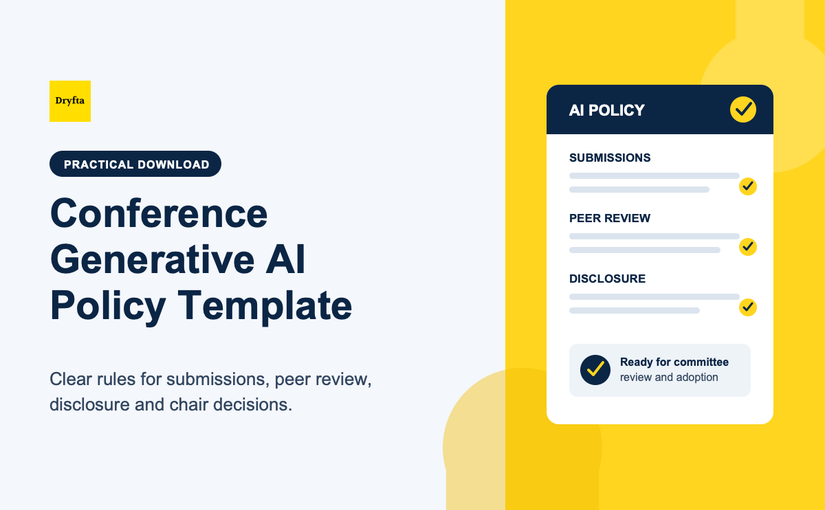
Generative AI Policy Template for Conference Submissions and Peer Review

Authors and reviewers should not have to interpret a vague sentence about using AI “responsibly.” They need to know what they may do, what they must disclose, and what they must never place in an outside tool.

This guide helps conference chairs turn those questions into a clear working policy. It focuses on the decisions that matter most: language assistance, substantial writing or research support, reviewer confidentiality, human responsibility, and the conference’s own use of AI-assisted review tools. Continue reading

10 Must-Have Marketing Tools to Promote Your Event

10 Must-Have Marketing Tools to Promote Your Event

Planning an event often means using several tools for email, social media, paid ads, and registrations. Keeping track of them all can get difficult as the event grows.

Event marketing software helps manage these activities more efficiently. For complex events, Dryfta can work well as an integrated event marketing solution, especially when marketing needs to work closely with registration and other event processes.

Specialist tools may still be a better fit for specific marketing channels. The right choice depends on your event needs, workflow, and budget.

Continue reading

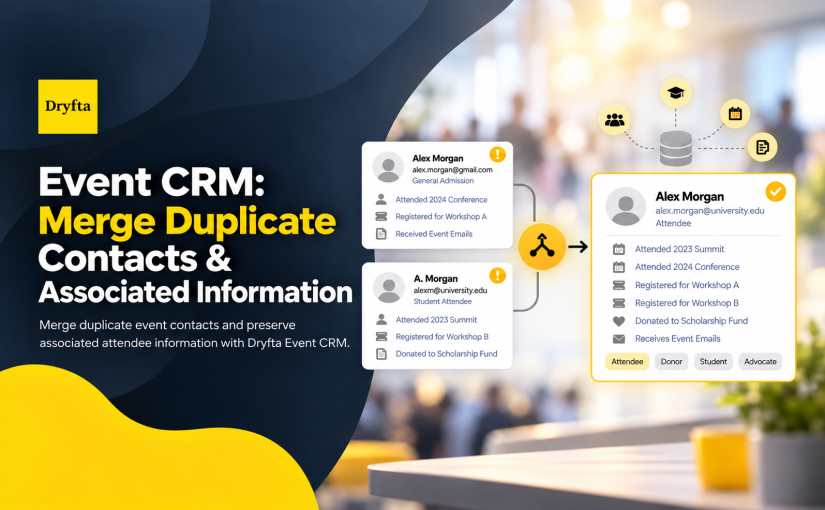
How to Merge Duplicate Contacts in Dryfta Event CRM

One person can end up with two contact records for perfectly ordinary reasons. They may register with a second email address, return as a speaker after attending an earlier event, or have an assistant create an account for them. Soon, their tickets, submissions, meetings, and messages sit in different profiles.

Dryfta’s Event CRM helps administrators review and merge duplicate contacts into one primary record. This guide explains how the merge works, which record to keep, and what to check before you confirm it.

Continue reading

Event Schedule : Complete Guide for Creating an Event Schedule

create event schedule


There are a lot of details to nail down when you are organizing an event or conference. What structure do you use, how do you handle a networking event, how long should speakers be on for, and how many intervals should you include? These are all excellent questions that deserve an answer, and while there is no single ideal way to run an event, you can use scheduling best practices to create event schedule for your next conference and ensure your guests get what they need out of their attendance.
Continue reading

The Power of Cloud Technology for Abstract Management

The Power of Cloud Technology for Abstract Management

In only the last few decades, the academic and research world has managed to pull off an almost impossible feat. Formerly reliant on paper-based systems and manual processes, abstract management has now carved a mark for itself in the digital era. All thanks to modern cloud technology and its integration into conference planning systems.

Continue reading

AI-Assisted Abstract Review for Research Conferences

AI-Assisted Abstract Review for Research Conferences

AI-assisted abstract review uses software to support defined parts of a conference review process, such as submission checks, topic classification, reviewer assignment and advisory analysis. It should not replace expert assessment of scientific merit or a programme committee’s final decision.

That distinction matters when a university, scholarly society or research conference receives hundreds or thousands of submissions. The administrative burden is real, but so are the consequences of a poor reviewer match, an exposed identity, a missed conflict of interest or an unexplained rejection.

The useful question is not, “Can AI review abstracts?” It is, “Which tasks can it support, who checks the output and what evidence will the committee keep?”

Continue reading