It is thirty minutes before registration opens. Staff stand at the desk with lanyards in hand, and the attendee lookup screen will not load. The organizer calls support and says what many of us would say: the contract promised 99.9% uptime. Surely this will be fixed at once. Perhaps it will. Perhaps it was never promised.
An event software SLA is easy to treat as reassurance and hard to read as an operating document. This article reads it the second way. Using one fictional outage, it shows which clause decides what an organizer can expect, before anything fails.
According to studies, over 44,554 event managers are currently employed in the United States, with 63.8% of the workforce identifying as women and 36.2% as men, highlighting the scale and diversity of the profession. Event management continues to grow as a dynamic field that blends strategy, creativity, and execution to deliver impactful experiences.
Plenty of event planners today realize halfway through that the service they signed up for does not meet their needs. And their attendees’ expectations. In this view, the team is forced to reckon with the reality of the software they have been working with. Sometimes costing tens of thousands of dollars, discontinuing a service is never easy. And never the first choice, at all. However, circumstances outgrow our events and we look for alternatives. It is with this thought that we have set out to discuss some of the brilliant vFairs alternatives. Continue reading
You have the venue locked in. The speakers are confirmed. The agenda looks great on paper. But here is the catch: none of that matters if the logistics behind the event fall apart. Buses arrive late, badge printing fails at the door, catering shows up to the wrong room and suddenly a meticulously planned event becomes a crisis management exercise.
The one thing that is permanent in event management is that plans change. You can map out every session, confirm every speaker, and double-check each detail and still something might shift at the last moment. A keynote speaker might miss a flight, a room suddenly becomes unavailable, or even a sponsor’s availability changes just hours before the event begins. These situations are common in event planning, and that’s why planners need to think of strategies for last-minute event changes. Continue reading
You made it. The team you had appointed to design your organization’s very own mobile event app has just handed it over to you. Officially. This is an incredible and worthy milestone for event planners who are just starting out and carving a mark for their organization.
Technavio has projected the valuation of the global event management industry to be well over $1.07 trillion. And almost all forecasts are in agreement that the event space is only set to skyrocket all the more, in terms of fiscal valuation, manpower and employment. What this means for the individual event planner or their event ROI is that this field is a high-stakes affair.
Signing a contract with the wrong technology vendor can cost you more than money. It can cost you your event itself.
For the thousands of event organizers who go through this process every year, the experience strikes the cord of familiarity. A vendor promises everything and more during their pitch. The demo is outstanding and the pricing appears to be a great deal. Or so they make it seem.
In the high-stakes world of event planning, your choice of technology is the difference between a seamless masterpiece and a complete disaster. As events continue to transform into complex, data-based experiences, one-size-fits-all type of event management platforms will no longer work. Regardless of whether you organize a global hybrid summit or an intimate executive roundtable, the platform you use to manage the event will act as the central hub for all things related to your event.
A successful conference requires coordination and clarity. Every detail of the conference, from the registration and ticketing to attendee communication, scheduling updates and analytics play an important role in the outcome. When organizers use separate tools as opposed to using one centralized conference management solution, they create hidden risks that can affect the teams, the conference and the attendee experience. Continue reading
Do you find that event planning forces you to be working in both directions of a seesaw?
One side being attendee experience, as they have expectations for their personal touch to make them feel included, large screens with which they can connect, improved networking opportunities, wellness, purpose, and sustainability. The other side being finance, which wants proof that your events have provided value beyond a packed room. If so, you are not alone.
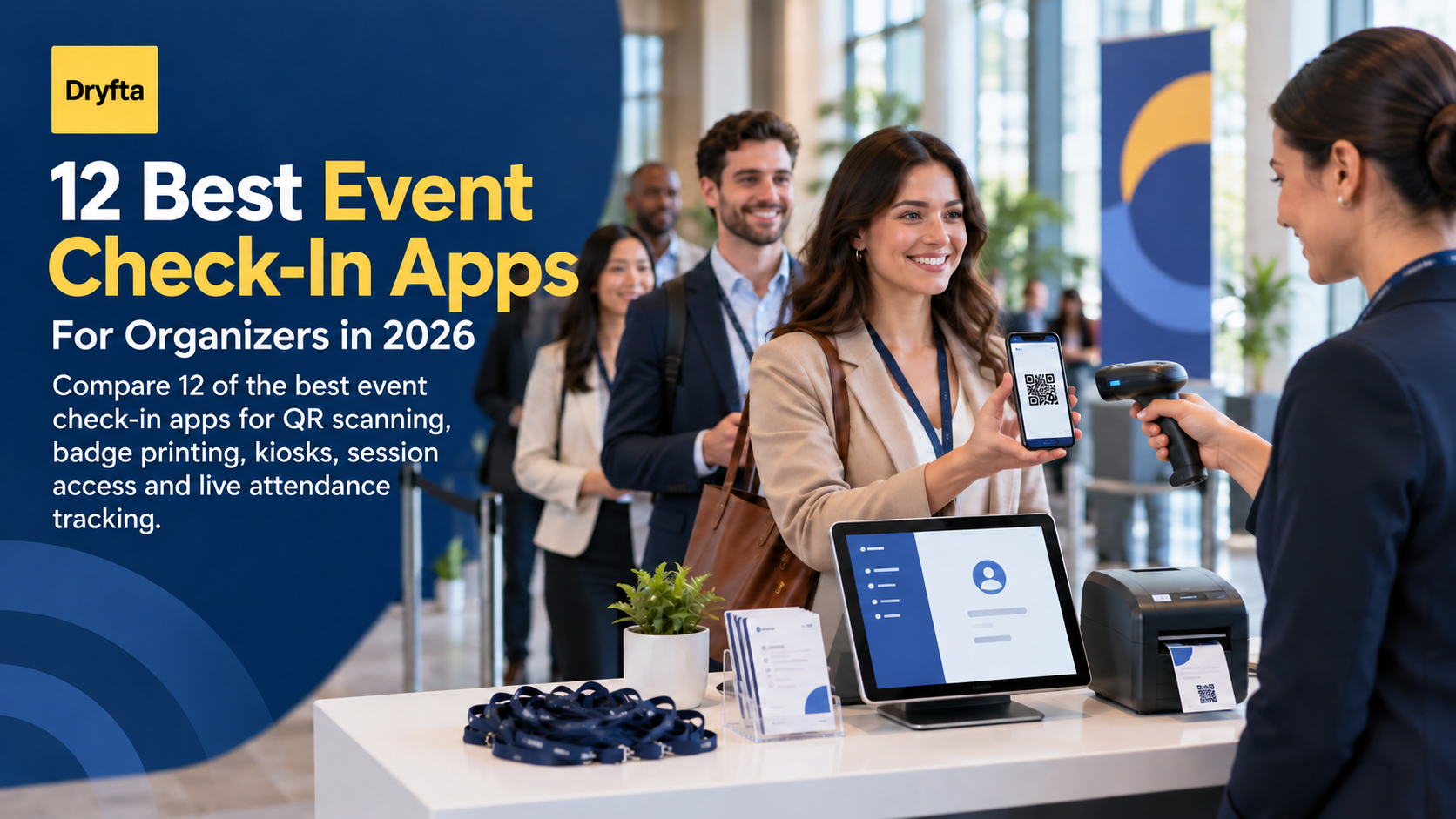
The best event check-in apps do more than scan a ticket. When several hundred people arrive within the same 20-minute window, the right app keeps the line moving, gives staff a reliable attendee record, and handles the exceptions that usually slow a desk down.
A forgotten QR code, a misspelled name, a walk-in registration, or a full session should not bring entry to a halt. Organizers need a tool that works with their event format, badge plan, staffing level, and reporting needs.
This guide compares 12 check-in apps for conferences, corporate events, trade shows, workshops, public ticketed events, and VIP gatherings. It explains what each option handles well and what you should test before making a decision.
Editorial note: Dryfta publishes this guide and appears in the comparison. We reviewed official product and help documentation available on September 23, 2026. We focused on the complete arrival workflow, not a vendor’s claim about scan speed. We did not run the same onsite test on every platform, and features can vary by plan, device, printer, event format, and region. Ask each vendor to demonstrate your busiest arrival period with realistic attendee records.