


Are endless email follow-ups and hidden software fees making it harder to manage your corporate sponsors and protect your event budget? You are definitely not alone.
Managing exhibitors and sponsors at nonprofit events goes far beyond organizing booth spaces and sponsor logos. Strong partnerships can increase fundraising opportunities and create lasting support for your organization. Which means, the more value you create for your exhibitors and sponsors, the more likely they are to become long-term contributors to your nonprofit event.
In this guide, you’ll learn practical strategies that will help you build stronger sponsor relationships.
Before we dive deeper..
How Do Nonprofit Event Sponsorship Dynamics Work?
First things first. Nonprofit sponsorships are fundamentally different from traditional event sponsorships.
Corporate events are all about direct return on investment (ROI). Nonprofit events, however, work entirely around return on mission (ROM). The biggest difference here, in terms of managing exhibitors and sponsors at nonprofit events, is that you offer organizations a way to connect with a cause and show the world how they contribute to their communities.
So, what are the main ways to understand the dynamics of managing exhibitors and sponsors at nonprofit events?
Aligning sponsorship with nonprofit mission
Truth be told, today’s businesses want their brands associated with something meaningful. They know that consumers are watching, and they want to let them know that they care more about the bottom line.
That’s why your sponsor engagement strategies should be based on matching a company’s community objectives with your nonprofit’s mission.
Don’t just request a check. Demonstrate how their funds make a difference in the community. The best nonprofit sponsorships happen when a sponsor’s goal matches your organization’s day-to-day mission.
- Local green community projects are popular with local eco-friendly shops
- Healthcare organizations are keen to sponsor charity runs or medical research dinners
- The financial literacy workshops are sponsored by community banks and credit unions
- Community banks and credit unions sponsor financial literacy workshops
- Animal shelter fundraisers are sponsored by veterinary clinics
- Scientific equipment companies aid laboratory workshops and STEM education events
Also, sponsors who find common ground with your mission often choose to stay engaged beyond a single event.
Budget considerations for nonprofits
We all know charities work with very tight budgets that corporate planners never have to worry about. Therefore, every single dollar spent on event exhibitor coordination must be carefully tracked to prove the return on mission.
Here is how you can optimize your event operations to maximize profit margins:
- Virtual booth spaces save money by reducing the amount of physical venue space and tables you need to rent.
- Digital logos and downloadable brochures replace traditional printed materials and their associated shipping costs.
- An all-in-one event platform is a better solution for avoiding the expense of multiple software subscriptions.
- Direct sponsor upload portals let sponsors submit materials themselves, thereby reducing admin costs.
- Online payment tools secure sponsor money early so you can easily pay your upfront venue deposits.
Types of sponsors common in nonprofit events
When managing exhibitors and sponsors at nonprofit events, you will usually work with 7 main types of groups:
- Financial sponsors fund your event and gain branding exposure in exchange for participating in our promotional efforts.
- In-kind sponsors donate products or professional services that will offset event costs.
- Venue partners sponsor event space for free or at a reduced price to downsize venue costs.
- Catering sponsors cover the food and beverage needs of your guests.
- Media sponsors support event promotion through advertising.
- Promotional partners expand event reach by sharing campaigns with their audiences.
- Digital and tech sponsors supply event technology.
What Should You Include in a Sponsorship Package?
As an organizer, developing flexible nonprofit event sponsor packages makes it easier to attract sponsors while keeping enrollment straightforward and hassle-free.
Let’s look at how to build sponsorship packages that support event exhibitor coordination:
Tiered Sponsorship Levels and Benefits
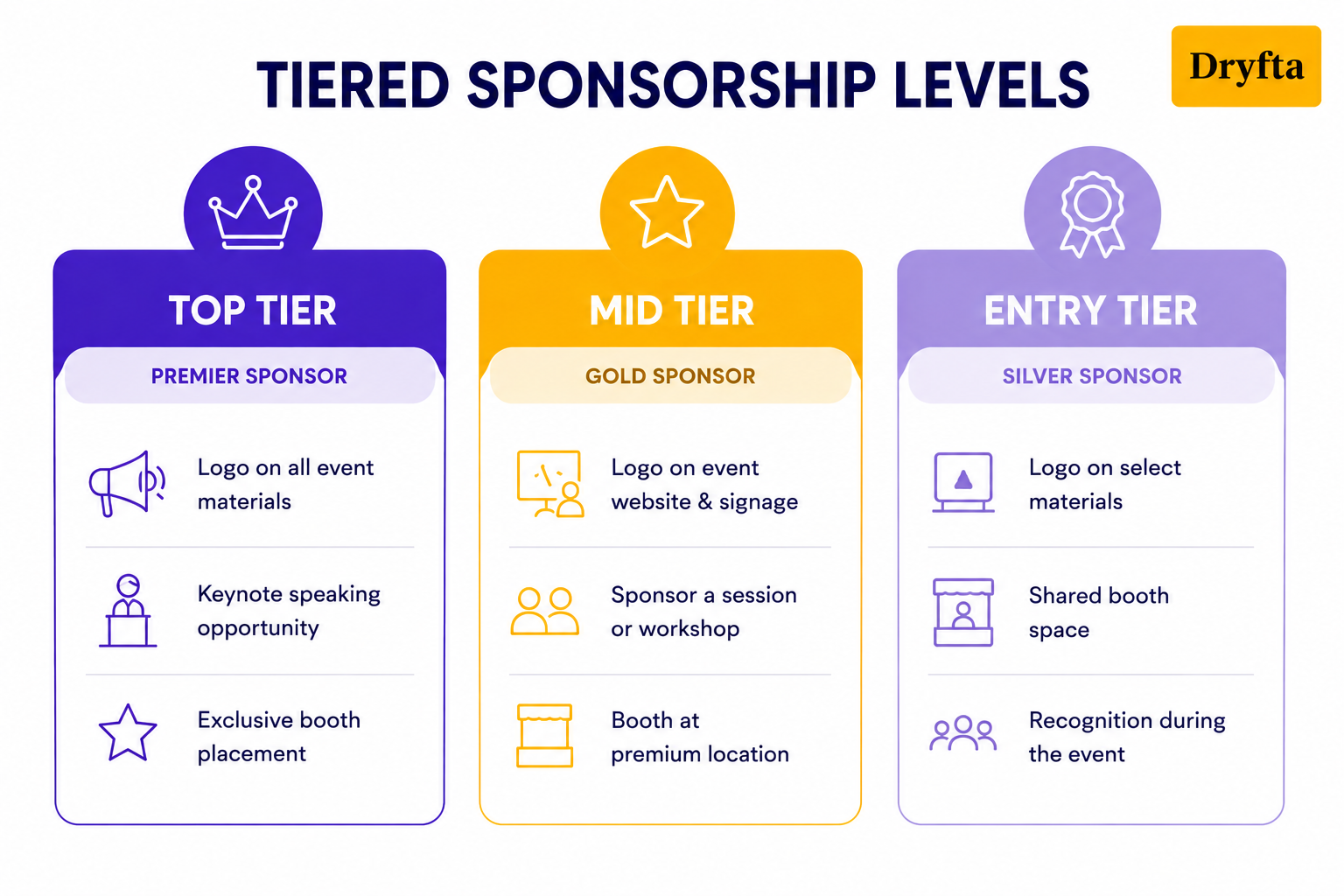
- The top-tier sponsors get the maximum brand exposure during the event.
- Mid-tier sponsors gain greater brand awareness due to sponsored sessions and branding throughout the venue to attract mid-sized businesses.
- Entry tiers offer sponsors some limited branding and shared booth space for a low cost.
Customizable Packages for Different Sponsor Needs
- You can easily swap boring signs for social media shoutouts or a staff volunteer day to match exactly what the company wants.
- Tweak your nonprofit event sponsor packages so a partner’s charity goals fit perfectly with your event activities.
- Use simple online signup forms to make managing exhibitors and sponsors at nonprofit events stress-free for your team.
Including In-Kind Sponsorship Options
- You can accept non-cash donations in exchange for your sponsored event such as an event location, printing flyers for your event, etc. This will save money on your event.
- Partner with local radio stations or newspapers for any kind of advertising at no charge and count that media coverage as a major sponsorship.
- Carefully organize your event exhibitor coordination so that donated food trucks and booths are set up without delay.
- Keep accurate records when managing exhibitors and sponsors at nonprofit events so that each donor receives the correct tax receipt.
Best Practices for Sponsor Communication and Engagement
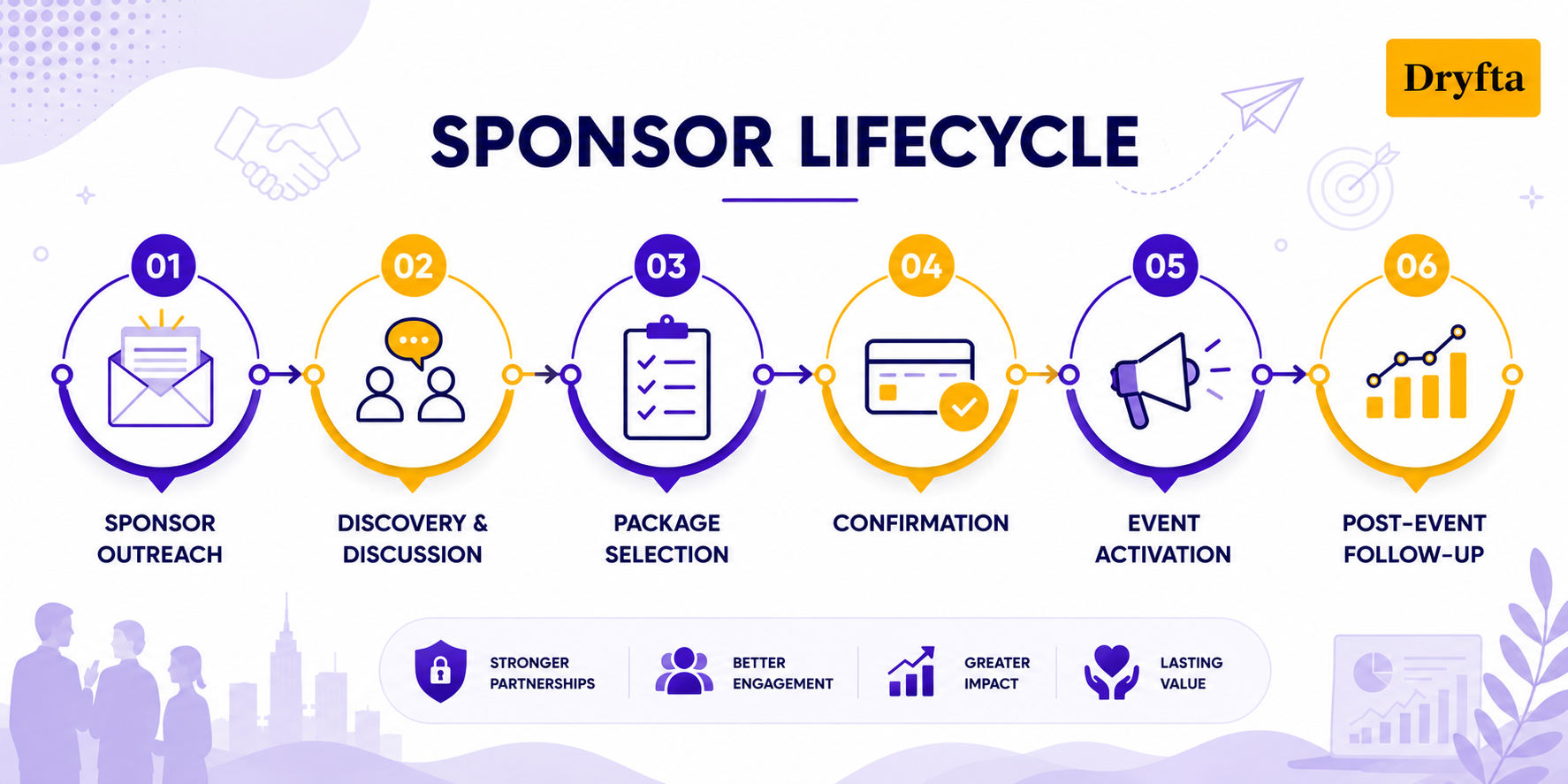
Now that we’ve got the facts straight, ignoring a sponsor may be the last thing you want to do, as it is very possible they will not sponsor your event again. To turn a one-time sponsor into a repeat sponsor, you must have an active communication strategy before, during and after the event.
The following are some ways that you can use these communication strategies to assist you in increasing exhibitor engagement while ensuring customer satisfaction:
- Before the event, send weekly emails to keep your sponsors informed as to how many attendees are registered for your event.
- Use a digital checklist to specify what sizes of banners you will accept and what logo formats you want from your sponsors so they do not have to make multiple trips to their design department or send you incorrect logos.
- Provide exhibitors with accurate deadlines for table setup to ensure your physical or virtual event runs smoothly on the opening day.
- Have dedicated staff welcome corporate sponsors at the entrance and make sure their digital branding is high quality on screen.
- Within two weeks of closing, provide a detailed analytics report to demonstrate your client’s exact banner click data and total crowd reach.
- Send personal thank-you notes within 48 hours to express your sincere thanks while the excitement is still fresh.
- Ask them to a short feedback session a month later to get early-bird contract renewals for your next event.
- Outline all the perks included in your nonprofit event sponsor packages so your partners have zero confusion about booth sizes.
When you show sponsors that you care about their business results, not just their money, you create the kind of relationship that brings them back year after year.
How Do You Manage Exhibitors and Sponsors Onsite?
Buckle up. The game day is finally here! When the doors open, your main goal is to make sure your partners feel like a key part of your mission. Getting event-day operations right is a key part of nonprofit event sponsorship best practices.
Want to know the best part? A little preparation goes a long way in keeping everyone smiling.

Here is how you can ace your event-day execution:
Clear signage and booth placement
- Map out your floor plan so your high-paying sponsors get the heaviest foot traffic.
- Hang easy-to-read signs for guests to find your booth spaces instantly.
- Double-check that every single corporate logo is spelled right and printed beautifully.
Dedicated support staff or liaisons
- Assign dedicated team members to act as personal concierges for your VIP sponsors.
- Hand out exhibitor management tips for nonprofits to your volunteers so they know how to help out.
- Check in on your vendors regularly to hand out water bottles and snacks.
- Walk the floor constantly because managing exhibitors and sponsors at nonprofit events requires your full attention.
Facilitating networking opportunities
- Host an exclusive morning coffee mixer to connect your corporate sponsors with your board members.
- Create fun games that force attendees to visit every single booth to win prizes.
- Introduce local business owners to one another to spark new community partnerships.
Leveraging Technology for Managing Exhibitors and Sponsors at Nonprofit Events
At the end of each day, using an Excel spreadsheet to track multiple logo requests from dozens of sponsors and booths can be frustrating. If you want to save your sanity, it is time to upgrade your toolkit. An event management platform such as Dryfta makes it easy to manage exhibitors and sponsors at nonprofit events.
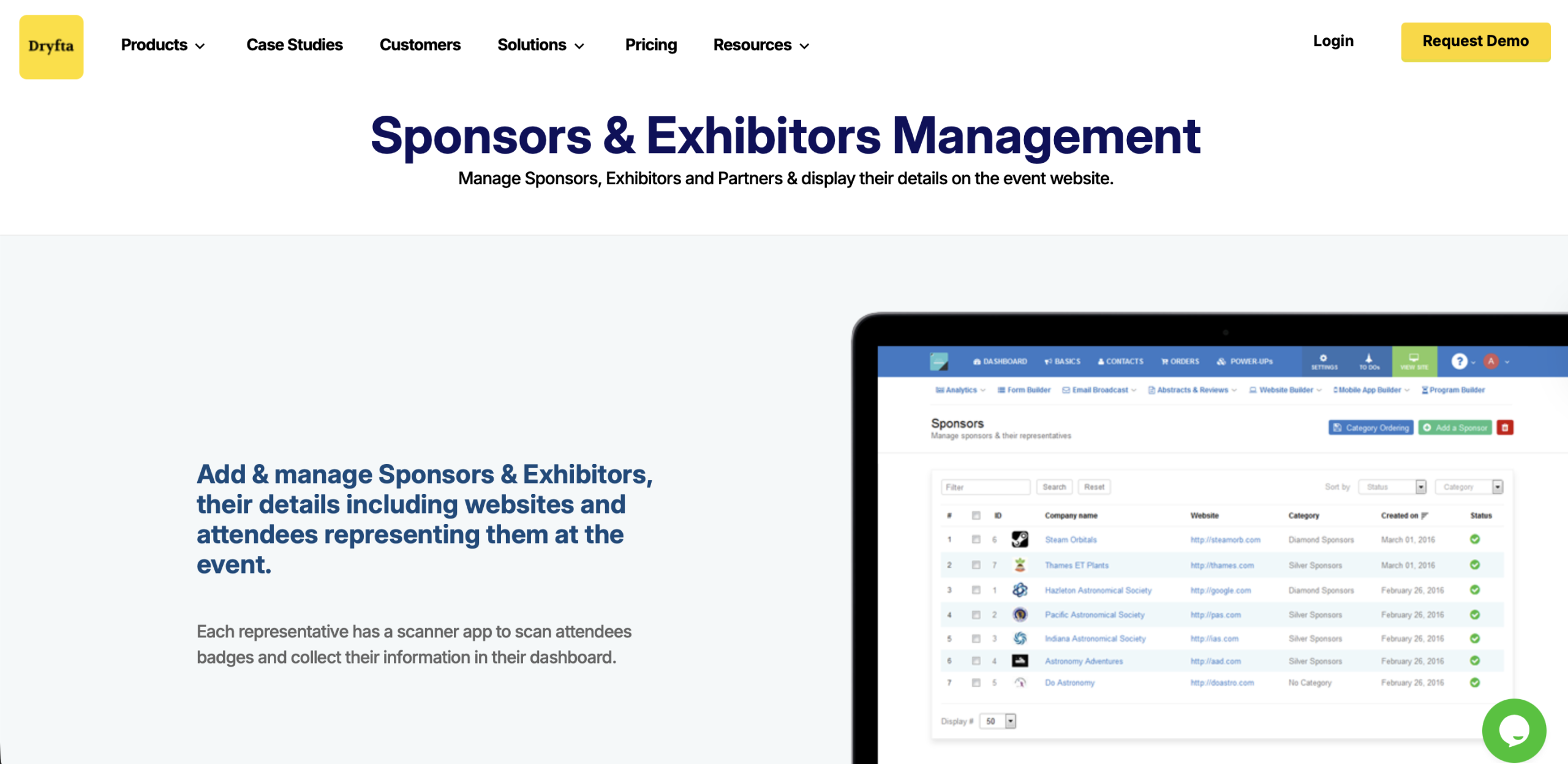
Here is how leaning on the right tech helps you master nonprofit event sponsorship best practices with zero stress:
- Centralized sponsor and exhibitor database: Say goodbye to searching through multiple folders by keeping all sponsorship-related files in one secure cloud dashboard.
- Automated communication and reminders: Stop spending time on manual follow-ups as the system automatically reminds sponsors and exhibitors about upcoming deadlines.
- Real-time reporting and analytics: See exactly who has paid and which booths are left with live dashboards that make tracking your fundraising goals incredibly easy.
- Integration with event websites and apps: Push sponsor logos directly to your public webpage and mobile app with a single click to save hours of manual web design.
Smart automation is the ultimate shortcut for your team. With the right tools in place, you can follow the best exhibitor management tips for nonprofits and simplify managing exhibitors and sponsors at nonprofit events.
Evaluating Event Success Through Metrics and Feedback
The end of the event is the beginning of building meaningful relationships with your sponsors. A solid post-event strategy is very important for managing exhibitors and sponsors at nonprofit events.
Here is how you can lock in your future collaborations:
- Reach out with a digital survey within forty-eight hours to gather honest feedback while the event is still top of mind.
- Keep your questions short and sweet so busy corporate executives actually take the time to answer them.
- Ask your vendors directly about foot traffic and venue layout to gather the best exhibitor management tips for nonprofits.
- Count up total mobile app clicks and website visits to show your sponsors their exact digital reach.
- Use attendee check-in records to understand how much traffic your exhibitor hall received.
- Study the honest feedback to fix any logistical errors before you start your next event management and planning.
- Draft success metrics into an easy-to-read report that helps sponsors see their ROI and the impact of their support.
- Use your proven success metrics to confidently upgrade your packages next year while managing exhibitors and sponsors at nonprofit events.
The Bottom Line
Mastering how you manage your sponsors and exhibitors is one of the best ways to create reliable fundraising opportunities for your organization. When you focus on shared goals and use the right digital tools, you can stay on budget while delivering meaningful value to your corporate partners.
Managing sponsor details through spreadsheets and individual emails only gets harder as your event grows. Using an all-in-one platform like Dryfta helps you keep sponsor information and event data in one place. This way, you can spend less time on admin tasks and more time building a successful event.
Ready to transform your next event planning cycle? Click below and book a completely free demo with Dryfta to explore how we can help you streamline your event operations and build lasting philanthropic partnerships with ease.
FAQs on Managing Exhibitors and Sponsors at Nonprofit Events
1. What are the key differences in managing sponsors for nonprofit events compared to corporate events?
Corporate Events are focused on creating a lead for your business as well as branding for the company. On the other hand, nonprofit events focus solely on raising funds for their charitable cause. Unlike Corporate events, many nonprofits have limited budgets; therefore, maximizing the return on each sponsorship dollar and managing sponsorships in an efficient manner is of utmost importance.
2. How can I create sponsorship packages that appeal to nonprofit sponsors?
Create sponsorship packages based on community impact that are priced differently so organizations can pick a package based on their budget. Provide organizations with an option to make an in-kind contribution if they would like to give goods/services instead of monetary contributions.
3. What technology features should I look for to manage exhibitors and sponsors effectively?
Choose systems with a single database so all of your contract and logo information is safe and stored in a central location. Find automatic messaging tools for quick deadline reminder notifications. More importantly, make sure that the software delivers real-time reporting for banner clicks and updates your event website instantly.
4. How do I ensure a positive onsite experience for exhibitors and sponsors?
Make it easy for attendees to find your sponsors with clear directional signs and premium booth placements. Have dedicated support staff available to welcome corporate guests and quickly resolve issues like Wi-Fi problems. A private lounge area can also give exhibitors a comfortable place to recharge during the event.
5. What are the best practices for post-event sponsor and exhibitor engagement?
Follow up within forty-eight hours with a personalized thank-you note and a digital impact report that highlights your final fundraising results. Share performance data, such as banner click metrics and engagement numbers, to demonstrate the value of their support. Then send a short feedback survey to gather insights and open the door for an early contract renewal.
