



According to studies, over 44,554 event managers are currently employed in the United States, with 63.8% of the workforce identifying as women and 36.2% as men, highlighting the scale and diversity of the profession. Event management continues to grow as a dynamic field that blends strategy, creativity, and execution to deliver impactful experiences.
In this guide, we are gonna break down the core aspects of event management and what it takes to run successful events from start to finish.
What Is Event Management?
In simple terms, event management covers everything that goes into bringing an event to life, no matter the size or format. It includes identifying your audience, shaping the event idea, and handling budgets, vendors, and speakers, along with all the small details that pop up during event planning.
Strong event management needs both creativity and control. You design engaging experiences while staying on top of logistics and unexpected issues. The best events look smooth from the outside because every detail has been carefully planned and managed behind the scenes.
Types of Events And How Event Management Differs Across Them
In event management, when you’re looking at planning from a macroscopic view, everything tends to look the same. Here’s what we mean by that. When looking on from the outside, every type of event seems to have the same kind of planning timelines, key functions and just the same rituals overall. You put out an invite or a poster, call for participants or attendees, sometimes beg for them to come even. Then you sell tickets, make some money out of it, pull off a spectacular show and call it a day. The drill is the same for all types of events.
But if you get into the details, the nitty gritty of it, you’ll find that each type demands some specific planning on your part. This is precisely why it is time to give up on your bird’s eye and approach event management with that of an eagle’s. The magic is in the details you miss. Here’s how events differ by type and why it’s important to know how to differentiate:
- Conferences and Multi-Track Events: Conferences are among the most dense and large-scale events to organize. You have multiple sessions running simultaneously. The event sees several speakers and hundreds of attendees. Event coordination is key here. What event teams do in the backend reflect in almost every aspect of on-stage commencements.
- Trade Shows and Exhibitions: Trade shows center on exhibitors and buyers and are often commercial in nature. Floor plans, booth allocations, lead capture tools and exhibitor move-in schedules are the primary event management concerns here.
- Corporate Meetings and Internal Events: Internal events operate under constraints that public-facing events do not. Budget approval processes are often stricter and attendance is sometimes mandatory rather than voluntary. The stakes are high and event themes are also similarly niche-specific.
- Product Launches and Marketing-Led Events: Product launches are designed to generate attention and it is this ppurpose that steers steers every other planning decision. Coordination between the marketing team, the AV crew and the PR function is tighter here than in most other event types. A single misstep in execution can undermine the story the event is meant to tell.
- Galas, Fundraisers and Social Events: These are people-driven events that see participants come together for a certain cause. They may bond over a shared sense of community or some other larger intention. Donor management, auction logistics, live giving moments and post-event acknowledgment are some of the most important aspects of this format of events.
- Workshops and Training Events: Workshops are outcome-focused in a way that most other event types are not. Training events are hands-on affairs. Here, skill delivery matters the most. Participants come in expecting to learn something, perhaps a skill or technique. So attendee satisfaction depends almost entirely on if the subject matter is imparted to them.
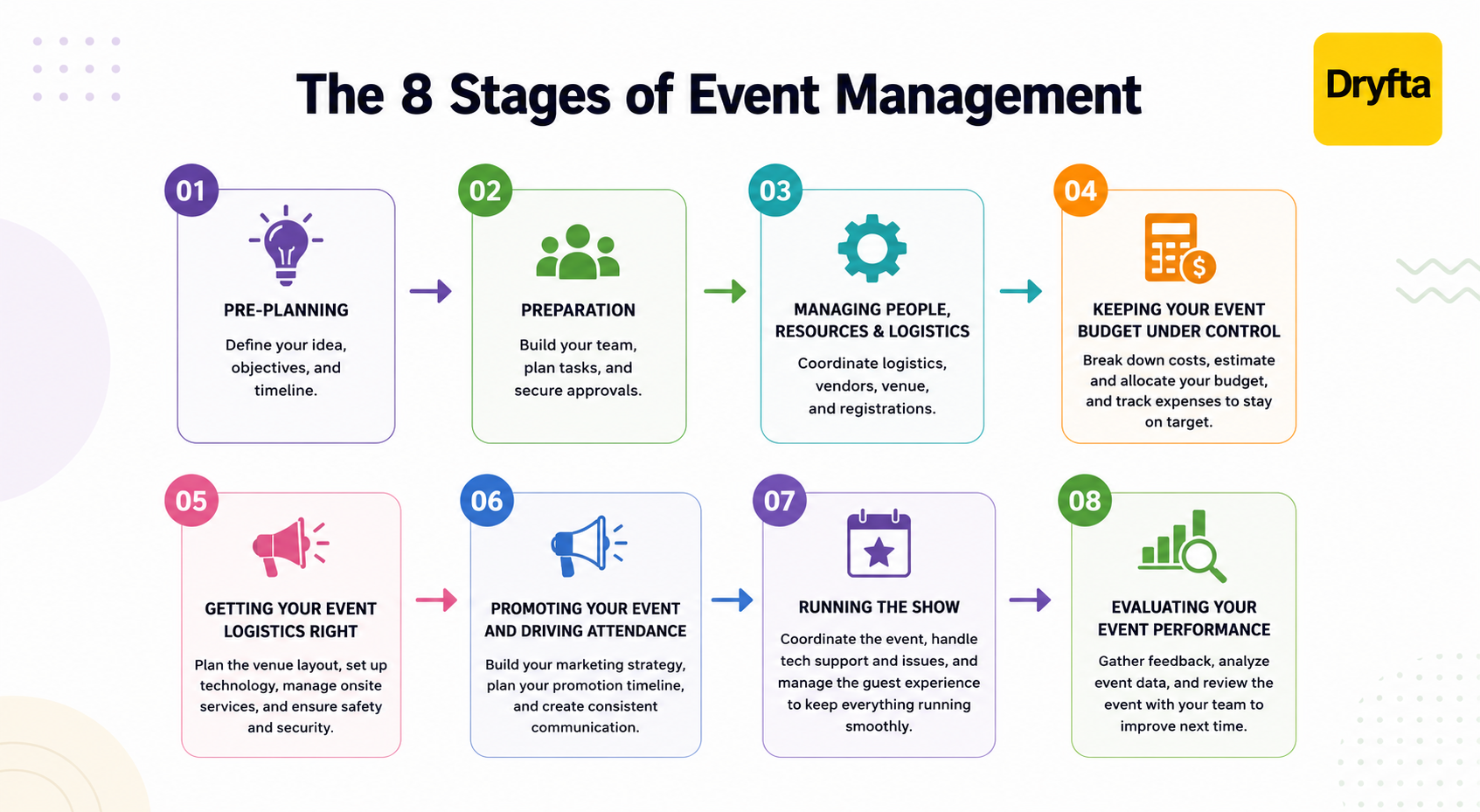
The 8 Stages of Event Management
Whether you plan it that way or not, each event has a sequence of steps. When one step is skipped in the process, something will fail later, usually at the worst possible time. These are the eight stages to keep everything on track from the idea to wrap-up.
1. Pre-Planning
Start by laying the groundwork so every decision that follows has direction and purpose.
Define your objectives
First, you have to define your objectives when it comes to events. It is necessary to have defined objectives so that you can use them as a decision-making tool. Without an overall goal, the event planning process will be unstructured. Many people aim to meet one or many of these objectives with their event planning, including:
- Lead Generation
- High Attendee Engagement
- Revenue Goals
Many planners have to work with multiple objectives. For example, a university reunion could serve both to reconnect alumni and to raise money for a scholarship fund.
Select the Event Type and Format
You have three major event format choices: physical, virtual, or hybrid. The different format options will affect the effort and resources required for the work involved with each.
- In-Person Format: An in-person event is centered around attendees interacting directly (in person). This type of event creates long-term professional connections that are harder to create through digital means, and gives you direct access to your speakers.
- Virtual Format: Virtual events use an online platform to connect people from all over the globe. Virtual events can cut down significantly on venue rental costs and travel costs, but they also open up global participation opportunities for your event.
- Hybrid Format: A hybrid event will be able to offer the greatest flexibility by allowing attendance from both remote and onsite participants.
Initial Research
The research phase is the foundation for all successful events. In this stage, the event manager will have to explore a number of different factors:
- Investigate potential venue options for your event based on its technical and space requirements.
- Check out possible vendor options (caterer, AV team, decorator) to determine whether they can meet your expectations.
- Review all estimated costs associated with hosting your event to assess whether it can remain fiscally responsible.
- Identify necessary permits, insurance coverage and logistics issues that could possibly impact your event.
Build Your Event Timeline
Next, develop an overall project calendar to identify each of your major milestones and deadlines. The standard project calendar will outline:
- Sending out invitations via digital or print channels
- Securing the venue contract
- Finalizing catering menus and dietary requirements
In essence, having a well planned project calendar helps ensure a smooth flow throughout your event while leaving room for changes as they occur.
2. Preparation
Once the basics are clear, it’s time to lock in people and backup plans.
Bring Your Team Together
The success of an event depends on several key individuals working together as a team. Some of these critical positions may be:
- Marketing: Promotes the event and provides live content coverage for guests during the event.
- Technical Support: Provides the necessary equipment and technical services to ensure there are no issues during the event, including lighting, audio, and video systems.
- Sponsorship Manager: Secures financial sponsors to support your event.
Get the Required Permits and Licenses
Some events require special permits to adhere to local regulations. These differ from jurisdiction to jurisdiction. Check with the local government office early on.
Have a Fallback Plan Ready
Issues may happen even when we have a solid plan in place. For example, a speaker might cancel at the last minute, or bad weather can ruin an outdoor event. That is why you need a plan to keep everything going smoothly. The event and the guest experience matter most, so having a contingency plan in place is very important.
3. Managing People, Resources, and Logistics
Now shift focus to coordinating teams, vendors, and the moving parts that keep everything running.
Choose the Right Venue
Choose an appropriate site based upon your goals. Corporate conferences require sites with professional conditions and high-tech amenities. Community events can be held at informal venues. Each site you consider should be evaluated as to its size, location and accessibility.
Coordinate Vendors and Suppliers
You will likely have several contracts for food, equipment and decorations. A signup form will help keep vendor contact details and insurance policies organized. Even better is a payment tracking system, which keeps the budget on track and vendors paid.
Set Up Registration and Ticketing
Guest registration is best done online. The registration forms gather important information such as contact details and dietary requirements in real time, aiding logistics.
Understand Attendee Preferences
It’s wise to collect feedback in the planning phase. A survey before the event will give you an idea of what guests expect and any special considerations, such as access needs. This is simply high-quality event management.
4. Keeping Your Event Budget Under Control
At this stage, keep a close eye on spending to keep your plans realistic and sustainable.
Break Down Your Event Budget
Budgeting is the most important aspect of the planning process. You will need to track:
- Rental costs of venues
- Food and beverage charges associated with each venue
- Costs of technology and marketing
- Staffing costs
Estimate and Allocate Your Budget
You should always fund the “must-haves” before spending on extras. Once the must-haves are fully funded, you may use the remaining budget to pay for additional features.
Track Your Event Expenses
Use an event management software to help you monitor each and every dollar that you spend during the course of an event. This will improve transparency for sponsors and help you find ways to save money for future projects.
5. Getting Your Event Logistics Right
With your budget in place, map out how the event will function on the ground.
Plan Your Venue Layout
When you’ve chosen the venue, plan the layout to ease movement. Consider these factors:
- Enough chairs for the number of guests
- Easy access from registration to dining to the stage
- Networking or exhibit spaces
The aim is to create a welcoming environment for attendees to move around easily.
Set Up Your Event Technology
Depending on whether you are hosting a virtual or onsite event, the technology requirements may vary. For example, onsite events would require audio equipment, Wi-Fi and possibly additional lighting. A reliable, high-speed internet connection would be required if you were hosting a virtual event. The safest option is to hire a professional vendor to handle the technical aspects of equipment setup.
Manage Onsite Services
Create an easily visible check-in station along with directional signs for guests. Also, provide accommodations for guests who may need assistance, ensuring the location has wheelchair-accessible features, including ramps and accessible seating.
Put Safety and Security in Place
Guest safety is your number one priority. Build emergency plans. Always maintain an adequate supply of first-aid equipment at the site. Know how to manage crowds when hosting larger events. It is worth investing in a privately contracted security company.
6. Promoting Your Event and Driving Attendance
Once the setup is clear, start building awareness and interest.
Build Your Marketing Strategy
You need a marketing strategy to drive attendance. Email marketing can target your existing list, while social media can help you target new audiences. Hashtags and influencer partnerships can also help.
Plan Your Promotion Timeline
In order to keep all communication consistent throughout the process, use a timeline. The timeline should outline when early teasers go out, when the event is officially announced, and when final reminders are sent.
7. Running the Show
When the day arrives, execution is all about coordination and staying in control.
Coordinate the Event
The day-of coordinator will determine who will work where to maintain the flow of events. When you employ a professional to manage aspects of your event, overall management improves significantly.
Handle Tech Support and Issues
Have a technical team to oversee AV and Wi-Fi. It is recommended to have spares in case of equipment failure.
Manage the Guest Experience
Assign a team to assist guests at the check-in area and assist them with seating. Clearly label all zones within the venue with signs. Additionally, a guest experience manager could monitor attendee reactions throughout the day.
8. Evaluating Your Event Performance
After the event is over, step back and analyze what worked, what didn’t, and what to improve next time.
Gather Attendee Feedback
Gather feedback using surveys. Inquire about the content, location and overall experience to identify opportunities for improvement.
Analyze Your Event Data
Measure attendance, engagement and lead conversion rates. This will help your team understand what is working and what can be improved in future events.
Review the Event With Your Team
Conduct a debrief meeting with your team and vendors. Review the successful aspects and problems. This is key to making improvements for the next event.
Sustainability in Event Management
Not greenwashing but real sustainability in action. That’s what we’re talking about. From monitoring net carbon footprints emitted at a conference to cutting down on unnecessary catering material, event organizations around the world are going green in their own ways. Well, it turns out that sustainability is in style. For event teams conscious of the impact their events are generating on the environment, check out these software tools made with your considerations in mind.
- Venue and catering choices: Event management does not necessarily have to be wasteful or over-the-top. Just enough catering resources and producing as little waste as possible is now becoming increasingly important for event organizers. Green events are the future and contemporary event management softwares like Dryfta are built with this in mind.
- Digital-first materials: Printed programs, paper schedules and physical delegate packs have direct substitutes in event apps, QR-linked schedules and digital badge wallets. Where print is genuinely necessary, FSC-certified paper and soy-based inks are a meaningful step down in environmental impact.
- Attendee travel: Virtual and hybrid events substantially cut down on resources that go into traveling and accommodation for participants flying in to the venue. Hybrid is the new normal. So if your event could have a virtual element to it, don’t think twice.
- Measuring and reporting: Sustainability commitments that are not measured remain superficial. To see your impact in action, clarify some measurable outcomes. This can include things like how much waste you diverted, how many you donated instead of dumping or the amount of paper you saved from switching to virtual agendas.
Common Event Management Mistakes to Avoid
The absurd part about planners making mistakes in event management is that most are completely avoidable. Most mistakes are duly warned of. But event professionals still end up making them, again and again.
In the wise words of Harry Styles, “We never learn, we’ve been here before.”
Right, enough pop music lyrics. We’re telling you for the last time. Do not make the below mistakes, at any cost.
- Do not kickstart event promotions too late: Advertising your event too close to closing registrations is a common mistakes that event planners make. Mostly, this is a direct consequence of taking too much time to plan the fundamentals and build the scaffolding for your event. Hence, this challenge can only be rectified if planning is done smartly right from day 1.
- Never underestimate vendor lead times: Vendors for catering, AV, printing and furniture all have booking windows that are longer than most first-time organizers expect. Reaching out to confirm availability at the same time as the venue contract is signed, rather than after, prevents the situation of discovering your preferred caterer is booked three months after the date is locked in.
- Do not operate without contingency plans: You might enjoy hanging around the end and the thrill of uncertainty. But this disastrous work morale when it comes to real event management. Plans go sideways all the time. People screw up, sometimes machines do. A mic could fail, your printer can jam, the roof could come crashing down even. What matters is, could you and your team effectively mitigate these situations? Who will makes things right when something goes wrong? These are important questions to ask and know answers to during the event planning stage.
- Ensure that there is no disconnect in databases: Figuring out data is no fun, even when you have all the time in the world. Now imagine having to frantically search for some data in the last-minute. Accessing it becomes ten times tougher when your numbers are all over the place. Make sure that your databases are organized within a single system. Otherwise, you’re going to have one hell of a time simply puting things together.
- Do not, for heaven’s sake, skip the post-event debrief: The period immediately after an event is when the team’s memory of what worked and what did not is most accurate, and it is also the period when everyone is most exhausted and most tempted to move on. A structured debrief within a week of the event, covering both the operational reality and the attendee feedback, is what converts one event’s lessons into the next event’s advantage
Choosing Your Event Technology Stack
Most event failures are not failures of creativity or intent. Rather, they are failures of infrastructure and the technology stack an organizing team puts together determines a great deal of what is and is not possible on the day. In the section below, we cover the core tools a planning team needs, right from the moment registration opens up until the very end.
- Registration and ticketing: This is typically the first technology a potential attendee interacts with, so the experience it delivers reflects directly on the event itself. Look for platforms with transparent fee structures, flexible ticket types and reliable payment processing.
- Event management platforms and pricing models: All-in-one platforms consolidate registration, scheduling, speaker management and reporting into a single system, which reduces the manual work of bridging data between separate tools. Pricing varies considerably across vendors and understanding what each model actually costs at your event’s scale is worth the time before signing anything. To know more about event pricing models, read this article.
- Project management for your planning team: Your team needs and breathes project management tools. Therefore, make sure to pick tools and software solutions that hold real value for you. Often when finalizing project management technology stack, event teams tend to miss out on the obvious while paying excessive attention to tools that never really come handy. Work by priority. Know what your event simply cannot do with and work your way down from there.
- Invoicing and vendor payment tracking: Vendor payment timelines create real financial risk when they are managed informally. A system that tracks invoice due dates, payment status and contract terms alongside your event budget keeps that risk visible and manageable.
- Promotion and marketing: Email platforms, social scheduling tools and landing page builders are the minimum. The key is connecting your marketing tools to your registration data so you can track which channels are actually driving sign-ups rather than just traffic.
- Badge printing and on-site check-in: Check-in at your event can be either of these. One, it can be as simple as ABC. Over before you know it. In fact, you’ll never need to know at all. Automated badge printing and self-kiosk check-ins get the job done by themselves. You could opt for this or you can also choose the old school way: place a dozen team members at entry, let queues build up and then worry over how the event might begin in time. The answer is obvious, isn’t it? Save your time and energy for the rest of the day with badge printing and QR-based check-ins. To know precisely badge printing works, head here. It is no rocket science. Just simple printer work really.
The Bottom Line
Event planning is about creating an environment where people have meaningful interactions. Attendees are most likely to be comfortable and able to connect with others if they do not have to think too much about their surroundings. When attendees feel secure and able to focus on their experience, this is when the best connection happens and new thoughts and ideas are generated. As an event planner, you need to plan every element of the attendee’s experience in such a way that all elements of the attendee’s experience are seamless.
This is exactly what Dryfta will let you do: plan all aspects of your next event from one location. Book a free demo today and learn how Dryfta will help streamline your next event.
Frequently Asked Questions (FAQs)
What’s the difference between event management and event planning?
While event planning and event management are very similar in theory, the focus differs when put into practice. The focus of an event planner tends to be on the creation and strategy of the event, how you will promote it, and how you will develop your concept. On the other hand, an event manager is responsible for coordinating all aspects of the event, from logistics to execution.
Why do events usually need a dedicated event manager?
If there are no defined roles or team members, it will be very difficult for everyone involved in the event to work efficiently. An event manager provides a framework for organizing and coordinating the many aspects of an event including timeline management, budget management, vendor management and communication, among other things.
What should you look for when picking the right event management software?
The key to selecting an appropriate event management software is whether the chosen application supports your organization’s workflow and event objectives. Ideally, registration, communication, scheduling and reporting capabilities should be integrated into as few applications as possible. Solutions such as Dryfta are notable for their ability to integrate all these components into a single platform. This type of integration facilitates planning and streamlines execution.
