Hopin, a popular event management platform today, and part of RingCentral Events, was first founded by a man who was left confined to his house owing to health issues. Following a long and quiet sabbatical, during which Johnny Boufarhat conceived the idea of a remote-first event management platform, Hopin was officially launched in 2019. The early period of 2020 proved to be a lucky break for Hopin. Hundreds of thousands of businesses, educational institutions and even non-profits turned to virtual avenues to carry out their day-to-day functions as normal life was disrupted by a global pandemic. The subsequent worldwide restrictions in offline movement and lockdowns around the world, put the ball in the virtual platform’s court.
Forbes magazine noted that virtual events have grown in usage and popularity by nearly 1000% since the onset of the COVID-19 pandemic.
What Is Hopin and Why Are Organizers Looking for Alternatives in 2026?
The aforementioned colossal statistic is proof that the virtual event format has skyrocketed after 2020. 6 years later, platforms like Hopin, who entered the market in just the right time and have since upgraded and adapted to settle within the demands of what is now a ‘norm’ in event organization, have continued to remain. Hopin, now called RingCentral Events since its acquisition by the cloud communication platform, is noted by users as one of these platforms that have stayed at the top of their game since its establishment. Organizational hierarchies have altered, personnel have come in and out of the firm but Hopin’s commitment to providing high-quality, remote-first experiences remains. Hopin offers virtual meeting rooms embedded with features to actively engage attendees and encourage interaction. After a fantastic 3-year tenure delivering satisfactory customer and client purchases, Hopin merged into RingCentral Events in 2023. From that point forward, Hopin’s raised capital began to take a dip.
In 2025, 5 years after the platform’s successful run, Hopin came crashing down and lost $1.6B in raised capital.
Critics began terming Hopin as a failed platform. Users began leaving the platform and gradually looking onto virtual event platform alternatives to Hopin. Hopin competitors closed in on the gaps that Hopin repeatedly left wide ajar:
- Rising pricing and commission structure. Once a flat fee, Hopin’s pricing has now become a tiered, per-organizer arrangement. Plans start at nearly $99 a month, climbing fast from there, with legacy ticket commissions still lingering in some corners. Predictability, the thing event budgets depend on most, has not survived the transition.
- Post-acquisition support and onboarding issues. Reviewers describe accounts that took weeks to activate, contract questions that went unanswered for months. Not catastrophic, perhaps. But for a team racing toward a fixed event date, even a small delay reads as a large one.
- No native abstract management. Hopin was never built with the academic conference or abstract management in mind the way Hopin competitors like Dryfta were. This makes academic event functions, collecting, reviewing, and scoring abstracts, largely inefficient and lacking some important personalization in features.
- Inconsistent hybrid feature depth. Since its acquisition by RingCentral Events, Hopin claims to support virtual, hybrid, and onsite formats. This claim holds up barely. Badge printing, offline check-in, the syncing of a remote and an in-person room into something coherent, these features depend heavily on which tier you can afford and not every organizer can afford the right one.
What to Look for in a Hopin Alternative
Not every platform calling itself a ‘Hopin alternative’ may be able to fill the logistical and/or operational gaps left behind by Hopin. One Hopin alternative may prove infallible for one user while for you, everything may seem to fall short. Before comparing names and choosing the best Hopin alternative for your needs, it helps to know what to look out for.
- Pricing model and total cost. Look past whatever number sits on the homepage. Per-organizer, per-attendee, per-ticket-commission. The structure matters more than the headline figure. Ask what triggers the next tier before you sign anything.
- Hybrid event depth. Hybrid support can mean a livestream bolted onto a room with chairs in it. Or it can mean two genuinely connected audiences. Check for badge printing, offline check-in, real onsite-to-virtual interaction and not just the word ‘hybrid’ on a features page.
- Abstract management and peer review. For academic, medical, or research conferences, this is often the single largest gap a general-purpose platform leaves behind. Native submission, reviewer assignment, scoring. These can help you save months that would otherwise have you burning the midnight oil night after night.
- Onboarding and implementation timeline. Some platforms can launch and go live in days. Some others need a few weeks to decipher. Onboarding and implementation varies by event. What you ought to do is find a platform that matches your pace and not the other way round.
- Networking tools. Matchmaking, virtual tables, scheduled 1:1 meetings, the quality of networking tools like these vary enormously. If connection between attendees or attendee engagament is the main point of your event, it deserves to be tested directly rather than taken on faith.
- Registration and ticketing. Per-ticket fees, tiered pricing for early birds and groups, integration with the payment processor you already use. Make sure to confirm all of this before the cost surprises you later on.
- Integration depth. CRM and marketing automation integrations decide how much manual cleanup your team inherits once the event ends and the real work, which is following up, begins only after.
The 10 Best Hopin Alternatives for Virtual & Hybrid Events in 2026
Know the ten platforms that are doing it better than Hopin. Know where, despite everything, Hopin still falls short as a competitor against these fast-growing Hopin alternatives.
1. Dryfta
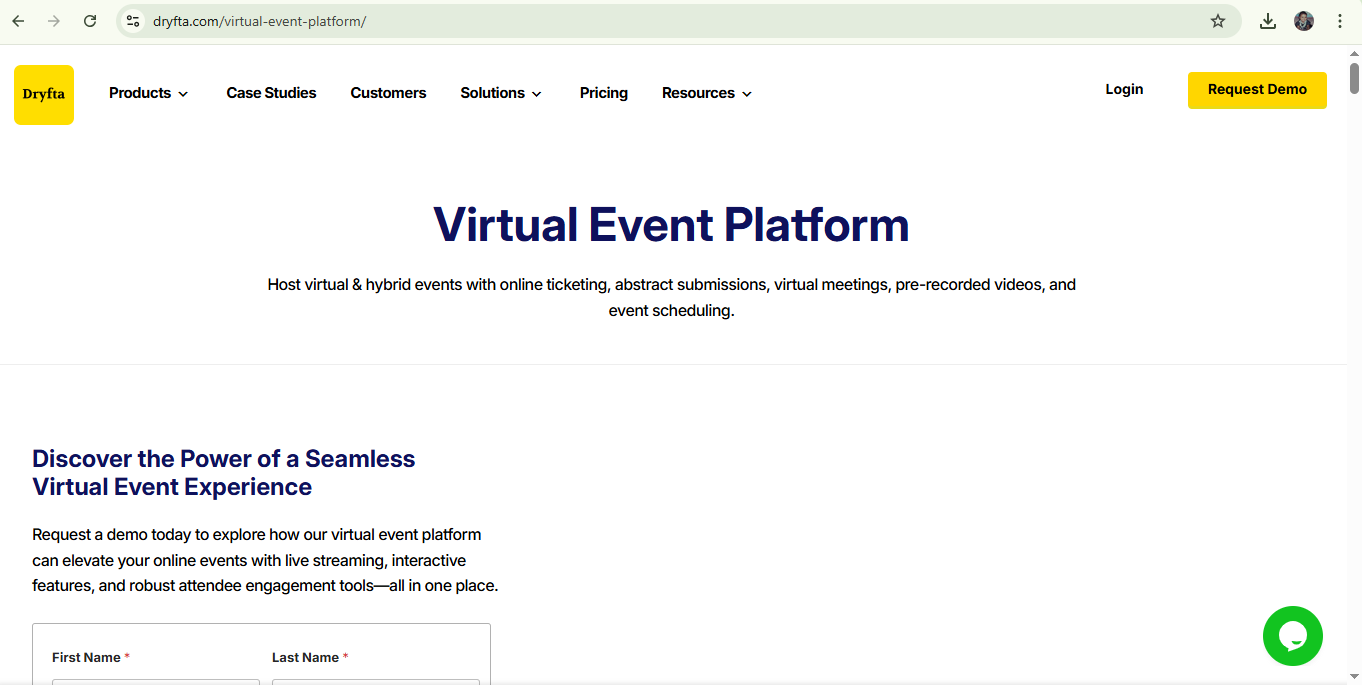
Verdict: The only platform here built around abstract management first and the event itself second. This makes Dryfta the obvious and best Hopin alternative choice when research is the true heart of your gathering.
Best For: Academic conferences, research symposiums, university events running a peer-review submission process.
G2 Rating: 4.7/5
Dryfta exists for organizers who needs abstract submission, peer review, and scoring to sit beside the usual machinery of registration and event websites, with the added option of on-premise deployment for data that cannot simply live on someone else’s server.
Where It Beats Hopin
- Native abstract management and peer review, a function Hopin never offered at all
- On-premise deployment, handing organizers direct control over data residency and compliance
- No transaction fees on top of your own payment processor
Pricing: Starts at $1,499 a year for smaller events with up to 100 abstract submissions, scaling with volume from there.
2. vFairs

Verdict: The nearest thing to a like-for-like swap for Hopin’s all-in-one virtual room, with hybrid and onsite tools built in rather than bolted on.
Best For: Virtual and hybrid academic and corporate events that want a branded, immersive environment.
G2 Rating: 4.7/5
vFairs builds entire virtual venues like lobbies, expo halls, networking lounges that are designed to feel less like a webpage and more like a place. Gartner and G2 have both named it among the category’s leaders, and its customers span corporate, association, and academic events in roughly equal measure.
Where It Beats Hopin
- A dedicated project manager through implementation, repeatedly cited by reviewers as the difference-maker
- Deep customization of the virtual environment without needing a developer in the room
- Hybrid and onsite features built for the format, not retrofitted from something virtual-first
Where It Falls Short
- Pricing lives entirely behind a quote, which makes early budgeting harder than it should be
- Some reviewers describe quality control slipping on the most heavily customized builds
Pricing: Quote-based. Most figures scale with attendee count and the scope of customization requested.
3. Whova
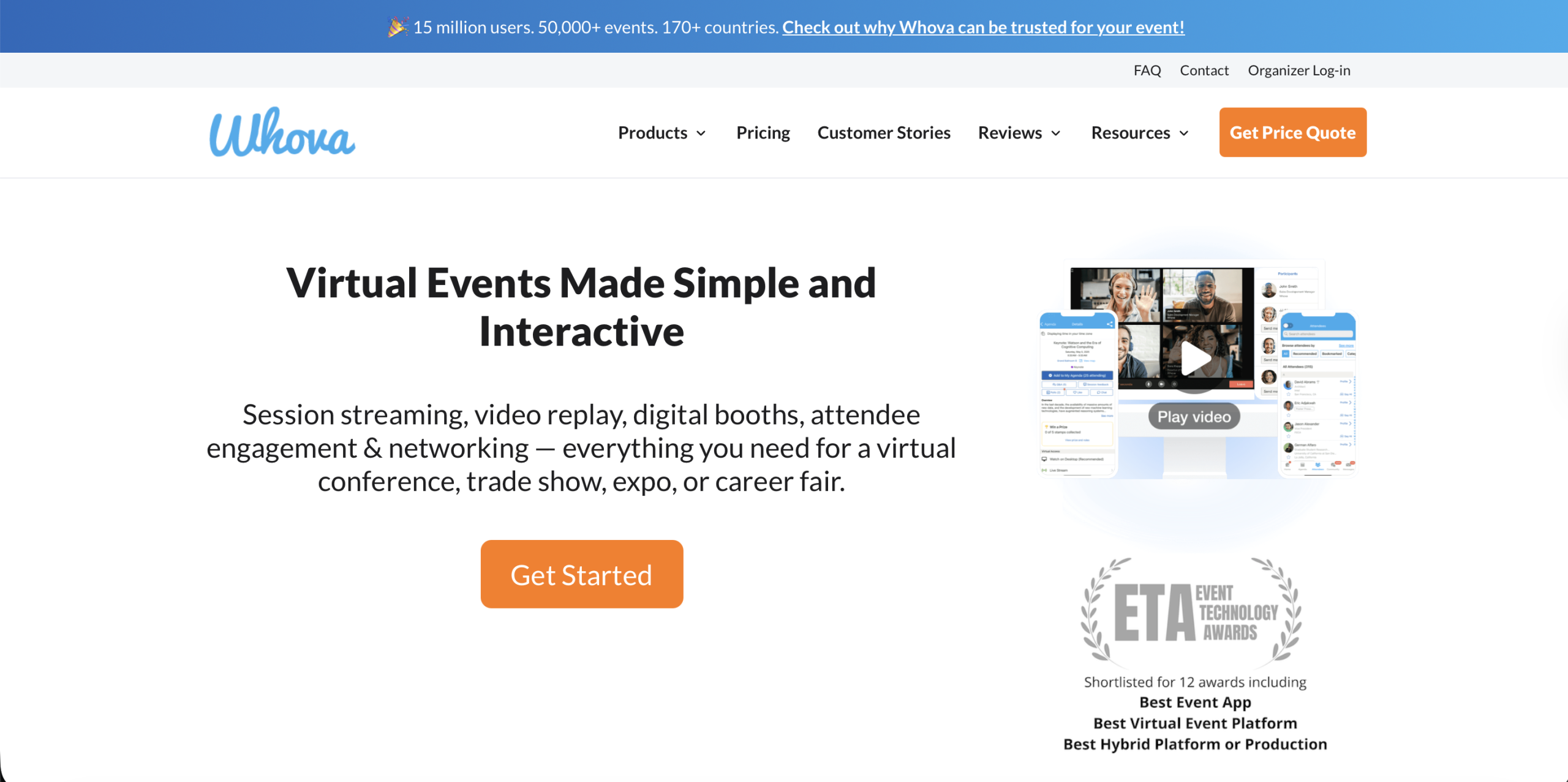
Verdict: The highest-rated name on this list, and tellingly, it gets there through networking and community rather than anything resembling Hopin’s virtual stage.
Best For: Large conferences, academic, corporate, or association, and is built around attendee connection and a polished event app.
G2 Rating: 4.8/5
Whova has now powered more than 50,000 events across over a hundred countries, counting several Fortune 500 names among its clients. Its real strength sits in the attendee’s pocket: an app handling agendas, messaging, and a layer of gamified networking that somehow keeps people engaged well after the event has technically ended.
Where It Beats Hopin
- Built-in abstract and Call for Speakers submission management for conference organizers
- The highest rating on this entire list, across G2, the App Store, and Google Play alike
- Customer support reviewers describe, again and again, as simply responsive
Where It Falls Short
- Notification overload and a cluttered admin portal, by reviewers’ own account, on larger events
- No published pricing.
Pricing: Quote-based; no public flat-rate tiers available.
4. Bizzabo
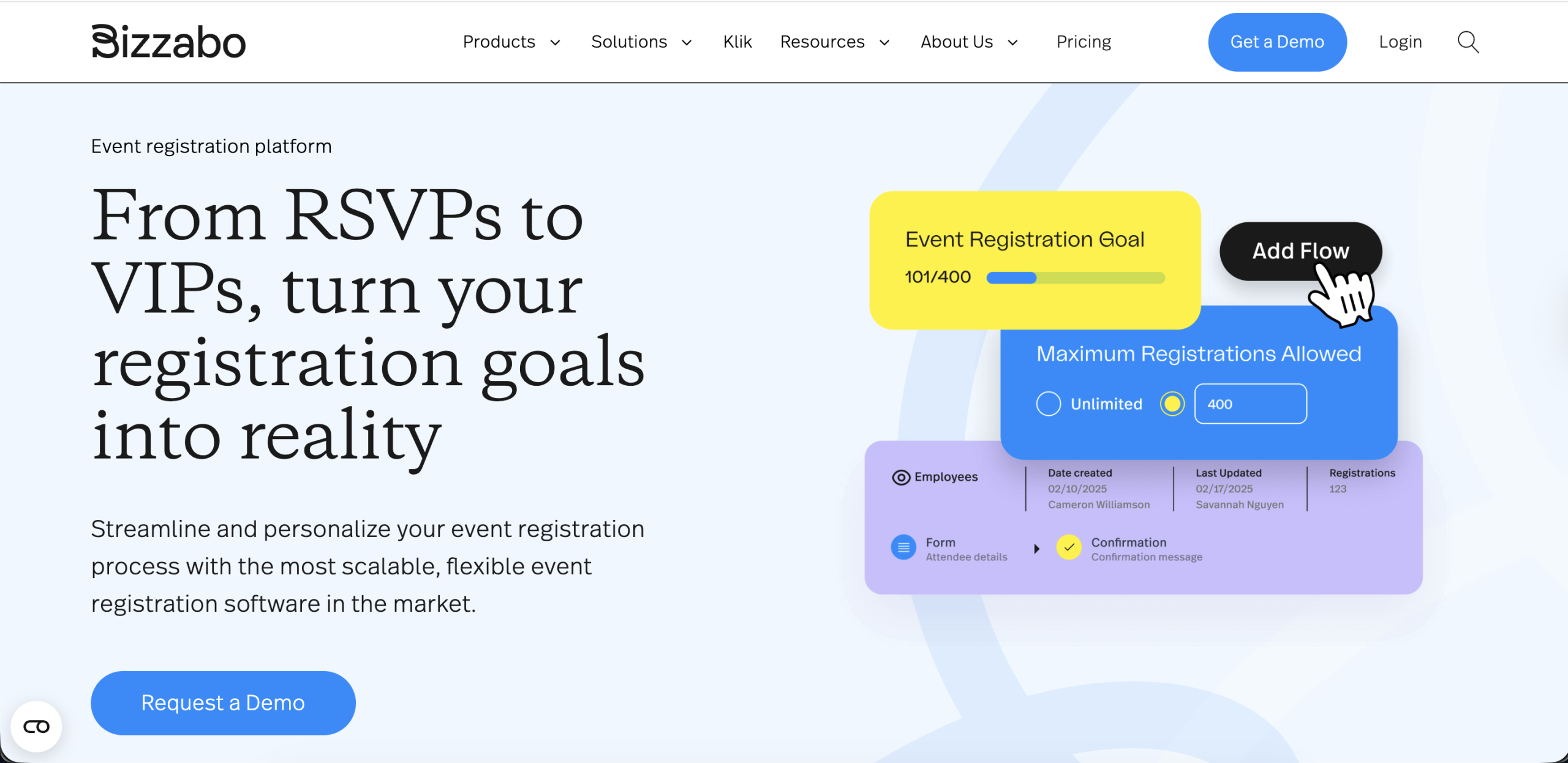
Verdict: The enterprise option, built for teams who need their CRM woven directly into the event and are prepared to pay enterprise rates for it.
Best For: Large corporate events and B2B marketing conferences running on Salesforce or HubSpot.
G2 Rating: 4.4/5
Bizzabo’s Event Experience OS is aimed squarely at mid-market and enterprise marketing teams, everything from an intimate summit to a conference crossing ten thousand attendees. It has been named a Leader in Gartner’s Magic Quadrant and the sole Customer Favorite in Forrester’s Wave for event technology, which tells you exactly who it was built for.
Where It Beats Hopin
- Native integration with Salesforce, HubSpot, Marketo, and Eloqua, built for sales and marketing teams specifically
- Enterprise-grade infrastructure with uptime commitments that matter when the event cannot afford to fail
- A published starting price, rather than a wall of silence before the quote
Where It Falls Short
- No abstract management at all. Academic organizers will need to look elsewhere
- A platform reviewers describe as occasionally rigid once you step outside its default templates
- A starting price that puts it out of reach for smaller teams running one-off events
Pricing: Starts at $17,999 a year for the Event Experience OS, billed annually with a three-user minimum.
5. Eventtia

Verdict: A flexible, deeply customizable option, particularly for organizers in Europe who need GDPR compliance built into the bones of the platform, not added as an afterthought.
Best For: Multi-format corporate events where branding and compliance carry equal weight.
G2 Rating: Moderate review volume; positioned firmly as an enterprise-friendly, all-in-one platform.
Eventtia has served more than 12,000 organizations, several of them major luxury and retail names, across upward of 35,000 events. It markets itself as fully customizable and API-driven. It is built for organizations running events across multiple regions at once, not just a single conference a year.
Where It Beats Hopin
- Greater customization depth across registration pages, event apps, and email or SMS campaigns
- API integrations designed for organizations operating across several markets simultaneously
- No reliance on a single ‘room format and is better suited to events that refuse to sit still in one shape
Where It Falls Short
- No native abstract management for academic-style submissions
- An interface some reviewers describe as feeling a step behind newer competitors visually
- A pricing tier sitting noticeably higher than several mid-market alternatives on this list
Pricing: Starts around $1,250–$1,500 a month depending on feature tier, with custom enterprise pricing above that.
6. Airmeet
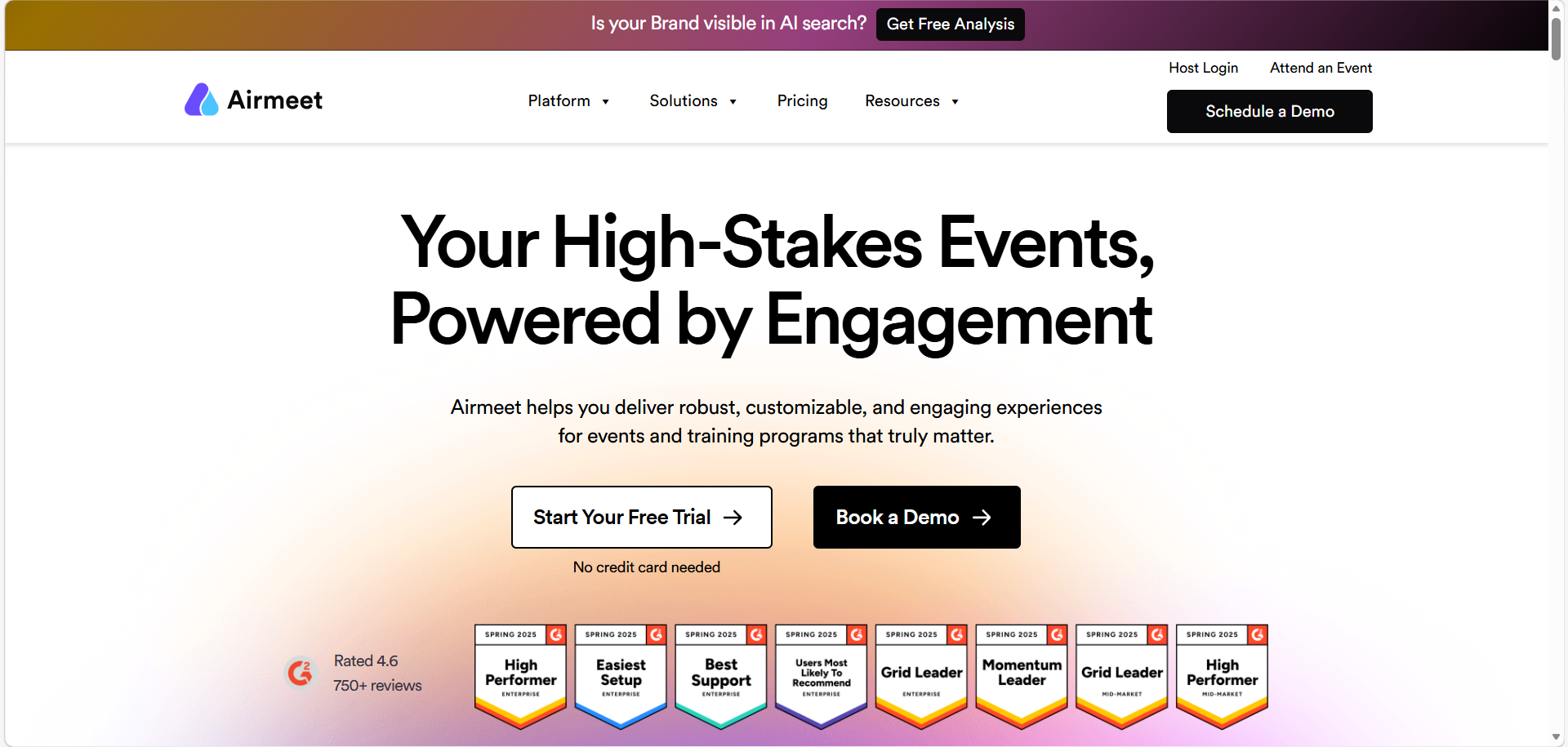
Verdict: Airmeet can be the closest thing left that’s left of Hopin’s original virtual-first instincts and can, therefore, work ss a strong Hopin alterative.
For: Virtual-first webinars, meetups, and community gatherings where spontaneous networking matters more than onsite infrastructure.
G2 Rating: 4.6/5
Airmeet made its name on virtual networking tables It is used by names like Comcast, HP, and PwC for webinars and mid-sized virtual gatherings, and the platform can be compared against features that were appreciated by users of early Hopin.
Where It Beats Hopin
- Real-time networking tables that reviewers describe as genuinely close to in-person mingling
- Attendee-based pricing, which can suit a smaller, one-off event better than a flat platform fee
- Recognized as a G2 Leader in both Enterprise and Mid-Market segments for virtual events
Where It Falls Short
- Hybrid and onsite tools remain visibly thinner than the virtual-first features
- A 2025 pricing change that pushed monthly costs higher for features once included by default
- A mobile app reviewers regularly describe as clunky, particularly outside virtual-only use cases
Pricing: Entry plans start around $200 per event; attendee-based pricing applies at scale.
7. Webex Events
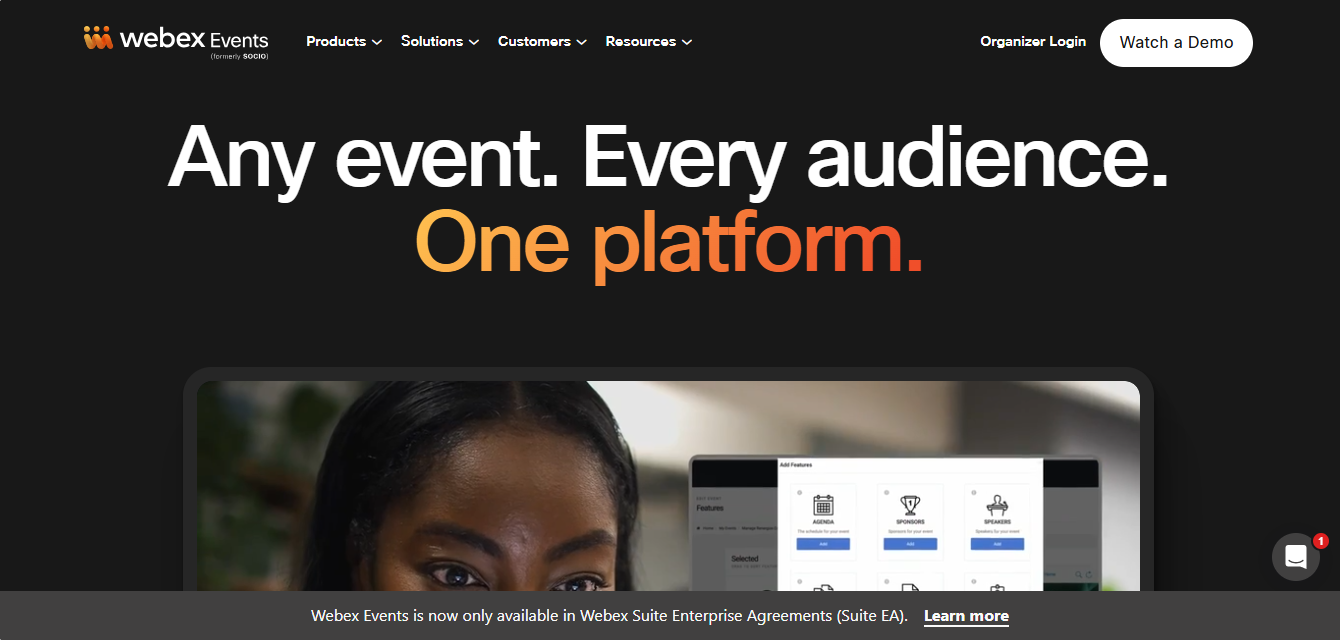
Verdict: The safe choice for IT and compliance teams migrating off Hopin with security requirements that cannot be negotiated away.
Best For: Hybrid events at organizations bound by strict security, compliance, or data residency rules.
G2 Rating: 4.6/5
Webex Events, formerly Socio, now lives inside Cisco’s Webex Suite, supporting events up to 100,000 attendees with badge printing, lead retrieval, and live streaming. All of this is sitting on top of Cisco’s existing brand, which is, for many of its buyers, the entire point.
Where It Beats Hopin
- Enterprise-grade security and compliance controls inherited directly from Cisco’s infrastructure
- Real-time translation across more than 100 languages for genuinely global audiences
- Scale that does not buckle under very large attendee counts, unlike a platform built around a single virtual room
Where It Falls Short
- No native abstract management for academic-style events
- An interface reviewers frequently describe as overwhelming for first-time, non-technical organizers
- No published pricing, and a reputation among smaller organizations for being simply expensive
Pricing: Quote-based; standalone Webex Webinars plans start near $225 per host per month, with Events priced on request.
8. Zoom Events
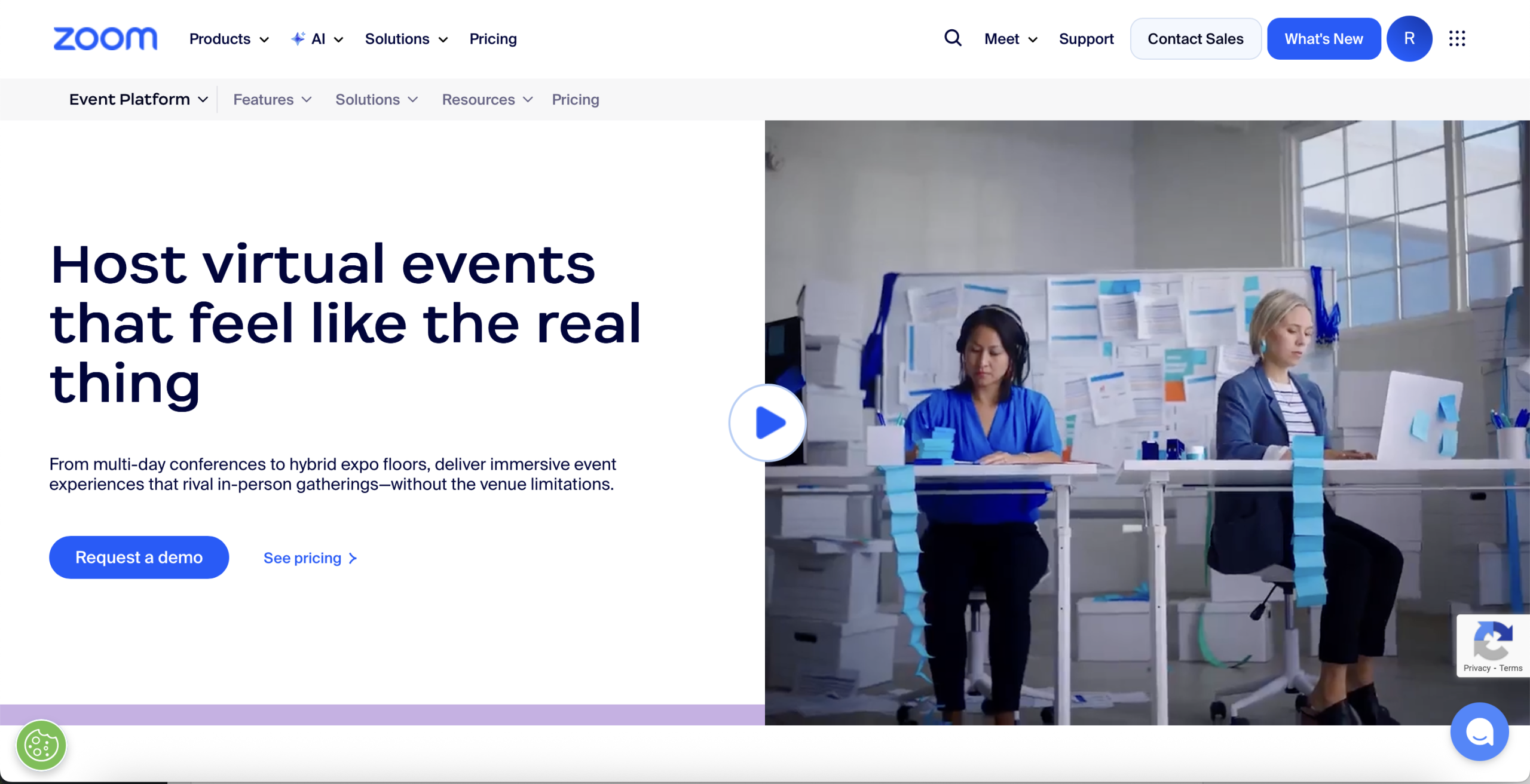
Verdict: Among the simplest virtual event platform alternatives to Hopin here, Zoom events is built for teams who already live inside Zoom and only need a thin layer of event structure on top of what they know.
Best For: Webinars and smaller virtual events where familiarity matters more than depth.
G2 Rating: 4.3/5
Zoom Events extends an interface most attendees already understand without being told owing to its near-absolute monopoly in the market at a time. Registration, ticketing, a chat-enabled lobby, all of these features are wrapped around the video infrastructure that Zoom has spent years refining.
Where It Beats Hopin
- Almost no learning curve for attendees who already know their way around Zoom
- Tight integration with existing Zoom Meetings and Webinars workflows
- A straightforward setup, well suited to simpler, single-track events
Where It Falls Short
- Hybrid and onsite features that remain limited next to dedicated event platforms
- No abstract management or peer-review functionality of any kind
- Branding options that stay basic, with costs climbing quickly for larger events or added storage
Pricing: Plans start at $79–$89 a month per license for smaller webinar tiers, with attendee-based pricing for larger Events plans.
9. Accelevents
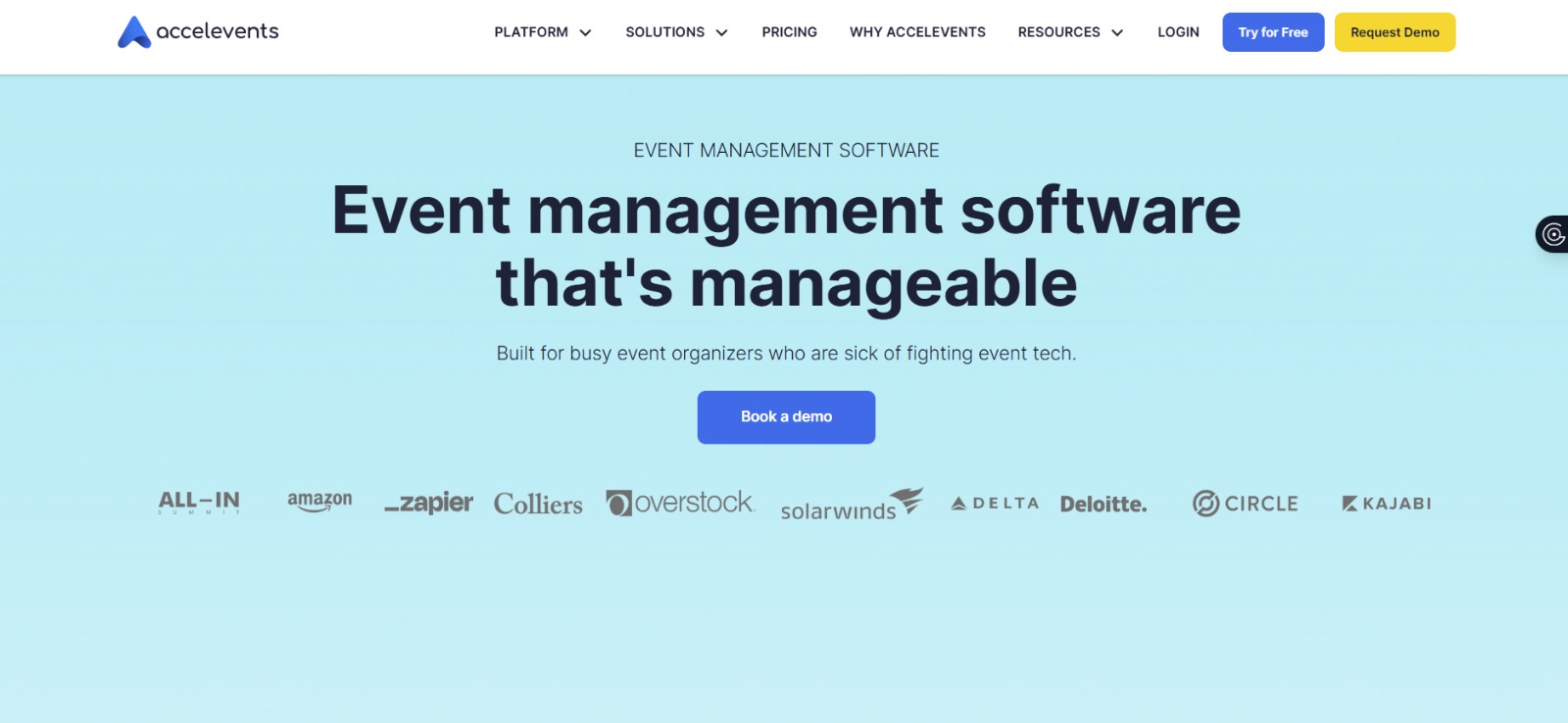
Verdict: A middle ground between Hopin’s old feature set and enterprise-grade hybrid tooling. Accelevants comes with native abstract management thrown in as something close to a bonus.
Best For: Mid-to-large hybrid events that need real onsite infrastructure alongside a virtual component.
G2 Rating: 4.7/5
Accelevents covers registration, badge printing, mobile event apps, and exhibitor lead capture in one place, built for teams running conferences, trade shows, and employee summits across virtual, hybrid, and in-person formats without switching tools mid-event.
Where It Beats Hopin
- Real onsite hardware support including badge printing, offline-capable check-in
- Native abstract and call-for-speakers management for conference-style programming
- Customer support reviewers describe, consistently, as responsive and human
Where It Falls Short
- A smaller pool of G2 reviews than vFairs or Whova, which gives the rating somewhat less statistical weight
- Frequent updates that some teams find difficult to track without a consolidated changelog
- A starting price that reads steep for a single, smaller event
Pricing: Professional single-event plans start around $7,500, with custom enterprise and white-label tiers above that.
10. Hubilo
Verdict: Built less for full conference management and more for marketing-driven webinars, Hubilo is a fit for demand-gen teams inheriting Hopin’s webinar use cases, not its conference ones.
Best For: Corporate marketing events and webinar series where pipeline attribution matters as much as the event itself.
G2 Rating: 4.4/5
Hubilo frames the webinar as a measurable pipeline tool rather than a one-off broadcast, with an Account Intelligence Dashboard that tracks engagement at the account level for teams running account-based marketing programs.
Where It Beats Hopin
- Revenue and lead-attribution dashboards built specifically for marketing and sales teams
- AI-driven content repurposing, turning recordings into blog posts and social assets without extra production work
- Strong CRM integrations with HubSpot and Salesforce for lead nurture that does not require manual handoff
Where It Falls Short
- No native abstract management for academic or research-style events
- Fewer third-party integrations than several larger competitors on this list
- Performance lag reported by some users during large-scale, high-attendance sessions
Pricing: Quote-based; no published flat-rate pricing tiers.
Quick Comparison: Hopin Alternatives at a Glance
Here is a quick look at how the 10 best best Hopin alternatives we’ll be getting into in this guide measure against each other. We’re placing them on a yardstick of factors that matter the most in practicality.
| Platform | Best For | G2 Rating | Abstract Mgmt | Hybrid Support | Starting Price |
| Dryfta | Academic/research conferences with abstract management | 4.7/5 | ✅ Native | ✅ Full | From $1,499/yr |
| vFairs | Virtual/hybrid academic and corporate events | 4.7/5 | ✅ Yes | ✅ Full | Quote-based |
| Whova | Large conferences with networking + community features | 4.8/5 | ✅ Yes | ✅ Yes | Quote-based |
| Bizzabo | Enterprise corporate events with CRM integration | 4.4/5 | ❌ No | ✅ Yes | ~$17,999+/yr |
| Eventtia | Flexible multi-format events; European GDPR strength | 4.2/5 | ❌ No | ✅ Yes | From ~$600/mo |
| Airmeet | Virtual-first; spontaneous networking; small events | 4.4/5 | ❌ No | ⚠️ Limited | From $99/event |
| Webex Events | Hybrid events with enterprise security requirements | 4.4/5 | ❌ No | ✅ Full | Quote-based |
| Zoom Events | Webinars and smaller virtual events; familiar UI | 4.3/5 | ❌ No | ⚠️ Limited | From $99/mo |
| Accelevents | Mid-to-large hybrid events with onsite + virtual tools | 4.5/5 | ✅ Yes | ✅ Full | From $500/event |
| Hubilo | Corporate marketing events; revenue attribution focus | 4.4/5 | ❌ No | ✅ Yes | Quote-based |
Which Hopin Alternative Is Right for Your Event?
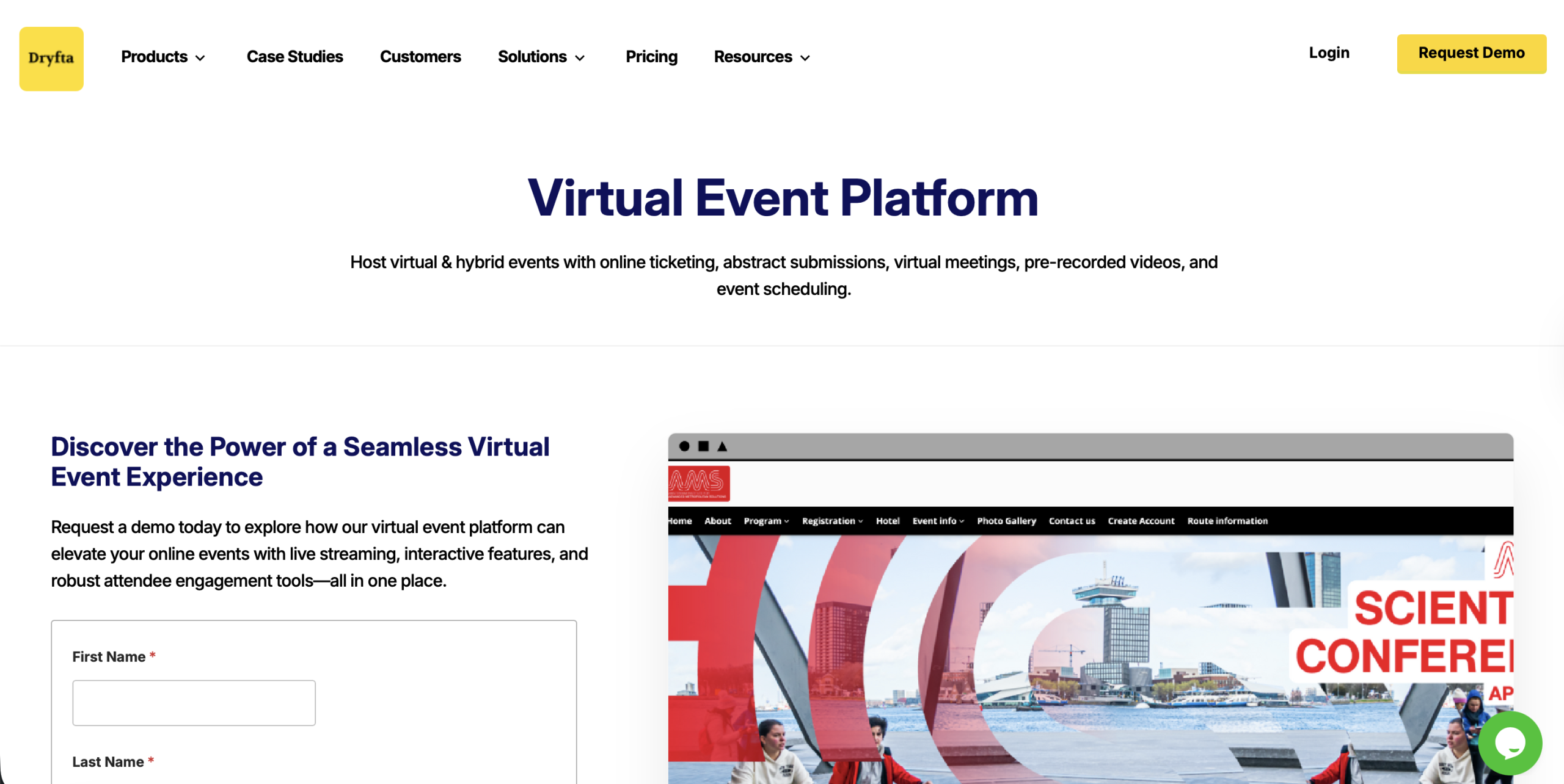
If you run academic conferences, research symposiums, or university events, Dryfta is the clearest answer. It is the only platform here that treats abstract submission and peer review as priorities with dedicating time and effort into devising as well as updating.
If you want the highest-rated alternative by G2 users, this verdict belongs to Whova, at 4.8/5 across more than 1,800 reviews. Whova has earned this largely through networking tools and an event app that reviewers keep coming back to praise.
If you need an immersive virtual environment closer to what Hopin once offered in the beginning, Dryfta goes in-depth into branded virtual venues, backed by implementation support and micro interaction and AI-matchmaking features that work to encourage attendee networking.
If you run enterprise marketing events with heavy CRM and attribution needs, platforms like Dryfta, Bizzabo and Hubilo are all worth looking at. Bizzabo leaning toward large-scale conference logistics, Hubilo toward webinar-driven demand generation. Dryfta has invested immense effort into personalizing its platform particularly for marketing events for enterprises and B2Bs.
If cost transparency is your primary concern, Dryfta is among the few Hopin alternatives that publishes its starting price in the open. Additionally, Dryfta also offers a free demo, sparing you the sales call before you even see a number.
If your team is already living inside Zoom, Zoom Events is the path of least resistance. However, Zoom does not go beyond the most basic virtual event management. By taking this path of familiarity, you’ll potentially be losing out on all-in-one event management features such as that of Dryfta.
Frequently Asked Questions (FAQs)
Is Hopin still available in 2026?
Yes, it is available for usage in 2026. However, not as Hopin. RingCentral acquired Hopin’s events business in 2023 and the platform now operates as RingCentral Events. It has been absorbed into RingCentral’s wider collaboration suite.
What is the best free alternative to Hopin?
None of the platforms here offer a complete free tier for a real event. Free plans tend to cap out around small-scale testing or webinars under 100 attendees. Zoom Events and Airmeet both offer free or trial tiers worth testing before any money changes hands.
Which Hopin alternative is best for academic conferences?
Dryfta, by a clear margin, for its native abstract submission and peer-review system. Whova and vFairs also support some form of abstract or Call for Speakers management within a broader platform.
How much does Hopin (RingCentral Events) cost in 2026?
Pricing starts near $99 per organizer per month for the base plan, with attendee-based and enterprise tiers rising significantly from there depending on event size and feature needs. Some legacy plans still carry per-ticket commissions.
What are the main complaints about Hopin after the RingCentral acquisition?
Complaints such as slower account activation, delayed responses on onboarding and contract questions appear to come up frequently post-acquisition. For many previous users, an acquisition meant that the platform lost the original essence that attracted them to Hopin in the first place.