


What non-profit organizations do day in and day out is work, rally toward a cause. A movement. A people. Much of the work of non-profits is targeted at advocacy, whether that be rights advocacy, environmental advocacy or even legislative advocacy. Most non-profits organizations, at least the ones that are creating real change, run on consistent funding and volunteer support. Without the two, a non-profit and its vision is bound to fail. In fact, many do every year. Only a fraction of all non-profits actually make it in the long run. So what could possibly multiply a non-profit’s chances of making it in the world today? Among the things that help are advocacy tools for non-profits.
They make volunteer mobilization and campaign engagement easier than it has been for non-profits all these years. So…what exactly are these advocacy tools for non-profits? Is investing in advocacy software for non-profit organizations even a smart choice?
What Are Advocacy Tools For Non-Profits?
Let’s not pretend that we know what advocacy tools for non-profits are. Here are the basics. What do advocacy tools for non-profits comprise of?
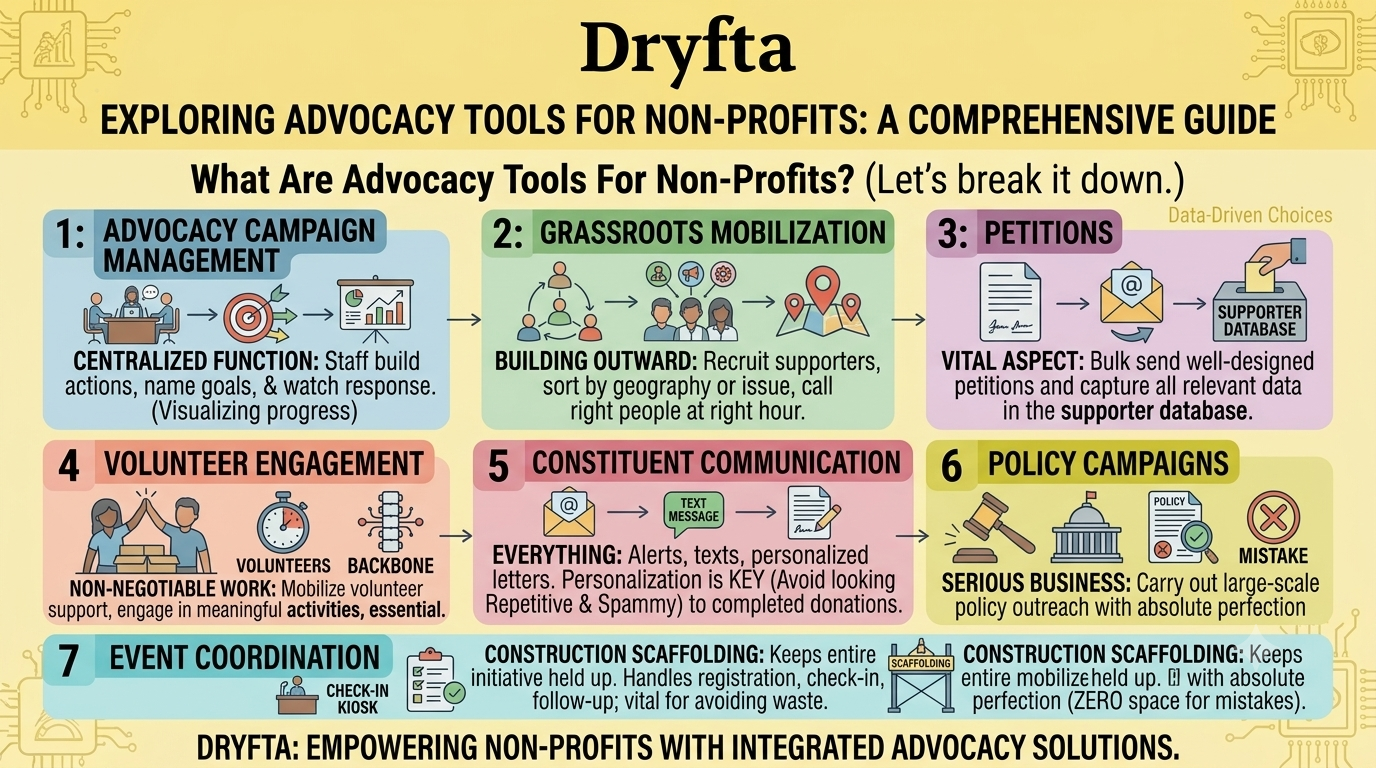
- Advocacy campaign management: Campaign management sits at the center of most platforms, giving a small staff the means to build an action, name a goal and watch who answers.
- Grassroots mobilization: Grassroots mobilization builds outward from there, letting organizers recruit new supporters, sort them by geography or issue and call on the right people at the right hour.
- Petitions: Petitions are among the most important aspects of advocacy tools for non-profits. What a need, as part of an advocacy software, is a well-designed feature to send petitions in bulk and feed all data pertaining that in a supporter database.
- Volunteer engagement: Volunteers are the very backbone of your non-profit initiative. Without whom, any and all outreaches is bound to fail. Therefore, the mobilization of volunteer support and engaging them in meaningful activities is non-negotiable work for an advocacy software.
- Constituent communication: Constituent communication is everything that has to with functions as email alerts, text messages and personalized letters. In a way, all non-profit activities rely heavily on communication. For the effectiveness of which determines final output, whether the numbers really amount to something concrete. You may have sent several dozen emails to individuals all over the internet seeking donations. But how many of those actually turn into completed donations? Does copy pasting the same email, a zillion names, work? Turns out it doesn’t. Recipients are likely to ignore anything that looks repetitive and spammy. Personalization is key here.
- Policy campaigns: Carrying our policy campaigns, particularly in the larger scale, is no simple task. Policy is serious business and commonly involves information and outreach that you just cannot get wrong. The space for mistakes is already narrow in advocacy work. But in policy advocacy, it’s absolute. It’s zero. The advocacy software you choose to mobilize support and communication ought to be perfect.
- Event coordination: Event coordination is a lot like construction scaffoldings. It keeps the entire building from collapsing into rubble at any point in time. Everything that advocacy tools for non-profits accomplish is held up in place by coordination. Often manual, if your team fails to get things like registration, check-in and follow-up in check, pretty much all of the mobilization and outreach you’ve done over the months amounts to waste.
Remember, event coordination is king. It lets you finish what you started, in style.
Advocacy tools take many different forms and serve plenty of functions by discipline and niche. Research, for instance, is a field that holds vast implications for advocacy tools. If you would like read more about how advocacy software like Dryfta can help upscale your research impact, make sure to not miss this article. We’ve covered everything about advocacy software in research from A-Z. If that’s your niche, head there. If you’re still not convinced about how advocacy tools for non-profits work in practice, well, keep at this page. In the next few sections, you’re about to find out precisely why you need an advocacy software if you are a non-profit. And all the fun (and relief) you’re missing out on if you aren’t.
Benefits of Advocacy Tools For Non-profits
Using advocacy software to supplement the important and applaudable work your non-profit is already doing, is like icing on the cake. Except that baking the cake previously might have taken you weeks in planning and perhaps a month in misery. You may have found yourself asking questions like:
Where do I start my non-profit operations from?
Who even is going to donate to my cause?
Where am I going to find volunteers from?
These are extremely common questions to be losing your sanity over, especially when you are new non-profit in the field. There’s probably 10 other organizations targeting the same advocacy discipline as you are.
So what can make my non-profit organization stand out from the rest?
The above is a question that you should be pondering over and answering for yourself. But most non-profit organizers just don’t have that much free time in their hands. They have little time to work on the things that really matter for your organization because the operational, logistical part of it is sucking the life out of the team already. Here’s everything you get (and get a break from) when you sign up for a non-profit advocacy software.
- Increased supporter engagement: The clearest gain is also the easiest to state. Your supporters rise. And so does their engagement. When taking action costs one click instead of an afternoon spent hunting down the correct email address for a district office, more people follow through, and the difference tends to show itself within the first few campaigns an organization runs on purpose-built software rather than a general mailing list.
- Better campaign organization: With advocacy tools for non-profits, organizations will find that their campaigns get a makeover overall. Everything is more organized than before. Your databases are not split across 7 different spreadsheets and management actually feels like management. You’ll no longer be looking for needles in haystacks.
- Volunteer coordination: So, your volunteers. Your superhuman. Everything about them will be more organized. Their preferred time of work, the nature of their work and everything in between will be in one place for you to take a glimpse at and plan for the day.
- Automated communication: Signing up for automation in constituent communication is one of the biggest reliefs that a non-profit organization can possibly have. A thank-you after a supporter, a rreminder sent to registrants before an even and even gentle nudge to someone who started a petition but never quite finished it.
- Event promotion: Event promotion benefits from advocacy tools for non-profits in a quieter way still. Given that an established non-profit, having conducted atleast one event in the past, may hold supporter data, event promotion can add to its merits. Tapping on to existing information, advocacy software can send an invitation to the people most likely to actually walk through the door, instead of broadcasting to an entire village and hoping for the best.
- Data-driven decision making: Human non-profit actors make decisions based off of human emotions. It takes a machine to help you make decisions that make sense in terms of databases, algorithms and websites. What you need first is data. Data is something that all non-profit organizations produce. Whether you retain it in intelligent ways and if you do eventually tap into it to aid smarter decisions is the real deal breaker in 2026.
- Reporting and analytics: Closely tying back to our observations about data and the power it holds for non-profit organizations, reporting and analytics is another function that most non-profits do not capitalize on. Overwhelmingly due to the fact that they don’t have nearly enough time to perform any analytics except for that which is visible outwardly. A wealth of inferences lie within data. All it takes is for someone to unearth it. In our case, plenty of advocacy tools for non-profits like Dryfta are equipped to accomplish this.
Best Advocacy Tools Compared
| Platform | Best For | CRM | Petitions | Events | Reporting | |
|---|---|---|---|---|---|---|
| Bonterra (EveryAction) | Nonprofits wanting advocacy and fundraising in one CRM | Yes | Yes | Yes | Basic | Advanced |
| NationBuilder | Community-driven organizing and membership sites | Yes | Yes | Yes | Basic | Standard |
| Action Network | Budget-conscious grassroots coalitions | Basic | Yes | Yes | Basic | Standard |
| FiscalNote Advocacy | Legislative tracking alongside grassroots action | Basic | Yes | Yes | Basic | Advanced |
| Quorum | Public affairs teams needing stakeholder mapping | Basic | Yes | Yes | Basic | Advanced |
| Muster | Associations and trade groups new to advocacy | Yes | Yes | Yes | Basic | Standard |
| Neon CRM | Small and mid-size nonprofits wanting an all-in-one CRM | Yes | Basic | Yes | Yes | Standard |
| Salsa | Mid-size nonprofits combining advocacy with fundraising | Yes | Yes | Yes | Basic | Standard |
| Blackbaud | Large nonprofits already on Blackbaud’s fundraising suite | Yes | Basic | Yes | Yes | Advanced |
| Soapbox Engage | Associations needing simple, affordable action alerts | Basic | Yes | Yes | Basic | Basic |
| Mobilize | Volunteer and event-heavy organizing programs | Basic | No | Basic | Yes | Standard |
| VoterVoice | Associations needing precise legislator matching | Basic | Yes | Yes | Basic | Advanced |
12 Best Advocacy Tools for Non-profits
1. Bonterra (EveryAction)
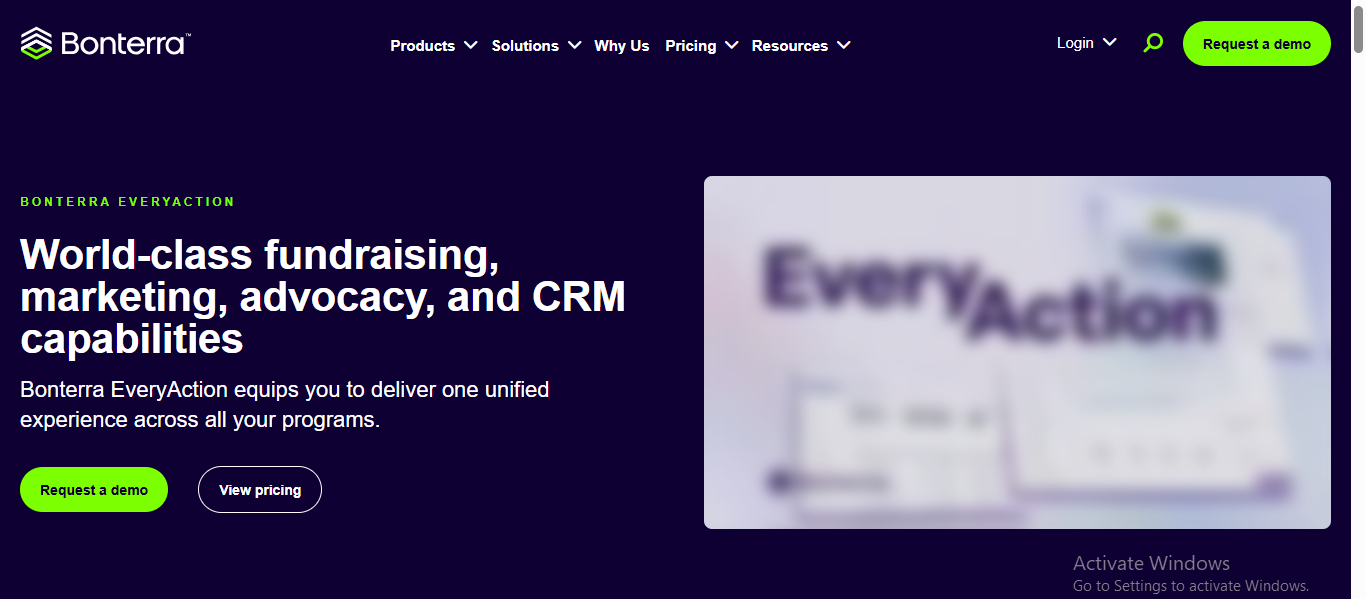
Best For: Nonprofits that want advocacy, fundraising and CRM data living under one roof.
Key Features:
- Unified CRM covering donors, members and advocates
- One-click action alerts with legislator matching
- Multichannel supporter journeys spanning email, text and mail
- Custom reporting and segmentation tools
Pros: A single record for each supporter removes the quiet guesswork of stitching fundraising and advocacy data back together after the fact, and the platform scales with a nonprofit rather than against it as the organization grows.
Cons: Pricing climbs quickly as a contact list grows, and more than one user has described a steeper learning curve than the smaller, single-purpose tools it competes against.
2. NationBuilder
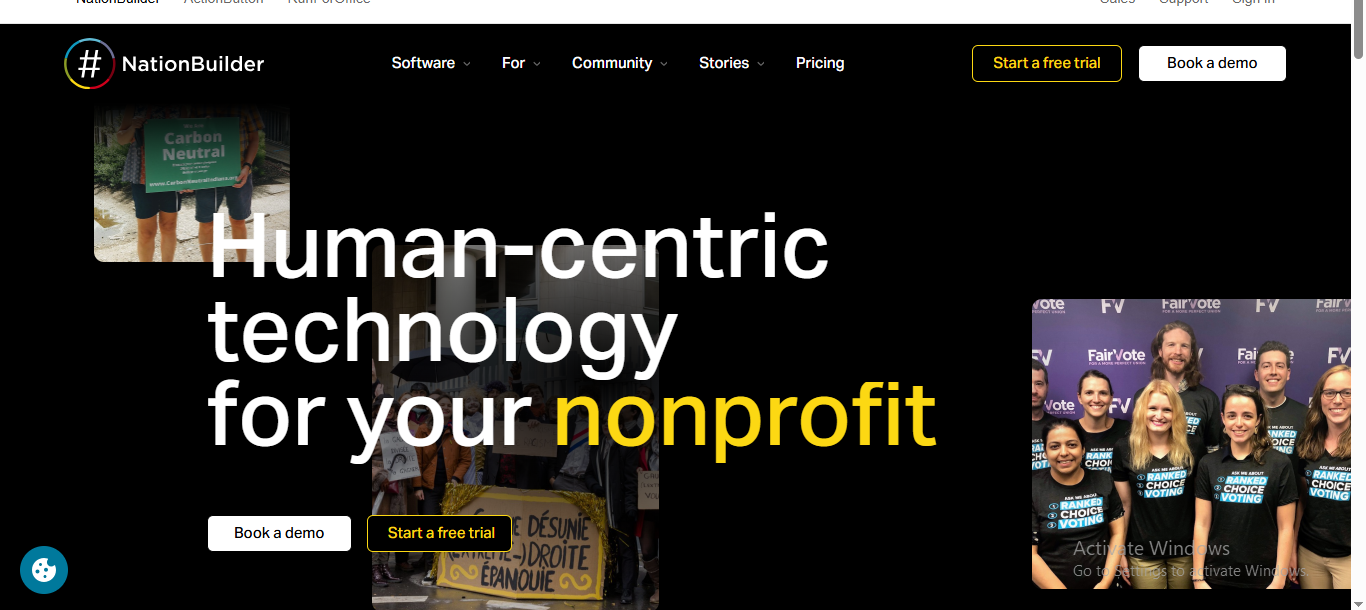
Best For: Organizations building a community around a cause rather than running one isolated campaign after another.
Key Features:
- Combined website, CRM and organizing platform
- Peer-to-peer fundraising and membership tools
- Path automation for supporter follow-up
- Broadcast tools for email and social outreach
Pros: The all-in-one website and database setup suits an organization that wants to manage its public presence and its supporter data without stitching two separate systems together by hand.
Cons: Advocacy-specific features such as legislator matching sit lighter here than on dedicated advocacy platforms, so a heavily policy-focused organization may still need to supplement it.
3. Action Network
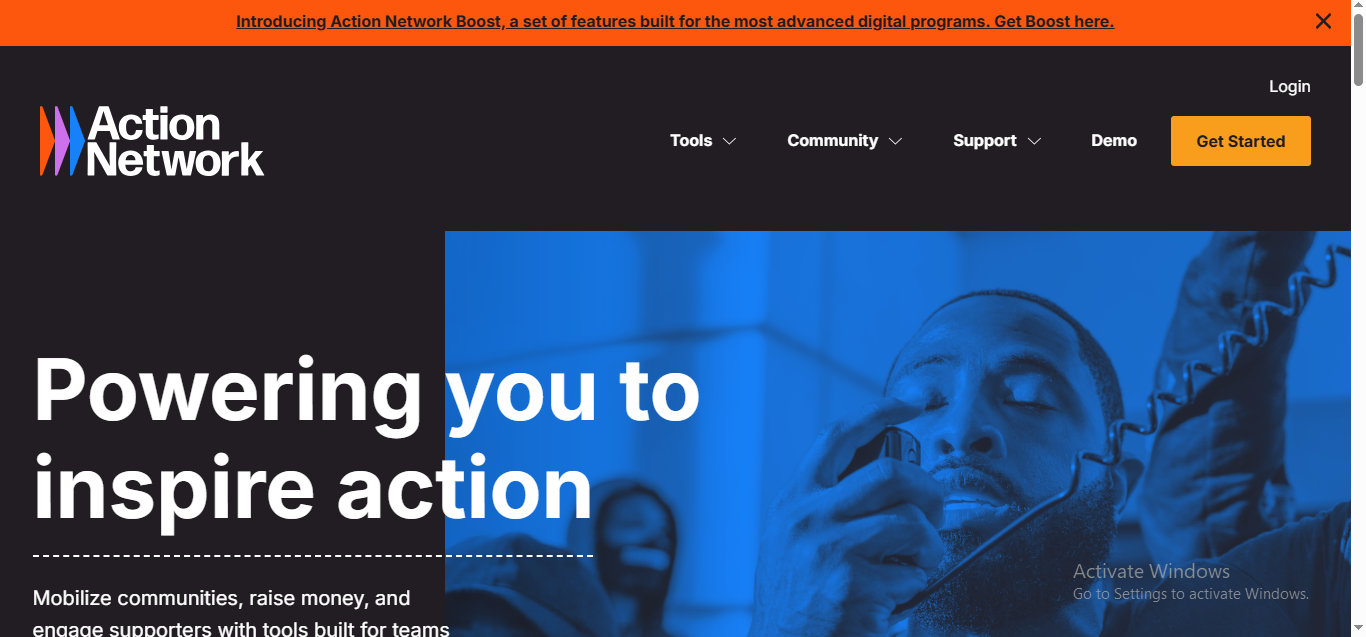
Best For: Coalitions and grassroots groups that need advocacy tools without a large budget behind them.
Key Features:
- Free core tier with paid upgrades
- Petitions, calls to action and event pages
- List sharing across partner organizations
- Basic supporter database and tagging
Pros: The free entry point keeps it within reach of small and volunteer-run groups, and its coalition-sharing feature suits organizations that regularly campaign beside a partner rather than alone.
Cons: Reporting and CRM depth lag behind the paid enterprise platforms, so a growing organization tends to outgrow it within a few years.
4. FiscalNote Advocacy
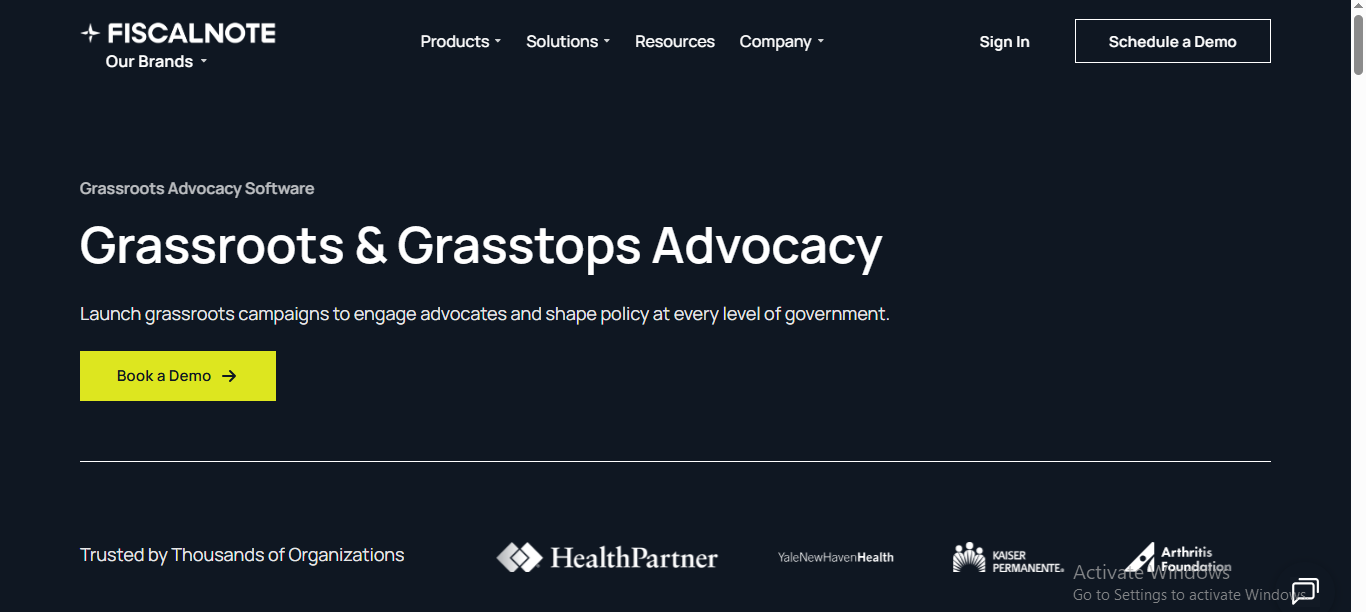
Best For: Organizations that need legislative and regulatory tracking alongside grassroots mobilization, not instead of it.
Key Features:
- Bill and regulation tracking across federal and state levels
- Grassroots action alerts tied directly to tracked legislation
- Stakeholder and coalition management
- AI-assisted policy monitoring
Pros: Pairing legislative intelligence with mobilization tools lets a policy staffer spot a bill and activate supporters in the same afternoon, without ever switching platforms.
Cons: The pricing structure targets larger associations and government relations teams, which puts it out of reach for most smaller nonprofits.
5. Quorum
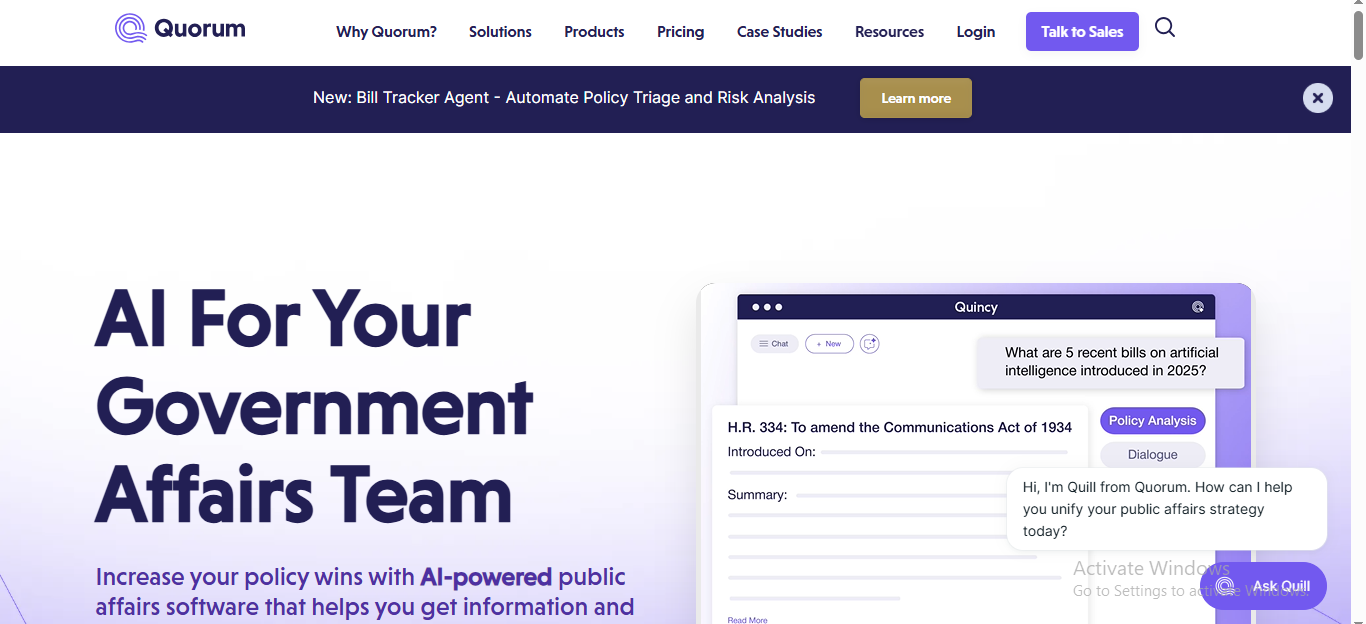
Best For: Public affairs and government relations teams that need stakeholder mapping alongside their advocacy campaigns.
Key Features:
- Legislator and staffer contact database
- Grassroots advocacy and email campaign tools
- Stakeholder relationship tracking
- Custom dashboards for policy teams
Pros: Its depth of legislative contact data gives a government relations professional a real edge when the target is a specific office or a single committee.
Cons: The platform leans toward corporate and association government affairs use cases, so a smaller community-based nonprofit may find it more than it needs.
6. Muster
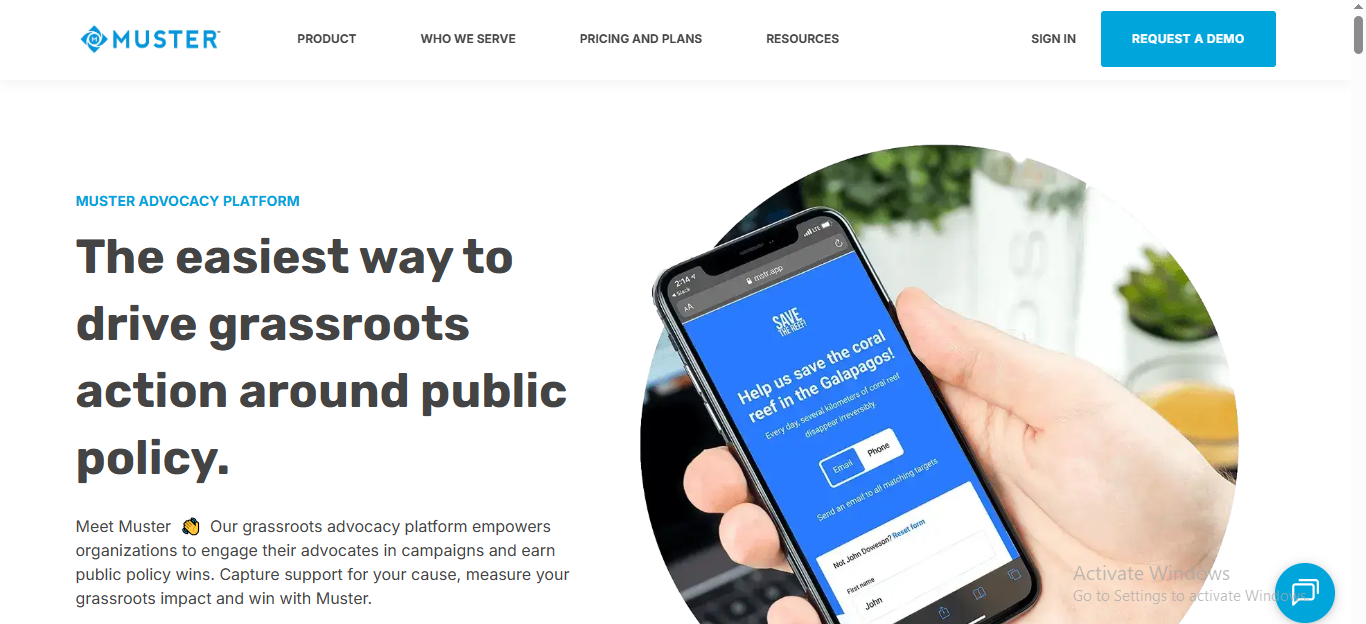
Best For: Associations and trade groups running their first grassroots advocacy program.
Key Features:
- Customizable action centers for campaigns
- Advocate activity tracking and CRM
- Multichannel outreach spanning email, phone and social
- Legislator and district matching
Pros: Reviewers return again and again to the same two words: easy setup. That, paired with responsive support, suits a smaller team without a dedicated advocacy technologist on staff.
Cons: Some message customization options, formatting inside a legislator email among them, remain more limited than what competitors offer.
7. Neon CRM
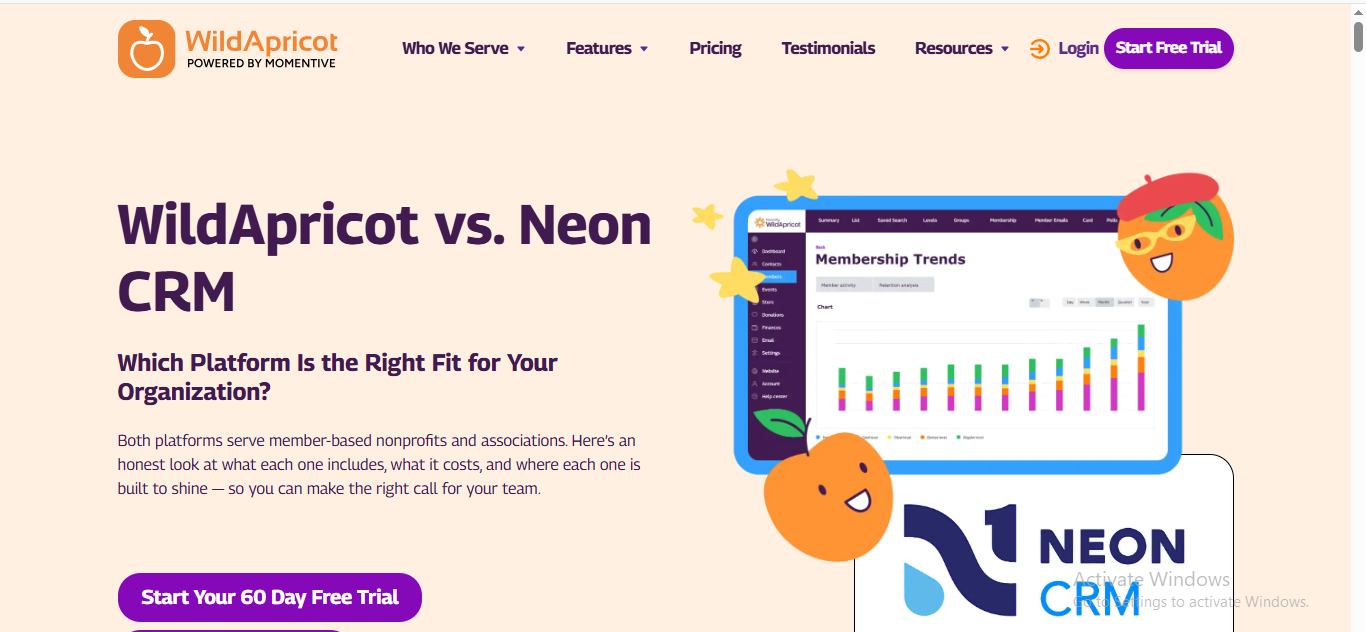
Best For: Small and mid-size nonprofits wanting one CRM to cover fundraising, membership and light advocacy work.
Key Features:
- Combined donor, member and event management
- Online forms for petitions and calls to action
- Email marketing and automation
- Built-in event registration and ticketing
Pros: An organization already running Neon for fundraising and membership can add advocacy campaigns without adopting an entirely second system.
Cons: Advocacy features are less specialized than what a purpose-built platform offers, with fewer legislator-matching and district-targeting options.
8. Salsa
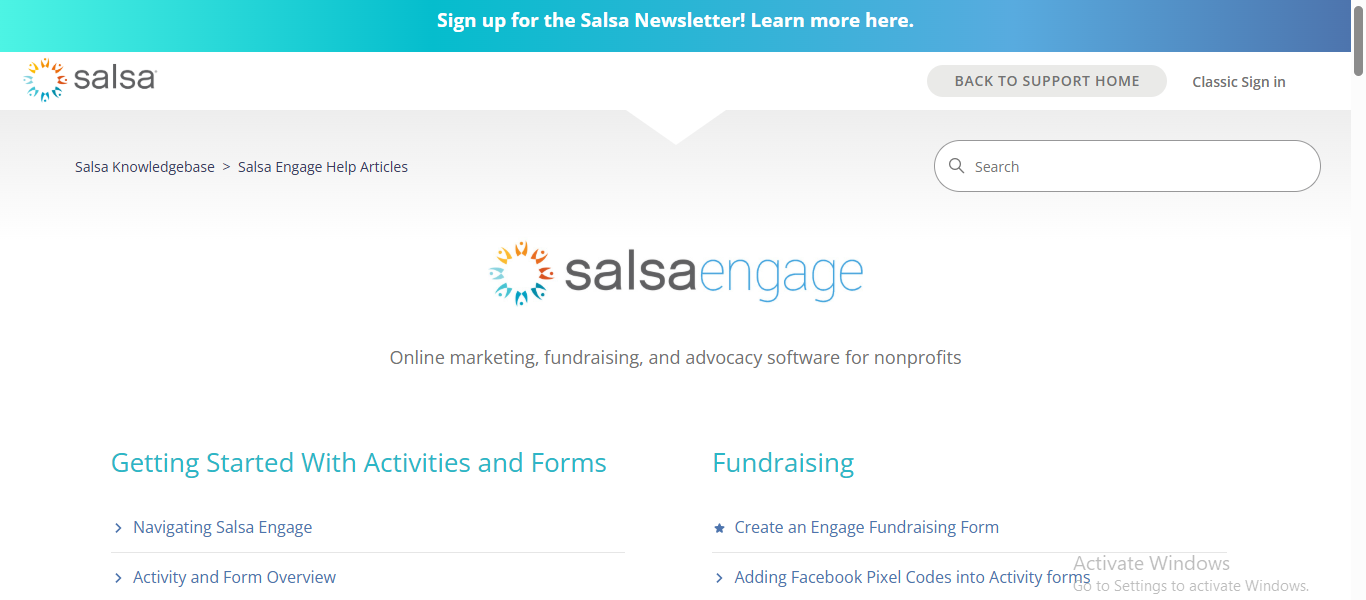
Best For: Mid-size nonprofits that want advocacy tools bundled with fundraising and email marketing.
Key Features:
- Advocacy action alerts and petitions
- Peer-to-peer and online fundraising
- Email marketing automation
- Supporter tagging and segmentation
Pros: The bundled pricing appeals to an organization that wants fundraising and advocacy under one contract rather than negotiating with separate vendors.
Cons: Salsa now sits inside a larger corporate family of nonprofit products, and some users report slower support response times than in years past.
9. Blackbaud
Best For: Large nonprofits already invested in Blackbaud’s fundraising and donor management suite.
Key Features:
- Advocacy add-on within the Blackbaud ecosystem
- Deep integration with Raiser’s Edge and other Blackbaud products
- Enterprise-grade reporting and analytics
- Event and ticketing management
Pros: For an organization already running Blackbaud’s core fundraising suite, adding advocacy keeps every supporter record inside one ecosystem instead of two.
Cons: The cost and sophistication of the broader Blackbaud suite make it a poor choice for an organization that only wants a standalone advocacy tool.
10. Soapbox Engage
Best For: Associations that want simple, affordable action alerts without committing to a full CRM.
Key Features:
- Action alerts and petition tools
- Event registration add-on
- Integration with existing association management systems
- Straightforward setup for small teams
Pros: Its lighter footprint and lower cost suit an association that already has a membership database and only needs an advocacy layer set on top of it.
Cons: Reporting stays fairly basic next to the full-featured advocacy suites, and it works best as a companion tool rather than a system of record.
11. MobilizeHub
Best For: Organizations running volunteer-heavy, event-driven organizing programs.
Key Features:
- Event and shift sign-up pages
- Volunteer recruitment and tracking
- Text and email reminders for scheduled events
- Reporting on turnout and volunteer hours
Pros: Its event and shift-based design makes it especially strong for canvassing, phone banks and rallies that need volunteers signed up fast.
Cons: It was not built as a petition or legislator-messaging tool, so most organizations pair it with a separate advocacy platform for direct policy campaigns.
Common Challenges Non-profits Face with Advocacy Campaigns
There are plenty of challenges that non-profits face when hosting events, mobilizing for campaigns or when engaging in advocacy.
If you would like to read in greater depth about not just these challenges but also their solutions, check out this blog.
- Low supporter engagement: When supporters engage like they have been held at gunpoint and against their will, that’s a challenge. One that needs immediate mitigation. Because in non-profits, people matter. Without the engagement of whom, movements collapse and advocacy fails.
- Volunteer coordination: You have pooled in volunteers, now what? Well, now comes the toughest bit of it. Coordinate them. This is easier said than done, particularly when you are an non-profit organization operating remotely or have a presence across cities and countries.
- Managing multiple campaigns: Running several campaigns at once creates further strain, especially for an organization juggling more than one policy priority in legislative advocacy. Without a shared dashboard, one team can message the same supporter twice in a week about two unrelated issues. And this overlap is enough to wear you down.
- Event organization: This sounds like a fairly vague and general challenge to consider. Well, event organization itself can be challenge for many non-profits just like how for some getting out bed in the morning is tough. Feels like you’re glued to your dear, fluffy bed, huh? But you know that, eventually, you will have to get out of bed. You know it’s coming and its inevitable. Similarly, for non-profits trying to make a true difference, events are an avenue that one just cannot waste away. So, prepare to take on that challenge no matter how out of reach it looks presently.
- Measuring campaign impact: Measuring what a campaign actually accomplished is harder than it sounds too. Counting signatures or emails sent tells only part of the story. Boards increasingly want to know whether a campaign changed a vote or moved a conversation forward at all. This is something that most advocacy tools for non-profits are not equipped to answer.
- Limited staff resources: Almost every non-profit is familiar with this challenge. You have too few hands for too much work. You want to change the world but are confronted with the glaring reality that you can’t do it. Atleast with the current capacity of your workforce.
Where Dryfta Fits Beside These Advocacy Tools For Non-profits

Advocacy platforms exist to mobilize supporters and reach lawmakers and none of the tools discussed above set out to replace that particular job. What most of them carry less gracefully is the part of the work that happens in a room: event coordination. So this is where an all-in-one event management software tool like Dryfta can help. Non-profits may even add this as an addition to the existing advocacy software that they might have settled into the routines of for years.
Most non-profits are boggled down by this division of labor. A grassroots platform gets a supporter to sign a petition and write to a legislator but the moment a campaign needs an actual room full of people, staff typically fall back on a generic form builder or a spreadsheet to track who is coming. At Dryfta, we see this less as 2 vendors sharing a market than as two halves of one unfinished job.
- All-in-one non-profit event management platform: Dryfta was built to close in on this particular problem of disconnected tools and databases lying around. With our personalized advocacy tools for non-profits, advocacy and membership teams get a dedicated all-in-one events platform connected to the organizing they are already doing online.
- Registration and ticketing: Online registration and ticketing offered by Dryfta handles free and paid events from one setup, which matters for an organization running everything from a no-cost community meeting to a ticketed annual gala within the same year.
- Proceedings management: Session and admin management allows organizers build a full agenda with breakout tracks, workshops and keynote sessions, and attendance tracking shows staff who actually walked in the door and not merely who signed up and never appeared.
- Fundraising events: Many advocacy organizations raise money to sustain the work itself, and Dryfta supports that side of the operation too. Galas and donor conferences run on the same registration system as advocacy events and sponsorship management gives development staff a way to track sponsor commitments in one place.
- Exhibitor management: A feature that rounds out the toolkit for organizations hosting a trade show floor or a partner fair beside their main event.
- CRM capabilities: Beyond just registration, Dryfta also helps you support the ongoing relationship that you as a non-profit organization build with your members and supporters. Member portals give constituents a home base to manage their own registrations and profiles, and mobile event apps keep attendees connected to the agenda and to each other throughout a live event.
- Networking tools: Dryfta’s networking features, built for both online and virtual formats.
- Analytics and Reporting: Dryfta’s reporting tools work long after your event day has officially included. Our features can help you track registrations, attendance, campaign events and session participation inside one dashboard.
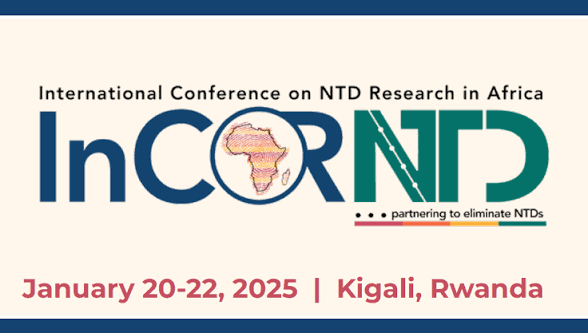
Dryfta’s non-profit management software has been preferred by entities around the globe, including those associates with nation-wide, governmental initiatives. We are honored to have been associated with the government of Kenya in the conduction of their 10th Annual Neglected Tropical Diseases Conference.
Since launching our non-profit management software with state-of-the-art advocacy and mobilization tools, Dryfta has gained over 3 clients, including the Kenyan Ministry of Health.
If you are a non-profit organization, specifically focusing on advocacy, mobilization and volunteer engagement among broader event management, Dryfta can be an advocacy software worth experimenting with. You can choose to experience a demonstration today. For completely free of cost. No strings attached and no hidden costs. We don’t want your credit card details. We want to know you, your non-profit, your events and your goals! Sign up for a free demo with us today.
Frequently Asked Questions (FAQs)
What are advocacy tools for non-profits?
Advocacy tools for nonprofits are software tools and features that aid non-profit organizations in their activities, including magnifying campaigns, mobilizing volunteers and cause-driven advocacy. Any non-profit advocacy software will typically comprise some important data for the host organization to make use of. This includes a supporter database with campaign, email and reporting features that help in community mobilization and communication dissemination.
What is the best advocacy software?
The best advocacy tools for nonprofits maximize value for buying organizations and within the least possible budget. Given that most non-profit organizations run under bootstrapped budgets and are often supported entirely by third-party funding, making investment choices can come off as a risk. However, a good advocacy software is guaranteed to simplify your work markedly, adding value to all people involved. Dryfta is an advocacy software that organizations looking for a 360 degree software solution will find efficient. If you want fringe non-profit advocacy tools, there are plenty in the market. However, they may fall short in action, given that they work as individual tools and not a single, intuitive software solution.
How do advocacy tools for non-profits help?
Advocacy tools for nonprofits help non-profits in a multitude of ways. They almost entirely replace manual outreach with automated and more targeted campaigns. Using advocacy software, non-profits can send bulk and automated action alerts with the click of a button as well as track responses that come in. When using an all-in-one advocacy software like Dryfta, non-profits can track and measure campaign performance within a single intuitive system.
Can advocacy tools for non-profits manage volunteers?
Most advocacy tools for nonprofits in the market are equipped with the most basic volunteer tracking. But ideally, an advocacy software must be able to handle sophisticated volunteer logistics. The depth of this outreach and mobilization is what matters most for non-profit organizations. The advocacy tools we’ve covered in this article specialize in volunteer and event sign-up among other things.
What features should advocacy tools for non-profits include?
Look for action alerts and petition tools, legislator and district matching, CRM or supporter database integration, email automation, mobile-friendly action pages and reporting that shows both activity and outcomes rather than raw counts alone.