




Event registration is the backbone for organizing successful conferences and events. The process draws attendees’ attention while capturing essential details for better execution. Focusing on event registration will result in gaining many small details without missing the important ones.
In the event registration process, a registration page or a form is a must for gathering the attendees’ information. Submission of this page or form is proof that the attendees confirm their participation and interest in being a part of the conference or an event. It’s the primary step in the event planning journey and sets the tone for the entire event’s experience. This is the reason following a well-designed registration process is a must so that there will be no ambiguity, confusion, or loss of data.
This blog discusses the comprehensive checklist for event registration management, which is a must-have for the successful execution of the whole event and for being stress-free while hosting it.
Choosing the Software for Event Registration
The event management software is the best resource for the event organizing committee. It helps to enhance the experience of running a conference at every level without compromising on the quality. The software also holds a reputational impact; it ensures that there is an end-to-end registration system. It offers the best possible event registration experience for the attendees, authors, reviewers, delegates, speakers, and more.
Using sophisticated conference management software will help boost the event management registration process rather than just collecting names. It helps the event organizers to manage the logistics with ease, reduces unwanted friction, develops anticipation, and gives them confidence.
From basic workshops to large-scale academic conferences, the presence of an efficient event registration process ensures that the attendees feel more welcomed and well-organized from the moment they sign up. When done right, it can turn into a powerful tool that drives higher engagement rates and delivers a standout event experience.
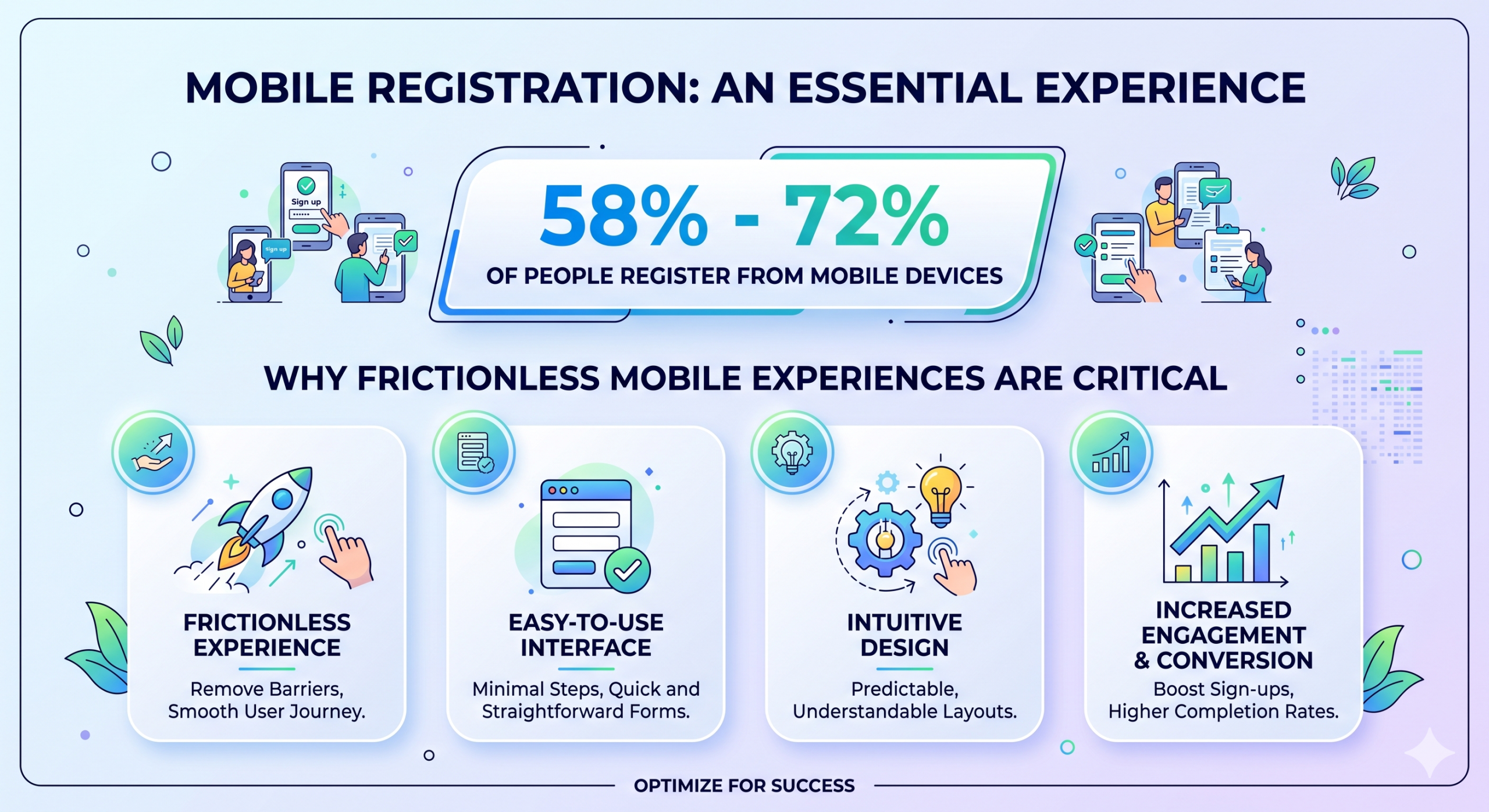
The event registration process should be user-friendly and flexible. To achieve this, choosing a registration software like Dryfta is the best choice. According to multiple studies, almost 58-72% of people register from mobile devices, so it is important to use software that offers a frictionless, easy-to-use, and intuitive mobile experience. The simple-to-navigate mobile apps have become a main pillar for several conferences. It is quite helpful to get registered whenever and wherever one wants to.
Clear Event Registration Goals
While registration is mainly about collecting attendee details, it’s also about getting the right data and supporting the conference’s financial sustainability. This is the reason it is important to focus on defining certain measurable goals so that the whole process of event registration gets carried out smoothly. A few of the important aspects to consider are:
Target Audience
The organizers must be very clear about their event’s theme and subject and whom they are targeting. They should come with a blueprint on for the total registrations they are expecting. They should also break it down in the form of attendee type, such as authors and researchers, faculty members, students, industry professionals, and more.
Investment and Returns
The organizers should come up with a strategy related to the revenue objectives. This is useful to clearly set a target for the event registration, such as fees, early bird discounts, special offers, and reduced rates. From there, they can project realistic returns and optimize their event’s financial success confidently.
User Experience
The organizers must discuss with their team and set achievable benchmarks in terms of registration completion time and abandonment rates in the event management registration. They should take proper and action-driven steps, such as using conference registration software that boosts the overall user experience.
Dedicated Event Registration Page
An event registration requires a user-friendly registration page that easily showcases all the necessary information. The structure of the registration form clearly impacts the rate of completion. There are many academic conferences that often need more detailed information, and to achieve this, a streamlined format becomes necessary.
Using conference registration software to create customizable forms or pages that capture all the necessary inputs will help without overwhelming potential attendees during the process of event management registration. Add fields for name, email, organization, ticket type, and custom questions like accommodation requirements or networking preferences. Ensure adoption of conditional logic to display only relevant options.
Preview mobile responsiveness and test different workflows with the help of conference registration software, so the whole process of registration management shines across various devices and encourages quick completions every single time without any delays.
Important Things to Follow
Mention all the important information, such as group-related questions, in the main logical sections, which include personal information, academic details, and session selection. Try using only clear, concise labels with extra context wherever necessary. Display all the appropriate field types, such as radio buttons for single selections and checkboxes for many options. Shift the optional information to secondary screens.
After taking all the requirements, lock them and start focusing on building the form using the templates and standard blocks. Templates are very important to maintain consistency because they help in standardizing the whole design elements, like field naming, accessibility and mobile UX essentials, and layout and formatting. Applying conditional logic also shortens forms and improves relevance. Event organizers usually decrease 20-40% of visible fields by just hiding irrelevant questions.
Best Practices for Page Design Workflow
Always ensure to show only the most critical information first. Adopting conditional logic to create branching paths based on the registrant type is a good idea. Providing ease in navigation between registration steps is helpful. Give the users the freedom to review and edit their details before they submit the form. If there are any users with special abilities, make sure to add relevant fields on the form and ensure accessibility compliance for them.
The page should be accessible and mobile responsive because most of the attendees use their mobile devices to get registered. Test the mobile registration pages, by conducting contrast check, tap targets, keyboard navigation and responsive design.
Finish off the internal approvals on priority and create proper field mapping and marketing reviews for copy and CTAs and design checks and branding wherever relevant. Following all these aspects will help protect both the attendee experience and the integrity of downstream data.
Advantages of an Event Registration Page
For event organizers, a streamlined event management registration process becomes a game-changer. It reduces the workload, especially on the time-consuming admin tasks. This allows the event management teams to focus on work that is of higher value in event planning.
There are also benefits for attendees, too—quick, intuitive sign-ups lead to better satisfaction levels and fewer drop-offs. The event organizers get to collect accurate and more consistent data. This is useful to get better insights and smoother execution. In simple terms, an efficient event management registration page or form backed up with conference registration software will save a lot of time, enhance the overall experience, and help make smarter and results-driven decisions.
Customize Ticketing in Conference Registration Software
Setting up tiered tickets in conference registration software for event management registration, such as early birds, standard, and VIPs, by mentioning clear pricing, capacities, and more details to boost revenue streams. Enable group bookings for teams in event management registration and give options for promotions, discount codes, and waitlists to better handle surges without any chaos. Automation of the whole inventory with proper notifications and alerts is going to be very helpful.
Configure Secure Payments and Policies
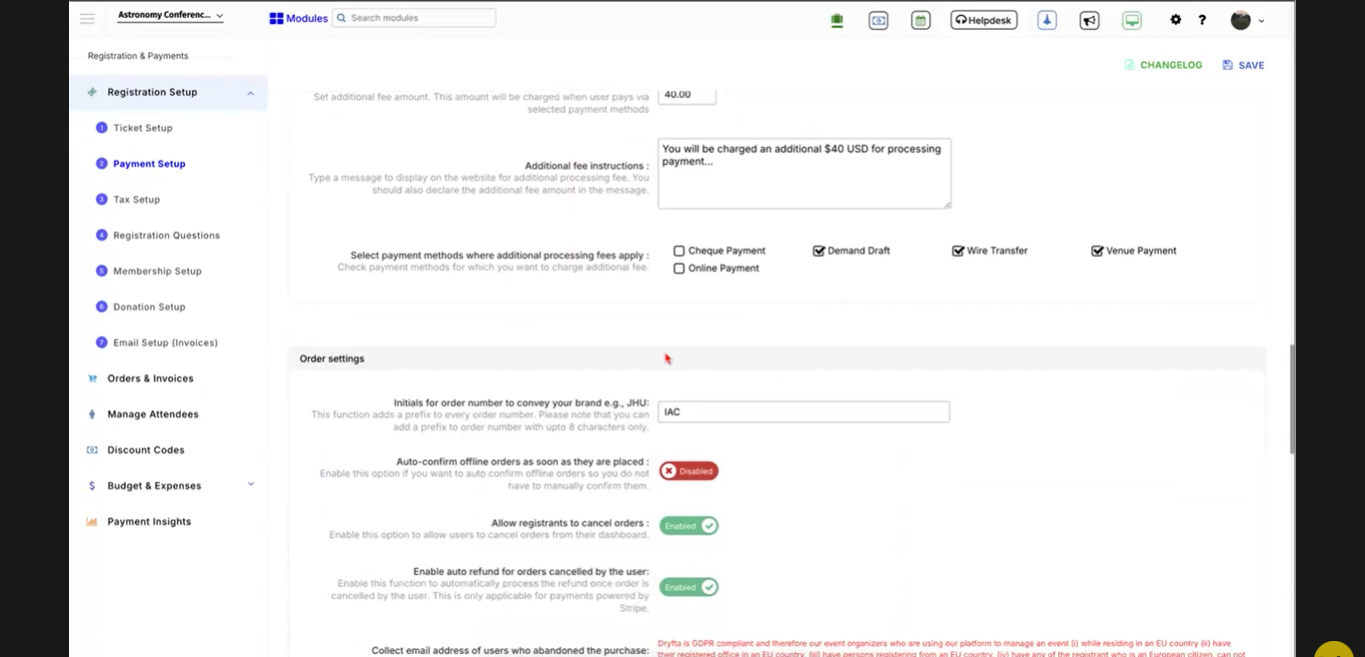
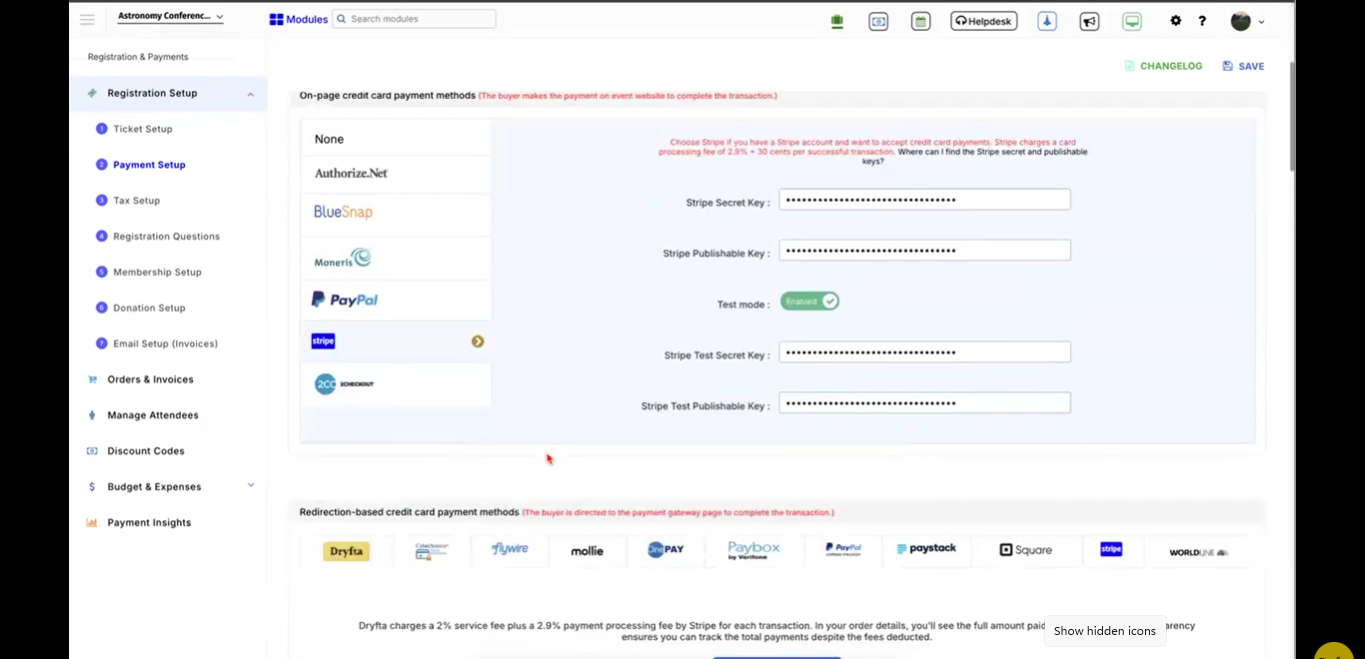
Irrespective of paid or partially paid events, configure the payment and policy settings early. Clearly decide on what mode of payment you are going to accept. Make sure to get connected with the different and most widely used gateways.
Integrate the payments with the conference registration software; support global currencies, installments, and international standards related to privacy and security policies to build reliability instantly. Well-test the end-to-end transaction flows to avoid friction during the event management registration process. The top priority should be securing the funds without any hassles.
Promote and Launch Event Registration
Embed event management registration links everywhere—sites, emails, and social media platforms—with CTAs highlighting speakers and extra benefits. Monitoring the drop-offs to tweak messaging and meeting the attendance goals is essential. Partner with some of the known people and share special coupon codes to supercharge the whole event registration process. This helps to gain more visibility, create more buzz, and meet the desired promotional goals.
Use social media to promote the event management registration process. It is important to promote the upcoming events on the various social media platforms to increase the interest levels and the number of registrations. Make sure to add and share the direct links for the event registration page. You can also add the previous event’s attendee testimonials to build excitement and reliability.
Create designs that are appealing and draw the viewer’s attention immediately. Highlight all the important elements related to the event, such as key sessions, speakers, and experiences. Always remember that well-targeted ads are useful to meet certain demographics and accelerate visibility. The main goal of promotion and launching is to get the event in front of the right people and make registration feel like a cakewalk.
Enable Online and Onsite Registration
To boost the attendee satisfaction and maximize the turnout, give options for online and onsite registration. This flexibility helps the event organizers to get the last-minute registrations while still streamlining the whole experience for those who plan in advance.
It is also important to support hybrid registration flows, making it simple to handle everything in one place. The event organizers can also use this kind of setup to promote early bird discounts online while managing onsite operations smoothly—keeping the whole process efficient and the attendees satisfied.
Personalize the Event Registration Experience
Add customizable name badges, goodie bags, and dynamic agendas to go beyond simple event registration. These well-considered enhancements showcase the event’s attention to detail and enhance the overall event experience. They also feel easily seen and appreciated when events are personalized.
Providing accessibility features like multi-language support will attract attendees from different nations. It is also a good idea to offer the event registration page in different languages. Incorporating localized content, translated fields and instructions, and currency-choosing settings will help to attract a global presence and boost overall registration rates.
There can be more accessibility features, such as adopting eye-catching visuals; a user-friendly interface, especially for the conference registration software, easy-to-navigate and screen reader-friendly layouts; and accessible color palettes. If the event is in-person or hybrid, then make sure that there are enough supportive devices for the attendees. Event organizers must keenly prioritize the personalization elements so that every attendee can register and participate with ease.
Set Up Group Registrations and Limitations
Make the registration process a breeze for groups and companies so that there will be many attendees at once. Enable group registration options and offer special discounts. This saves a lot of time and easily reduces friction. Simplify the whole check-in process with pre-assigned badges. Handle the capacity effectively by setting sessions and proper limitations for the event. Automate the wait-listing to fill the spots as soon as they are available and notify the attendees in real time. This is useful to maintain the desired attendance and avoids overbooking.
Master the Event Registration Process for Future Success
A seamless event management registration process is more than just a checklist. It is the primary foundation for a successful event. From the moment the attendees first interact with the promotional materials to the second they walk into the networking, every touchpoint matters. A strategized event registration guide ensures smooth operations on the event day and leaves the attendees with a strong and memorable impression that eventually gives rise to engagement and retention for future events.
Dryfta offers a simplified event management registration process. Its conference registration software is a perfect resource that contributes to raising the events to a global standard. To create an unforgettable event and make it successful, streamline the whole registration process, book a free demo today and elevate your event to the top level!

Frequently Asked Questions (FAQs)
1)What are the best practices for designing event management registration pages?
A) Some of the best practices for designing online pages and forms are using left-aligned labels, placing labels on top of form fields, and reducing the number of fields. It is also equally important to avoid two-column forms and ensure that required fields are clearly marked. Additionally, providing a clear call-to-action (CTA) and the form should be mobile-friendly to improve user experience and completion rates.
2) What all needs to be present in an event management registration page?A) There should be all the essential attendee information like name, email, phone, and organization. Add ticket selection, payment details, dietary restrictions, and legal consents. For exhibitor events, registration forms can include booth preferences, company details, staff information, and setup requirements.
3) What is the best event management registration software?
A) The best platform is one that suits and rightly fits with the event’s requirements and budget. Look for features like pricing, event ticketing, customized forms, automated communications, secured payment gateways, and detailed reporting.
