


Planning and organizing a conference is no small feat; it involves tedious paperwork, abstract submissions, paper reviews, and numerous other tasks. Organizers are often in need of a platform that supports all these aspects. The right abstract management system(AMS) saves enormous workloads, burnout, and helps produce polished products and abstract books.
Historically, abstract management has been a tedious process that requires multiple email exchanges and continuous communication, involving many hours of manual work to ensure everything goes smoothly. Now, technological advancement has made the process quite simple. To help you find the perfect platform, we have put together a list of the 12 best AMS platforms to consider in 2026. But before we get into the verdict of the best abstract management software 2026, let’s assess what features we’re basing our decisions upon.
What to Look for in an Abstract Management System for Conferences
Event organizers hosting academics and/or research-driven events in 2026 ought to have their priorities straight. It does not help for efficient event planners to choose an abstract management system for conferences in a jiffy. An abstract management software is the very foundation upon which your event stands. And to choose that within the twinkling of an eye, with little research or insight into its features, is doing a great disservice to your event. That being said, let’s get down to brass tracks and look into features your chosen abstract submission software must possess as non-negotiables.
- Blind review configuration: Blind peer review or the process of concealing the identities of the submitter and sometimes, that of the reviewer and other copyeditors, to ensure that the evaluation is free of bias or unfair scrutiny. Blind review is a way to keep reviewers and authors from working in prejudicial ways, often implicit, and undermining the quality of judgment of the abstract submitted. Most abstract management systems for conferences today treat this as a mandatory exercise in peer review. Peer review can be single-blind, double-blind and in certain cases, even triple-blind to ensure the highest degree of scholarly ethicality.
- Submission form customisation: A key characteristic of good conference abstract management rests in customization and personalization. It is the degree to which you can design your submission process to make it appear as though it were especially created for the submitter. The best abstract management software in 2026 must support custom fields and apply conditional logic to them. They must be easy to navigate and free of sophisticated technical interfaces or features.
- Automated and manual reviewer assignment: Abstract management systems for conferences offer reviewer assignments that can be either entirely automated or manual. It can also be semi-automated. If automatic matching is one of your conference abstract management needs then ensure to test the availability and efficiency of that function. Assess how the automation deploys to assign submissions to reviewers. Is it entirely random or does it work based on something like keywords or field of expertise? If you are an event organizer for whom manual override is a necessity, then look into softwares that will offer direct control.
- Abstract-to-schedule conversion: Conference organizers no longer have to toil to manually initiate further schedules for authors of selected abstracts. Customized abstract management softwares today do this wholly on command, neatly sending across emails of confirmation and notifying acceptance or rejection to authors. The software then also converts these accepted submissions directly into session slots.
- Author and reviewer self-service dashboards: Anxious authors and chronically ghosted submitters will appreciate this feature exceptionally. With dashboards that work a lot like self-checkouts at convenience stores, it is now possible for both reviewers and authors alike, to check in on the status of submissions. Intuitive portals let submitters track status and let reviewers manage workloads without having to ping organizers before every move.
- AI features: The assistance of Artificial Intelligence and associated technologies has transformed conference abstract management in novel ways. Automated conflict-of-interest flagging is one such tool that helps organizers identify any existing self-interests between the author and reviewer that could potentially affect the integrity of conference abstract management. AI-based flagging of this, pointing out should an author and reviewer be previously associated in personal or professional ways for instance, allows room for recusation.
- Integrated event management: The best of abstract management platforms are those that provide unified features and all-in-one event management. This banishes the necessity to spend on several tools and go over the trouble of integrating them. These are not cookies to purchase. Using multiple tools comes with the immediate con of having to integrate them into a singular workflow. Therefore, it is encouraged for event planners to opt for all-in-one abstract management systems for conferences such as that of Dryfta.
- Pricing model: Pricing is among the first things you should account for despite it being the last point on this list. You may breathe a sigh of relief having found your ideal abstract submission software. However, only to find that its payment methods are unsustainable for your organisation or that the budget goes way out the roof. Always look for software that publicizes their pricing and method of charging. Figure if they employ a per-event, per-year or a per-ticket charge. Understand what is included in the final pricing and what you may pay extra for prior to committing.
12 Best Abstract Management Systems for Conferences in 2026
We know the features we need to be looking at as event organizers aiming for excellence and a show better than the last. As promised, here’s the exclusive list of the 12 most promising abstract submission softwares in the market right now. Whether you’re someone who is expanding to accommodate more high-volume abstract submissions and a planner who is upping your integrity game after a bitter conflict-of-interest last time, there is something for all in this list.
1. Dryfta
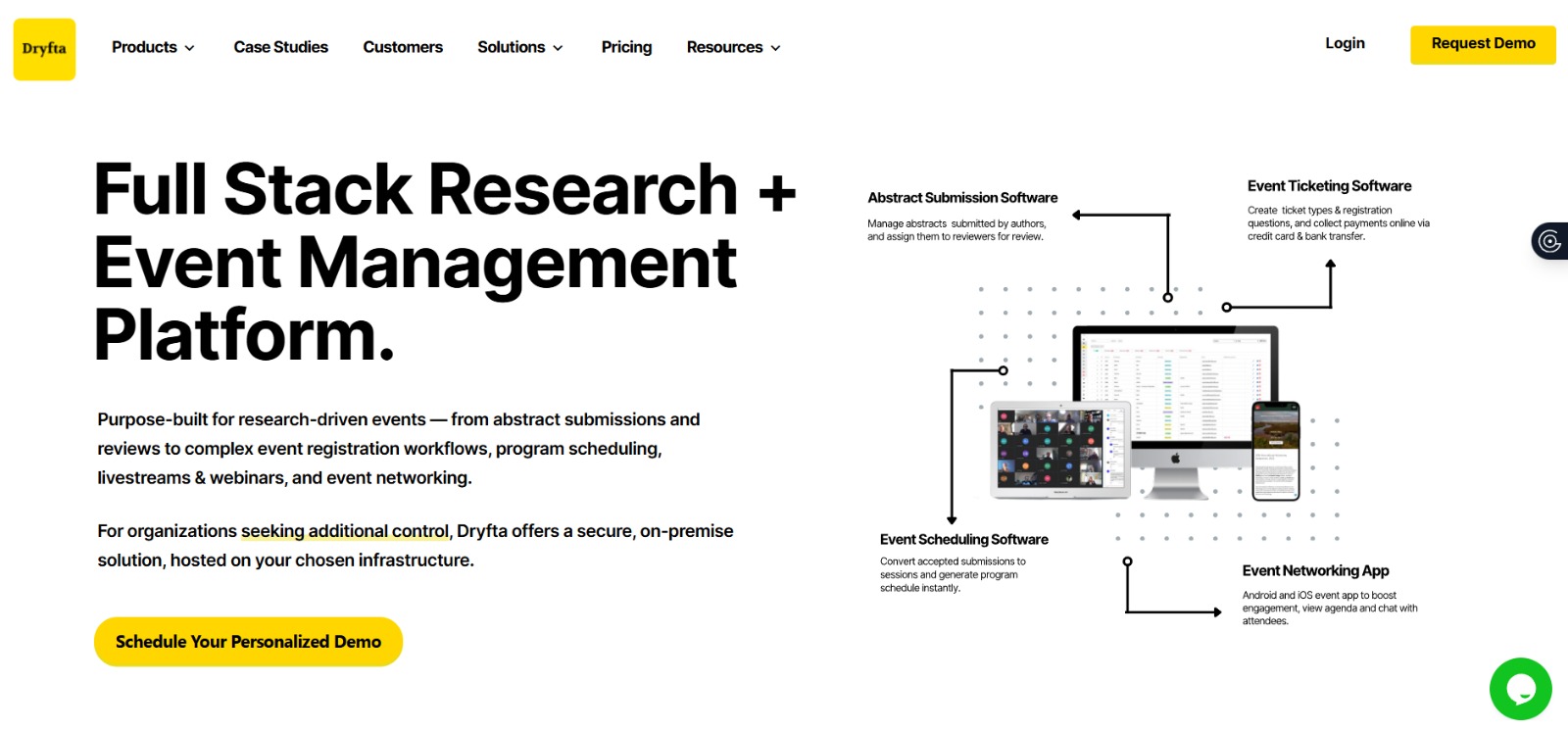
Best For: High-volume abstract submissions and end-to-end conference management.
Overview: Dryfta’s abstract management system allows conference chair committees to select either a straightforward submission process or a more complex, multi-track, multi-level submission and review workflow. Whether you’re organizing a small seminar or an international conference with hundreds of participants, Dryfta has the capabilities to meet your needs.
Key Strengths
- The platform positions itself as an end-to-end event management system that streamlines tiresome abstract submissions and peer review.
- It offers strong automation features while still allowing for customization. You can automate mundane processes, such as reviewer assignments or notifications of acceptance, while maintaining control over how to organize the submission, how deadlines are set, and who receives specific communications.
Pricing: Starts at $1,499 per year. No hidden charges.
2. ConfTool
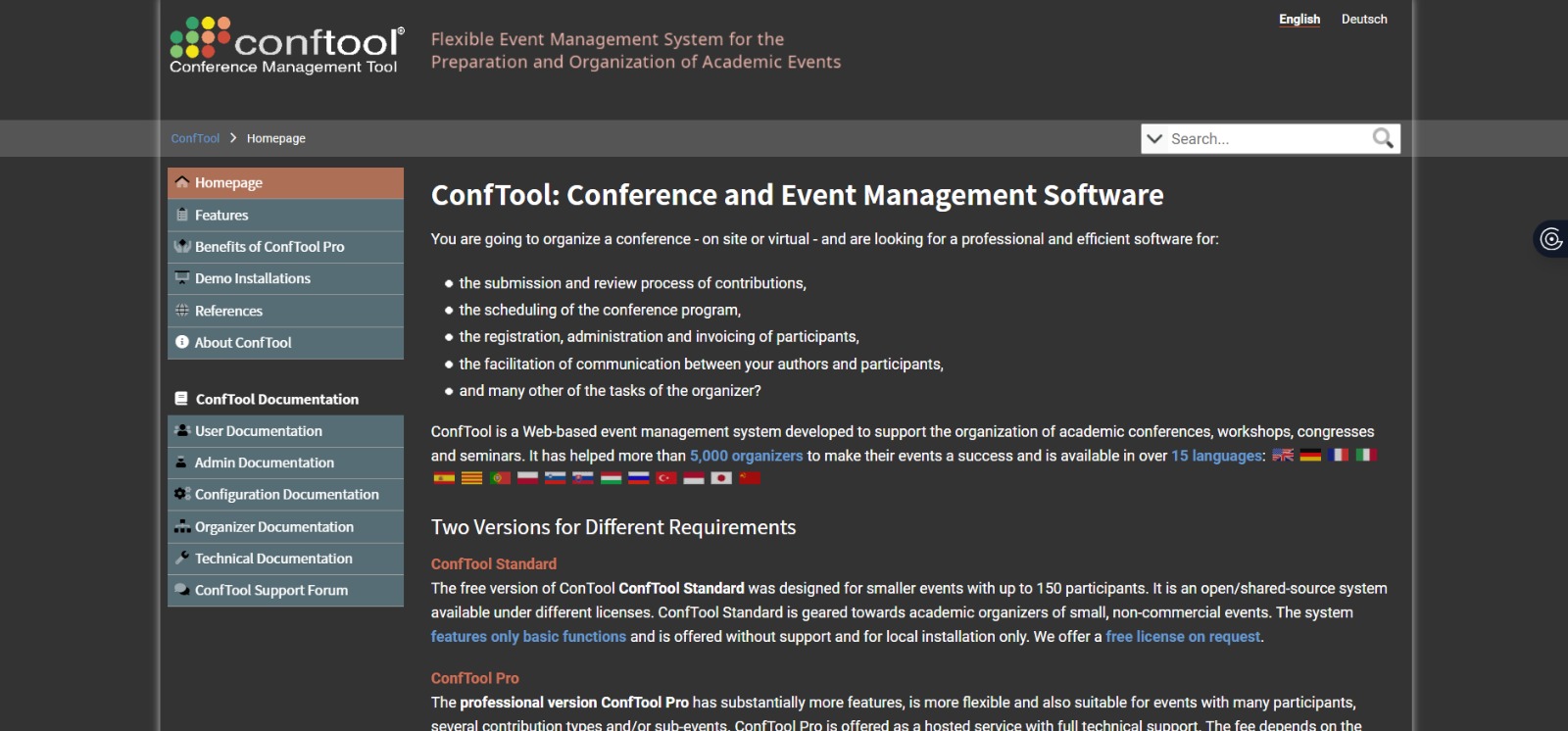
Best For: Mid-sized to large academic conferences requiring flexible submission and review workflows.
Overview: ConfTool is a good choice for AMS due to its robust, all-in-one approach, highly customizable workflows, and excellent customer support. For 2026, it remains a great choice because it’s a sophisticated system that prioritizes data security and offers comprehensive solutions.
Key Strengths:
- The platform is purpose-built for academic and university conferences, offering features like abstract submissions, peer reviews, and a conflict management system that meet the expectations of scholars.
- Highly customizable workflows to suit varied academic conference formats.
- Supports single and double blind review configurations.
Limitations:
- Does not prominently emphasize AI-based abstract screening in its standard offering.
- Pricing is tiered and custom rather than publicly listed, requiring direct inquiry.
Pricing: Starts at approximately €450 per year for smaller events; larger conferences are priced on a custom basis depending on size and feature requirements.
3. OpenWater
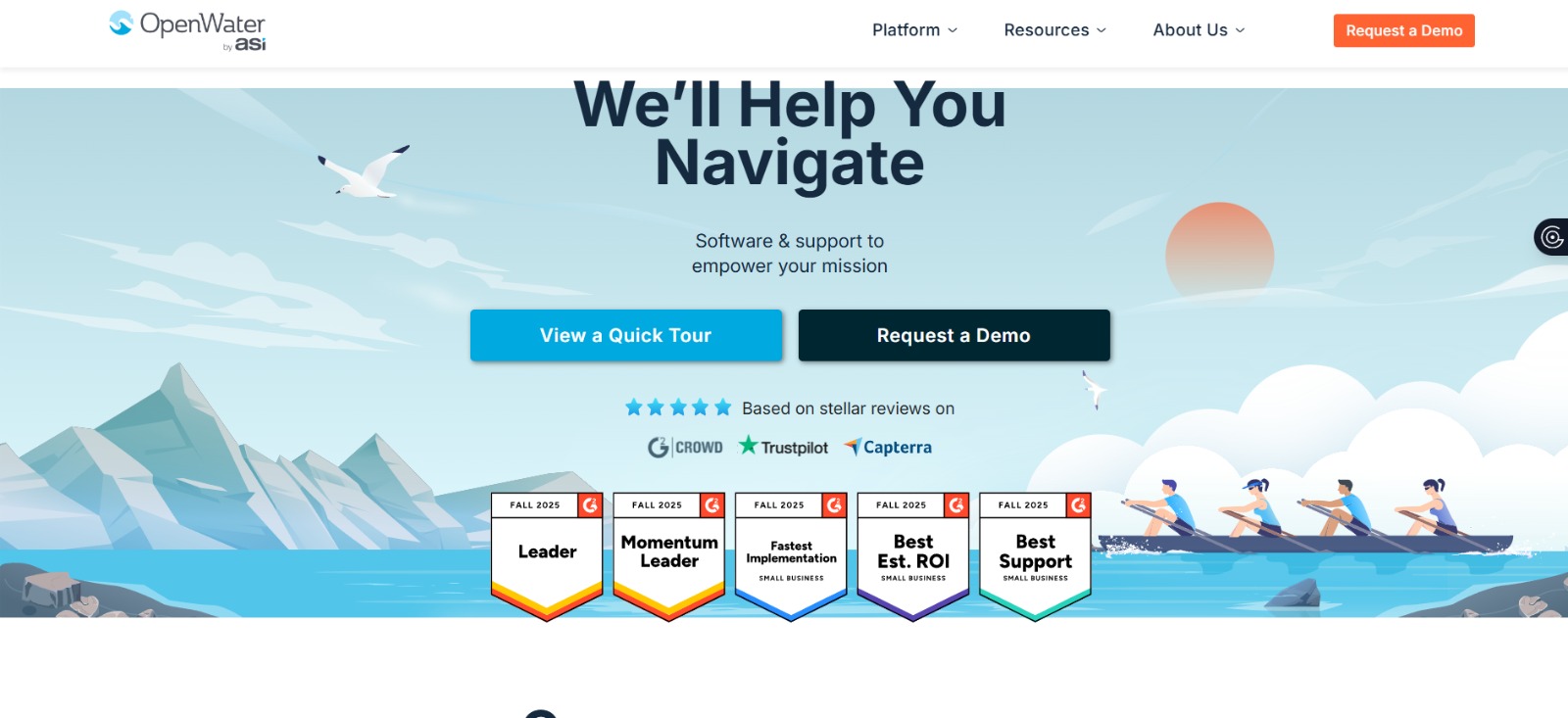
Best For: Associations, enterprises and conferences needing highly customizable abstract and application workflows.
Overview: OpenWater’s abstract management tool offers a unified system with advanced automation and AI features. It eliminates the need for multiple systems and streamlines all the tedious work for event organizers. This saves significant time and reduces manual error.
Key Strengths:
- With OpenWater, your organization can handle all abstract management tasks in one fully integrated solution, saving you time and money.
- Supports blind review workflows including anonymized reviewer assignments.
- Broad applicability beyond conferences, useful for awards programs, fellowships and grant competitions.
Limitations:
- Dedicated AI abstract analysis tools are not a core headline feature.
- Custom pricing model means costs are not transparent upfront.
Pricing: Starts at approximately $5,100 per year for a base configuration; larger or more complex programs are priced higher on a custom basis.
4. Ex Ordo

Best For: Academic and research conferences seeking a scholarly-focused submission and peer review platform.
Overview: It is a hassle-free system, tailored specifically for academic conferences. It simplifies the complete conference life cycle by making it easier to submit abstracts, peer review, and schedule sessions. Due to its user-oriented focus and excellent customer support, it is perfect for any organization that wants to save time and reduce administrative burden in managing complex conferences. It offers a wide range of features, ranging from abstract management, peer review, to many others, including:
-
- A customizable and intuitive abstract submission form
- An allocation engine to match submissions with reviewers
- Progress tracking with reminders for reviewers.
- Email automation for sending notifications to authors and reviewers.
Key Strengths:
- Customizable and intuitive abstract submission forms.
- Allocation engine to match submissions with reviewers, plus progress tracking with automated reviewer reminders.
Limitations:
- AI-based plagiarism detection or conflict-of-interest flagging is not a central marketed feature.
- Pricing is not published upfront; a demo is required to get a cost estimate, which makes early-stage budget planning harder.
Pricing: Not publicly listed. A demo or direct inquiry is required to get a quote, which varies by conference size and needs.
5. EasyChair
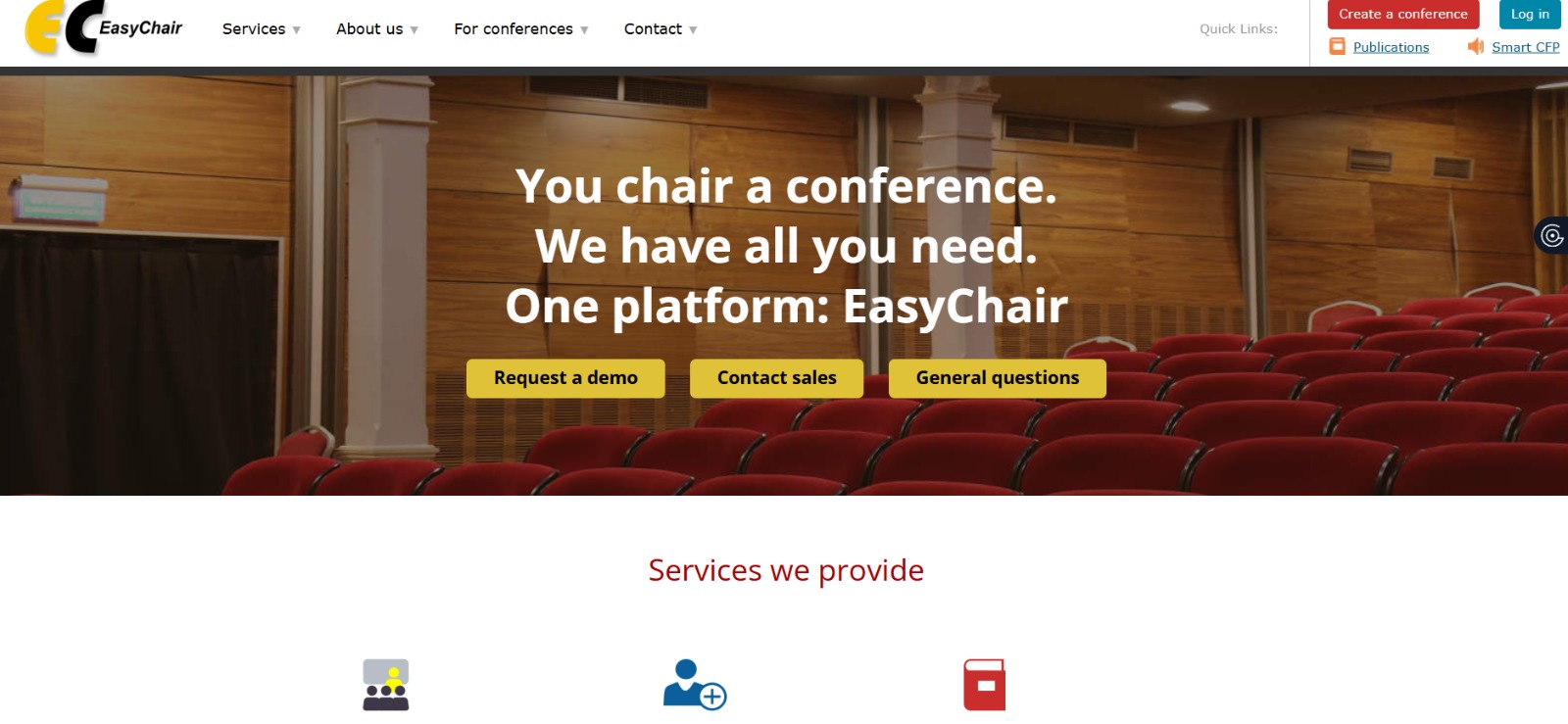
Best For: Academic conferences and journals needing a familiar, research-oriented submission and review system.
Overview: EasyChair has been used to handle several big academic conferences. Among the strengths of this platform are a powerful system for submission management, program committees, and peer reviews. Its interface consists of a modern interpretation of the event management system. When a platform has been offering support to millions of users and more than 100,000 conferences, it indicates great professionalism and the ability to handle such large-scale events.
Key Strengths:
- EasyChair ensures that the tools simplify communications among organizers and stakeholders to ensure constructive feedback.
- Simplifies communications among organizers, reviewers and authors.
Limitations:
- Limited AI-driven functionality compared to newer platforms.
- Primarily a submission and peer review system, not a full all-in-one event management platform.
Pricing: Free plan available for up to 20 submissions. Professional licenses are £2.90 per submission (up to 60 submissions). Executive and VIP licenses start from £4.50 per submission with unlimited submissions.
6. Ant Abstract
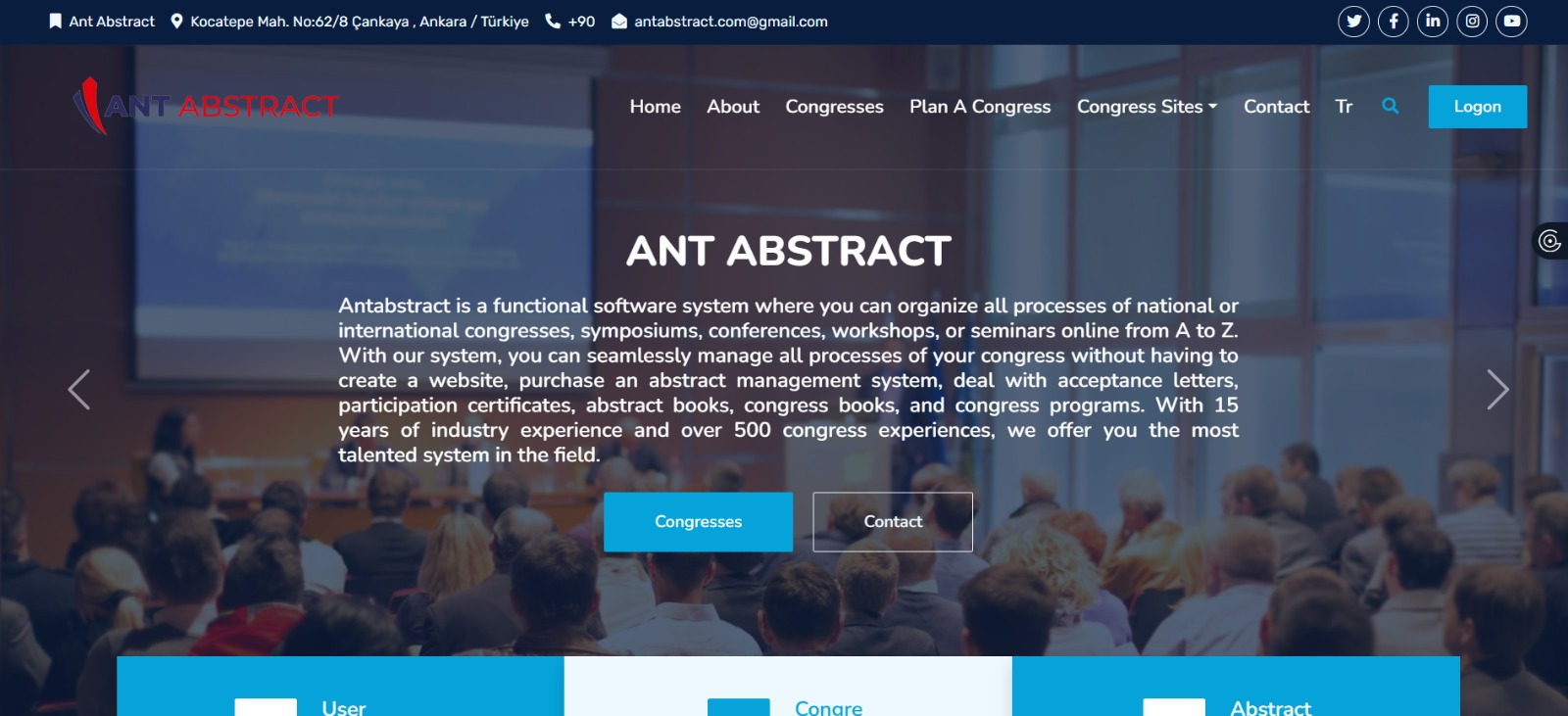
Best For: National and international conferences looking for dedicated abstract and speaker management with integrated publishing services.
Overview: Ant Abstract is an excellent solution for the abstract management platform in 2026, as it provides an A-Z of event management experience. The platform comes with 15 years of industry-specific knowledge, integrated publishing services, and professional support in its entirety. It offers an integrated, one-stop solution to handle all aspects of a national and international conference online.
Key Strengths:
- When using the tool, organizers can eliminate the hassle of having to purchase separate systems.
- Deep domain expertise built over 15 years in conference abstract management.
Limitations:
- Does not strongly position AI-based review assistance as a headline capability.
- Pricing is not publicly listed, which limits early-stage cost comparison.
Pricing: Not publicly listed. Pricing is provided on request based on event scope and modules needed.
7. Invajo
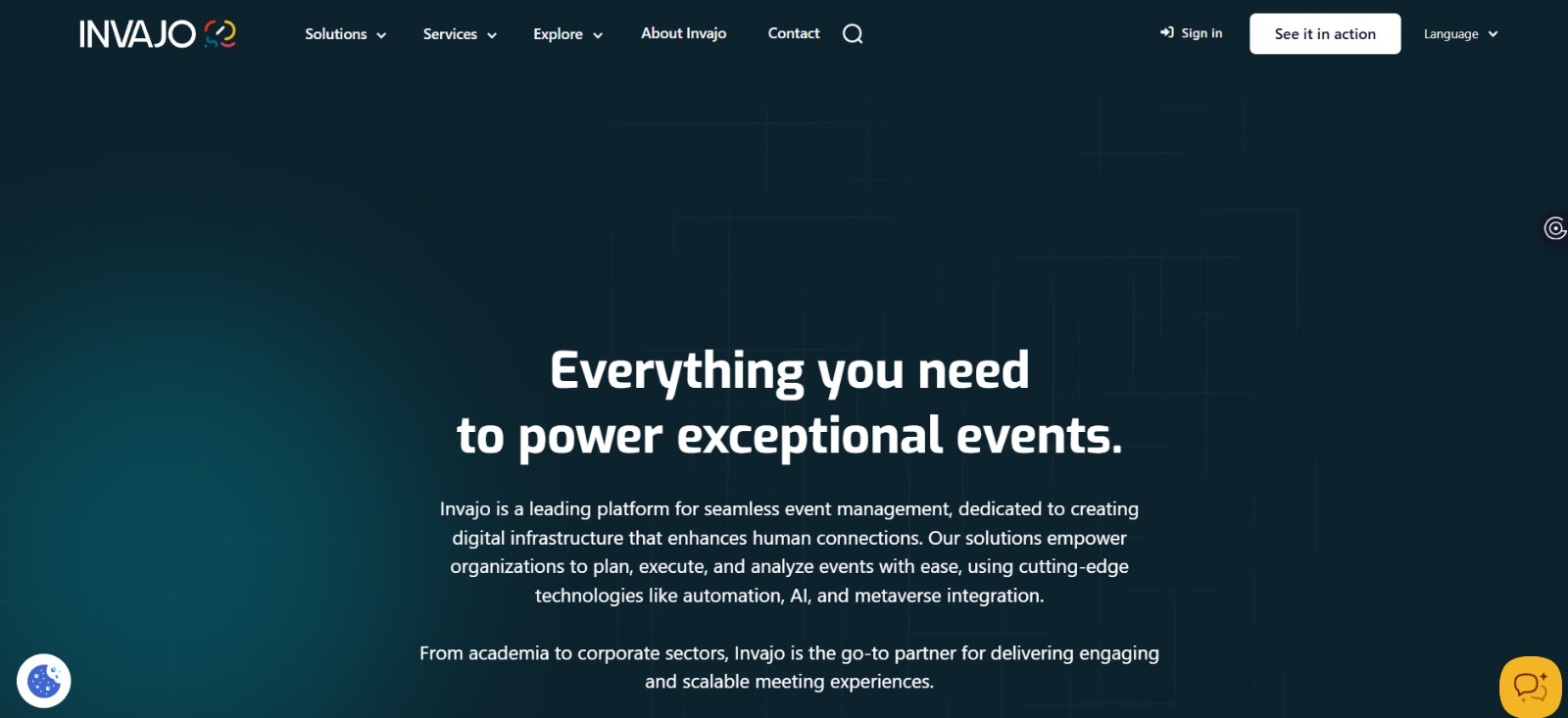
Best For: Event organizers wanting abstract handling within a broader event operations environment.
Overview: Invajo is a web-based abstract management platform that streamlines the submission and review processes. The tool combines a fully functional abstract system with a comprehensive suite of event management features, including registration, payments, scheduling, and dedicated event apps.
Key Strengths:
- Its strengths lie in its streamlined workflow and robust features for both organizers and participants.
- The platform offers a user-friendly process for online abstract submissions, reviewer assignment, scoring, and feedback. Organizers can cut down administrative overhead and ensure a transparent, efficient review process.
Limitations:
- Advanced AI-based abstract analysis is not a key differentiator.
- Pricing is tailored per client and not published, requiring direct contact for figures.
Pricing: Not publicly listed. Invajo customizes pricing based on factors such as event size, volume and other support needs. Contact the sales team for a quote.
8. Oxford Abstracts

Best For: Academic, medical and professional events needing modern abstract submission and program-building tools.
Overview: Due to its continuous upgrades based on user feedback, it presents an intuitive and flexible system. The tool comprises a comprehensive feature set and strong customer support, which makes it stand out as one of the best platforms for 2026.
Key strengths:
- This platform offers support for in-person, virtual, and hybrid events with tools like a live conference site.
- Additionally, it comes with a virtual exhibitor space and poster galleries. This, in turn, streamlines the abstract management and research paper submissions.
Limitations:
- AI-led review intelligence is not its primary selling point.
- The free plan has limitations on features; full functionality requires a paid tier.
Pricing: Free plan available for basic abstract management with unlimited submissions. Paid plans are priced per event: Abstract Management at $790, Standard Conference at $1,980 and Professional Conference at $2,970.
9. AbstractWiz
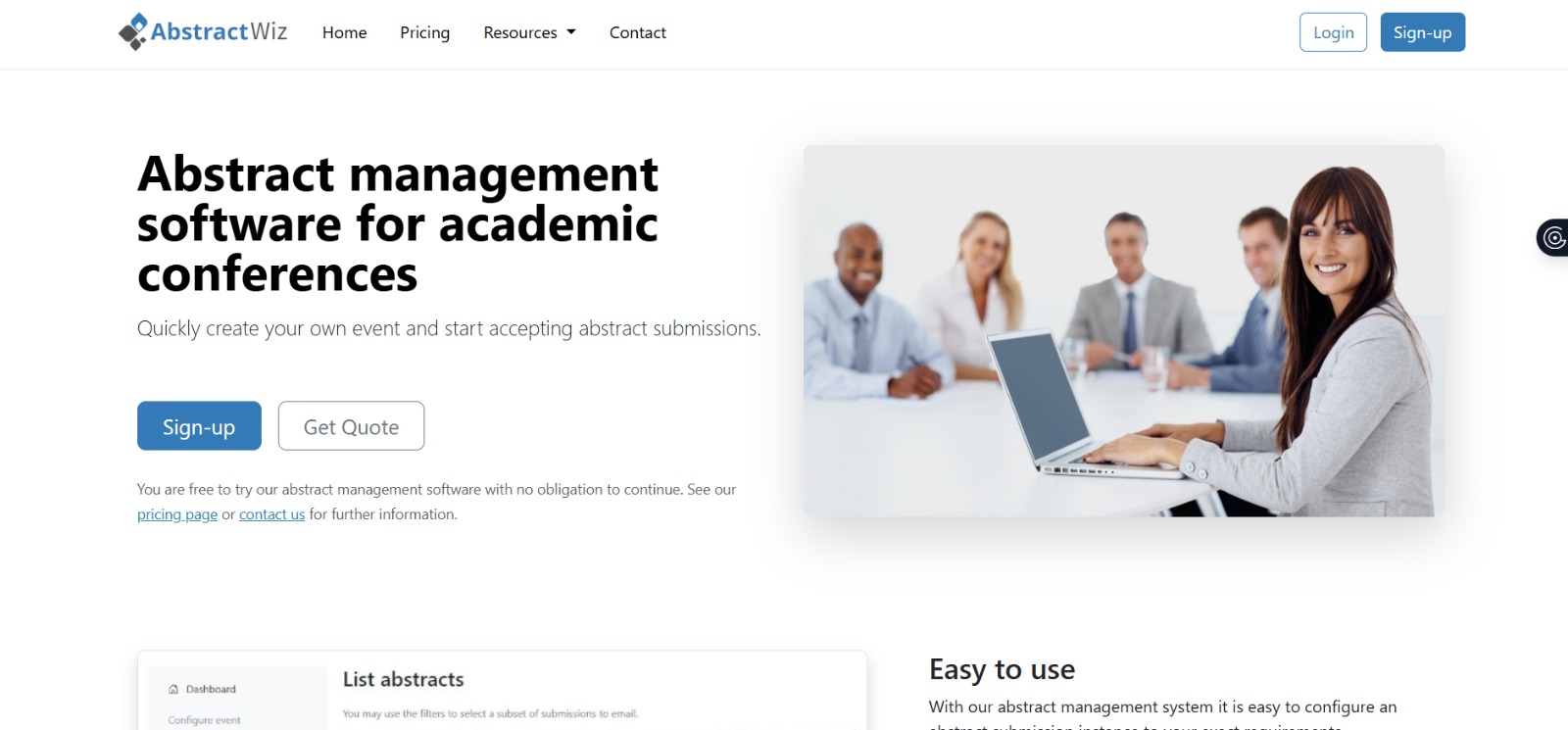
Best For: Events seeking straightforward abstract collection, review and presentation management without requiring coding knowledge.
Overview: It is fully intuitive, while at the same time offering organizers and authors a great deal of automation. Its features are designed to ease the workload and lighten administrative burdens to make an academic conference run smoothly.
Key Strengths:
- Organizers can easily configure the system to their exact needs with a user-friendly interface and customizable forms, fields, and review criteria, without needing coding knowledge.
- It supports various submission types and allows for generating customizable abstract books.
Limitations:
- Does not prominently advertise AI-based decision-support or abstract screening features.
- A dedicated tool that may lack the broader event management coverage of all-in-one platforms.
Pricing: Not publicly listed. Pricing is custom and depends on program size, complexity and administrative needs. Contact sales for a quote.
10. ReviewR
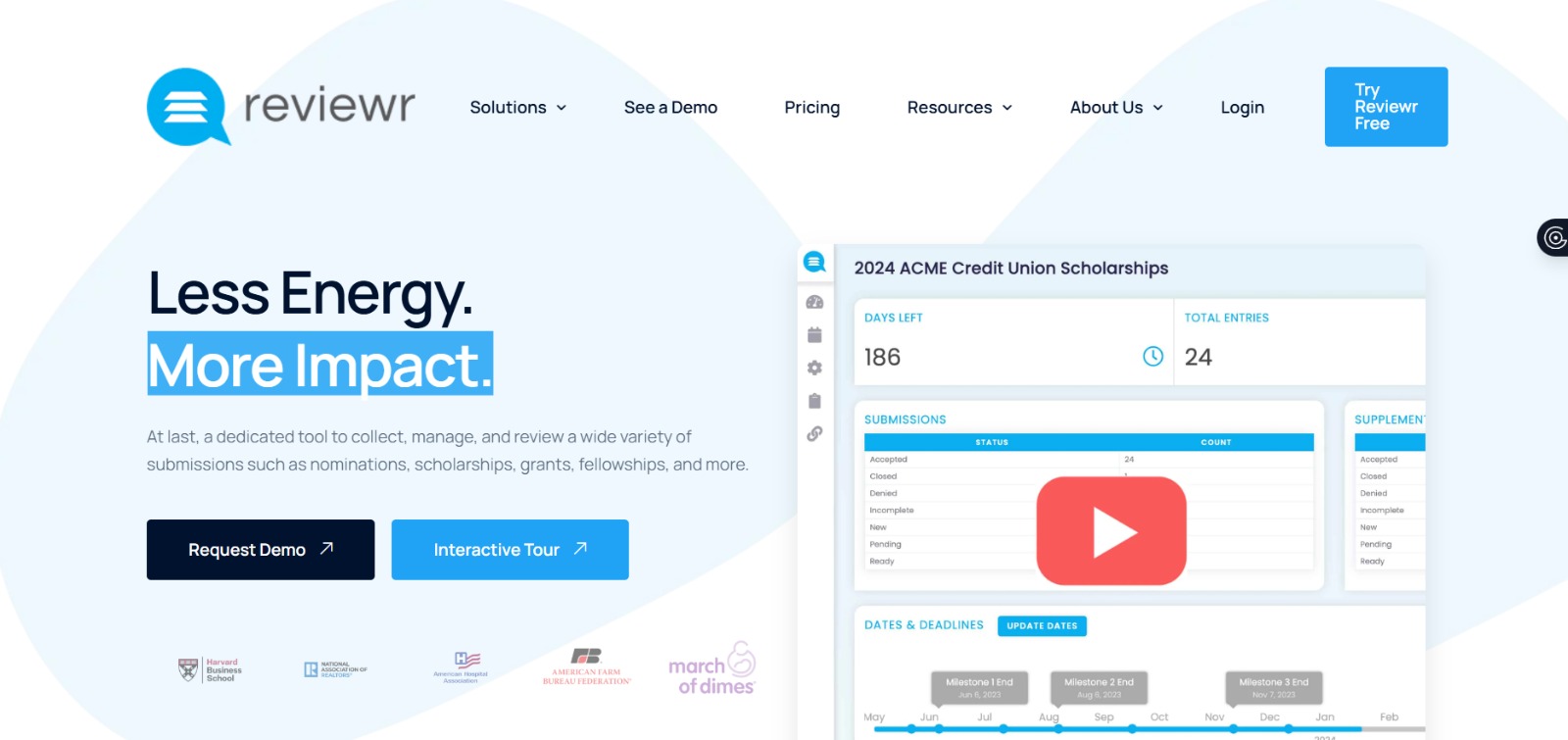
Best For: Research competitions, symposiums and conferences needing structured submission and evaluator workflows driven by AI and automation.
Overview: ReviewR system comes with powerful analytics dashboards and customizable reports that lend the organizer valuable insight into submission volume, review progress, and acceptance rates.
Key Strengths:
- AI-powered reviewer matching and automated reminders reduce manual coordination effort.
- Integrations with other event platforms for hybrid and virtual events.
- Analytics and customizable reporting tools for organizer oversight.
Limitations:
- Focuses more on workflow management and scoring than deep AI-based review analysis.
- Three pricing tiers exist but specific figures are not publicly listed and require direct contact.
Pricing: Three tiers available (Starter, Standard and Prestige). Starter plans begin at $99/month; higher tiers go up to $299/month. Enterprise contracts are priced separately based on scope and volume.
11. Cvent
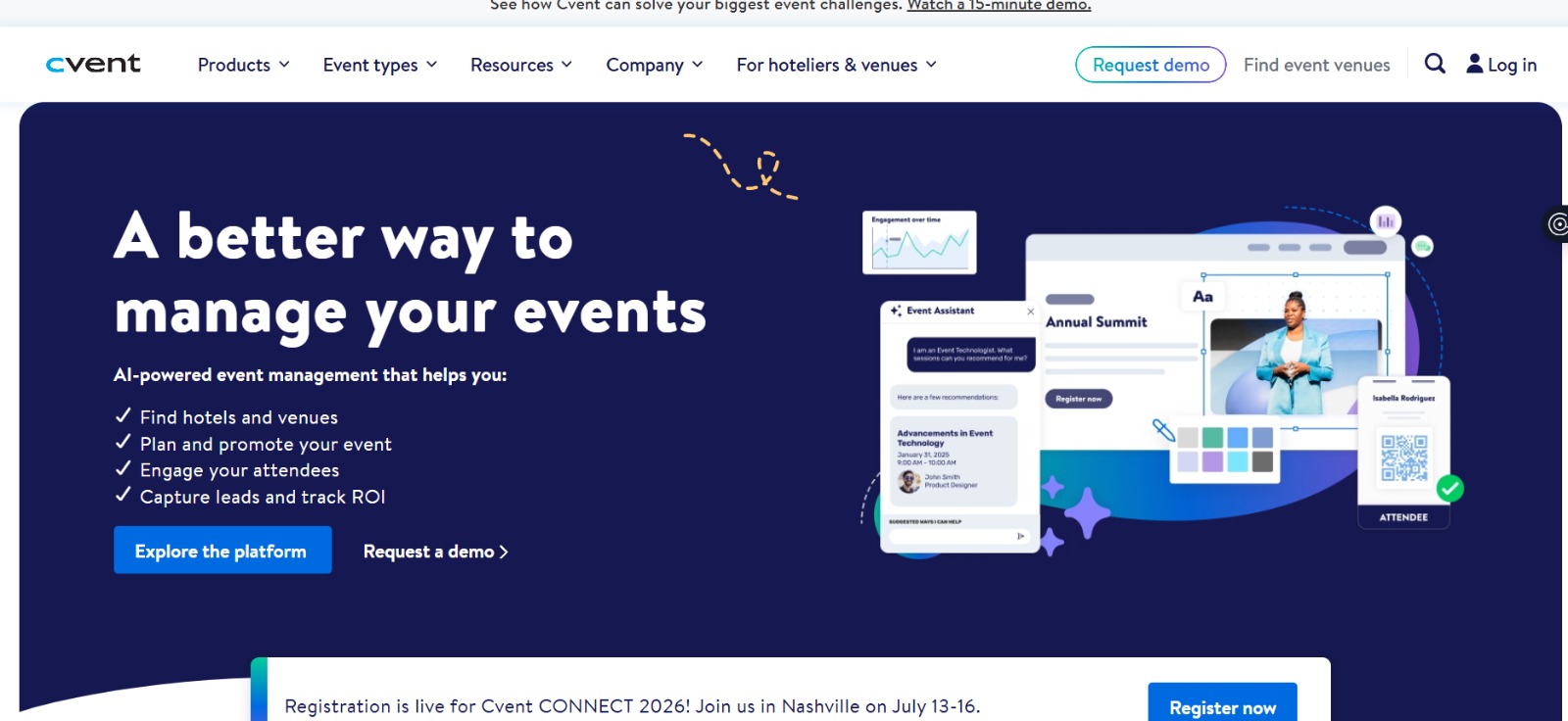
Best For: Large conferences and enterprises needing abstract management within a comprehensive, scalable event interface.
Overview: Cvent is a scalable enterprise-level abstract management solution for managing the entire lifecycle of events. Its main feature is handling complex, large-scale events. The system enables organizers to assign submissions to specific reviewers according to topic. In addition, it coordinates the scoring across teams in different locations and tracks the scores in real time within a centralized portal.
Key Strengths:
- Scalable for complex, large-scale events with distributed review teams.
- Topic-based reviewer assignment and real-time centralized score tracking.
Limitations:
- Abstract-specific AI screening capabilities may vary depending on implementation and configuration.
- Pricing is not publicly listed and total costs can climb significantly once per-registrant fees and implementation costs are added.
Pricing: Annual platform licenses start at approximately $20,000 per year. Per-registrant fees run $7 to $12 per attendee per event.
12. CadmiumCD
Best For: Scientific, medical and association events requiring abstract, speaker and agenda management including continuing education credit tracking.
Overview: With its comprehensive, integrated suite of tools that streamline the entire event lifecycle, Cadmium’s abstract management platform is an outstanding option for organizers. Cadmium helps in keeping track of continuing education credits and certifications through integrated tools. Thus, it creates great value for attendees both academically and professionally, while ensuring compliance with the standards for accreditation.
Key Strengths:
- Comprehensive content and program planning functionality for scientific and medical conferences.
- Supports blind review workflows for abstracts and session proposals.
Limitations:
- Emphasizes workflow efficiency and content management more than AI-first abstract evaluation tools.
- Pricing is not publicly available and must be requested directly, which complicates early budget planning.
Pricing: Not publicly listed. Pricing is customized based on event size, feature set and service level. Contact Cadmium directly for a quote.
How We Evaluated These Platforms
We compared each abstract management system against the same conference workflow: submission-form flexibility, reviewer assignment and conflict handling, single/double-blind review, scoring and decision controls, author notifications, reporting, integrations, scalability, and pricing visibility. We also considered the needs of universities, academic societies, medical meetings, and nonprofit conference teams. Feature and pricing statements are based on publicly available vendor information and should be confirmed before purchase.
- Workflow coverage: Can organizers collect, assign, review, decide, notify, and publish without manual hand-offs?
- Governance: Are roles, permissions, blind-review settings, conflicts of interest, audit trails, and deadlines controllable?
- Fit and cost: Is the platform appropriate for the event’s submission volume and does it clearly explain pricing, limits, and implementation effort?
Information checked: September 2026. Product features, limits, and pricing can change; verify current details with each vendor.
Quick Comparison: The 12 Best Abstract Management Systems in 2026 at a Glance
Refer to the table further down to look at the characteristics of the 12 best abstract management systems for conferences in 2026 briefly. It helps to compare and contrast the key features of each abstract submission software, assess strengths, weaknesses before shortlisting the top 5 best platforms for your event and ultimately, making the final choice.
| Name of Software | Best For | Blind peer review | AI-based tools | Event Management Nature | Pricing |
| Dryfta | High-volume abstract submissions and conferences. | Single, double and triple blind review. | Offers tools such as AI-based conflict-of-interest flagging and plagiarism checks. | Integration, end-to-end and all-in-one event management software. | Starts from $1,499 per year, employing an annual pricing model. No hidden charges. |
| ConfTool | Mid-sized to large academic conferences requiring flexible submission and review workflows. | Supports single and double blind review configurations. | Does not prominently emphasize AI-based abstract screening tools in its standard offering. | Modular conference management software with strong abstract, registration and scheduling capabilities. | Offers tiered pricing based on event size and feature requirements. Custom pricing is provided. |
| OpenWater | Associations, enterprises and conferences needing highly customizable abstract and application workflows | Supports blind review workflows, including anonymized reviewer assignments. | Offers workflow automation and smart form logic, though dedicated AI abstract analysis tools are not a core highlight. | Broad event and application management platform with abstract management, awards, grants and registration support. | Custom pricing based on configuration, scale and usage needs. |
| Ex Ordo | Academic and research conferences seeking a scholarly-focused submission and peer review platform. | Supports single and double blind review processes. | Offers workflow-enhancing automation, but AI-based plagiarism detection or conflict flagging is not a central marketed feature. | Conference management software built for abstracts, peer review, program building and speaker coordination. | Pricing is typically quote-based depending on conference size and requirements. |
| EasyChair | Academic conferences and journals needing a familiar, research-oriented submission and review system. | Supports single, double and other configurable review models | Limited AI-driven functionality in comparison with newer event technology platforms. | Primarily a submission and peer review system rather than a full all-in-one event management platform. | Offers both free and paid plans depending on usage type, scale and required features |
| Ant Abstract | Conferences and scientific meetings looking for dedicated abstract and speaker management tools. | Supports blinded review workflows for fair abstract assessment. | Does not strongly position AI-based review assistance as a headline capability. | Specialized abstract management software with additional tools for program and speaker coordination. | Pricing is usually provided on request based on event scope and modules needed. |
| Invajo | Event organizers wanting abstract handling within a broader event operations environment. | Supports review workflows, including blinded abstract evaluation options. | Includes automation features, though advanced AI-based abstract analysis is not a key differentiator. | End-to-end event management platform covering registration, communication and abstract-related workflows. | Provides custom pricing depending on event complexity, volume and support requirements. |
| Oxford Abstracts | Academic, medical and professional events needing modern abstract submission and program-building tools. | Supports anonymized review, including single and double blind review formats. | Offers automation and streamlined workflows, though AI-led review intelligence is not its main selling point. | Abstract and program management platform that also supports posters, speakers, sessions and event content organization. | Pricing is generally quote-based according to event requirements and submission volume |
| AbstractWiz | Events seeking straightforward abstract collection, review and presentation management. | Supports blind review workflows for unbiased scoring and selection. | Does not prominently advertise AI-based decision-support or screening features. | Dedicated abstract management solution with tools for submission intake, review and agenda preparation. | Pricing is custom and depends on program size, complexity and administrative needs. |
| ReviewR | Research competitions, symposiums and conferences needing structured submission and evaluator workflows. | Supports anonymous and blinded review processes. | Focuses more on workflow management and scoring than on advanced AI-based review tools. | Submission and review management platform suited for abstracts, papers, grants and competitions. | Custom enterprise pricing based on product bundle, scale and contract scope. |
| Cvent | Large conferences and enterprises needing abstract management within a single event ecosystem. | Supports abstract review workflows, including blinded review options depending on setup. | Offers automation and intelligent event technology features, though abstract-specific AI screening may vary by implementation. | Enterprise-grade all-in-one event management platform with registration, marketing, onsite and content management tools. | Custom enterprise pricing based on product bundle, scale and contract scope. |
| CadmiumCD | Scientific, medical and association events requiring abstract, speaker and agenda management in one system. | Supports blind review workflows for abstracts and session proposals. | Emphasizes workflow efficiency and content management more than AI-first abstract evaluation tools. | Comprehensive event content and conference management platform with strong abstract, speaker and program planning functionality. | Pricing is typically customized based on event size, feature set and service level. |
Which Abstract Management System Is Right for You?
Choose the platform that matches your committee’s workflow, governance requirements, submission volume, and budget—not simply the longest feature list.
- Universities and research institutes: Prioritize blind review, reviewer expertise matching, role-based access, and a reliable export for institutional records.
- Medical and scientific conferences: Look for multi-track workflows, conflict-of-interest controls, scoring calibration, and abstract-to-program publishing.
- Associations and nonprofits: Favor transparent pricing, reusable forms, accessible author communications, and integrations that reduce administrative work.
- High-volume or multi-event teams: Test bulk imports, automation, reporting, permissions, and support capacity before signing a contract.
Moving from another platform
Before migration, export authors, submissions, reviewer assignments, scores, decisions, and consent records. Map each field and status to the new system, confirm retention and access rules, then run a small pilot with real reviewers. Keep a read-only copy of the legacy export so the committee can answer audit or author queries after launch.
Where Dryfta fits
Dryfta is a strong fit for teams that want abstract submission, peer review, author communications, scheduling, registration, and reporting in one conference workflow. Its broader event-management scope can be more than a small team needs if it only wants a basic submission form, so compare the full feature set and total cost with the specialized options above.
Ready to Choose the Right Platform?
The right AMS in 2026 will depend less on the headline and more on how the committee accepts the platform. If you are a university or a research institution that wants a research-focused configuration stack, start with Dryfta’s abstract management system.
With features like bulk abstract submission, automated reviewer assignments, integrated payments, and real-time reporting, Dryfta provides everything you need in one place. As a result, organizers are reducing costs, saving time to create more successful events.
Try our free demo today to learn more about how Dryfta’s abstract management system operates.
Frequently Asked Questions (FAQs)
What is an abstract management system for conferences?
An abstract management software system for conferences is a software tool or utility prgram that helps event organizers accept, assign, categorize and approve abstract manuscripts submitted by researchers and academicians. Previously a function performed almost enrietly by manual means, an increase in event size and the growing volume of abstract submissions,abstarct submission sofwatres have now turned mandatory for modern organizers. Equipped with state-of-the-art technology, abstract management platforms like Dryfta are helping orgnaizers not only simplify their AMS tasks but also power them to be efficient all the more.
What features should I look for in abstract management software?
Assess features that will point at the capacity of the abstract management software. Figure if submissions are limited to a number or are unlimited. Ask or read about the particular submission workflow of the tool to know if it suits your event’s timeline. Furthermore, should there be any specific requirements or concerns pertaining to the nature of the software, clarify that with the vendors. Ask for a free demo or some other run down through the software’s features. Ask if their quoted price is final or if any additional charges could come up in the future.
Which abstract management system is best for academic conferences?
Drfyta’s integrated and all-in-one evetne management software tops the list of the best abstract management systems for academic conferences in 2026. Dryfta earns its position to outdo its competitors by the very fact that it was created with the needs and challenges of academic conferences in mind. Most other software tools are simply extensions of their generic, existing event management tool. Dryfta, on the other hand, was built with the abstract conference format in mind, offering features like blind peer review, conflict-of-interest flagging, intuitive and customizable CRM capabilities as well as a number of other features within its automated workflow.
What is the difference between abstract management and conference management software?
Abstract management software focuses specifically on the submission and review process. This comprises activities such as collecting abstracts, assigning reviewers, managing blind review, scoring submissions and notifying authors of decisions. Conference management software, on the other hand, is much broader. It encompasses things like registration, payment processing, scheduling, venue logistics, mobile apps, virtual event tools and attendee engagement. Abstract management is often only one aspect of the larger conference management software stack.