
Use this ten-platform comparison to build an event ticketing supplier shortlist. Start with your event format, registration requirements and buying constraints, then compare the candidates against the same brief. The output is two or three suppliers to investigate further, with the reason for including each one.
The comparison table and ten profiles below provide an initial view across different event needs. Confirm the listed capabilities and commercial terms with each supplier; inclusion is not a ranking, a guarantee of fit or proof that the product meets your requirements. Use the criteria below to decide whom to invite to a demonstration.
How to Choose an Event Ticketing Platform?
Start with a buying brief, then reduce the ten candidates to two or three suppliers worth a demonstration. Separate requirements that would exclude a supplier from preferences that you could work around. Record the evidence and unresolved questions for each candidate; a feature mentioned in a profile is a starting point to confirm.
- Event format and scope: state the event dates, expected registrations, repeat-event needs and whether admission includes conferences, workshops, fundraising, onsite attendance or virtual access. Ask which proposed product and plan cover that scope.
- Registration rules: list the ticket categories, member rates, group bookings, required fields and capacity restrictions that matter to your event. Mark the rules that are essential before considering optional extras.
- Payments and finance: specify the currencies, payment methods, invoicing needs, refund policy and reporting handoff. Ask who collects and pays out the money and which parts depend on a payment processor or another service.
- Branding and attendee access: identify the pages that must match your event, any restricted registration or session access, and the staff or supplier work needed to set them up.
- Connected systems and data: name the CRM, email, accounting or event tools you need to keep. Ask which connections are included, which need development or manual transfer, and who is responsible for data export and access.
- Event-day delivery: state the entrances, badge or scanning arrangements, equipment, staff roles and support hours you need. Require the supplier to explain what is included in the quote and what your team must provide.
- Academic or wider event workflows: decide whether this purchase also needs submissions, reviews, programme management or virtual-session delivery. Include these only when they are actual requirements, rather than treating a larger feature list as automatically better.
- Commercial fit: request written pricing for the same event scenario, including platform charges, processing fees, add-ons, support, refund charges, renewal terms and any limits. Keep unknown costs visible instead of comparing headline prices alone.
For each supplier, record meets requirement, needs configuration, needs another service, or not yet confirmed, with the source of that answer. Keep two or three candidates whose confirmed scope and quote fit your event. Then use the ticketing workflow test checklist to check their purchase, refund and check-in process before a final commitment.
Best Event Ticketing Platforms Compared
| Platform | Best For | Ticketing | Registration | Hybrid Events | Analytics |
|---|---|---|---|---|---|
| Dryfta | Academic and association conferences | Custom pricing tiers | Registration and abstract submission management | Hybrid events with mobile app support | Event and financial reporting |
| Eventbrite | Public events, workshops, and festivals | Online ticket sales | Simple registration forms | Supports virtual events | Sales and attendee insights |
| Cvent | Enterprise events and large conferences | Multiple ticket types and currencies | Enterprise registration workflows | Hybrid and onsite event tools | Event performance dashboards |
| Townscript | Community and regional events | Online ticket sales | Custom registration forms | Supports video integrations | Registration and sales reports |
| Ticket Tailor | Independent events and festivals | Flexible ticket options | Registration management | Integrates with virtual event tools | Sales tracking and exports |
| Bizzabo | Conferences and trade shows | Secure ticketing and payments | Automated attendee registration | Built-in virtual event tools | Attendee engagement analytics |
| Eventzilla | Fundraisers, webinars, and business events | Ticketing and donation collection | Group registration support | Webinar and virtual event support | Revenue and attendance reporting |
| Universe | Social events and festivals | Online ticketing | Fast registration and checkout | Supports virtual access links | Ticket sales and marketing insights |
| RegFox | Custom registration workflows | Flexible ticket setup | Highly customizable forms | Hybrid event support | Registration and sales analytics |
| Tito | Tech conferences and professional events | Event ticketing | Streamlined registration experience | Integrates with external tools | Order and attendee reporting |
Top Event Ticketing Platforms in 2026 Worth Considering
1. Dryfta
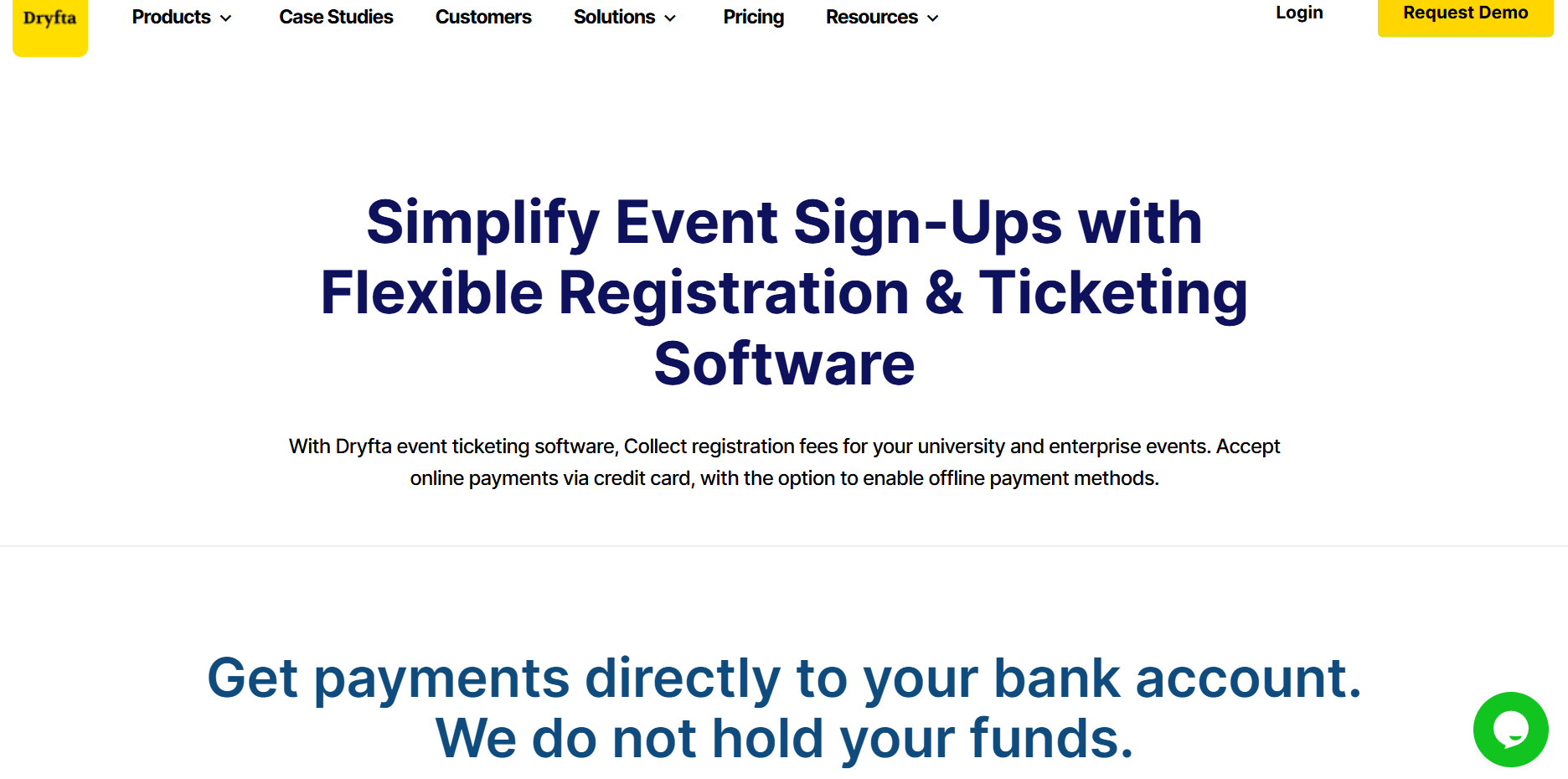
Dryfta is the most widely appreciated event ticketing platform in 2026. By using Dryfta, you achieve the ultimate goal of proper planning, managing, and running of events. It has features for selling tickets, registering attendees, collecting payments, and creating automated workflows.
Dryfta is the right choice as a solution for academic, scientific, and online events. In addition to being simple to use, the platform allows organizers to have absolute freedom regarding the kinds of tickets to sell, the pricing, the discounts, and the registration forms.
Key Features:
-
- Custom registration forms
- Multiple ticket types
- Post-purchase automation
- Attendee CRM
- Abstract management
- Badge generation
- Check-in tools
- Exhibitor and sponsor management
- Native email marketing
- Payment gateway integrations
Besides that, Dryfta is an all-in-one online event platform for virtual and hybrid events. So, the organizers can host the sessions, manage the attendees, and even get the feedback right there.
With Dryfta, organizers don’t need multiple software programs anymore. It does all the heavy lifting through a single interface. Thus, it not only makes the job of the event staff easier but also ensures that the tasks are accurate. Hence, organizers not only save time but also get more efficient results.
2. Eventbrite
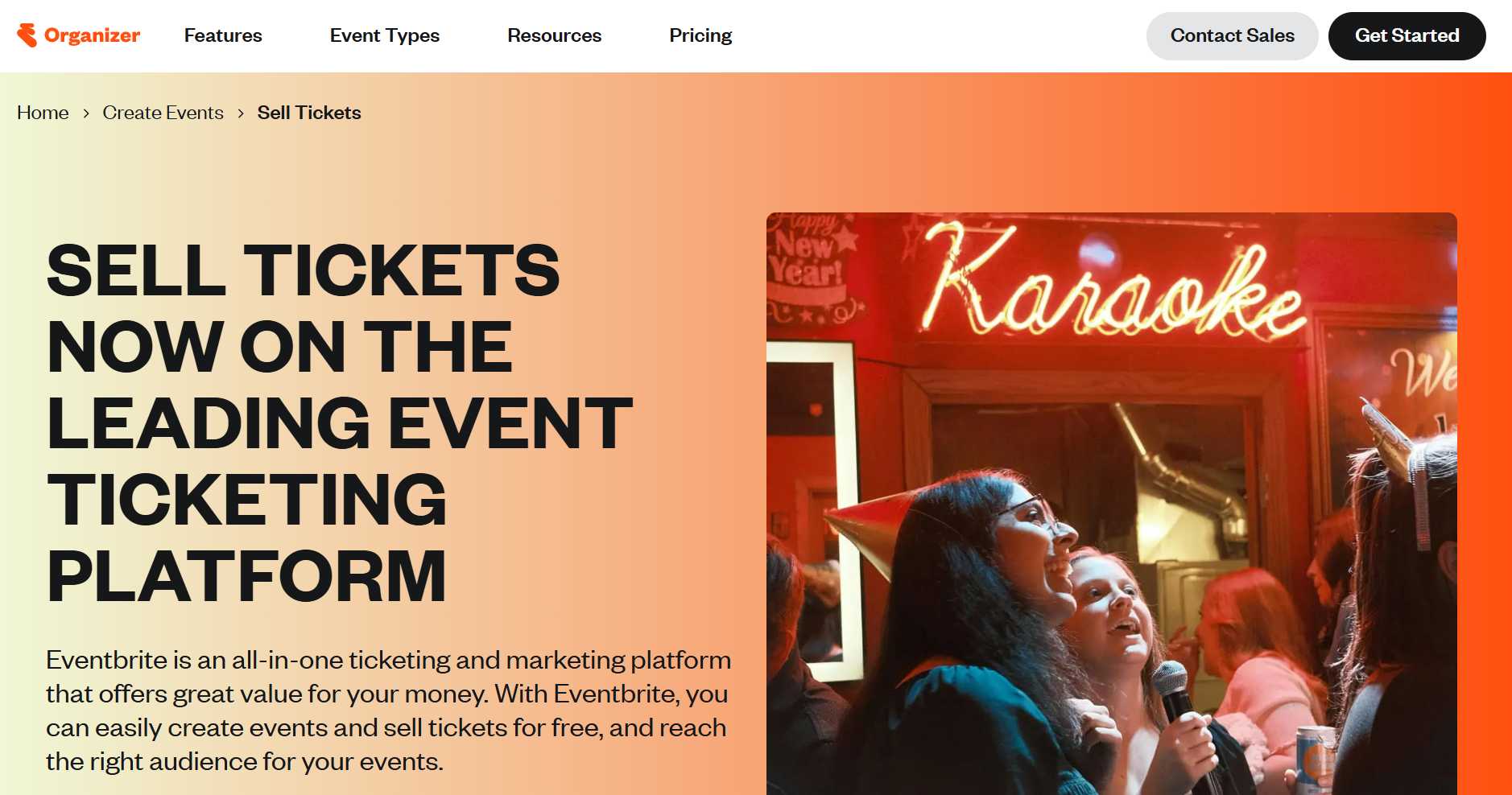
Eventbrite is known as the principal ticketing platform through which anyone worldwide can access it. The platform fits best with different types of events such as workshops, concerts, yoga sessions, and local community events.
Key Features:
-
- Fast self-service
- Easy information collection
- Promotion via social media
- Ticket type system
- Mobile check-in
Eventbrite is an excellent platform for organizers who are in the habit of holding smaller events. However, large and professionally organized events usually require advanced features for customization, which are not available in Eventbrite.
3. Cvent

Cvent is a platform with great power that mainly focuses on enterprise event ticketing. Its major focus is on large corporate events, hospitality industry events, and hybrid meetings. The system comprises features such as advanced analytics, venue sourcing, and a complete set of tools for the workflow.
Key Features:
-
- Event registration
- Meeting management
- Ticketing
- Attendee tracking
- Hotel and travel management
Cvent is a great tool for big corporations. Small organizers might find Cvent too complicated or too expensive.
4. Townscript

Townscript is the perfect platform to get tickets for small and medium-sized local events. Being a favorite in Asia, it provides straightforward tools for event creation and sign-up.
Key Features:
-
- Event landing pages
- Inclusion of a payment gateway
- Ticketing options
- Essential marketing tools
Among the activities that can be planned with Townscript are sports events, community meetups, and workshops.
5. Ticket Tailor

If you are looking for a simple, low-fee option, Ticket Tailor would be a good choice. It is one of the best event ticketing platforms for organizers who want control and a simple ticketing system without additional layers.
Key Features:
-
- Either payment per event or by subscription
- Simple ticketing
- You are allowed to keep 100% of the ticket sales revenue.
The Ticket Tailor platform is made for small and medium-sized events. It lacks many advanced features for event management.
6. Bizzabo
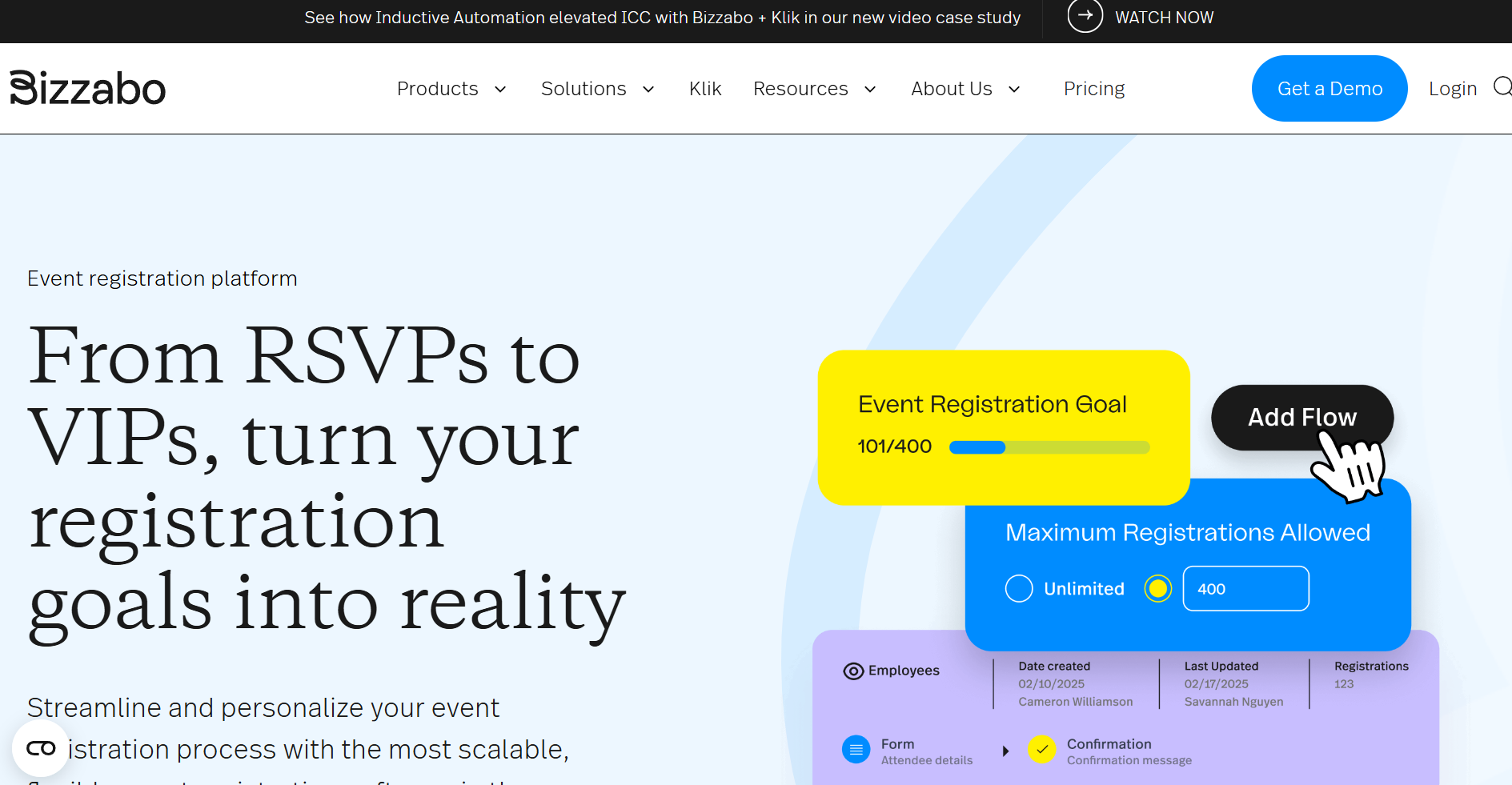
Bizzabo is an event experience and data analytics platform that is ideally suited for large-scale conferences and trade shows.
Key Features:
-
- Smart registration
- Offline check-in
- Interaction tools
- Event apps
Bizzabo is all about the attendee experience by making it a personal one. It is a perfect tool for event organizers to increase engagement.
7. Eventzilla

Eventzilla provides a basic platform to manage various kinds of events. It can handle the tickets for a paid or free event, a webinar, a class, or a conference.
Key features:
-
- Drag and drop configuration
- Mobile check-in
- Event pages
- Connection options
- Custom forms
Eventzilla is an excellent tool for clubs, associations, and businesses.
8. Universe

Universe is a branch of Ticketmaster. It merges business ticketing with the marketing of events. The platform mainly offers ticketing support for festivals, concerts, and big entertainment events.
Key Features:
-
- Fixed seating
- Internet advertising
- Social networking tools
- Ticket scanning application
Universe is a great tool for non-private events and those working in the entertainment industry.
9. RegFox

RegFox has adjustable pricing and great customization features. It permits event planners to create detailed registration forms that include add-ons, conditional logic, and advanced fields.
Key Features:
-
- Minimal fee per registration
- Simple customization
- A feature of upselling
RegFox is a good fit for events like seminars, conferences, and skill development programs.
10. Tito

Tito is a platform designed to handle simple but professional events. Its functionality is aimed at organizers who need a neat design and a simple way of selling tickets.
Key Features:
-
- Customizable registration
- Simple user interface
- Developer-friendly
- Ticketing automation
Tito is of great use for small and medium events in technology communities.
Best Event Ticketing Platforms by Event Type
The right platform often depends on the type of event you are running. Here are the best software matches for each format.
- Academic Events: Dryfta is well suited for academic events by natively pairing its registration tools with abstract submission and peer-review workflows.
- Conferences: Tito is a popular choice for professional conferences thanks to its straightforward registration experience and easy-to-use checkout process.
- Festivals: Music and arts festivals often choose Ticket Tailor for its transparent pricing model and cost-effective ticketing for large audiences.
- Nonprofit Fundraisers: Eventzilla simplifies charity galas and foundation meetings with built-in donation widgets and automated tax receipts.
- Corporate Events: Cvent is a popular choice for enterprise-grade corporate events with features like attendee management, venue sourcing, accommodation planning, and event logistics.
- Trade Shows: Trade shows often rely on Bizzabo for its exhibitor tools and attendee engagement features.
- Hybrid Events: RegFox supports hybrid events with registration tools that accommodate virtual access and onsite attendance.
- Community Events: Townscript offers a user-friendly entry point for local meetups that require localized mobile ticketing options.
Common Event Ticketing Challenges
At the end of the day, getting attendees to click “register” is only half the battle. If your registration process feels confusing or slow, potential attendees may drop off before completing their purchase.
Also, we all know that not all event ticketing platforms are built the same. Everything can seem fine until launch day puts your system to the test. To avoid potential bottlenecks, look out for these common challenges when evaluating the best event ticketing software.
- Registration Drop-Off: Complicated, multi-page checkout forms frustrate buyers and lead to cart abandonment before purchase. A strong online event ticketing platform must support short registration forms to secure those impulse purchases.
- Multiple Ticket Types: Events often include early-bird pricing, VIP access, group tickets, member rates, and discount codes. Modern event ticketing platforms should handle pricing changes automatically without requiring manual updates.
- Refund Management: Attendee plans can change at any time, leading to cancellations and refund requests. Event ticketing platforms should automate refunds and restock tickets effortlessly.
- Onsite Check-In Delays: Registration lines can slow down when ticket data is not updated in real time. Reliable check-in tools help organizers check in attendees faster and reduce wait times.
- Reporting Gaps: Tracking event performance is no easy task when the data is managed across multiple tools. The best event ticketing software should provide centralized reporting and analytics to help organizers make informed decisions.
- Payment Processing Issues: Registration revenue can take a hit when attendees encounter failed transactions, payment gateway errors, limited payment options or cross-border payment restrictions. Your online event ticketing platform should support multiple currencies and trusted payment providers to remove barriers for international attendees.
- Managing Hybrid Attendees: Hybrid events generate attendee data from multiple channels. Without a centralized system, communication gaps and data inconsistencies can happen between virtual and in-person audiences.
Why Event Organizers Choose Dryfta?
When conference operations depend on multiple standalone platforms, errors can pile up in no time. Instead of working together, your event tools operate independently, leaving your team to handle back-and-forth data transfers and duplicate work.
That is why many organizing committees are moving beyond standalone event ticketing platforms. They are now looking for a single platform that brings event registration, submissions, scheduling, communications, and attendee management together in one place. Dryfta is designed to support that approach, helping teams manage complex event workflows.
Here is why Dryfta has become the best event ticketing software choice for event planners worldwide:
1. Ticketing and Registration in One Platform
Most standard event ticketing platforms force you to process a ticket on one site and then manually move user details into a separate database. Dryfta removes that extra step by combining an online event ticketing platform with a registration system. As soon as an attendee completes a purchase, their profile becomes available across your entire event dashboard.
- Fully branded registration portals: Custom fields tailored to your audience.
- Integrated payment processing networks: Fast and reliable global checkout options.
- Zero platform-side ticket commission fees: Keep 100% of your ticket revenue.
2. Academic and Scientific Conference Support
This is where Dryfta completely outpaces generic competitors. Basic ticketing tools have absolutely no idea how to handle academic events. They lack abstract management and peer review. However, Dryfta is engineered from the ground up to support universities and research institutions running multi-track scholarly conferences.
3. Multiple Ticket Types and Pricing Rules
Keeping track of different ticket levels can make registration management harder than it needs to be. Thankfully, Dryfta offers highly customizable ticketing that adapts to your event pricing structure. With Dryfta, you can:
- Configure early-bird discounts that expire automatically.
- Set up restricted institutional group passes and VIP categories.
- Apply custom promotional coupon codes to targeted groups.
4. Abstract Management
You cannot run a prestigious research symposium using everyday form builders. Dryfta includes a dedicated abstract and review management system designed to handle academic workflows. Authors can upload documents, track their acceptance status, and view notes directly inside their personal dashboards.
Other features:
- Supports single, double, and triple-blind peer review.
- Flags potential reviewer conflicts of interest automatically.
- Converts accepted papers directly into live event schedule slots with a single click.
5. Attendee CRM
Long-term event success depends on knowing how your audience engages over time. Dryfta includes a built-in CRM that helps organizers track attendee interactions and engagement. Planners can categorize user profiles based on session views or ticket purchase data to send highly targeted email campaigns.
6. Sponsor and Exhibitor Management
Today’s sponsors and exhibitors expect measurable results from their investment. Dryfta helps organizers strengthen sponsor relationships with features designed to increase visibility.
You can:
- Build interactive virtual vendor booths with embedded video showcases.
- Track banner ad impressions and live link clicks across the site.
- Provide exhibitors with standalone mobile lead retrieval tools.
- Deliver automated ROI reporting tools to sponsors.
7. Badge Printing and Check-In
Event day puts registration systems to the test. With Dryfta in place, conference teams can manage attendee check-ins through digital ticket scanning and instant profile lookups, helping organizers keep queues under control and improve the arrival experience.
8. Virtual and Hybrid Event Support
You do not need to purchase a secondary streaming platform to reach your digital audience. Live sessions can be linked directly to the event agenda, simplifying hybrid event management.
9. Event Analytics
Making informed event decisions requires accurate, up-to-date data. Dryfta provides real-time analytics and reporting dashboards that track key business and engagement metrics, helping organizers monitor performance with ease.
- Monitor registrations, submissions, attendee activity, and session engagement through real-time event dashboards.
- Create custom reports with advanced filters to analyze specific event data and audience segments.
- Share reports securely with sponsors and stakeholders through access links.
- Export event data in multiple formats for an in-depth analysis and internal reporting.
- Build targeted attendee segments and use them to send personalized email campaigns.
10. Automation Workflows
Event teams have enough on their plates even without manual follow-ups. Dryfta helps reduce this manual workload through built-in automation. It handles registration confirmations and cart abandonment notifications for incomplete ticket purchases.
Final Thoughts
The event ticketing platforms you choose will determine the success of your event. The right tool makes registration easier and offers a great attendee experience. These platforms will become more stable and feature-rich in 2026.
If your requirement is an absolutely integrated system that manages ticketing, registration, submissions, check-ins, badges, CRM, analytics, and event automation, Dryfta would be the best option.
Dryfta is one of the best event ticketing platforms on the market, providing the tools you need for registration, ticket pricing, task automation, and event management in a seamless way. If you are seeking a platform that will keep your whole event well-organized from start to finish, then Dryfta has the solution. Book your free demo today and see how Dryfta can be the power behind your next event.