



What do you think organizers look for when organizing an event? If your answer is event platforms that simplify speaker and session management, then you are likely correct. Managing an academic event can be challenging, given the multiple important elements that need attention. The appropriate platform effectively prioritizes all these elements.
Most event organizers would agree that managing speakers and their sessions at academic events can get complicated at any moment. However, with the right platform, speaker management becomes a little less stressful.
This is why in this blog, we have put together a list of the top 10 academic event platforms that make speaker and session management seamless.
What Academic Conferences Actually Need from a Speaker and Session Management Platform?
Academic conferences are very different from business events. Conference organizers do far more than coordinate keynote speakers. They manage hundreds of researchers, multiple presentation formats, parallel sessions, and schedules that keep changing. Without the right event platform, even a simple update can take hours to handle manually.
That is why speaker and session management should never be an afterthought. It should be a part of the planning process from the very beginning.
Let us unpack what this looks like on the ground:
- Speaker management covers everything from the time presenters submit a paper until they step onto the stage. It means collecting their bios, sending important event updates, tracking their presentation files, and managing their travel or scheduling requests. In the end, your speakers know where to be and when to be there, and they feel supported throughout the event.
- Session management is all about creating your event schedule and organizing presentations into the right time slots. It involves matching the right speakers to the right rooms, assigning session chairs, avoiding timing conflicts, organizing presentation order, and updating schedule changes. Done right, attendees can move between tracks without missing out on anything.
Looking ahead, the biggest trend for 2026 is smarter data integration. Many academic organizers are replacing manual human work with event platforms that links abstract reviews to the live schedule. The result is fewer mistakes and a better experience for speakers and attendees alike.
What to Look for in an Academic Event Platform for Speaker and Session Management?
Not every conference platform is made for academic events. Research conferences have special needs, from abstract submissions to speaker coordination and session planning. Choosing the right event platform means less manual work and fewer scheduling errors.
Let’s pinpoint the non-negotiable tools your dashboard needs to feature.
- Speaker self-service dashboard
Give speakers a place where they can update their profiles, upload presentation files, edit their information, and share their biographies without contacting the organizing team every time. - Abstract-to-schedule conversion
Accepted abstracts should be added directly to the conference agenda, saving time. - Speaker conflict detection
The platform should automatically flag scheduling conflicts so a speaker is never assigned to two sessions at the same time. - Multi-track session scheduling
Academic conferences often run several tracks in parallel. Good event platforms should make it easy to organize sessions across multiple rooms and time slots. - Blind peer review
Built-in blind review helps reviewers evaluate submissions fairly while keeping author identities hidden when required. - Automated speaker communications
From acceptance notifications to reminder emails, automated communication keeps speakers informed without adding extra work for organizers. - Session chair and moderator assignment
Assigning chairs and moderators should take just a few clicks, making it easier to manage every session from a single dashboard. - Participation certificate generation
The platform should generate certificates automatically for speakers, reviewers, session chairs, and attendees once the conference ends. - Pricing model
Choose a platform with transparent pricing that includes the features your conference actually needs instead of charging extra for every essential tool.
Quick Comparison — 10 Platforms at a Glance
| Platform | Best For | Abstract & Peer Review | Speaker Dashboard | Multi-Track Scheduling | Starting Price |
|---|---|---|---|---|---|
| Dryfta | Academic & research conferences | ✅ Native, blind peer review | ✅ Yes Self-service |
✅ Yes+ conflict detection | $1,499/year |
| Eventleaf | Small to mid-sized conferences | ✅ Yes | ✅ Yes | ✅ Yes | Free / $1 per attendee |
| Oxford Abstracts | Abstract-first conferences | ✅ Yes | ✅ Yes | ✅ Yes | Free / $890 per event |
| Cvent | Enterprise conferences | ⚠️ Limited | ✅ Yes | ✅ Yes | Quote-based |
| Whova | Attendee engagement | ⚠️ Limited | ✅ Yes | ✅ Yes | Quote-based |
| Eventeny | Community & academic events | ⚠️ Basic | ✅ Yes | ✅ Yes | Free / $120/month |
| PheedLoop | Large hybrid conferences | ✅ Yes | ✅ Yes | ✅ Yes | From $950/year |
| Sessionize | CFP & speaker management | ⚠️ Basic | ✅ Yes | ✅ Yes | Free / $499/event |
| ConfTool | Academic abstract management | ✅ Yes | ⚠️ Basic | ✅ Yes | Quote-based |
| Ex Ordo | Scholarly conferences | ✅ Yes | ✅ Yes | ✅ Yes | Quote-based |
The 10 Best Academic Event Platforms for Speaker and Session Management in 2026
Choosing the right academic event platform can make the difference between a well-organized conference and a stressful one. To help you decide, we’ve rounded up the 10 best academic event platforms for speaker and session management in 2026.
1. Dryfta
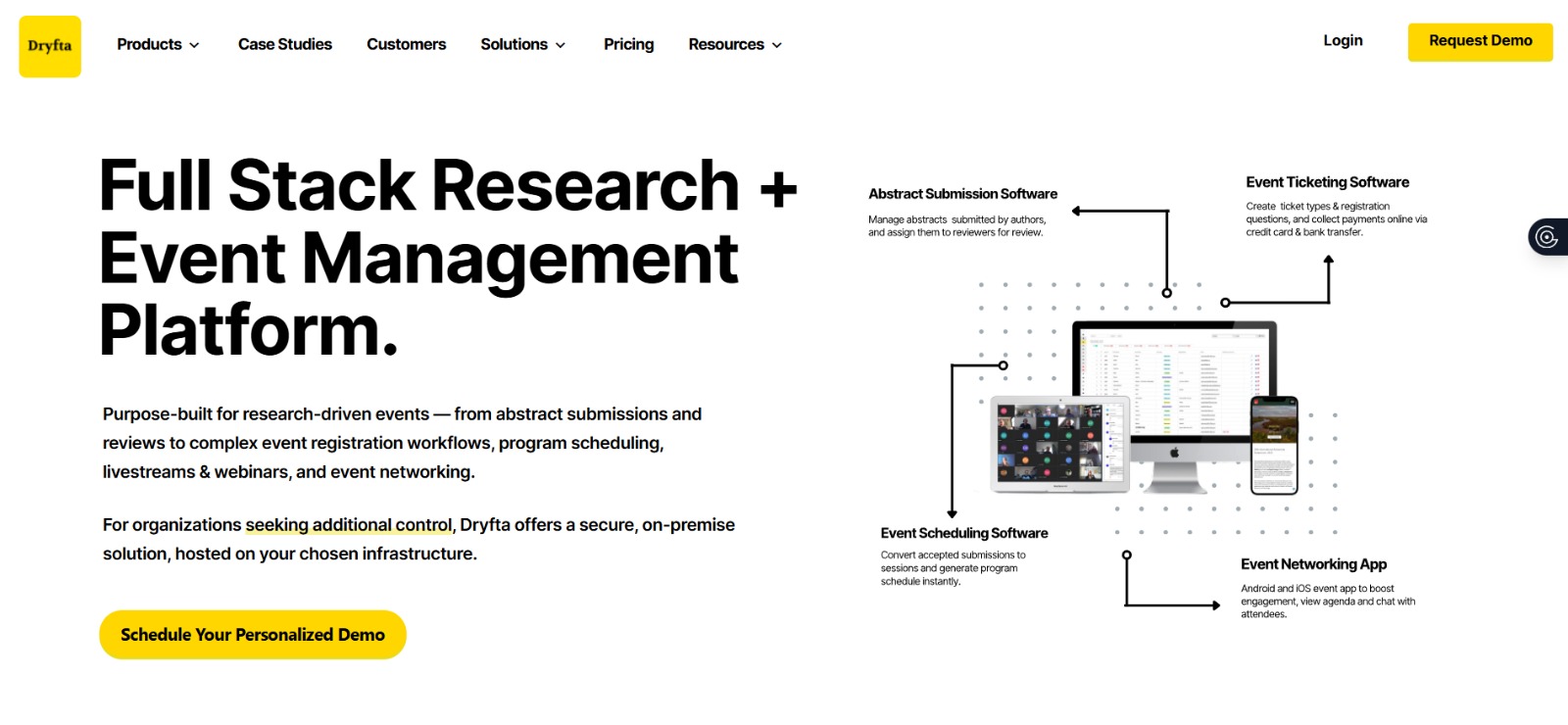
Dryfta is one of the best academic event platforms that is built specifically for academic and university conferences and events. It focuses on speaker, abstract, and session automation, hence making it a favorite among academic institutions.
Its speaker management system includes speaker bios, roles, and time availability. This allows organizers to assign chairs, moderators, and co-authors to individual sessions, ensuring that every segment of the event is well-structured.
It is a purpose-built facility for research-driven events. It handles abstract submissions, peer review, and integrates them into the program. Dryfta is specifically built to address the challenges faced by academic and university conferences. It helps streamline registration, ticketing, and program building.
2. Eventleaf
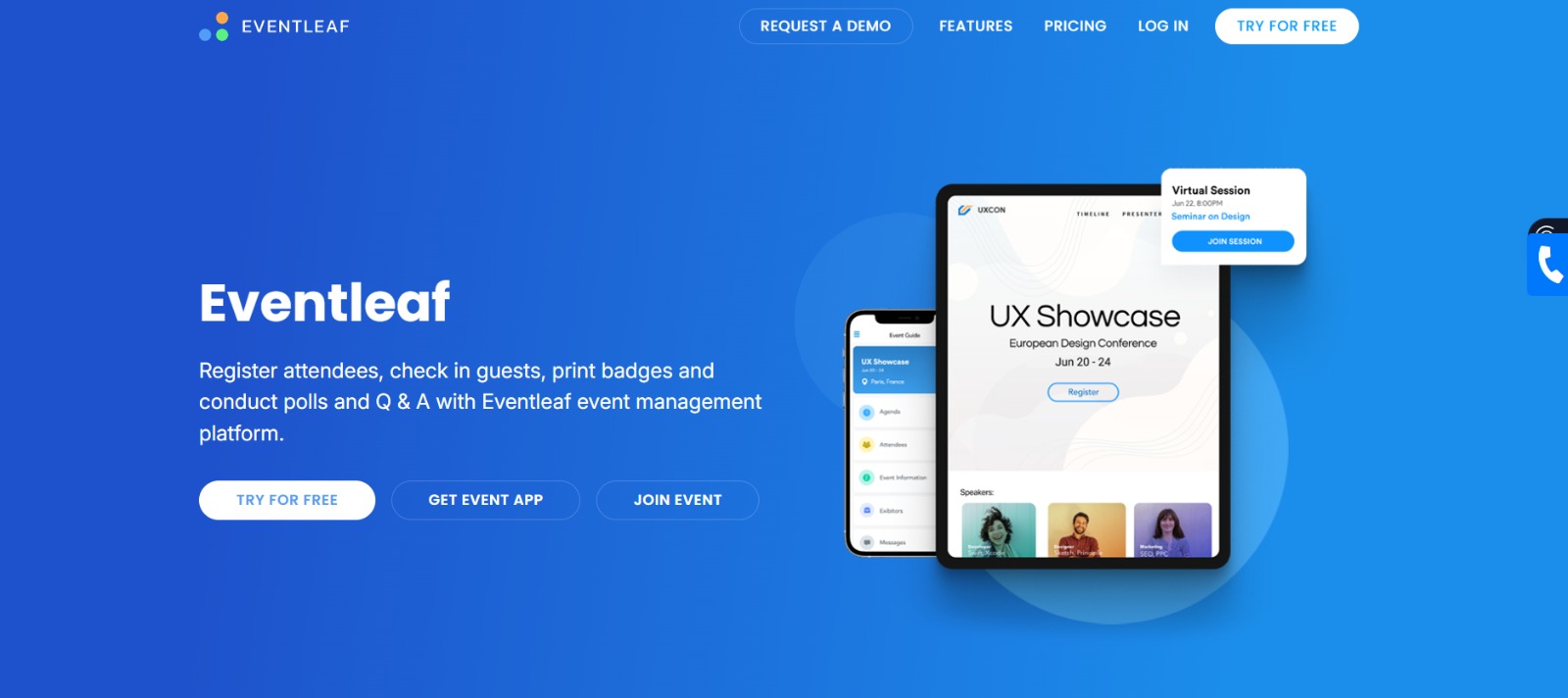
This platform provides an all-in-one solution for registration, abstract management, and session scheduling. It is well-regarded by universities and offers features like Q&A, polls, and instant schedule updates via a mobile app.
Here, the organizers can create their own agenda, add speakers, and upload presentation materials from a single dashboard. Speakers are also assigned to sessions, and attendees can view schedules from their mobile devices.
3. Ex Ordo

This specific platform is custom-built for research conferences and scholarly events. It excels at dealing with complex tasks. It includes an abstract management software, a program builder, and an integrated registration system. This ensures organizers have everything they need in one platform.
When you are looking for a platform that provides the ability to sync the full conference program with a mobile app, allowing for real-time updates and push notifications, then Ex Ordo is the right platform for you.
This platform masters the blend of speaker and session management. It is best for scholarly events, workshops, and symposiums of all sizes that require robust abstract and paper submission.
4. Cvent

Cvent is one of the most scalable event platforms designed for a wide range of tools for professional event planners. Its dedicated speaker management software allows organizers to store speaker profiles in an account-level library, showcasing speaker information and managing resource allocation. This is best for large-scale, professional conferences and conventions that require a powerful, all-in-one solution with deep analytics. It deals with a larger audience globally.
This platform can integrate with other systems to align data-driven analytics. It also ensures access to a large number of venues.
5. Whova
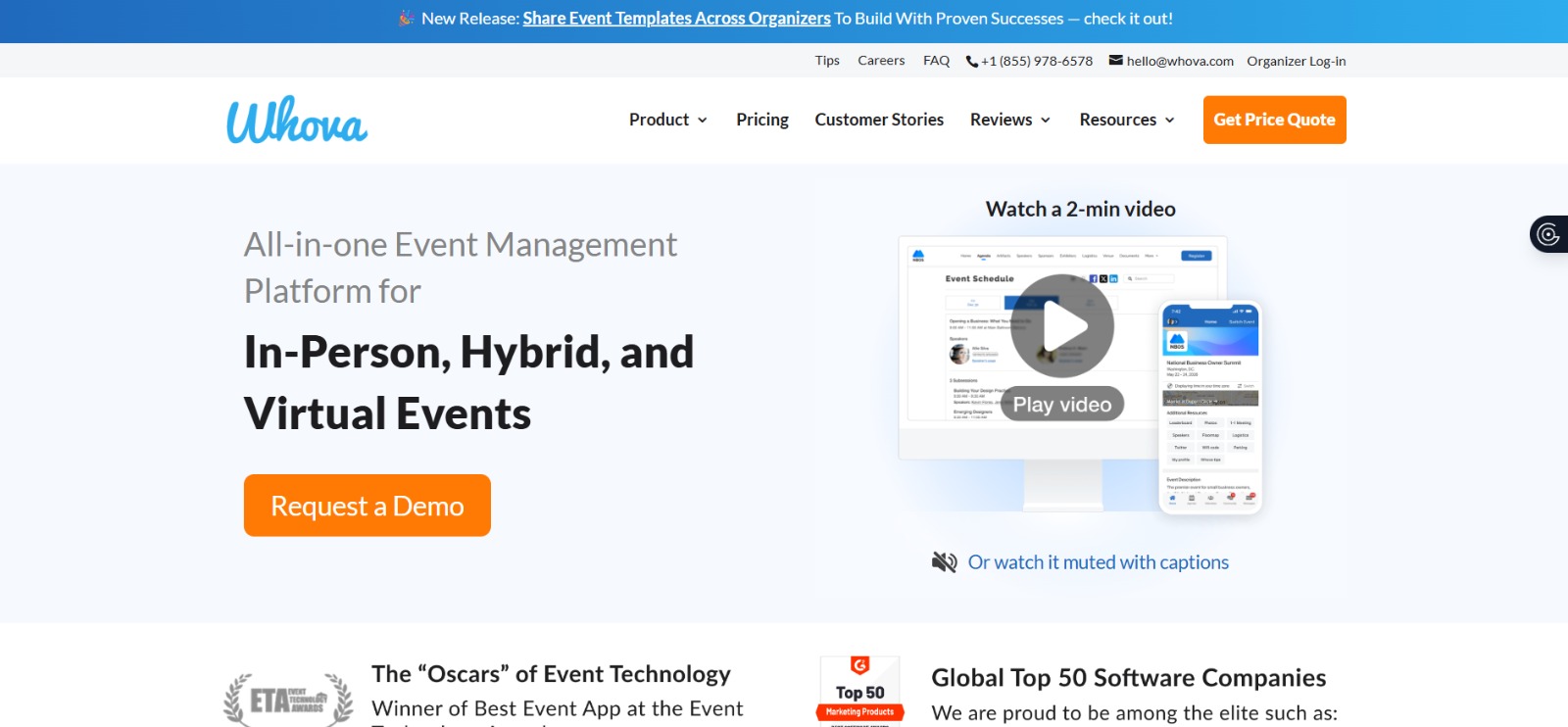
This is an award-winning platform known for its user-friendly interface and strong networking features. It simplifies planning with registration management, attendee engagement tools, and detailed analytics. With this experience, it caters to swift speaker and session management.
Whova saves time by automating tasks such as creating speaker webpages and setting up big-screen displays. It also offers customizable event agendas and helps facilitate communication with speakers through the platform.
6. Eventeny

A fully integrated platform for program, speaker, and session management with real-time public syncing across the website. Organizers can navigate easily to create sessions and assign speakers.
It is best for large-scale events that benefit from a fully integrated, automated system for managing speakers and sessions efficiently.
If you are in doubt and you need a platform for seamless navigation, then Eventeny is the right choice you are looking for.
7. Sessionize
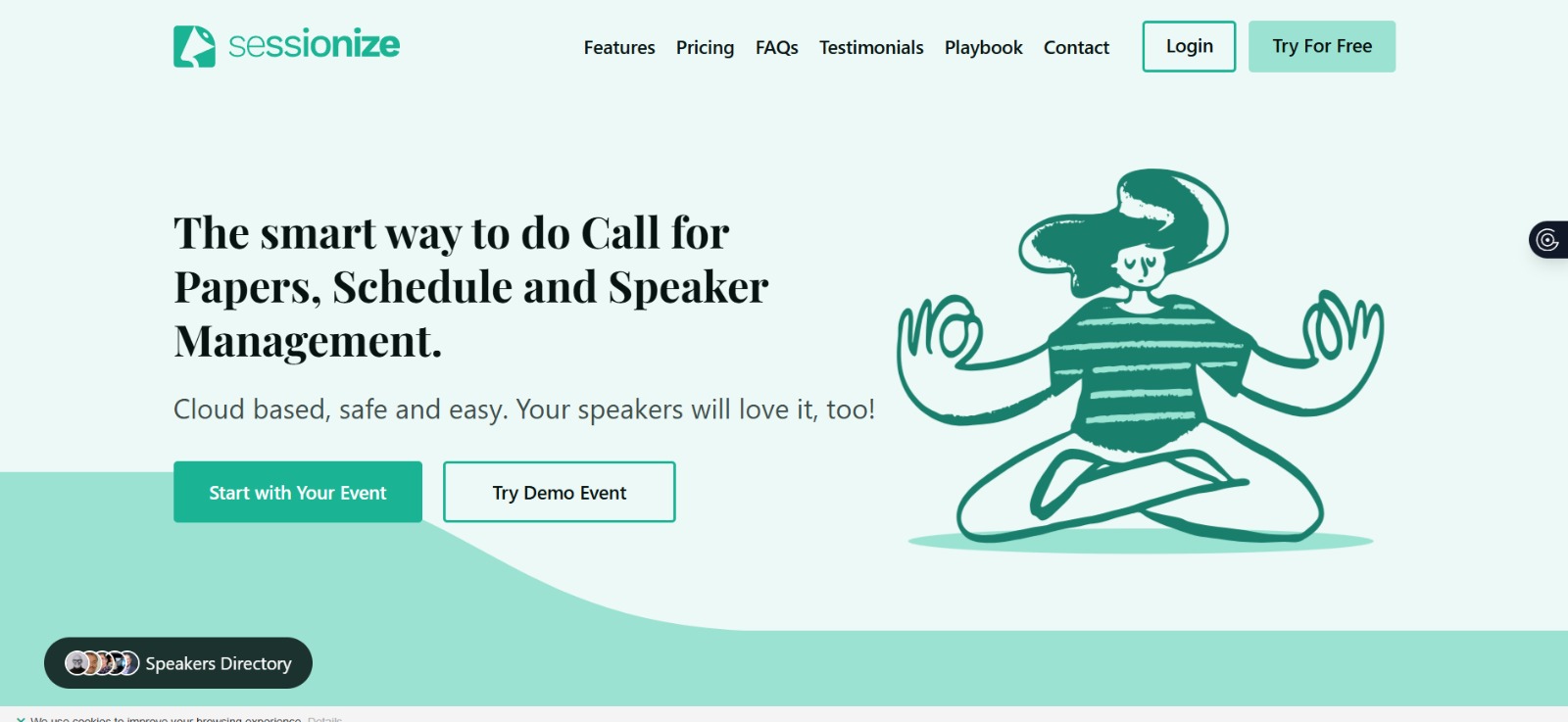
A streamlined tool designed for papers and the session selection process. It simplifies the session proposal and review process, allowing speakers to manage their bios and session details independently.
With this tool, it’s easier to handle a high volume of speaker applications. It is best for event planners whose primary needs are simplifying the abstract submission, review, and scheduling of sessions and speakers.
The platform offers a robust and guided review process with three modes that allow content teams to review submissions much more efficiently.
8. Oxford Abstracts
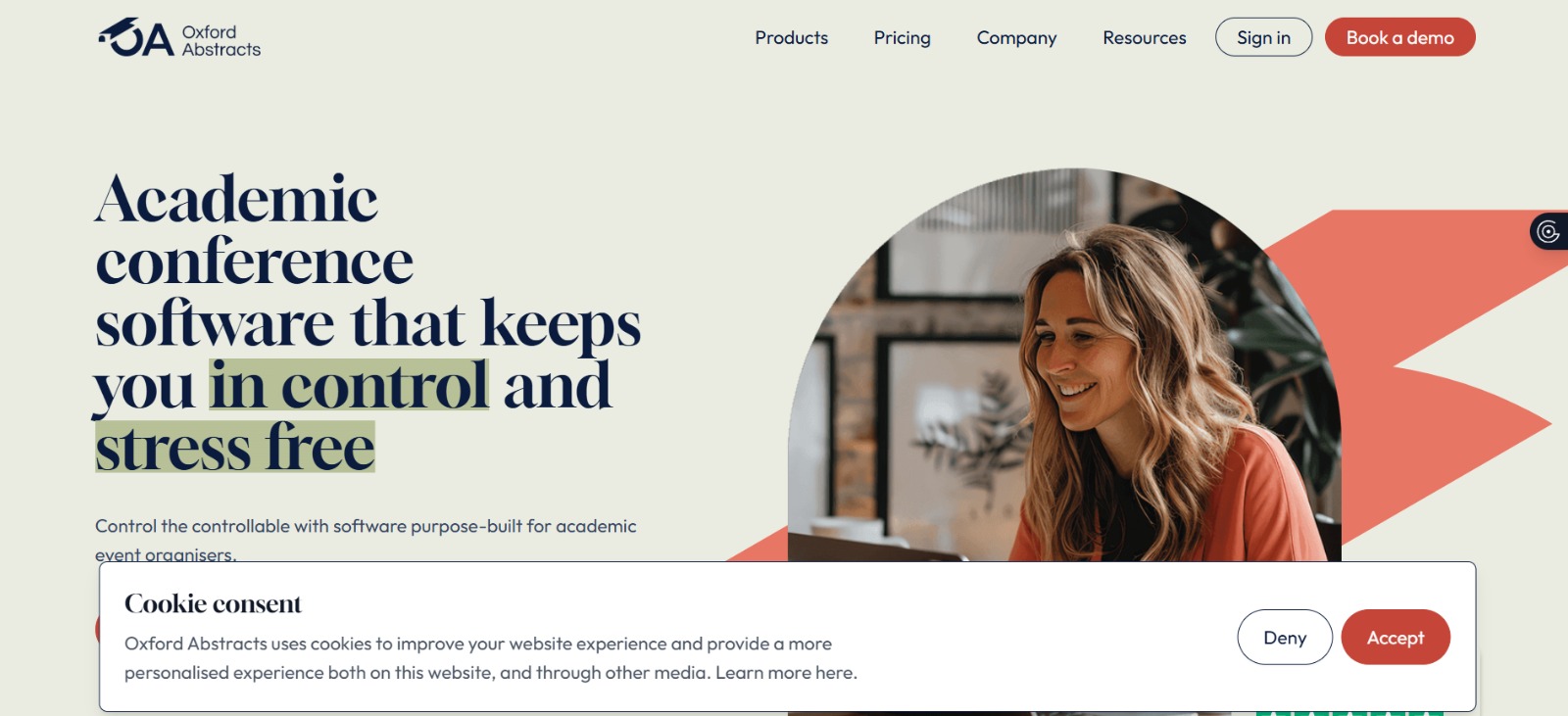
This platform manages abstract submissions and speaker workflows. It has been widely used by academic associations, scientific committees, and universities worldwide. Managing speakers and sessions can be a tedious task; hence, choosing Oxford Abstracts helps make the entire process simple.
It has one of the most advanced event platforms in the academic events market, making it ideal for research-intensive conferences with large reviewer groups.
9. PheedLoop
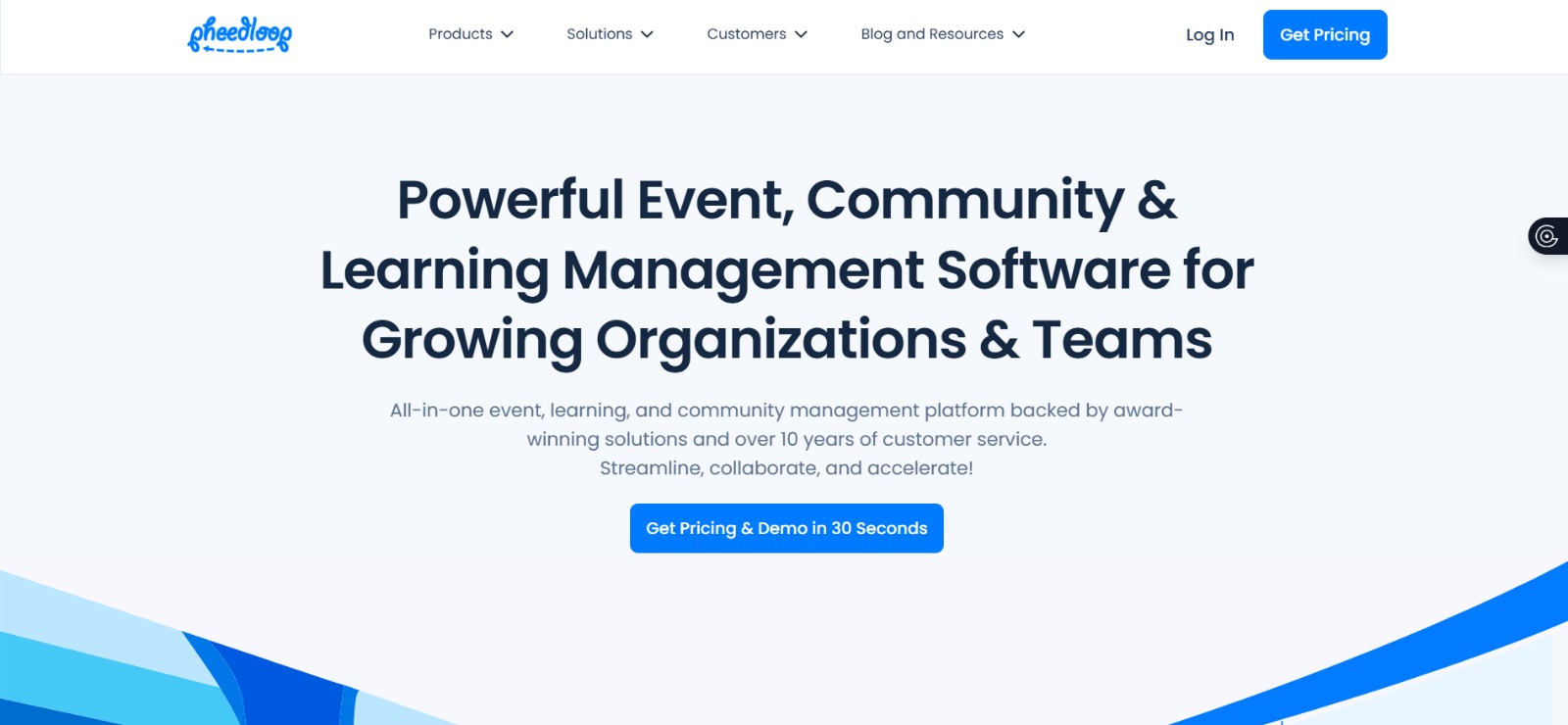
The tool brings an all-in-one, centralized system that automates and streamlines speaker and session management through dedicated portals, abstract management tools, and real-time synchronization.
Pheedloop offers private, personalized portals where speakers can manage their experience autonomously. They can upload presentation files and biographies, all in one place.
For academic and university events, this platform comes with a learning management system and continuing education credit tracking, allowing organizers to create courses and present attendees with personalized credit reports.
10. ConfTool

It presents a highly customizable set of tools that streamline the entire speaker and session management lifecycle, from submission and peer review to scheduling and communication. It manages the entire process of call for papers, abstract submissions, and the peer review process within a single system.
For online conferences, ConfTool allows organizers to add links to external resources for each session or presentation directly within the agenda.
Which Platform Is Right for Your Academic Event?
The best academic event platform depends on the size of your event and the features you need most. Here’s a quick guide to help you narrow down your options.
Best Platform for Large-Scale Academic and Research Conferences: Dryfta
Dryfta is one of the best event platforms, purpose-built for conferences that handle large numbers of submissions, reviewers, speakers, and parallel sessions. Its end-to-end workflow, from abstract submission to peer review, registration, scheduling, proceedings, and abstract book publishing, makes it an excellent fit for complex research events.
Best Platform for Scholarly Conferences Where Peer Review Workflow Is the Primary Factor: Oxford Abstracts & Ex Ordo
If your main focus is abstract submission and peer review, Oxford Abstracts and Ex Ordo are both solid options. Both platforms are built for academic conferences and offer reliable tools to manage the review process.
Best Platform for Full-Scale Academic Conferences Wanting the Highest G2-Rated All-in-One Platform: Dryfta & PheedLoop
Dryfta includes abstract management, speaker management, registration, scheduling, event websites, and publishing in one platform. PheedLoop also offers an all-in-one conference management solution with tools for attendee engagement.
Best Platform for Academic Events Wanting Per-Event Pricing Without an Annual Contract: Eventleaf & ConfTool
Eventleaf and ConfTool are good options for organizers who run conferences occasionally and prefer paying for each event instead of an annual subscription.
Best Platform for Smaller Academic and Scientific Events: Eventleaf & Whova
Many smaller conferences prefer simple platforms that are easy to use. Eventleaf and Whova make registration and agenda management easy to handle.
Best Platform for Technology or Developer Conferences: Sessionize & Eventeny
Sessionize is widely known for managing speaker submissions and technical session scheduling, while Eventeny offers flexible event management features that work well for community-driven and technology-focused events.
Best Platform for Enterprise-Scale Annual Congresses: Dryfta, Cvent & PheedLoop
Enterprise conferences need software that can manage large crowds, multiple tracks, detailed reports, and complex workflows. Dryfta, Cvent, and PheedLoop are all strong options. Dryfta is especially useful for conferences that also manage abstract submissions and peer reviews.
Parting Thoughts
Academic conferences are unique, and they require a lot more than just venue booking and agenda planning. When selecting academic event platforms, one needs to consider the depth of speaker management tools and session scheduling flexibility.
Dryfta is often considered ideal for academic conferences due to its powerful abstract management and customizable scheduling tools. In short, it is the best event management software that meets your goals and the level of customization you require for organizing the event.
So, what are you waiting for? Try the free demo and explore what you can achieve with the help of the right platform.
Frequently Asked Questions
- What features should I look for in academic event platforms for speaker management?
Look for features like speaker profiles, self-service dashboards, abstract management, automated email notifications, conflict detection, multi-track scheduling, and session assignments. A good platform should also keep speaker information connected to abstracts and the final conference agenda to reduce manual work.
- How is academic event platform speaker management different from corporate event speaker management?
Academic conferences focus on abstracts, peer review, research presentations, and complex multi-track schedules. Corporate events usually prioritize marketing sessions and attendee engagement.
- Which academic event platform is best for multi-track session management?
Dryfta is one of the best choices for multi-track academic conferences. It lets organizers schedule parallel sessions, assign speakers, avoid timing conflicts, manage room allocations, and update agendas from a single dashboard, making large and complex conference programs much easier to coordinate.
- Is there a free academic event platform for speaker and session management?
Free options exist, but they often have limited features or attendee restrictions. They may work for small workshops or simple events, but larger academic conferences usually benefit from a dedicated platform focused on your needs.
- What is abstract-to-schedule conversion and why does it matter for speaker management?
Abstract-to-schedule conversion moves accepted abstracts straight into the conference schedule. You don’t have to enter the same information repeatedly. That reduces errors and keeps speaker details accurate. Building and updating the conference agenda also becomes much faster.
