




Did you know that, according to Dataintelo’s 2025 industry report, the education sector accounts for 11.9% of the global conference market? That is a huge slice of the pie. Yet, knowing how universities manage research conferences successfully is still unfamiliar to most organizers.
Unlike corporate events, there is no single team making every decision. Universities work across different departments with busy faculty members.
And if you have ever wondered how universities organize research conferences so successfully, we’ve got you covered. Keep reading.
Why Do Universities Manage Research Conferences Differently Than Other Organizations?
Universities work very differently from businesses. That is why how universities manage research conferences is different too. To understand university research conference management, it is important to know that these events are not controlled by a traditional corporate hierarchy. Instead, academic culture plays the biggest role.
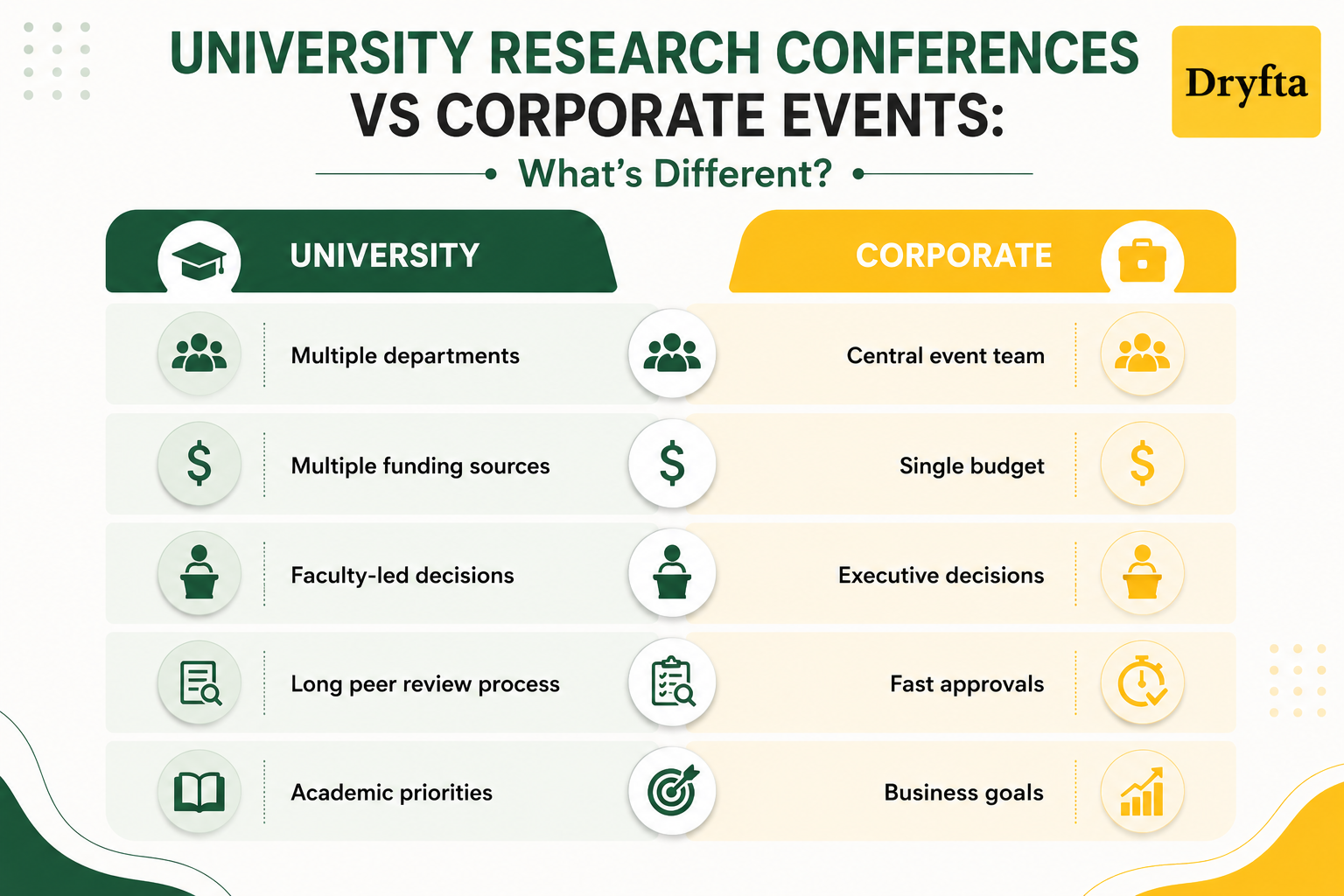
Here are the three differences that define how universities manage research conferences nowadays:
Decentralized decision-making across departments
Businesses have one team that manages events. However, universities give each department the freedom to manage its own events. This means university research conference management can be very different from physics to literature, with each department following its own methodology. Most decisions are made within each department, leaving central administration to coordinate everything.
Faculty commitment volatility
Professors have a lot to do. They teach classes, grade assignments, work on their own research, all while taking care of their personal lives. Even if they are helping with the conference today, they may have to focus on research tomorrow. Conference plans need to be flexible and adjust to these changing schedules.
Layered, often informal funding
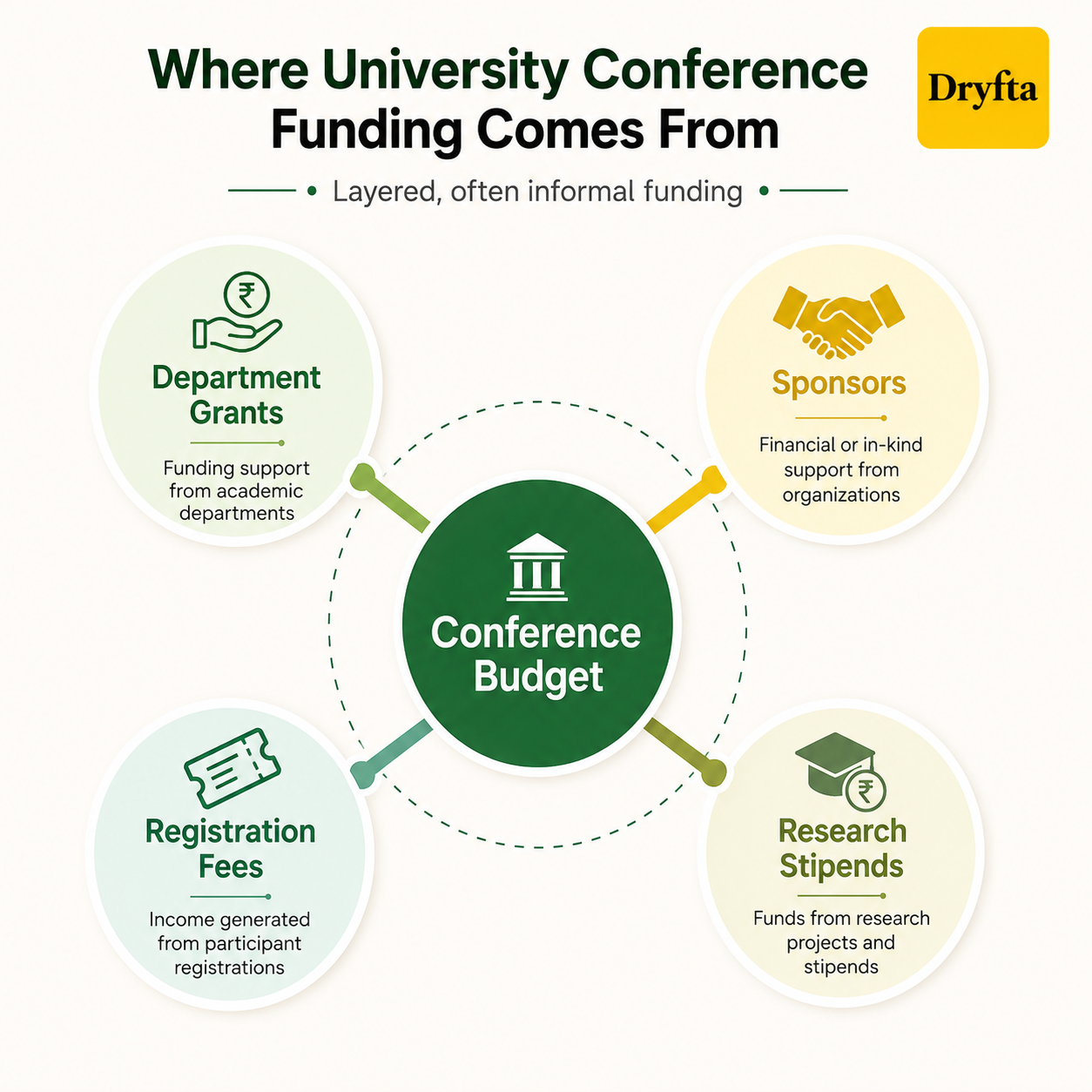
Corporate events usually have a single source of funding. But how universities manage research conferences is very different. The money often comes from several different sources, such as:
- Internal department grants
- External sponsor contributions
- Individual registration fees
- Leftover research stipend
As you can see, universities need a different approach to event planning. Being flexible and patient is important because corporate planning does not always fit here.
Something you might not know: According to the Academic Research and Development Global Market Report 2026, the global academic research and development market is projected to reach nearly $628 billion in 2026, growing at an annual rate of 8.5%.
The University Research Conference Timeline — What Happens When
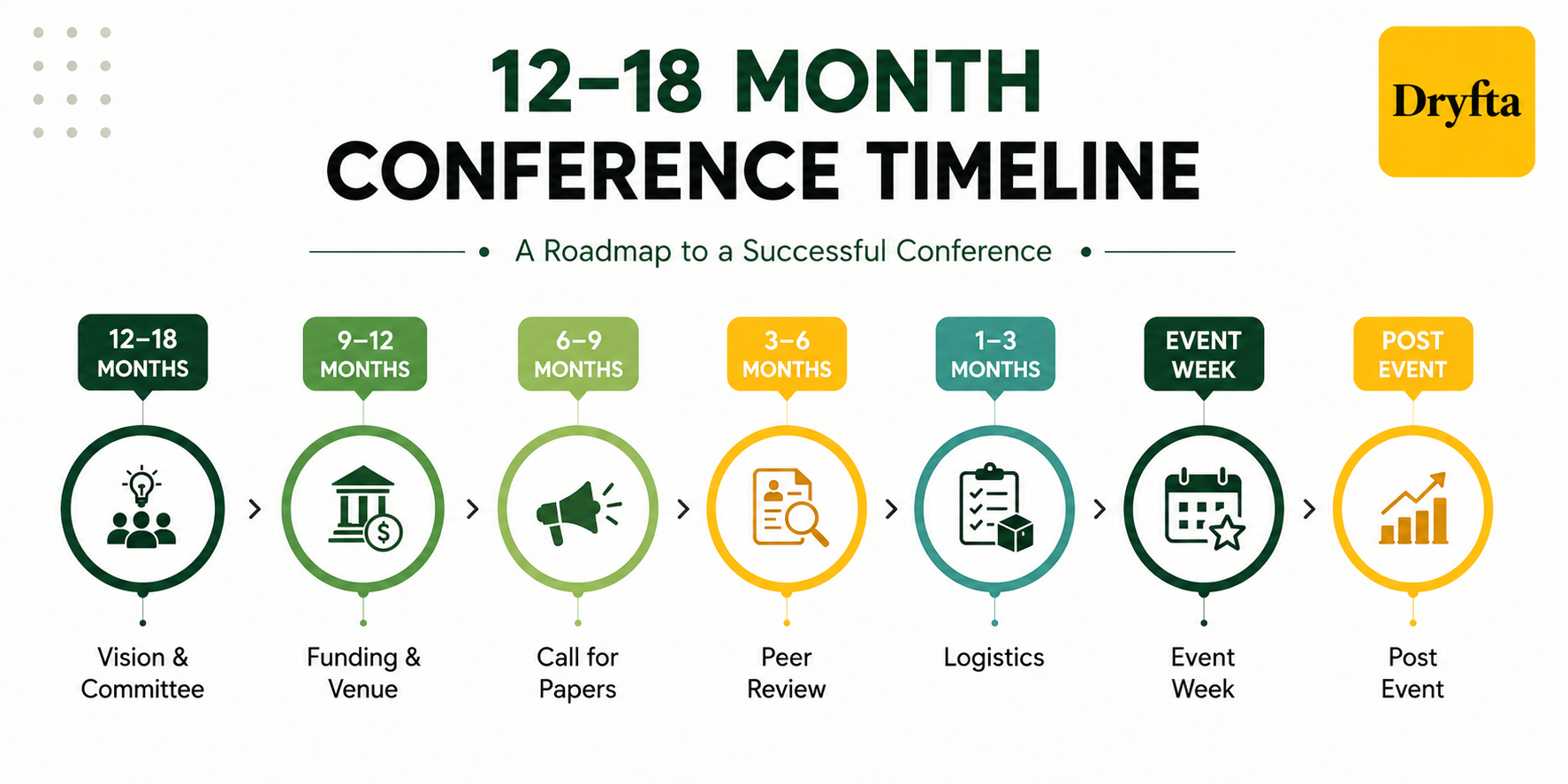
Planning an academic conference is a marathon. You cannot start today and pull it off in a few weeks. It takes meticulous planning and patience. Between managing your authors and reviewers and finding funding from different sources, you need a rock-solid, step-by-step game plan.
Let’s look at the timeline together.
12–18 Months Before: Vision and Committee Formation
This phase is where you plan the basics before moving on to the bigger tasks. It lays the foundation for your university research conference management.
- Decide on the main conference topic
- Bring together faculty members and staff to form the organizing committee
- Decide what success looks like for your event
- Make a list of keynote speakers and VIP guests you want to invite.
9–12 Months Before: Budget, Funding, and Venue
Now it is time to plan your budget and choose a venue. This is where how universities manage research conferences can become complicated since funding often comes from several different sources.
- Finalize funding from the university and participating departments
- Prepare a list of sponsors and reach out to them about sponsorship opportunities
- Plan your budget by matching expected expenses with projected income
- Visit different venues and book the one that best fits your event
- Work with nearby hotels to reserve rooms for attendees
6–9 Months Before: Call for Papers and Submission System Setup
This is one of the most important stages of your conference planning. The success of your event depends on the quality of the research and presentations you receive.
Here are the first steps to get started:
- Publish the official call for papers with topics and submission instructions
- Test the abstract submission and peer review platform before launch
- Invite faculty members to join the program committee and review papers
- Launch the registration portal for early attendees
3–6 Months Before: Review, Decisions, and Program Building
Now that all the submissions are in, it is time to review and select the best research. This step has a big impact on your conference’s academic quality.
- Send submitted papers to experts for peer review
- Inform authors whether their papers have been accepted or rejected
- Finalize the conference agenda and session schedule
- Confirm all keynote and invited speakers
- Open early-bird registration and encourage people to register early
1–3 Months Before: Confirmation and Communication
Your conference is just around the corner. Now it is time to focus on logistics and make sure everything is ready for event day.
- Check all arrangements with the venue and catering providers
- Finalize hotel bookings and share accommodation details with attendees
- Send pre-event information to everyone involved
- Prepare attendee badges and printed conference materials
- Test all event technology and hybrid session equipment before the conference
Event Week and Day-Of
Event day is here. One thing that makes how universities manage research conferences successful is streamlined communication with everyone involved.
- Share a detailed event schedule with every team lead
- Assign a dedicated contact person in each area to handle questions and solve problems
Post-Event (1–4 Weeks After)
Your work is not over when the conference ends. Successful university research conference management continues with post-event follow-up.
- Show your appreciation by sending thank-you emails to speakers, volunteers, and most importantly, your team
- Share the conference proceedings or session recordings with attendees
- Meet with your organizing committee to discuss what worked well and what can be improved
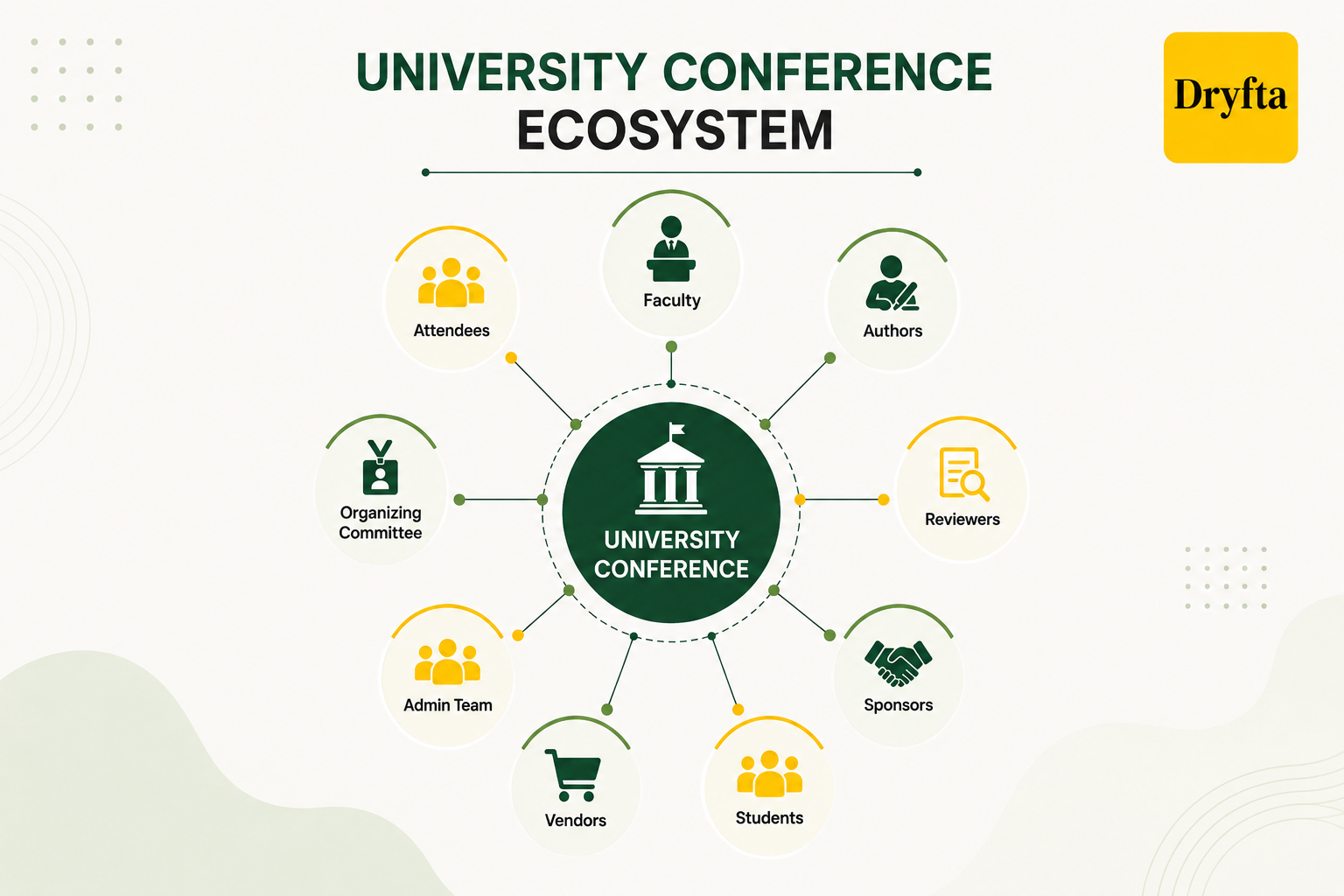
The Five Structural Challenges Universities Face — and How They Manage Them
Planning a university conference comes with its own challenges. Unlike corporate events, universities must balance administrative processes with busy academic schedules. Here are five common challenges and how universities handle them.
- Faculty Availability and Commitment Volatility
Problem: Faculty members are often busy with teaching and research, so they may not always be available for conference tasks.
Fix: Assign extra committee members and have backup session chairs ready in case someone cannot attend.
- Student Assistant Reliability
Problem: Student volunteers are sometimes unavailable because of exams and coursework.
Fix: Reward volunteers with certificates and easy-to-follow task lists.
- The Absence of a Central Coordination Hub
Problem: Different departments plan events on their own, leading to repeated work.
Fix: Create a shared folder with event templates and vendor contact lists.
- Layered and Conditional Funding
Problem: University conference budgets often combine money from several different sources.
Fix: Keep all expenses organized with budgeting software that tracks each funding source.
- Hybrid and Virtual Delivery Expectations
Problem: Weak campus Wi-Fi and technical issues can interrupt live streaming.
Fix: Hire technical experts and test all equipment several days before the event.
How Universities Running Multiple Conferences Manage the Portfolio?
When universities organize several conferences each year, planning everything at the last minute is not practical. How universities manage research conferences depends on organized tools and repeatable workflows.
Here is how they do it:
- Reusable conference infrastructure: Instead of buying new software or designing badges every time, campuses build a plug-and-play toolkit. They deploy template-based websites and standardized abstract submission portals that any department can spin up instantly.
- A shared events calendar across departments: To avoid booking conflicts, universities use a shared digital calendar to track every department’s event plans. Each department can see existing bookings, preventing two departments from booking the same auditorium at the same time.
- Centralized vendor and venue relationships: Many universities sign long-term agreements with hotels and caterers. By doing so, organizers no longer need to negotiate new legal agreements for every event.
- A shared pool of trained student assistants and administrative support: Many universities rely on the same trained student volunteers for multiple events. Their experience with the event tech and speaker support helps conferences run more efficiently.
- Unified reporting for institutional stakeholders: At the end of the academic year, the university consolidates data from all conferences into a single dashboard. A centralized report helps measure the overall impact of conferences and monitor financial performance.
Taking this approach makes a huge difference. It changes how universities manage research conferences by handling one problem at a time.
The Bottom Line
In 2026, successful university research conference management requires better tools. From handling peer review timelines to managing events across different departments, universities face many unique planning challenges.
That is where Dryfta helps make things easier. Built specifically for academic and scientific conferences, Dryfta brings your entire workflow into one centralized platform, including abstract submissions, single/double/triple blind peer reviews, registration, and scheduling. We help your admin teams save hundreds of hours.
Ready to simplify your university’s event planning? Book a free demo with Dryfta today.

Frequently Asked Questions
- How long does it take a university to organize a research conference?
It typically takes 12 to 18 months. Since how universities manage research conferences involves academic approvals and long review timelines, organizers need to start well in advance to keep everything on schedule.
- Who is responsible for organizing a university research conference?
Organizing a university research conference is a collaborative effort. Faculty members handle the research program and speaker invitations, while administrative staff or event coordinators manage the day-to-day event planning and logistics.
- What is the biggest challenge universities face in managing research conferences?
One of the biggest challenges is that professors have very busy schedules. They spend most of their time teaching and doing research. Since conference planning is often an extra responsibility, they may suddenly have less time when other academic work takes priority.
- How do universities fund research conferences?
Unlike corporate events, university research conferences do not rely on one budget. Funding usually comes from departments, sponsors, registration fees, and research grants.
- How do universities running multiple conferences per year manage the portfolio efficiently?
Universities avoid duplicate work by sharing resources. How universities manage research conferences relies on a common event calendar, a shared abstract submission system, a well-informed team, and trained student assistants who help across departments.
