



If you have ever submitted a paper to a conference or have spoken at an academic event, chances are you have already know what is an abstract. You perhaps may have just written one back in university without fully understanding its purpose. Well, in this article, we’re putting a name to it. And don’t be mistaken.
Even if you are someone who works with abstracts for a living, you’d be surprised to know some of the things we’ve mentioned in this article. It’s always good to know more about your field of work, right?
In this exhaustive blog, we’re answering all your questions on what is an abstract and how it is managed. Bonus points if you make it till the end you’ll discover what capable abstract management software can do for you.
What Is an Abstract?
An abstract is a brief and self-contained summary of a larger piece of work. It typically is the first section on academic material such as research papers, theses and journal articles. Abstracts are mostly between 150 and 350 words. But despite their brevity, it is worth noting that abstracts are among the most widely read pieces of academic writing. In many cases, they are the only part of a paper that most people will ever read.
What Is the Purpose of An Abstract?
A simple and straightforward purpose of the abstract is to give the reader a brief idea of what the alleged paper entails. In this view, it lets the reader decide if the topic of the paper is worth their time or not.
For peer reviewers and other academics, the abstract is the fastest assessment that they perform to gauge whether a paper is relevant to their work. For more academic and scientific conferences, the abstract is often the primary basis and depending on which submissions are accepted or rejected. When a committee reviewing hundreds of submissions decides whether to include a paper or presentation in the program, the abstract is often the first and sometimes the only document they read before making that decision. This makes the abstract one of the most consequential pieces of writing a researcher or speaker will produce.
Types of Abstracts
Based on their characteristics and significance, the abstracts can be of many types. These types are-
-
- Descriptive Abstracts: A descriptive abstract briefly what a paper explains but without getting into details about findings or conclusions. It tells the reader the subject matter and scope of the work but does not tell what the research found yet.
- Informative Abstracts: An informative abstract, the most common type summarizes the full content of the paper, not holding back on any information and/or findings.
- Structured Abstracts: A structured abstract uses explicit section headings to organize its content. Structured abstracts are standard in medical and health science journals because they allow for the rapid extraction of specific information.
- Critical Abstracts: A critical abstract goes beyond just summarizing the work and also includes aspects like the author’s contributions to the field. These are fairly less common in standard abstract papers.
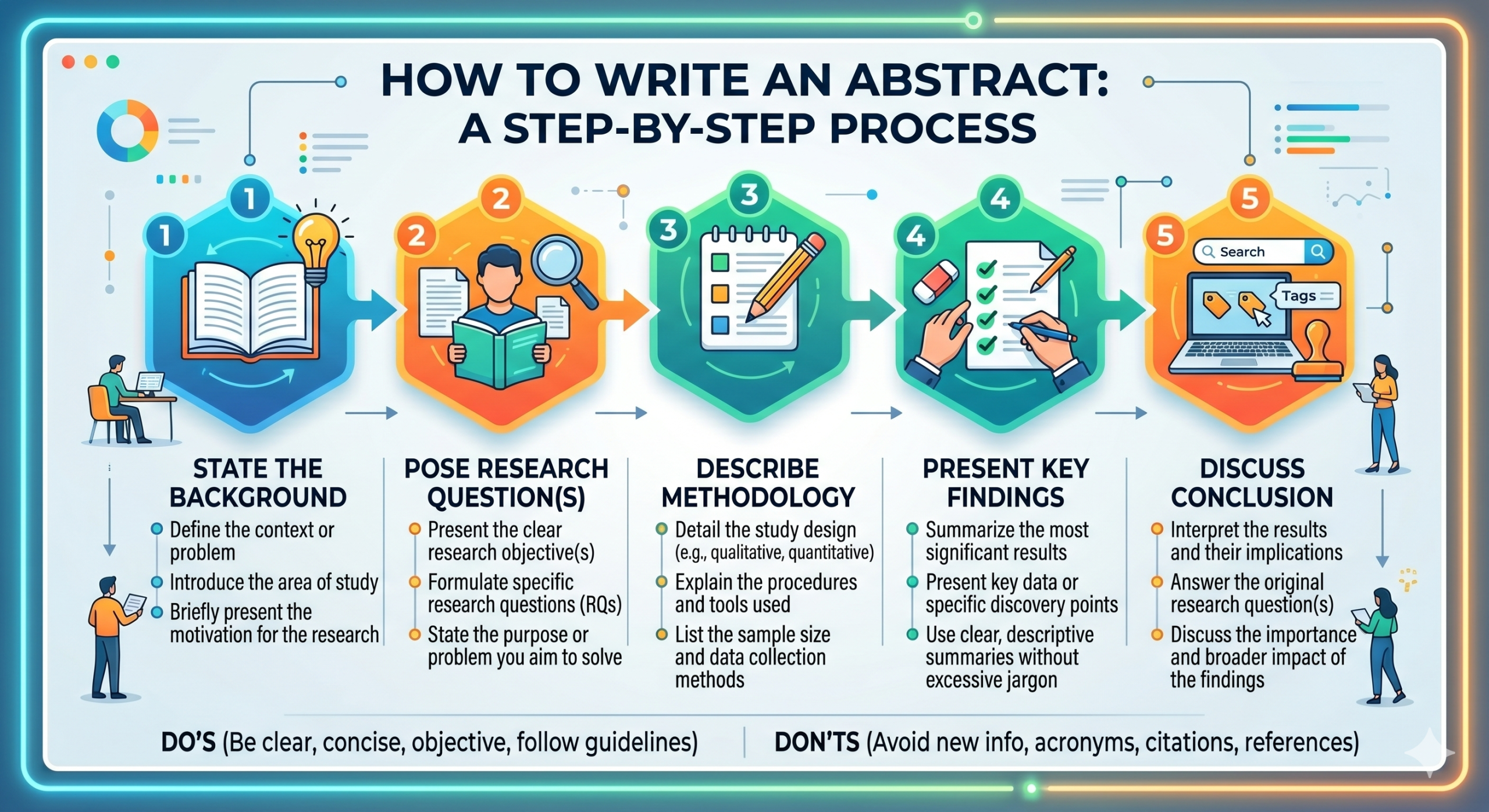
How To Write An Abstract?
Most well-written abstracts comprise the below core components:
Background and Context
This is what makes up the very opening of an abstract and establishes why the topic matters. This section should be concise, typically one to two sentences and should orient the reader quickly without extensive background narrative.
Objective or Research Question
This is a precise statement of your research objective or question, stating precisely what is it you are dealing with. One of the most important elements of abstract writing, it tells the reader what youd work is about and if it is relevant to their needs.
Methodology
The methodology section describes how the research was conducted. It answers questions such as:
What data was collected?
What analytical approach was used?
For quantitative studies this might include sample size, study design and statistical methods. For qualitative studies it covers the research approach and data sources. This section does not need to be exhaustive but should give enough detail for an expert reader to assess the quality of the approach.
Results and Findings
This is the most substantive part of an informative abstract. Herein, the author reports on what their research discovered.
Conclusions and Implications
What should a reader take away?
What are the practical or theoretical implications of the research?
This section provides more clarity on questions such as the above. The most well-written abstracts also found a way to tie these findings back to the broader context or research question that they establish at the opening.
Abstract Writing Best Practices- Mistakes to Avoid
Even experienced researchers and professionals make avoidable errors in abstract writing. It helps to be mindful of common mistakes and attempt to rectify them when writing abstracts.
If you write an introduction instead of a summary, you are making a great mistake. An abstract is not the place to where you should be offering background context on the field or personal anecdotes on how you discovered the topic.
Omitting the methodology you used is another common error. Without a description of how you arrived at your findings, peer reviewers and experienced assessors may find no basis for your credibility at first glance.
If your study produced measurable results, state them. If you hedge with phrases like ‘results were positive’ or that the ‘approach showed promise’, you are making a weak impression.
Manage Abstract Submissions Effortlessly with Dryfta
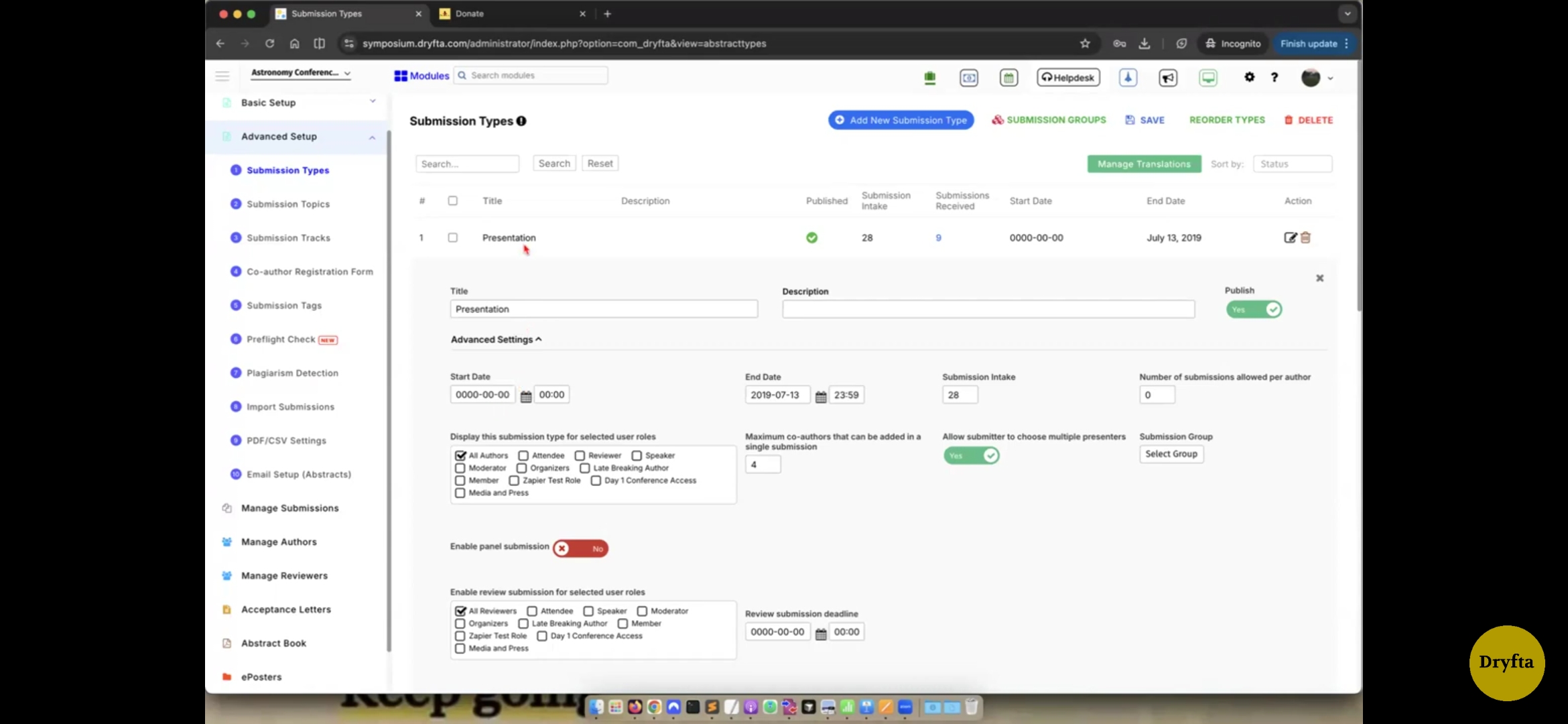
If you are a conference organizer still held back by a spreadsheet that takes you down a meltdown with every new submission, it’s time to switch today. Manual software to sift through abstracts is medieval in comparison to the endless, state-of-the-art features offered by automated software today. If you are managing 50 submissions or 5,000, Dryfta can help streamline the entire abstract submission and review process for you. So your team can focus on doing the things that truly matter for your event. Visit our website and sign up for a free demo today.
Frequently Asked Questions (FAQs)
What is an abstract in simple terms?
An abstract is a short summary of a longer piece of work, typically a research paper, thesis or conference presentation. It gives readers enough information to understand what the work is about, how it was conducted and what it found, without requiring them to read the full document. Most abstracts are between 150 and 350 words long.
What is the difference between an abstract and an introduction?
An abstract is a standalone summary of the entire work, including its findings and conclusions. An introduction is the opening section of a paper that provides background, establishes context and leads the reader into the full document. An abstract can be read independently. An introduction cannot be fully understood without reading the rest of the paper.
What is an abstract submission for a conference?
A conference abstract submission is an application to present at an academic or professional conference. Researchers and practitioners submit a short summary of the work they would like to present. The conference program committee reviews these submissions and selects those that best fit the event’s theme, quality standards, and program structure.
What makes a strong abstract for a conference submission?
A strong conference abstract clearly states the research objective, describes the methodology, presents specific findings and explains the implications of the work. It respects the word limit, uses precise language appropriate to the field and can be understood independently without reference to the full paper. It also directly addresses the themes and criteria stated in the conference call for abstracts.