


There is a moment that most academic conference organizers know well. A reviewer who cannot find their assigned papers. An author who cannot tell whether their submission went through. A program chair rebuilding their workflow from scratch, again, because the interface refused to cooperate. For years, that moment arrived inside EasyChair.
EasyChair has been a fixture in academic conference management since 2002. According to Wikipedia, it began as a free web-based system developed out of the University of Manchester’s Department of Computer Science, supporting paper submission, peer review and basic program scheduling. For much of its history, it was the default choice simply because nothing else was as widely available or as widely understood.
That calculus has changed. As The Data Blog documents, EasyChair effectively ceased to be free for most conferences in 2022, with conferences receiving more than 20 submissions now required to pay for features that were previously standard. At the same time, the broader conference management software market has matured considerably. Modern conferences need more than paper submission workflows. They need registration systems, hybrid event support, attendee engagement tools, communications infrastructure and post-event analytics.
This guide covers the best EasyChair alternatives available in 2026, what to look for, how each platform compares and how to make the transition.
Why Conference Organizers Look for EasyChair Alternatives
The criticisms of EasyChair are consistent and well-documented across organizer communities. As Dr. Jody Muelaner noted after managing a conference through the platform, the system is “extremely unintuitive” for first-time chairs, with documentation that provides few answers and options that require trial and error to locate.
- Outdated interface and navigation: The platform’s design has changed little since its early years. What was functional in 2005 creates unnecessary friction for organizers and reviewers who now use modern software daily.
- Steep learning curve: As Leconfe notes in its comparison, EasyChair’s customization is ‘very limited and less flexible to the unique needs of the conference,’ and the onboarding experience for non-technical users is particularly difficult.
- No attendee engagement tools: EasyChair manages submissions and reviews. It does not manage the experience of the people attending the conference.
- Basic registration and payment: Registration is not a native EasyChair feature in any meaningful sense. Organizers routinely manage payments through separate tools, creating fragmented data and additional reconciliation work.
- No hybrid or virtual event support: Academic conferences increasingly run in hybrid formats. EasyChair has no infrastructure for this.
- Complex workflow setup: Building a multi-track conference with custom review stages in EasyChair requires significant technical familiarity that most program chairs do not have.
- No all-in-one capability: EasyChair solves one part of the conference management problem. Modern conferences require a system that addresses the full lifecycle from call for papers to post-event reporting.
What to Look for in an EasyChair Alternative
- Abstract submission management with customizable forms and file upload support
- Double-blind peer review with clear anonymization controls
- Automated reviewer assignment with conflict-of-interest management
- Multi-track conference support with separate program committees
- Speaker and session management without external spreadsheets
- Integrated registration and payment processing
- Virtual and hybrid conference infrastructure
- Conference website builder with automatic schedule sync
- Automated email workflows for authors, reviewers and attendees
- Proceedings and publication support
- Analytics and reporting dashboards
- Mobile-friendly attendee experience
- AI-powered reviewer matching and scheduling tools
- Zoom and virtual platform integration
Quick Comparison of the Best EasyChair Alternatives
Best EasyChair Alternatives for Academic Conferences
1. Dryfta
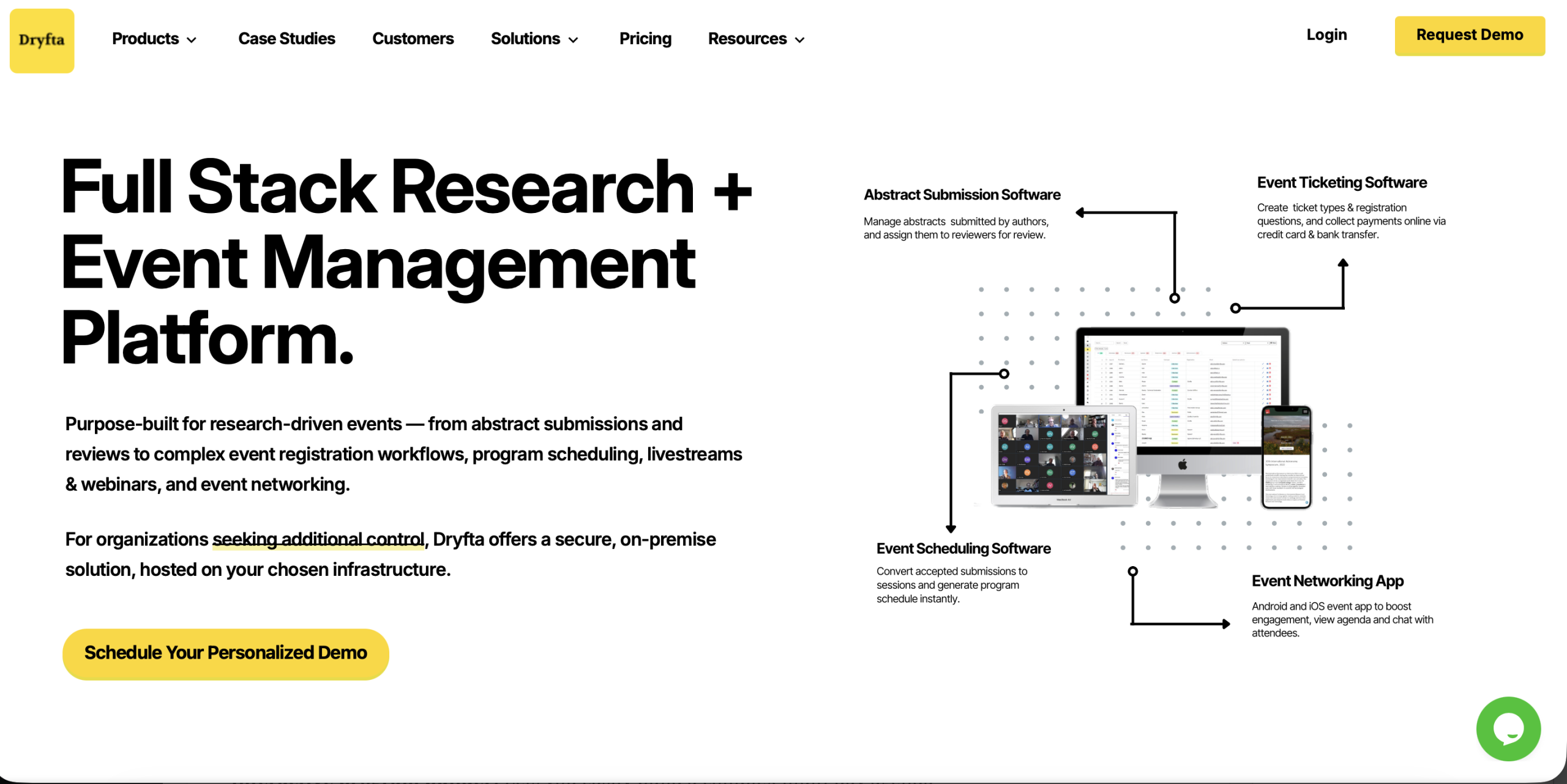
Dryfta is an all-in-one academic conference management platform built for the full event lifecycle, from call for papers to post-event reporting. It is one of the few platforms that combines advanced abstract submission, double-blind peer review, registration, schedule building, virtual event support and a mobile app inside a single system without requiring third-party tools. Its key features include:
- Ideal For Academic Events: Platform is built specifically for academia and includes extensive abstract management software capabilities.
- Fair peer review: Solutions designed for peer review workflows and include triple blind review mechanisms.
- Speaker management: Tools ssupporting speakers portals for scientific and research conferences.
- 360 degree Conference Management: Conference management capabilities that stretch across the entire lifecycle.
- Publication support: Submission-to-publication workflows with features like Dryfta bookbuilder.
- Specialized Symposium Software: Support for symposiums and university events
- High Sclability: The potential for scalability is greater for international conferences.
- Collaborative: Multi-reviewer collaboration tools are made available for users.
2. Ex Ordo
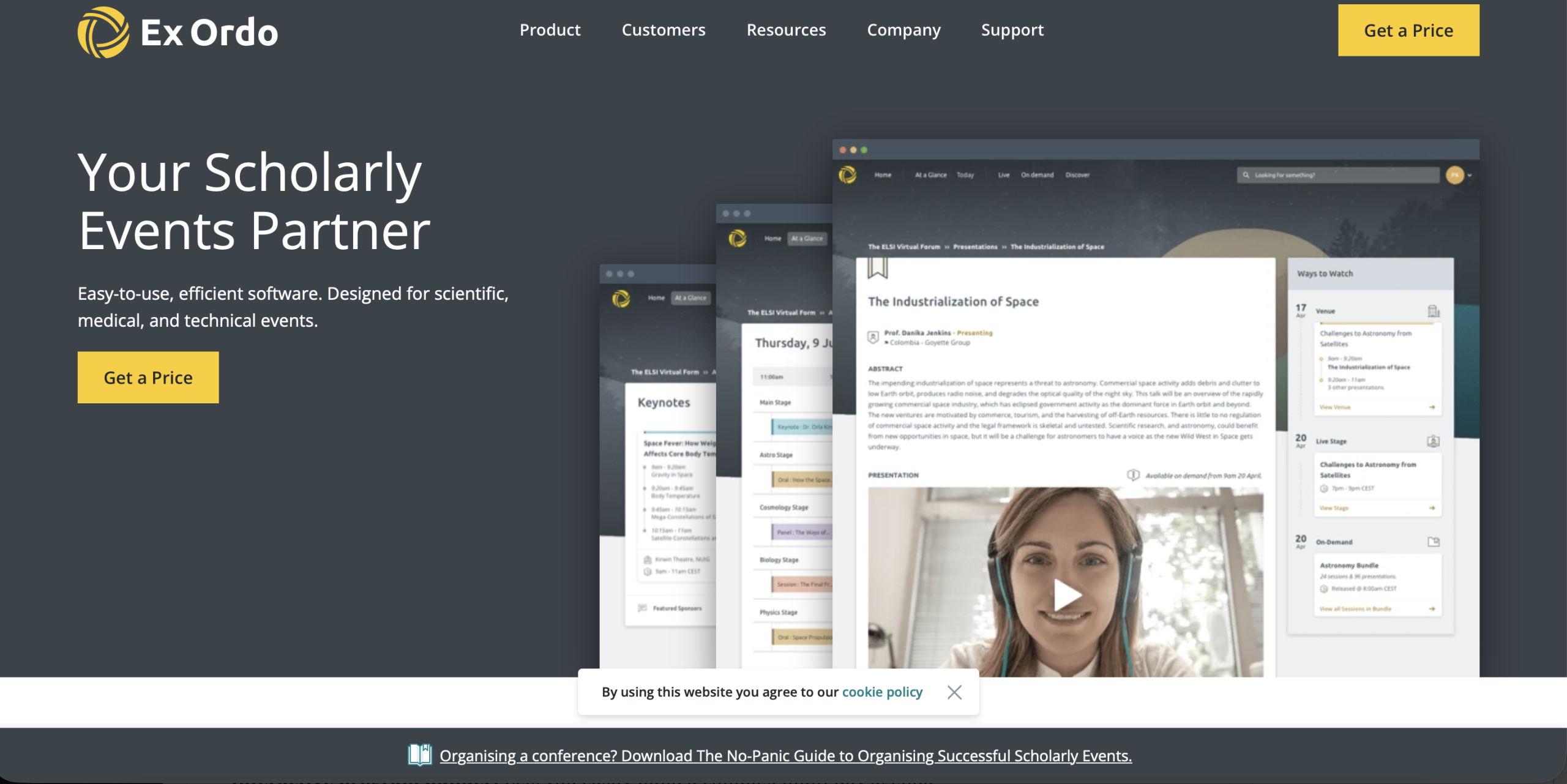
Ex Ordo was built in 2008 when an engineering student could not find suitable software for his supervisor’s conference and decided to build it himself. According to an article, Ex Ordo is now used at research conferences in 60 countries, with 13 of the top 20 global universities on its client list.
3. Oxford Abstracts

Oxford Abstracts has spent two decades building exclusively for academic conferences. According to Whova’s 2026 guide, it holds a 4.9-star Trustpilot rating from over 400 reviews. Its transparent per-event pricing and free tier make it accessible for conferences of all sizes.
4. ConfTool

ConfTool is a German-based platform with over two decades in academic conference management. According to Whova’s 2026 guide, it supports 15 languages on the professional plan and is well regarded for customer support quality.
5. Whova

Whova covers abstract management, peer review, registration, a mobile app and on-site tools within one platform. According to its own 2026 guide, it is one of the strongest options for organizers who want submission management alongside a rich attendee experience.
6. Fourwaves
Fourwaves is a Canadian platform built specifically for scientific and academic events, with particular strength in poster session management. According to Ex Ordo’s 2026 conference software guide, it is effective for virtual poster sessions, registration, call-for-abstracts and peer review with simple scoring systems.
7. OpenConf
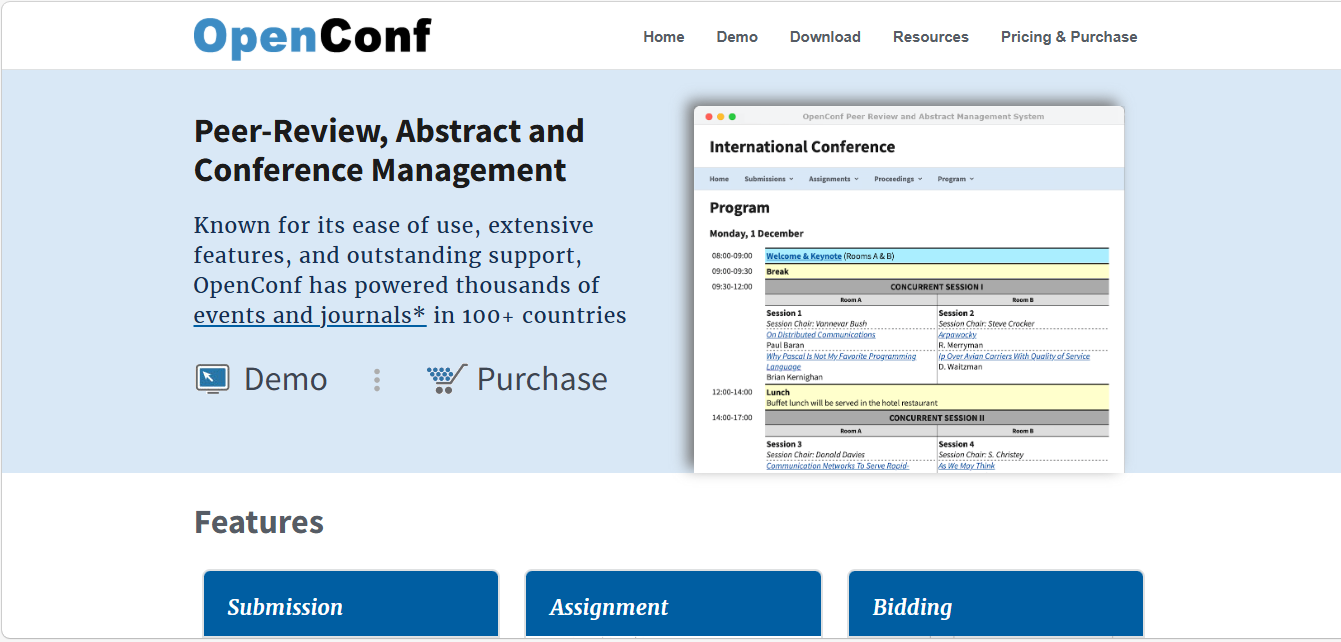
OpenConf is a lightweight, low-cost option for organizers who need reliable core submission and peer review management for small to mid-sized academic and technical conferences without the overhead of a larger platform.
8. Microsoft CMT
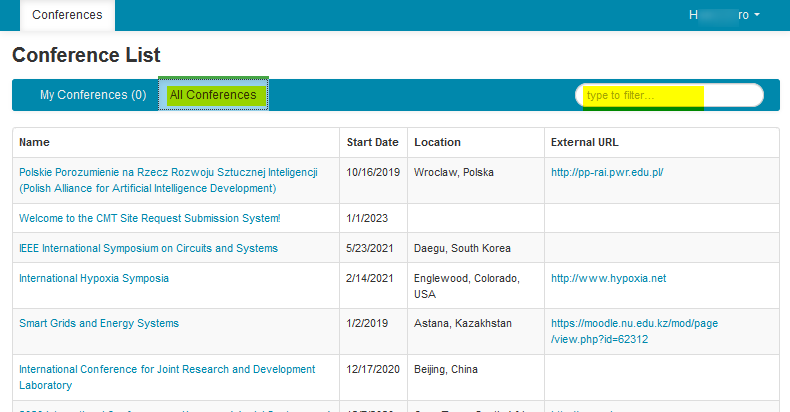
Microsoft CMT is a free peer review platform sponsored by Microsoft Research. According to Whova’s 2026 guide, it has over one million users across 240 countries and has hosted more than 12,000 conferences. Access is restricted to current university faculty.
9. Morressier
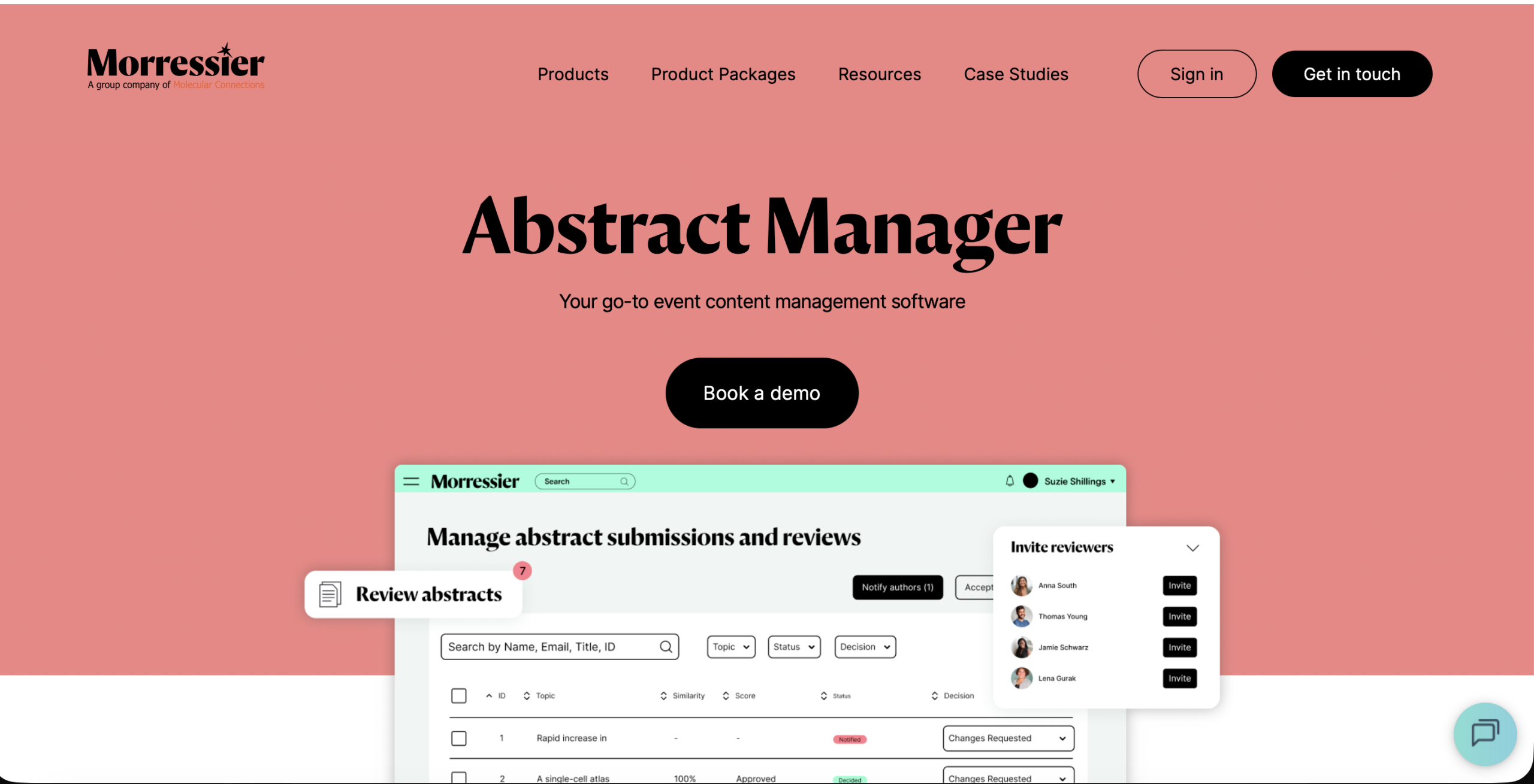
Morressier serves large research organizations and professional societies that need to connect conference proceedings with publishing workflows. It is positioned at the enterprise end of the market and is used by major scientific publishers and associations.
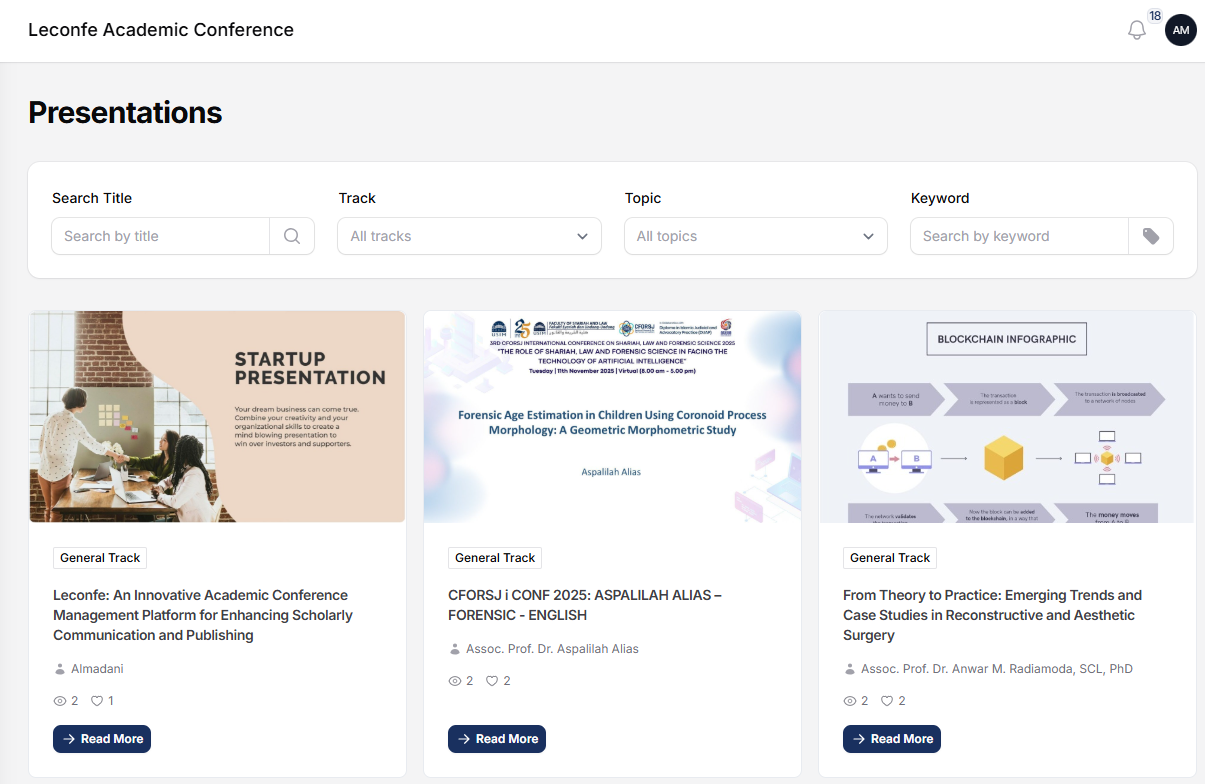
10. Leconfe
Leconfe is an open-source platform designed with a focus on academic institutions in Southeast Asia and developing countries. It covers manuscript submission, review, registration, payment and publication in a single system with a mobile-responsive interface.
Best EasyChair Alternatives for Peer Review Management
- Double-blind and single-blind review: Dryfta, Ex Ordo, Oxford Abstracts, ConfTool and Whova all support both review types with clear anonymization controls.
- Reviewer bidding systems: Ex Ordo and Dryfta allow reviewers to indicate preferences for assigned papers before assignments are finalized, improving review quality.
- Automated reviewer assignment: Algorithm-driven assignment based on topic expertise, reviewer load limits and conflict-of-interest flags is available in Dryfta, Ex Ordo and Microsoft CMT.
- Review scoring and evaluation: Customizable scoring rubrics, weighted criteria and reviewer progress tracking are available in Dryfta, Ex Ordo, Oxford Abstracts and ConfTool.
- Discussion and rebuttal workflows: Author rebuttal periods, reviewer discussion threads and meta-review capabilities are available in Ex Ordo and Dryfta.
- AI-assisted reviewer matching: Dryfta and newer platforms are introducing AI-driven reviewer matching based on publication history and research profile analysis.
Best EasyChair Alternatives for Hybrid and Virtual Conferences
- EasyChair has no virtual or hybrid event infrastructure. Organizers running modern conferences that extend beyond a single in-person venue need platforms built for this reality.
- Dryfta supports HD livestreaming, virtual breakout rooms and on-demand content alongside full in-person event management, making it one of the strongest hybrid options in the academic segment.
- Whova delivers strong virtual and hybrid capabilities with a mobile conference app, live Q&A tools, community networking boards and session recording.
- Ex Ordo includes a virtual conference platform, though Oxford Abstracts notes it is more focused on virtual delivery than on integrated hybrid management.
- Fourwaves handles hybrid poster sessions well, with tools for virtual poster display, attendee interaction and support for rich media presentations.
Why Dryfta Is a Strong Alternative to EasyChair
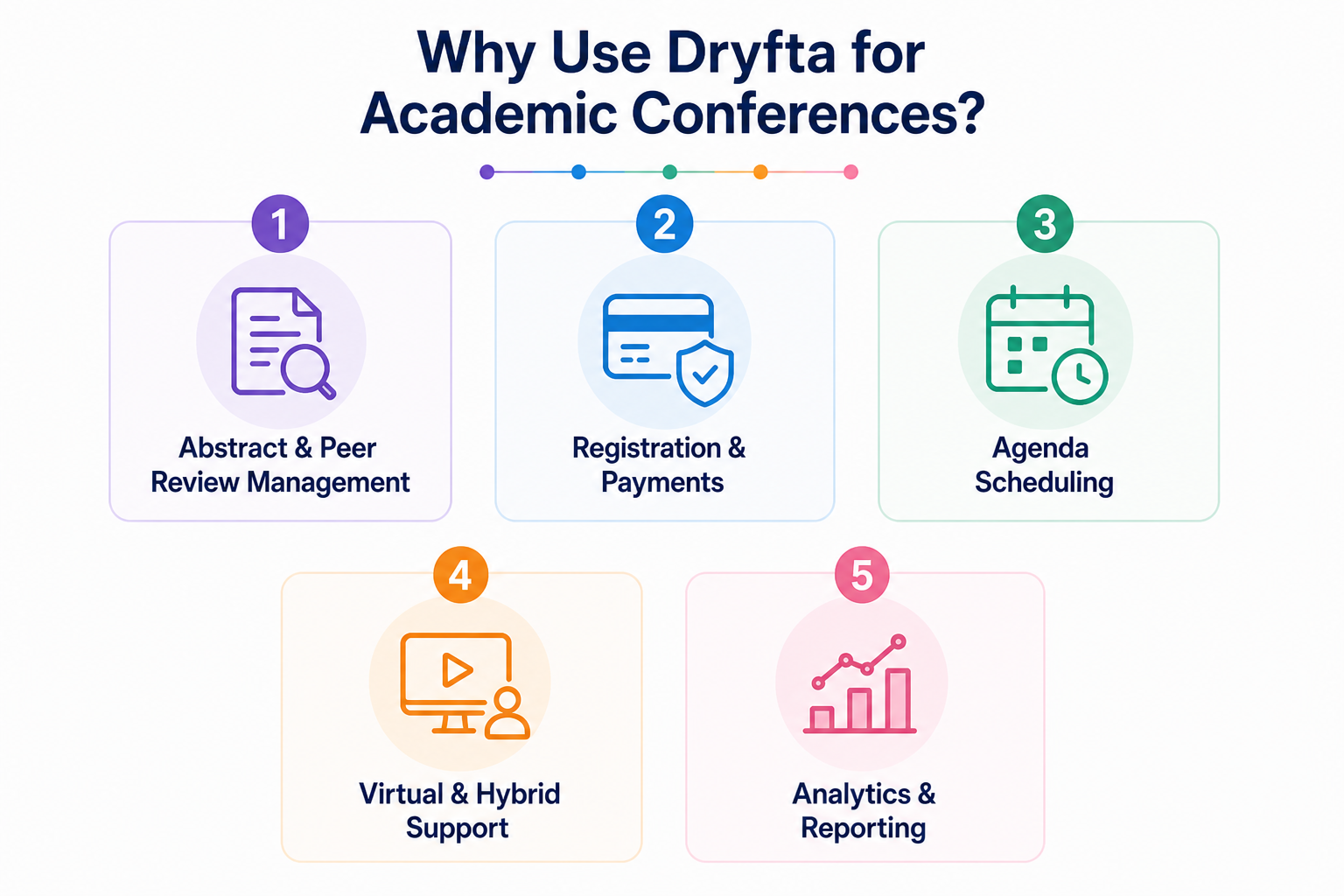
Most EasyChair alternatives solve one piece of the problem. But Dryfta solves the full problem. It is built as an all-in-one academic conference management platform, meaning the submission database, reviewer assignments, registration records, session schedule, attendee communications and event analytics all live in the same system. There is no reconciliation between tools. There is no data migration between stages.
- Advanced abstract submission: Custom submission forms with conditional logic, file upload support, multi-track routing and author notification workflows built in.
- Integrated peer review: Double-blind and single-blind review, automated reviewer assignment, reviewer dashboards, scoring rubrics and decision management.
- Registration and ticketing: Multiple ticket types, early-bird pricing, group registration and payment processed directly to the organizer’s account with no platform service fees.
- Conference website builder: A branded event website that updates automatically as the schedule develops.
- Hybrid and virtual event capabilities: HD livestreaming, virtual breakout rooms and on-demand content.
- Mobile-friendly attendee experience: A mobile event app with the schedule, speaker profiles, networking tools and real-time updates.
EasyChair vs Modern Conference Management Platforms
Best EasyChair Alternatives for Small Academic Conferences
- Dryfta starts at $1,499 per year and includes the full feature set, making it viable for smaller conferences that expect to grow or that need abstract management and registration without separate tools.
- Leconfe is open source and free, covering submission, review, registration and payment in a single system. Particularly suited to academic institutions in developing regions where proprietary platform costs are prohibitive.
- OpenConf offers low-cost per-event licensing for small to mid-sized conferences that need reliable submission and review management without advanced features.
- Microsoft CMT is free for university faculty and handles peer review at scale. For conferences that can manage registration separately and need only a submission and review system at no cost, it remains credible.
- Pretalx is an open-source scheduling tool used by smaller events that need call-for-proposals management and schedule building without the overhead of a full conference management platform.
How to Migrate from EasyChair to Another Conference Platform
- Exporting submission data: EasyChair allows export of submission records in CSV format. Export all submissions, author details and review assignments before beginning the migration.
- Migrating reviewer assignments: Reviewer-to-paper assignments can be exported from EasyChair and reimported into the new system. Verify conflict-of-interest records are transferred accurately.
- Importing author information: Author records, affiliation data and contact details should be migrated alongside submission records to maintain continuity in author communications.
- Transferring conference schedules: Program schedules from EasyChair can be exported and rebuilt in the new platform’s schedule builder.
- Setting up new review workflows: Use the migration as an opportunity to rebuild review workflows from scratch in the new platform rather than replicating EasyChair’s structure.
- Organizer onboarding and training: Most modern platforms provide onboarding support. The investment in a proper handover saves significantly more time than it costs.
- Communication with authors and reviewers: Inform all authors and reviewers of the platform change well before the submission or review deadline. Provide clear instructions for accessing the new system.
- Testing before launch: Run a full test of the submission, review and registration workflows before opening the conference to the public.
Frequently Asked Questions (FAQs)
What is the best alternative to EasyChair?
For most academic conferences in 2026, Dryfta offers the most complete alternative. It covers abstract submission, peer review, registration, scheduling, hybrid event support and post-event analytics in a single platform. For conferences that prioritize peer review above all else, Ex Ordo and Oxford Abstracts are strong options.
Which EasyChair alternative is best for academic conferences?
Dryfta and Ex Ordo are built specifically for academic and research conferences. According to Whova’s 2026 guide, Ex Ordo is used at research conferences in 60 countries. Dryfta covers the full event lifecycle, making it the stronger choice for conferences that need more than submission management.
Is there a free alternative to EasyChair?
Yes. Microsoft CMT is free for university faculty and handles peer review at scale, though it covers submission and review only. Leconfe is open source and free, covering a broader set of functions. Oxford Abstracts offers a free tier for smaller events.
Which platform is best for peer review management?
Dryfta, Ex Ordo and Oxford Abstracts all offer strong peer review workflows with double-blind support, automated reviewer assignment and decision management. For large computer science conferences on zero budget, Microsoft CMT remains the most established free option.
Which conference management software is best for hybrid events?
Dryfta provides the strongest integrated hybrid event infrastructure in the academic segment, with HD livestreaming, virtual breakout rooms and on-demand content alongside full in-person event management. Whova and Ex Ordo also support hybrid formats.
Can I migrate from EasyChair easily?
Yes, with preparation. EasyChair allows CSV export of submission and reviewer data. Most modern platforms accept this format for import. The migration is most straightforward when treated as a clean rebuild of workflows in the new system rather than a direct replication of EasyChair’s structure.
Which platform supports abstract and registration management together?
Dryfta, Ex Ordo, Whova and Fourwaves all combine abstract management and registration in a single platform. Among these, Dryfta offers the most complete integration, with submission data, reviewer assignments, registration records and the conference schedule all connected inside one system.