The global conference management software market was valued at USD 6.89 billion in 2021 and is projected to reach USD 17.33 billion by 2030, growing at a compound annual growth rate of 8.6 percent, according to Grand View Research. Within that broader market, the academic conference segment is undergoing its own particular reckoning. We are witnessing more and more event organizations switching to abstract management tools than ever before.
What Is Oxford Abstracts?
Oxford Abstracts is an online abstract management and conference management software platform designed primarily for academic and scientific conferences. Founded with a focus on the academic publishing and research conference market, since its inception in 2001, Oxford Abstracts has gained adoption among universities, research institutions and professional associations that run annual academic gatherings.
The platform also occupies a more specific and relatively narrow niche of abstract management within the broader conference management software market.
Why Organizers Are Looking for Oxford Abstracts Alternatives?
For all that Oxford Abstracts does well within its defined scope, a growing number of conference organizers are actively searching for Oxford Abstracts alternatives.
-
- The platform’s per-submission pricing model can become expensive at scale, making it less economical for large conferences that receive hundreds or thousands of abstract submissions annually.
- Event registration and ticketing are not natively integrated, requiring organizers to manage these workflows across separate platforms and reconcile data manually.
- There is no built-in conference website builder, meaning organizers must maintain a separate web presence independently of their abstract management workflow.
- Virtual and hybrid event hosting capabilities are absent, a significant limitation for organizations that have incorporated online participation as a permanent part of their event model.
Key Features to Look for in an Oxford Abstracts Alternative
Before evaluating specific Oxford Abstracts competitors, it is worth establishing a clear set of criteria. Here are some key features to look for when choosing an Oxford Abstracts alternative:
-
- Look for an end-to-end abstract submission management capable of customization and personalization at scale.
- Check for a peer review system that can support multi-round review and flag any conflict of interest.
- A speaker and presenter management portal that allows speakers to confirm participation, upload materials and manage their session details directly.
- A conference website builder that allows organizers to publish a professional event site without requiring separate web development resources.
- Reliable customer support with responsive assistance available at the moments that matter most in the event lifecycle.
Why Consider Dryfta as an Oxford Abstracts Alternative
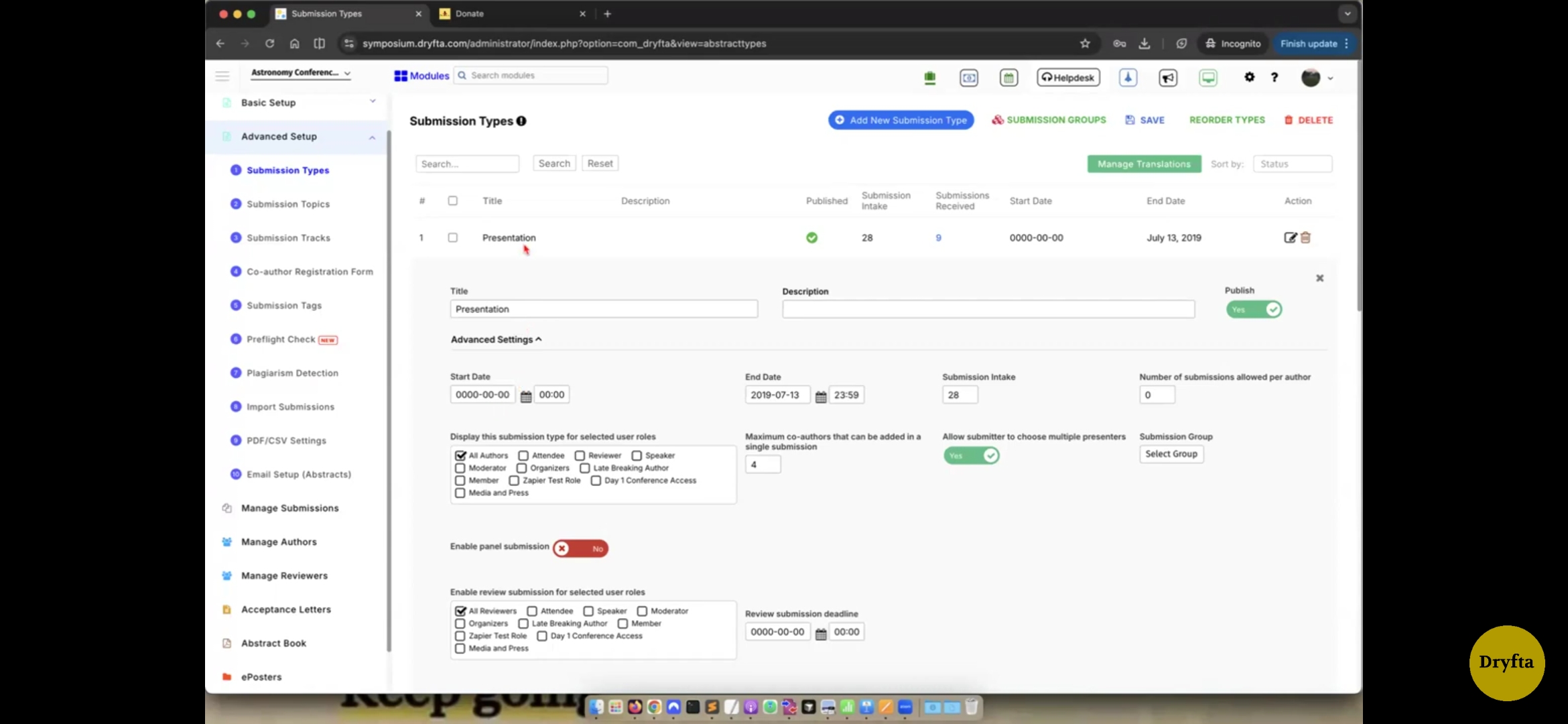
Among the sites like Oxford Abstracts available in 2026, Dryfta’s event management software particularly appeals to organizers who feel constrained by the limitations of Oxford Abstracts. Here’s why Dryfta suits better:
-
- Full abstract submission and management system with customizable submission forms, multiple submission tracks and automated confirmation workflows.
- Dryfta has a check-in application facilitated via its native app (available on Google Play, Apple Store or equivalent) that allows for smooth on-site attendee management.
- It also has a flat subscription pricing that is significantly more economical in comparison to the per head pricing model employed by Oxford Abstracts.
- Dryfta offers dedicated and round-the-clock customer support and hands-on assistance available throughout the event planning and execution process.
Dryfta vs Oxford Abstracts- A Comparison
Top Oxford Abstracts Alternatives in 2026
What follows is a considered assessment of five platforms that conference organizers are using as Oxford Abstracts alternatives in 2026.
1. Dryfta
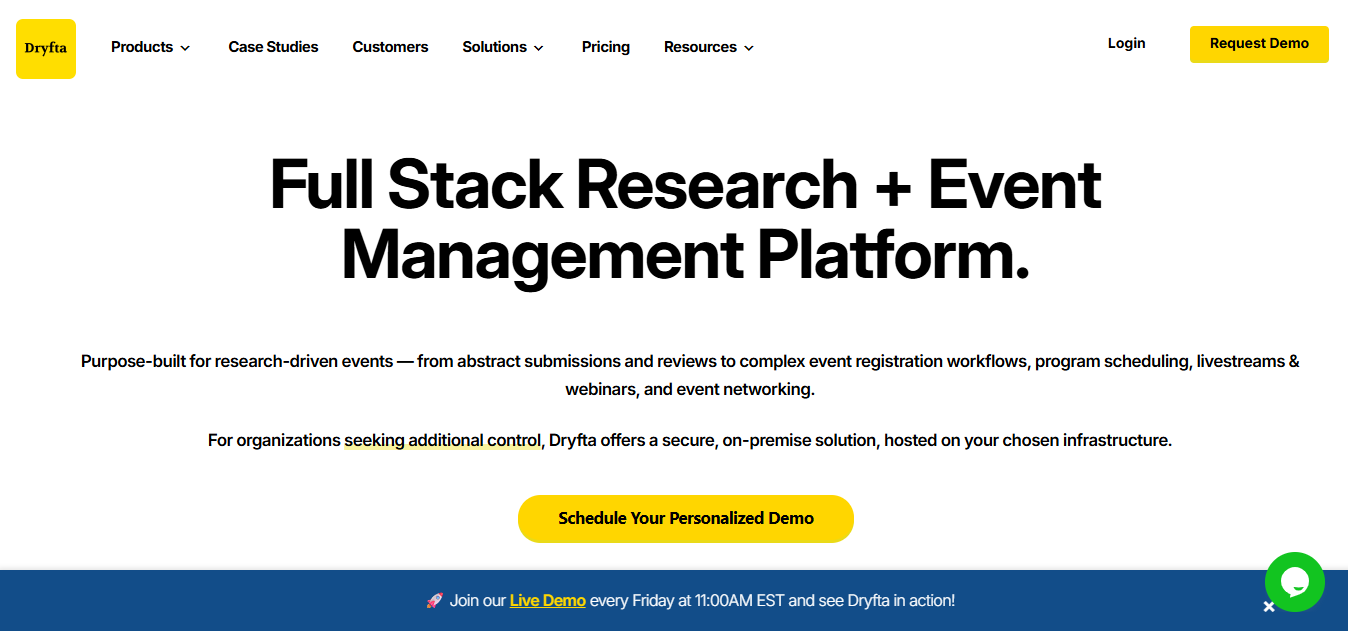
Dryfta is an all-in-one conference management platform purpose-built for academic and professional events and is one of the best Oxford Abstracts alternatives. It brings abstract management, peer review, event registration, conference website building, virtual event hosting, networking tools and post-event analytics into a single integrated system. For organizers who have grown frustrated with assembling a patchwork of separate tools to manage a single conference, Dryfta addresses that fragmentation directly.
Pros:
-
- Comprehensive end-to-end platform covering abstract management, registration, virtual events and on-site operations
- Flat subscription pricing that scales economically
- Built-in conference website
- Dedicated support
Cons:
The breadth of features means a steeper initial setup process for organizers who only need abstract management.
Pricing: Subscription-based flat fee model which is significantly more cost-effective than per-submission models at higher volumes.
2. Cadmium
Through its EventScribe tool, Cadmium is renowned for delivering event management services and Learning Management Services (LMS) for academic and professional clients around the globe. In particular, its abstract management system is noted for its ability to handle high-volume submissions
Pros:
-
- Extremely well-known platform within academic circles
- Easy to set up for basic abstract management
Cons:
-
- Users report inconsistent and delayed customer support across its suite of tools
- Switchers note great difficulty in learning to navigate Cadmium’s features, a steep learning curve.
Pricing: Cadmium’s suite of tools, including its task-based event management software, employs a quote-only pricing.
3. Confex
Confex is a conference management platform with a long history in the academic and association conference market. It offers abstract submission, peer review management, program scheduling and basic attendee management tools. It is a more direct competitor to Oxford Abstracts than Eventbrite and has been used by a significant number of large academic and professional associations over the years.
Pros:
-
- Established platform with experience in large academic conferences
- Strong multi-track scheduling tools
- Familiar to many association conference organizers
Cons:
-
- The interface feels dated compared to newer platforms
- No integrated virtual event hosting. Limited attendee networking features
- Setup and configuration can require significant effort
Pricing: Subscription and service-based pricing.
4. Ex Ordo
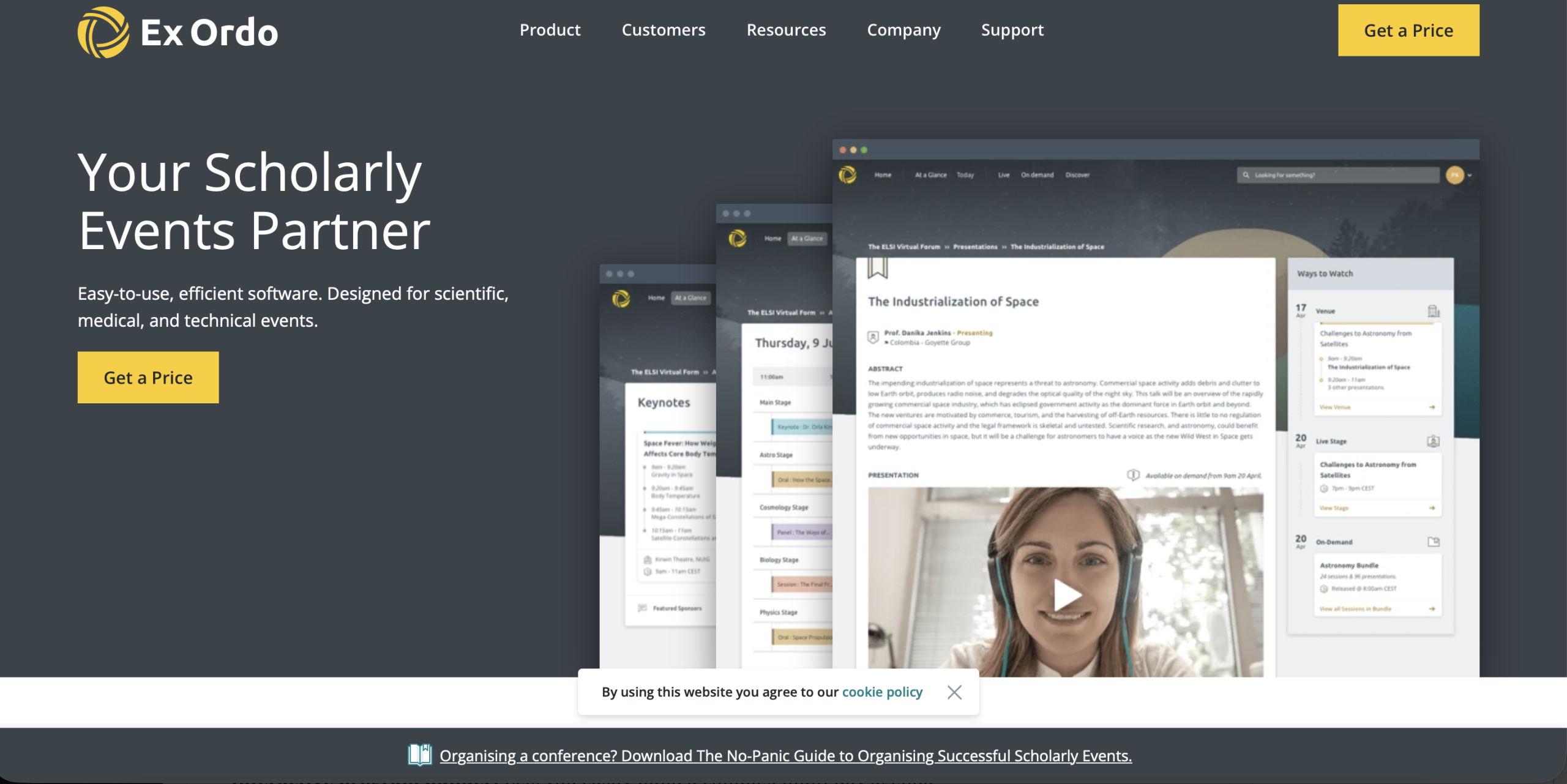
Ex Ordo is an Irish conference management software company with a particular focus on the academic conference market. It offers abstract submission management, peer review workflows, program building and attendee registration. It is a well-regarded platform in academic circles and has been adopted by universities and research associations across Europe and beyond.
Ex Ordo sits closer to Oxford Abstracts in its positioning than some of the other platforms in this list, making it one of the more natural sites like Oxford Abstracts for organizations whose primary requirement is abstract and review management.
Pros:
-
- Clean, modern interface
- Strong abstract submission and peer review tools
- Good registration functionality
- Well-regarded customer support. Purpose-built for academic conferences
Cons:
-
- No built-in virtual event hosting
- Limited networking tools
- No conference website builder
- Pricing can be high for smaller institutions with tight budgets
Pricing: Subscription-based pricing tiered by submission volume and event size.
5. Submittable
Submittable is a submission management platform that originated in the literary and grant-making space and has expanded into academic and professional submission management. It is not a conference management platform in the traditional sense, but it is used by some academic organizations for abstract collection and review management, particularly those that value its clean submission experience and reviewer interface.
Pros:
-
- Excellent submission and review interface
- Good reviewer experience
- Strong for organizations that manage multiple types of submissions beyond just conference abstracts
Cons:
-
- Not designed specifically for conferences so no integrated event registration, ticketing or scheduling
- Similarly, no virtual event functionality
Pricing: Subscription-based pricing with tiers based on submission volume and number of users.
Comparison of All Oxford Abstracts Alternatives
In the table, we’re taking a side-by-side view of all Oxford Abstracts alternatives:
How to Choose the Right Oxford Abstracts Alternative
Choosing among Oxford Abstracts competitors is not primarily a matter of comparing feature lists, though features matter. It is a matter of honest organizational self-assessment. The platform that serves one conference well may be entirely wrong for another of similar size and subject matter. What follows are the questions and criteria that should guide the decision.
Clarify your primary pain point with your current platform before evaluating alternatives. If the core frustration is pricing, that points toward flat-fee subscription models.
Consider your submission volume and how different pricing models affect your total cost at that volume. Per-submission pricing that seems reasonable at low volumes can become very expensive at scale.
Evaluate the quality of customer support as seriously as you evaluate features. Events are time-sensitive operations. A platform with strong features and poor support can cause more problems during a live event than a simpler platform with responsive assistance.
Wrapping Up
Oxford Abstracts can be a suitable platform for small-sized academic conferences whose needs are confined to abstract collection and basic review management. In this case, it serves its purpose adequately. But the conference management space has changed considerably, and the expectations of organizers and attendees have also changed alongside it. For larger event objectives and professional goals, teams are now looking into Oxford Abstracts alternatives.
The demand for integrated platforms that handle the full arc of a conference is growing. The right choice for your event is certainly the one that most honestly solves the specific operational challenges of your conference.
Dryfta gives academic and professional conference organizers a single platform that covers every phase of the conference lifecycle, from the first call for abstracts to post-event reporting. If you are evaluating Oxford Abstracts alternatives and want to see how an integrated platform handles the full scope of your event, sign up for a free demo today.
Frequently Asked Questions (FAQs)
What are the best Oxford Abstracts alternatives?
This guide compares Dryfta, Cadmium, Confex, Ex Ordo and Submittable as alternatives to Oxford Abstracts. Start with the workflows your conference needs, such as submission collection, peer review and event registration. Then verify each shortlisted platform’s current features, pricing and support before choosing.
Is Oxford Abstracts suitable for large conferences?
Oxford Abstracts can manage large volumes of abstract submissions, but its per-submission pricing model makes it increasingly expensive as submission numbers grow. Additionally, its absence of integrated registration, virtual event hosting and networking tools means that large conferences with complex operational requirements will need to supplement it with several additional platforms. For large conferences seeking a single integrated system, platforms like Dryfta or Confex are likely to be more suitable.
Which platform is better than Oxford Abstracts?
The answer depends on what an organizer needs beyond abstract management. In terms of end-to-end conference management, Dryfta is a more capable platform. For abstract management and review with stronger registration functionality, Ex Ordo is a compelling option. In case of large public-facing events where ticketing is the primary need, Eventbrite is more appropriate. The right platform is the one that most closely matches your specific conference requirements rather than the one with the most features in aggregate.
Is Dryfta a good alternative to Oxford Abstracts?
Dryfta is one of the strongest Oxford Abstracts alternative software options available for academic and professional conferences. It covers every phase of the conference management lifecycle in a single integrated platform, addresses the pricing limitations of Oxford Abstracts through its flat subscription model and offers capabilities, including virtual event hosting, conference website building and mobile check-in, that Oxford Abstracts does not provide.
For conferences that have outgrown Oxford Abstracts or require more than abstract management, Dryfta is well worth serious evaluation.
What features should I look for in abstract submission software?
The most important features in abstract submission software are: customizable submission forms that match your conference’s specific requirements; a peer review system that supports multi-round review, configurable scoring and conflict of interest management; integration with event registration so that submitter and attendee data are managed in a single system; clear communication tools for notifying submitters of decisions; and post-submission analytics that give the program committee visibility into submission volumes, topics and review progress.