




There is a fine line between flexibility and unnecessary complexity, and many teams only realize it after spending too much time building logic they never fully use. Swoogo offers strong customization, but the effort required to manage its conditional logic can slow down actual event execution.
In this blog, we explore the best Swoogo alternatives and Swoogo competitors that help teams reduce setup effort and focus more on delivering a smooth event experience.
What is Swoogo?
Swoogo is an event management system designed for making event planning for in-person, virtual, and hybrid events more efficient. With an emphasis on ease of use through a simple drag-and-drop user interface, teams can build their own custom event registration websites, eliminating the need for technical expertise. On top of that, Swoogo lets users track each stage of the event from marketing through to sessions and data syncs with tools such as Salesforce.
How to Evaluate Event Platforms as Swoogo Alternatives and Competitors?
In order to analyze the Swoogo competitors, pay attention to several main aspects that directly influence the way your event is organized.
-
- Pricing model: In contrast to Swoogo, some platforms may be priced by the number of attendees rather than users. The most cost-effective pricing model depends on how many people attend each of your events and how frequently you host them.
- Customization and UX: Check out how simple it is to create registration pages and event sites. A good Swoogo alternative should offer great design options, support conditional logic for building their event site, and provide full branding controls without requiring a coder on board.
- Integration ecosystem: Make sure the platform integrates with other tools, such as Salesforce, HubSpot, or Marketo, to keep your data up to date.
- Onboarding and support: Find out about the average response time and overall quality of support when you are hosting a live event. Any delay in support could have disastrous consequences.
Ultimately, the right fit is determined by your team’s technical comfort and the frequency of running events. If the user-based pricing or flexible setup of Swoogo fails to meet your objectives, Dryfta (academic events) or Cvent (enterprise events) can be the best Swoogo alternatives that you can consider.
What Can Swoogo Do for Your Event Planning?
There are a few ways Swoogo will fit into the way that you currently run events.
-
- Hotel booking management: Swoogo provides hotel reservation options integrated directly into the registration flow. Attendees can reserve accommodations when they register for an event.
- Registration and ticketing: You can create customizable registration forms, design various types of tickets and monitor registrations in real time.
- Attendee management: With Swoogo, you can also manage all attendee information and automatically send confirmation emails.
- Branded custom event sites: Create a site for your event that you can customize as an organizer. Add event information and registration features directly to the event page.
- Language support: Swoogo currently has language support for Dutch, French, German, Portuguese, Spanish, and Chinese.
What Are the Pros and Cons of Using Swoogo for Event Planning?
When comparing Swoogo competitors, look at what Swoogo does better than others and where it doesn’t meet your requirements.
Pros
-
- User-based pricing model allows you to host unlimited events and registrations without any additional fee.
- A drag-and-drop builder for creating a professional-looking registration page will help save time and effort.
- Advanced conditional logic allows you to personalize registration flows for different attendee types.
- Integration with major CRMs keeps your event data aligned with marketing and sales workflows.
- Customer service has a rapid response time and offers human interaction during critical times.
- On-site tools like the mobile app support check-ins and badge printing for live events.
Cons
-
- The level of customization can feel overwhelming for teams without technical experience.
- Virtual broadcasting features are not as strong as platforms built specifically for webinars.
- Smaller teams with limited events may find the base subscription cost harder to justify.
- Some design changes may require basic CSS knowledge for precise control.
- Reporting options may feel limited for teams that need deeper data analysis.
- Reviewing these points makes it easier to decide between this platform and other Swoogo alternatives.
How Should You Compare Swoogo Alternatives?
To find the best Swoogo alternatives, you need to look beyond basic registration.
-
- Compare financial models: compare Swoogo’s user-based pricing with the per-registrant charges of other platforms. It will help you decide whether a flat subscription is better suited to high-volume events or a variable pricing model is more appropriate for small, occasional events.
- Research scalability: Ensure the platform is scalable to bigger and more complicated events in the future.
- Test workflow automation: Consider the way each platform treats conditional logic and automated emails. An effective system must minimize manual labor and handle complex processes, such as speaker management or approvals, without constant oversight by support staff.
- Measure design flexibility: Determine whether or not you can design event pages with drag-and-drop tools that are fully branded without having to use technical expertise to make every minor adjustment.
- Test mobile functionality: Make sure the platform has trustworthy apps to check in using QR code, print badges, and network with attendees, even in areas with weak internet.
What Event Leaders Love That Sets Dryfta Apart?
| Feature | Dryfta | Swoogo |
| All-in-one system | Yes, built-in modules for end-to-end management | No, relies more on customization and integrations |
| Abstract management | Native, multi-stage peer review system | Not built-in |
| Academic workflows | Fully supported | Limited |
| Registration and CRM | Integrated into one platform | Strong, but often requires setup |
| Ease of setup | Structured workflows reduce setup time | Requires manual logic building |
Top Swoogo Alternatives for Event Planning
Here are six top affordable Swoogo alternatives to consider for event planning in 2026.
1. Dryfta
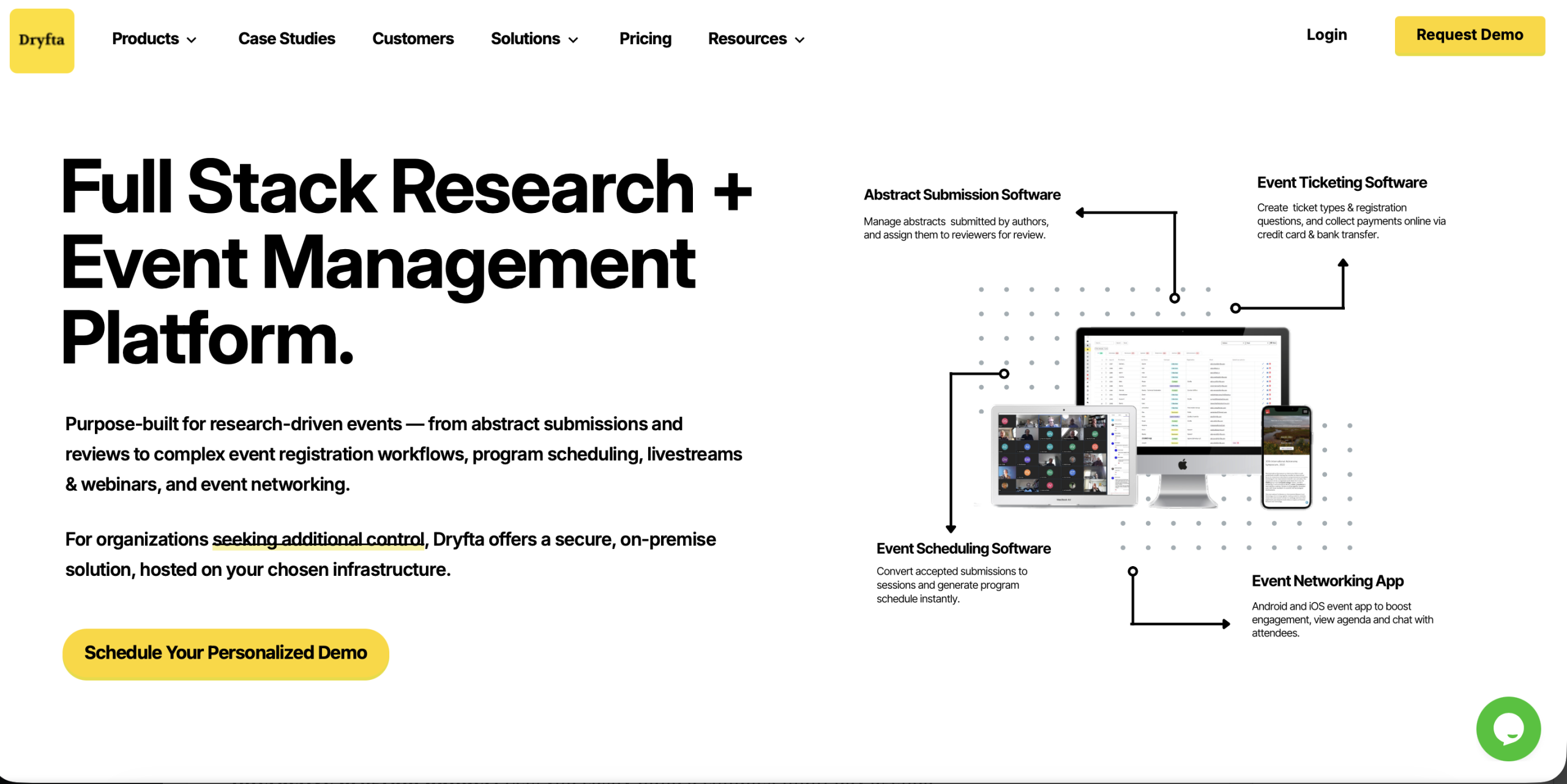
Dryfta is an all-in-one event management platform designed for academic conferences, research organizations, and professional associations.
Features
-
- Enhanced abstract management facilitates multi-level peer reviews and an easy submission process by international contributors.
- Schedule builder automatically schedules sessions and prevents speaker or room conflicts.
- Mobile app supports digital check-ins and networking for high-attendance sessions.
- A flexible registration system supports various ticket types and early-bird pricing.
Pros
-
- Developed to support academic workflows that are not well supported on most general platforms.
- Integrates a lot of functionality into a single system, so you do not need several tools to run events.
- Handles sensitive information with a heavy emphasis on privacy and security, which is important to research-driven events.
Cons
-
- New users might require time to learn how all the features relate and interact with each other.
- Emphasis is placed on functionality rather than visually heavy virtual environments.
Pricing
Plans start at $1,499 per year, with flexible pricing options available for medium and large events.
2. Whova
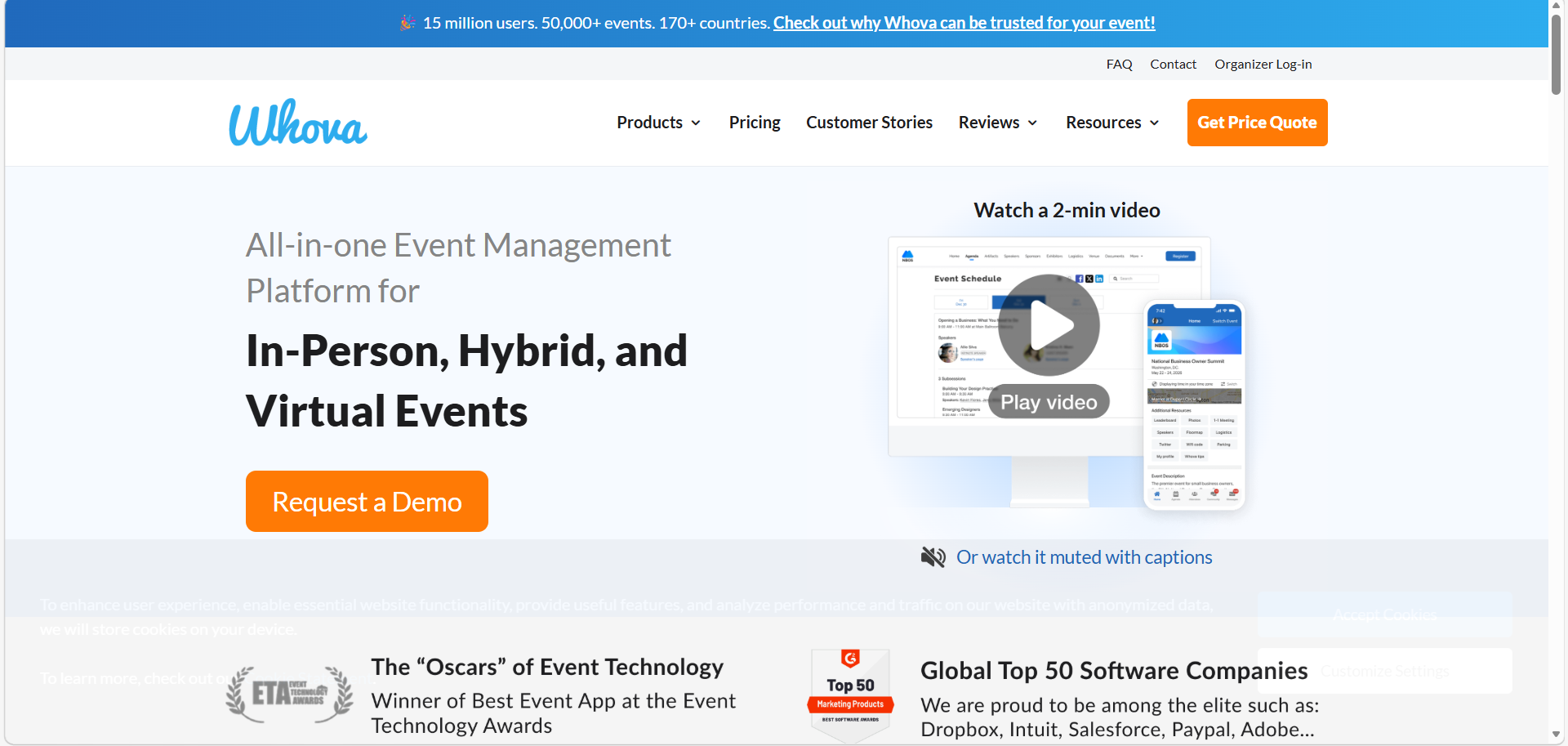
Whova is reputed for having a powerful attendee app and the capacity to manage logistics and engagement across various event scales.
Features
-
- The mobile event application features community boards and networking tools to help attendees engage with the event.
- Badges and online check-in systems can help organizers control entry without congesting the venue.
- Built-in modules support speaker coordination and sponsor visibility.
Pros
-
- High emphasis on interactivity, particularly on networking-intensive events in which interactivity is crucial.
- Automatic data synchronization reduces manual labor and ensures attendee data is up to date.
Cons
-
- Registration templates are somewhat constrained when you want greater design freedom.
- Conditional logic is not as well-developed as tools like Swoogo.
Pricing
Individual quotes depend on the event size.
3. Cvent
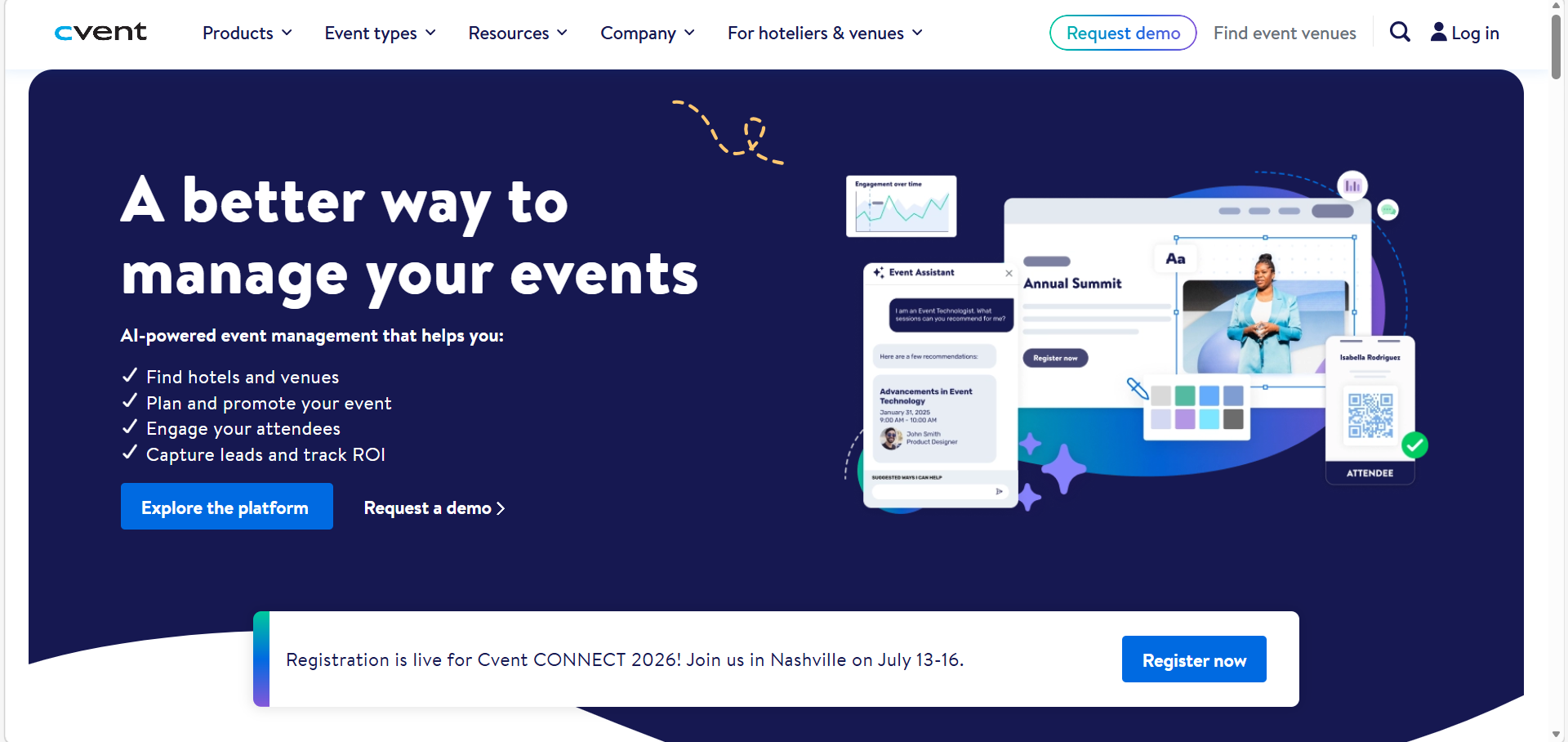
Cvent is preferred by organizations that require detailed control over complex, global event programs.
Features
-
- Venue sourcing operates via Cvent Supplier Network, which assists teams in locating and managing locations effectively.
- Multi-track events with structured workflows are supported by advanced registration and session tracking.
- On-site services such as hardware support and lead retrieval of exhibitors and sponsors.
- Financial reporting tools will give more information on ROI and event performance.
Pros
-
- Manages large events without a hitch, even when there are moving components.
- Has a high level of security and compliance.
Cons
-
- Time-consuming to learn, particularly when dealing with unfamiliar teams and complex systems.
- It is not as practical for smaller organizations since costs can easily increase.
Pricing
Multi-level quote-based pricing.
4. Bizzabo
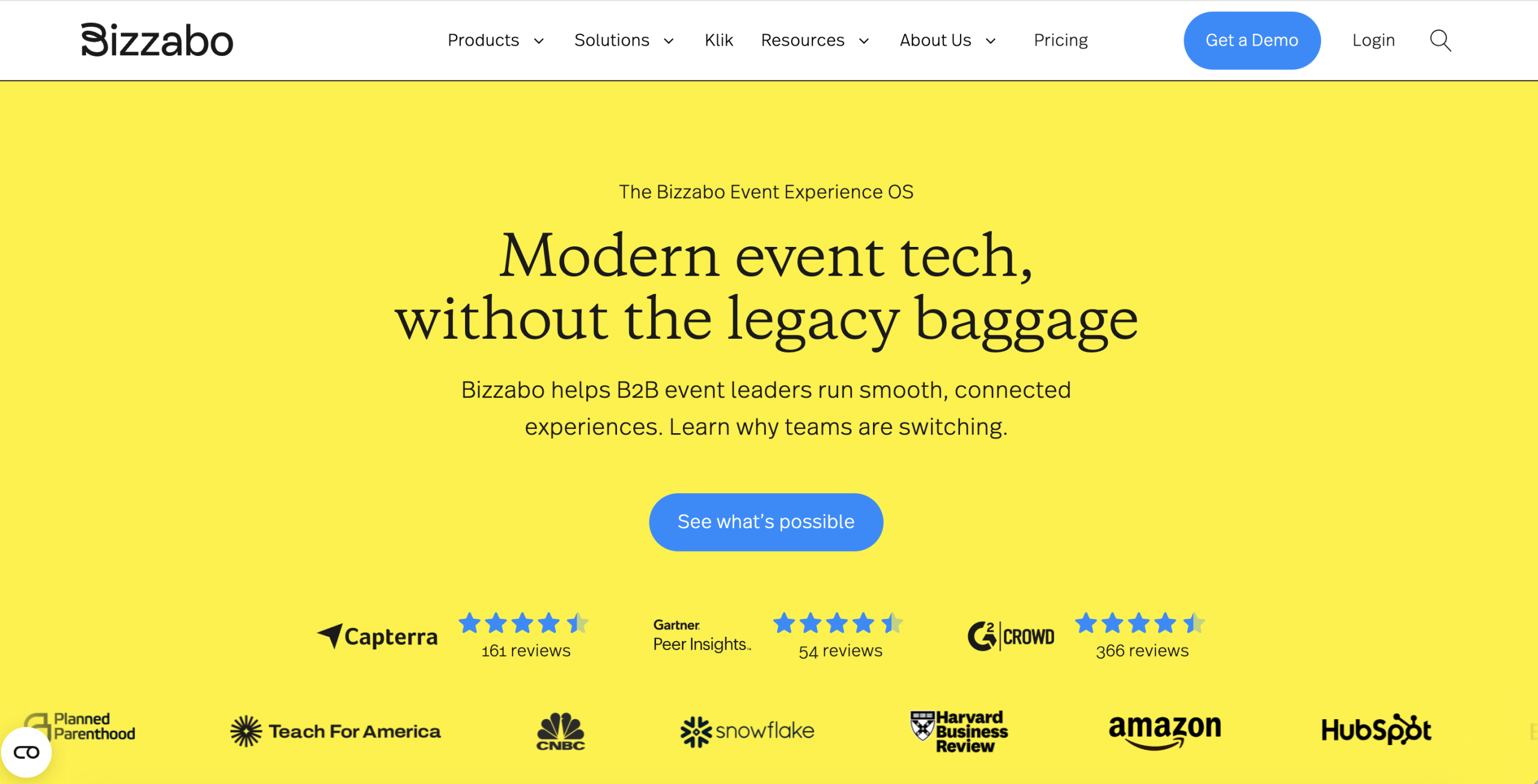
Bizzabo focuses on delivering polished event experiences with strong marketing and design features.
Features
-
- Wearable network devices such as Krowden help attendees interact more effectively during events.
- A modern website builder lets users create contemporary-looking event pages without technical skills.
- Video hosting on demand helps in virtual content and post-event interaction.
Pros
-
- Good visual design skills make events appear more high-end and branded.
- Provides valuable marketing data that can guide teams on how to interact with attendees.
- Customer service is receptive and supportive in implementation and installation.
Cons
-
- Pricing may be more expensive than comparable tools.
- The backend navigation is a little non-linear until you become accustomed to it.
Pricing
Starts at $499 per user per month, billed annually, with plans beginning at $17,999 per year.
5. vFairs
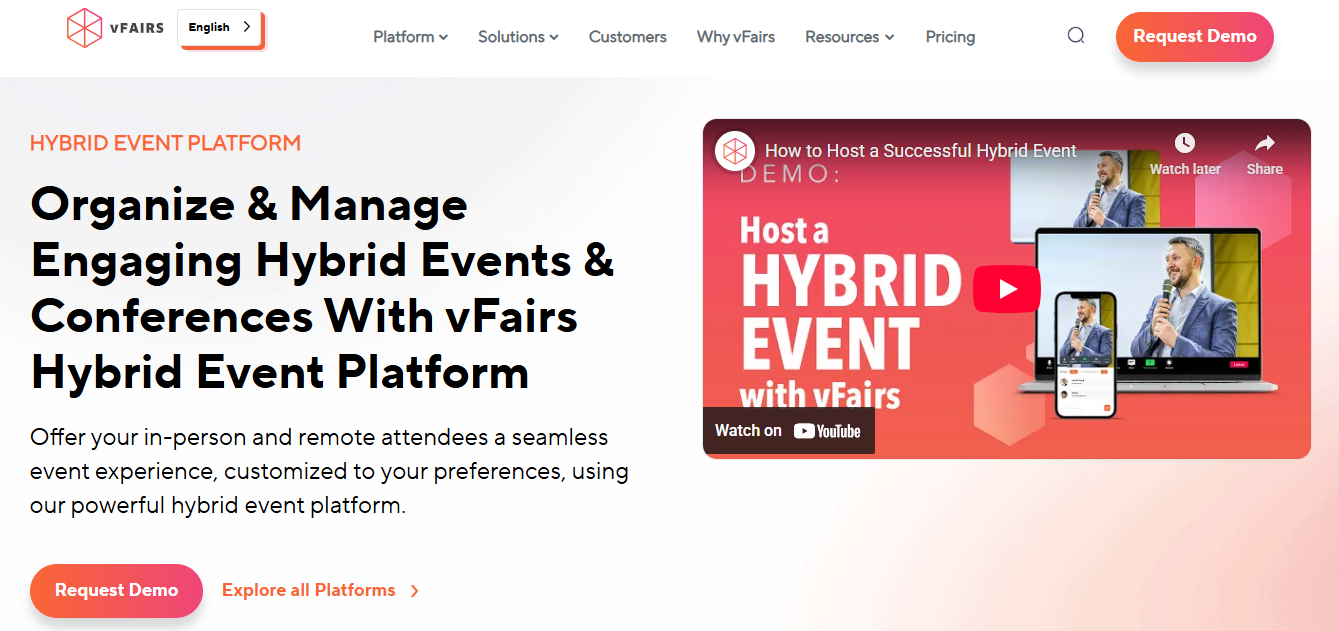
vFairs stands out in virtual and hybrid events with immersive environments that simulate real venues.
Features
-
- The 3D booth and virtual space provide the attendees with a more interactive environment than the traditional layouts.
- Live chat and Webinar integrations keep sessions alive and available.
- Gamification features, such as leaderboards, improve attendance at events.
- An AI assistant is used to aid in content-related activities and general assistance.
Pros
-
- Provides a visually pleasing experience for virtual participants who do not want to see just video calls.
- Particularly effective in job fairs, expos, and large virtual meetings.
Cons
-
- Some users might find the 3D interface old-fashioned.
- It is more time-consuming to set up compared to standard platforms.
Pricing
Custom pricing based on event scope or customization level.
6. EventMobi
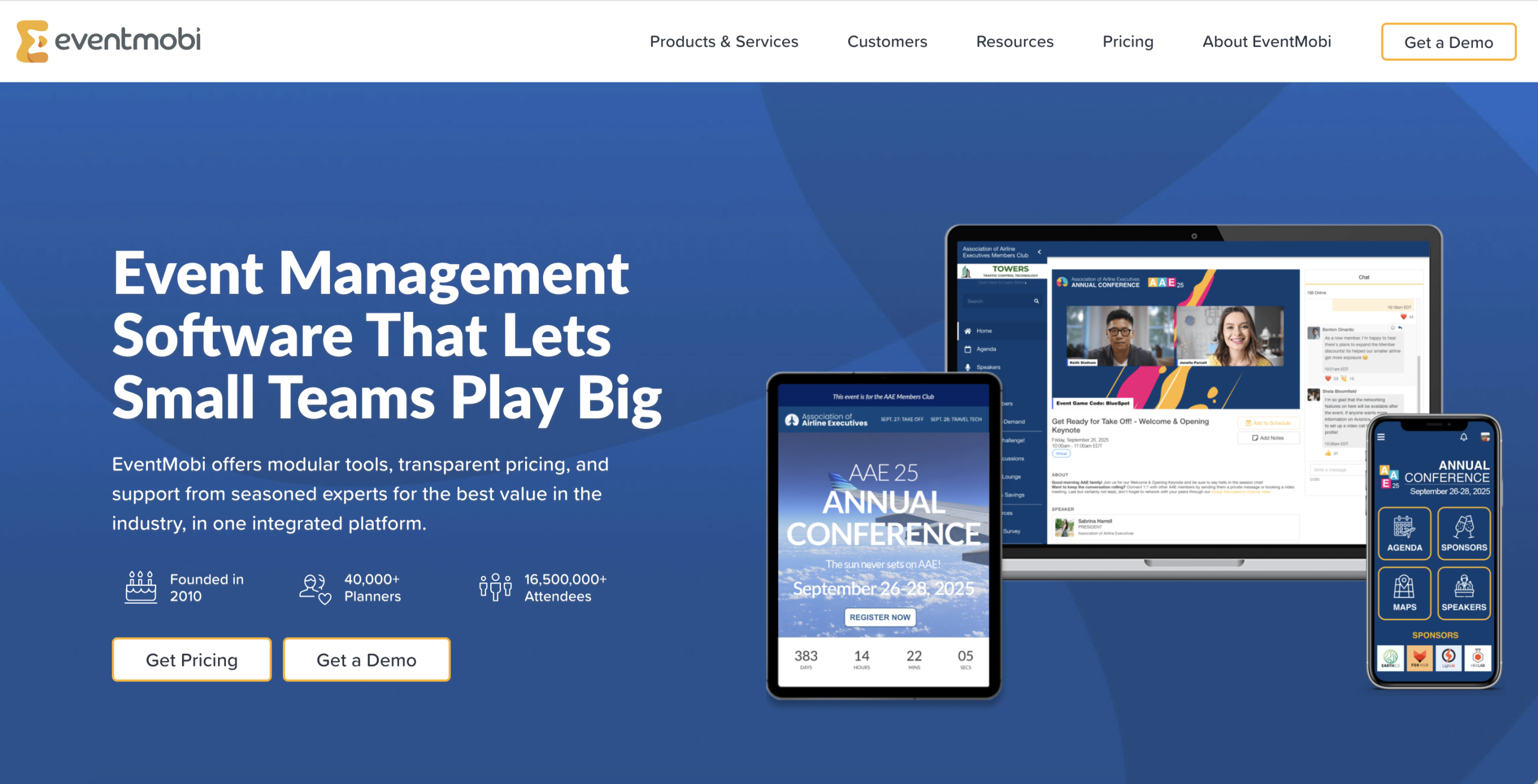
EventMobi is one of the more affordable Swoogo alternatives for smaller teams that need a simple yet powerful setup.
Features
-
- Live updates posted on social feeds can be displayed on-site, keeping attendees informed and engaged.
- The multi-event dashboard enables organizers to manage multiple events without switching tools.
- Email marketing and registration collaborate to boost communication.
Pros
-
- User-friendly, even to non-technical teams.
- Works well as an all-in-one tool for smaller teams that prefer simpler components.
Cons
-
- Limited advanced logic for complex setups.
- Reporting works fine, but does not go as deep as enterprise-level platforms.
Pricing
Modular pricing based on selected features.
Choosing Your Next Event Management Solution
According to Persistence Market Research, the global event management services market is valued at $1.5 trillion in 2026, reflecting how large-scale and complex modern event planning has become. At this rate, choosing the right event management platform is very important, as it helps your event run as smoothly as possible.
Before choosing an event management platform, take some time to do your research and compare all of your options. Look at case studies and user feedback on how platforms have performed in actual events. Trial each of the options you’re considering for your event. This will give you insight into which one will work best for you, so you’ll feel confident in organizing your event.
The Bottom Line
Choosing an event management software is a question of what matters most to your events, whether it’s scale, engagement, or structured workflows. Swoogo is highly customizable, but a search on the best Swoogo alternatives can help you avoid paying a lot of money for features you do not require. Alternatives such as Dryfta have very different applications. When you need a simpler, one-stop solution, check out Dryfta and schedule a free demo to see how it fits into your workflow.
FAQs
Why should I consider switching from Swoogo?
You may want to move away from Swoogo if your event volume stays low and the flat user-based pricing does not make financial sense. Teams that need academic workflows like abstract management or peer review may also feel limited. Some organizers look for simpler tools with virtual features and less complex configuration, especially when setup time and ease of use matter more than deep customization.
Can I use Swoogo alternatives for small events?
In the case of smaller events, Dryfta, Eventbrite, and RSVPify are among the more affordable Swoogo alternatives. Dryfta is better aligned with organized academic events, whereas Eventbrite is more basic, and RSVPify is more design-oriented. These alternatives tend to be based on flexible pricing frameworks, which might be more comfortable than enterprise-level commitments.
What features should I look for in a Swoogo alternative?
Pay attention to websites with flexible site builders, strong branding control, and easy CRM integrations. On-site solutions, such as mobile apps for QR code check-in and lead capture, are also important. The quality of support is important, particularly at live events. The pricing must be consistent, as your attendance increases, so you do not incur unforeseen expenses when scaling up your events.
Is there an easier-to-use alternative to Swoogo?
Dryfta is a simpler alternative with a more organized workflow. It combines registration, abstract management, and scheduling into a single dashboard, so you do not have to use multiple tools. The interface of Dryfta is usability-oriented.
Which Swoogo alternative is best for virtual or hybrid events?
Dryfta is effective in both virtual and hybrid environments because it integrates live sessions, audience interaction, and content access within its virtual event platform. Streaming or networking functions do not require additional plugins to be run by the organizers.
Which Swoogo alternative offers all-in-one event management?
Dryfta is a powerful all-in-one alternative, particularly for academic events that require more than simple registration. It has an in-built CRM and a mobile app, complemented by registration and ticketing, so both complex workflows and the usual event logistics can be managed with great ease.
