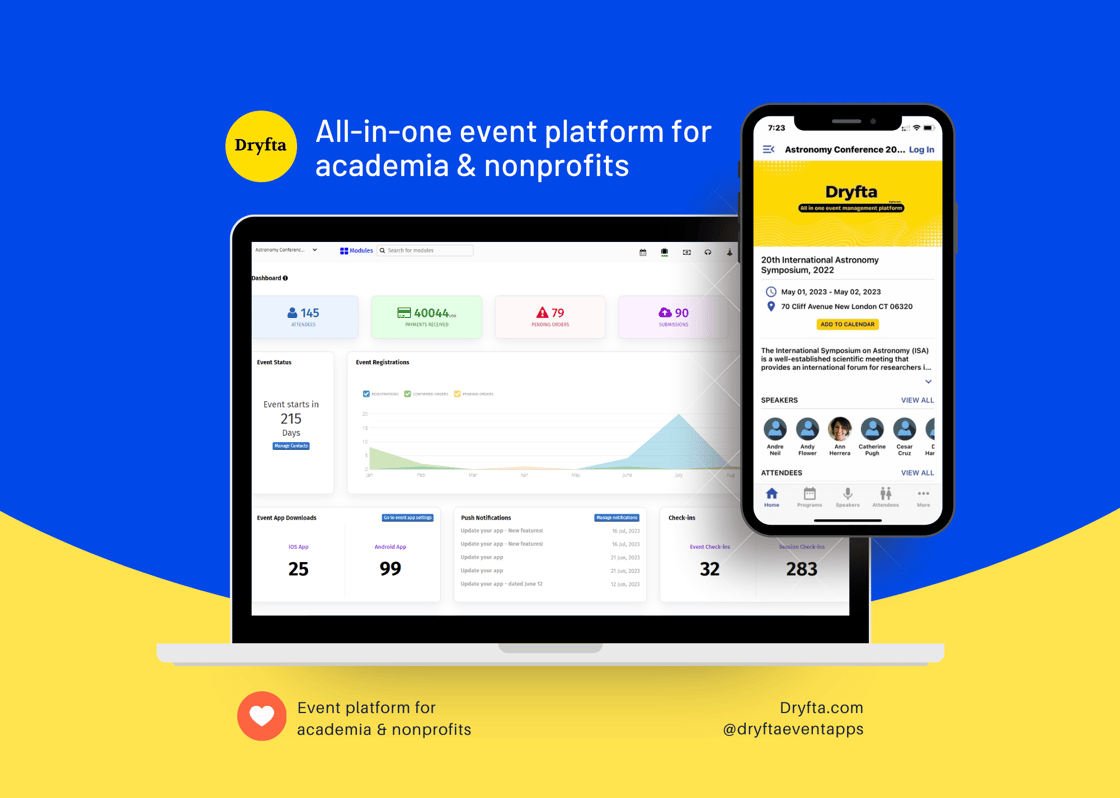
Preparing a conference app involves several connected decisions: what attendees should see, how the event should look on a phone, and where organizers should manage app communications. Dryfta’s latest Event App Publisher update gives that work a clearer home in the event administration dashboard.
Event App Publisher is now a dedicated module, with direct access to app setup, Push Notifications, and Private Messaging. A new phone-style preview also shows the guest homepage using your event’s saved settings. Together, these changes help organizers review the saved mobile experience and find the relevant controls before directing attendees to their event’s mobile app.
ROI or return on investment is a key marker for event planners when it comes to a plethora of considerations. It is the numbers that yield as ROI that will ultimately decide the future course of your organization. Show the returns must shown, more than told.
In the ever-evolving world of events, agencies and businesses are constantly seeking innovative ways to stand out. Imagine having a state-of-the-art event management software, fully customized to reflect your brand, without the hassle of building it from scratch. With Dryfta’s White Label Event Software, you can make this a reality. Designed to empower event agencies and businesses, this platform allows you to create a professional, branded event experience—completely free of Dryfta’s branding.
Let’s explore what makes Dryfta’s White Label Event Software a game-changer and how it can help you save time, cut costs, and enhance customer satisfaction.
Issuing participation certificates by hand was, for a long time, considered a perfectly acceptable inconvenience. A workshop with 50 attendees meant 50 copies of a Word document, each name typed individually, each PDF converted, and each email then composed and sent one at a time. For events of that modest scale, the process was tedious but proved survivable. However, increasingly, manual certificate generation is becoming unsustainable for event organizers around the globe. As an instance, a hybrid academic conference registering 10,000 or even a smaller-scale corporate webinar series running a few dozen sessions in a single calendar year, will barely be able to survive on manual means of generation a certificate of participation.
1EdTech inferred from its 2025 batch count that the number of digital badges issued grew remarkably from 74.7 million to 320.4 million in 2025 in just 3 years.
When you plan an event, you want a smooth registration experience for every attendee. But selling tickets can be a challenge, especially for nonprofits and academic conferences managing multiple ticket types, discounts, and payment rules. Choosing the right online ticketing platform can reduce administrative work while helping your organization keep more of its ticket revenue.
Dryfta makes it easy to create webinars, online training sessions, and even in person workshops from the same workflow. This guide walks you through the full process, from creating the session to customizing the registration form and managing attendees.
Peer review is one of the most important parts of running a conference, symposium, or call for papers. It is also one of the most time consuming.
Program committees often spend days assigning submissions, balancing reviewer workloads, checking topic fit, and trying to maintain consistency across thousands of abstracts.
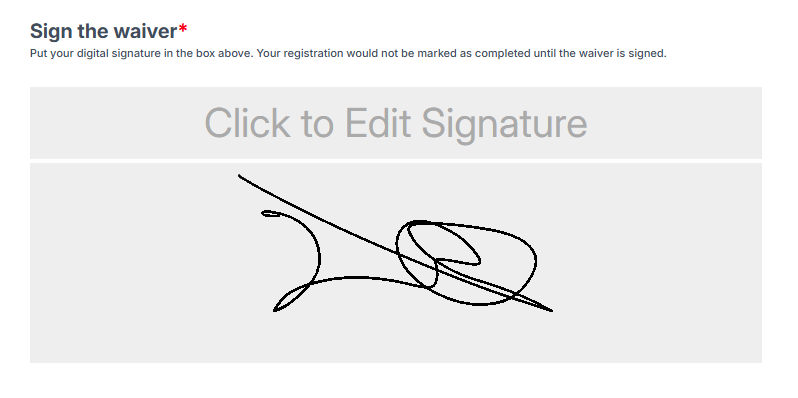
Collecting signatures at events has traditionally been slow, manual, and prone to errors. Paper forms get misplaced. Approvals get delayed. Compliance becomes harder than it should be.
Digital signature fields solve this. They allow organizers to collect legally binding signatures directly within online forms, speeding up workflows while maintaining a clear audit trail.
The best event planning tools for nonprofits are not always the products with the longest feature lists. They are the ones that fit the event, reduce manual work, protect supporter data, and leave more time for the mission behind it.
A fundraising gala, volunteer orientation, annual conference, and community workshop each create a different workload. One team may need ticketing and donations. Another needs abstract submissions, session schedules, certificates, and detailed attendance records. Before comparing brands, it helps to decide which jobs your technology must handle.
This guide compares 11 useful tools across the nonprofit event workflow. You will find options for project planning, design, email, fundraising, ticketing, volunteers, donor records, agendas, audience participation, virtual delivery, and connected event operations.
The central choice is not simply which tool has the most features. It is whether separate tools will stay simple or force your team to become the connection between them. That difference often decides whether an event feels manageable in its final weeks.
Editorial note: Dryfta publishes this guide and appears in the comparison. We reviewed official product and help information available on September 24, 2026. We assessed each tool for a specific job rather than declaring one product the winner in every situation. We did not run the same event on every platform. Features, nonprofit eligibility, pricing, and integrations can change, so confirm the details that affect your event before signing a contract.
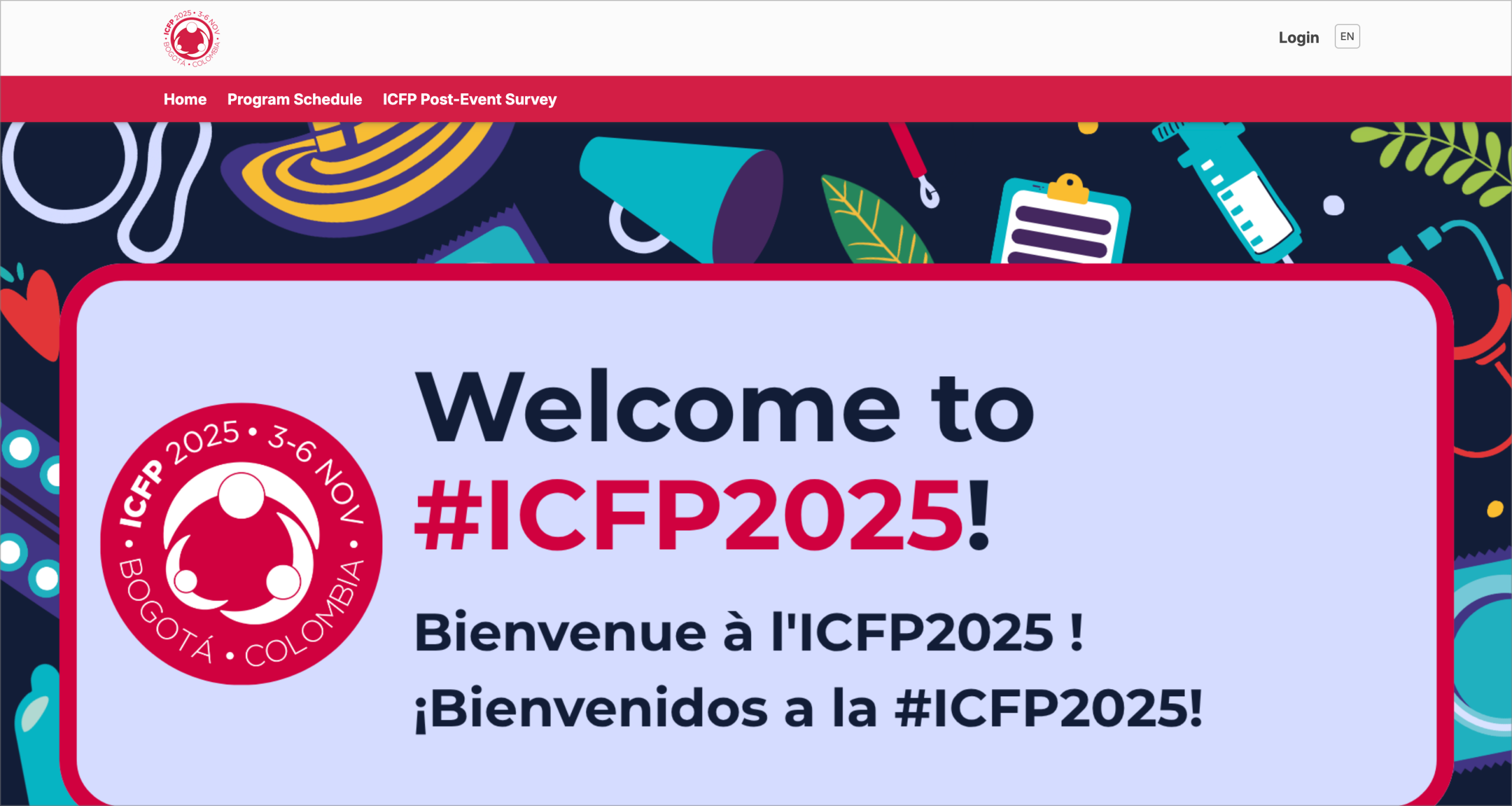
ICFP 2025 is a research conference (with over 3700 attendees) from Johns Hopkins University, co-hosted by Gates Institute, that uses Dryfta event platform. SBCC Summit 2022/26 and IMNHC 2023/26 are the two other similar conferences co-organized by JHU and hosted on Dryfta.
Running a major research conference is never just about opening registrations and publishing a program. It is about managing thousands of submissions, coordinating reviewers, processing payments, supporting international delegates, building a schedule people can actually use, and giving every attendee a seamless experience from abstract submission to check-in to participation certificate delivery.
This month’s Dryfta updates focus on making virtual delivery simpler, attendee navigation faster, and admin controls tighter across matchmaking, submissions, and ticketing.