
At 06:00 a truck pulls up at the wrong entrance. The exhibitor is holding last month’s PDF; the driver has a label that matches nothing on the dock, and the official contractor cannot find the order that should explain it all. Nobody at the dock did anything careless. The failure began weeks earlier, in how the conference exhibitor manual was written, published, and changed.
A manual that works is not merely a longer version of an existing document. Rather, it is a controlled source that ties each instruction to a date, an owner, a supplier and an exhibitor action. This article begins after the exhibitor has booked and follows the show clock from the first deadline to the final truck. Sponsor packages and relationships sit elsewhere, and teams who need them can read about managing nonprofit sponsors and exhibitors.
A conference exhibitor manual should be more than a PDF. It needs one controlled source of truth, dated actions, named owners, direct supplier links, dependencies, exception routes, version history, and acknowledgement. Organize your conference exhibitor manual around what exhibitors must do before arrival, during move-in, when the show is open and at move-out. Each instruction should name the authority behind it, so an exhibitor knows which document wins if two sources disagree.
Name the Authoritative Source for Every Instruction
Exhibitor instructions come from five places, and each has authority over different questions. When a manual blends them into one voice, nobody can tell which rule to trust.
| Source owner | Typical authority |
|---|---|
| Organizer | Show dates, exhibit hours, event contacts and event-specific policy |
| Venue | Facility access, building rules, fire and safety constraints |
| General service contractor | Freight, material handling, labor and move-in operations |
| Exclusive or official supplier | Electricity, internet, rigging, catering, cleaning or AV where applicable |
| Exhibitor-appointed contractor | Booth build within approved scope and access rules |
Link directly to each source and state which document wins if two disagree. Do not paste supplier rules into prose the organizer cannot keep current, because the moment a contractor revises a form, the pasted copy becomes a trap. A single sentence such as “the contractor’s current freight page controls delivery windows” costs nothing and prevents an argument at the dock. It also tells the organizer’s own staff where to look when an exhibitor phones with a question.
Build the Manual Around the Show Clock
Most manuals are organized by department: venue rules here, contractor forms there, organizer policy at the back. Exhibitors do not experience an event by department. They experience it by date. A time-based layout puts each task where the exhibitor will need it.
- After booking: contacts, booth allocation, required profiles and initial approvals.
- Before discounted service deadlines: utilities, furnishings, internet, AV and contractor orders.
- Before shipping: labels, warehouse or direct-to-show route, delivery windows and documentation.
- Before move-in: credentials, insurance, contractor approval and arrival slot.
- During move-in: access, material handling, safety inspection and service resolution.
- When the show is open: booth staffing, demonstrations, conduct, replenishment and support.
- At move-out: breakdown time, outbound freight, bill of lading, material removal and closeout.
This clock is the spine of the manual. The conference move-in schedule and every other item among the trade show exhibitor requirements then sit inside the stage they belong to and not in a single appendix. The sections that follow deepen each decision without repeating the timeline.
Turn Every Deadline Into an Owned Action
A deadline without an owner is a wish. Give each one a row in a register the whole team can read.
| Action | Exhibitor owner | Supplier or approver | Deadline and time zone | Dependency | Direct link | Evidence |
|---|---|---|---|---|---|---|
| Order electricity | Named exhibitor contact | Official supplier | Date and time zone | Final booth plan | Preferred order page | Confirmation number |
Replace “early-bird deadline” with a precise date, a time zone and a consequence. A booth service order deadline should state separate dates for discounted pricing, final ordering and onsite availability wherever the source distinguishes them. An exhibitor who knows that onsite orders carry a surcharge and a delay will plan differently from one who reads only that the deadline is soon. Always state the time zone, because a deadline at midnight means different things to an exhibitor shipping from another continent.
Show How Service Orders Depend on Booth Decisions
Service orders are not independent errands. Each one depends on a decision made earlier in the booth plan, and a manual should show the chain.
One chain: Booth layout → power location → electrical order → equipment placement → safety check → live demonstration.
If the layout changes, the power location may change, and so may the order. If the order is late, the demonstration may fail its safety check. Showing that chain once, with a real example, teaches exhibitors more than a list of forms.
Cover the common categories without becoming a vendor catalogue: electrical and internet, furniture and floor covering, AV and screens, rigging where permitted, cleaning and waste, catering or sampling approval and lead retrieval when it applies. For each one, state which supplier controls it. The organizer cannot override venue exclusivity or labor rules, and the manual should never suggest otherwise.
Separate Advance-Warehouse Freight From Direct-to-Show Delivery
Freight causes more dock-side trouble than any other part of the manual, because two routes can look similar on paper and behave very differently on the day. Exhibitor freight instructions should answer the same questions for each route the event permits.
- Which route is permitted for this event?
- What address and label format must be used?
- What delivery window applies?
- Who signs for the shipment?
- When does material handling begin?
- What happens to empty containers?
- Which outbound documents and carrier arrangements are required?
- What happens when a truck misses its slot?
Do not present one route as cheaper or better in general. The right answer depends on the venue, the official contractor and the exhibitor’s schedule, and the manual’s job is to state the event’s rules, not to recommend a strategy. Whatever the route, the last question matters most. A truck that misses its slot needs a named person to call and a written next step.
Design Move-In as an Appointment and Not An Open Door
An open door invites congestion. An appointment prevents it. The manual should give each exhibitor a target move-in date and time, the vehicle and loading access that applies, the credentials staff and contractors need and any safety briefing or protective equipment the venue requires.
It should also say how the booth is inspected and approved, where the service desk sits, whom to call when something goes wrong and when aisles must be clear. Just as important, it should say what cannot arrive before the space is ready. A targeted floor plan or arrival slot keeps the dock moving. Do not assume every conference uses union labor, marshalling yards or the same access process. Describe the event’s own.
Put Booth Rules Beside the Decision They Affect
Exhibitors read a rulebook when they have a question, not before. Place each rule next to the decision it affects.
| Exhibitor decision | Relevant rules to surface |
|---|---|
| Build the booth | Height, boundaries, materials, structural approval |
| Run a demonstration | Sound, crowding, power, safety and schedule |
| Serve food or drink | Catering exclusivity, permits, allergens and waste |
| Store materials | Fire lanes, back-of-booth storage and empty containers |
| Use an outside contractor | Approval, insurance, credentials and permitted work |
Avoid copying an entire venue rulebook. Link to it and surface only the requirement that changes what the exhibitor does. An exhibitor planning a demonstration needs to know the sound limit before buying a speaker, not after the booth inspector arrives. The same rule placed in an appendix is technically published and practically invisible.
Give Exhibitors One Route for Questions and Exceptions
Vague instructions such as “contact us if needed” fail because they do not say who, why, or by when. Build a contact map that covers seven situations.
- Organizer policy and booth allocation
- Venue access or facility rules
- Freight and material handling
- Utilities or service orders
- Credentials and contractor approval
- Safety or urgent onsite issues
- Billing disputes with a supplier
Each route needs a named role, a channel, hours, and an escalation path. Publish roles and shared channels and not personal details, unless the person has agreed to it.
Control Changes So the Old PDF Stops Circulating
The truck at the wrong entrance usually means the instruction changed and the old copy kept moving. A conference exhibitor manual needs change control as firmly as it needs content.
Keep one preferred online location. Give every version a number or effective date, name a change owner and an approver and keep a short change log. Link to supplier forms and do not copy them. Tell affected exhibitors when a material instruction changes, mark or remove superseded files and confirm that suppliers and onsite staff received the same update.
Take a loading entrance that moves after the manual was first issued. Sending another attachment is not enough. The update path covers the manual page, a notice to every exhibitor with a delivery window, the contractor’s dock team, the venue’s security desk and the signage on the day. One change, five places, and each one needs an owner.
Ask for Acknowledgement Where Failure Creates Real Risk
Not every paragraph needs a checkbox. Reserve acknowledgement for material items, such as the move-in slot, the freight route, insurance, booth-safety limits, outside-contractor approval and move-out duties. Record who acknowledged, when and which version of the manual they saw.
Acknowledgement is an operating control, not a waiver. It does not move the organizer’s responsibilities onto the exhibitor. It tells the team who has seen which instruction before a problem arrives, and that is worth far more than a dispute about who was told.
Test the Conference Exhibitor Manual With One Exhibitor Before Release
Before the manual goes out, test it with one scenario. A first-time exhibitor needs power, internet, a freight shipment, two contractor badges and a product demonstration. Ask someone unfamiliar with the event to find every deadline, supplier, form, dependency, cost stage, delivery instruction and support contact.
Record every unclear step and every dead link. This is a usability test, not proof that the underlying rules are correct, so supplier facts still need verification. But a conference exhibitor manual that a newcomer cannot follow will fail a real exhibitor on a busy morning.
Close Move-Out and Preserve Next Year’s Evidence
An exhibitor move-out procedure should cover breakdown timing, outbound carrier arrangements, bills of lading, empty-container return, material-removal approval, missing freight, damage reporting and supplier closeout. Move-out is where small ambiguities become lost shipments.
Afterward, keep what the show taught you: recurring questions, missed deadlines, exceptions granted and instructions that turned out to be obsolete. Preserve them for the next revision without exposing confidential exhibitor information.
How Dryfta Fits Without Pretending to Be the Freight System
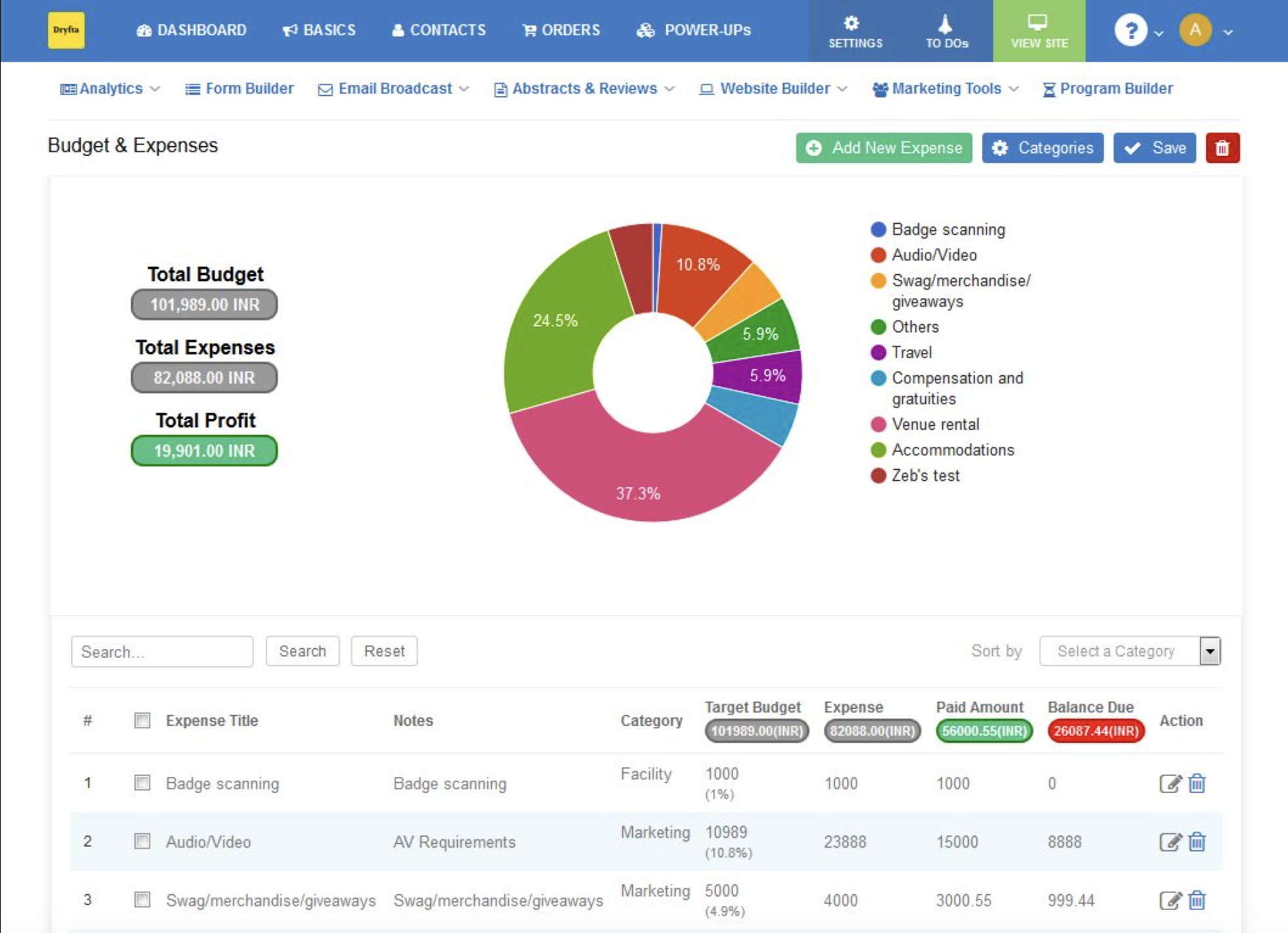
Dryfta can keep sponsor and exhibitor information connected to the event, and sponsors and exhibitors management records can sit beside the rest of the conference. Attendees can discover exhibitors using event information and the event app floor plan. Organizers can use their event communication workflow to point exhibitors to the controlled manual location and to important updates.
Venue and official-contractor systems remain authoritative for services, freight, labor and facility rules unless a current integration proves otherwise. This article does not claim that Dryfta creates bills of lading, controls loading docks, processes supplier service orders or verifies insurance automatically. Organizers should confirm any specific capability against their own event configuration.
If the Instruction Changes, the Operation Must Change With It
Return to the truck at the wrong entrance.. Before you issue the conference exhibitor manual, walk one complete exhibitor journey from booking to move-out and fix whatever breaks.
If you are an orgnization that is hoping to better organize your event operations, explore Dryfta’s all-in-one-event managment software today. Sign up for a free demo today. Click here.
Frequently Asked Questions (FAQs)
What should a conference exhibitor manual include?
Dated actions, named owners, direct links to venue and supplier documents, freight and move-in instructions, booth rules, contact routes, change history and acknowledgement for material items. Organize it by the show clock so exhibitors find each task when they need it.
When should organizers send the exhibitor manual?
Once exhibitors have booked, early enough for them to meet the first service and shipping deadlines. The exact timing depends on the event’s own dates and supplier calendars, so work backward from the earliest deadline and not from a fixed number of weeks.
What is the difference between an exhibitor manual and an exhibitor services kit?
Providers use the terms differently. A services kit usually emphasizes forms, rates and ordering. A manual may cover show information and rules as well. This article treats them as one resource, so always check how your own contractor defines each.
How should organizers communicate changes after the manual is issued?
Update the single controlled location first, record the change in the log, then notify affected exhibitors, suppliers and onsite staff with the version and effective date. Remove or clearly mark superseded files so the old copy stops circulating.