
Three weeks before the conference, the program team confirms a speaker and tells her she will receive an honorarium. Finance reads the same file and sees a service that needs a contract. The speaker, meanwhile, assumes her flights and hotel are covered on top. Nobody has been careless; each person used a familiar word to mean something different. A clear speaker honorarium policy would have settled the question before the invitation went out. The payment promise starts before the paperwork, and it is hard to take back once made. This guide helps you separate the three payment paths, ask the right questions of the right internal team and record the terms before anyone relies on them.
In short: a speaker honorarium policy defines when a voluntary or discretionary recognition payment is appropriate, when a contracted service fee is required and when approved expenses may be reimbursed. Before promising any payment, confirm eligibility, funding, approvals, documentation, tax or immigration review and timing. Definitions vary by institution and jurisdiction, so your own organization’s rules always take precedence over this guide.
Honorarium, contracted fee and reimbursement answer different questions
The three terms are often used as if they were interchangeable. They are not, and the difference shapes who must approve the payment, what paperwork is needed and what you can safely say to the speaker.
| Payment path | General purpose | Organizer question | Common internal owner |
|---|---|---|---|
| Honorarium | Recognition where institutional rules allow it | Is this activity and recipient eligible? | Finance or designated approver |
| Contracted fee | Payment for agreed professional services | Does this require procurement and a contract? | Procurement, legal and finance |
| Expense reimbursement | Repayment of approved, documented costs | Which expenses and limits are allowed? | Travel or finance |
An honorarium is generally understood as a payment of recognition, offered where the rules of the paying institution permit it, rather than a price negotiated for a service. A contracted fee is payment for professional services that have been agreed in advance, usually with defined deliverables, and it typically passes through procurement and a written agreement. Expense reimbursement repays costs the speaker has actually incurred, within approved categories and limits, against documentation.
The columns give the common pattern, not a rule. Some institutions restrict honoraria to certain kinds of speakers or activities. Others treat almost any payment for a prepared talk as a purchased service. Published guidance from the US Department of Commerce, Stanford and the University of Rochester shows how eligibility and treatment depend on the governing rules, and how an honorarium is distinguished from an ordinary purchased service. Those are examples of different institutional approaches, not universal definitions, and each should be checked against its current published version.
The key point is that labels do not determine treatment. Calling a payment an honorarium does not make it one, and it is not a way around a contract. The institution’s policy, the facts of the engagement and the jurisdiction decide how a payment is classified. That is why your policy should begin with a classification step, and why the person who classifies the payment should be the one who understands the rules.
Start with the activity, recipient and relationship
Classification depends on facts, so gather them before choosing a path. A short intake note, completed by the programme team and handed to the approver, does most of the work. Document:
- What the speaker is expected to deliver. A keynote, a workshop, a panel seat and a multi-day teaching commitment may be treated differently.
- Whether the engagement is voluntary or negotiated as a service. If the speaker has asked for a price, or the deliverables are specified in detail, the arrangement may look more like a service than a gesture of recognition.
- Who the person is. An employee, a public official, a student, a foreign payee or a representative of an organization may each be subject to different rules.
- Whether the payment goes to an individual or an entity. Some speakers invoice through a company or a speakers’ bureau.
- Whether travel or other costs are separate. State what is expected on top of any payment, so no one assumes.
- Whether an existing relationship or conflict needs review. A speaker who is also a vendor, a board member or a staff member’s relative should be flagged.
This note is not a decision. Do not try to settle edge cases yourself, and do not rely on a general guide, including this one, to decide whether a particular person can be paid in a particular way. Send each unusual case to the authorized institutional team, such as finance, procurement or compliance, and record what they decide.
Two habits help. First, write the intake note in neutral language, describing what will happen rather than what you hope to call it. Second, keep it short enough that busy colleagues will read it. A half-page that names the activity, the person and the open questions gets a faster answer than a long email thread.
Obtain approval before the invitation states an amount
The most useful rule in any speaker payment process is about order: approve first, then invite. Once an invitation names an amount or a category of payment, the speaker may plan around it, decline other work or buy a ticket. If approval later fails, the organization has a relationship problem as well as a budget one.
Build a simple sequence and follow it each time:
- Confirm the funding source and budget owner. Know whose money it is and that it is available.
- Classify the proposed payment path. Honorarium, contracted fee or reimbursement only, using the intake note.
- Check recipient and activity eligibility. Ask the designated approver, not a colleague’s memory of last year.
- Determine procurement, contract, tax and immigration review. Find out which of these apply, and start them early.
- Approve the amount and reimbursable expenses. Record who approved, and on what basis.
- Set the payment process and a realistic timeline. Ask finance how long payment takes after the event and what triggers it.
- Only then place the terms in the invitation or agreement.
A note on wording. The phrase “subject to approval” should not be used to cover an offer that has not been properly checked. If approval is genuinely pending, say so plainly, early and in writing, before the speaker relies on the promise: for example, that payment terms are being confirmed and will follow by a stated date, and that the speaker should not make commitments based on them until then.
It also helps to agree internally who is allowed to discuss payment with speakers. When several organizers, committee members and volunteers can each mention money, the result is usually mixed messages. Name one person, give them the approved terms and route every payment question through them.
Put the exact terms in one written record
Once the payment is approved, put every term in a single written record, whether that is an agreement, a formal letter or an institution-approved template. One document prevents the slow drift in which the email thread says one thing, the contract another and the speaker remembers a third.
The record should state:
- The speaker and the paying entity
- The activity, date and agreed deliverables
- The payment classification and the amount or approved basis
- Travel and other reimbursable categories, limits and receipt rules
- Required forms and the secure route for submitting them
- Cancellation or change terms
- The payment trigger and the expected processing window
- Institutional contacts for programme questions and for payment questions
The last two items cause the most frustration when they are left out. A speaker who does not know when payment normally arrives will start chasing the programme team a week after the event, and the programme team will not know the answer. Give the processing window as a realistic range agreed with finance, and name the person to contact if it is exceeded.
Intellectual property, recording consent and usage rights should appear as separate agreement items rather than being folded into the payment terms. They raise different questions and may need different approvers. For how to handle consent for recordings, see the relevant Dryfta guidance on speaker consent rather than expanding it here.
Finally, have the record reviewed by the right internal teams before it is sent, and keep the approved version where the finance and programme teams can both find it. If terms change, change the record and tell the speaker in writing. A verbal update that never reaches the file is how the next dispute begins.
Treat international speakers and special categories as escalation points
Some speakers will need more review than others. Citizenship, tax residency, work authorization, the place where the service is performed, sanctions, treaty rules and the speaker’s institutional status can each change the process, and sometimes whether a payment is possible at all. A speaker joining remotely from another country, or a public official speaking in an official capacity, can raise similar questions.
For an organizer, the right approach is to treat these cases as escalation points and not to answer them from a general guide. As soon as you know a speaker may fall into one of these categories, start the review with your finance, tax, immigration, procurement or legal teams, depending on how your institution divides the work. Early review matters because these checks can take weeks, and some may affect what you can offer.
This article deliberately does not explain visa categories, withholding rates, tax forms or the law of any particular country. Those details change, they differ by situation and they require qualified advice. A confident summary from a non-specialist could do more harm than saying nothing.
What you can do is prepare well:
- Ask the speaker, through the approved route, for the minimum information the reviewing team has said it needs.
- Tell the speaker early that additional checks may apply and that terms will be confirmed after review.
- Keep the escalation in writing, with the date raised, the owner and the outcome.
- Do not promise a payment amount, a payment date or a payment method until the review is complete.
Treat this as a standing part of the process, not a rare exception. If your event regularly invites speakers from other countries, ask your finance team to give you a short, approved checklist of the questions to raise, and a named contact for each.
Keep expense reimbursement separate and explicit
Reimbursement is the part of speaker payment most often left vague, because it feels routine. Yet it is also where speakers are most likely to be surprised. Handle it as its own item, with its own terms.
State clearly:
- Whether travel is booked by the organizer or reimbursed to the speaker. These are different processes with different timing and risk.
- Which categories are permitted. For example, transport, accommodation or meals, as your policy allows, and any limits that apply.
- What approvals are required, and whether they must be obtained before the cost is incurred.
- Which documents the speaker must keep and submit. Receipts, itineraries or proof of payment, as your finance team requires.
- How currency and exceptions are handled. A speaker paying in another currency, or facing a change of plan, should know what to do.
Note also that a flat allowance, an advance or a single bundled amount may be treated differently from a reimbursement of actual costs under local rules. If someone proposes combining an honorarium and travel into one figure, send the proposal to finance before it is discussed with the speaker.
Two cautions. Do not promise that every cost will be reimbursed, and do not tell a speaker to go ahead and book before the relevant approval is in place. A speaker who buys a non-refundable fare on an informal “don’t worry about it” has a reasonable grievance if the claim is later refused. Reimbursement is repayment of approved, documented costs under policy. It is not informal cash, and it should never be offered as a way to move money that would not otherwise be approved.
For broader guidance on speaker travel and invitation logistics, see our advice on inviting university speakers.
Collect payment information through the approved route
Payment details are among the most sensitive data an event team ever touches. Bank account numbers, tax identifiers and identity documents can cause real harm if they are mishandled, and the conference team rarely needs to see them at all.
Apply four principles:
- Minimum necessary access. Only the people who process payments should receive payee data, and only the parts they need.
- Approved, secure finance systems. Use the channel your finance team has designated, such as its own payee portal or form, not email attachments or shared folders.
- Separation of programme and banking information. Keep the speaker’s biography, session details and travel preferences apart from financial records.
- Retention rules and a clear contact. Know how long the finance team keeps the data, and tell the speaker who to contact to correct or update it.
Never suggest collecting bank or tax details through an ordinary conference registration form, a speaker profile or a general-purpose survey unless your institution has explicitly approved that workflow and its security controls. Convenience is not a good enough reason. A form built for session titles and headshots was not designed to hold banking data.
When you write to the speaker, send them to the approved route in plain terms: what the finance team will ask for, why, and how to submit it. Make clear that the programme team will not ask for these details by email, which also helps speakers recognise genuine requests and avoid payment-related scams.
If you are unsure whether a tool or form is approved for this purpose, ask finance or information security before using it. The answer is usually quick, and the cost of guessing wrong is far higher.
Track status without exposing sensitive information
The programme team still needs to know where each speaker’s payment stands, so that it can answer questions and spot delays. A status tracker does this well, provided it records workflow and not confidential data.
| Speaker | Payment path | Approval owner | Agreement status | Required forms status | Payment trigger | Finance reference | Speaker update due |
|---|---|---|---|---|---|---|---|
| Name as used in the programme | Honorarium, contracted fee or reimbursement | Named approver | Not sent, sent or signed | Not requested, requested or received | Event completed, forms received, invoice received | Reference supplied by finance | Date of next update to speaker |
Each column answers a practical question. The payment path and approval owner show who decided. The agreement and forms columns show what is outstanding. The payment trigger records what must happen before finance releases payment, and the finance reference lets anyone check the status with the right team without exchanging personal details. The last column keeps the speaker informed, because silence is what turns a routine delay into a complaint.
What the tracker should not contain matters as much. Tax identifiers, bank details, copies of identity documents and protected forms should remain in the authorized finance system. The conference team needs status, such as “forms received” or “payment scheduled”, and not unrestricted access to the underlying records.
A few habits keep the tracker useful. Limit who can edit it, and name one person who keeps it current. Review it on a set rhythm in the weeks around the event, not only when a speaker asks. And when a speaker asks about payment, check the tracker and finance reference before replying, so that every answer rests on the actual record and not on an assumption.
Define how exceptions and disputes are handled
Even with a careful process, something will change: a session is cut, a speaker cancels travel, a form goes missing or a payment is late. The time to decide how to handle these is before they happen.
Your policy should name:
- The policy owner, who maintains the rules and answers questions about them.
- The escalation contact, who handles a dispute or a case the policy does not cover.
- The evidence required, such as the written record, approvals and correspondence.
- Who may approve an exception, and up to what limit, so that no one improvises.
- Who communicates with the speaker, so that the message is consistent and timely.
Then walk through the common cases at a process level. If the deliverables change, who decides whether the payment terms change with them? If travel is cancelled, which costs are recoverable and who tells the speaker? If a required form is missing, how many reminders are sent and what happens at the deadline? If payment is delayed, who contacts finance and when does the speaker hear back?
Avoid reaching legal conclusions in the policy or in correspondence. Whether a payment is owed after a cancellation, for instance, depends on the agreement and the governing rules, and the right people to judge it are your institution’s finance or legal teams. What the organizer can do is gather the facts, preserve the record and escalate quickly.
For sessions where a speaker does not appear, the operational response is a separate topic; see our guidance on a presenter no-show policy. Link the two internally, so that a missed session triggers a payment review as well as a programme fix.
How Dryfta can support the wider speaker workflow
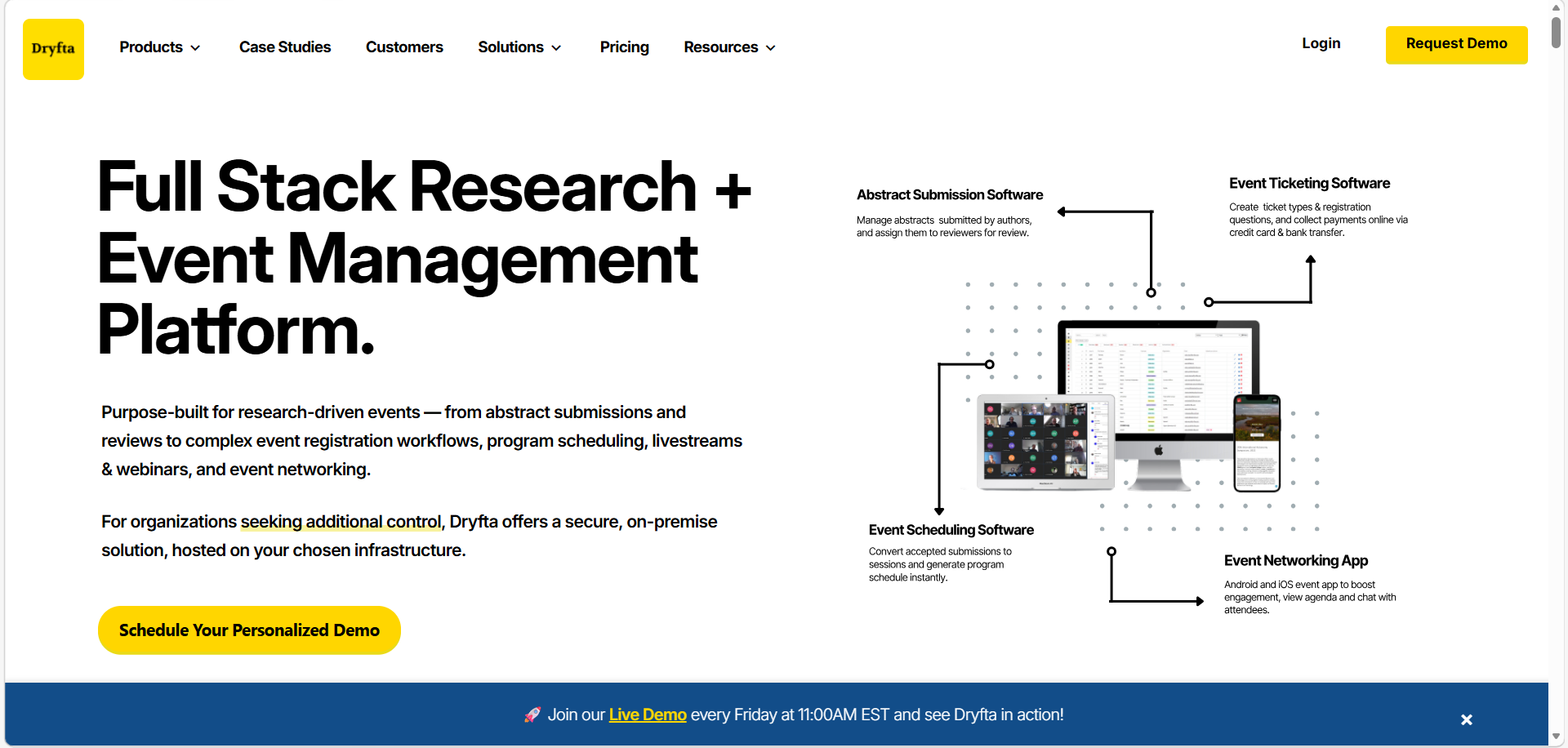
A payment policy sits inside a larger speaker workflow: profiles, communications, programme placement and a list of tasks that must be done before each person takes the stage. Keeping those pieces organized in one place helps the programme team see who has been invited, who has confirmed and which readiness steps remain open. For the wider picture, see our guide to the speaker management workflow.
Payment itself is different. Financial approval, tax records, bank details and payment execution should stay with your institution’s authorized systems and teams. Dryfta does not classify payments, give tax advice or process honoraria, and this article should not be read as a description of any such feature. The most an event platform should hold is workflow status, such as whether an agreement has been sent, and never confidential payee data.
If you want to see how a connected speaker workflow can support your team’s readiness checks, you can request a Dryfta demo.
Classify first, promise second
Most payment confusion is not caused by the money. It is caused by a promise made before the question of what kind of payment it is has been answered. Reverse that order, and the rest of the process becomes simpler to run and easier to explain.
The one change to make now: add a payment-classification and approval field to your speaker-invitation readiness check. An invitation should not go out until that field names the payment path, the approver and the date of approval, or states that no payment is offered. Your institution’s policy remains the final word, and your finance team is the right place to confirm it.
Frequently Asked Questions (FAQs)
Is an honorarium the same as a speaker fee?
Not necessarily. An honorarium is generally a recognition payment where institutional rules allow it, while a speaker fee is usually payment for agreed services and may require a contract. Institutions define and treat them differently, so confirm the classification with your finance or procurement team before using either word with a speaker.
Can travel expenses be paid in addition to an honorarium?
In many cases they can, but it depends on your institution’s policy. Expenses are usually handled as a separate path, reimbursing approved and documented costs within set limits. State travel terms separately from any other payment, and confirm with finance whether the two may be combined or must be recorded individually.
When should finance review begin?
Before the invitation names any payment. Early review lets finance confirm the funding source, classification, eligibility and timing, and it leaves time for any procurement, tax or immigration checks. Starting after the speaker has accepted risks forcing the organization to renegotiate a promise it can no longer honor.
What information should not be stored in an event platform?
Bank account details, tax identifiers and identity documents should stay in your institution’s authorized finance systems unless your security team has approved another workflow. An event platform is better suited to workflow status, such as agreement sent or forms received. Ask finance or information security if you are unsure what is permitted.
Can an international speaker receive an honorarium?
Possibly, but treat it as an escalation point. Tax residency, work authorization, the place of service and institutional rules can all affect the answer. Raise the case early with your finance, tax, immigration or legal teams, and avoid promising an amount or date until they have confirmed what applies.