



The world of professional gatherings has changed forever. And honestly? It’s for the better. We are no longer forced to choose between live audience energy and global digital reach. Instead, we have the hybrid event, the best of both worlds.
A hybrid event is the ultimate blend of a physical gathering and a virtual experience, designed to engage two distinct audiences simultaneously. In recent years, we have seen an incredible surge in these dual-mode experiences.
But why are so many companies making the switch? It is worth noting that businesses use hybrid events to achieve the perfect balance of high-impact networking and massive global reach.
Want to host a hybrid event but unsure where to start? Keep reading.
What Is a Hybrid Event?
A hybrid event is a combination of two experiences: in-person and virtual, through digital platforms. The biggest advantage? Organizers can now reach a much larger group of people without having all participants travel to be able to attend.
One of the main reasons companies choose hybrid events over other options is their ability to reach a larger audience and retain the vibe of a live event. Anyone can join from anywhere.
A hybrid event:
- Provides attendees with more choices, depending on their time, place, and availability
- Provides greater interactive opportunities through live chat and polls
- Offers brands double exposure to both real and virtual audiences
It is worth stating that successful hybrid events are found to have stronger engagement than fully in-person gatherings. When you look at hybrid event examples like international conferences, product launches, or large association summits, the scalability becomes pretty obvious, too.
Key Elements of a Successful Hybrid Event
The success of virtual and hybrid events relies heavily on the connection between in-person attendees and those watching remotely via video stream. Therefore, the goal is to go beyond merely using a camera to capture what’s happening on the stage.
These are key elements that event planners cannot afford to overlook:
- Strong hybrid event platform to host all digital activities in one place
- High-quality live streaming to ensure remote viewers remain connected to the live energy
- Advanced audience engagement tools like gamification and live chat
- Networking opportunities designed to bridge the gap between physical and virtual guests
- Interactive Q&A and polls that allow both audiences to participate simultaneously
- Event mobile apps that provide schedules and updates for people on the move
- Tight synchronization between virtual and physical attendees to create a unified community
- On-demand access to the content so that attendees can return to it later
If you look at hybrid event examples, such as global trade shows, you’ll understand how these elements result in a “best of both worlds” situation. Prioritizing these features is a non-negotiable.
Did you know? About 83% of event organizers reported higher attendance for hybrid events than for in-person-only events in 2025, underscoring how virtual access expands audience reach for modern conferences and business events.
Best Hybrid Event Examples
Hybrid events continue to reshape modern event experiences. Here are a few hybrid event examples that stand out.
1. UNBOUND by HubSpot
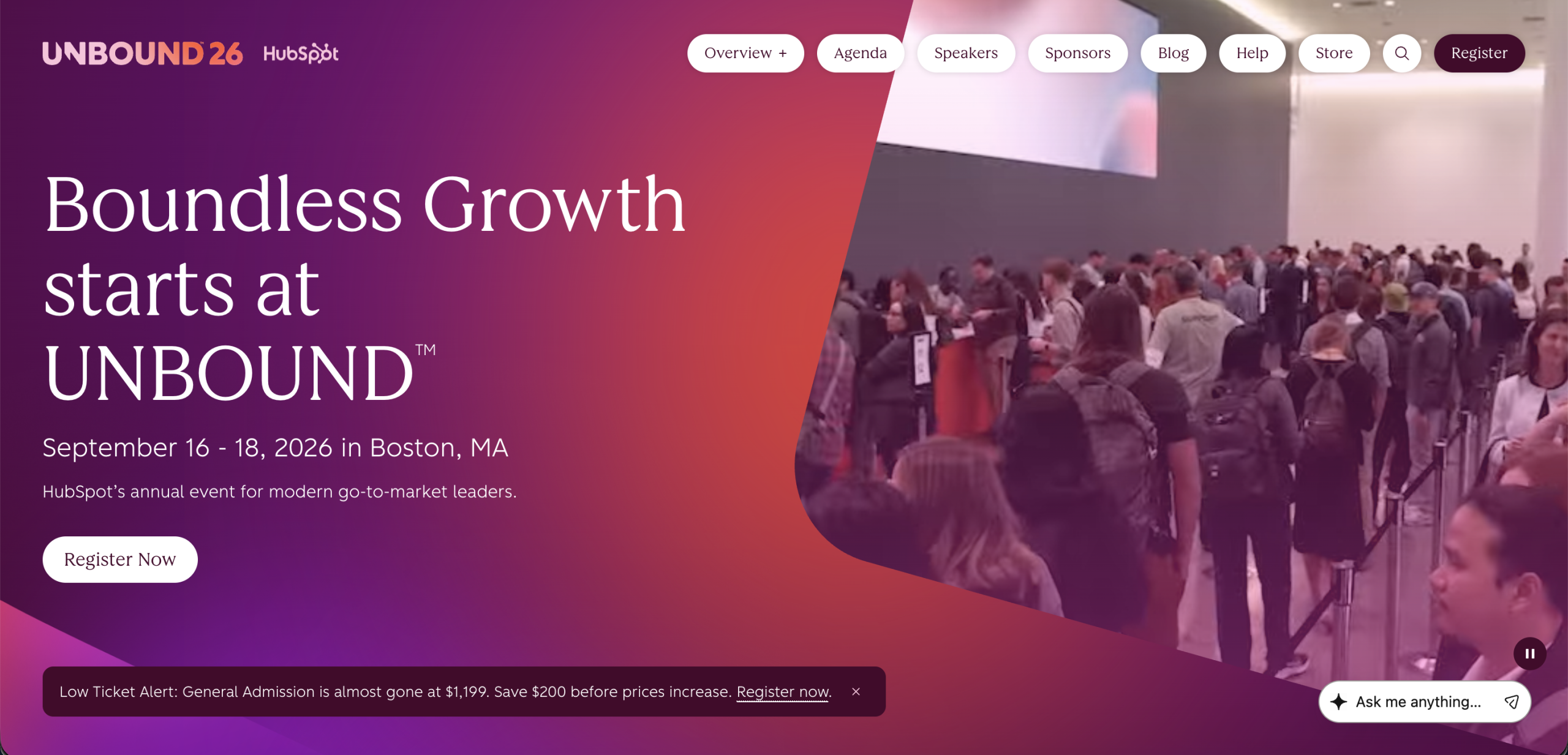
One of the most entertaining hybrid event examples is UNBOUND (formerly INBOUND) by HubSpot. All session recordings are available online so that attendees can join the sessions live or on demand at their convenience. Their secret is to make the virtual experience look like the real stage.
The following elements explain why it’s still at the top of the list.
- Marketing conference format built around business growth, sales, and digital trends
- Combination of live and virtual attendees through streamed sessions and online access
- Networking and breakout sessions with opportunities for attendees to interact and discuss
- Virtual engagement features such as live chat and Q&A
- Speaker lineup and entertainment featuring industry leaders, celebrities, and stand-up comedians
Takeaway from UNBOUND: Creating a premium entertainment experience alongside educational content will offer a high-end experience for your attendees.
2. Apple Special Events
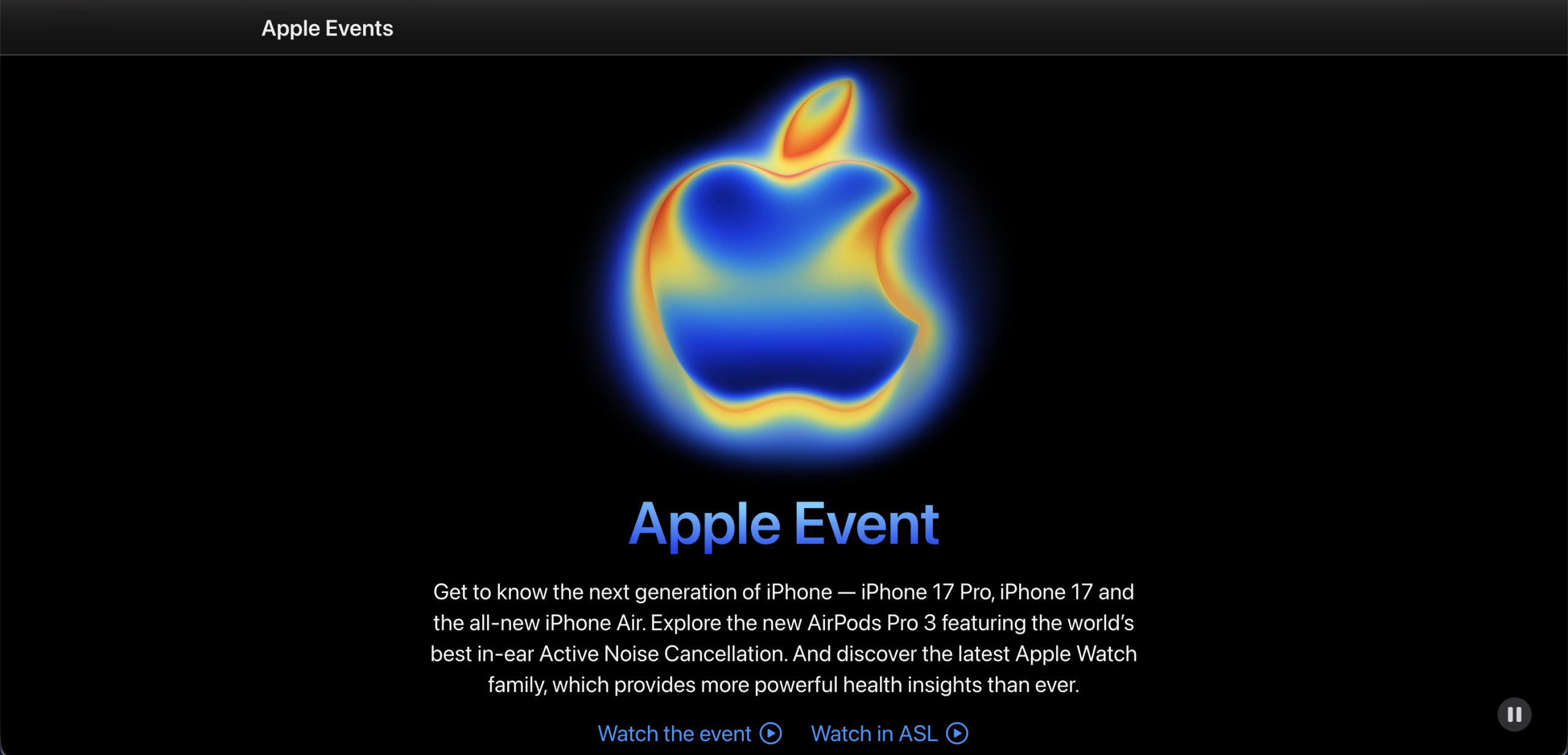
As one of the best hybrid event examples, Apple is still setting the benchmark for major product launches.
For many years now, Apple has developed expertise in creating both virtual and hybrid events by using webcasting as part of its live-streaming of high-stakes product launches and other special events to tech fans all over the world, while keeping a select number of people physically present at the same time.
In fact, Apple treats product launches like blockbuster movie premieres, and quite frankly, Apple’s fan base follows suit every single time. There’s a lot to be gained from Apple’s hybrid approach for businesses seeking to enhance their own.
Here are some key elements behind the event’s success:
- Product launch hybrid strategy built around simultaneous live and virtual access
- Live presentations with global streaming for worldwide audiences
- Production quality and audience engagement through cinematic visuals and polished delivery
- Massive online audience reach across multiple regions and platforms
A lesson to learn from Apple: Investing in superior production quality and a digital-first mindset will make sure your message resonates with a global audience.
3. TwitchCon
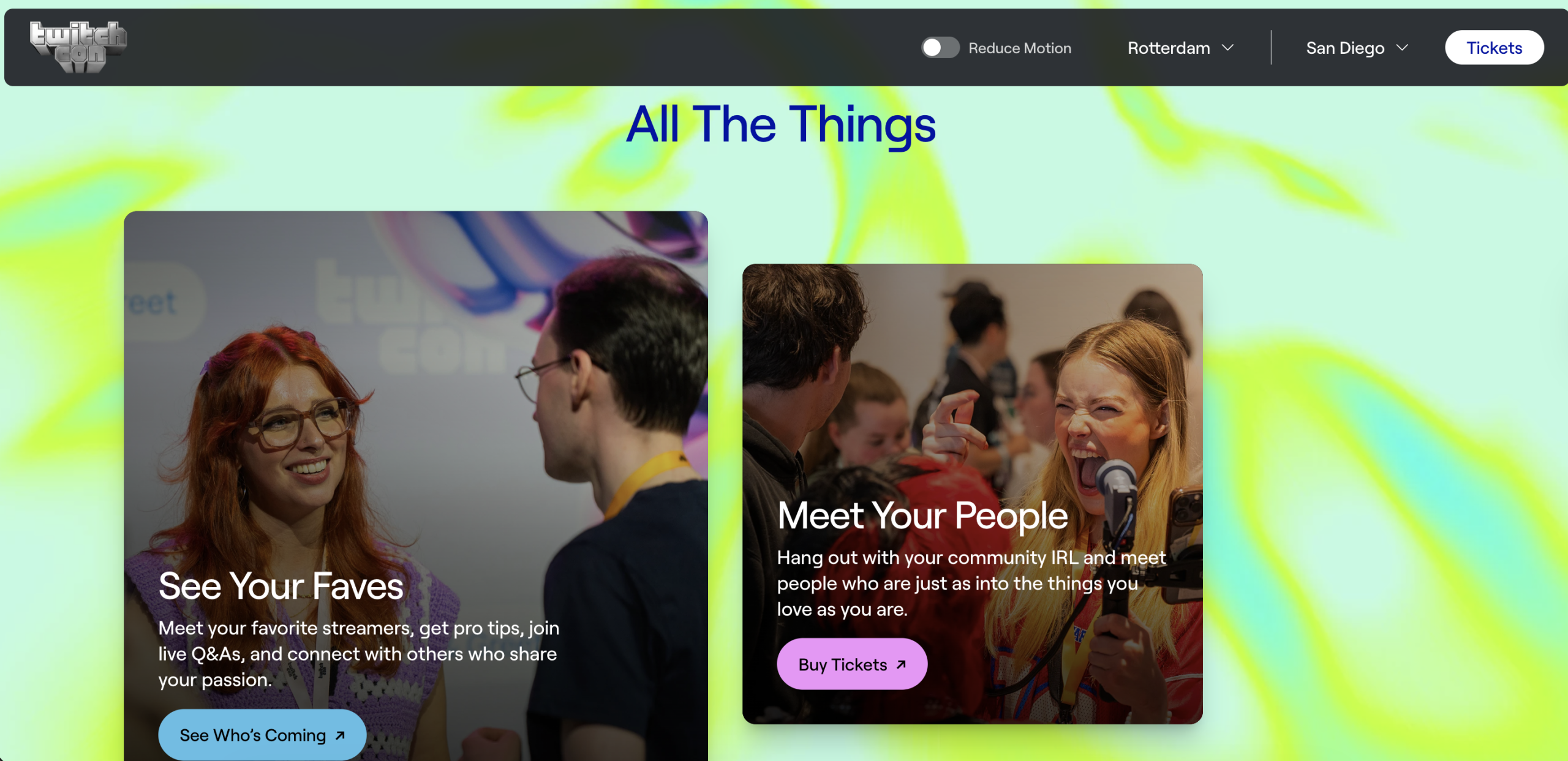
One of the best hybrid event examples in the gaming industry is Twitch and its annual event, TwitchCon. The event will take place in San Diego and feature both live events and digital participation for gaming fans, creators, and streamers from around the world.
The event will include performances and appearances from MalvexTV, Tubbo, Valkia, Ayla, and several other popular creators and streamers in 2026.
There are a number of reasons why this event is unique:
- Gaming and creator community engagement through panels, tournaments, and fan interactions
- Live streaming integration that connects remote viewers with onsite activities
- Online participation methods, including live chat, virtual viewing, and digital discussions
- Interactive virtual experiences designed around live audience involvement
- Community-building strategies that let creators and fans engage prior to, during, and after the event
What brands can learn? Entertainment and interaction contribute as much as the content itself.
4. Meeting Professionals International: WEC Grapevine
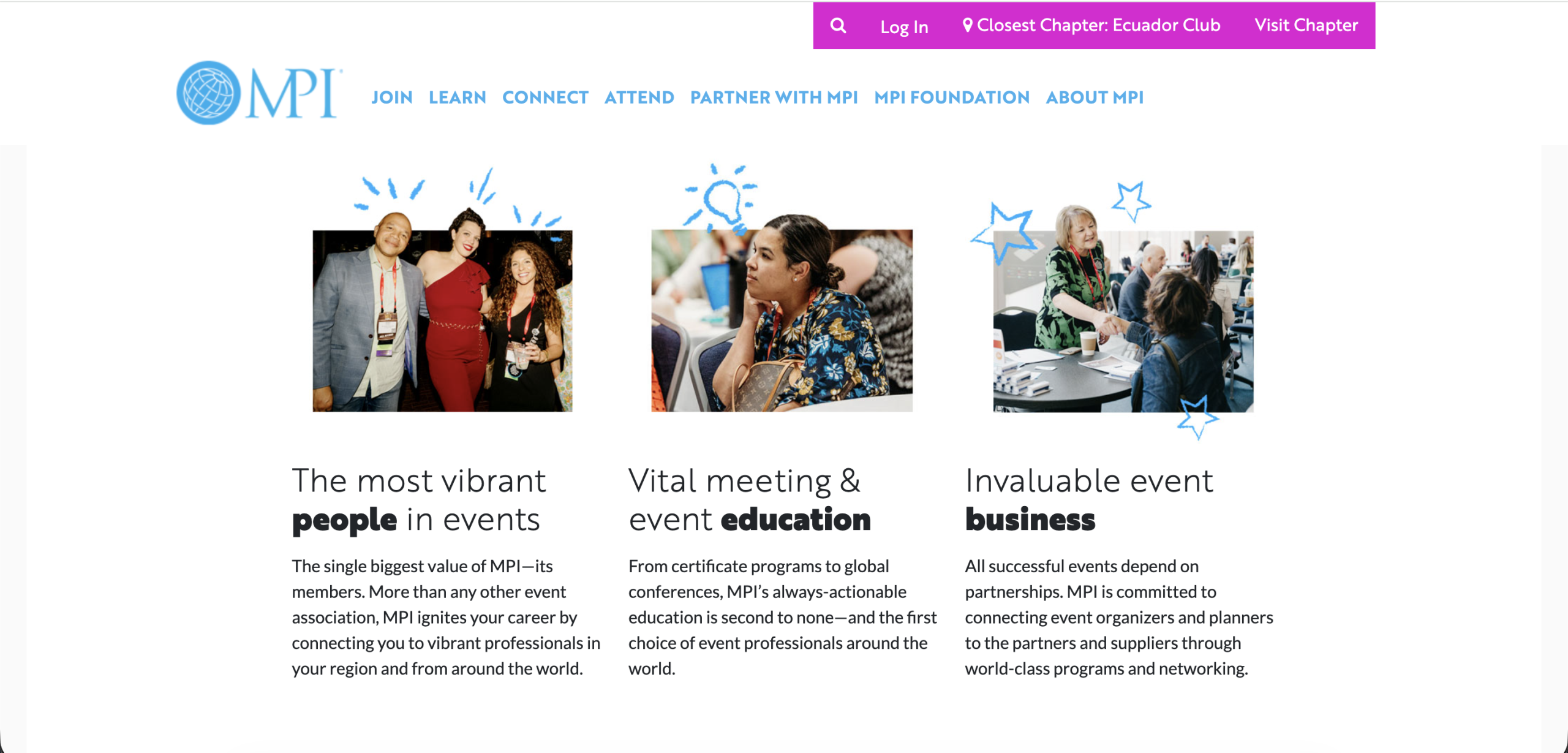
Expectations are always high when the world’s largest association for meeting and event planners hosts a hybrid event. That being said, WEC Grapevine met those expectations with the success of their Grapevine-based in-person event (over 600 attendees) and their virtual event (over 1000 attendees).
Even more impressive, the event’s overall attendee satisfaction rate was 93%, which is extremely rare in the event industry. Their breakout discussion sessions included midday broadcast segments, a Zumba session, and 23 concurrent tracks to keep both groups’ energy levels high throughout the day.
Several strategies played a major role:
- Conference setup for hybrid attendees through synchronized live and virtual sessions
- Safety protocols and virtual participation let people attend from their desired remote or physical locations
- Educational sessions and networking designed for both digital and onsite interaction
- Event production strategies that included talk-show-style keynotes, breakout discussions, and live audience engagement
- Engagement statistics showing strong attendee satisfaction with a reported 93% approval rate
5. Dreamforce
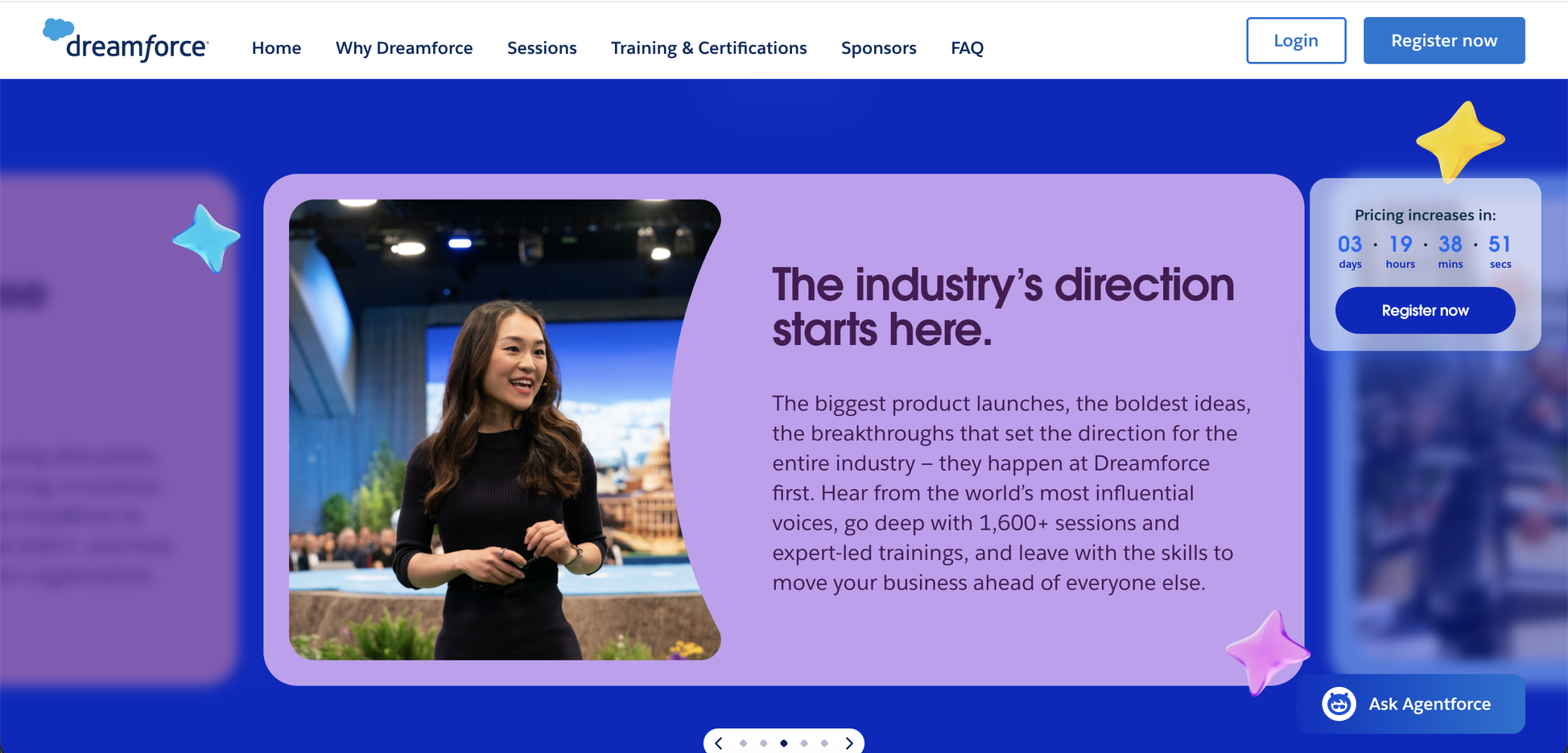
Dreamforce 2026 will bring together large-scale hybrid experiences and AI-driven innovation for a global audience of business leaders, developers, and technology professionals. Hosted by Salesforce, the event will feature live presentations, virtual attendance options, digital networking opportunities, workshops, and interactive sessions for both physical and online attendees.
Here are a few reasons why the event became one of the strongest hybrid event examples:
- Enterprise-level hybrid event execution built around global participation
- Global audience participation through virtual access and online engagement features
- Live keynotes provided remote attendees with a means to engage with the major announcements
- Virtual expo and workshops that let attendees interact virtually with sessions and exhibitor booths
- Flexible content and on-demand session viewing options that gave audiences flexibility beyond the live event schedule
Hybrid Event Ideas for Different Industries
Hybrid events are transforming how industries connect and engage with their audiences. Here are a few hybrid event ideas that work well across different industries.
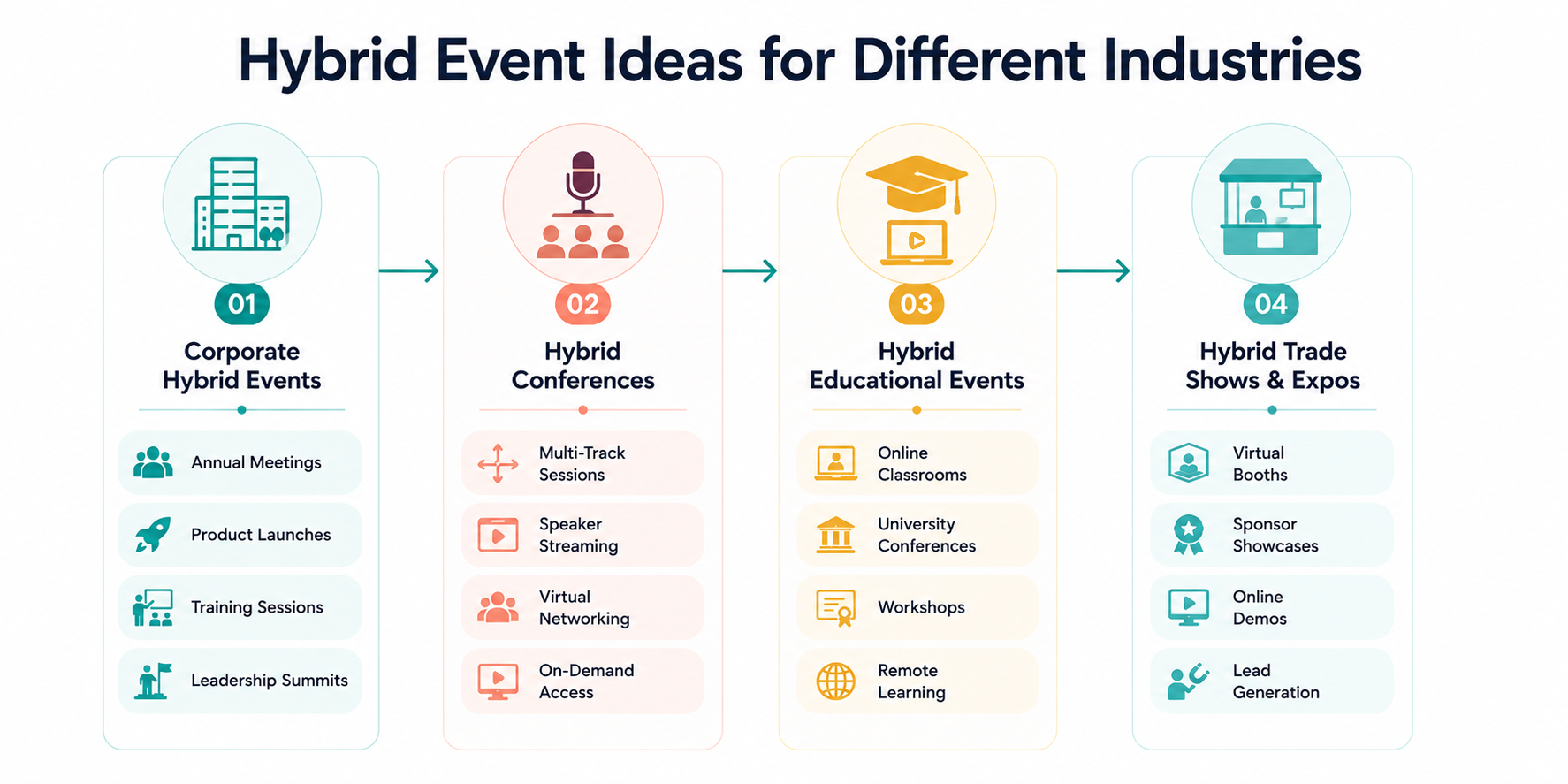
1. Corporate Hybrid Events
With today’s technology, corporate virtual and hybrid events have become the “gold standard” for corporate connection.
Annual meetings and leadership summits no longer need all executives to fly to one location. Rather, in hybrid events, senior-level decision-making is possible as on-site leaders collaborate with off-site regional managers in real time.
There’s more! Consider product launches. A company can host a VIP onsite product launch event and stream it to thousands of global customers using a hybrid model.
Corporate hybrid event examples include:
- Annual meetings: Mix boardroom and remote shareholder access so that all shareholders can have a voice, wherever they are.
- Product launches: Generate global excitement with simultaneous physical and digital product announcements, appealing to both local influencers and global fans.
- Training sessions: Provide in-person training for local staff and complete online training and live streams for remote staff.
- Leadership summits: Easily bring the best talent from different time zones on board with high-quality video conferencing and collaborative digital boards.
2. Hybrid Conferences
The traditional academic or professional gathering has been completely altered through many hybrid conference examples. No longer are researchers or professionals forced to miss out due to travel budget cuts or scheduling conflicts.
Speaker streaming allows keynote speakers to share their ideas even if they are unable to travel. This flexibility is what makes them some of the best hybrid event examples in the professional world.
Hybrid conference examples include:
- Multi-track sessions: With the ability to create multiple streams of content (physical and digital), each attendee can choose how they want to learn from their conference experience.
- Speaker streaming: High-quality video feeds let you bring in global experts into your conference as long as they don’t have to travel internationally.
- Virtual networking lounges: All attendees will have a common place to meet and interact, exchange virtual business cards, and develop relationships based upon a shared interest.
- Digital attendee access: On-demand recordings available to keep attendees up to date, even if they are unable to attend at the same time.
3. Hybrid Educational Events
In the academic world, hybrid events are changing the way knowledge is shared. Nowadays, university conferences and workshops are more interested in remote participation.
This is a game-changer, particularly for career professionals who need to keep their skills up to date.
You may be asking yourself how this is applied in practice. Online classrooms are combined with face-to-face lectures, so that participation certifications can be obtained regardless of location.
Educational hybrid event examples include:
- Online classrooms: Bring students online and engage them in live classroom discussions over academic debate and feedback.
- University conferences: Share academic research with the world, promote international collaboration, and rapid sharing of new discoveries.
- Workshops and certifications: Provide flexible means to gain critical professional development skills through dual-mode instruction that fits a student’s lifestyle, personal responsibilities, and work schedule.
- Remote participation benefits: Reduce travel expenses and environmental impact while maintaining the quality of education expected from top institutions.
4. Hybrid Trade Shows & Expos
Trade shows are traditionally busy events and one of the trickiest hybrid events to pull off.
Gone are the days when a booth’s success was limited to the people walking the floor. In today’s world, sponsors promote with digital tools that enable remote attendees to download brochures and chat with representatives on the spot.
Hybrid trade shows & expos include:
- Virtual booths: Present a 3D virtual storefront that lets users interact with products and brand ambassadors from their computers.
- Sponsor showcases: Give brands a platform to promote their products on physical banners and digital apps for optimal ROI throughout the event.
- Online demos: Organize live-streamed product demos for a worldwide audience to build interest and excitement beyond the venue.
- Lead generation opportunities: Collect interest from all interactions to give exhibitors a much more accurate picture of their reach.
Benefits of Hybrid Events
Why limit your reach when you could potentially open your doors to an unlimited audience around the world?
It’s now obvious that hybrid event examples show how Digital Integration is changing traditional formats at every opportunity. Let’s consider some of the actual benefits of hybrid events.
- Hybrid events increase attendance since they don’t have a physical limit on the number of people who can be at one location. This means thousands more people can attend virtually from anywhere in the world.
- Better audience inclusivity that allows people with mobility, budget, or travel issues to fully engage in the event experience.
- Better ROI for organizers because the cost of scaling the virtual infrastructure is relatively low compared to the cost of selling many more digital tickets.
- Brands have sponsorship opportunities to reach audiences in two ways: through physical banners at the venue and through digital channels. In addition, the ads will display each user’s click-through rate.
- Flexible attendee experience where they can opt to physically network while attending in person or attend virtually to view a selected set of presentations during a busy schedule.
- Content repurposing options to capture all live sessions and convert them into on-demand webinars, social media snippets, or marketing pieces for months.
- Hybrid events reduce travel costs and the event’s carbon footprint by reducing flights and lessening overall demand for venue resources.
Also, recent hybrid event examples highlight how virtual access increases global attendance.
Challenges of Hybrid Events and How to Solve Them
Hybrid events can be a lot of work. Oftentimes, they feel like you’re creating two completely separate shows at the same time. However, the problems you encounter when putting together a hybrid event typically stem from “how,” not what.
Although some of the best hybrid event examples illustrate just how successful they can be.
The most successful hybrid events are examples of good practice, but there are specific challenges to consider when planning one.
- Technical difficulties: Be prepared for anything by contracting an experienced AV team and make sure that your venue has access to a dedicated internet connection.
- Audience engagement imbalance: Create a bridge between the physical and remote audiences by appointing a virtual host to serve as the voice of all remote viewers and relay their questions and comments to the speakers in real time.
- Event coordination complexity: Streamline onsite coordination by using a single project management plan to keep all on-site caterers, tech people, and remote presenters on the same page, even if they’re in different time zones.
- Managing two audiences simultaneously: When designing your sessions, adopt a “digital first” mindset and use interactive tools such as live polling or gamification to encourage both crowds to participate in the same activities.
- Importance of choosing the right platform: Choose a professional-grade platform that includes registration, live streaming, and a networking lounge within a single branded environment so as to provide consistency for the end-user.
Tips to Make Your Hybrid Event Successful
Successful hybrid events are not a fluke. The challenge for organizers is to strike a balance between the energy they can provide in the venue and what they can offer to those joining remotely.
Sounds simple, right? But here’s the catch: virtual attendees lose interest fast when they feel like second-priority guests. The most successful hybrid event examples are those that make both audiences feel equally valued throughout the event.
Notable tips:
- Select the appropriate event technology to enable streaming, networking, live interaction, and real-time attendee management.
- Pay particular attention to the audience. Live polls, chats, Q&A, and gamification help engage attendees throughout the event.
- Don’t just point a camera at the stage and expect the virtual audience to be pleased. Create separate experiences for virtual attendees. No one likes to be an afterthought.
- Facilitate networking by using breakout rooms, virtual lounges, and AI matchmaking features to encourage meaningful interactions among participants.
- Keep the energy level up for both the audience and the presenter by using interactive tools in presentations.
- Plan strong event moderation so sessions flow smoothly, without awkward silences or technical issues.
- Test audio and video setups multiple times before launch. A single glitch can instantly derail audience engagement.
- Take feedback from the attendees after the event to find out what went well, what went wrong, and how to do better the next time.
Features to Look for in a Hybrid Event Platform
Finding the right foundation for your event is the most critical decision you will make. Think about it: If your platform can’t support two audiences, your message will get lost in the lag. And honestly, attendees notice every little delay and glitch faster than organizers expect.
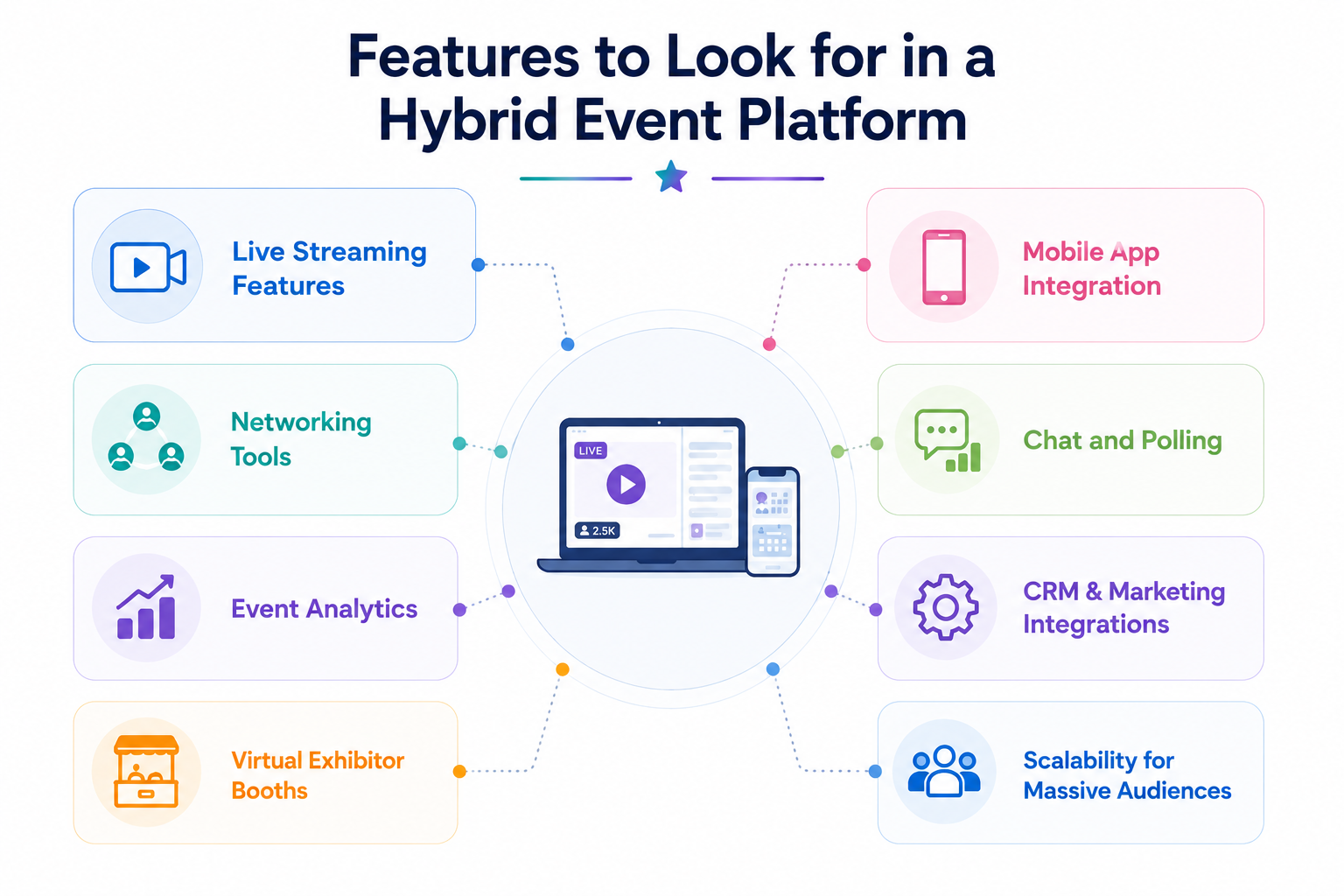
Look for:
- Live streaming features: Make sure your platform has stable streaming with low lag. Otherwise, your audience will lose interest in your stream in no time.
- Networking tools: Strong networking features help attendees connect through chat rooms, breakout spaces, AI matchmaking, and scheduled one-on-one meetings.
- Event analytics: Real-time data tracking helps organizers understand attendee behavior, session popularity, engagement levels, and overall event performance.
- Virtual exhibitor booths: Sponsors and exhibitors should have dedicated virtual booths to explore resources and interact directly with teams.
- Mobile app integration: Choose a platform that offers a native mobile application to synchronize schedules, floor maps, and push notifications for both your in-person and remote participants.
- Chat and polling: Interactive features help to keep the session interesting and prevent attendees from being silent viewers watching another webinar on another screen.
- CRM and marketing integrations: Look for seamless connections with tools like HubSpot or Salesforce to automatically sync attendee data and streamline post-event follow-up and lead nurturing.
- Scalability for massive audiences: Ensure the platform can handle high traffic and thousands of users simultaneously without sacrificing video quality or stability.
The Bottom Line
Ultimately, it is clear that virtual and hybrid events provide organizations with diverse opportunities to capitalize on the synergy between digital and physical audiences. Brands use hybrid formats either to expand their global reach or to create stronger interaction between virtual and in-person attendees.
Truth is, the real advantage comes from combining the energy of live experiences with the accessibility of digital participation.
And honestly, attendees love having options. Some want the front-row networking experience, while others prefer joining from their couch with a cup of coffee.
If you’re planning a hybrid event, book a free demo with Dryfta to see how we can help you handle registrations, streaming, networking, and attendee engagement, all in one place.
Frequently Asked Questions About Hybrid Events
- What is an example of a hybrid event?
Apple continues to deliver some of the best hybrid event examples by mixing an exclusive in-person keynote with a massive global livestream. A small live audience creates energy inside the venue, while millions join remotely in real time. That balance between exclusivity and accessibility explains why they have received huge attention across both physical and digital audiences. Also, the best hybrid event examples usually focus heavily on audience interaction and seamless streaming.
- What are the benefits of hybrid events?
One key benefit of successful hybrid events is that they remove location constraints without compromising the live-event atmosphere. Companies can reach larger audiences and create reusable content from every session. Virtual and hybrid events also extend marketing value because recorded panels continue to attract engagement long after the event ends.
- Which industries use hybrid events?
Various sectors use hybrid events, with hybrid conference examples being common in the tech, medical, and corporate worlds. Universities use them for global academic summits, while trade shows use virtual booths to connect exhibitors with international buyers. Even the entertainment industry, including gaming platforms like Twitch, uses hybrid events to host tournaments that engage both local fans and remote viewers.
- What technology is needed for hybrid events?
Organizers need reliable live streaming tools, professional AV setups, interactive engagement features, and stable internet connections that can handle large audiences without glitches. Mobile apps, live chat, polling tools, and integrated registration systems also help synchronize the experience.
