
If you are organizer who has been manifesting better data organization for your event, this blog is the sign you’ve been looking for. With greater ambitions for your event company also comes the necessity to segment and arrange your data better. Perhaps you’ve been exporing your options for a while now. In this piece, we’re offering you one more to add to your list. You can integrate Dryfta with HubSpot using Zapier so that your selected event contact data reaches HubSpot without a manual CSV import. A controlled one-way workflow forms the safest starting point, built around a verified Dryfta contact trigger, an optional formatting or filter step, and a HubSpot find or create and update action.
Before the Zap goes live, your technical team should decide which system owns each field, how contacts will be matched, and if a person has granted permission to receive marketing communication. In this blog, we’re walking you through the basic setup first. We’ll then take you down into field mapping, testing, safe activation, and ongoing monitoring. All of these are important considerations when you integrate Dryfta with Hubspot using Zapier. A working Zap on day one says very little about whether it can stay put after your event ends.
What the Integration Can and Cannot Do
Before any setup begins, a team benefits from a clear picture of what this integration reliably does and where its limits sit, since HubSpot and Zapier both continue to expand what is technically possible.
| Status | Meaning |
|---|---|
| Verified core | Transfers selected data from a Dryfta trigger into a supported HubSpot action once that flow has been tested end to end |
| Possible with configuration | Normalizing fields, filtering records, branching by type, adding event context and creating follow up tasks or list membership |
| Plan dependent | Multi step logic, premium functionality, HubSpot workflows, custom objects or events, reporting and autoreplay |
| Not automatic | Historical backfill, two way conflict resolution, consent, perfect deduplication, attribution or deletion propagation |
| Must not be assumed | Native HubSpot marketing event records, instant sync, every Dryfta data object or bidirectional synchronization |
Treating every row in this table as equally guaranteed is one of the most common mistakes teams make when they integrate Dryfta with HubSpot using Zapier. A capability that exists in principle still depends on the specific plan, trigger and configuration a team has actually set up.
Decide Which System Owns the Data
Data ownership decisions belong at the very start of the project, well before anyone opens Zapier, since a Zap built without a clear ownership model tends to accumulate conflicting values the moment two systems both try to hold the same fact.
| Owner | Recommended Responsibility |
|---|---|
| Dryfta | Registration, ticket or order, abstract or review, session, attendance and event operational truth |
| HubSpot | Marketing subscriptions, lifecycle stage, sales ownership, campaign interaction, deal and relationship follow up |
| Zapier | Transport and workflow logic, since it should never become an undocumented master database |
| Shared with a rule | Name, company, title, phone and selected segmentation fields, with one winner named for conflicting updates |
A phrase like ‘two-way sync’ sounds like a single Zap, though it actually requires loop prevention, timestamps, conflict rules, deletion handling, and ongoing reconciliation. And none of these come about automatically simply because two apps can both write to the same object. It is, therefore, important to agree upon key ownership at this point in time. To integrate Dryfta with Hubspot using Zapier in a fuss-free manner, keep clear of team functions, leadership, and the larger human exercise. Certainly, tech doesn’t work well unless the team behind it does.
Getting Ready to Integrate Dryfta with HubSpot Using Zapier
A short preflight checklist protects the rest of the build from avoidable rework, and skipping it tends to surface the same problems later at a much higher cost.
A Dryfta administrator or otherwise authorized user should confirm the current authentication route and access to the Dryfta Zapier app. A HubSpot Super Admin, or a user holding the required app and marketplace permissions, should approve the connection before work begins. A non production test event, or clearly labelled test records in both systems, should exist before any real data is touched. The team should name an automation owner, a backup owner and a shared location for the field map and the runbook.
Only the data needed for a defined action should be listed for transfer, and sensitive abstract, payment, accessibility or dietary data should be excluded by default. HubSpot properties should be created before mapping begins, each recorded with its type, allowed values, owner, overwrite rule and retirement date. A stable event identifier should be chosen ahead of time, since relying only on an event name that can change or repeat creates matching problems later. Zapier and HubSpot plan requirements should be confirmed on the day of publication rather than assumed from an earlier subscription tier.
With ownership assigned and the preflight list cleared, the actual build of the Zap can begin.
Build the Basic Zap to Integrate Dryfta with HubSpot Using Zapier
The steps below describe the current verified sequence for the starter workflow, though every screen, button label and field name should be checked against the live Dryfta, HubSpot and Zapier interfaces before anyone follows them exactly, since vendor interfaces change on their own schedule rather than this guide’s.
- A new Zap should be created and given a durable, descriptive name, something along the lines of DRYFTA Annual Congress Contact to HubSpot version one, so the automation remains identifiable months later.
- Dryfta should be selected as the trigger app, with the current verified trigger chosen deliberately rather than the first option that looks close enough, and the team should document exactly what creates a qualifying trigger record.
- Dryfta should then be connected using its current authentication method, and the screen where credentials are created should be captured without exposing a real secret in any screenshot.
- A labelled test record containing realistic optional fields, null values and controlled consent choices should be loaded before moving further, since a clean test record hides exactly the edge cases that cause trouble later.
- A Formatter step should be added only when a field genuinely needs normalization, such as trimming stray text, splitting a full name into parts or standardizing a date format.
- A Filter step should be added only when records must meet an explicit rule before reaching HubSpot at all, and that rule should be written out in plain language somewhere the whole team can read it.
- HubSpot should be chosen as the action app, with a current find or create and update pattern preferred once it has actually been tested for duplicates and overwrites.
- The intended HubSpot portal should be connected, its user permissions verified, and the connection itself named clearly enough that nobody confuses it with a sandbox account or a different portal later.
- Identity and event context fields should be mapped using the approved field dictionary, and any field that serves no clear purpose should stay unmapped rather than included out of habit.
- The action should be tested, the exact resulting HubSpot record inspected line by line, and that record compared against the original source before the Zap is allowed to go live.
- Once published, the Zap’s owner, version and publication date should be recorded, and the first real runs should be watched directly rather than assumed to be working simply because the test passed.
Use This Field Mapping Model to Integrate Dryfta With Hubspot Using Zapier
A field mapping model gives the entire team a single reference for what each value means and where it belongs, rather than leaving that knowledge scattered across whoever built the original Zap.
| Dryfta Value | HubSpot Destination | Purpose | Rule or Caveat |
|---|---|---|---|
| Contact email | Identity candidate | Normalize case and spacing, and test shared and changed email scenarios | |
| First and last name | First and last name | Profile | Trusted CRM values should not be overwritten with blanks |
| Dryfta contact ID | dryfta_contact_id | Stable source key | Create as text and keep immutable where possible |
| Dryfta event ID | dryfta_event_id | Event key | Prefer the ID over the event name for joins and reconciliation |
| Event name | dryfta_event_name | Readable context | May change over time, so it should not be used as the sole key |
| Event role or type | dryfta_event_role | Segmentation | Use controlled values such as attendee, author, reviewer, speaker or sponsor |
| Registration status | dryfta_registration_status | Operations | Keep separate from attendance and from marketing consent |
| Ticket or order context | Selected property or associated record | Commerce | Avoid card or payment data, and verify the correct HubSpot object first |
| Consent evidence | Appropriate subscription or consent mechanism | Compliance | A custom boolean alone may not actually change HubSpot subscription status |
| Last sync time | dryfta_last_sync_at | Operations | Use an unambiguous time zone and format |
Prevent Duplicates and Destructive Overwrites
Duplicate records tend to be the first visible failure a team notices after launch. Here’s how to spot and correct them in time to integrate Dryfta with HubSpot using Zapier effortlessly:
- Trigger deduplication and CRM record deduplication solve different problems. Since Zapier may avoid retriggering the same source item while the HubSpot action independently determines whether a duplicate contact gets created or an existing one gets updated instead.
- A new email, an existing email, an uppercase or whitespace variation, a missing email, a changed email, two people sharing an email, blank optional fields and a replayed run should all be tested deliberately rather than assumed to behave correctly.
- A find, then conditionally create or update pattern, should be preferred wherever the current actions support it, with the searched property recorded along with what happens if more than one match turns up.
- A populated CRM field should never be overwritten with an empty Dryfta value, and conditional logic or a separate event-specific property should handle this case instead of a blanket overwrite rule.
- The Dryfta source ID and event ID should be stored on every synced record, since a later reconciliation export will need both to locate mismatches accurately.
- Once duplicate handling has been designed rather than left to chance, the Zap is ready for a structured round of testing before any real attendee data moves through it.
Test Before Real Attendee Data Moves
A short but deliberate test matrix catches the failures that a single happy path test will always miss.
| Scenario | Expected Result | Acceptance Check |
|---|---|---|
| New contact | One new HubSpot record with correct source keys | No duplicate appears, and every required value is present |
| Existing contact | Approved properties update while protected fields remain untouched | The overwrite policy behaves exactly as documented |
| Missing email | The record stops, routes elsewhere or logs according to policy | No unusable duplicate gets created |
| Blank optional value | The existing HubSpot value is preserved when that is the intended behavior | No destructive blank overwrite occurs |
| Unsubscribed contact | Operational data may update while marketing status does not silently change | The subscription state remains compliant |
| Failed action | The failure appears in Zap history and alerts the owner | The recovery path and replay have both been tested |
| Repeated or replayed item | No duplicate business action occurs | Idempotency or duplicate control works as intended |
| Wrong event or portal | The workflow is stopped or the error is visibly detected | Naming and environment controls prevent any leakage |
Expand Carefully Into Advanced Workflows
Advanced workflows can add real value, though each one depends on plan features, trigger availability and data sensitivity that should be confirmed before anyone builds on top of them.
| Workflow | Potential Use | Before Publishing |
|---|---|---|
| Orders | Sending selected ticket or order context for customer service or reporting | Verify the available Dryfta trigger or search, the supported HubSpot object and the financial data policy |
| Sessions and attendance | Recording meaningful participation or creating follow up segments | Verify the check in payload, event identity, volume, plan and reporting model |
| Abstracts | Supporting author or reviewer communication and relationship history | Avoid confidential review content and verify both the fields and the lawful purpose |
| Companies and deals | Associating qualified contacts with organizations or opportunities | Use a documented qualification and association rule |
| Custom events or objects | Building richer lifecycle reporting in eligible HubSpot accounts | Confirm the subscription, object design, attribution setup and API or action support |
| AI step | Classifying non-sensitive free text or drafting an internal summary | Human review, data minimization, model policy and a fallback path are all mandatory |
Monitor, Reconcile and Maintain the Zap
An integration that only receives attention on launch day has a great chance at failing, miserably. And this is usually right as the event volume reaches its highest point.
- Make sure to assign a primary and a backup owner. An automation should never depend entirely on just one departing employee’s account.
- Zap history should be reviewed after launch and on a defined cadence, with error notifications configured to match the event’s volume and risk level.
- Replay should be used carefully, since it can retry failed actions without guaranteeing success, and a full run replay may repeat work that already succeeded the first time.
- Dryfta source counts should be reconciled against successful HubSpot outcomes after major registration pushes and again before and after the event itself. Sync coverage, failures, time to detection, duplicate rate, blank or invalid fields, and records requiring manual repair should all be monitored on an ongoing basis.
- The Zap should be retested after any change to fields, permissions, plans, app versions, or registration forms, since a small change upstream can break a mapping that worked perfectly the week before.
- Shutdown, archive, and deletion steps should be documented in advance, ready to use once the event ends or the integration gets replaced by something else.
Privacy and Security Safeguards
Each and every field and dataset that is moved through this integration is a responsibility to be upheld on the part of the technical team. As is the case with all kinds of data transfer, to integrate dryfta with hubspot using zapier, is delicate. When things go wrong in the installation process, it can go wrong drastically and quickly. This is particularly true when it comes to provisions pertaining to privacy and security safeguards. Here are some things to keep in mind in connection with security of private data:
- Only the minimum data needed for the stated workflow should be sent, rather than copying a full event profile on the assumption that it might be useful someday.
- Card data, passwords, access tokens, reviewer conflicts, accessibility needs, dietary or health information and private submissions should never be transferred without a documented necessity and approved controls in place.
- Clearly named service or role accounts should be used wherever policy allows. It is also important to wall this with strong authentication and security.
- Credentials should be stored only in the supported connection interface. A live API key should never appear pasted into documentation or a screenshot.
- Controller and processor responsibilities, subprocessors, retention periods, deletion procedures and incident contacts should all be recorded in the implementation runbook.
- Marketing subscription and suppression rules should be treated as authoritative inside HubSpot, since consent should never be inferred from the simple fact that someone registered for an event.
- What happens when a person corrects their data or requests deletion in either system should be reviewed and documented before the integration goes live.
Troubleshooting Table For When You Integrate Dryfta With Hubspot Using Zapier
In the table below, let’s go over some failures that teams frequently find themselves encountering once a Zap has been running for a while.
| Symptom | Likely Cause | Check or Fix |
|---|---|---|
| Dryfta test data does not load | The wrong trigger, no qualifying recent record, or an authentication or access issue | Create a labelled test record and verify the trigger definition, account and connection |
| HubSpot connection fails | Permissions, an expired connection, the wrong portal or a plan restriction | Reconnect with approved access and confirm the intended portal |
| Duplicate contacts appear | A create only action, a poor matching key or a normalization problem | Test the find or update behavior and normalize identity fields |
| Fields are blank or wrong | A bad mapping, an unexpected payload, a field type mismatch or a changed form | Inspect the trigger sample and property types, then remap and retest |
| Dates shift | Time zone or datetime conversion behavior | Use explicit time zone rules and test dates around midnight and daylight changes |
| The Zap stopped running | A paused Zap, a task limit, an expired connection or repeated errors | Check status and history, reconnect, resolve the quota issue and replay safely |
| The wrong people got enrolled | Filter logic that confuses registration, attendance, role or consent | Stop the downstream action, correct the definitions and audit the affected records |
When you integrate Dryfta with HubSpot using Zapier, you might initially, or early in the setting-up process, face some resistance. This is completely normal and can be dealt with by our capable technical team here at Dryfta.
Why Teams Are Choosing To Integrate Dryfta with HubSpot Using Zapier
Success here was never about how many fields you managed to move from one system to the other. It all comes down to whether clean, permitted event data reaches the correct HubSpot record and supports a specific. This is best accomplished when it leaves no mess for another team to clean up behind later.
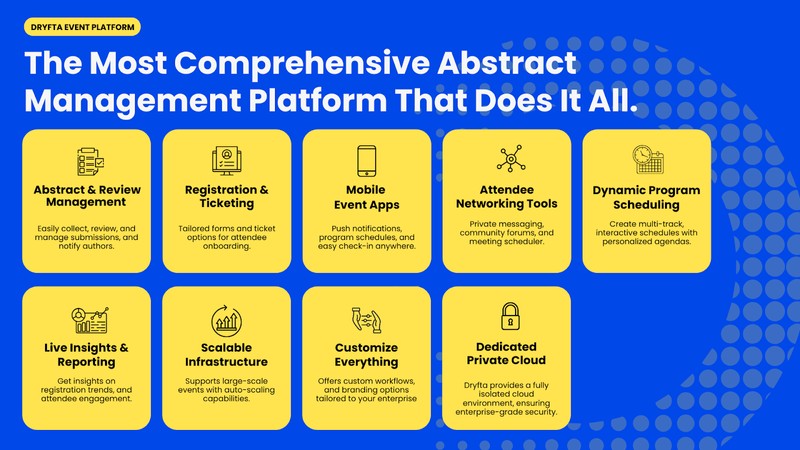
Dryfta keeps registrations, attendees, orders, abstracts, and sessions connected in one system. Zapier can pass the event context a HubSpot team needs, once that context has been mapped and tested the right structured way. To experience Dryfta’s capabilities to the fullest, sign up for a free demo today.
Frequently Asked Questions (FAQs)
Can Dryfta integrate with HubSpot using Zapier?
Yes, Dryfta can connect to HubSpot through Zapier, with a verified contact trigger in Dryfta feeding a find or create and update action in HubSpot. The exact trigger names and available fields should be confirmed against the current Dryfta Zapier app before building anything.
Is a paid Zapier plan required?
It depends on which parts of the workflow are being used, since basic single-step Zaps often run on a free or lower tier, while filters, formatters, multi-step logic, and higher task volumes typically require a paid plan. The current plan requirements should be checked on Zapier’s own pricing page before publication.
Does the integration update existing HubSpot contacts?
It can, provided the HubSpot action uses a find or create and update pattern rather than a create-only action and provided the matching key and overwrite rules have both been tested against existing records first.
How often does Dryfta data sync to HubSpot?
Sync frequency depends on the trigger type and the Zapier plan in use rather than following a single fixed interval, so the actual behaviour should be verified in the current accounts instead of assumed from an older article or plan tier.
Can registrations, attendance, orders, or abstracts be sent to HubSpot?
Each of these is possible with the right trigger, search, and HubSpot object, though none of them should be treated as available by default, and each one carries its own data sensitivity and plan considerations covered earlier in this guide.
Can the integration work both ways?
A genuine two way sync is technically possible but is not a single Zap, since it requires loop prevention, timestamps, conflict rules, deletion handling and ongoing reconciliation, all of which need to be designed deliberately rather than assumed.
How are duplicate contacts prevented?
Duplicates are prevented by testing the matching key across multiple edge cases, preferring a find then conditionally create or update pattern, and never allowing an empty Dryfta value to overwrite a populated HubSpot field.
Does sending a registrant to HubSpot create marketing consent?
No, sending a registrant’s data to HubSpot does not by itself create consent to market to that person, and marketing subscription status should be handled through HubSpot’s own consent and suppression mechanisms rather than inferred from registration.
What should happen when a Zap fails?
A failed Zap should appear in Zap history and trigger an alert to the assigned owner, who can then review the failure, correct the underlying issue and use replay carefully rather than assuming a retry will automatically succeed.
Can historical Dryfta contacts be backfilled into HubSpot?
Backfilling historical contacts is possible in principle but is not automatic, and it typically requires a separate, carefully scoped project rather than an extension of the ongoing real-time Zap that we’ve described comprehensively in this guide.