




In 2026, managing a high-stakes enterprise event requires an absolute powerhouse of a system. But you shouldn’t need a computer science degree just to build a custom registration form or run a hybrid webinar. You need an event platform that keeps your data synchronized while giving you total control over your branding.
Whether you’re frustrated by Stova’s transaction fees or missing features that your events depend on, you’re not short on options. Fortunately, today’s market offers hundreds of event platforms built to offer a better experience for both planners and attendees.
Let’s take a closer look at the 10 best alternatives to Stova in 2026.
But first…
What Is Stova, and Why Are Enterprise Event Teams Looking for Alternatives in 2026?
Following the merger of Aventri, MeetingPlay, and EventCore, Stova was launched as a full-scale event management suite built to manage high-volume enterprise events. The platform does an excellent job of offering enterprise-grade security compliance and orchestrating venue sourcing for Fortune 500 companies.
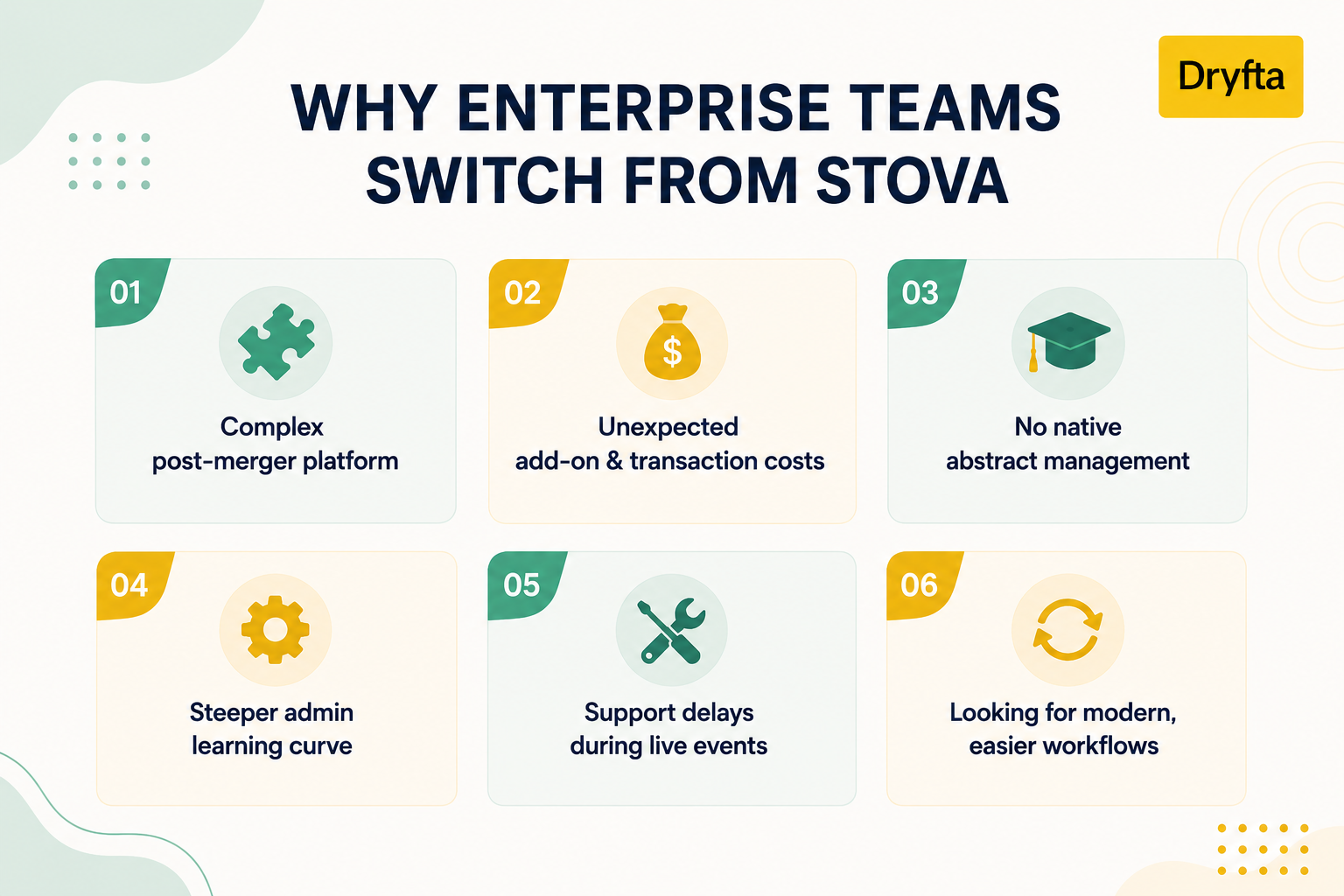
But here is the catch. A platform’s enterprise nature does not always translate into the flexibility and ease of use modern event teams expect. That is why many organizers are exploring the best Stova alternatives for a more streamlined experience.
First off, the biggest elephant in the room is the post-merger product uncertainty and integration complexity. The integration of multiple legacy platforms together under a single system has resulted in a more complex user experience for some existing customers.
On top of that, some teams find the user experience less intuitive than newer platforms. The admin interface can require extra steps for routine updates, making everyday tasks more time-consuming than expected.
Then there is the support experience, with some organizers reporting delays during high-stakes live sessions.
Finally, for organizations running academic conferences, the platform offers no native abstract management. Forcing teams to buy extra software plugins just to grade research papers is a major dealbreaker.
Moreover, for teams looking to simplify their event workflows, exploring the top Stova competitors is a worthwhile next step.
According to McLean & Company, Stova received a 7.4/10 overall product score in the Virtual Event Management category, with reviewers highlighting implementation complexity and additional costs as common concerns.
What to Look for in Stova Alternatives for Enterprise Events?
Comparing Stova alternatives in 2026 often means looking beyond feature lists and product demos, especially if you do not know exactly what to look for. Because let’s face it, most corporate platforms look practically identical.
To help you cut through the noise, use these non-negotiable benchmarks to find the best Stova alternatives that will make your life easier this year.
- Product roadmap stability means making sure the platform you choose has secure financial backing and consistent system upgrades.
- UX and onboarding speed dictate how fast your planning team can learn the software dashboard. A simple interface saves your staff from spending weeks sitting through training.
- Abstract management and peer review tools are a non-negotiable requirement if you are tasked with running research-heavy academic conferences. Generic event platforms fall flat here.
- CRM and marketing automation integration depth is a core component of effective business data tracking. The best enterprise event management alternatives to Stova send detailed buyer intent data and lead scores directly into your event CRM.
- Multi-event management and portfolio reporting lets you track your entire year’s event calendar from a bird’s-eye view.
- Onsite logistics tools like automated badge-printing kiosks and fast mobile check-in scanners keep your front-door queue moving. Make sure the provider’s onsite check-in can process thousands of arrivals even if the venue Wi-Fi suddenly drops.
- Hybrid and virtual event depth guarantees that your streaming platforms and chat windows can handle high user traffic flawlessly. Your remote viewers deserve the same high-quality experience as those sitting in the front row.
- Pricing transparency and total cost must be clearly laid out from day one to help prevent unexpected per-ticket fees from impacting your budget.
- Customer support SLA guarantees that an expert technical engineer is available to help your team 24/7 during live streaming.
Did you know? Corporate events accounted for 43.25% of the global event management software market in 2025.
Comparison — 10 Stova Alternatives at a Glance
| Platform | Best For | G2 Rating | Abstract Management | Multi-Event Management | Published Pricing |
|---|---|---|---|---|---|
| Dryfta | Academic conferences with built-in abstract and peer review management | 4.8/5 | ✅ Native | ✅ | Starts at $1,499/year (Enterprise custom pricing) |
| Whova | Networking-first conferences with high attendee engagement | 4.8/5 | ✅ Yes | ✅ | Quote-based + 3% + $0.99 per paid ticket |
| Cvent | Large enterprise events with global venue sourcing | 4.3/5 | ⚠️ Add-on | ✅ | Quote-based |
| Bizzabo | B2B marketing events focused on pipeline and ROI | 4.3/5 | ❌ No | ✅ | Quote-based |
| vFairs | Large-scale virtual and hybrid events | 4.7/5 | ✅ Yes | ✅ | Quote-based |
| Accelevents | Hybrid events with fast deployment and onsite check-in | 4.7/5 | ✅ Yes | ✅ | Starts at $7,500/year (Enterprise custom pricing) |
| RainFocus | Enterprise event portfolios with centralized attendee data | 4.6/5 | ❌ No | ✅ Advanced | Quote-based |
| InEvent | Enterprise webinars and branded virtual experiences | 4.6/5 | ❌ No | ✅ | Starts at $6,000/event or $9,000/year |
| Eventtia | B2B networking events and business matchmaking | 4.4/5 | ❌ No | ✅ | Starts at $1,650 (attendee credit model) |
| EventMobi | Mobile-first conferences focused on attendee engagement | 4.6/5 | ❌ No | ✅ | Starts at $3,500/event or $7,900/year |
The 10 Best Stova Alternatives for Enterprise Event Management in 2026
When major changes happen in the event tech, enterprise planners often find themselves switching to platforms they have relied on for years and adapting to new platforms and pricing structures. Following the high-profile merger that created Stova, many event management teams began exploring independent platforms that offer long-term consistency and more frequent feature updates.
Finding the best Stova alternatives means choosing a platform that can support enterprise-scale operations while maintaining a strong attendee experience. If you are currently sorting through the top Stova competitors that can support long-term growth, this guide breaks down ten of the best Stova alternatives for 2026.
1. Dryfta
Verdict: Beats Stova when managing highly technical academic or research-driven corporate conferences that require native peer-review workflow.
Best For: Enterprise organizations and universities running large-scale abstract management.
G2 Rating: 4.8/5
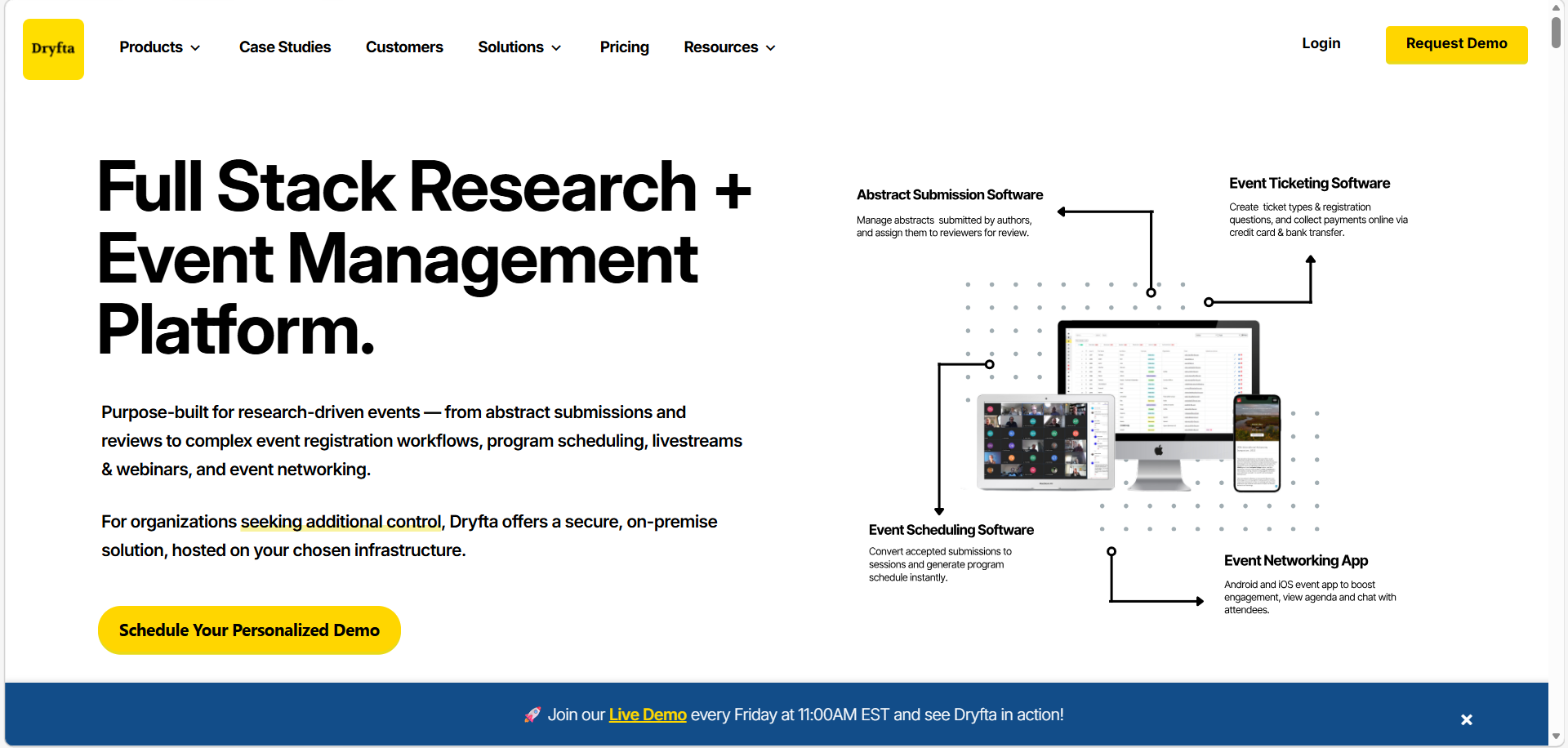
Dryfta is an all-in-one event management platform designed specifically to handle research-heavy conferences. The platform blends event registration with abstract and review management, making it a strong fit for organizations that need both functions on a single platform. It is often considered among the Stova alternatives for continuing education programs.
Where It Beats Stova
- Native abstract submission and peer review management.
- Transparent, flat pricing models that protect budgets from unexpected per-ticket commission fees.
- Connects accepted abstracts to live session schedules and attendee-facing agendas.
Where It Falls Short
- Fewer marketing integrations than some event platforms.
- Less suitable for organizations focused on trade shows and large-scale exhibitions.
Pricing: Plans start at $1,499 per year for smaller events, increase to $14,999 per year for mid-sized events, and custom enterprise pricing is available for large-scale conferences. The platform charges no per-ticket commission.
2. Whova
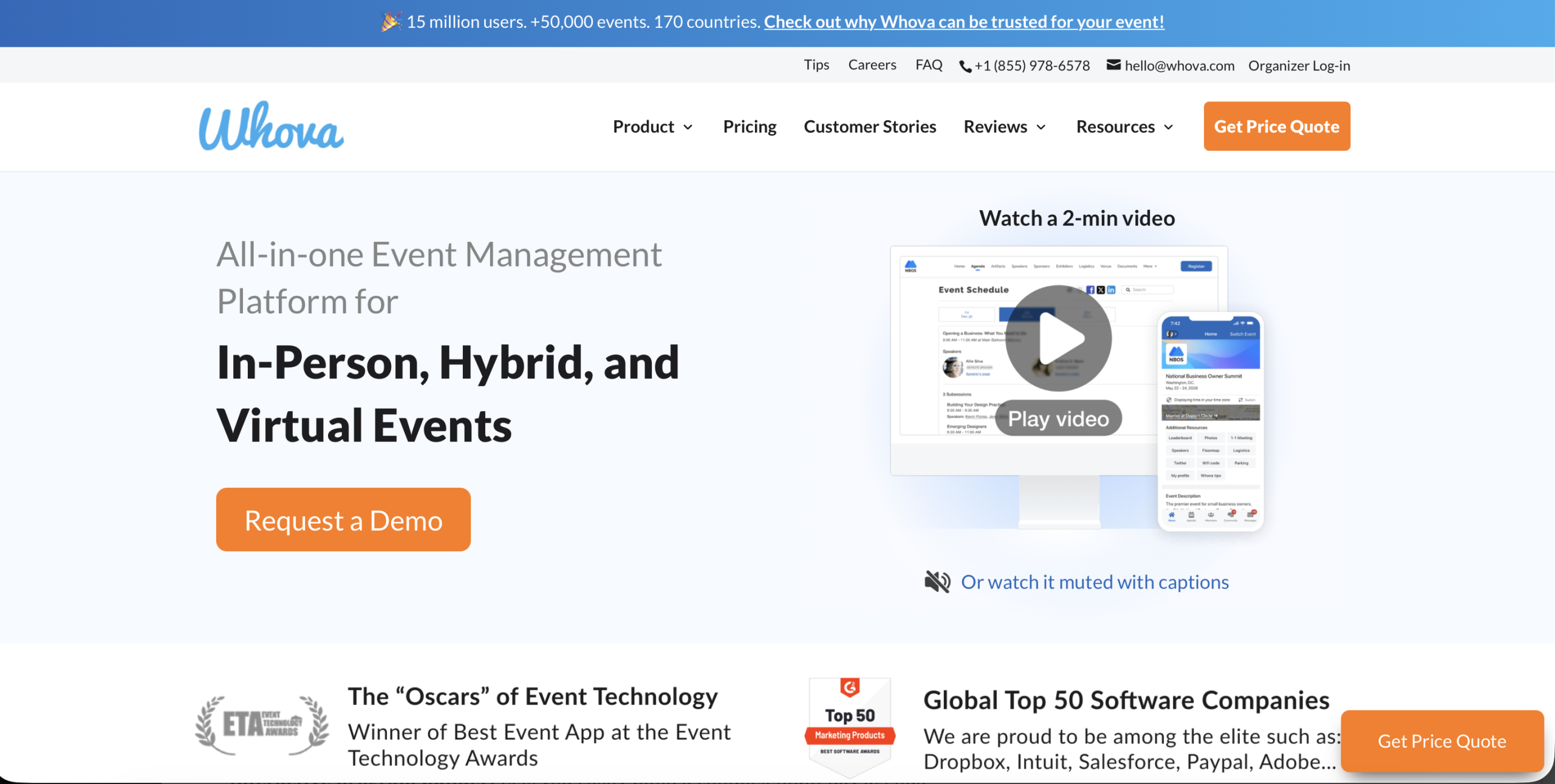
Verdict: Beats Stova when attendee networking and mobile event experiences are the top priority.
Best For: Mid-to-large enterprise conferences looking to maximize participation across hybrid or virtual events.
G2 Rating: 4.8/5
Whova is an event management software widely recognized for its engaging mobile app, supporting more than 50,000 events. It is one of the top Stova alternatives for organizations that prioritize attendee networking without a complex and lengthy setup process.
Where It Beats Stova
- Industry-leading networking and attendee interaction features.
- Highly rated mobile event app experience.
- Built-in event gamification features like live photo contests and competitive leaderboards.
Where It Falls Short
- According to G2, some reviewers mention that the notification feature can feel overwhelming when multiple chats and event announcements are running concurrently.
- Pricing can increase with add-ons and registration fees.
Pricing: Custom quote. Registration fees include 3.0% + $0.99 per paid ticket in addition to payment processing costs.
3. Cvent
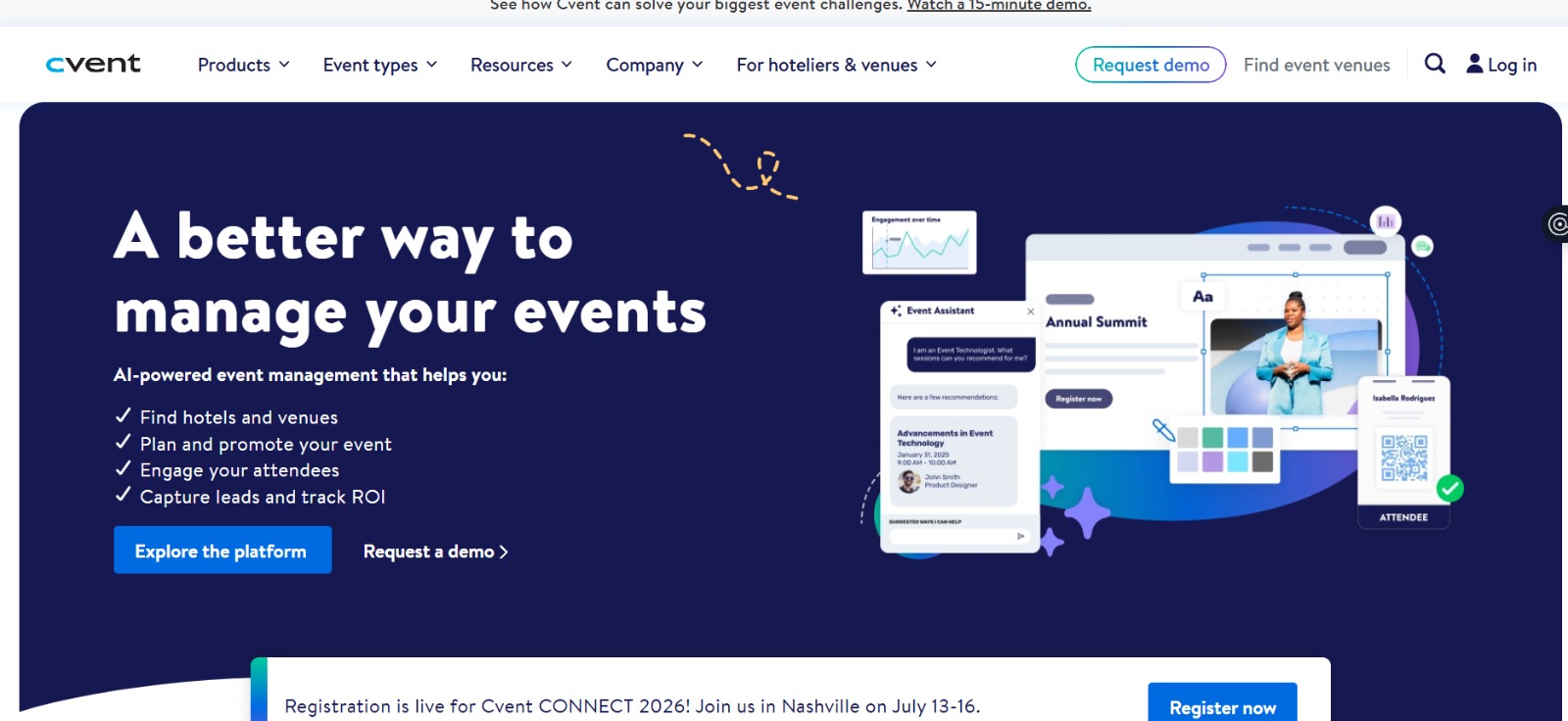
Verdict: Beats Stova when global venue sourcing and enterprise-scale event operations matter most.
Best For: Fortune 500 corporations managing hundreds of events annually.
G2 Rating: 4.3/5
Backed by a broad feature set, Cvent provides organizations with end-to-end event management covering venue sourcing, budgeting, procurement, and onsite check-in tracking. Among Stova competitors, it stands out for organizations hosting thousands of annual sessions with strict compliance requirements.
Where It Beats Stova
- Integrates the Cvent Supplier Network, allowing planners to issue procurement RFPs to thousands of global venues natively.
- Multi-layered single sign-on (SSO) frameworks and complex budgeting.
- Onsite execution suite with automated badge printing and session-level tracking.
Where It Falls Short
- Setting up new layouts or adjusting the registration workflows can feel cumbersome.
- Because of its broad feature set, some organizations invest in dedicated training during deployment.
Pricing: Custom quote.
4. Bizzabo
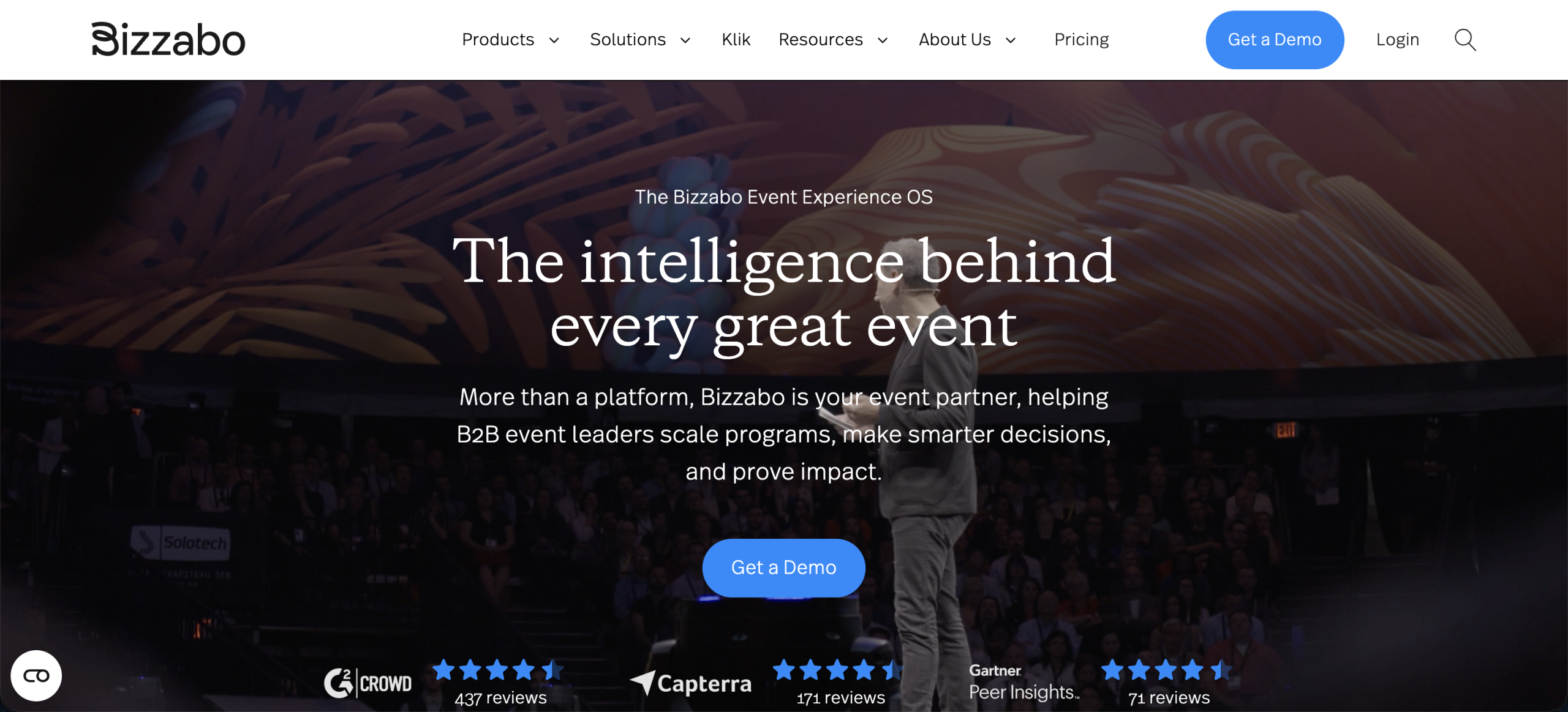
Verdict: Beats Stova when your main goal is measuring attendee networking at in-person corporate events using wearable technology.
Best For: Tech-forward B2B marketing organizations focused on generating a qualified pipeline.
G2 Rating: 4.3/5
Bizzabo’s Event Experience OS is built specifically for B2B corporate events. As one of the leading Stova alternatives, it stands out for its ability to capture and analyze attendee engagement data through wearable smart badge technology.
Where It Beats Stova
- Wearable badges let physical attendees swap professional contact information with a simple tap.
- Bidirectional native data connections with Salesforce, HubSpot, Marketo, and Eloqua.
- Integrated AI assistant built directly into the mobile app to help attendees build personalized schedules.
Where It Falls Short
- According to G2, reviewers frequently note that the built-in landing page can take extra time to create detailed layouts.
- Enterprise-level reporting tools may require upgrading to a premium pricing.
Pricing: Quote-based enterprise pricing.
5. vFairs
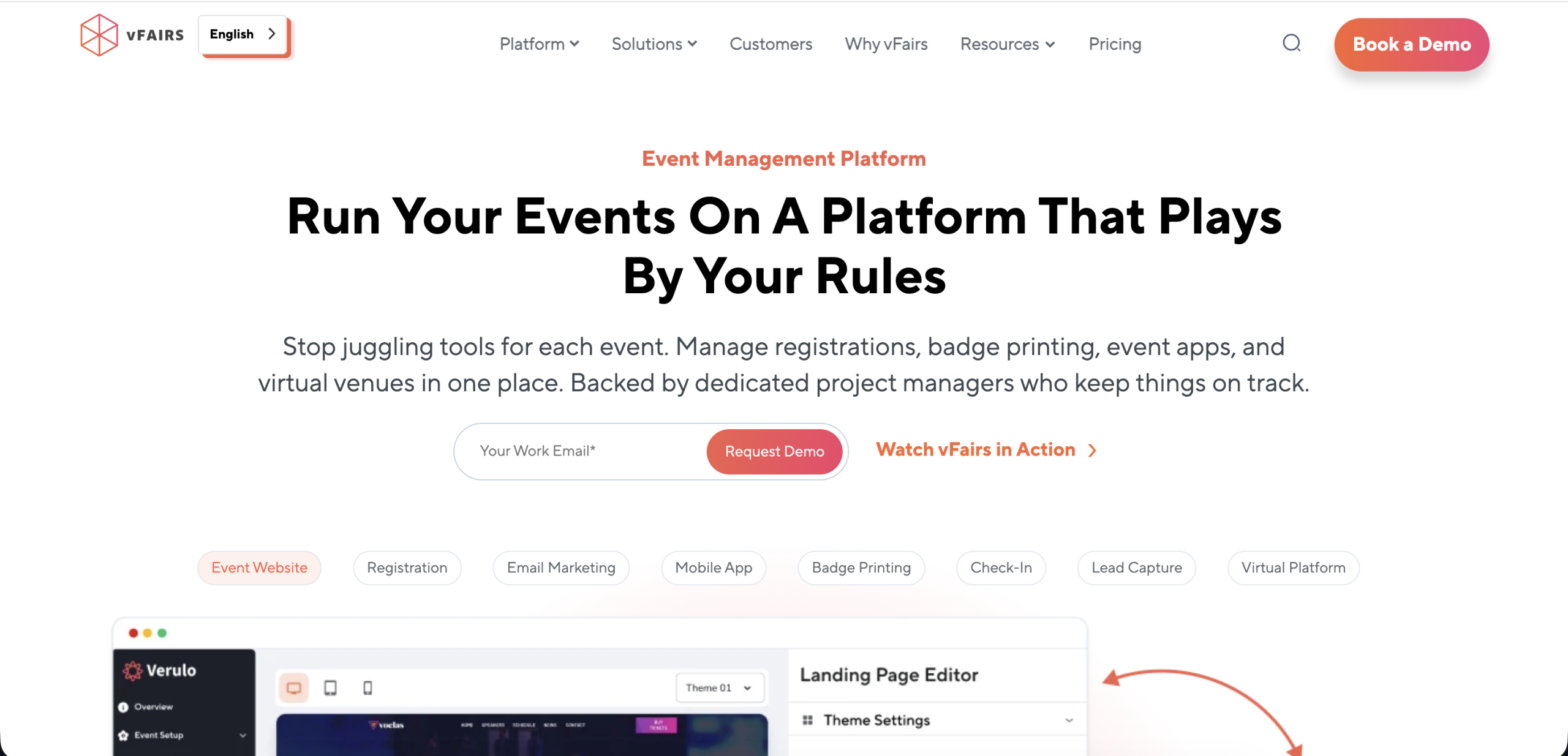
Verdict: Beats Stova when virtual and hybrid event features are a must.
Best For: Enterprises hosting global job fairs and interactive virtual expos.
G2 Rating: 4.7/5
vFairs specializes in virtual and hybrid event experiences with customizable features, exhibitor booths, networking lounges, webinars, and attendee engagement tools. It is a strong option for organizations with virtual event needs.
Where It Beats Stova
- Exhibitors can customize separate 3D booth stalls and upload localized documentation directly to digital swag bags.
- Every enterprise contract includes a dedicated project manager who handles the backend.
- Visually rich networking lounge that looks like a physical convention center.
Where It Falls Short
- The platform might feel complex for simple in-person events.
- Customization may increase implementation time.
Pricing: Quote-based.
6. Accelevents
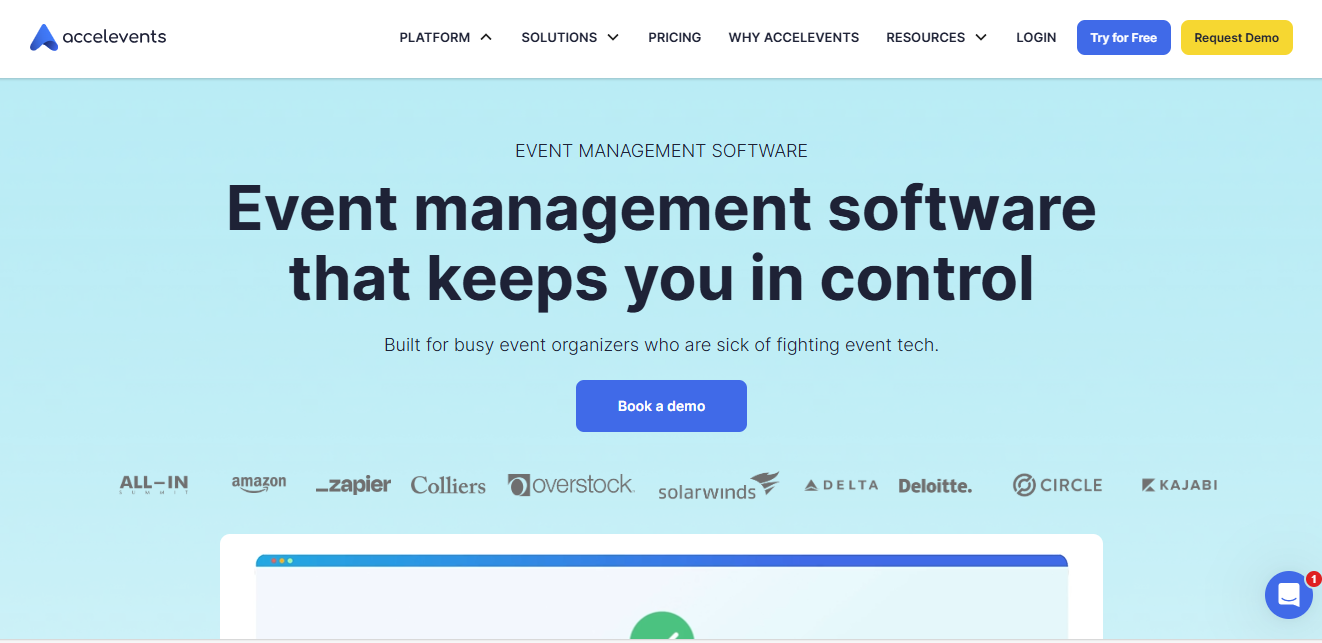
Verdict: Beats Stova when you need a fast-deploying hybrid platform with a flat-rate, transparent pricing model.
Best For: Mid-sized and enterprise event teams running hybrid conferences that need integrated attendee check-in and badge printing.
G2 Rating: 4.7/5
Accelevents blends ticketing, virtual events, exhibitor management, and event analytics. As one of the leading Stova alternatives, it appeals to event teams that want strong reporting features and a streamlined user experience.
Where It Beats Stova
- Faster setup and onboarding.
- Mobile check-in app that integrates with wireless laser badge printers to speed up attendee entry.
- 24/7 live human chat support with response times averaging under a single minute.
Where It Falls Short
- The built-in website builder offers fewer customization options than some competing platforms.
- Limited support for travel and accommodation.
Pricing: Paid plans start at $7,500 per year for single-event programs, while higher-tier plans start at $13,500 per year for organizations managing multiple events. Enterprise and white-label packages are available through custom pricing. In addition, payment processing fees are charged separately through Stripe or Square at 2.9% + $0.30 per transaction.
7. RainFocus
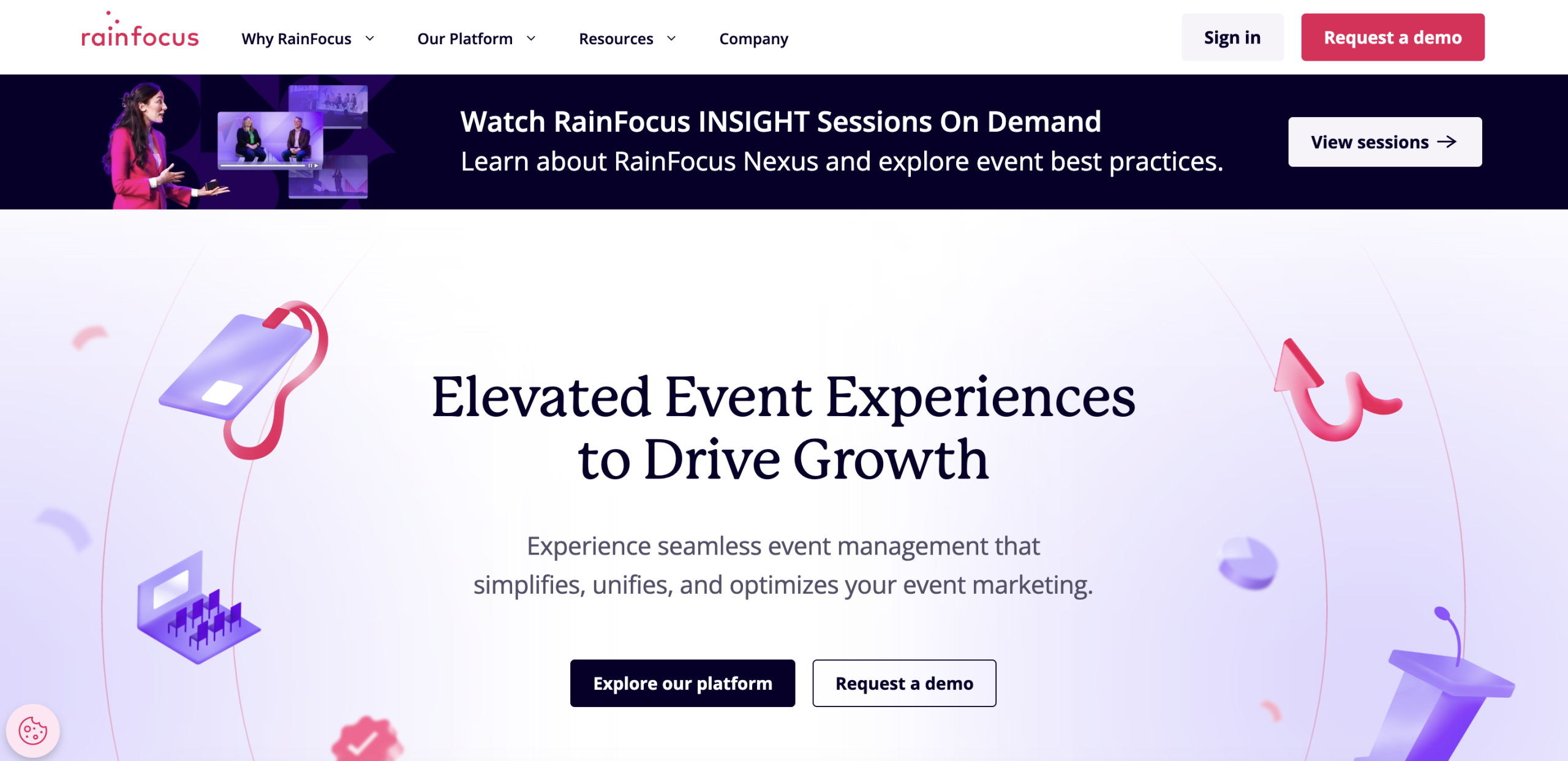
Verdict: Beats Stova for supporting enterprise organizations that need visibility into attendee data across multiple events.
Best For: Global tech companies running multi-day annual user summits.
G2 Rating: 4.6/5
RainFocus is built for organizations managing extensive event portfolios. The platform blends attendee data from multiple events into a centralized database rather than maintaining separate records for each event. It is widely used by teams managing multi-event portfolios.
Where It Beats Stova
- SaaS model that completely eliminates data discrepancies between your online and onsite check-in.
- Advanced content management engine built to orchestrate hundreds of speakers and presentations.
- Built-in integrations automatically sync attendee engagement data with enterprise marketing platforms such as Adobe and Oracle.
Where It Falls Short
- Longer implementation timelines.
- Requires dedicated resources for administration.
Pricing: Quote-based enterprise pricing.
8. InEvent
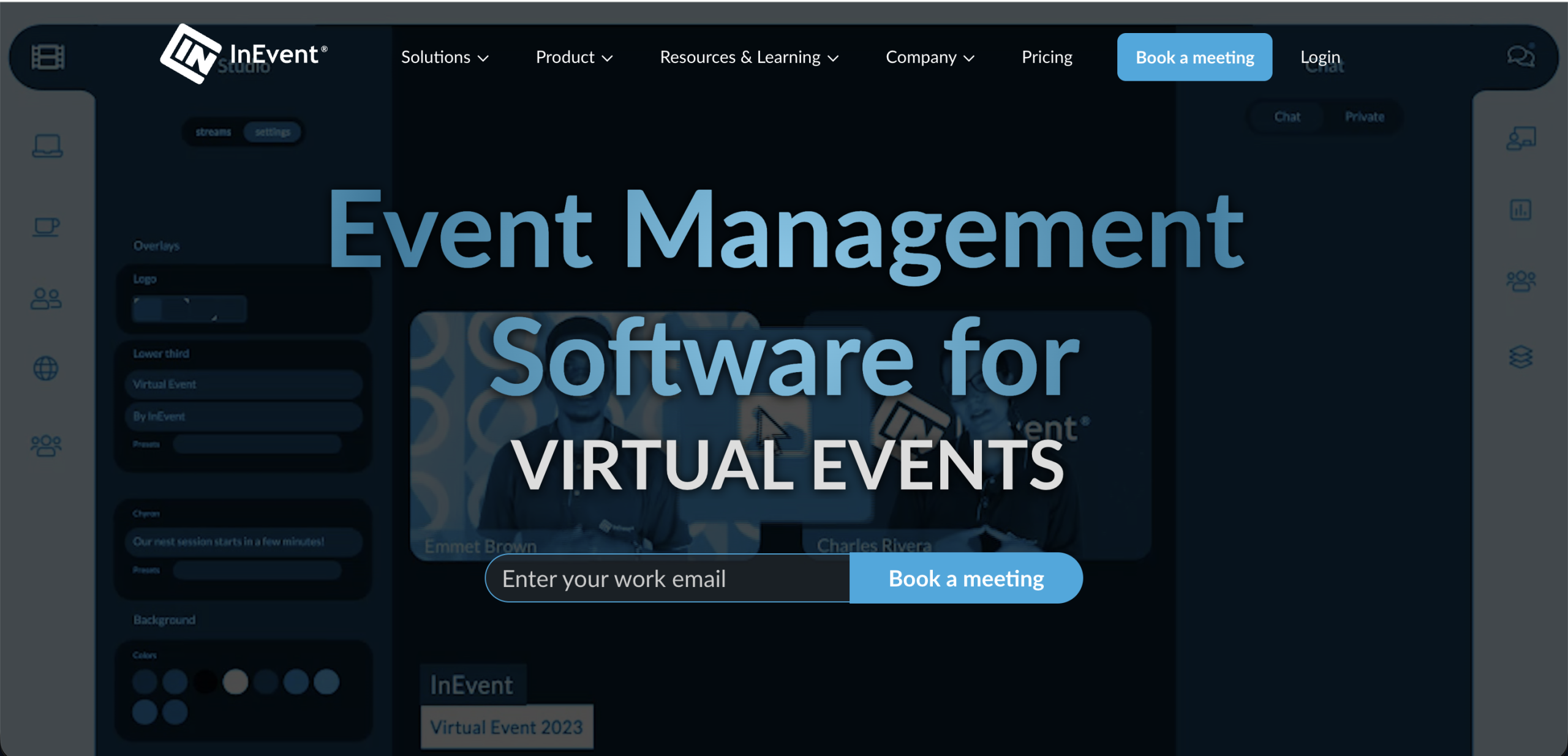
Verdict: Beats Stova when you need a white-label video platform with native AI video editing tools.
Best For: Multi-national teams broadcasting live product launches.
G2 Rating: 4.6/5
InEvent is an excellent option for Stova alternatives when an organization wants to remove all external vendor branding and use native AI tools to maximize the lifespan of their video content. The platform offers built-in webcasting tools with compliance-focused features and flexible API support.
Where It Beats Stova
- AI “Content Lab” that cuts long session recordings into short marketing clips and social media posts.
- Local caching helps maintain uninterrupted onsite check-ins during network disruptions.
- Complete branding control without third-party platform branding.
Where It Falls Short
- Extensive feature set can result in a steeper learning curve for new users.
- Older devices may experience performance issues during highly interactive virtual events.
Pricing: Pricing starts at $6,000 per event for organizations running a single event and $9,000 per year for an annual subscription. Additional enterprise requirements may require custom pricing.
9. Eventtia
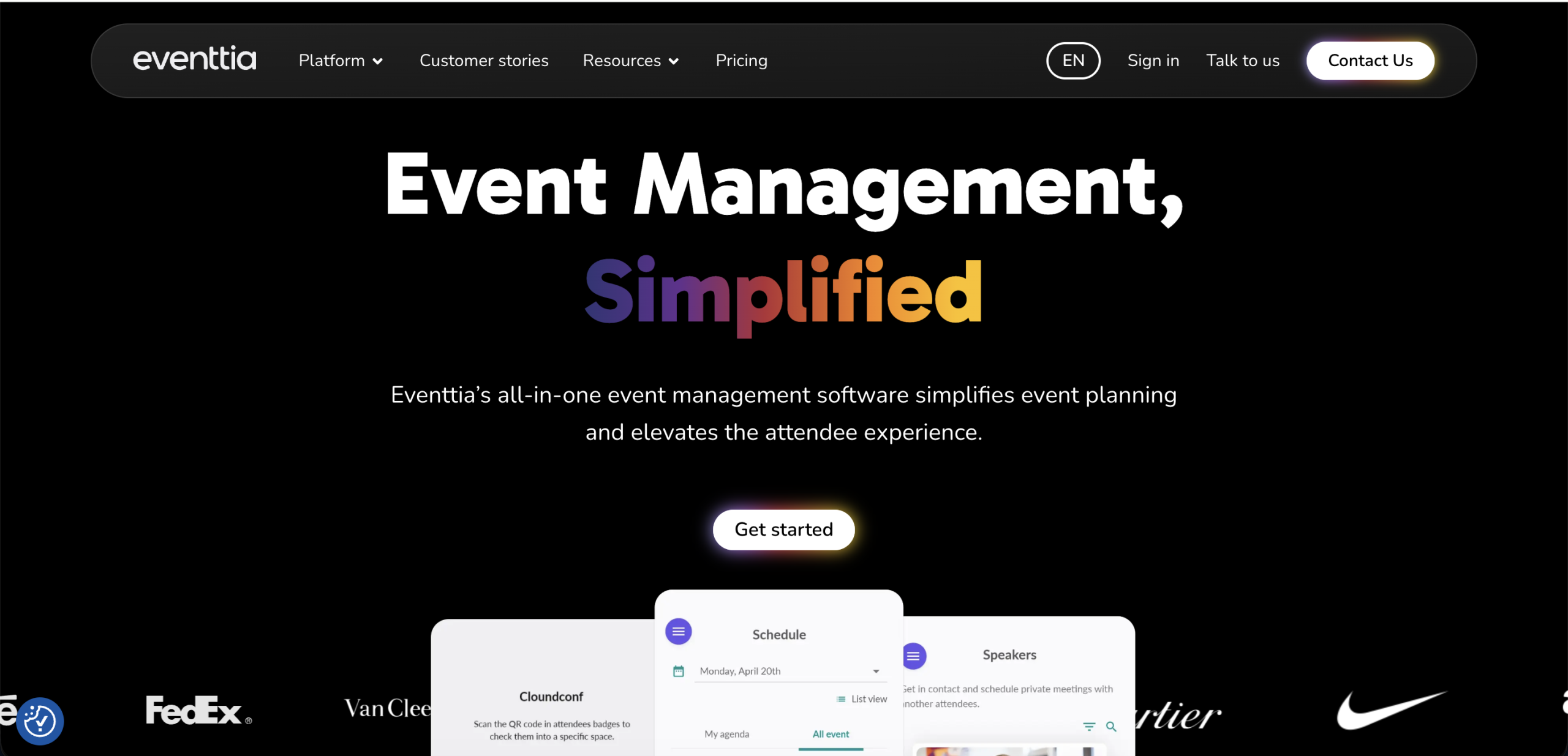
Verdict: Beats Stova when running networking-focused conferences and business matchmaking events.
Best For: Business associations and corporate networks focused on attendee connections.
G2 Rating: 4.4/5
Eventtia is an event management platform built for organizations that prioritize business networking and commercial engagement. The platform combines registration management and B2B matchmaking tools. Among Stova alternatives, Eventtia stands out for helping organizers create meaningful connections between attendees, buyers, exhibitors, and partners without the complexity of enterprise platforms.
Where It Beats Stova
- Targeted 1:1 matchmaking based on attendee profiles and shared interests.
- Flexible transactional gateways that let global planners process complex registrations in multiple regional currencies.
- Teams can turn features on or off to maintain an uncluttered workspace.
Where It Falls Short
- Advanced broadcast features require third-party streaming tools.
- Certain CRM integrations may require additional configuration.
Pricing: Plan starts at $1,650 for Essential, $2,500 for Premium, and $1,600 for Networking. Eventtia uses an attendee credit model, and credits remain valid for 12 months across unlimited events.
10. EventMobi
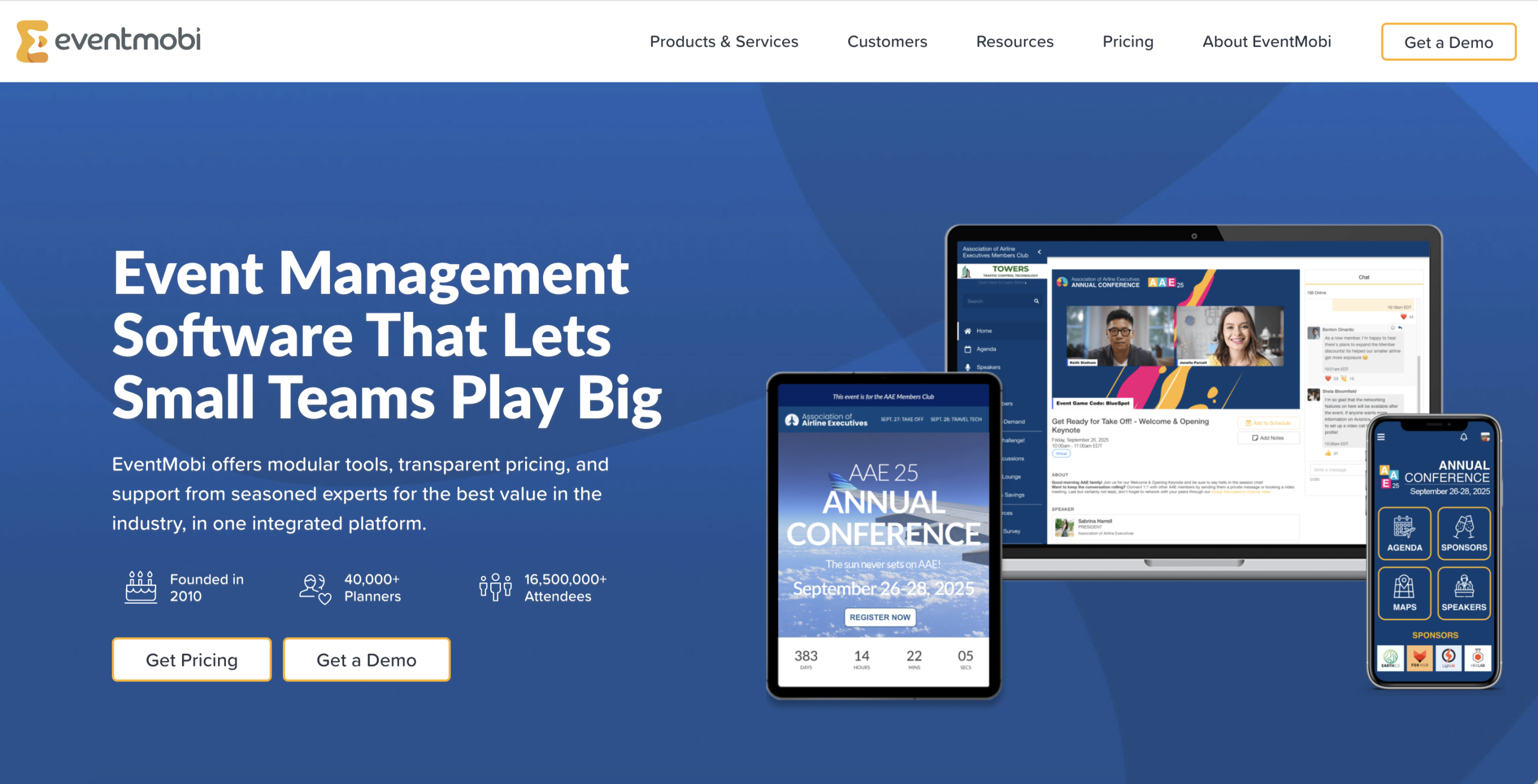
Verdict: Beats Stova when your event’s success depends on an interactive and gamified mobile app experience for multi-day conventions.
Best For: Organizations looking to boost onsite attendee engagement and participation.
G2 Rating: 4.6/5
EventMobi blends mobile event technology with tools for managing in-person, virtual, and hybrid events. Its customizable event apps help attendees stay engaged through personalized schedules and networking features.
Where It Beats Stova
- Customizable gamification features to boost attendee participation.
- Interactive floor maps to help attendees navigate venues and exhibitors.
- Attendees can download session materials directly from the event app.
Where It Falls Short
- Less suited for advanced multi-tier ticketing.
- Virtual event features are less advanced than dedicated streaming platforms.
Pricing: EventMobi’s event-based plans start at $3,500 per event, while annual plans start at $7,900 per year for organizations managing multiple events.
Fact check: Large enterprises accounted for 53.2% of the global event management software market in 2025.
Which Stova Alternative Is Right for Your Organization?
Here is the bottom line. Let us look past the usual sales pitches and look at the real-world scenarios. Use this curated framework to pinpoint exactly which platform aligns with your organizational strategy this year.
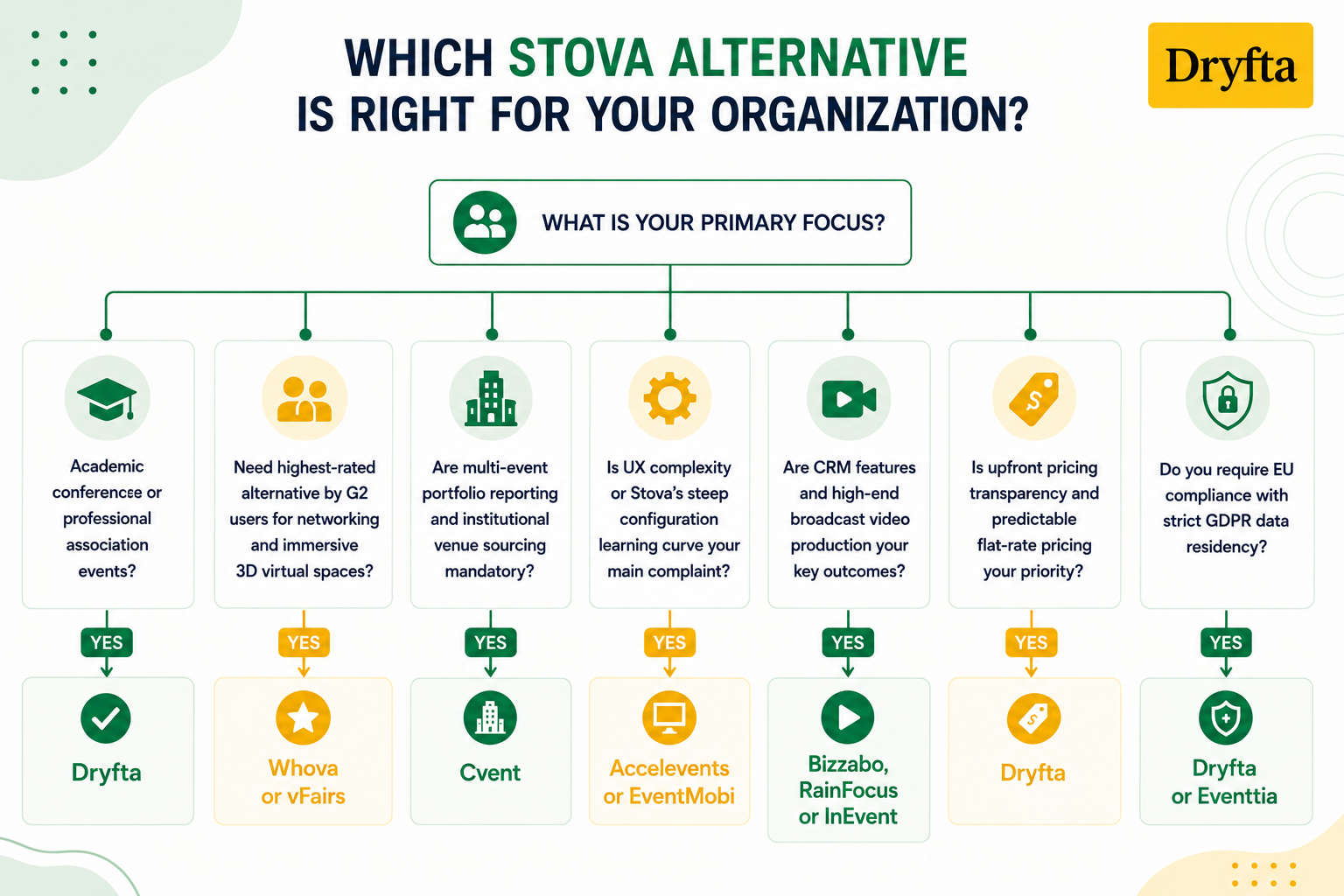
- Go with Dryfta if your team hosts academic conferences or professional association events that demand built-in abstract submission and peer-review dashboards.
- Choose Whova or vFairs if you want the highest-rated alternative by G2 users who value attendee networking and immersive 3D virtual spaces.
- Pick Cvent if multi-event portfolio reporting and institutional venue sourcing are your mandatory requirements.
- Opt for Accelevents or EventMobi if the UX complexity and Stova’s steep configuration learning curve are your primary complaints.
- Pick Bizzabo, RainFocus, or InEvent if CRM features and high-end broadcast video production are your primary event outcome metrics.
- Transition directly to Dryfta if upfront pricing transparency and predictable flat-rate pricing are your primary concern.
- Standardize on Dryfta or Eventtia if your compliance teams operate strictly in the EU with rigid GDPR data residency requirements.
The Bottom Line
At the end of the day, finding the perfect fit among all the Stova alternatives out there isn’t about chasing the most famous software on the market. It is about locking down a stable platform that aligns with your team’s day-to-day event goals without surprising you with post-merger bugs or hidden commission fees.
Dryfta is an all-in-one event management platform that streamlines your event’s operational workflow by pairing custom ticketing and registration with an integrated attendee CRM, multi-track agenda builders, interactive mobile apps, on-demand badge printing, and smart vendor lead retrieval tools, all under a single flat-rate subscription.
Ready to simplify your event planning? Book a free demo with Dryfta today and see exactly how it stacks up against your event portfolio!
Frequently Asked Questions
- What is Stova and what was it previously called?
Stova is an end-to-end enterprise event management suite designed for large-scale organizations. The platform was created through a high-profile merger of three major event technology brands: Aventri, MeetingPlay, and Eventcore.
- Why do people look for Stova alternatives?
Organizers look for Stova alternatives due to the complexity of post-merger integration and inconsistent customer service. For research-heavy events, teams look for enterprise event management alternatives to Stova, like Dryfta, because Stova lacks advanced abstract management and blind peer-review workflows.
- Which Stova alternative is best for academic and research conferences?
Dryfta is the standout choice for academic and research conferences. While general event platforms require expensive third-party plugins, Dryfta handles abstract submissions, blind peer reviews, abstract book publishing, and multi-track presentation schedules natively.
- Which Stova alternative has the most transparent pricing?
Platforms like Dryfta and Accelevents are highly rated Stova competitors for their absolute budget clarity. Dryfta leads the market in pricing transparency by offering upfront flat-rate annual plans starting at $1,499.00 per year with zero per-registration fees.
- How does Stova compare to Cvent?
Cvent is preferred for global venue sourcing and procurement tracking, but has a notoriously steep learning curve. However, Stova offers a different approach, with some users noting occasional backend and usability challenges.
