Ex Ordo Alternatives: Better Options for Academic Events

Home > Blog > Event Management Software > Ex Ordo Alternatives: Better Options for Academic Events

best ex ordo alternatives

Ex Ordo is a conference management system that understands research and scholarly events have specific needs and provides rightful solutions. It is useful for event management, collaboration, content management, and abstract review workflows. Many academic conferences use Ex Ordo because of its streamlined and efficient workflow that covers the entire conference lifecycle.

In recent years, the demand for modern conference management workflows has grown exponentially due to their support for hybrid formats, real-time collaborations, mobile access, and many more features. The onus is on conference organizers to choose a reliable and scalable conference software that matches their needs and meets the expectations of the attendees. There is a huge requirement for all-in-one conference management platforms that are not just the Ex Ordo alternatives but also outperform in every aspect to make the conference management workflows run smoothly.

The conference management organizers usually face a lot of unresolved challenges with fragmented workflows, such as duplicated data entry, inconsistent communication, and difficulty tracking reviews and schedules across various systems. This is the reason the demand for software like Ex Ordo has increased, which offers a more comprehensive, scalable, flexible, and overall end-to-end solution for handling academic events.

In this article, you’ll get to know all about the best ex ordo alternatives that can redefine the hosting and execution of the academic events.


Ex Ordo

Table of Contents

What is Ex Ordo?

Ex Ordo is a user-friendly conference management software designed for managing academic and scientific conferences. It mainly focuses on abstract management software, peer review, program builder, registration system, conference scheduling, and a mobile app, with an integrated virtual conference platform to support online as well as hybrid events.

This platform eases the administrative burden on event organizers with its offering a modern and intuitive interface. It is most commonly used by universities and associations. Software like Ex Ordo is preferred for reach-driven gathering, such as scholarly and research events, symposiums, and workshops of all sizes. This cloud-based conference workflow platform creates a cohesive environment where event organizers get to manage content, enhance collaboration, and basic logistics in one place.

It uses a tiered pricing model based on the number of submissions and features needed. It provides a mid-range budget solution with customized deals, which is ideal for events of all sizes. It provides a fruitful value for the event organizers who are looking for a straightforward platform and are easily affordable.

Why Conference Organizers Look for Ex Ordo Alternatives?

Organizing academic events is not as simple as it looks. The organizing teams often struggle with many tasks that require their immediate attention. This is when the conference organizers, who were dissatisfied with the limited features of Ex Ordo, started to look for some alternative options.

There are quite a few Ex Ordo competitors that offer advanced enterprise features like hybrid and virtual conference-driven workflows, flexibility, end-to-end abstract submission management, and better customization options. These alternative options also gave the academic event organizers the freedom to choose what they need and to leave unwanted ones. Some main reasons academic conference organizers started to seek better options than Ex Ordo are:

  • Stronger CRM Integrations

Ex Ordo CRM integrates with payment gateways, video conferencing tools like Zoom, Guidebook Mobile, and Naylor AMS. Conference organizers usually look for more integrations with tools like Salesforce, HubSpot, or marketing automation platforms, so that facilitating registrations, session attendance, virtual and hybrid event management, and engagement scores get direct outreach and reporting.

There are Ex Ordo alternatives that offer consolidated CRM processes, such as dedicated real‑time dashboards to manage speakers and attendees, native integrations, customized reporting and filters, and advanced and easy communication tools.

  • Limited attendee engagement tools

When there is an academic event, the last thing an organizer needs is extra complexity. There is a high demand for the best event management software that consists of features that ensure attendee engagement is in line with the same environment.

Ex Ordo primarily focuses on abstracts and reviews, so it offers relatively basic tools for attendee engagement, such as simple agenda views and basic communication channels. Organizers pick up alternatives that have built‑in, modern engagement tools and keep participants active before, during, and even after the event.

  • Robust sponsor and exhibitor management 

Irrespective of the academic event, sponsors and exhibitors usually expect measurable Return on Investment (ROI), including lead-scanning, booth analytics, and digital engagement tracking. Software like Ex Ordo lacks these aspects.

There are quite a few competitors that have user-friendly tools like virtual booths, quick-to-navigate sponsor and exhibitor dashboards, customizable packages to attract and retain high-value partners, sponsor portals so that exhibitors can upload assets, view real-time traffic, and export leads. This makes the relationships stronger and more transparent.

  • Scalability concerns for large conferences

Academic events are usually organized by educational institutions and universities. They host these events on a large, multi-track, and multi-day platform, for which they require a platform that easily handles high-volume submissions and registrations. Although Ex Ordo provides good support, it falls short in the matter of scalability.

Managing thousands of abstracts, concurrent sessions, and different global time zones can be overwhelming for it. Its architecture cannot fully support federated workflows, multi-language support, or deep API access at scale. This resulted in exploring alternative event management software that is highly scalable and is explicitly designed for complex, large-scale conferences.

  • Requirement for better mobile experiences

Ex Ordo has limited mobile experience, and it is not among the core features; it is an add-on. This can make the conference organizers frustrated. Attendees, irrespective of their location, prefer getting registered, networking, and following agendas on mobile devices.

At the same time, they also expect a better mobile experience, which they get from several other alternative platforms. These platforms prioritize native mobile apps with offline agendas, push notifications, personalized schedules, one-tap networking, and custom informational pages. Organizers who want to deliver a seamless mobile-first experience usually consider Ex Ordo as a backlog.

  • Need for advanced analytics and reporting

Ex Ordo provides basic reporting around submissions and reviews, but it lacks the advanced analytics many conference organizing teams now demand. They require predictive advanced analytics, insights related to engagement rates and session participation, quality in abstract submissions, and customized reports.

Some of the best Ex Ordo alternatives offer an all-in-one platform without compromising on the quality. They are driven by real-time analytics, which are helpful to track Key Performance Indicators (KPIs) as well as give scope to explore more options.

  • More flexible workflow automation requirements

Academic conference organizing teams prefer highly flexible workflow automation, such as auto-assigning reviewers, multi-tier submission, sending status-based reminders, and triggering post-review actions without any type of manual intervention. Automation support is present in Ex Ordo, but it often feels rigid when compared to its competitors that offer simple drag-and-drop workflow builders, conditional logic, and API-driven triggers.

  • Budget considerations for growing events

As conferences grow, organizers look for pricing models that align sensibly with the number of events, attendees, or sessions, not just the number of abstracts or researchers. Ex Ordo’s pricing and licensing structure is less transparent in comparison to the latest event management platforms that have tiered, usage‑based, or event‑based models.

Events that have a limited budget avoid multiple add‑on tools for mobile, sponsors, and analytics, which would increase their total costs. Some of the Ex Ordo alternatives provide tailored estimations that perfectly fit the financials for the growing conference demands.

  • Need for end-to-end conference lifecycle management

Academic conference organizers like to think that there is a single system that supports the entire conference lifecycle. A software that supports initial tasks like call‑for‑papers and abstracts through registration, on‑site check‑in, networking, and post‑event analysis and reporting.

A proven holistic vision is the main reason many conference organizers seek options that are beyond Ex Ordo. They prefer platforms that offer end-to-end conference lifecycle management because of their tools that ensure smoother data flow, fewer manual touchpoints, and consistent branding across every stage.

What to Look for in an Ex Ordo Alternative?

The right event management software makes sure the conference planning and execution stay on track from inception to conclusion. Not all platforms are built for academic conference use. This is the reason the organizing team must be aware of Ex Ordo alternatives that not only offer unique and easy-to-use features for your conference needs but also boost it to the next level with its proven solutions. Below are some important factors to consider while looking for Ex Ordo competitors.

  • Abstract submission and Peer Review 

An Ex Ordo alternative should offer robust multiple submission and automated communication workflows, such as customizable forms for submissions, multi‑stage uploads, and version control, so authors can edit and resubmit without getting confused. The platform must also support different types of peer reviews, especially double-blind and triple-blind. There should be automatic masking of author and institution details to ensure fairness and compliance.

  • Simplified usage for organizers and reviewers

A software can be said to be the best if it is user-friendly. It should contain an interface that is quick and easy to navigate. The event organizers and reviewers must not feel irritated while using the system. This encourages timely participation without any delays. A mobile-friendly user interface also helps to maintain high-quality reviews and faster registrations.

  • All-in-one Seamless Management 

An Ex Ordo Alternative should contain all the core pieces that are essential for an academic event under one platform. Instead of juggling among different tools for every component, there should be a unified way to manage the speakers details, sponsors queries, exhibitor booths, session handling, and more. The platform must improve accuracy and reduce the back‑and‑forth with the organizing team.

  • Assignment automation 

The platform should have automation features that help in assigning abstracts to reviewers in real-time. If there are options for intelligently matching submissions to reviewers based on topics, expertise, and conflicts of interest, then it will be beneficial. This reduces manual overhead.

  • Registration, Ticketing, and Scalability 

A strong conference platform seamlessly handles registration and ticketing. It manages everything from quick and easy sign‑ups to complex multi‑tiered events, including early‑bird pricing, group discounts, and add‑on purchases such as memberships, workshop tickets, sponsorship packages, and donation items.

A strong system scales smoothly for international conferences, automatically handles different time‑zone‑aware deadlines, currencies, and large attendee volumes without any performance issues. Event organizers can set capacity limits, waitlists, and custom registration paths for different attendee types—authors, speakers, students, and sponsors—all within a single flow. This reduces confusion and errors.

  • Mobile event apps

An academic event management platform that has its own mobile event app then it easily helps the organizers to serve the attendees well. Mobile apps boost hybrid and virtual conference support by enabling remote participants to join live streams, download session recordings, and interact through Q&A, live polls, chats, push notifications, surveys, and in-app networking. They help the attendees to access e-tickets, agendas, and venue maps directly from their smartphones.

  • Conference website builder

An event handling system that supports a built‑in conference website builder gives the organizers the freedom to create a professional event website. This website consists of embedded registration forms, dynamic program views, and sponsor/logo pages without relying on external CMS tools.

  • CRM integrations 

CRM integrations connect the rich dataset to external systems, such as Salesforce or HubSpot. They are useful to manage contacts, segment leads and attendees, track interactions, track long-term engagement, and automate communications—all from one single powerful platform.

The system should also contain an event CRM that gives real-time analytics to track attendee registrations, engagement, and preferences. It should also have clear reporting dashboards to collect data from registration, website traffic, session attendance, and mobile engagement, then visualize key metrics such as conversion rates, no-shows, and sponsor traffic in clear, customizable widgets.

Quick Comparison of the Best Ex Ordo Alternatives

Let’s understand a quick comparison of the best Ex Ordo alternatives, based on various categories.

Quick Comparison of the Best Ex Ordo Alternatives

Best Ex Ordo Alternatives for Academic Conferences

According to the American Express 2026 Global Meetings & Events Forecast, attendees’ expectations have changed over the last five years. Today, they look for 42% more interactive sessions. e.g. Academic Conferences 

Academic conferences require innovative solutions to reduce administrative work, save time, and ease the scheduling and engagement. Some of the Ex Ordo competitors ensure the academic conferences are well-managed as well as stay on track from inception to conclusion. Some of the alternatives include:

  • Scientific conference management

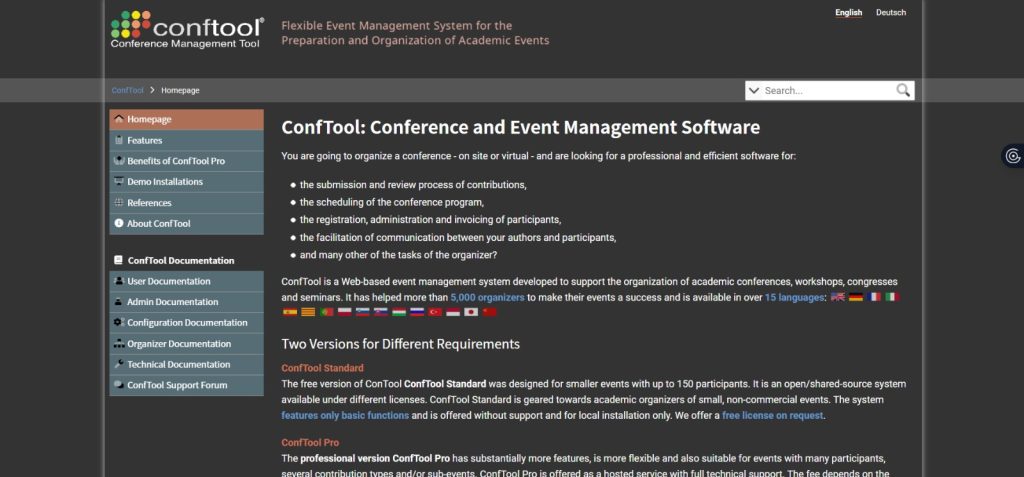
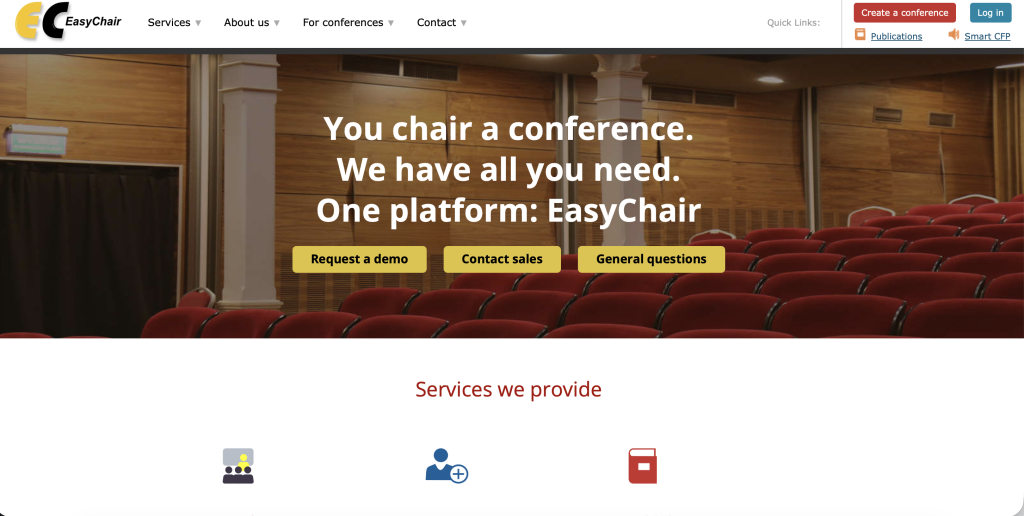
Use Dryfta, ConfTool, Oxford Abstracts, or EasyChair to run the scientific conference management. They handle abstract submissions, peer review, registration, and payments without the need to juggle between different platforms.

  • Research symposium workflows

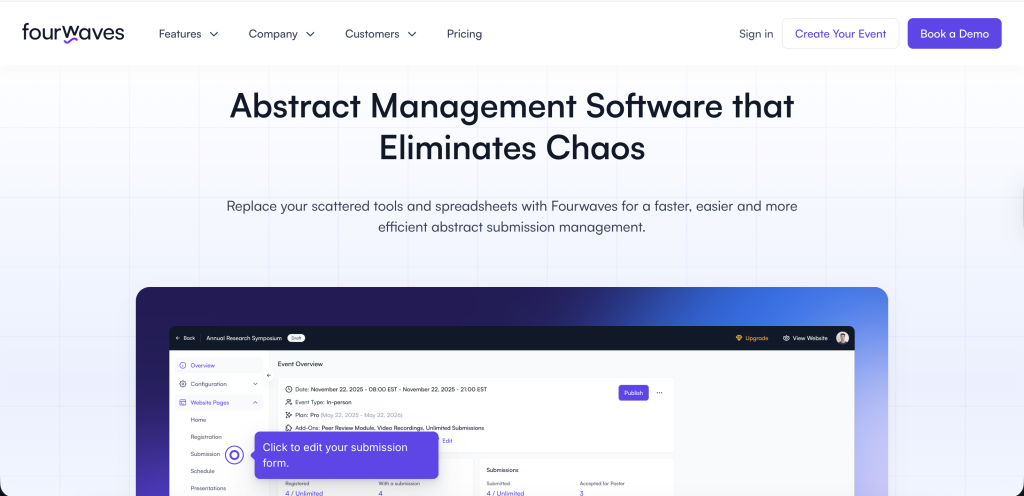
Dryfta, Oxford Abstracts, Fourwaves, Microsoft CMT, and EasyChair are some of the best tools that are suitable for multi-stage research symposium workflows where submissions, reviews, and revisions need a clear process.

  • University conference support

Dryfta, Microsoft CMT, Oxford Abstracts, and OpenConf perfectly fit university-led academic conferences. These platforms support academic conventions without forcing teams into a generic event setup. Researchers exclusively developed Microsoft CMT for academic conferences, making it highly preferred due to its free academic usage.

  • Proceedings management

ConfTool, Dryfta, EasyChair, and OpenConf take care of the entire proceedings pipeline. These systems support the chairs to monitor progress via dashboards, reassign overdue reviews, and generate reports to support program decisions. This helps the academic conference organizers to move accepted papers through publication workflows with greater efficiency.

  • Reviewer collaboration workflows

Dryfta, Microsoft CMT, EasyChair, and Oxford Abstracts offer advanced options in terms of reviewer collaboration. They automate version control, generate proceedings volumes that require very little to no manual editing.

  • Multi-track conference scheduling

Dryfta, ConfTool, Oxford Abstracts, and Fourwaves consist of exceptional features. They come up with options like drag‑and‑drop editors, conflict detection, capacity controls, and automated schedule updates that publish instantly across web and mobile properties. This is useful for the event organizers to reduces last-minute timetable fixes and improves the attendee experience with accurate, real-time agenda views.

  • Research networking capabilities

Dryfta, Oxford Abstracts, and Fourwaves provide networking features that focus on researchers, including matching based on interests, organized meeting requests, and searchable attendee profiles to help build valuable connections even after academic conferences end.

  • Author communication management

Dryfta, Oxford Abstracts, EasyChair, and OpenConf have dedicated centralized author communications with templated emails, status tracking, and personalized dashboards for authors and reviewers; clear and easy-to-view speaker and sponsor portals, which will help to enrich the overall communication management.

Best Ex Ordo Alternatives for Peer Review Management

Although, Ex Ordo specializes in simplifying the process of peer review management, it has limited flexibility. There is a huge demand for a comprehensive solution that meets the expectations of event organizers. Below are some of the best Ex Ordo alternatives for peer review management.

  • Support for Single, Double and Triple Blind Peer Reviews

Dryfta, EasyChair, Microsoft CMT, EasyChair, Oxford Abstracts, and HotCRP offer a broader range of features that go beyond a simple peer review process. These are some of the prominent alternatives that give organizers the options of single-blind, double-blind, and triple-blind peer review. This is very useful to match the review model to the event’s academic and research standards.

This flexibility helps conference chairs to make sure there is zero bias and 100% fairness in the review process at every step. They also make it simple to run mixed review types across different highly competitive tracks without the need to create separate systems. This facilitates keeping the workflow consistent for reviewers and simpler for program chairs to manage.

  • Reviewer bidding systems

HotCRP, EasyChair, OpenConf, ConfTool, and Microsoft CMT are a few Ex Ordo alternatives. These perform reviewer bidding and show paper titles and abstracts signaling reviewer interest in papers, collect ranked preferences, and give chairs clean and relevant data to start assignments by reducing their workload.

  • Conflict-of-interest management

Dryfta, Microsoft CMT, OpenReview, ConfTool, Oxford Abstracts, and EasyChair offer conflict-of-interest management to flag inappropriate reviewer matches before assignments are distributed. This protects the credibility of the entire review process.

  • Reviewer assignment automation

Dryfta, Microsoft CMT, Oxford Abstracts, EasyChair, and ConfTool are a few chosen Ex Ordo alternatives that automate reviewer assignment based on their expertise, availability, and conflict rules.

There is no denying that automation helps organizers fairly distribute workload and prevents delaying decisions from reviewers. Apart from this, if there is a portal for reviewers for bidding systems and a dashboard with all the necessary information, it will hasten the whole process with precision and without any hassles.

  • Review scoring workflows

EasyChair, HotCRP, Dryfta, OpenConf, ConfTool, and Oxford Abstracts provide review scoring workflows that allow the event organizers to set criteria, weight categories, and comment fields that fit the best with the academic conference’s evaluation structure. They also offer a dedicated portal that shows all the necessary details, such as pending tasks, deadlines, assigned papers, and scoring forms in one clear view, so reviewers can work quickly without hunting through emails.

  • Reviewer dashboards

Platforms like Dryfta ,Microsoft CMT, ConfTool, Oxford Abstracts and EasyChair give reviewers a clear view of assigned papers, deadlines, progress, and paper details in one place.

  • AI-assisted reviewer matching

OpenReview, Researcher App, Dryfta, Microsoft CMT, and Oxford Abstracts consist of AI-driven reviewer matching that speeds up the whole assignment process by analyzing submission topics, reviewer history, and expertise signals with highly intelligent systems rather than manual tagging alone.

  • Bulk acceptance and rejection workflows

EasyChair, ConfTool, Dryfta, Microsoft CMT, and OpenConf offer tools with a good count of acceptance and rejection workflows. This gives program chairs the ability to act on large volumes of decisions efficiently once the review period closes. It also reduces follow-up questions and revision loops later in the process.

  • Reviewer collaboration tools

Dryfta, Microsoft CMT, Oxford Abstracts, HotCRP, and ConfTool offer reviewer collaboration tools such as threaded discussions, shared notes, and chair moderation. They are useful to handle borderline papers without messy external email chains.

These features make it easier to reach consensus, especially during the submissions. Submitters will also receive mixed scores when reviewers disagree on originality and relevance. This makes the result a more transparent and defensible review process.

  • Review analytics dashboards

Dryfta, Oxford Abstracts, EasyChair, ConfTool, and OpenReview are perfect platforms that offer review analytics dashboards that show completion rates, reviewer turnaround times, and score distributions across tracks. These insights offer the organizers the ability to spot bottlenecks early and rebalance work before deadlines slip.

Best Ex Ordo Alternatives for Hybrid & Virtual Conferences

According to the 2026 Global Meetings & Events Forecast by American Express, 22% of event planners identified the ability to host hybrid meetings as one of the top factors influencing meeting venue and destination selection in 2026.

Platforms that offer events in hybrid and virtual formats are in high demand. This demand has exponentially increased, especially after the global pandemic. This resulted in the event organizers looking for Ex Ordo alternatives that not only help to build the conference online but also experience live access, stream on-demand sessions, provide seamless browser-based access without any need for third-party apps, and offer downloadable media like PDFs and spreadsheets.

  • Virtual session hosting

Dryfta, Whova, vFairs, Accelevents, Cvent, and EventsAir are some of the prominent Ex Ordo alternatives that give the freedom to let the audience join live sessions directly with the help of the platform because virtual hosting is considered a common element rather than a bonus feature. This flexibility reduces friction and makes it easier for academic audiences to follow keynote talks, panels, and workshops from anywhere at any time while ensuring the event stays meaningful.

  • Live streaming integrations

Dryfta, EventsAir, Accelevents, Whova and vFairs are the best event management platforms that connect smoothly with streaming tools. This is useful for the event organizers to broadcast sessions without forcing attendees to install extra software or switch between platforms. These platforms also keep the academic conference experience consistent while giving organizers flexibility to use the streaming services they can rely on.

  • Virtual poster presentations

Dryfta, Whova, vFairs, Brella, Fourwaves, Oxford Abstracts, and Morressier offer tools for virtual poster presentations, which play an important role in research-driven conferences. Authors can use this feature to share their research findings in the form of posters with audiences. These systems let attendees browse and ask questions and interact with presenters in a centralized environment.

  • Interactive attendee engagement

Dryfta, Hopin, vFairs, EventsAir, Brella, Whova and Accelevents offer some of the best tools for virtual and hybrid conferences. They provide features that help the participants to ask questions, vote in polls, and respond in real time. These platforms consist of built-in interactive engagement tools so both onsite and remote attendees can actively take part in the program without leaving the event space.

  • Hybrid networking tools

Dryfta, Whova, Accelevents, vFairs, EventsAir, and Brella are a few modern platforms that offer hybrid networking tools, which makes the event feel unified instead of split into two separate experiences. These tools are useful for remote and in-person attendees to get connected through chat, matchmaking, and meeting scheduling.

  • Session recording and playback

Dryfta, vFairs, EventsAir, Cvent, Accelevents, and ConfTool support automatic recordings of the sessions, playback, and dropping them into an on-demand library. Recording each live meeting also helps in monetizing. Giving premium access by selling these video recordings as on-demand sessions will help in extending the life of the content and getting revenue.

  • Browser-based conference experiences

Dryfta, Oxford Abstracts, vFairs, Fourwaves, Hopin, Airmeet, Whova, and WebinarNinja offer browser-based event experiences, which help in decreasing the session attendance challenges. Here attendees can join sessions, view agendas, and stay connected without downloading a separate app or plugin. This approach is especially effective for academic and research conferences where simplicity, accessibility, and cross-device access improve participation.

  • Mobile-first attendee experiences

Dryfta, Whova, Cvent, EventsAir, Brella, and Accelevents offer feature-rich mobile attendee conference experiences for the audience to move easily between sessions, networking, panels, and posters. These platforms offer native iOS/Android apps with agendas, maps, notifications, and offline access, so attendees navigate sessions whether they’re in the venue or attending remotely.

Best Ex Ordo Alternatives for Enterprise Conferences

Enterprise conference teams require next-level software to handle their events that connect registration, sponsorship, analytics, and global operations in one single environment. Software like Ex Ordo lacks support for enterprise events completely. This is the reason choosing the right platform that consists of the following attributes becomes necessary.

  • Enterprise CRM integrations

Cvent, Bizzabo, Dryfta, EventsAir, and Bevy offer innovative enterprise CRM integrations to connect smoothly with Salesforce, Insightly, and HubSpot. These offer the best experience to the teams based on real-time data flow between events and their vaster marketing or membership stack. There is no special technical support required to manage these integrations.

  • Multi-event management

Dryfta, Cvent, Bizzabo, Whova, and EventsAir offer tools for multi-event management that save time and reduce internal confusion. The conference organizers usually host many events each year, so they need one dedicated dashboard that lets them manage multiple events without rebuilding workflows every single time.

  • Large-scale attendee management

Cvent, Dryfta, vFairs, EventsAir, Whova, and RainFocus offer large-scale conferences that require systems that can handle thousands of registrations, session sign-ups, and communications. These platforms are some of the notable Ex Ordo alternative platforms that ensure branding, registration logic, and reporting remain consistent and managing the attendee data becomes easy.

  • Sponsor and exhibitor workflows

Bizzabo, RainFocus, Cvent, vFairs, and Dryfta help enterprise conference organizers manage sponsor packages, exhibitor profiles, virtual booths, lead capture, branding opportunities, and performance reporting from a single and well-structured integrated system.

  • Advanced analytics and reporting

Dryfta, RainFocus, Certain, Bizzabo, Cvent, Bevy, and EventsAir offer features that help in the success of any enterprise conference. The conference organizing team usually prefers using portals that show submission details, status of registration, sponsor activity, engagement progress, and more advanced analytics. These details help them to make better data-driven decisions and take actionable steps.

  • Enterprise-grade security

Certain, Cvent, Microsoft CMT, EventsAir, Whova, Bizzabo, and Dryfta offer strong enterprise-grade security for conference organizers. These platforms help to handle sensitive data, payment details, and institutional records without any disturbances. They are some of the best Ex Ordo alternatives that offer role-based permissions, simple sign-ins, and other controls that align well with the needs of enterprise standards.

  • Marketing automation workflows

Bizzabo, Splash, Cvent, Whova, EventsAir, and Dryfta offer marketing automation workflows that help in profile creation, lead capture, post-event reporting, emails, reminders, and audience segments without the need to manually manage every aspect. They also provide support to the enterprise conference organizers to manage commercial partners professionally and keep communication consistent across the event lifecycle.

  • Global event management capabilities

Cvent, Bizzabo, Whova, EventsAir, Dryfta, vFairs, and RainFocus consist of global event management capabilities like registration, making payment in different currencies, handling time zone variations, and supporting multilingualism for the attendees to participate actively. This platform handles all the global logistics for distributed audiences with their cross-border event programs.

Ex Ordo vs Modern Conference Management Platforms

Hosting academic events is more than just about registration and ticketing. Event organizers need innovative and quick solutions that will help them to host successful academic events that deliver high value. Below is a brief comparison between Ex Ordo and Modern Conference Management Platforms.

Ex Ordo vs Modern Conference Management Platforms

Why Dryfta is a Potential Alternative to Ex Ordo?

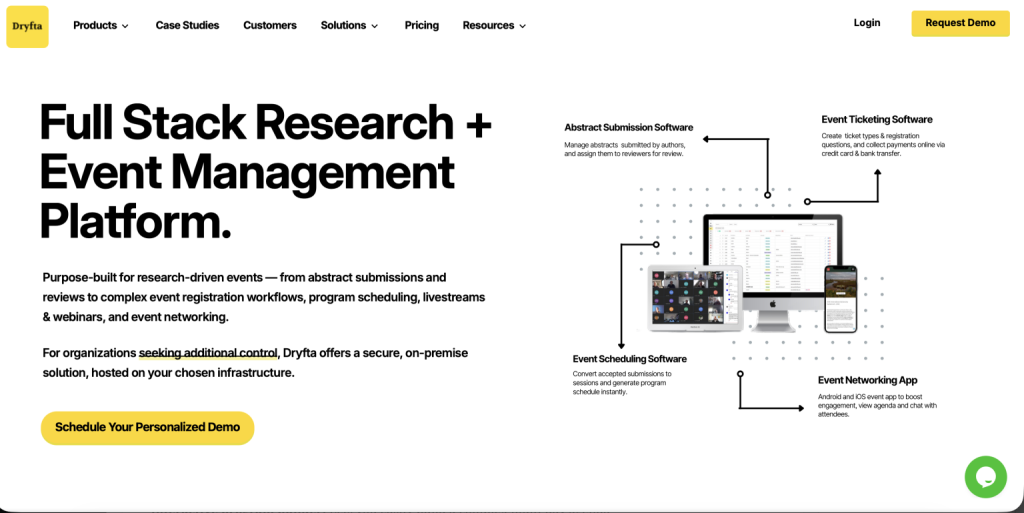
Dryfta is an end-to-end Ex Ordo alternative platform that offers academic conference organizers the ability to manage registration, engagement, and overall event operations in one unified platform. It reduces tool switching and manual coordination without any interruptions. Dryfta offers a vast range of built-in features that cover the full academic event lifecycle without any confusion. Some of the core attributes where Dryfta leads are:

  • All-in-one academic conference management

Dryfta is a unique all-in-one academic events management platform that combines the main functions organizers primarily need to host an event. Instead of different tools for submissions, registration, websites, scheduling, and communication. It provides a dedicated platform where everything related to the event is taken care of in one place. This frees up admin work and makes it simple to keep data consistent across departments.

  • Advanced abstract submission workflows

It supports advanced abstract submission workflows that are useful for the conference organizers to manage academic and scientific content with more control. They can structure submission forms, apply review at each stage, and collect the information required for different session types or conference tracks.

This is highly helpful for events to handle posters, papers, entries, and presentations. It is also useful for the organizing team to decrease the clutter and maintain a cleaner, more organized abstract submission process.

  • Integrated peer review management

Dryfta consists of integrated peer review management that makes it easier to assign reviewers, collect feedback, and track decisions inside the same system. Ex Ordo also contains a painless peer review process, but it lacks several elements.

Dryfta offers the event organizers the opportunity to not get dependent on separate review tools or extra manual spreadsheets. It focuses on improving visibility for program chairs and helps reviewers move through their tasks more smoothly. It also has a consistent peer review process that promises to deliver a great experience for academic events without any bias and 100% fairness.

  • Registration and ticketing system included

Dryfta offers a flexible event registration and ticketing system, which simplifies the event sign-ups without any hassles. It assists the event organizers in handling ticket types, pricing, and attendee categories from the same dashboard.

It also carefully mitigates errors that usually occur when registration data is available in a separate system. For the growing needs of academic conferences, Dryfta is the best connection that saves time and improves overall attendee experience.

  • Conference website builder

Dryfta offers a dedicated conference website builder that is useful for the event management teams to create event pages without heavily relying on outside web tools. Event organizers can present sessions, registration details, speakers, and important announcements in one public-facing space. This makes it simpler to keep conference information up-to-date and aligned with the event’s branding.

  • Compatible hybrid and virtual conference

Dryfta offers a ready-to-use hybrid and virtual conference format, which is important for academic conferences that serve both in-person and remote audiences. This system is useful for event organizers to extend reach and participation beyond the real venue.

The audience, irrespective of their geographical location, can attend the event and stay connected. This matters for academic conferences that want wider access, higher attendance, and more flexible participation options. It helps academic conference event hosting teams to adapt to the changing event expectations more easily.

  • Speaker and session management

Dryfta has features with easy-to-navigate and use speaker and session management tools. This aids the event management organizers in structuring agendas and coordinating presentation details without any delays.

They can also manage speaker profiles, session assignments, and program structures from a single system rather than juggling between different documents. This makes it simple to keep event scheduling highly accurate and update information whenever there are any changes. This also boosts the communication with presenters and session chairs.

  • Automated customization and communication workflows

When a conference has particular academic, institutional, or review criteria, Dryfta gives the organizers improved customization and communication workflows adaptability. Teams get to modify forms, notifications, approval procedures, and content flows to align with the event’s workflow. For organizers who prefer a flexible, one-size-fits-all approach, it is highly beneficial.

Dryfta also helps to facilitate automatic communication procedures that make it easier for organizers to send event announcements, status updates, and reminders.

This minimizes tedious administrative tasks and provides timely information to authors, reviewers, presenters, and attendees. The automated communication eliminates the need for manual follow-up and increases consistency. It also reduces the likelihood of missing communication and saves time.

  • Best for scientific and professional conferences

Dryfta provides the most structured procedures that are essential for scientific and professional events. These conferences usually require scheduling, abstract processing, peer review, and attendee management on the same platform and Dryfta has them all. Educational institutions, universities, associations, and research groups find it useful because it ensures that professional events are smooth and well-organized.

  • Full lifecycle conference management

Planning, submissions, reviews, registration, scheduling, engagement, and follow-up are all covered by Dryfta’s comprehensive conference lifecycle management. It eliminates the need for the event organizers to switch between multiple platforms during the whole event process. It offers cleaner and more insightful data with its advanced analytics, better coordination, and fewer delays. Additionally, it provides teams with a more robust operational base for regular meetings.

  • Affordable alternative for growing conferences

Whenever an event organizer thinks about cost-saving, they should think about only Dryfta. It offers a perfect blend of features within a single integrated platform. It is the most affordable option among the Ex Ordo competitors.

It requires fewer expenses to get additional software add-ons. This efficiency becomes especially important for event organizers, as the demand for small academic meetings grows to larger annual conferences. Furthermore, it consists of all the essential features within a single system, and budgeting becomes simpler.

How Dryfta Helps Academic Conference Organizers?

Dryfta

Dryfta assists academic conference organizers not just as a platform but as a reliable partner. It makes it easier for conference organizers to handle complicated academic events from inception to execution by minimizing the need for back-and-forth between various technologies. Below are some of the main elements where it extends its assistance to the academic conference organizers:

  • Automates abstract submission, reviewer workflows, reminders and notifications

Dryfta automates abstract submission, reviewer workflows, reminders, notifications, and many other elements so event organizers can easily collect submissions, organize, and move into review without manual sorting. It also helps them to keep authors, reviewers, and attendees informed without sending every message manually. This is useful for them to save valuable and productive time, especially during high-volume conference seasons, reduce missed deadlines, and make communication feel timely, consistent, and accurate.

  • Simplifies reviewer assignment, scoring, proceedings and certificate generation

Dryfta simplifies reviewer assignment, scoring, proceedings, and certificate generation with its simple yet advanced tools. Academic conference organizers can route submissions to the appropriate reviewers, collect structured feedback, move accepted content into final event outputs, and do everything in a systematic format without missing.

This eases the process of review management, especially for chairs, and creates a more consistent scoring process for each abstract or paper. It also cuts down a lot of post-event work that makes it simpler to deliver a flawless academic record for participants.

  • Integrates registration, scheduling, and agenda management

Registration, scheduling, and agenda management are all integrated in the Dryfta software. This allows both organizers and participants to utilize the same event structure. This facilitates the alignment of program updates, session schedules, and data delegation as the conference progresses.

  • Supports sponsor and exhibitor management with hybrid and virtual conference experiences

Dryfta supports sponsor and exhibitor management with hybrid and virtual conference experiences. This is useful for the organizers to manage commercial partners alongside the academic program. This allows them to host the academic conference for both onsite and remote audiences.

This helps the conferences that need a structured way to handle sponsorship packages, exhibitor visibility, and partner communication. It also increases the reach to global audience while keeping sessions, speakers, and attendees connected in one environment.

  • Provides customizable conference websites

This platform offers customizable conference websites so the academic conference organizers can present the conference with a branded, professional look. They can use the site to share schedules, registration details, speaker information, and important announcements without relying on separate web tools.

  • Enables real-time submission and review tracking

Dryfta enables real-time submission and review tracking so academic conference organizers can see progress as submitted abstracts move through each stage. This visibility helps teams to identify delays early and respond before deadlines become a major issue.

  • Reduces manual operational workload

It completely eliminates the need for manual operational workload by centralizing the core tasks that usually get spread across spreadsheets, emails, and separate software. This gives academic conference teams more time to focus on speaker support, attendee experience, and program quality.

  • Improves collaboration between organizers, reviewers, and authors

Dryfta enhances the collaboration between organizers, reviewers, and authors by keeping key workflows connected. This makes it easier for each group to stay informed, submit updates, and respond to the next step without any confusion because all the details will be displayed in one place.

  • Scales easily for international conferences and symposiums

Dryfta scales easily for international conferences and symposiums because it can support small university academic conferences as well as larger global academic meetings. This flexibility makes it a practical option for academic conference organizers who are looking for a single platform that helps to grow their event portfolio.

Best Ex Ordo Alternatives for Small Academic Conferences

There are some Ex Ordo alternatives for small academic conferences that offer one of the best solutions that boost the overall conference’s brand value. A few of them are:

Ex Ordo Alternatives for Small Academic Conferences

How to Migrate from Ex Ordo to Another Conference Platform?

Migrating from Ex Ordo to another conference platform involves exporting the data from Ex Ordo and importing it to another conference platform. A successful migration also includes testing integrations, training users, and ensuring that submission, review, registration, and communication processes continue without any disturbances.

  • Exporting abstract and attendee data

The academic conference organizers must begin by exporting all abstracts, attendee records, and submission metadata from Ex Ordo in CSV or spreadsheet format to easily map the data into the new platform. Ex Ordo already supports exports for panel and conference information. Organizers can use this and move core content out of the system in a structured way.

  • Migrating reviewer assignments

Reviewer assignments must be carefully migrated because each platform handles reviewer roles, topic matching, and scoring logic a little differently. Before migrating, consider taking a backup of who reviewed what and what stage each submission reached.

Rebuild those assignments in the new platform and test a few sample submissions to confirm that reviewers see the right tasks. This minimizes confusion and keeps the review cycle moving without delays.

  • Importing author information

Export author profiles, affiliations, email addresses, and submission history, so getting complete author records into the new platform becomes easier. Ex Ordo supports final submission workflows and structured content handling.

Here, organizers can extract the data they require before moving systems. Match each field carefully during import, especially when the new platform uses different naming or formatting rules. Clean author data helps to avoid duplicated entries and broken communication.

  • Transferring conference schedules

Move the conference schedule by exporting session titles, times, tracks, and speaker assignments from Ex Ordo into a format for the new platform. Ex Ordo has a program builder and session assignment tools that structure presentations into sessions.

This can be used for migration. Recreate the schedule on the new platform and compare it with the old one to catch any missing sessions or time conflicts. This keeps the agenda accurate for both organizers and attendees.

  • Registration migration workflows

Rebuild the registration workflows in the new platform by copying ticket types, attendee categories, and payment settings from Ex Ordo. This platform combines conference management with registration and related content workflows. These can be mapped carefully before switching over. Test each registration path, especially early-bird pricing, discounts, and confirmation emails. This is useful for avoiding registration errors during the transition.

  • Review process set up

Set up a new review process by defining submission stages, review criteria, scoring rules, and decision statuses before importing live work. Ex Ordo’s conference workflow documentation shows that review and program stages follow a structured process. Ask the reviewers to test the new workflow with sample abstracts. A smooth review setup helps to meet the deadlines and prevents confusion once the migration starts.

  • Organizer onboarding and training

Train organizers early, so they understand the new dashboard, review tools, scheduling screens, and registration settings before launch day. Good onboarding reduces the risk of errors because the event organizing team learns the new workflows before they need to use them under pressure. Use short live demos, role-based walkthroughs, and a simple migration checklist. This approach helps the teams to switch platforms with less stress.

  • Communicating changes to authors and reviewers

Send clear communication to authors and reviewers as soon as you confirm the migration timeline, because people need to know where to submit, review, and track status. Explain what changes, what stays the same, and what action they need to take so they do not miss deadlines or assume the old platform still works.

Use reminder emails and FAQ updates to reduce support questions during the transition. Clear communication builds reliability and keeps the migration from disrupting participation.

  • Testing workflows before launch

Test every major workflow before launch, including submissions, reviews, registration, session assignment, and confirmation emails. Ex Ordo’s structured workflows give a clear benchmark. This is often helpful to verify each equivalent process that works correctly in the new platform.

Run test cases with sample users from different roles to confirm that permissions and notifications behave the way one expects. Careful testing catches small issues before they become a chaotic event-day problem.

  • Minimizing disruption during migration

Minimize disruption by migrating in phases, keeping a rollback plan ready, and avoiding last-minute changes close to submission or event deadlines. Use overlapping access windows only when necessary, and freeze edits briefly. Assign one internal lead to handle questions and one technical lead to manage data checks. This structure keeps the migration controlled and prevents confusion for authors, reviewers, and organizers.

The Winner of the best Ex Ordo alternatives

While both Dryfta and Ex Ordo offer great solutions for abstract management. Dryfta is an all-in-one platform with unique and event-friendly customization options. It majorly focuses on academic and scholarly events. This makes it the perfect choice for comprehensive and holistic academic event management.

Frequently Asked Questions About Ex Ordo Alternatives

What is the best alternative to Ex Ordo?

Dryfta is a good option, with transparent pricing and strong peer review workflows. Conference organizers who need abstract management alongside a comprehensive attendee experience for them, Dryfta is a top pick.

Which Ex Ordo alternative is best for academic conferences?

Dryfta is best for academic conferences. It fits academic and professional conferences well because it reduces the need to stitch together many separate tools. Whether it is a vaster conference management or a more focused scholarly workflow, Dryfta covers them all.

Is there a cheaper alternative to Ex Ordo?

Yes absolutely. Microsoft CMT is one Ex Ordo alternative platform that is completely free for public use but it has very limited features. Dryfta is the most cost-effective for growing academic conferences’ needs, because it combines many functions in one platform instead of buying separate tools. Dryfta also offers free trials and charges a nominal price that starts from $1499/year. 

Which platform is best for peer review management?

Fourwaves and Dryfta are considered the best for peer review management, but EasyChair and OpenConf usually feel the most lightweight and review-focused. However, Fourwaves and Dryfta give a more polished academic workflow with stronger submission and reviewer management.

Dryfta peer review management handles the full submission and review cycle. The best option depends on the needs of the academic event, and review depth or all-in-one convenience.

Which conference management software is best for hybrid events?

Dryfta, Fourwaves, and Oxford Abstracts are the best choices for hybrid academic events because they support workflows that are well aligned with academic needs. They also handle virtual or remote participation.

If you want more event engagement and mobile-friendly participation, Dryfta and Fourwaves usually feel more complete for hybrid academic conferences. For most academic event organizing teams, the best hybrid platform is the one that lets attendees join sessions, follow the agenda, and stay engaged without extra tools.

Published by

Ameena Bibi

Ameena Bibi focuses on event execution, attendee communication, and digital solutions that support successful conferences and meetings.