Conflict management is perhaps the single most valuable skill that any professional leader can develop. This is particularly relevant in the event management space, which is prone to several different kinds of conflicts. Managing conflicts is never about allowing them to arise at all, no.
It is inevitable for conflicts to arise in the workplace. In fact, healthy conflicts and their subsequent resolution are even encouraged. The scale of what unmanaged conflict can cost your workplace makes conflict management impossible to dismiss as simply another interpersonal aspect of work.
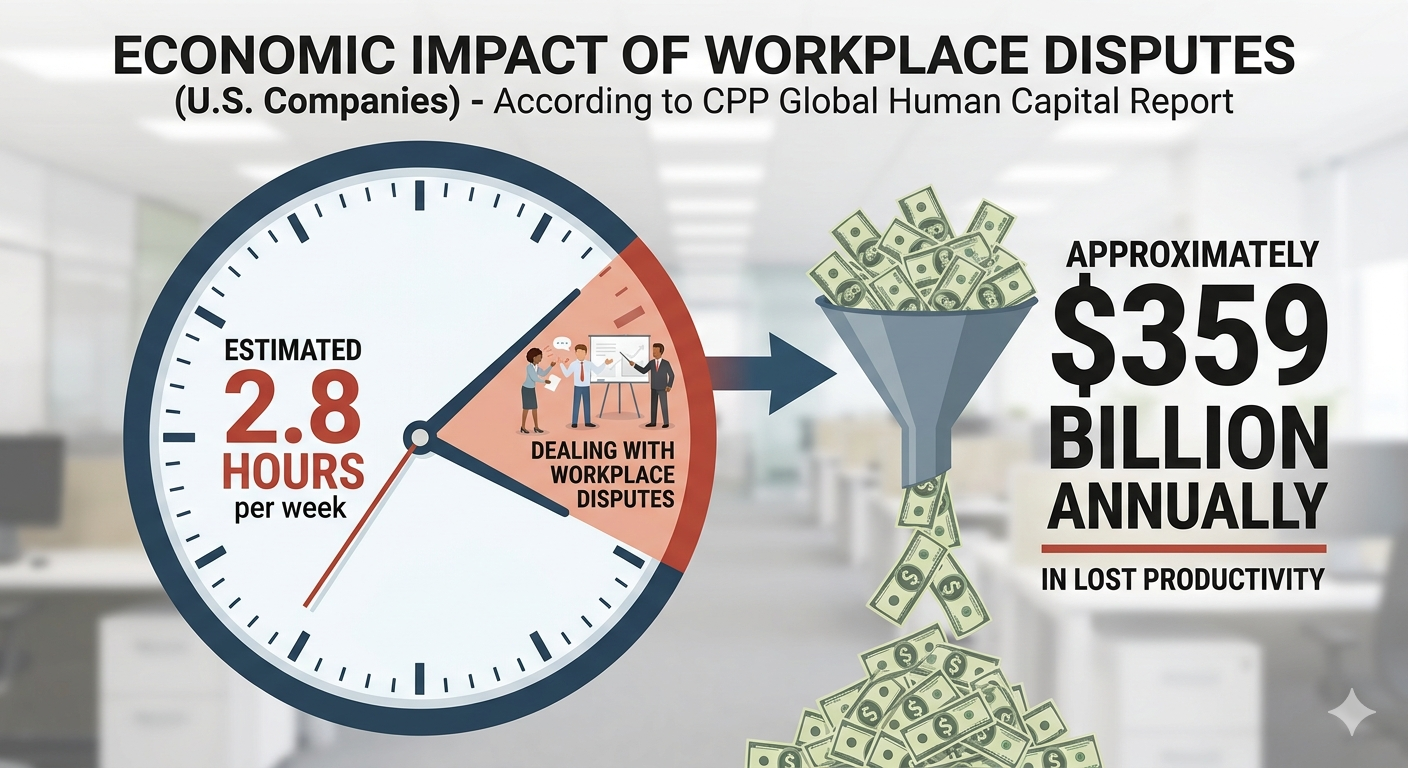
According to the CPP Global Human Capital Report, employees in U.S. companies spend an estimated 2.8 hours per week dealing with workplace disputes. This then converts into what is approximately $359 billion annually in lost productivity. Despite this, the Workplace Peace Institute’s 2024 survey found that 72% of organizations either lack a formal conflict resolution policy or their employees are unaware one exists.
What is Conflict Management?
Conflict, in the context of workplaces, can point at any differences in opinion pertaining to some function at work. This can include conflict with fellow colleagues, peers or even the larger workplace culture. Conflict management, on the other hand, is what it takes to resolve said conflicts that crop up in the workplace.
It is the process of identifying, scrutinizing and proposing ways to aptly resolve any and all disagreements between individuals or groups. An important aspect of conflict management is also to ensure that it is fair, unbiased and in alignment with the organization’s values and ideals.
In this blog, especially for team leaders, event managers and professionals, we’re taking you down the often less trodden path of conflict management and what it means for modern workplaces in 2026.
Types of Conflict in Event Teams
Before a workplace begins to work on conflict resolution, the fundamental step is to correctly identify them. It is easy for conflict to be dismissed as mundane disagreements or differences in thought, opinion or action. However, it is important for workplaces in 2026 to realize that a conflict left unattended can damage a company’s positive indicators.
There are several different types of identifiable conflicts. Each of them demand some largely different approaches in conflict resolution. Some types of conflict in the workplace include, but are not limited to the following:
-
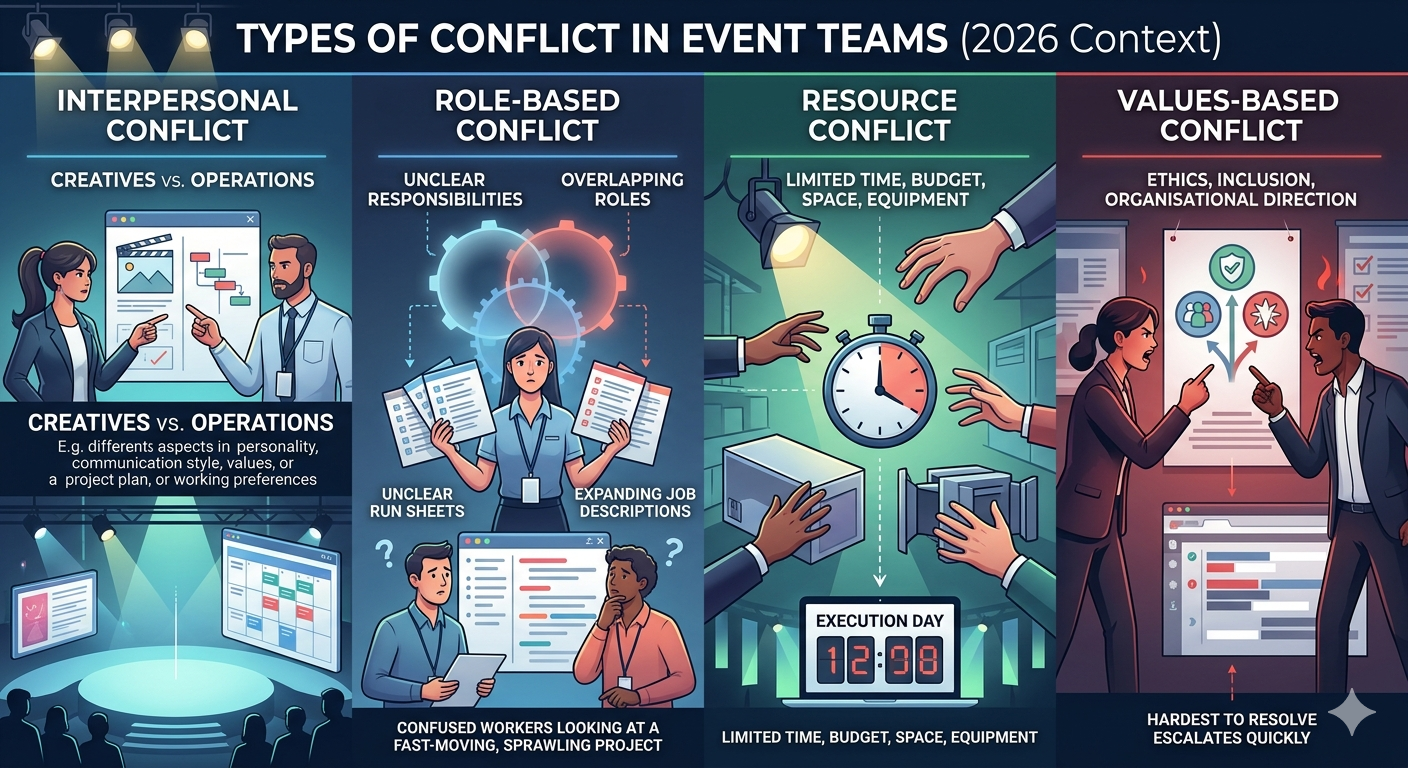
- Interpersonal conflict: The most common type of conflict to crop up in workplaces and event organizations. It arises from differences in personality, communication style, values or working preferences between individuals. In event teams, this often manifests between creatives and operations staff, or between vendors and in-house coordinators who have competing definitions of what ‘on time’ means.
- Role-based conflict: Such conflicts emerge when work responsibilities are unclear or overlap. In fast-moving event environments where job descriptions expand and contract with each project, this type of team conflict is particularly common and particularly easy to prevent with clear briefing documents and run sheets.
- Resource conflict: When teams compete for limited time, budget, space or equipment, resource conflict follows. The closer an event gets to execution day, the more acute this type of workplace dispute becomes.
- Values-based conflict: When individuals disagree not about what to do but about what is fundamentally right, in terms of ethics, inclusion or organisational direction, this type of conflict arises. It is also one of the hardest types of conflict to resolve. Values-based conflict also has a propensity to escalate quickly if not attended to. The resolution process herein needs more than a conversation between the parties involved.
Conflict Management Strategies That Pay Off
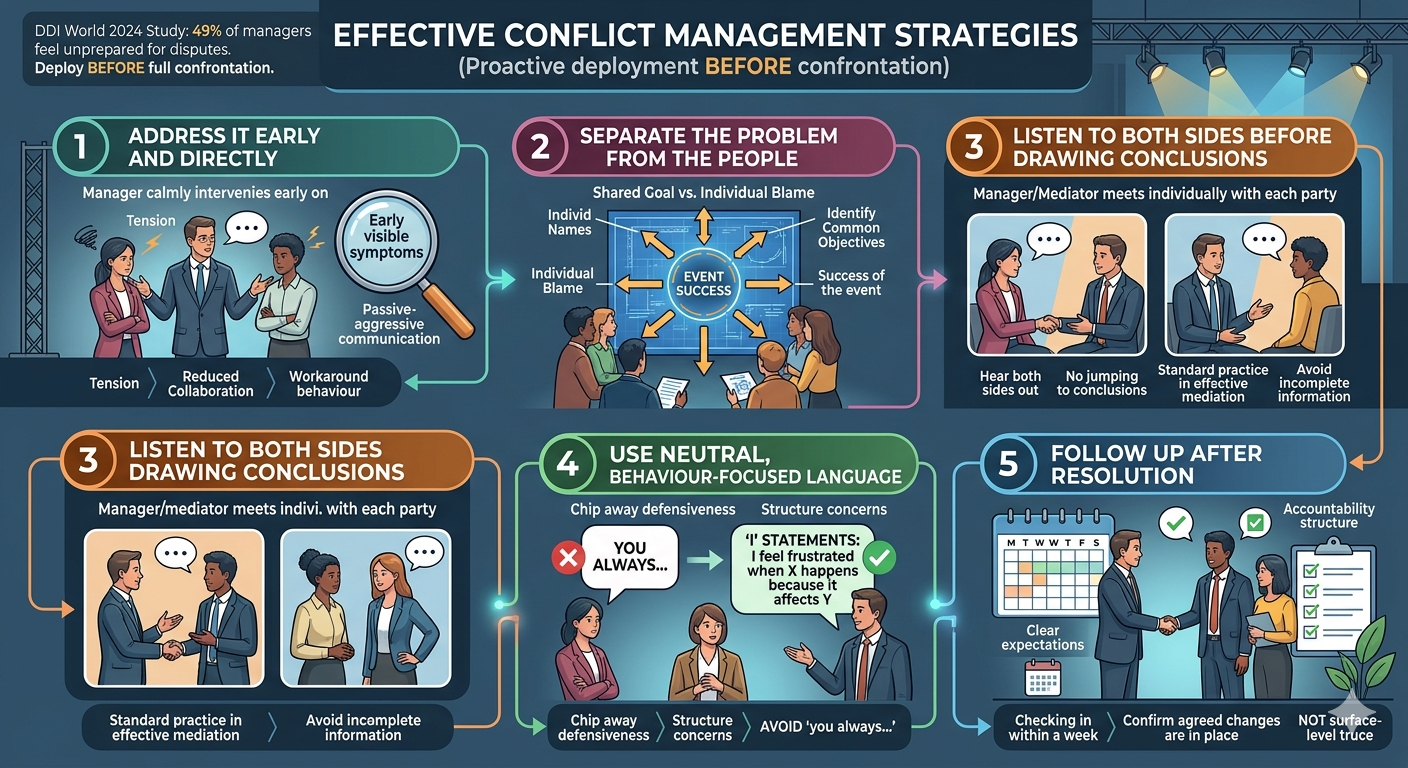
The most effective conflict management strategies share one characteristic: they are deployed before a dispute has become a full confrontation. The research is unambiguous on this point. 49% of managers report feeling unprepared to handle workplace disputes, according to DDI World’s 2024 Leadership Insights study.
Here are some useful conflict management strategies to employ when resolving a conflict at your workplace or event organization:
Address it early and directly: Address it early and directly for passive-aggressive communication, silence and workaround behaviour are the visible symptoms of a conflict that has already been avoided for too long. Pay attention to tension, reduced collaboration and any changes in existing team dynamics or camaraderie.
Separate the problem from the people: The most durable resolution is one that frames the dispute around a shared goal rather than around individual blame. It is recommended to identify common objectives as the first move in any facilitated discussion, because shared goals give both parties a reason to want the same outcome. This is especially true in event management, where the success of the event is a goal that nobody on a professional team wants to compromise.
Listen to both sides before drawing any conclusions: Hear both sides out before jumping to any or taking action. Meeting individually with each party before bringing them together is standard practice in effective mediation. Any assumptions that you make on the basis of incomplete information will just multiply the problem.
Use neutral, behaviour-focused language: The ‘I’ statement approach where one structures concerns as ‘I feel frustrated when X happens because it affects Y’ rather than ‘you always do Z’, can help chip away the defensiveness that derails resolution conversations.
Follow up after resolution: An agreement reached in a mediation session is only as good as the accountability structure that follows it. Setting clear expectations, checking in within a week and confirming that the agreed changes are actually in place is what separates a sturdy resolution from a surface-level truce that barely withholds.
The Takeaway
Conflict is not the ultimate problem. Rather, conflict that is not attended to is the larger problem draining the morale out of workplaces. Avoiding conflict is the larger issue in 2026. If you build teams that are capable of picking up on any friction early and then communicate clearly, investing in handling interpersonal conflict constructively, your workplace is on the right path.
Do not just aim to resolve disputes faster, like they never arose in the first place. Healthy conflicts, when resolved amicably can produce better work, retain staff longer and build trust. If you are managing a fifteen-person event crew in the final week of production or a cross-functional corporate team spread across three time zones, the same kind of conflict management principles apply: address it early, listen without bias, focus on shared goals and follow through.
Manage Your Events With Less Conflict and More
If your event team is spending more time managing interpersonal conflict than managing your events, Dryfta is built to help. Dryfta is an all-in-one event management platform that eliminates the ambiguity that comes with unclear roles, miscommunicated run sheets, and duplicated responsibilities.
These are what trigger most team conflicts in the first place, and our software has been developed with just that in mind. With centralized communication, transparent task management and real-time collaboration tools, Dryfta gives every team member the same information at the same time. Sign up for a free demo today and find out what your events look like when the team is genuinely thriving, conflict-free.
Frequently Asked Questions (FAQs)
What causes most workplace conflicts?
According to the Myers-Briggs Company, 49% of workplace disputes stem from personality clashes and ego-driven behaviour. Role ambiguity accounts for approximately 22% of conflicts, and differing values contribute to around 18%. In event planning and high-pressure environments specifically, miscommunication around responsibilities, budget constraints and deadline pressure are the most frequent triggers of interpersonal conflict between team members.
What conflict management skills should every event manager have?
Event managers benefit most from active listening, emotional intelligence, clear and neutral communication, and the ability to separate people from the problem. The capacity to intervene early before a workplace dispute hardens into something much more complicated is an important skill. De-escalation techniques, the ability to mediate impartially and comfort with delivering difficult feedback calmly are also skills that pay dividends across every stage of the event planning process.
When should a conflict be escalated to HR or senior leadership?
A conflict should be escalated when it involves allegations of harassment, discrimination or misconduct, when a manager is directly implicated and cannot act as a neutral party, or when repeated mediation attempts have failed. According to Passivesecrets (2026), 88% of employees who experienced serious workplace conflict said HR got involved. For event teams, any dispute that threatens the timeline, safety or core deliverables of an event warrants immediate escalation.