


According to a study, the online event ticketing market is set for steady growth, projected to reach $69.25 billion by 2029 at a compound annual growth rate of 6.7%. That number says one thing very clearly: digital ticketing has evolved from being something nice to have to the heart of today’s events.
As people continue to demand more efficient ways to access events, manual registration and paper-based entry will be seen as outdated. Today’s events require more than just an easy way to take money; they need an integrated solution that securely manages information while providing real-time field metrics.
In this blog, we will discuss why implementing a robust ticketing system is the most critical decision an event organizer can make to achieve better scalability, stronger security, and a higher-quality guest experience in an increasingly competitive environment.
What is an Event Ticketing Platform?
Consider event ticketing platforms as an online box office that does the heavy lifting on your behalf. You do not need to manually track names or work with cash. All you need to do is create a web page where visitors may purchase tickets or register. The system will then send them a digital ticket (typically a QR code) once they have made the payment via secure transaction. It also provides a clear record of who has bought what. When the event starts, just scan their phones at the door to check your guests in.
Digital ticketing benefits apply at all stages of an event, streamlining operations and making them more predictable.
Before the event, the platform will manage registration and process payment for your tickets. It will also send automatic confirmation emails to attendees once they have completed their transaction. Furthermore, the system will track who is attempting to enter your event venue in real time and let organizers view a report on the event’s performance, with options to adjust pricing strategies.
These digital ticketing benefits eventually enable organizers to have clearer and data-driven confidence in planning future events.
Digital Ticketing Benefits for Modern Events
The following sections highlight how digital ticketing benefits each stage of event execution.
Streamlining Event Operations With Automation
The shift to automated ticketing changes how events operate at a fundamental level, turning manual, time-consuming processes into a systemized and effective one. Organizers no longer have to work with disorganized information. After the setup is in place, the platform handles registrations, payments and confirmations on its own. This is one of the most significant digital ticketing benefits in modern event planning.
Automation also minimizes errors that happen with manual handling. Crises such as incorrect entries, duplication, or payment defaults are much rarer when operations are centralized.
To add to that, real-time data synchronization will keep attendee information up to date across all touchpoints. This, in turn, will make operations more reliable, another obvious example of digital ticketing benefits that directly impact event execution.
Faster Event Entry and Check-in
Digital check-in tools have completely changed how entry management works, replacing slow manual guest list checks with a faster, automated process. Organizers avoid delays from searching through printed lists or checking details one by one, since QR code scanning lets attendees check in within seconds. This is one of the most visible digital ticketing benefits during live events.
Here’s what you get:
-
- Faster entry flow that keeps queues short and avoids congestion during peak arrival windows
- Lower staffing pressure at entry points
- Live visibility into attendance patterns
- A smoother and more professional check-in experience that reflects strong event organization
- Stronger access control that blocks duplicate or invalid digital tickets from being used across the venue
Track Insights in Real Time
Gone are the days of waiting for post-event reports to understand event success; instead, every ticket purchase and attendee scan registers instantly. Such visibility alters decision-making, particularly when time is of the essence. One of the most practical digital ticketing benefits is the ability to act on live data rather than guess based on assumptions.
Digital ticketing benefits you can expect:
-
- Live monitoring of event ticket sales in regions, channels, and audience segments
- Clear visibility into which campaigns are performing well and which ones need adjustment
- Faster decision-making when registrations slow down or when some groups are underrepresented
- Better staff allocation based on actual footfall rather than rough estimates
- A more controlled environment where issues get handled before they grow out of control
Increase Sales and Reach More People
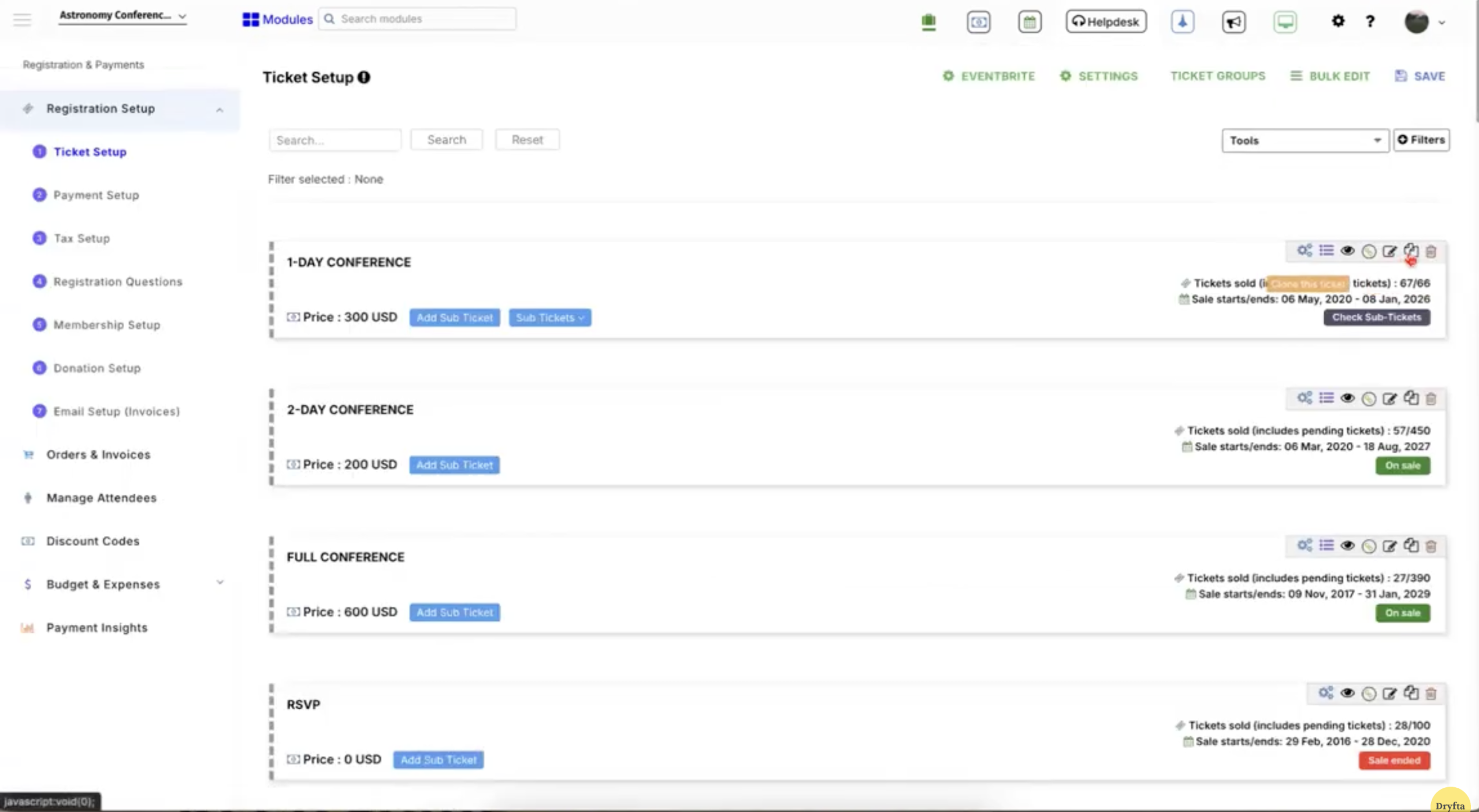
The role of pricing strategy is larger than most teams would assume. Tiered pricing creates urgency at the initial stage, particularly when early-bird deals encourage people to make a decision sooner rather than later. Also, organizers can introduce VIP tiers or group pricing without having to make manual adjustments.
What this supports:
-
- Organic promotion when attendees share digital tickets within their networks
- Improved coverage of niche communities without using paid campaigns
- Versatile ticket levels that serve various audience groups
- Automated price adjustments that respond to demand
Stronger Security and Fraud Protection
Digital ticketing systems offer stronger security than paper-based systems because each digital ticket contains an encrypted code for each attendee. These encrypted codes help prevent fraudulent event ticket sales and multiple attempts to buy tickets for an event (since each is tied to a single person).
Additionally, secure payment processing is handled via PCI compliant gateways, which protect sensitive transactional information for all users who make online payments.
Choosing the Right Event Ticketing System
Choosing an appropriate event registration tool from all of the available options can be overwhelming. Consider these questions when evaluating potential platforms:
Is it easy to use?
The platform should be easy to use for both event organizers and attendees. The complicated checkout procedure will lead to higher cart abandonment, and the complex backend will slow down daily operations.
Does it provide the features you require?
Begin with your needs, be it fundraising tools, volunteer management, or customizable event pages. The platform must align with your objectives without forcing you to compromise.
Can it grow with you?
A minor incident can escalate rapidly. Therefore, the system must be able to handle both low and high attendance volumes without affecting the process.
Are pricing and fees clearly disclosed?
You need to know exactly what the platform costs. For instance, is it based on per-ticket fees, a percentage of total revenue or a subscription? Knowing this before adopting an event ticketing software allows you to budget accordingly and avoid unexpected expenses.
Dryfta as an Event Ticketing Platform
-
- Payments go directly into your bank account, removing the usual requirement to use third-party ticketing systems, and provide full control of your earnings from the moment a transaction is complete.
- Dryfta does not take a percentage of your event ticket sales if you use your own payment gateway. This means you can maintain your profit margin and avoid hidden fees deducted from your earnings.
- You can create a variety of ticket types (for example, registrations, memberships, workshops, sponsorships and donations), set start/end dates for each type, group tickets by category and restrict access to certain ticket types based on how structured your event is.
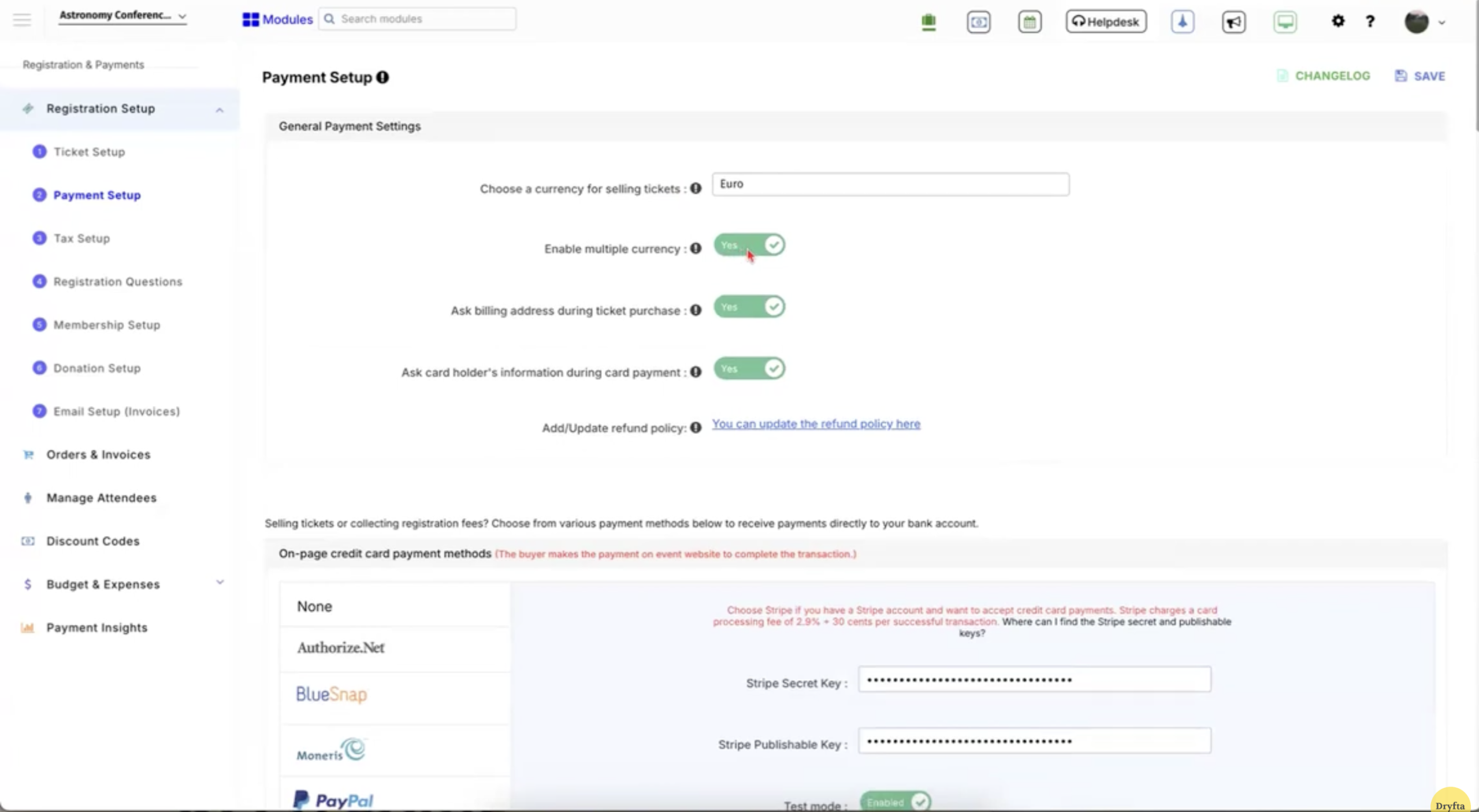
- Dryfta supports both online and offline payments (credit cards, PayPal, Bank Transfers, Pay at Venue) as well as multi-currency support and can configure VAT requirements if necessary.
-
- With registration forms, you can gather attendee information using an unlimited number of questions with conditional logic.
- Digital tickets can be sold directly through your event’s website or embedded on other websites. In addition, Dryfta offers features such as multi-ticket purchasing and auto-fill for logged-in users.
- In-built order management lets you track payments, update offline orders, automatically generate invoices and export data.
The Bottom line
Event ticketing tools have a dramatic effect on how an event runs from start to finish. The purpose of using event ticketing platforms is to enable rapid registration, easy payment, and an easy-to-use scan-and-go check-in at your event venue. Using the proper event ticketing platform or online event ticketing platform will make this process easier than ever and reduce the manual time you or your staff spend.
Start with a tool that fits what you need today, but can still handle growth when your audience expands. Keep your audience type, pricing structure, compliance needs, and on-site flow in mind, and choose software that connects easily with your existing systems so your data stays consistent across everything you use.
Dryfta helps you manage ticketing, payments, and attendee data in one place without adding complexity. You stay in control while the system handles the heavy lifting behind the scenes. Book a free demo to see how Dryfta fits your next event.