Summit and conference are two words that are often used interchangeably. While the two share more similarities than differences, there are a few things that draw a clear distinction between them. In terms of the size of the event, the topic of focus and even the number of days, a summit and conference have unique strings attached to each of them.
Studies have shown that the market for customer experience and personalization software, which powers tools like AI matchmaking, is expected to reach about $11.6 billion by 2026. The growth rate demonstrates how attendees expect more intelligent, personalized experiences at large events such as academic conferences.
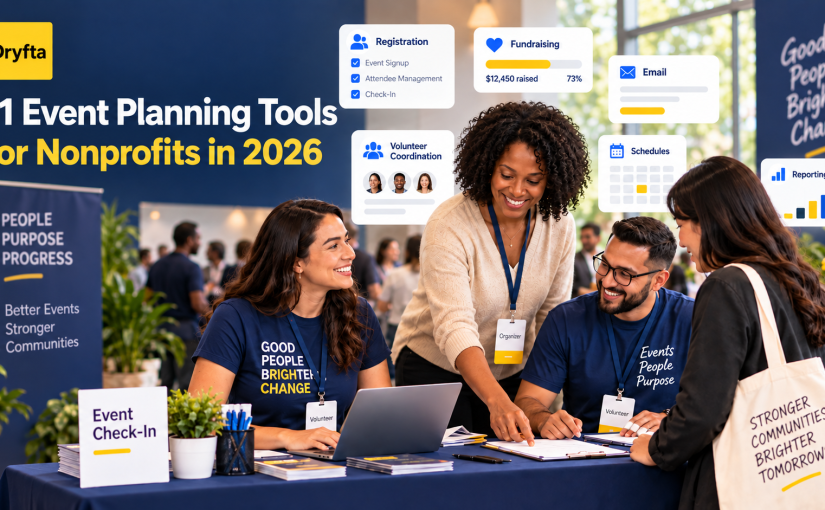
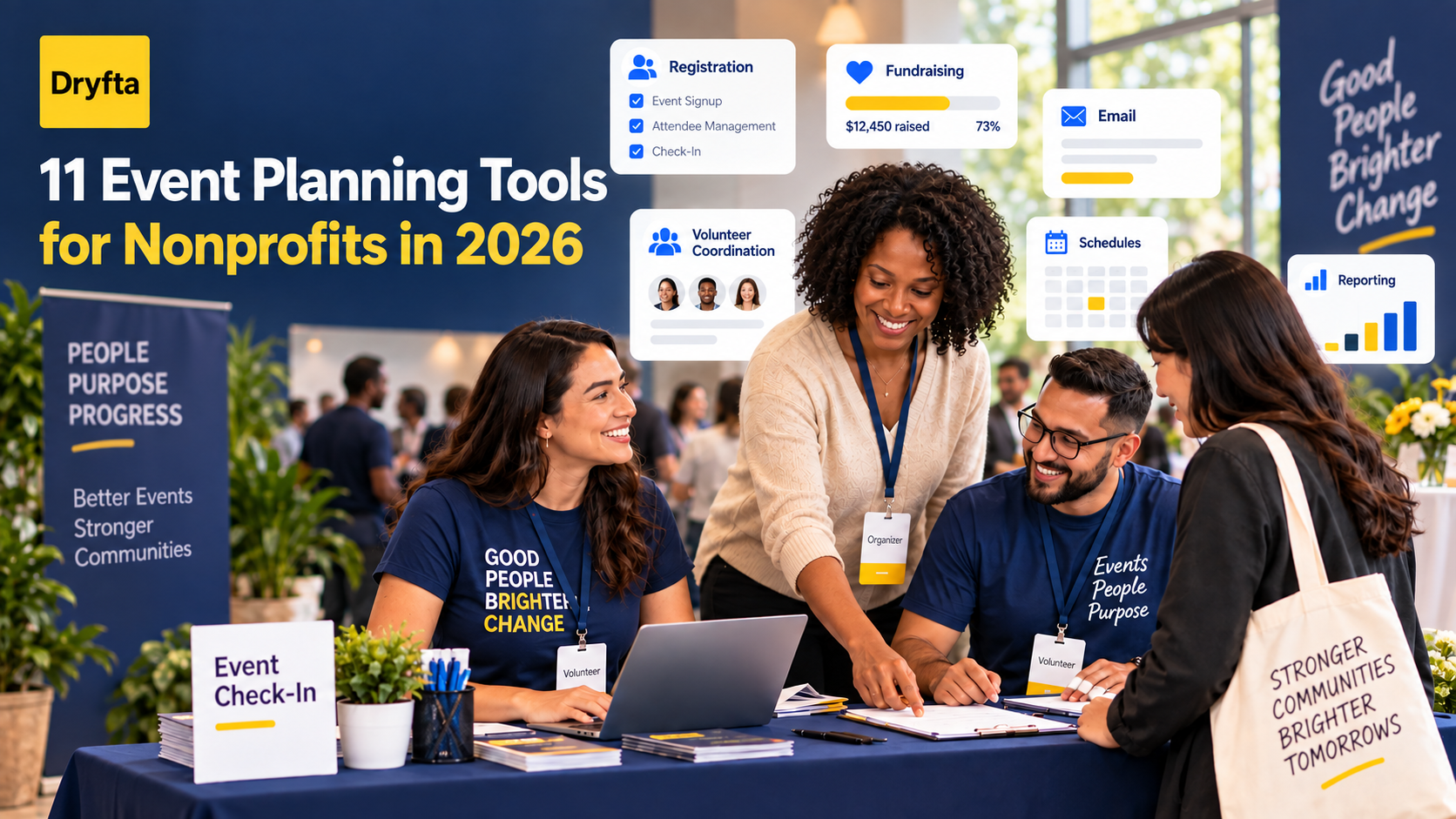
The best event planning tools for nonprofits are not always the products with the longest feature lists. They are the ones that fit the event, reduce manual work, protect supporter data, and leave more time for the mission behind it.
A fundraising gala, volunteer orientation, annual conference, and community workshop each create a different workload. One team may need ticketing and donations. Another needs abstract submissions, session schedules, certificates, and detailed attendance records. Before comparing brands, it helps to decide which jobs your technology must handle.
This guide compares 11 useful tools across the nonprofit event workflow. You will find options for project planning, design, email, fundraising, ticketing, volunteers, donor records, agendas, audience participation, virtual delivery, and connected event operations.
The central choice is not simply which tool has the most features. It is whether separate tools will stay simple or force your team to become the connection between them. That difference often decides whether an event feels manageable in its final weeks.
Editorial note: Dryfta publishes this guide and appears in the comparison. We reviewed official product and help information available on September 24, 2026. We assessed each tool for a specific job rather than declaring one product the winner in every situation. We did not run the same event on every platform. Features, nonprofit eligibility, pricing, and integrations can change, so confirm the details that affect your event before signing a contract.
A hybrid conference rarely fails because someone cannot switch on a livestream. It fails in the seams: a remote attendee cannot find the right session, the room moderator misses questions from the online audience, or a schedule change reaches the mobile app but not the stream page.
The best hybrid event platforms close those seams. They give onsite and remote attendees different routes into the event while keeping registration, schedules, speakers, communication, engagement, and reporting connected behind the scenes.
This guide compares six platforms by the kind of event each suits best, the hybrid workflows it handles well, pricing visibility, and the compromises buyers should examine before signing a contract.
Editorial disclosure: Dryfta publishes this guide and is one of the platforms compared. We reviewed vendors’ official product, support, and pricing pages on September 23, 2026. We have identified a best-fit use case and a tradeoff for every option instead of naming one universal winner. We have not run identical hands-on tests of all six platforms, so confirm critical features, limits, and costs in a written proposal and a workflow-based demo.
A great and damaging misconception about Customer Relationship Management (CRM), is that many believe that this is something that concerns conventional businesses. The commercial ones. The ones that you purchase from on a regular basis. Hardly does anyone think of customer relationship management when it comes to event management.
Today, a non-negotiable aspect of organizing an academic event is associated with what you do post-event. Yes, you read that right. Post-event. If you’ve signed up to be an event planner in this day and age, well, we’d like to warn you that there are clear boundaries. And perhaps no finish lines. It is a race that continues well after your event officially draws its curtains. Continue reading
Studies suggest that 45% of event planners work more than 50 hours per week during peak planning periods. For academic event organizers, the workload can become even heavier, as responsibilities extend beyond logistics to include abstract submissions, reviewer coordination, and communication with scholars. Adopting a CRM for event planners will help transition the event operations into a more organized workflow.
If you are comparing Cvent alternatives, the useful question is not which platform has the longest feature list. It is which one fits the events you run, the systems you already use, and the amount of setup your team can realistically manage.
Cvent covers a broad range of enterprise needs, including registration, attendee engagement, onsite check-in, badging, venue sourcing, travel, and event reporting. That breadth is valuable for some organizations. Others may need a platform with a narrower specialty, a different pricing model, or less operational overhead.
This guide compares eight Cvent competitors by best-fit use case, core event workflows, pricing visibility, and the questions a buyer should ask before switching.
Editorial disclosure: Dryfta publishes this guide and is one of the platforms compared below. To keep the comparison useful, we checked product and pricing information against vendors’ official pages on September 17, 2026, identified tradeoffs as well as strengths, and did not award a single “best overall” label. We have not run identical hands-on tests of every product. Features, limits, and prices can change, so confirm the final scope in a written proposal.
Event registration is a live data feed. Statista notes that about 328.77 million terabytes of data are generated daily. Every spike, drop-off and demographic detail in your registration flow is telling you something about how your event is landing with your audience. If you are a proactive organizer, you should be paying very close attention to this data. If not, you are seriously missing out.
Studies show that the average form abandonment rate reaches 67.8% when more than seven fields are required in a form. People may show strong interest after seeing a compelling theme or a respected keynote speaker. Yet somewhere between clicking “Register Now” and completing the final payment, many potential attendees disappear, leading to event registration drop-offs.
Everyone who has attended an academic conference has felt the weight of networking. You sit through two days of presentations, collect a dozen business cards, eat the complimentary pastries and leave feeling oddly disconnected. You spoke to people, yes. But did you actually network with them? Probably not.
The academic event industry has historically faced significant challenges, but the digital world has presented it with a wealth of opportunities. If the conference organizers are stuck between hosting an in-person and virtual conference, then a hybrid format is the perfect option they can choose. The concept of “hybrid” includes the combination of two or more different technologies or approaches.