



The abstract review is a cornerstone of academic conferences. It ensures the quality, relevance, and integrity of the content. An abstract review scoring matrix gives the academic conference organizers an easy way to evaluate submissions by setting the required standards. Instead of each reviewer depending solely on personal judgment. They get a clear set of instructions, which include criteria, a scoring scale, and a clear shared process. This keeps the review stage well-organized and much easier to manage, especially when there are a huge number of submissions.
An abstract review scoring matrix is an important process because it gives the conference team a practical system to understand and implement. This improves consistency, strengthens decisions, and keeps the review process manageable when submissions begin to pile up.
- Reviewer calibration across a large pool
If there are abstract scoring criteria for the conference, then it helps the reviewers to follow the same set of standards. This is very useful, especially when there is a large review pool, because people naturally interpret abstract quality in different ways. With clear abstract scoring criteria, reviewers stay aligned and produce scores that are easier to compare.
- Defensibility of decisions
A structured review scoring matrix gives program chairs a clear reason for each acceptance or rejection. When authors ask how decisions were made, there will be a defined process available instead of just relying on subjective judgment. This makes the review outcomes easier to explain and defend.
- Bias reduction
An abstract review scoring matrix keeps reviewers focused on the abstract only instead of personal preference or first impressions. This lowers the risk of inconsistent evaluation, especially when several reviewers review many submissions. This procedure reduces bias and maintains a more transparent and professional process.
The 7 Core Abstract Review Criteria — What They Are and How to Use Each
A well-crafted abstract review scoring matrix keeps reviewers to stay focused, reduces overlap, and makes it easier for chairs to compare scores across a large submission pool.
Reviewers should understand what each criterion measures, because only then they can evaluate one specific aspect of the submission. This includes a consistent scoring scale, and provide clear anchor descriptions to reduce interpretation differences.
To build a reliable evaluation process, you must define clearly what the reviewers are measuring. The following seven core abstract review criteria form the foundation of most academic conference abstract review evaluation process and help reviewers make objective, consistent, and defensible decisions.
1. Scientific Quality / Methodological Soundness
Scientific Quality / Methodological Soundness criterion mainly focuses on measuring the quality. It explains whether the work makes sense scientifically and the method supports the claim or not. Reviewers should ask if this approach is appropriate, the logic is sound, and the abstract shows credible results.
To operationalize it, score the strength of the method, evidence, or technical approach on a fixed scale such as 1 to 5. A common drawback is rewarding an interesting topic even when the method is weak. An example for anchor descriptions include – strong and transparent method with clear logic, and results that match the claims.
2. Originality / Novelty
Originality criterion measures how fresh and unique the idea, method, or finding feels. Reviewers should score whether the submission adds something new, extends existing work, or offers a meaningful new angle. To make it usable, define what low, medium, and high novelty is before the review period starts.
The most common pitfall is confusing novelty with quality. A submission can be original but still poorly executed. An example for anchor description is – introducing a new concept, dataset, framework, or interpretation, which challenges existing paradigms or opens entirely new avenues of inquiry.
3. Relevance to Conference Scope
Relevance checks whether the abstract rightly fits with the conference’s theme and audience. Reviewers should score how closely the submission matches the conference tracks, goals, or subject area. Operationally, this can work as a separate scored dimension that filters out-of-scope abstracts early.
The backlog in this is letting a strong abstract score well even when it belongs at a different event. An anchor description example for this can be directly supporting the conferences primary theme and intended audience.
4. Clarity and Presentation
This criterion measures how clearly the author writes and structures the abstract. The reviewers must consider a logical flow, concise language, and an easy-to-follow argument. To operationalize it, score readability, structure, and completeness should be given priority while keeping the focus on communication rather than just subject matter.
The most common drawback is blending writing quality with scientific value, which can distort the overall result. The example for anchor description is clear, well-organized, and easy to understand with instant and effective communication.
5. Significance / Potential Impact
Potential impact usually measures how important the work is to the particular field, practice, or audience. Here reviewers should consider whether the abstract suggests meaningful results, practical usages, or academic influence.
To score it accurately, define impact in the context of the conference, since significance looks different in clinical, engineering, and social science settings. The major drawback is overrating bold claims that do not get connected to real outcomes. An instance for anchor description includes, high chances of influencing research, practice, or future work.
6. Suitability for Presentation Format (Conference-Specific)
A conference-specific presentation format matters when there is a separate oral, poster, and lightning talk tracks. Reviewers should consider the scoring matrix related to the submission matches the format it will occupy, based on complexity, scope, and presentation style.
Operationally, this helps program chairs place strong abstracts in the right session type instead of forcing every submission. A common pitfall is ignoring format fit and only judging overall quality. An anchor description instance is – Suitable for the assigned presentation type, interactive audience discussion and session length.
7. Reviewer Confidence
This criterion does not score the abstract itself. It measures how confident the reviewer feels about the evaluation. Chairs can use it to flag borderline cases, low-detail reviews, or submissions that might require another opinion.
The major backlog is ignoring the actual assessment and assuming a high-confidence reviewer is always right, which can leads to bias. Anchor description example is that the reviewer is familiar with the specific methodologies and feels feel confident in this score.
The Complete Abstract Review Scoring Matrix Templates
After defining the abstract scoring criteria for the conference, you need a practical scoring template that helps reviewers to complete everything consistently.
There are a few challenges that come up when multiple reviewers evaluate abstracts, such as inconsistent scoring, personal bias, and difficulty comparing submissions fairly. It also shows how an abstract scoring matrix creates a more structured process, helps reviewers stay aligned, and makes final decisions easier to defend.
Conference organizers usually get benefitted with this approach because it improves consistency, saves time, and supports smoother review workflows. Various disciplines emphasize different priorities. Here are four distinct abstract review scoring matrix templates that are tailored for specific conference types.
TEMPLATE 1: Standard Academic Conference (General Sciences)
When To You Use This Template?
This abstract review scoring template is ideal for general scientific conferences, research symposiums, university undergraduate or postgraduate conferences, and multi-disciplinary academic meetings that do not need specialized clinical or technical weights.
Explaining the Criteria
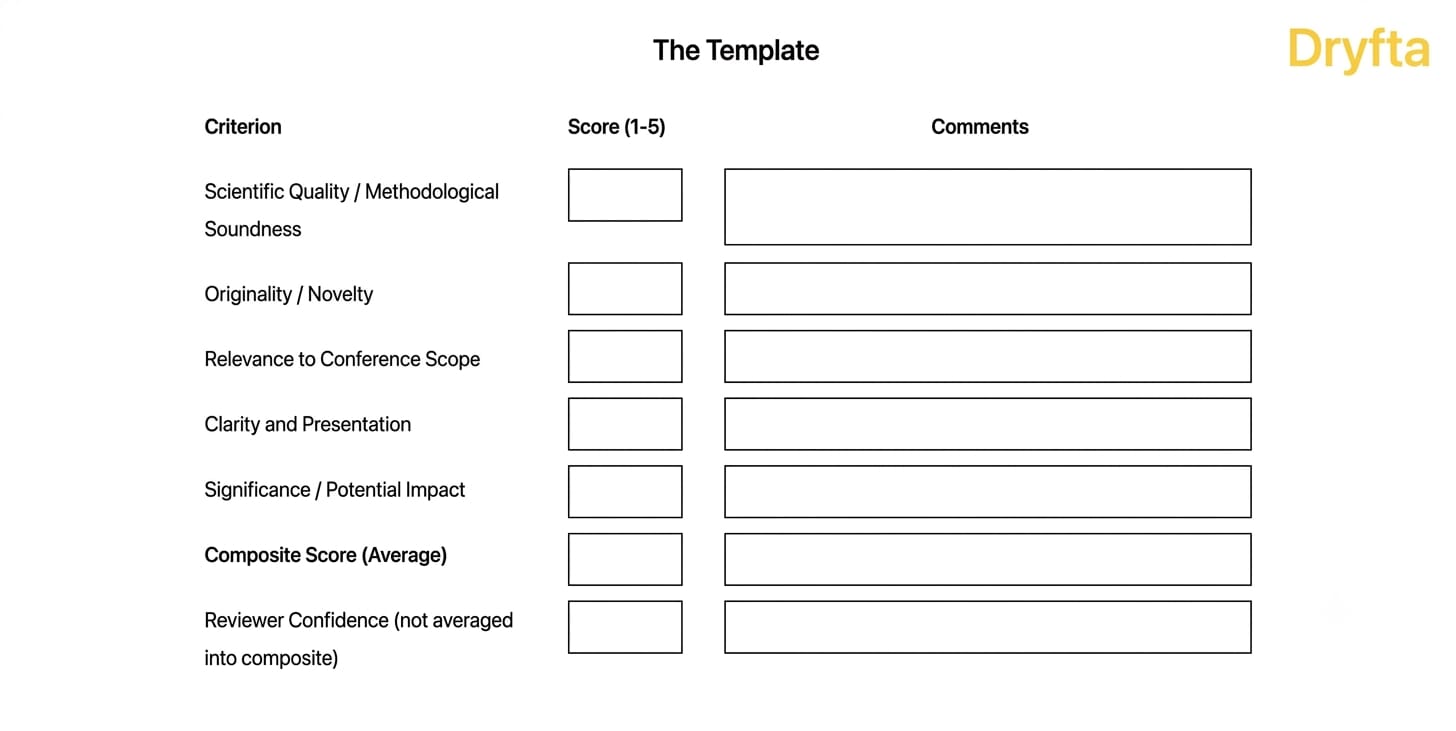
- Scientific Quality / Methodological Soundness
Clearly evaluates the research design, methods used, statistical validity, sample size, and logical conclusions. High scores usually denote strong methodologies with accurate analysis and reliable insights. Whereas, low scores reveal weak design or missing steps, which lack clear and unsupported conclusions.
- Originality / Novelty
Reviewers assess if the idea is actually new, whether it solves an existing problem, or extends previous research.
- Relevance to Conference Scope
This tracks whether it matches conference themes or not and is it suitable for the targeted audience and would attendees get any benefit from it.
- Clarity and Presentation
Reviews grammar, organization, readability, overall flow is logical, consist of clear presentation of objectives, and has well-written conclusions.
- Significance / Potential Impact
This pays attention to academic contribution, practical application with future-driven research value and its relevance with the industry standards.
- Composite Score
Calculated as the simple math average of all five primary criteria.

- Reviewer Confidence
Reviewer confidence shows how familiar the reviewer is with the topic, not how they scored the abstract. Use 5 for expert, 4 for very familiar, 3 for moderately familiar, 2 for limited expertise, and 1 for not my field. This criterion is not used in scoring, but it is useful for the committee to judge how much weight is required to give for the review.
Advantages
This template is quite simple-to-understand, scoring process is quicker. It also ensures highly consistent evaluations, and fits well with most traditional academic disciplines.
Limitations
It treats every criterion equally by not prioritizing scientific rigor over basic writing clarity.
TEMPLATE 2: Weighted Scoring for Multi-Track Academic Conference
Some competitive conferences care more about methodology and novelty than writing quality and style. If an abstract has a great information with minor grammatical flaws, then a simple standard average might unjustly penalize it.
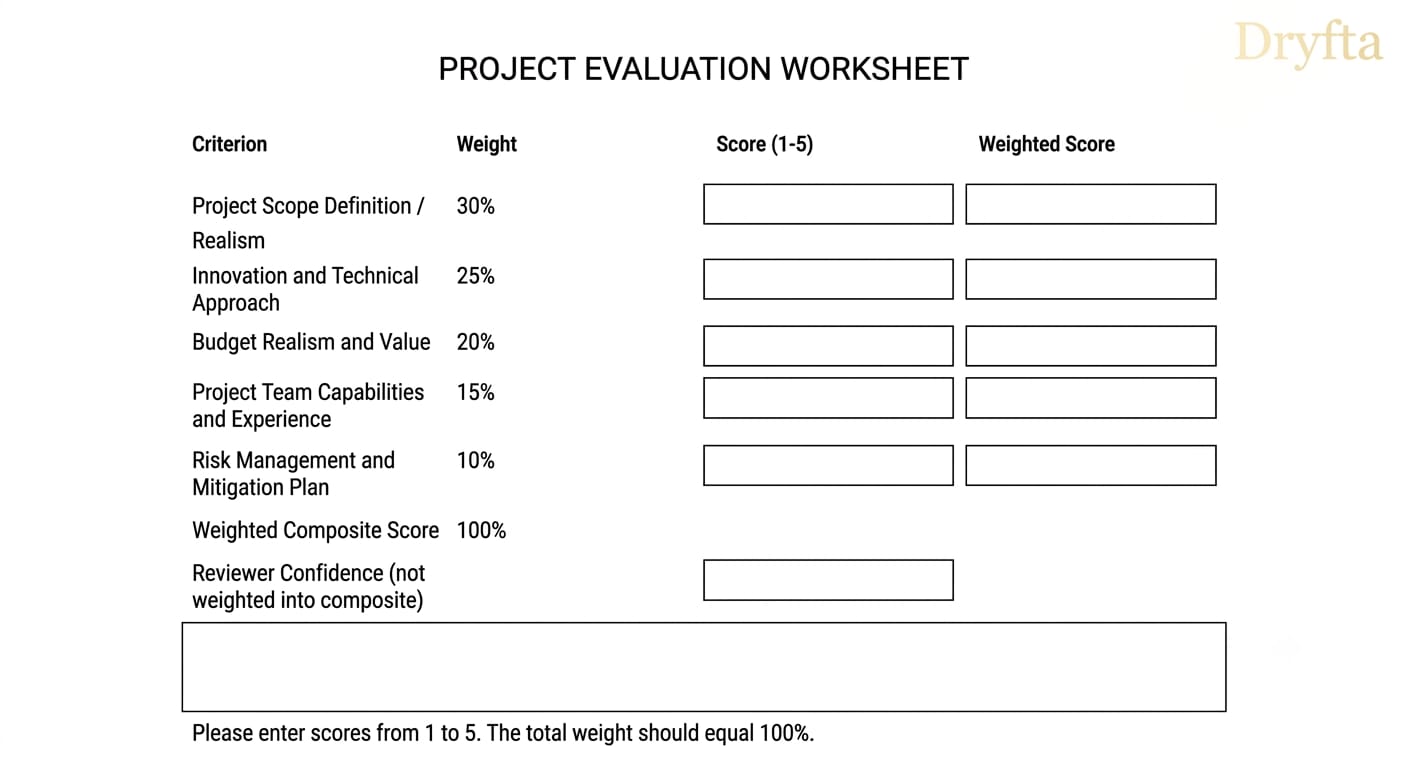
However, weighted scoring solves that problem by multiplying raw scores and giving each criterion a different level of importance with the help of designated priority weights. This also helps program chairs to prioritize the essential factors that matter most for their event while still keeping the review process clear and fair.
In the weighted scoring system, you assign a weight to every criterion and then multiply the reviewer’s score by that weight. A stronger criterion gets a higher weight, while a less critical criterion will get a lower weight. This works well when you want the final score to reflect conference priorities instead of just treating each criterion as equally important.
A worked example calculation:
A reviewer scores an abstract as follows: Scientific Quality = 5, Originality = 4, Relevance = 5, Significance = 4, Clarity = 3.
| Criterion | Weight | Score (1–5) | Weighted Score |
| Scientific Quality / Methodological Soundness | 30% | 5 | 5 × 0.30 = 1.5 |
| Originality / Novelty | 25% | 4 | 4 × 0.25 = 1.0 |
| Relevance to Conference Scope | 20% | 5 | 5 × 0.20 = 1.0 |
| Significance / Potential Impact | 15% | 4 | 4 × 0.15 = 0.6 |
| Clarity and Presentation | 10% | 3 | 3 × 0.10 = 0.3 |
| Weighted Composite Score | 100% | 4.4 |
Uses of Weighted Scoring
Weighted scoring is useful for the academic conferences to make better decisions when some criteria matter more than others. Some of the real-time examples it is highly implemented are:
- Medical conferences often value study design and clinical relevance above polished writing.
- Engineering conferences consider giving more weight to technical correctness and reproducibility.
- Competitive conferences benefit from weighted scoring because they need to separate mediocre submissions from very strong submissions.
- Large international congresses also apply it because it helps align many reviewers across diverse tracks with the same evaluation priorities.
TEMPLATE 3: Medical / Clinical Conference Abstract Scoring
Medical and clinical academic conferences usually require specialized scoring because they evaluate research that can affect real patient care. A strong abstract may look polished, but reviewers still require to judge whether the study design is sound, the evidence is reliable, and the findings matter clinically or not.
Need for specialized scoring
Medical and clinical abstracts carry more weight than general academic conference submissions. Reviewers usually check whether the study supports safe and useful decisions in healthcare field, not just whether it sounds interesting. That is the reason medical review criteria focuses on methodology, ethics, and practical impact. Main criteria for their evaluation involve:
- Patient outcomes
Reviewers look at whether the research consists of meaningful improvement in health, recovery, quality of life, or symptom control. A result only matters if it contributes in something important for the patients.
- Clinical trials
Reviewers check whether the trial design makes sense and whether the sample, controls, and outcomes support the conclusions. They want to know if the clinical trial produces trustworthy and usable evidence.
- Evidence quality
Reviewers judge how strong the evidence is. A randomized trial usually carries more weight than a weaker observational report, while meta-analyses can rank highly when they combine good studies clearly.
- Ethical approvals
Reviewers need to see that the study followed ethical standards. They look for approval from the proper review board and for any sign that the study protected patient rights and safety.
- Treatment effectiveness
Reviewers ask whether the treatment actually works in a meaningful way. They also check whether the abstract shows enough data to support the claim, not just theory.
Study design
Study design matters because it shapes how much trust reviewers place in the findings. A weak design can hurt an abstract even if the topic sounds important. Reviewers want evidence that supports the conclusion, not just a promising idea. A few examples for study design include:
- Randomized trials usually score well because they reduce bias and give stronger evidence.
- Cohort studies help when randomization is not possible, but reviewers still look closely at confounding and sample selection.
- Meta-analyses can score highly when they combine strong studies and present the findings clearly.
Clinical relevance
Clinical relevance asks a simple question: does this help in improving patient care? Can the physicians apply it in practice? Reviewers want to know whether physicians can actually apply the findings in their practice. If the study changes diagnosis, treatment, workflow, or patient outcomes in a realistic setting, it scores better. If the result remains too theoretical or too narrow, it usually scores lower.
Suitability for Presentation format
Medical conferences also need the right format match so that reviewers can assess the suitability for presentation formats, ensuring heavy datasets are designated. They usually recommend:
- Oral presentation works best for studies with strong results, broad relevance, or high clinical importance.
- Poster suits studies that are valuable but may benefit from visual discussion and one-on-one questions.
- Rapid-fire fits concise updates, small studies, or early findings that still deserve exposure.
- Lightning talk works well for brief, focused summaries that can grab attention quickly without deep detail.
TEMPLATE 4: Computer Science / ML / Engineering Conference
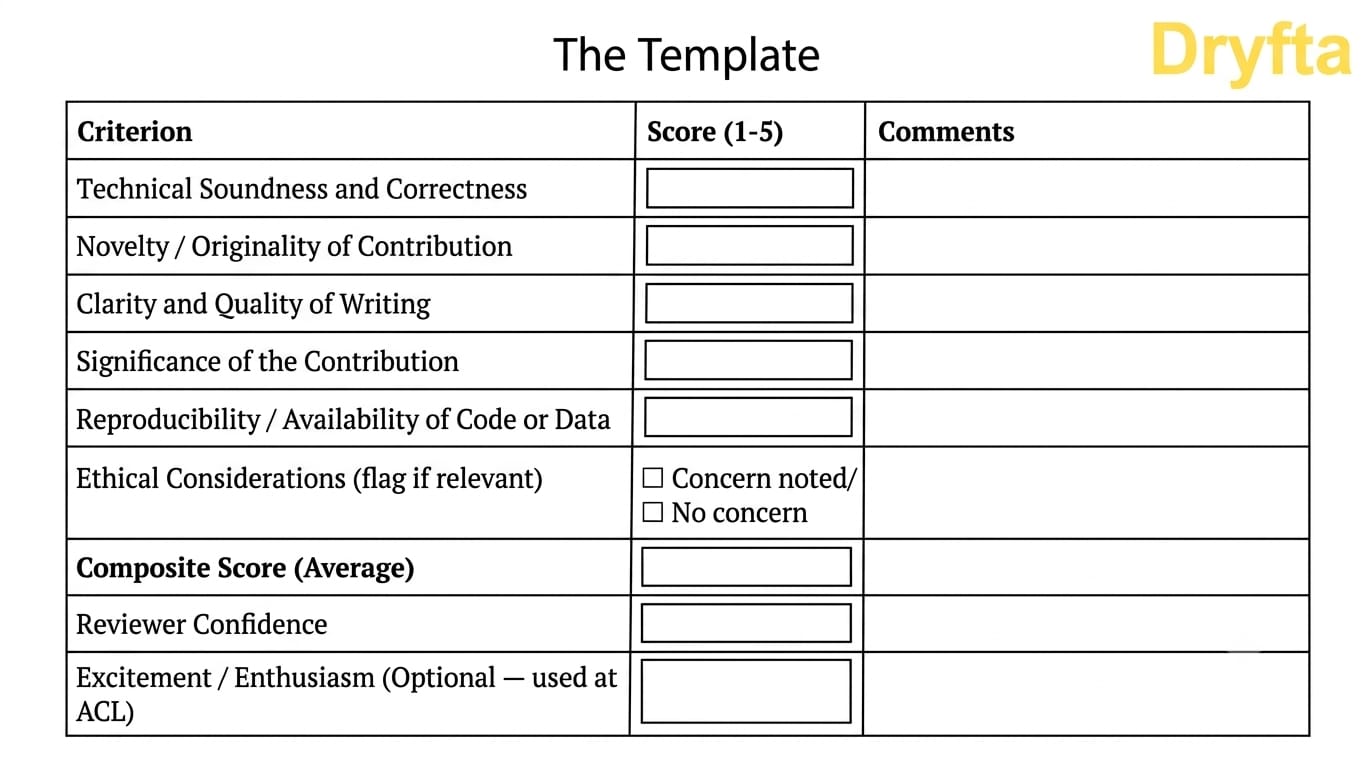
Unlike medicine, computer science (especially AI/ML) and engineering academic conferences heavily emphasize different factors. This abstract review scoring template evaluate work that is based on technical correctness, algorithmic accuracy, measurable results, public reproducibility, ethical considerations (e.g., AI bias, privacy, dual-use concerns) and the ability for others to verify the claim.
A paper can sound innovative, but reviewers still need to know whether the algorithm works, experiments hold up, and another researcher could reproduce the same result to capture high-interest and disruptive ideas.
Technical Soundness
Reviewers first ask whether the algorithm is valid. They want to know if the method makes sense mathematically and the implementation matches the idea the authors describe.
They also check the validation of experiments, which means the comparison setup, datasets, baselines, and metrics all support the conclusion. If the evaluation is weak, the paper loses credibility even if the idea looks promising.
Novelty
Originality is quite crucial because computer science conferences want to highlight new contributions. Reviewers look for a new algorithm, an improved architecture, or a new benchmark that pushes the field forward. A small performance gain alone does not always count as strong novelty unless the paper also introduces something genuinely useful or different.
Reproducibility
Reproducibility has become one of the most important criteria in computer science academic conferences review. Reviewers want to know whether others can reproduce the results from the paper.
They check the code availability, the data is public or not, and the method is explained clearly for another team to repeat the experiment. Strong reproducibility builds reliability and helps the paper influence future work.
Ethical Considerations
Many conferences now ask reviewers to watch for ethical issues as well. That includes AI bias, privacy risks, security flaws, dual-use concerns, and copyright problems. A technically strong paper can still raise serious concerns if it can be misused or if it handles data irresponsibly. Reviewers flag these issues so program chairs can judge the broader impact of the work.
Excitement / Enthusiasm
Some AI and ML conferences also ask reviewers, “How excited are you to see this presented?” That question helps identify papers that can usually give way to new discussions, inspire new ideas, or attract strong interest from the audience. It does not replace technical review, but it adds another signal about the paper’s potential impact on the community.
These criteria help computer science and engineering academic conferences judge not just whether a paper is interesting, but it is correct, useful, reproducible, and worth presenting.
Best and Why?
A good scoring scale design makes abstract review easier to compare and defend. The best scale depends on how detailed you want the review to be, how familiar the reviewers are with the process, and how much precision the academic conference really requires.
- 1–5 scale is usually recommended for most academic conferences because it stays simple and clear. Reviewers can score quickly, and chairs can compare results without dealing with too much noise. Its ideal use case includes General Sciences & Humanities. This scale is quite intuitive, standard, fast to evaluate with low reviewer fatigue.
- 1–10 scale gives more granularity, which is why many Artificial Intelligence (AI), Machine Learning (ML) and Computer Science (CS) academic conferences use it. For example, NeurIPS, which is The Conference on Neural Information Processing Systems – a machine learning and computational neuroscience conference. This is great to sort high mathematical resolution and for sorting thousands of papers. However, it can also create false precision if reviewers do not have strong calibration. It requires strict rubrics.
- Categorical or letter-grade systems is the right choice when there is a requirement for broad judgments, instant sorting, and preliminary rounds instead of just fine scoring, but they often make final comparisons with lack consistency related to quantitative data.
- Anchor description principles matter because they turn numbers into shared standards. Instead of asking reviewers to guess what “4” or “2” means, you define it in advance with examples or short descriptions. This reduces disagreement, boosts reviewer calibration, and makes the final decision process easier for program chairs.
Scoring Scale Table
This kind of scoring scale table is useful for reviewers to stay aligned. When everyone knows what each number means, the scoring becomes consistent and there will be less chances to avoid using the scale differently from one abstract to another. Defining each number avoids subjective drift and helps in creating a basic layout:
| Score | Meaning |
| 5 | Excellent – Exceptional quality. Exceeds all expectations and standards with zero flaws and major contribution. |
| 4 | Very Good – Strong submission. Competent methodology, highly readable with clear relevance. |
| 3 | Acceptable – Solid work. Meets basic research criteria, minor presentation or data gaps. |
| 2 | Weak – Noticeable deficiencies. Unclear methodology, insufficient data, or poor writing. |
| 1 | Poor – Fundamental flaws. Incoherent logic, absent data, and completely out of scope. |
How to Run the Review Process with the Scoring Matrix
An abstract review scoring matrix works best when there is a review process before reviewers start scoring. This gives everyone the same expectations, reduces confusion, and makes final decisions easier to defend. The goal is not just to collect scores, but to build a process that stays consistent from the first abstract to the last.
Step-1 -> Distribute the matrix before the review period opens
Share the matrix, guidelines, and rubric definitions before the review period opens. Reviewers should see the criteria, scoring scale, and anchor descriptions in advance so they know exactly to look for. This step also gives you time to train reviewers and answer questions before scoring begins.
Step-2 -> Assign 2–3 reviewers per abstract minimum
Never rely on a single opinion. Make sure that each abstract is independently reviewed by at least two to three. That helps balance out individual bias and gives the program committee a better view of each submission. When possible, blind reviewer identities so the process stays fair and focused on the abstract itself.
Step-3 -> Use reviewer confidence scores to weight borderline decisions
If an abstract scores a borderline, then check the reviewer confidence. A score from an expert carries different than from someone out of their field. Define the scoring guidelines clearly, and allow comments for every score so reviewers can explain their reasoning instead of leaving the committee to guess.
Step-4 -> Set thresholds before looking at scores
Set thresholds before you review the scores. Decide in advance what counts as an accept, a reject, or a borderline case. Define your mathematical cut-offs before looking at the submissions to eliminate favoritism and bias.
Step-5 -> Flag reviews with low detail or missing comments
Pay attention to reviews with low detail or missing comments. A number without an explanation does not help the committee much. Flag those reviews early so you can correct problems before decisions go out. Set system alerts for reviews submitted with numeric scores but zero written text in the comment sections.
Step-6 -> Configure your abstract management platform to surface inconsistencies
Configure your abstract management platform to instantly flag abstracts where there are surface inconsistencies, highlighting missing reviews, and automate scoring and ranking. This saves time and makes it easier to spot patterns across submissions. It also helps chairs monitor reviewer consistency throughout the process.
Step-7 -> Document your process for author feedback
Keep all clear matrix records of how you handled scoring, review conflicts, and final decisions. This makes author feedback easier to provide and helps the committee explain outcomes if any questions come up later.
Best Practices to Follow for Abstract Reviewing
By adhering to the best practices, you run the process smoothly. The matrix becomes more than just a form. It becomes a reliable system for fair, efficient, and defensible abstract review.
- Train reviewers before scoring starts.
- Use at least two or three independent reviewers per abstract.
- Blind reviewer identities when appropriate.
- Define scoring guidelines clearly.
- Allow comments for every score.
- Resolve large score discrepancies through discussion.
- Monitor reviewer consistency throughout the review period.
- Use software to automate scoring and ranking.
Common Mistakes to Avoid in Abstract Reviewing
Some of the most common mistakes to avoid in abstract reviewing are:
- Giving every abstract similar scores.
- Ignoring reviewer confidence.
- Using unclear evaluation criteria.
- Not weighting important factors.
- Allowing personal bias.
- Missing conflict-of-interest checks.
How to Customize the Matrix for Distinct Fields
Every abstract scoring criteria conference needs different scoring priorities, so the abstract review scoring matrix should reflect the academic conference’s intent and goals.
- Scientific conferences
Focus on scientific quality, originality, relevance, and significance. Use criteria that reward clear methods and strong evidence.
- Medical congresses
Prioritize study design, clinical relevance, patient outcomes, ethical approval, and treatment impact. Accuracy and safety matter more here than polished writing.
- Engineering conferences
Emphasize technical soundness, reproducibility, benchmarks, and practical application. Reviewers should score whether the work is correct and usable.
- Business conferences
Focus on practical impact, strategic value, innovation, and clarity. Use a simpler matrix that supports applied ideas and real-world usage.
- Education conferences
Emphasize pedagogy, weight teaching effectiveness, learner outcomes, research quality, and relevance and replicability to classroom or institutional practice. Accessibility and usefulness with student demographic frameworks matter a lot here.
- Humanities conferences
Give more weight theoretical depth, critical analysis, originality, argument quality, interpretation, and writing clarity over rigid statistical metrics. Although methodology remains important, reviewers place greater emphasis on the strength of the research insights and the overall scholarly contribution.
- Student research competitions
A more supportive evaluation approach than professional academic conferences. Reviewers should place less emphasis on groundbreaking research or historical novelty and focus more on the participant’s learning progression, research effort, originality, and presentation skills.
A simple review scoring matrix with a stronger focus on clarity, research effort, originality, organization, and presentation readiness. This encourages constructive feedback while helping young researchers build confidence and strengthen their academic skills. Although research quality remains important, the evaluation should recognize growth, critical thinking, and the ability to communicate ideas effectively.
How Dryfta Simplifies Abstract Review Scoring
Manually compiling scores, managing weights, and chasing down reviewers across spreadsheets can derail a conference schedule. Dryfta’s event management platform simplifies abstract review scoring by turning a complicated review process into a structured workflow.
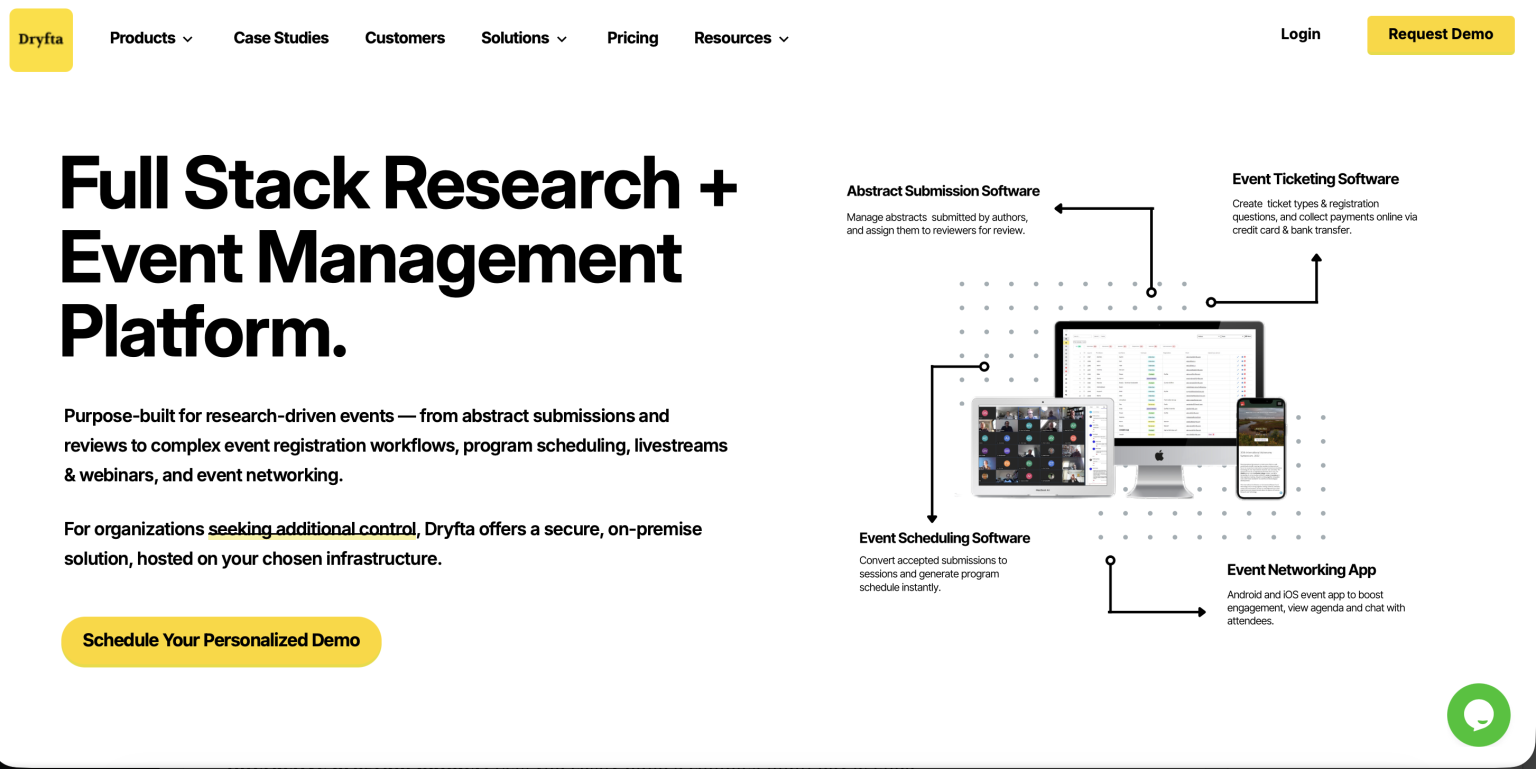
It is designed to fully automate the peer-review pipeline. It helps academic conference teams set clear rules, assign the right reviewers, and keep every score, comment, and decision in one place. Some of its core features include:
- Fully customizable scoring matrices
Dryfta helps conference organizers build scoring matrices that match with the conference’s intent. You can set abstract scoring criteria, scoring scales, and weightings so reviewers evaluate abstracts using the same standards.
- Reviewer assignment based on expertise
It helps match abstracts with reviewers who understand the topic, which improves review quality and reduces the chance of poor or uneven assignments.
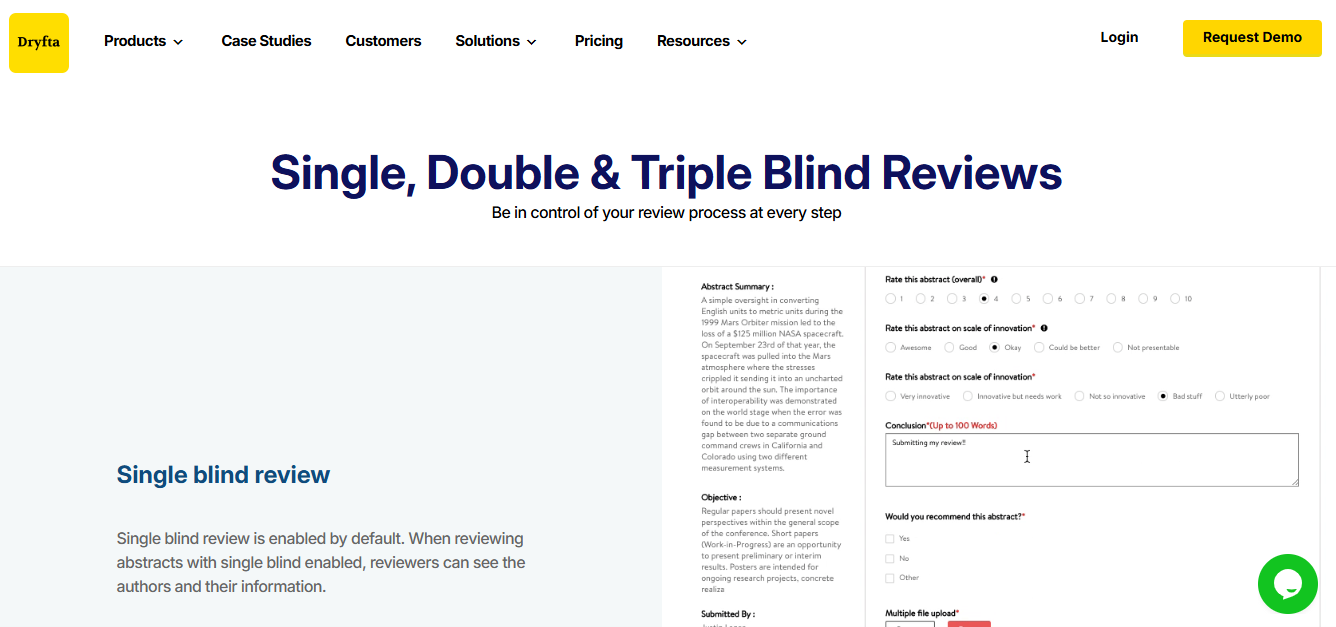
- Blind and double-blind review workflows
Dryfta supports blind and double-blind review setups. This reduces bias by keeping identities hidden when the conference requires a more neutral evaluation process.
- Weighted scoring support
Dryfta supports weighted scoring so organizers can give more importance to critical criteria. This is useful when methodology, originality, or clinical relevance should count more than writing style.
- Automatic score calculation
It calculates scores automatically once reviewers submit their evaluations. This saves time, reduces manual errors, and helps chairs compare abstracts faster.
- Reviewer confidence tracking
Dryfta lets reviewers indicate how confident they are in their judgment. That gives program chairs helpful context when they review borderline submissions or conflicting scores.
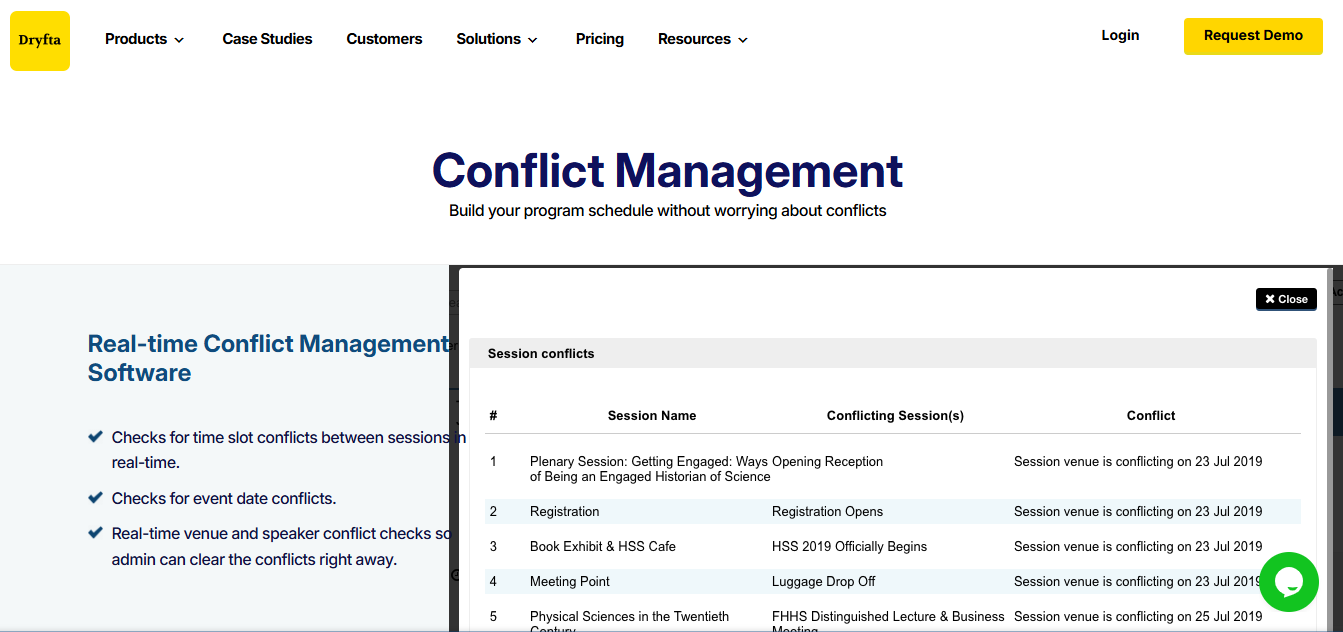
- Conflict-of-interest management
Dryfta helps flag conflicts before assignments go out. This protects the fairness of the review process and helps avoid inappropriate reviewer-paper matches.
- Reviewer discussion and consensus tools
Dryfta supports reviewer discussion so chairs can resolve disagreements on difficult abstracts. This makes it easier to reach a final decision when scores differ widely.
- Ranking and acceptance recommendations
Dryfta can rank submissions based on review scores and help chairs identify likely acceptances. This process makes to take the final decision faster and more organized.
- Oral/poster categorization
It helps organizers sort abstracts into oral or poster categories. This makes program building easier and helps place each submission in the right session format.
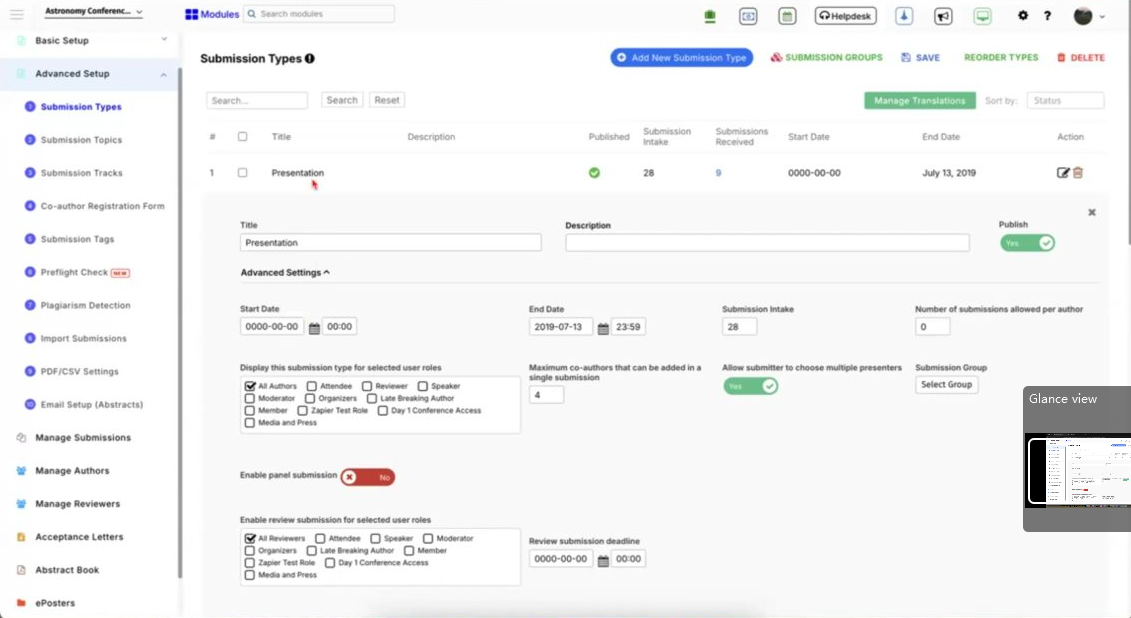
- Real-time review progress dashboards
Dryfta gives conference organizers easy-to-navigate dashboards with live visibility into review progress. Chairs can see completed reviews, pending assignments, and bottlenecks before deadlines slip.
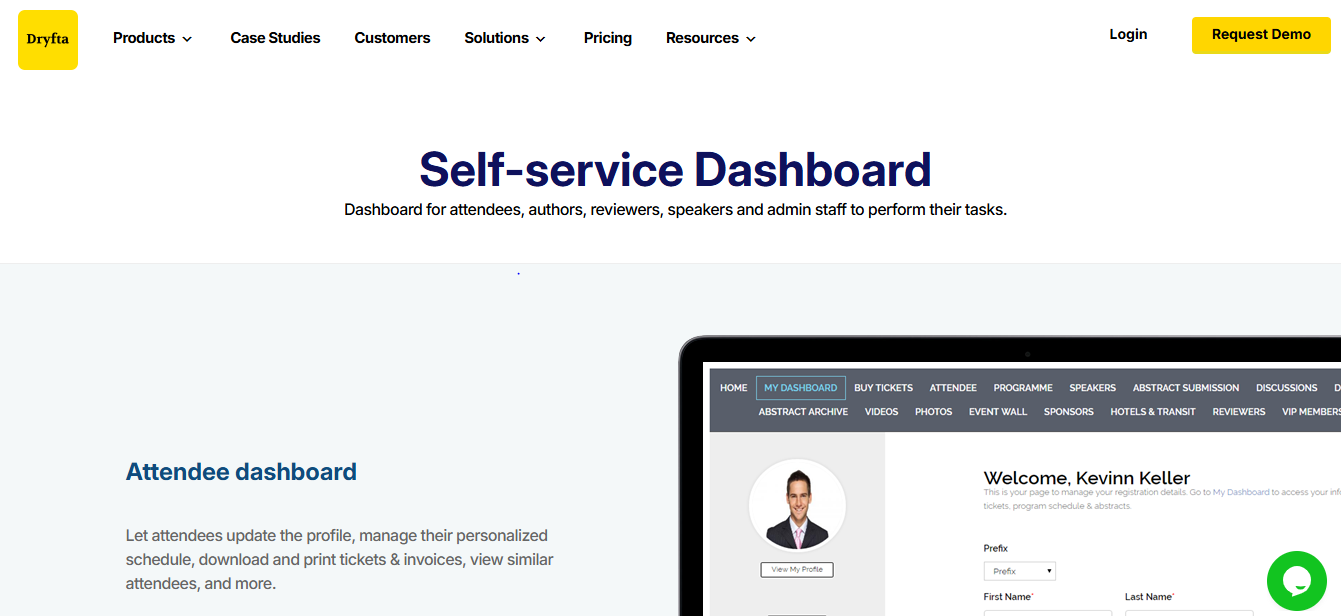
- Exportable review reports
It allows teams to export review reports for committee use, planning, and recordkeeping. This eases document decisions and share results with stakeholders.
Manage Abstract Review Scoring Effortlessly
The abstract review abstract review scoring matrix is a critical element of academic conferences. By adhering to established guidelines, addressing conflicts of interest and bias, conducting checks, following abstract review scoring matrix template, and offering constructive feedback will be helpful.
Reviewers and researchers contributions are important for in building a compelling conference agenda. With the help of Dryfta abstract management software the conference organizers can streamline and automate the review process, making it more efficient and transparent. To watch Dryfta’s abstract management software in action, sign up for a free demo today.
Frequently Asked Questions (FAQs)
What is an abstract review scoring matrix?
An abstract review scoring matrix is a structured evaluation rubric used by academic conference organizers and peer reviewers to objectively grade research submissions across distinct, quantifiable dimensions like methodology, novelty, and clarity.
What criteria are used to score conference abstracts?
The most common criteria include Scientific Quality (Methodology), Originality (Novelty), Relevance to Conference Scope, Clarity/Presentation, and Potential Significance/Impact.
What scoring scale should I use for abstract review?
A 1–5 scale is recommended for most academic conferences due to its simplicity and speed. A 1–10 scale is optimal for highly technical or competitive tracks (like Computer Science/AI/ML) requiring precise data separation.
How many reviewers should evaluate each abstract?
Every abstract should be evaluated by at least 2 to 3 independent reviewers to eliminate individual bias and ensure statistical fairness in final selections.
How do I handle reviewer disagreement on the same abstract?
Abstracts with highly divergent scores should be automatically flagged by software for a secondary evaluation, a consensus discussion, or a final tie-breaking assessment by the track chair.
How does double-blind review affect the scoring matrix?
A double-blind review removes author names and affiliations, meaning the matrix scores are based purely on the text’s inherent academic merit, preventing institutional or geographical biases.