



Event technology has now moved beyond simple webinars, where organizers now expect a platform that manages registrations, speaker workflows, attendee engagement, and hybrid sessions in one place. That shift explains why more teams are actively searching for Webex Events alternatives. While many have opted for it, some are also in search of platforms like Webex Events. Organizers are careful about comparing each platform and its competitors and evaluating platforms like Webex Events that offer more than just streaming.
At the same time, the industry itself is rapidly evolving. Statista suggests that the global events market is projected to grow to over $1.46 trillion by 2026, which points to the increasing demand for scalable and integrated event solutions. Organizers are no longer relying on fragmented tools, especially as 90% of large-scale events are expected to include hybrid or virtual elements, reinforcing the need for all-in-one platforms that go beyond basic streaming
This guide brings forth the top platforms in 2026 with a deeper look at the features and how each platform fits your unique event needs.
What is Webex Events?
Webex Events is part of Cisco’s Webex ecosystem and is designed for hosting virtual and hybrid events. It provides live streaming, audience engagement tools such as chat and Q&A, and enterprise-grade security. Though it performs nicely for webinars and corporate events, it focuses mainly on virtual delivery rather than full event management.
It lacks built-in tools for abstract submission, multi-tracking scheduling, and complex event logistics.
Why You May Need a Webex Events Alternative?
There may be multiple reasons why event planners may look for platforms like Webex Events. Some of the reasons are-
-
- Webex pricing starts at around $675 per user per year for webinars and requires a sales consultation for advanced plans.
- It is optimized for virtual-first events, not hybrid or in-person experiences.
- Multi-session scheduling and abstract workflows are not included
- Setup can feel complex for smaller teams without technical expertise
- The mobile app focuses on viewing content rather than on-site navigation
These limitations explain why businesses are exploring the best Webex Events alternatives and adopting platforms like them, which are built to meet the needs of modern events.
Why Dryfta is the Best Webex Events Alternative for Event Management Software
Dryfta stands apart from most Webex Events alternatives because it handles the entire event in one system. While Webex Events focuses on communication, Dryfta is designed for event execution from start to finish.
| Feature | Dryfta | Webex Events |
| Event Types | Virtual, hybrid, in-person | Primarily virtual |
| Abstract Management | Built-in | Not available |
| Multi-track Scheduling | Advanced | Limited |
| Registration and Payments | Fully integrated | Limited |
| On-site Tools | Yes | Limited |
| Pricing Transparency | Flexible pricing tiers | Requires sales inquiry |
Why Teams Are Switching From Webex to Dryfta
The shift is for the growing demand for next Webex Events alternatives that offer complete event solutions in one place.
-
- Teams prefer one unified platform instead of multiple tools
- Event organizers need simpler interfaces with less technical setup
- Budget transparency has become a key decision factor
- Hybrid and in-person events require logistics tools beyond streaming
- Speaker-driven events need submission and review workflows
- Mobile apps must support on-site engagement
List of Best Webex Alternatives in 2026
Let’s take you through a list of innovative event management software platforms that are worthy Webex Events competitors.
1. Dryfta
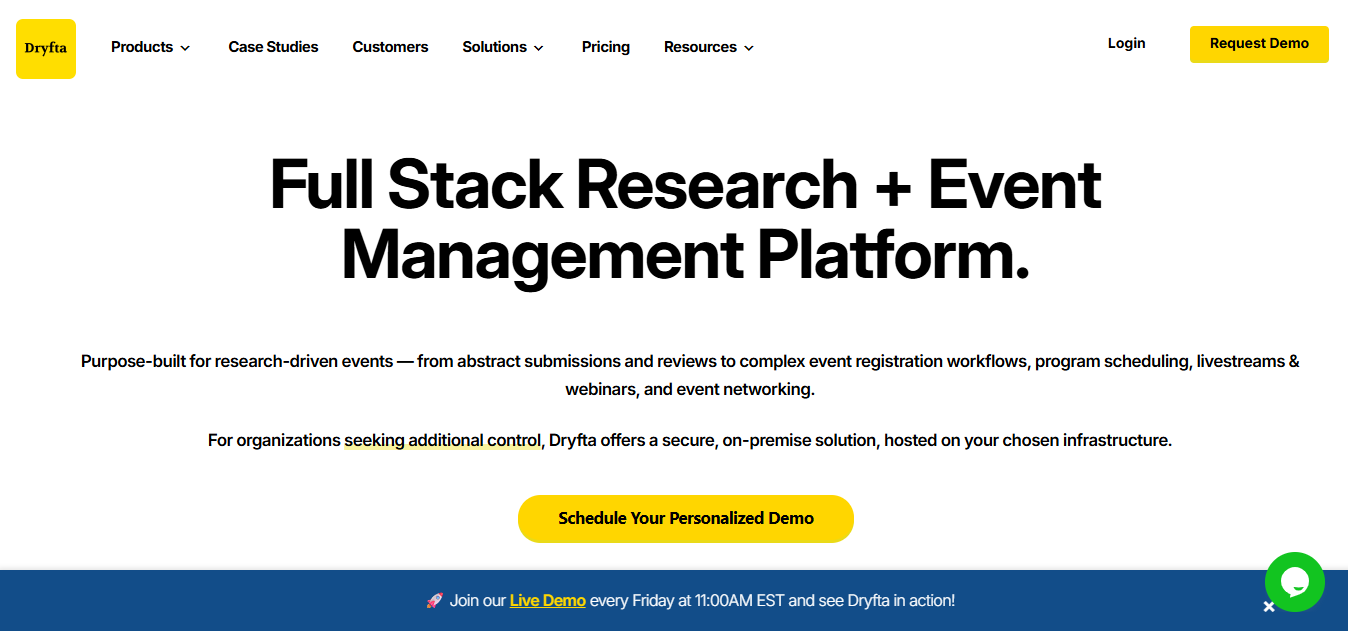
Dryfta is one of the best alternatives to Webex Events because it combines event management with submission workflows in one place. The platform can handle things like submissions, registrations, payments and attendee management all by itself. The platform puts everything in one dashboard, which makes it easier for teams to manage events. This is helpful for conferences, university events and associations that need to have structured workflows and manage their events properly.
Features
-
- Enhanced abstract management supports multi-level peer reviews and simplifies submissions for global contributors.
- A built-in schedule builder automatically organizes sessions while preventing speaker or room conflicts.
- The mobile app enables digital check-ins, live updates, and attendee networking during events.
- A flexible registration system supports multiple ticket types, discount codes, and early-bird pricing.
Pros
-
- Designed for academic and conference workflows that most Webex Events competitors do not support effectively.
- Combines multiple event and submission tools into one system, reducing reliance on external platforms.
- Strong focus on data security and privacy, making it suitable for research-driven events.
Cons
-
- New users may need some time to understand how different modules connect and function together.
2. Sched
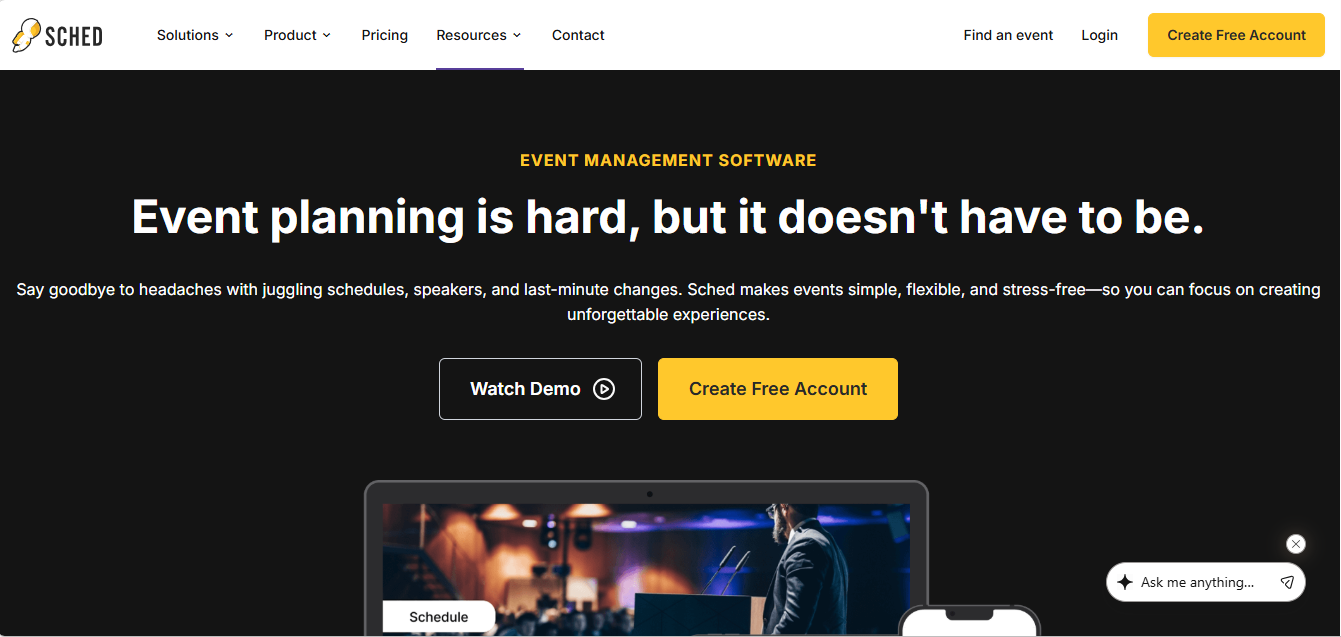
Sched is good at helping with events that have a lot of agendas and planning for each session. It makes scheduling easier. Sched is great for conferences where people need to find and choose sessions and build their schedule. It focuses on making the scheduling process simple. Sched does this while also giving attendees control over their experience at the event.
Features
-
- A multi-track scheduling system helps organizers create agendas that span multiple sessions and venues.
- This system allows attendees to make their schedules and get updates in real-time.
- Presenters can manage their profiles and session details on their own using self-service portals.
Pros
-
- Easy to use and quick to set up compared to many platforms like Webex Events.
- Cost-effective for small to mid-sized events with heavy scheduling needs.
- Helps attendees manage their time effectively with personalized agendas.
Cons
-
- Lacks deeper engagement tools such as advanced networking and live interaction features.
- Requires integrations for a more complete event management experience.
Pricing
Pricing starts at around $50 per month, with additional costs for branded mobile apps and advanced features.
3. InEvent
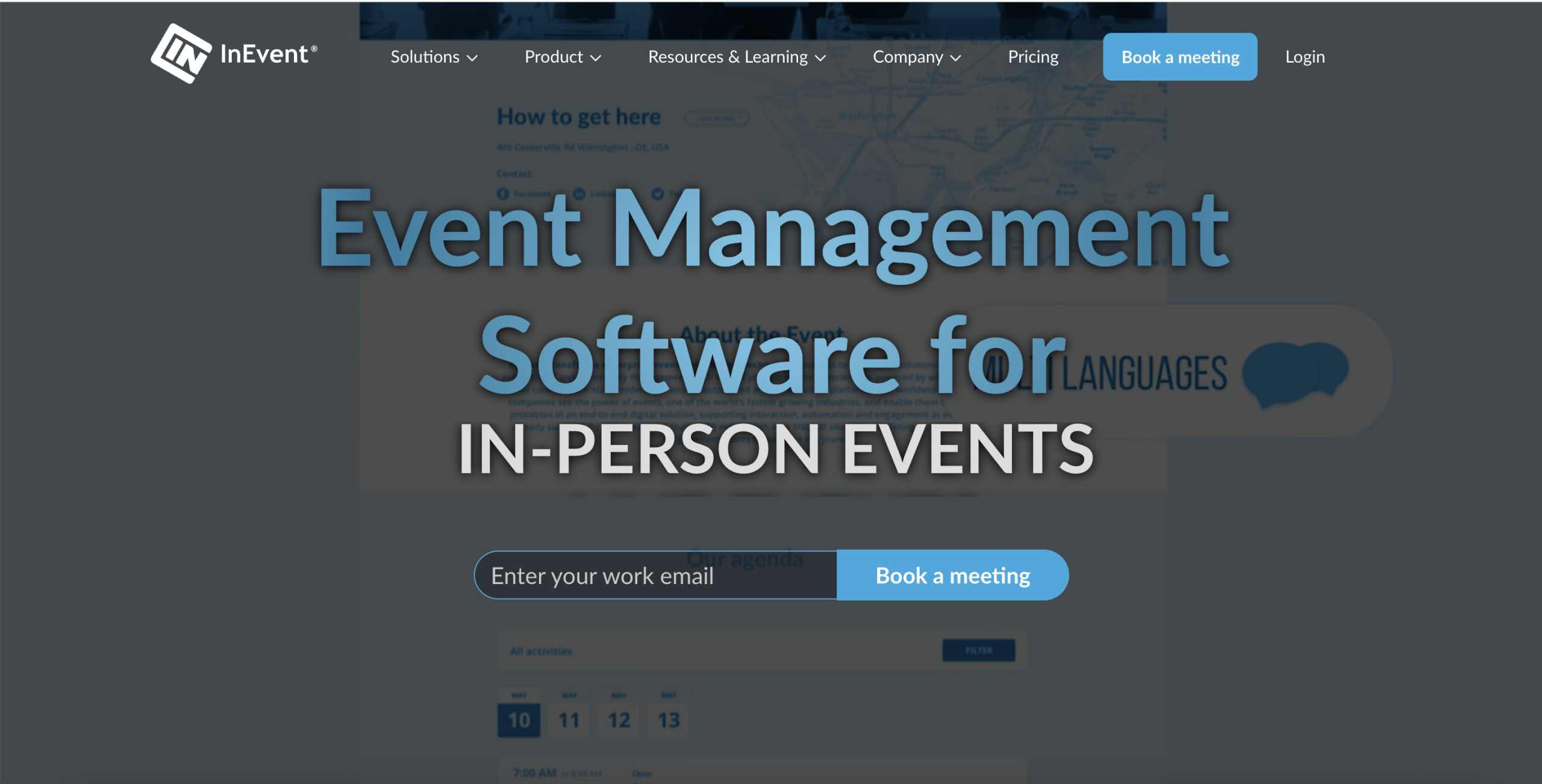
InEvent is one of the more advanced platforms like Webex Events. It is built for enterprises that manage large-scale hybrid and virtual events. It offers a flexible system that adapts to different event formats without needing major workflow changes. It is well-suited for organizations that need high levels of customization and integration across their event flow.
Features
-
- The registration tools are really helpful because they support forms that use logic, so you can have custom fields and automated workflows.
- The software makes it easy to work with platforms like Salesforce and HubSpot, which helps to keep all the data organized.
- For events that happen in person, there are tools to help with printing badges and checking people in.
Pros
-
- Strong customization options make it suitable for complex enterprise events.
- Offers deep integrations that connect event data with broader business systems.
- Supports scaling across multiple events without rebuilding workflows each time.
Cons
-
- The platform has a learning curve and may feel complex for smaller teams or first-time users.
Pricing
Modular pricing based on usage, feature access, or admin licenses, allowing flexibility for different event sizes.
4. Zoho BackStage
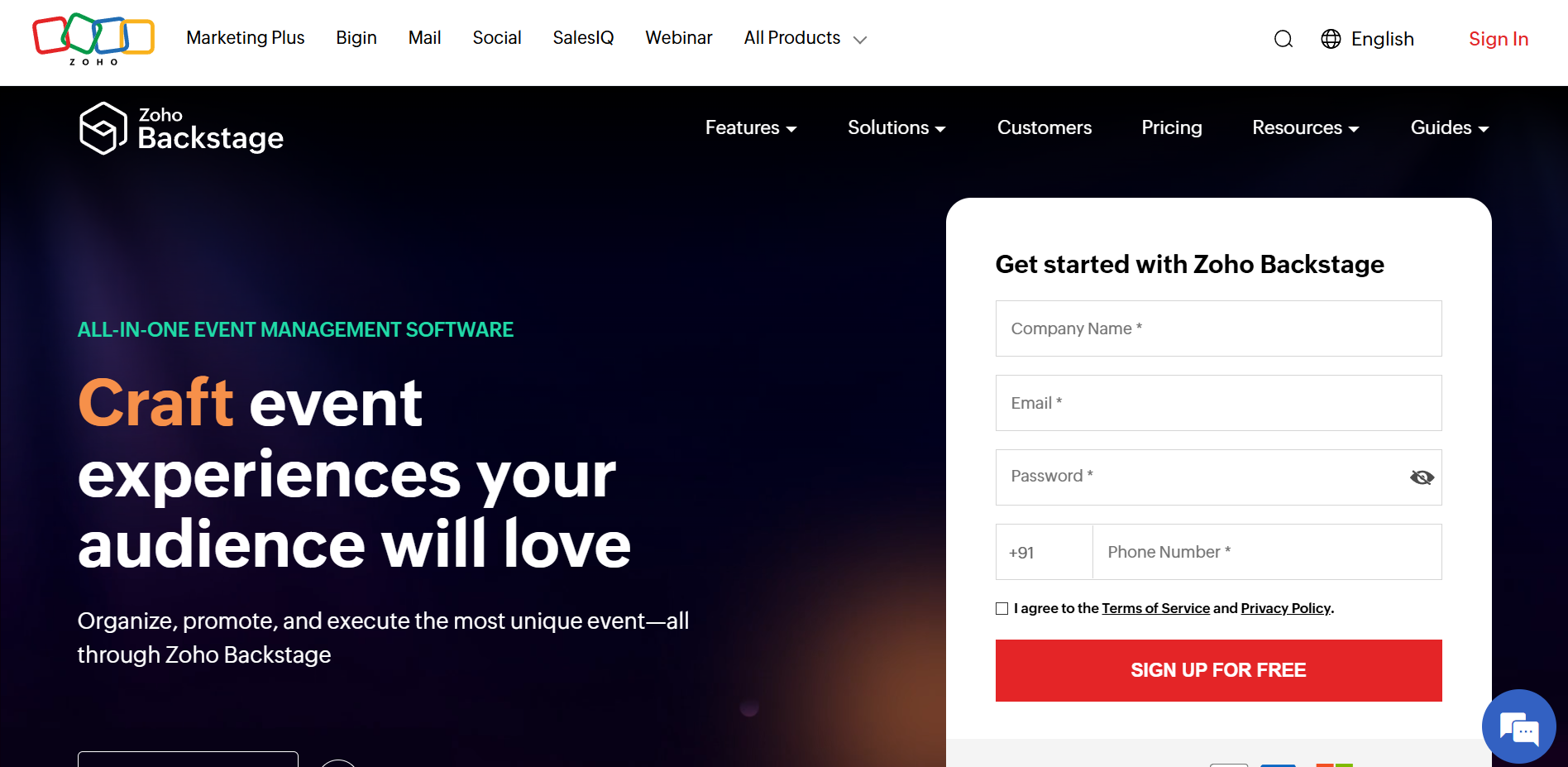
Zoho BackStage is getting a lot of attention from people looking for alternatives to Webex Events. This is especially true for teams that want something that can do everything they need. The platform is a choice because it has tools for managing events that also work hand in hand with other Zoho products. This makes Zoho BackStage a good option for organizations using the platform.
Features
-
- They have options for ticketing and registration tools that can handle prices for tickets and different types of people who are attending the event.
- The event website builder also has features that help manage sponsors and see how people are interacting with them.
- The mobile app makes the experience better for people who are attending the event.
Pros
-
- Offers a free plan, making it accessible for smaller events.
- Integrates seamlessly with other Zoho applications for CRM and marketing.
- Simple interface reduces the time needed for setup and management
Cons
-
- Limited advanced customization compared to higher-end Webex Events alternatives.
- May not meet the needs of large enterprise-level events.
Pricing
Free plan available, with paid tiers depending on features and scale.
5. Whova
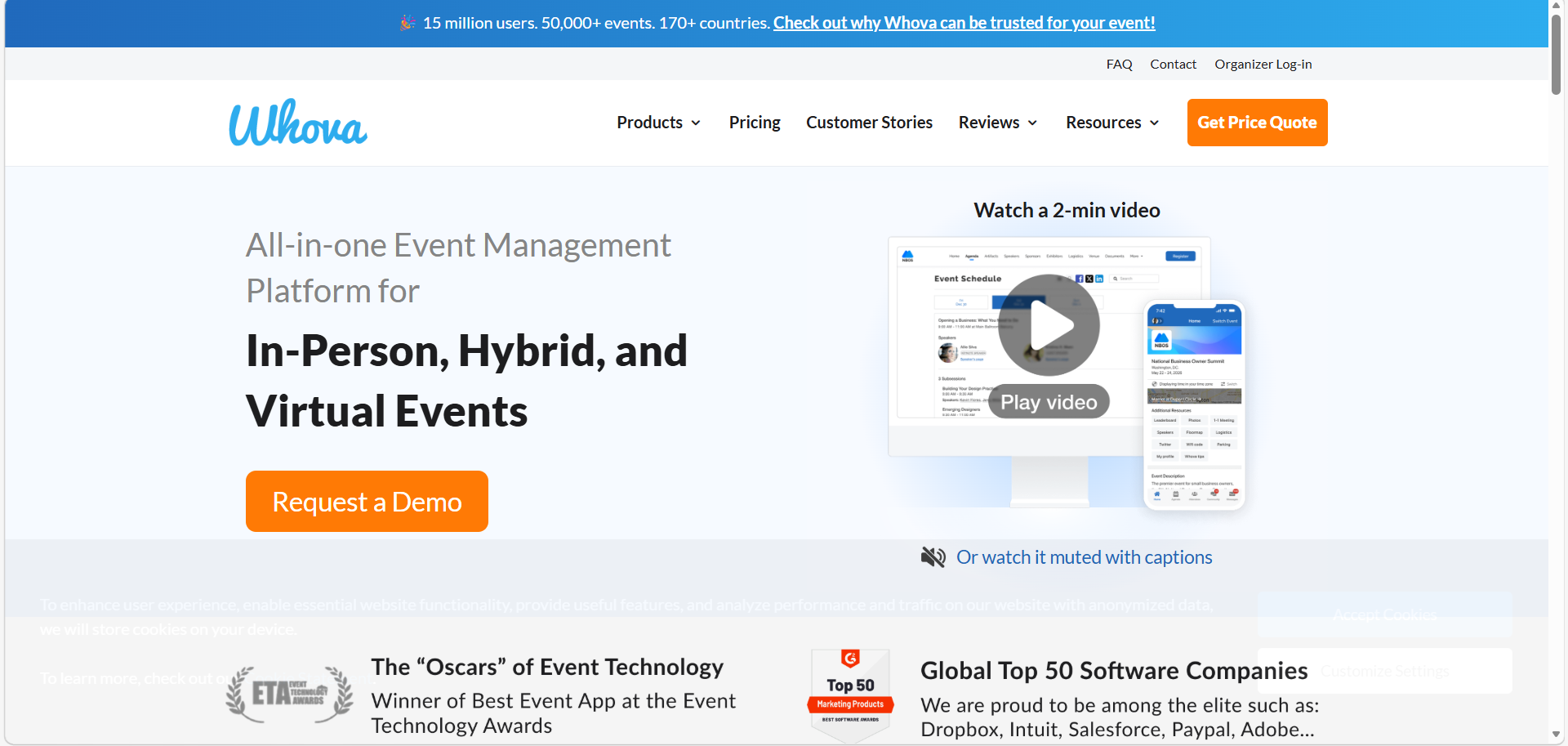
Whova is a well-known name in the event management platforms group for its ability to help attendees connect and network. It is used a lot for conferences, trade shows and community events where people need to interact. These events usually focus on getting attendees involved rather than complicated behind-the-scenes work. Whova is great for events, like that. Whova helps make them successful.
Features
-
- Agenda management tools help you find and plan sessions easily.
- Networking features include attendee messaging, community boards, and meetups.
- Mobile event apps send you updates and notifications in real time.
Pros
-
- Strong focus on attendee interaction makes events more engaging.
- User-friendly interface improves adoption among attendees and organizers.
- Reliable mobile experience supports both virtual and in-person events.
Cons
-
- Pricing can increase quickly for organizations running multiple events.
- Less focus on advanced backend workflows compared to other platforms like Webex Events.
Pricing
Custom pricing based on event size, features, and attendee volume.
Key Takeaways
Webex Events is still a decent tool for webinars, but it doesn’t do everything that people need for managing events these days. People who organize events need something that can help them plan, make sure everything happens and get people excited about the event in one place.
If you are trying to decide which Webex Events competitors are the best, or if you are looking at platforms like Webex Events, Dryfta is a choice because it can handle complex events with ease. You can ask for a free demo today and see how it can make managing your events a lot easier.
FAQs
What are the best alternatives to Webex Events?
If you are looking for something other than Webex Events, there are a lot of options you can consider. When you are deciding on the best Webex Events alternatives, think about what you need. Do you need something specific for your event or do you need something that can do everything? You can use Dryfta, Sched, InEvent, Zoho BackStage and Whova. These are some of the Webex Events alternatives.
How do I choose the right Webex Events alternative?
When you are trying to pick the option among Webex Events alternatives, you need to think about what you want from your event first. If you are organizing conferences or events with many different parts, a platform like Dryfta is a better choice. If you are having a simple event, something like Webex Events might be okay. You should also think about how big your event can get, how easy the platform is to use and how much it costs.
Do Webex Events alternatives provide analytics and reporting?
Yes, most of the best Webex Events alternatives include built-in analytics and reporting tools that help organizers understand how their events perform. These tools give you information about what the attendees are doing, how much they like the sessions, how many people sign up, and how many people take part in general.
Which platform is best for academic or educational events?
When we talk about research-based events, Dryfta is usually thought of as one of the best alternatives to Webex Events. Dryfta has tools for submission and peer review workflows, structured scheduling and more. This is why Dryfta is a choice for universities and research organizations and associations that need to manage events and handle submissions, all in one place.
How do Webex Events alternatives compare in terms of integrations?
Several Webex Events competitors can work with tools like CRMs, payment systems, email marketing, and analytics systems. Event platforms, like InEvent and Dryfta, can connect to more business tools, which lets event information easily update other systems used by a company. This helps make the work easier and reduces the need for multiple tools.
Are Webex Events alternatives suitable for small businesses?
Many Webex Events alternatives are made for businesses and big companies. Some platforms like Zoho BackStage and Dryfta have prices that can change and features that can grow with the company. This means small teams can start with the basics and add things as they need them. Webex Events alternatives, like these do not need a lot of work to set up or a lot of money to use.