




Picking the right event tech can make or break how smoothly your event runs. As teams move from basic webinars to more complex hybrid events, the choice between Bizzabo vs Whova becomes more important than expected. One leans toward marketing and analytics, while the other focuses heavily on attendee engagement and networking.
Then you have platforms like Dryfta, which operate a bit differently. For research-driven conferences where abstract management and peer review are essential, it often feels like a more natural fit.
Platform overview: What is Bizzabo
Bizzabo is positioned as a full-service Event Experience OS at the enterprise level, enabling the complete management of all aspects of planning, execution, and evaluation of your events, including in-person, online, or a combination of both. Registration, website design and agendas are all built in.
The platform leans heavily on interaction, and its Klik SmartBadge, powered by AI, enables contact sharing and real-time tracking to make interactions feel more natural at live events.
Platform overview: What is Whova
Whova aims to make events more interactive and the logistics easier for organizers. Its mobile application is unique, particularly the Community Board, where members update, discuss, and connect during the event.
Whova addresses basic requirements like registration, check-in, agenda management, and exhibitor lead tracking without making it overly complicated. It also drives interaction via gamification and AI-driven matchmaking.
Who Should Choose Bizzabo?
When comparing Bizzabo vs Whova, Bizzabo is generally better suited for large-scale events with intricate operations.
Consider Bizzabo for:
- Large enterprise conferences needing deeper workflow control
- Multi-event organizations managing several conferences yearly
- Enterprise marketing teams focused on revenue
- Complex sponsor management with detailed exhibitor tracking
- Large attendee volumes across hybrid and global events
- Enterprise analytics requirements with stronger reporting
- Global event programs managing large hybrid audiences across regions
Who Should Choose Whova?
If your events focus more on attendee interaction than enterprise-level complexity, Whova is a great option.
Consider Whova for:
- Mid-sized conferences looking for a simpler setup and easier event management
- Community events focused heavily on attendee interaction
- Academic and association conferences wanting less complicated workflows
- User-friendly event management for teams with limited technical experience
- Fast onboarding features for organizers working on tight timelines
- Budget-conscious organizers looking to avoid enterprise level pricing
- Networking events that want to enhance attendee interaction
Bizzabo vs Whova vs Dryfta
Here are the key features differentiating Bizzabo vs Whova vs Dryfta.
|
Feature |
Dryfta |
Bizzabo |
Whova |
|
Core focus |
Academic and structured events |
Marketing-driven events |
Engagement and networking |
|
Registration and ticketing |
Fully integrated |
Strong |
Strong |
|
Abstract management |
Built-in (multi-stage review) |
Not available |
Not available |
|
Event setup |
Structured and guided |
Flexible, but can take time |
Easy to set up |
|
Virtual/hybrid support |
Integrated within the platform |
Strong |
Strong |
|
Mobile app |
Yes |
Yes |
Yes |
Key Differences by Event Type
Here are the key differences by event type for Dryfta vs Bizzabo vs Whova, breaking down where each platform fits best across virtual conferences, hybrid flagship events, and smaller webinar programs.
Dryfta
Compared to Bizzabo vs Whova, Dryfta serves a more specialized use case.
-
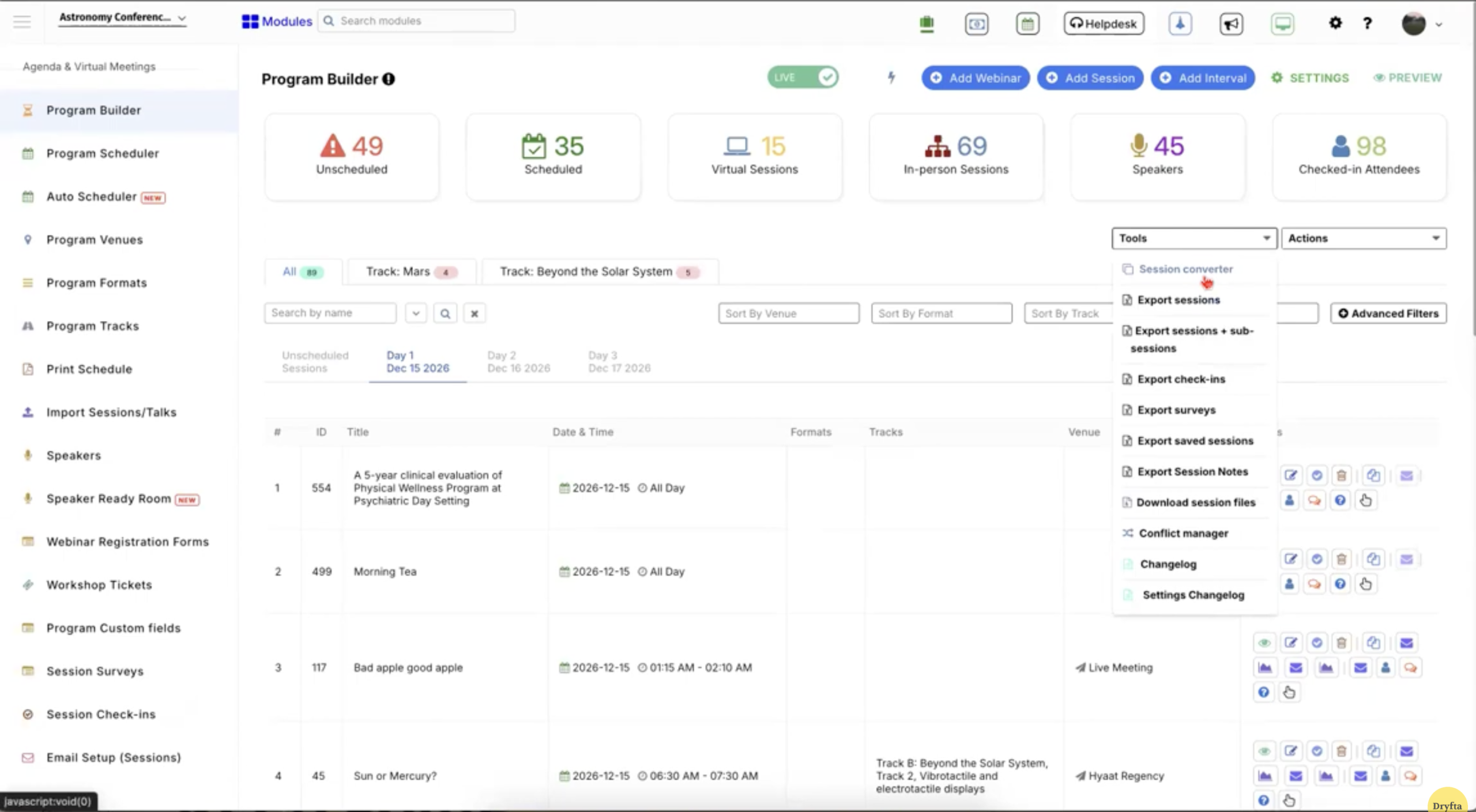
- Online conferences: Dryfta is an academic-oriented event management software that offers dedicated spaces to present abstracts and virtual posters.
- Hybrid flagship events: The platform manages complicated multi-track agendas and aligns them with a digital one, and it can be privately hosted on a cloud in case organizations require high data control.
- Webinars and smaller virtual programs: It has a low-cost Small plan, which nevertheless has advanced features like abstract management and certificate automation.
Bizzabo
In a typical Whova vs Bizzabo comparison, Bizzabo leans toward data-driven event strategies.
-
- Virtual conferences: Bizzabo provides a high-quality experience through its Event Experience OS, including an in-built broadcast studio and one-on-one networking, to ensure attendees remain engaged.
- Hybrid flagship events: It serves large corporate events with Klik SmartBadge technology that monitors attendee activity.
- Webinars and smaller virtual programs: The platform is focused on lead generation and can be integrated with CRM systems such as Salesforce to help teams measure the impact of each session.
Whova
A Bizzabo vs Whova comparison favors Whova for engagement-heavy events.
-
- Virtual conferences: Whova is mobile-first, which makes it more engaging through its Community Board, interactive activities, and virtual meetups organized by attendees.
- Hybrid flagship events: It streamlines logistics and provides simple check-in tools and exhibitor lead retrieval that are compatible with both physical and virtual environments.
- Webinars and smaller virtual programs: Its user-friendly interface and fast installation make it a good option for small-scale events.
Enterprise Considerations
Here is how enterprise teams evaluate Dryfta vs Bizzabo vs Whova, focusing on long-term operational efficiency across large event portfolios.
Dryfta
-
- On-premises hosting and private cloud solutions are available at Dryfta, meaning that organizations have complete control over sensitive research data.
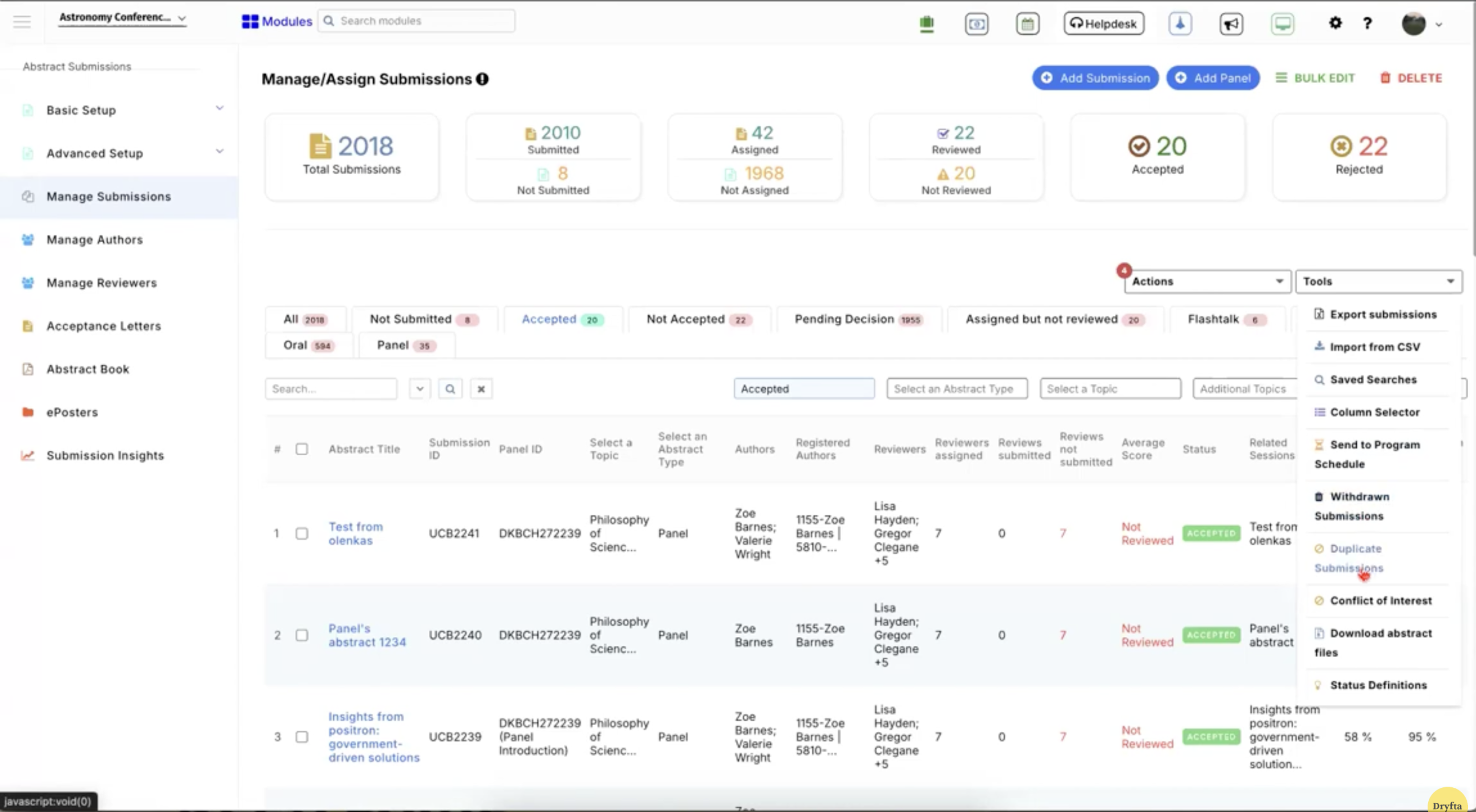
- The platform supports advanced academic processes, such as abstract management and formal peer review.
- It has a flat annual pricing system, which prevents teams from facing unpredictable attendee-based expenses.
- Dryfta is highly secure in line with university and research organization requirements.
Bizzabo
-
- Bizzabo integrates with CRMs such as Salesforce and Marketo to track lead attribution and event performance.
- The platform hosts large-scale event portfolios worldwide, including flagship conferences and corporate roadshows.
- Its Klik SmartBadge technology records attendee behavior in detail and links it to digital event data.
- Bizzabo offers full-time account management and 24/7 support to teams hosting high-stakes events.
Whova
- Whova lets teams deploy event apps and registration websites in minutes with minimal technical configuration.
- The platform offers a comprehensive report on attendee interaction, gamification activity, and exhibitor leads.
- It is also a cost-effective alternative to organizations that value networking and interaction.
- Whova combines registration, check-in, and mobile interaction into a single interface, minimizing admin effort.
Migration and Integration Considerations
Migration is one of the deciding factors in the Dryfta vs Bizzabo vs Whova comparison.
Dryfta
- Dryfta provides practical migration services, assisting academic departments in migrating abstract data and reviewer records from older systems with the structure intact.
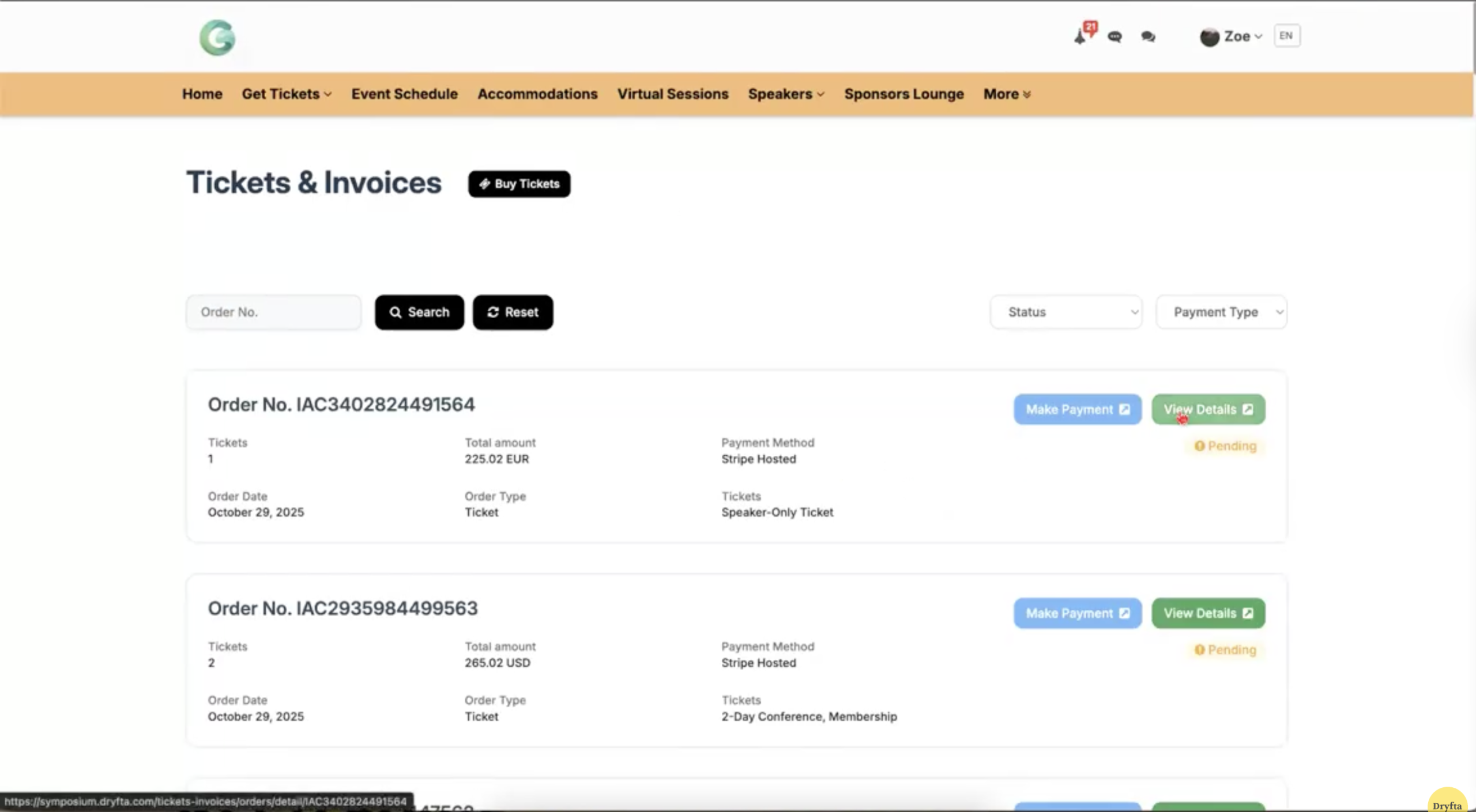
- The platform has a powerful API and integrates with payment gateways such as Stripe, PayPal, and Authorize.net to enable safe international transactions.
- It can be integrated with Zoom and similar applications, simplifying virtual sessions and their recording for future research.
Bizzabo
-
- Bizzabo offers an open API that can be easily connected to existing marketing and sales tools.
- It has migration tools that help teams move large attendee lists and previous event information from other platforms.
- Bizzabo can integrate with tools such as Slack and business intelligence platforms to boost internal communication and data-driven decision-making.
Whova
-
- Whova makes migration easy with Excel and CSV import features that let you upload attendee, speaker, and exhibitor data quickly.
- The platform connects to popular registration and event systems to maintain data consistency across phases.
- It is compatible with live streaming and video conferencing, and allows teams to operate hybrid or virtual events without additional configuration.
How modern event teams run events with Dryfta?
Modern event teams use Dryfta to automate the complex lifecycle of scholarly and professional programs. Here is how they execute high-impact events through the platform.
Unified Abstract Management
-
- Organizers can set up custom submission forms to receive research papers and session proposals directly.
- The system automatically assigns submissions to designated reviewers, depending on predetermined tracks or expertise.
- Papers are scored in a secure portal to promote a transparent, standardized selection process.
- Teams can send bulk email messages to all participants, indicating whether each participant is accepted or rejected.
Event Agenda Planning
-
- Organizers use a drag-and-drop builder to arrange hundreds of sessions into a multi-track digital agenda.
- The site automatically matches the accepted abstracts with their respective time slots and presenter profiles.
- Attendees use a customized meeting planner to save events and add them to external calendars.
Secure Payment Handling
-
- Dryfta processes payments via secure gateways and generates automated tax invoices and receipts.
- Sponsorship packages and exhibitor booths are managed by organizers via a centralized admin dashboard.
- The system tracks ticket sales and revenue growth in real-time to monitor the event’s financial performance.
Event Performance and Insights
-
- The platform automatically creates and shares digital participation certificates according to confirmed attendance information.
- Organizers can evaluate session ratings and attendee feedback to assess the success of specific program tracks.
- On-site staff use the mobile check-in application to monitor session attendance and control traffic.
- Teams can export reports of demographic data and engagement metrics to strategize future events.
Bizzabo vs Whova: Mobile App Comparison
Both platforms have native mobile apps, but the overall experience is different when comparing Bizzabo vs Whova.
Native vs web-based experiences
- Bizzabo focuses on premium native apps with deep branding customization for enterprise events.
- Whova takes a more mobile-first approach centered around attendee interaction and ease of use.
Push notifications
- Bizzabo supports targeted notifications tied to attendee data and registration activity.
- Whova keeps communication fast with instant announcements and direct attendee message alerts.
Session scheduling
- Bizzabo syncs personalized agendas directly with enterprise calendars.
- Whova makes it easy for attendees to build schedules and jump into sessions quickly.
Attendee networking
- Bizzabo focuses on professional AI-powered networking recommendations.
- Whova focuses on community engagement through discussion boards, social groups, and attendee messaging.
Polls and live Q&A
- Bizzabo integrates live polls and voting directly into session experiences.
- Whova keeps engagement active with interactive Q&A discussions before, during, and after sessions.
Sponsor engagement
- Bizzabo offers sponsor booths with detailed analytics and lead tracking.
- Whova drives sponsor visibility through contests and attendee interaction tools.
Offline access
- Bizzabo stores schedules and event information to reduce disruptions during connectivity issues.
- Whova keeps agendas and speaker details accessible even without internet access.
User experience comparison
- Bizzabo has a premium, minimalist corporate aesthetic.
- Whova prioritizes an approachable, highly active interface.
Gamification features
- Bizzabo uses simple engagement tools designed for professional events.
- Whova includes built-in leaderboards, icebreakers, and photo challenges to increase participation.
Bizzabo vs Whova: Attendee Networking & Engagement
Badge printing
- Bizzabo supports an advanced on-demand badge.
- Whova offers wireless badge printing that works well for self-service.
Check-in workflows
- Bizzabo supports highly customizable check-in flows tied to registration types and VIP access.
- Whova uses a fast QR code scanning system that staff and volunteers can learn quickly.
Queue management
- Bizzabo reduces congestion through self-check-in kiosks.
- Whova keeps the queue moving with mobile scanning apps that run on standard devices.
Lead retrieval
- Bizzabo gives exhibitors more advanced lead capture tools with deeper CRM connectivity.
- Whova allows sponsors to scan attendee details and capture notes directly from smartphones.
Session scanning
- Bizzabo tracks breakout room attendance with more advanced session monitoring controls.
- Whova uses app-based scanning to monitor attendance and session activity.
Staff coordination tools
- Bizzabo connects large event teams through centralized dashboards and access management.
- Whova keeps staff and volunteers aligned through communication tools.
Real-time attendance tracking
- Bizzabo streams live attendance numbers into enterprise dashboards for monitoring and reporting.
- Whova provides visual check-in tracking for organizers to monitor attendee arrivals.
Kiosk support
- Bizzabo integrates with self-service kiosks designed for large corporate events.
- Whova supports tablet-based check-in for lightweight event operations.
Offline functionality
- Bizzabo stores critical check-in information locally to avoid disruptions during internet outages.
- Whova keeps attendee lists accessible on scanning devices so registration can continue offline.
Exhibitor management
- Bizzabo gives exhibitors deeper customization and more detailed performance tracking.
- Whova lets vendors manage promotions and interact directly with attendees.
Are Bizzabo and Whova Suitable for Academic Conferences?
Bizzabo is a corporate enterprise platform. It completely lacks native support for abstract management and peer review workflows. University conference requirements need strict proceedings management and structured reviewer collaboration. Bizzabo needs expensive third-party software integrations to handle these scholarly demands.
On the other hand, Whova is highly suitable for mid-sized scientific conference management. It features a built-in, user-friendly abstract management system. Additionally, it has an in blind peer-review system and a rubric-based scoring dashboard. The accepted research papers can then be added directly from this interface to the interactive conference schedule.
However, a quick comparison with academic-focused platforms like Dryfta shows that even Whova has limitations. It cannot handle multi-stage journal indexing or complex editorial revisions.
Where Bizzabo and Whova Fall Short for Some Event Teams?
While mainstream event platforms cater well to corporate events, they often fall short for organizers with more specialized requirements.
- Limited abstract management workflows: Neither of the platforms natively supports multi-file document collection.
- No built-in peer review systems: Organizers must manually manage grading rubrics outside the platform.
- Limited scientific conference capabilities: Research symposiums and paper-heavy conferences may outgrow their academic features.
- Expensive enterprise pricing structures: Premium plans are too expensive for non-profit associations.
- Overkill for academic and association events: Many corporate marketing features add extra costs without much value for smaller organizations.
- Heavy dependency on add-ons and integrations: Missing built-in features often force teams to depend on outside software.
- Limited proceedings management: Document archiving and journal indexing are entirely unsupported in most platforms.
- Complex workflows for smaller conference teams: Overly complex dashboards can slow down smaller event teams.
- Limited flexibility for research symposiums: Many enterprise systems cannot adapt easily to academic conference requirements.
- Not optimized for submission-driven conferences:
- Many platforms focus heavily on attendees while ignoring reviewer and author coordination.
Why Dryfta is a Better Alternative for Academic & Professional Conferences?
While the standard event platforms are limited, Dryfta stands out as a platform built specifically for complex academic conferences. Rather than making organizers rely on multiple tools, it brings abstract management, peer review, scheduling, and attendee coordination into one streamlined system.
Key features:
- Integrated abstract management simplifies abstract collection and submission.
- Peer review workflows support multi-stage blind grading rubrics.
- Registration and scheduling in one platform connect ticket purchases directly to session tracking.
- Hybrid conference support keeps virtual attendees and physical attendees fully synchronized.
- Academic conference specialization satisfies strict institutional and university formatting requirements.
- End-to-end conference lifecycle management controls everything from call-for-papers to certificate distribution.
- Cost-effective conference management cuts out expensive third-party plugins with inclusive pricing.
- Integrated conference website builder generates professional, mobile-responsive event sites without coding.
What Is the Main Difference Between Whova and Bizzabo?
Whova is a good fit for community-driven events, as it prioritizes engagement from the start and leverages its mobile app to facilitate networking and interaction with attendees. Bizzabo is aimed at enterprise teams, providing in-depth marketing integrations, advanced onsite technology, such as smart badges, and in-depth analytics to monitor ROI. This is the core of the Bizzabo vs Whova discussion for most teams. If simplicity matters more, the Whova or Bizzabo decision often favors Whova.
When to Choose Dryfta?
-
- You have a complex academic conference that requires a combined abstract management and peer-review system.
- Your organization requires complete data security with on-premises or private cloud hosting.
- You have to organize complex multi-track programs with hundreds of sessions and various speakers.
- Your team would like to automate administrative processes, including certificate generation and abstract book publication.
- You are seeking a solution that offers fixed annual rates rather than per-attendee rates.
- The event needs a single platform that integrates registration and ticketing.
When to Choose Bizzabo?
-
- If you have multiple in-person, virtual, or hybrid events occurring at the same time that must be centrally managed at scale.
- If your event strategy requires integration with Enterprise CRM systems such as Salesforce or HubSpot to measure ROI.
- Your event has a high level of networking, powered by AI based matchmaking algorithms or 1:1 scheduling tools.
- Your marketing team requires granular behavioral data to understand how attendees engage throughout the entire event lifecycle.
- You require a highly flexible no-code website builder to ensure corporate branding is upheld across all touchpoints.
When to choose Whova?
-
- If you would like to increase attendee interaction using a high-rated mobile app that includes an active community board.
- Your event strategy uses gamification, including photo contests and leaderboards to encourage attendees to participate.
- You are running an academic or professional conference at which it would be great to have artificial intelligence-based matching.
- If you wish to enable attendees to plan their own informal discussions within the app.
- Your event has exhibitors who require a simple digital device to capture booth leads and manage them.
- You are more interested in a platform that has a fast installation process and a user-friendly interface that needs only a little technical knowledge.
The Bottom Line
The decision between bizzabo vs whova usually comes down to priorities, but not every team is solving the same problem. Bizzabo is most effective in organizations that require robust CRM integrations, analytics and premium onsite features to monitor ROI. Whova suits teams that want to establish a more interactive atmosphere where participants can easily connect and collaborate using mobile-first applications.
Dryfta is unique in organizations that want organized research submissions and complex scheduling. Your event will run much more smoothly when your platform aligns with your priorities. If you want to see how Dryfta works in practice, book a free demo today.
FAQs
- Which one should you choose: Whova, Bizzabo, or Dryfta?
Whova is most effective for events that want high levels of interaction with their attendees through a community-based mobile app. Bizzabo is suitable for enterprise B2B conferences that are based on advanced marketing integrations and ROI tracking. Dryfta supports academic and research conferences by providing specialized features for abstract management, peer review, and complex multi-track conferences.
- Which platform has better reviews?
Academic societies and professional groups are also very positive about Dryfta, as it is dedicated to scholarly processes. Most users note that it can easily process large volumes of research submissions. Its pricing structure is also distinctive. Teams do not have to deal with unpredictable charges, yet they receive a platform customized to academic requirements that is often lacking in general tools.
- Do platforms provide mobile event apps?
Yes, Dryfta features a mobile event app. Participants will be able to view comprehensive multi-track programs, search accepted abstracts, and use networking options on their mobile devices.
- Which platform offers better customization?
Dryfta is highly customizable for all types of events. Organizers can customize submission forms, establish specific review criteria, and automate event workflows. They can also tailor session layouts and branding.
- Which platform is better for small events?
Dryfta is suitable for smaller events, particularly targeted workshops or local academic conferences. It offers pricing that makes it affordable while also providing advanced features like abstract management and attendee tracking.
- Does Bizzabo integrate with marketing tools?
Yes, Bizzabo integrates with platforms (Salesforce, HubSpot, and Marketo) to streamline data flow. Event teams can sync attendee data, trigger targeted marketing campaigns, and track results directly within their CRM.
