Signing up for an event should be exciting rather than tiring. Your registration portal should be able to sustain the enthusiasm that a user entered in with. And not kill it altogether. An event registration that lags, reloads several times or asks for insignificant information, is a sure shot route to disappointment. A user will exit your registration tab just as quickly as they logged into it. Therefore, it is important to be introspective with the kind of event registration platform you will be using for your event.
Event registration platforms should serve you and your team well too. Organizers who work with sloppy and unreliable event management platforms are victims of a particular kind of frustration. It is knowing that your well-crafted event will underperform as a result of an inadequate system. So if you are dealing with an exported spreadsheet that makes it twice as hard to match your registrants payment records, you are on the right page.
In this blog, we’re dissecting everything about event registration platforms down to the very basics. You will never have to deal with a user who missed their confirmation email containing their entry passes. But for which you’ll have to read until the very end. Know the best event registration platforms available in 2026 in the matter. Weigh against the features that matter for your specific event and the pricing models that fit within your company’s budget. Know the right kind of question you should be asking before taking the plunge to commit.
What Is an Event Registration Platform?
Event registration platforms exist to prevent precisely the problems that we delineated in the introduction. So, what exactly is an event registration platform?
An event registration platform is a software that is able to manage the process of signing someone up for an event. It is, in contemporary terms, an automated or semi-automated software tool that handles everything from start to finish: displaying sign-up forms, selecting tickets and sending confirmations.
Beyond the attendee-facing experience, these platforms give organizers a central place to manage attendee records, track registrations in real time, send communications and prepare for check-in. Many connect with CRM systems, email marketing tools and analytics dashboards, making them a foundational layer of any well-run event.
Why Event Registration Platforms Are Important
To event registration platforms only in terms of its functions is to undersell what it actually does. It is pertinent to understand why event registration platforms are important in this day and age of event management. A registration platform is, in a very real sense, the first conversation that your event will have with a potential attendee. Whether the ‘potential’ attendee turns into a ‘completed’ registration depends on the platform. Registration is the moment an attendee decides to either commit or back out. The form they fill out, the confirmation they receive and the payment experience that they move through, all of this is also an impression about your event in itself.
A slow, confusing or broken registration process tells your attendee something about what is ahead of them.
On the other hand, a clean, fast and organized one tells them something else altogether.
Modern event registration platforms offer the following features that emphasize their need and importance in modern event management:
Centralized data management: Every registration, payment and attendee detail is in one place. You no longer have to lose your mind reconciling data across spreadsheets and emails.
Improved attendee experience: Attendees are able to get a clean registration page as well as instant confirmation following the process. The payment process is smooth and hassle-free.
Faster check-in: Event registration platforms host a variety of digital check-in tools such as QR code scanning and kiosk printing. All of this cuts waiting time significantly when checking in on the day of the event.
Better reporting and analytics: Registration numbers, revenue, ticket type breakdowns and drop-off points are visible in real time. This gives you plenty of useful data figures to make better decisions from.
Revenue optimization: A modern event registration and payment platform offers features like early-bird pricing, discount codes, group registration and upsells. These help increase overall ticket revenue for organizers.
Key Features of Event Registration Platforms
The best event registration platforms tend to embody the below features that make them worth the investment.
- Custom registration forms: Flexible form fields and conditional logic to collect precisely the information you need.
- Ticketing and pricing options: Multiple ticket types, early-bird pricing, member discounts, group registration and capacity limits by ticket category.
- Payment gateway integration: Secure payment processing with support for major gateways like Stripe and PayPal.
- Automated confirmations and emails: Confirmation emails, reminder messages and automated post-event follow-ups.
- On-site check-in tools: QR code scanning, badge printing, kiosk check-in and session-level attendance tracking for better event-day operations.
- CRM and marketing integrations: Connections to integration tools like Salesforce, HubSpot and Mailchimp.
- Analytics and reporting: Dashboards that track registrations, revenue, check-in rates and attendee behavior before, during and after the event.
Types of Event Registration Platforms
- Ticketing-focused platforms: Tools like Dryfta are built primarily around selling tickets. They work well for public-facing events with straightforward registration needs and little operational complexity.
- All-in-one event platforms: These handle registration alongside other event functions like abstract management, scheduling, sponsor management and post-event analytics.
- B2B event platforms: Designed for business conferences and trade shows, these platforms include features like lead retrieval, exhibitor management and CRM sync.
- Conference registration platforms: Built for multi-track events with sophisticated, speaker management and abstract submission.
- Virtual event registration tools: Platforms that accumulate features like registration with built-in video streaming, virtual networking and on-demand content access.
Event Registration Platform vs Event Management Software
The distinction between a standalone registration tool and full event management software is one that many organizers discover too late. They come to the bitter realization that the tool they had chosen is incapable of handling all that the event demands. On that note, we come to understand the key distinction between an event registration platform and an event management software.
A standalone event registration platform is what we went over in the first paragraph. It is a singular tool that handles sign-ups, payments and everything else about the registration process. What an event registration platform cannot do is manage things like abstract submissions, build event schedules or coordinate speakers.
A full-scale event management software, on the other hand, can do all of this and more. It performs registration only as part of a wider operational system.
How Event Registration Platforms Work
The process, when it works well, is nearly simple and flawless to the attendee. Behind this simplicity is a sequence that an organizer builds in advance using an event registration software. Let’s take a quick look at how seamless event registration platforms function in practice:
1. Set up your event page: Set up your branded landing page. Pack it with important details about your event, your speakers and the like.
2. Build your registration form: Include custom fields into your registration form that work based on conditional logic. Make sure to limit mandatory fields so as to avoid attendee fatigue.
3. Configure ticketing and pricing: Set up ticket types, early-bird deadlines, promo codes and capacity limits.
4. Enable payments: Connect your preferred payment gateway. On the best kind of event management platforms, the funds will go directly to your account.
5. Collect attendee data: As registrations come in, attendee records are created automatically and almost immediately in your dashboard.
6. Manage check-in: Use QR code scanning or badge printing on event day to check attendees in at the door and at individual sessions.
7. Analyze performance: Review registration rates, revenue, check-in data and attendee behavior to measure results and plan better events.
Best Event Registration Platforms
1. Dryfta
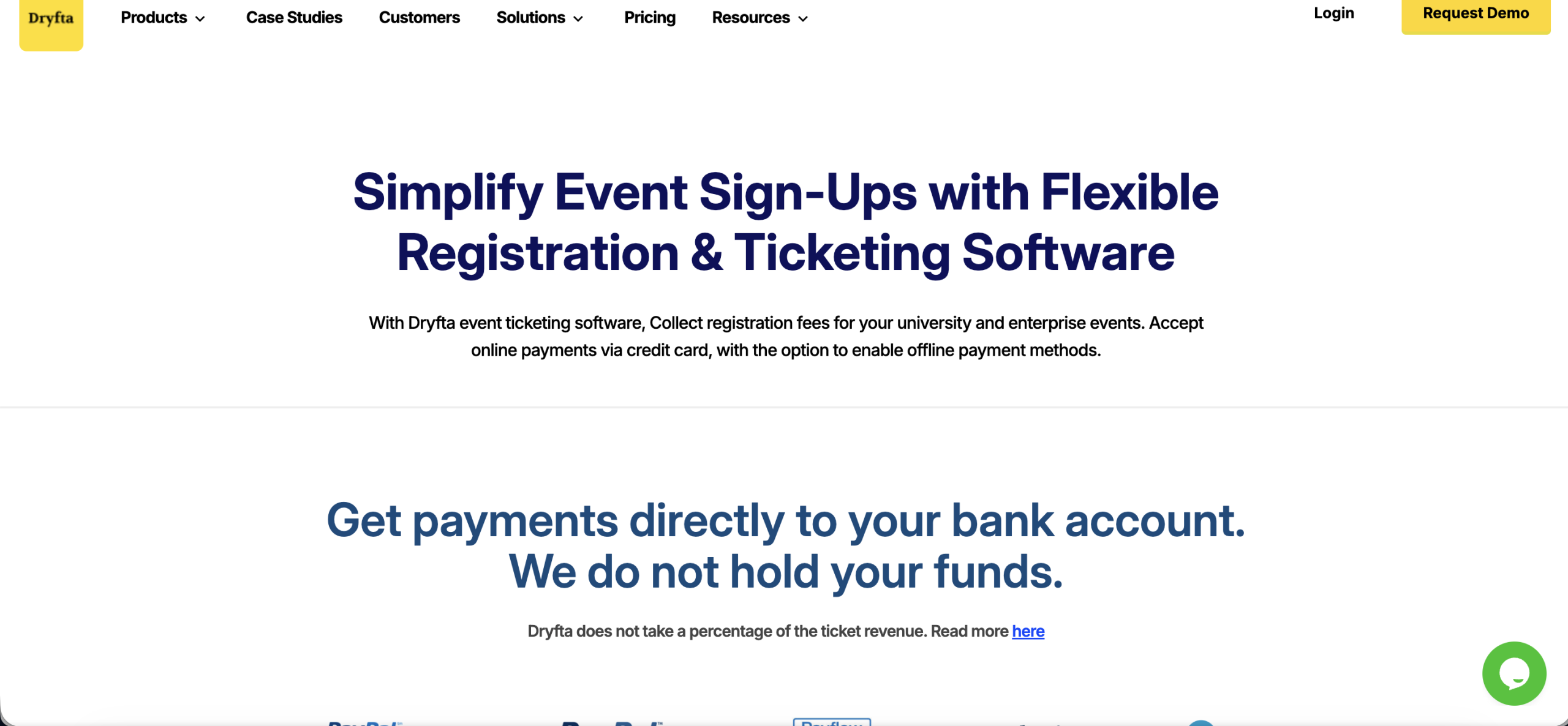
There are platforms that manage registrations and there are platforms that manage events. Dryfta is the latter, and it matters. For organizers who have spent years reconciling data between platforms, this is not a small thing.
Key features:
- Custom registration forms: Registration forms work based on conditional logic.
- Multiple ticket types: Features to allow for flexible pricing, discount codes and group registration.
- Integrated payment processing: Compatibility with global platforms like Stripe for direct fund deposits and zero service fees.
- Abstract and paper submission management: Smart, AI-powered reviewer assignment with triple blind review workflows.
- Event schedule builder: Equipped with automated capabilities to avoid conflict among sessions.
- Dedicated attendee CRM: Ability to track entire full attendee lifecycle from start to finish.
- On-site check: Hands-free dadge printing and automated digital participation certificates.
- Virtual event support: HD livestreaming and breakout room facilities for attendee engagement.
- Mobile event app: Real-time syncint to the event database.
2. Eventbrite
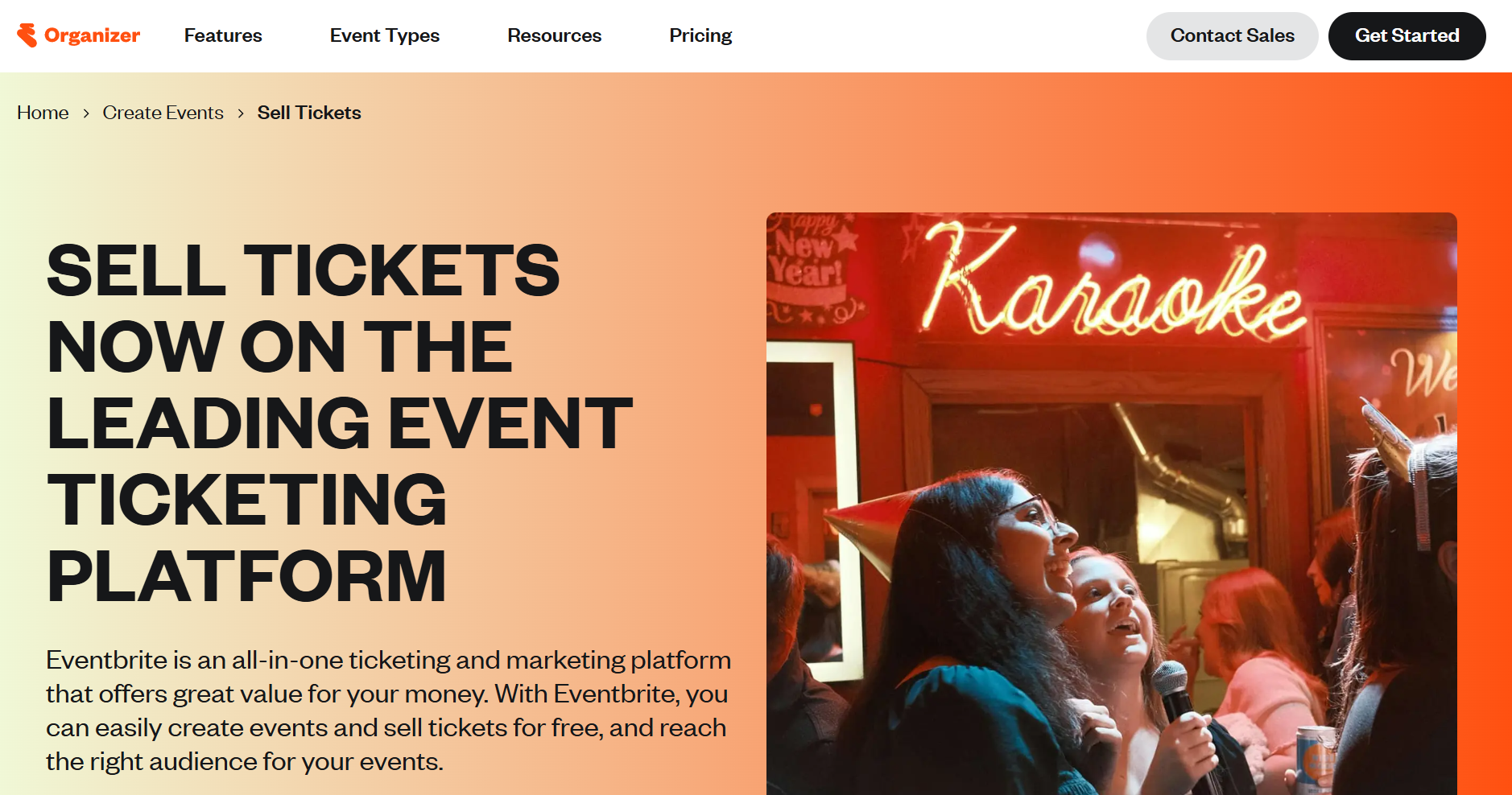
Eventbrite is one of the most recognized names in event ticketing and its familiarity is part of its value. Attendees know how it works.
Key features:
- Branded event pages with quick setup
- Basic ticketing and registration
- Attendee management dashboard
- Built-in event discovery marketplace
- Zapier integrations for connecting external tools
3. Cvent
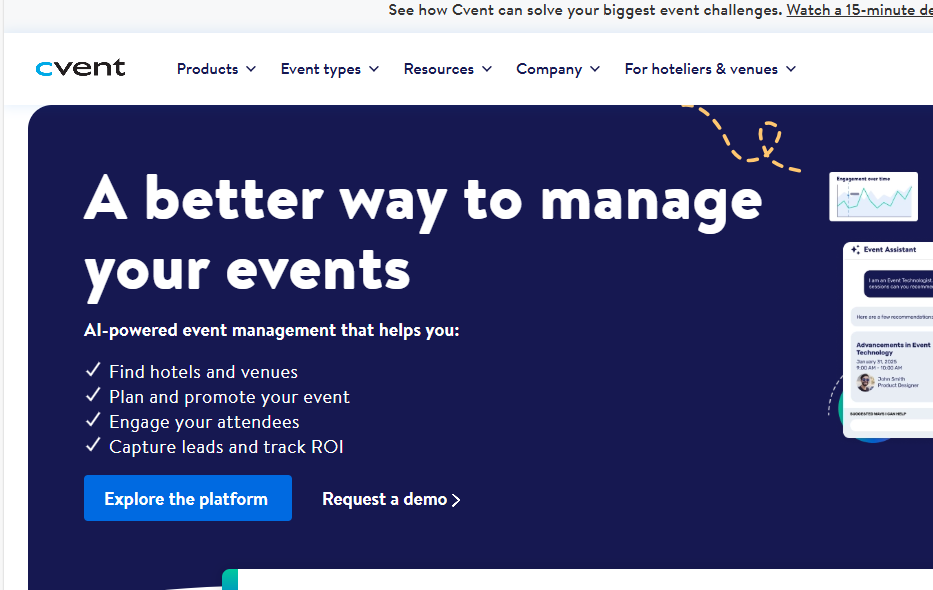
An enterprise-grade platform covering venue sourcing, registration, mobile apps and post-event analytics, Cvent is the industry standard for large corporate events and trade shows that require operational depth at every level.
Key features:
- Advanced registration forms with conditional logic and personalized attendee pathways
- Venue sourcing and room block management
- AI-generated content for event pages and email campaigns
- Native on-site check-in and badge printing connected directly to registration data
- Deep integrations with Salesforce, HubSpot and Marketo
4. Whova
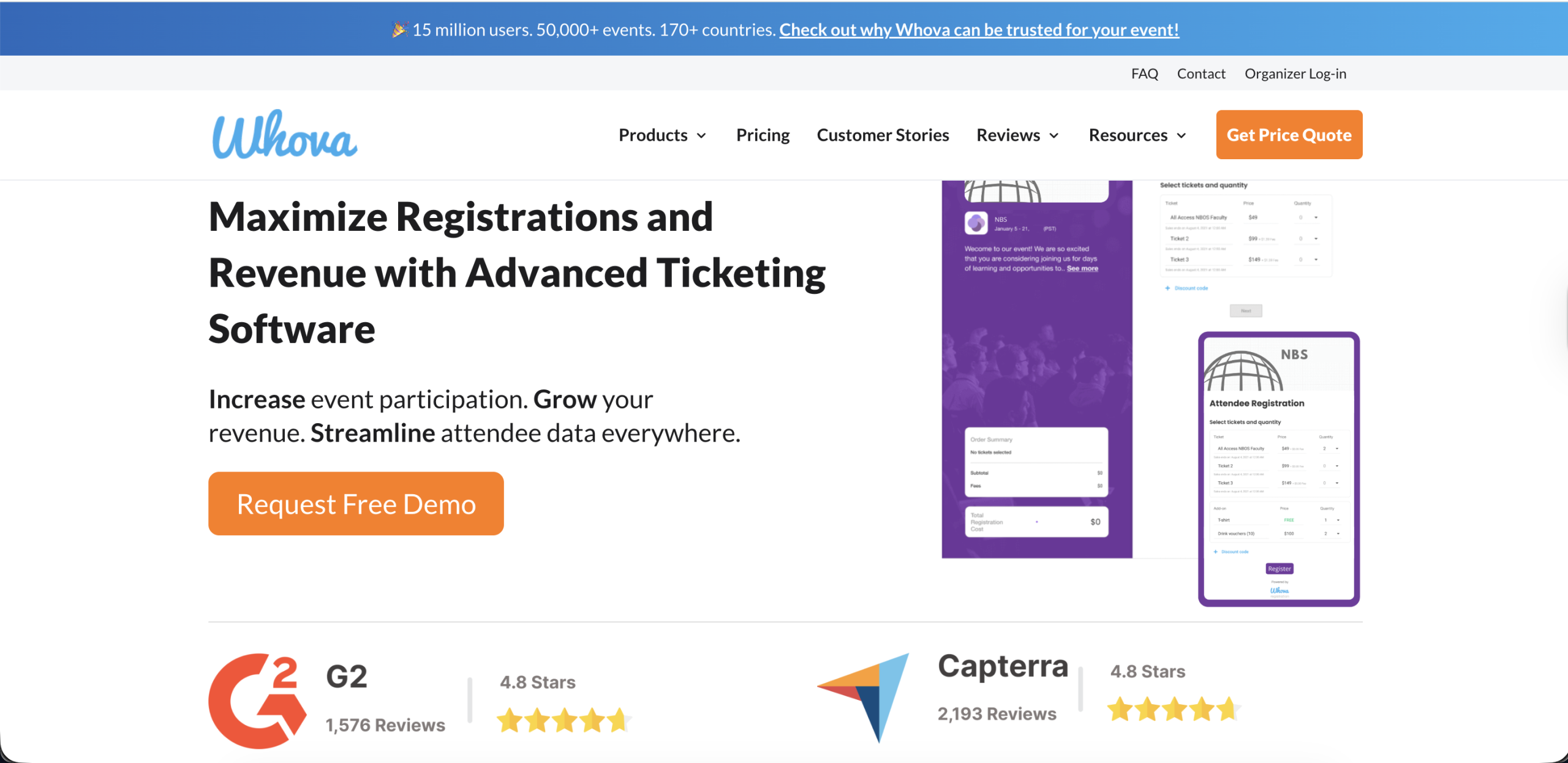
Whova has built its standing on one of the strongest attendee engagement and networking experiences in the market. For conferences and academic events where the connections made are as important as the content delivered, it is a well-regarded and frequently awarded option.
Key features:
- Custom registration forms with early-bird and member pricing
- Community boards and in-app attendee messaging
- Gamification with leaderboards and scavenger hunts
- Lead generation tools for exhibitors with digital booth profiles
- Instant payouts on ticket sales
5. Bizzabo
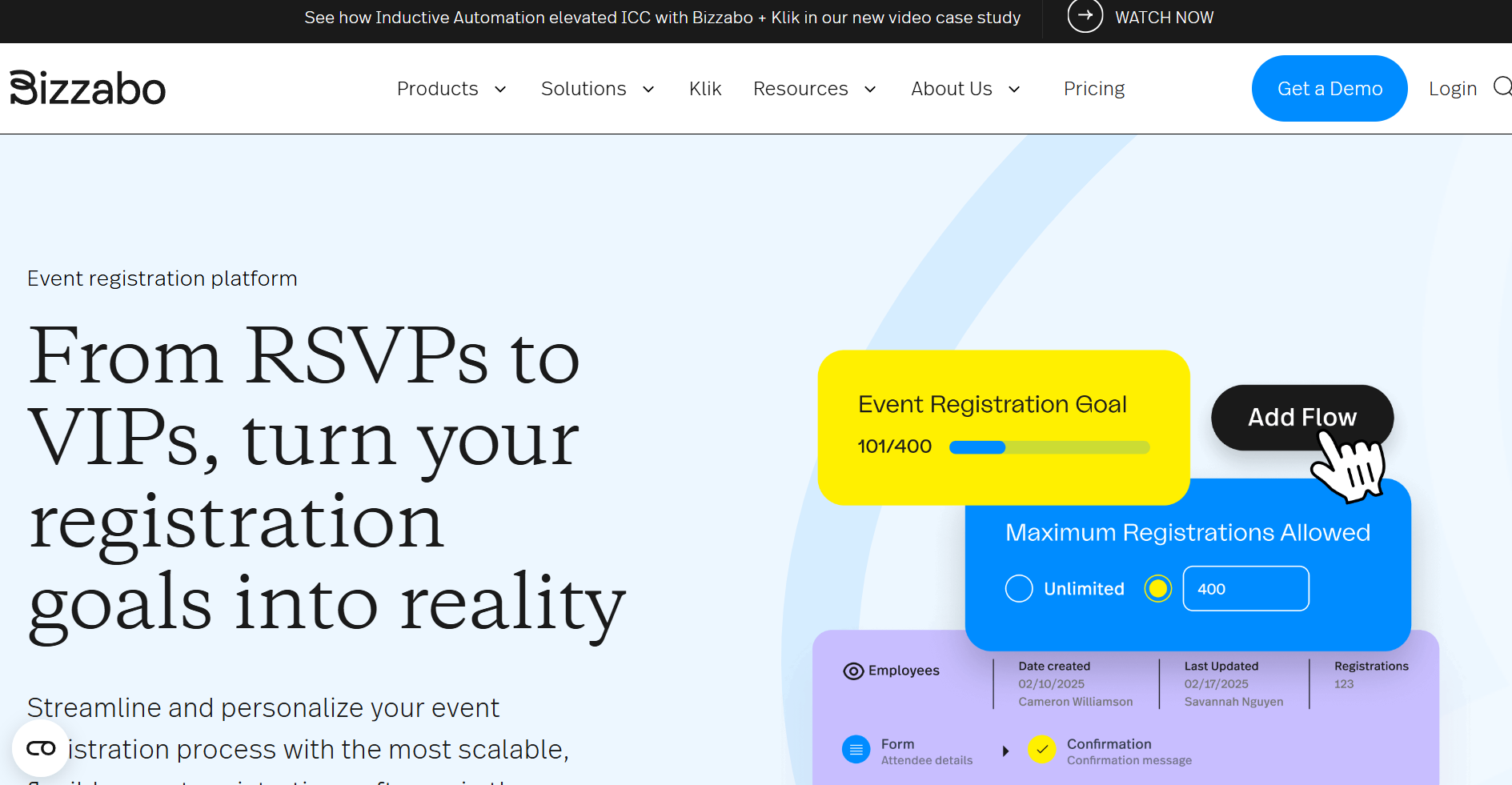
Bizzabo positions itself as a modern enterprise platform for B2B marketing teams. Its unified architecture means that session updates, speaker changes and sponsor details sync across the event website and mobile app automatically.
Key features:
- Registration and ticketing for in-person and hybrid events
- Klik SmartBadge for tap-based lead capture and real-time session check-in
- Native integrations with Salesforce, HubSpot and Marketo
- Unified event website and mobile app content backend
6. Zuddl
Zuddl describes itself as an AI-native B2B event platform,l and it has earned a 4.8 out of 5 on G2 largely by doing what it promises. It is particularly strong for teams that need deep app branding and real-time CRM.
Key features:
- Registration flows with conditional logic and approval workflows
- Fully branded mobile app and event website with real-time CRM sync
- Virtual production tools for hybrid sessions
- Real-time attendee and lead data routing to existing CRM systems
7. Swapcard
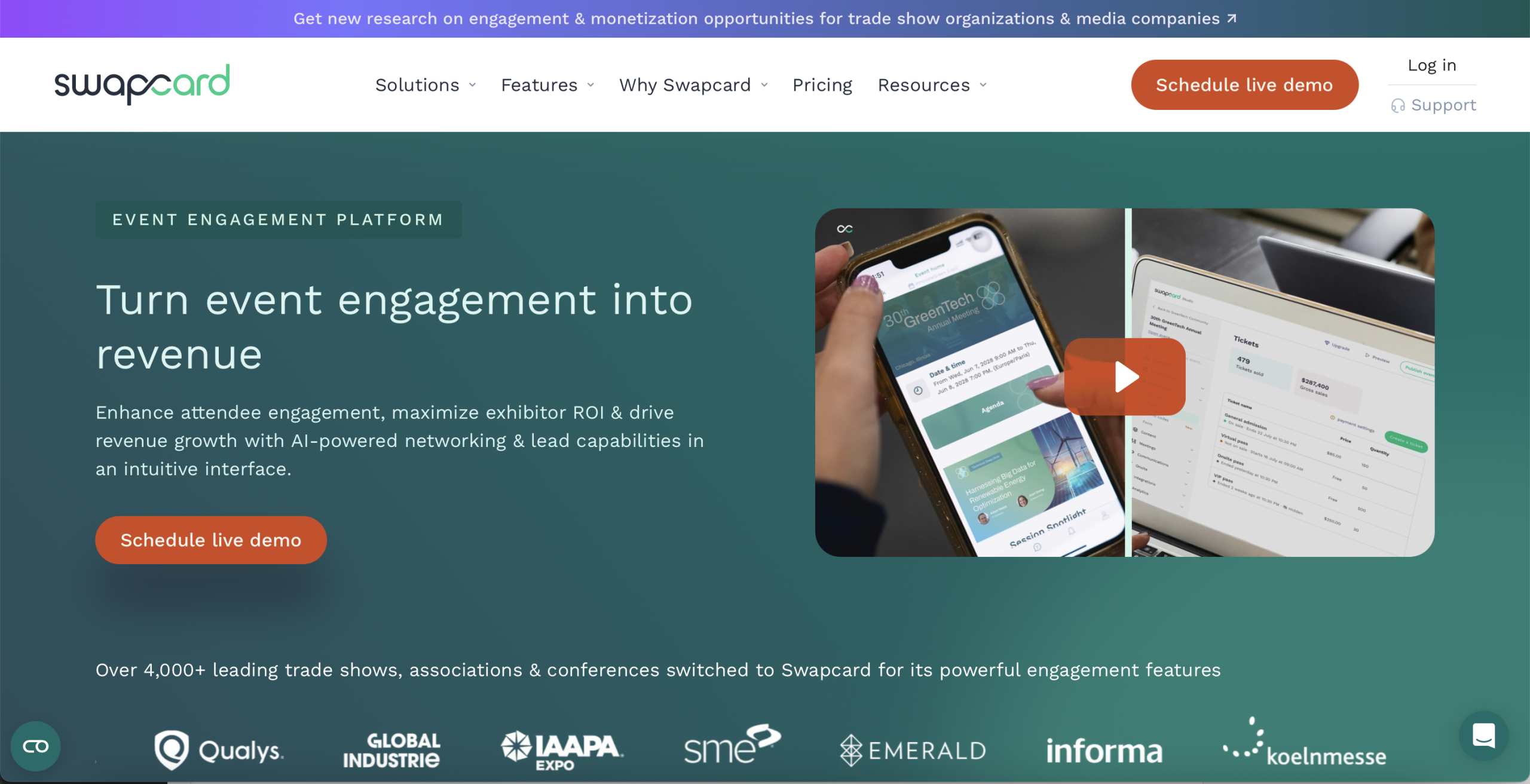
Swapcard began as a networking and matchmaking tool and has extended into registration. Its AI-driven recommendations sit at the center of what it does, and for events where the value is in the meetings made, it delivers.
Key features:
- AI-driven attendee and exhibitor recommendations
- Customizable digital exhibitor booths with lead scanning and qualification forms
- In-app meeting scheduling with attendee matching
- Virtual and hybrid event support
8. Ticket Tailor
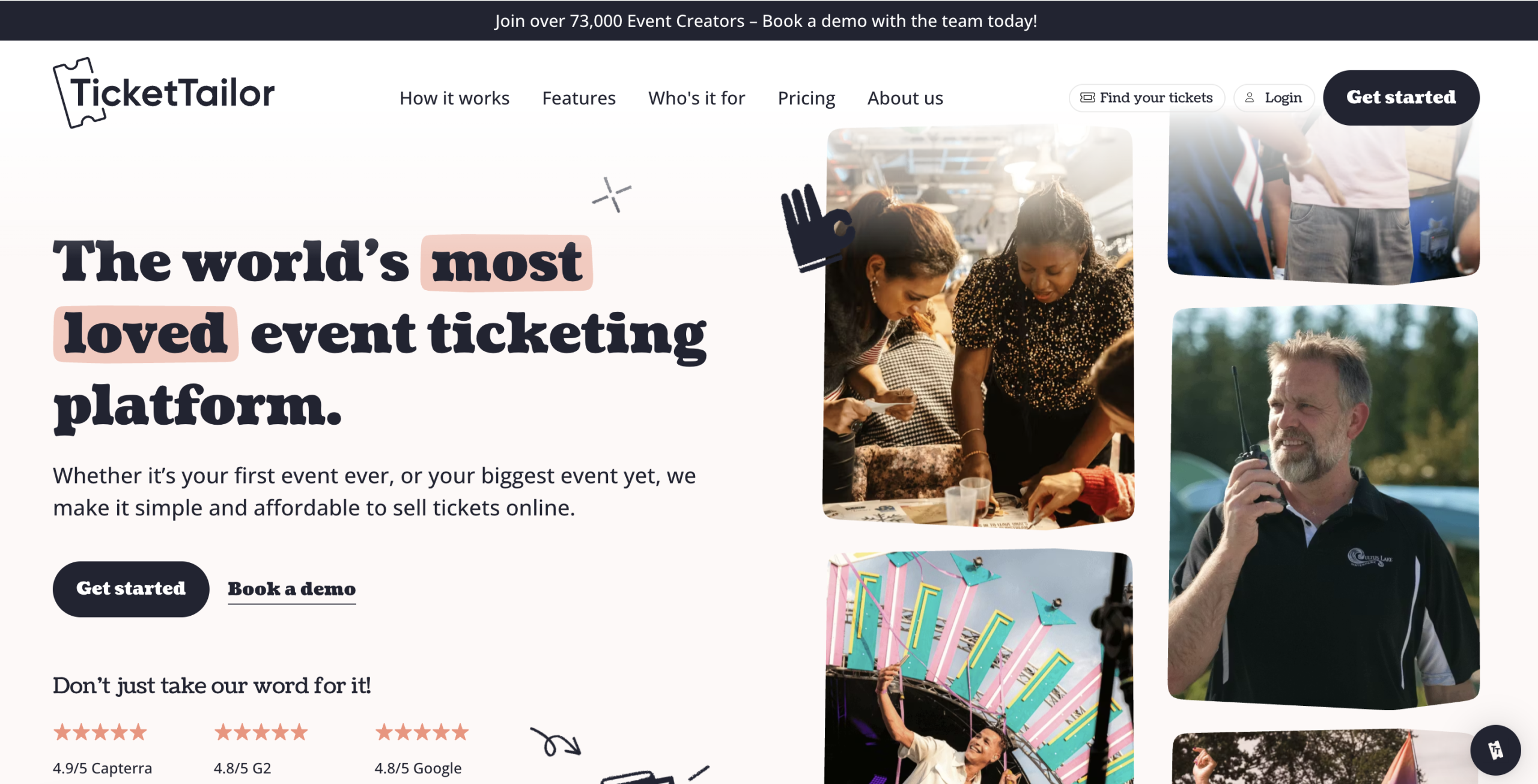
Ticket Tailor does not try to be everything. It is a ticketing platform built for organizers who want low fees, transparent pricing and a setup that does not require days of onboarding. For the right event, that restraint is a virtue.
Key features:
- Low flat-rate ticketing fees with no monthly subscription required
- Customizable event pages
- Discount codes and promotional tools
- Stripe and PayPal payment support
- Basic attendee management
Event Registration Platforms for Different Use Cases
How to Choose the Right Event Registration Platform
When choosing the right event registration platform for your needs, consider the following:
- The track-size and organizational complexity of your event.
- The budget you have available.
- Functions and features that are non-negotiable for you.
- Your integration needs and platforms you are seeking compatibility with
- The level and degree of customization you expect the software to offer.
Event Registration Platform Pricing Models
- Per-ticket fee: A percentage or flat fee on each ticket sold. It works well for occasional or lower-volume events.
- Subscription-based: A fixed annual or monthly fee covering unlimited events up to a certain attendee count. Dryfta starts at $1,499 per year. This model rewards frequency and offers more predictable costs.
- Freemium: Basic features are free and more advanced tools often required for you to buy a paid plan. Platforms like Dryfta offer a free tier for events that do not charge attendees.
- Enterprise pricing: Custom quotes based on attendee volume, features and support requirements. Cvent and Bizzabo operate here, typically starting at about $17,000 or more per year.
Benefits of Using Event Registration Platforms
- You save significant time with features like automating registration, confirmation emails and data collection. This returns hours to your team that would otherwise be spent on manual admin.
- Your annual errors also come down significantly. Automated data means fewer humans involved. This, in turn, leaves little space for manual mistakes that can cost you a lot.
- A better overall attendee journey is guaranteed. Attendees come in feeling organized and go back informed and ready for event day.
- You will witness increased registration conversions. Early-bird pricing, promo codes and abandoned registration recovery help convert more visitors into confirmed attendees.
- The quality of your data improves. Structured data collection with custom forms gives you cleaner, more actionable attendee information for post-event follow-up and future planning.
Common Challenges in Event Registration And How To Solve Them
How to deal with:
Low conversion rates: Simplifying forms, reducing required fields and adding progress indicators all help. Some platforms offer automated recovery emails for incomplete registrations.
Payment issues: Failed transactions frustrate attendees and cost you revenue. A platform with reliable payment processing and support for multiple payment methods reduces this risk significantly.
Data inconsistency: An all-in-one platform with a central attendee CRM eliminates the problem of data inconsistency at its very root.
Poor user experience: Slow loading pages, unclear navigation and mobile-unfriendly forms drive drop-offs. Be sure to the registration flow on a mobile device before launch, not after.
Integration gaps: When your registration platform does not connect to your CRM, data must be manually exported and imported after every event. It is important to therefore prioritize platforms that support integrations for the tools you already use.
Event Registration Best Practices
- Simplify forms: Collect only the information the event genuinely requires. Every additional field is a small friction that compounds across thousands of registrations.
- Optimize for mobile: A growing share of attendees register on their phones. The entire registration flow, from the landing page to the confirmation screen, should work without frustration on a small screen.
- Use multiple ticket types: Early-bird, standard and group options reach different segments and encourage earlier commitment. Price differentiation is also a form of communication about the value of registering sooner.
- Enable early-bird pricing: Time-limited discounts create urgency and improve your ability to forecast attendance well in advance. Most platforms support automatic pricing changes at a set date or ticket count threshold.
- Automate confirmations: A confirmation email should arrive the moment registration is complete. It should include the event date, location, agenda link and any preparation instructions. Not the next morning. Immediately.
Event Registration Platforms and Event Marketing Integration
A registration platform does not operate in isolation. Its value multiplies when it connects with the broader marketing infrastructure an organization already has in place.
- Customer Relationship Management (CRM): Attendee data flows into Salesforce, HubSpot or your preferred CRM the moment someone registers. Sales and marketing teams can act on that data without waiting for a manual export.
- Email automation: Registration triggers automated sequences, from confirmation to pre-event reminders and post-event surveys, without any manual sending by the organizing team.
- Lead nurturing: For B2B events, registration data can score leads and trigger targeted follow-up sequences based on ticket type, session selection or attendee profile, turning the registration form into the opening of a longer conversation.
- Campaign tracking: UTM (Urchin Tracking Module) parameters and Google Analytics integration let you see which channels drove the most registrations and what the return on your event marketing spend actually looks like in numbers.
Why Use Dryfta for Event Registration
Dryfta is one of the few platforms that covers the full event registration journey without requiring anything additional. It is built for the events that are hardest to run, academic conferences, multi-track professional gatherings and research-driven summits.
At Dryfta we do not ask you to choose between depth and affordability. Universities, professional associations and enterprise teams across multiple countries trust Dryfta for conferences ranging from 100 to thousands of attendees. Visit our website to learn more and sign up for a free demonstration today.
The Bottom Line
A registration form is the first thing an attendee encounters. It is the first test of whether you are organized and trustworthy enough to spend time, money and effort into signing up for Event registration platforms, therefore, shoulder more weight than the event management industry is willing to give it credit for. At Dryfta, we understand and give due importance to event registration. For teams managing conferences, academic events and professional gatherings that demand more than basic ticketing, our automated all-in-one event management platform offers a complete solution. It is also at a price point that is working across organization sizes. Sign up for a free demo today and watch our platform in action.
Frequently Asked Questions (FAQs)
Are event registration platforms suitable for both free and paid events?
Yes. Most platforms support both. Free events use the same forms and attendee management tools without the payment processing component. Platforms like Dryfta offer free tiers specifically designed for events that do not charge attendees.
Can event registration platforms handle large-scale events?
Yes. Enterprise platforms like Dryfta are built to scale. Dryfta supports up to 1,000 attendees for virtual events and handles large in-person conferences with on-site check-in and badge printing. In doing so, Dryfta regularly powers events with tens of thousands of attendees seamlessly.
How much do event registration platforms cost?
Costs vary considerably by model and platform. On an average, per-ticket fees range from $0.65 to $1.79 per ticket plus a percentage of the ticket price. Subscription plans start around $1,499 per year for platforms like Dryfta. Enterprise platforms like Cvent and Bizzabo typically start at $17,000 or more annually.
How do event registration platforms improve attendee experience?
They create a fast, organized registration process with instant confirmation, mobile-friendly forms and clear payment steps. On event day, digital check-in with QR codes removes queues. Attendees arrive feeling prepared rather than uncertain.
Can event registration platforms integrate with other tools?
Yes. Most platforms connect with CRM tools like Salesforce and HubSpot, email platforms like Mailchimp and payment gateways like Stripe. Many offer Zapier integrations for connecting with additional apps beyond the native integration library.
How do I choose the right event registration platform?
Start with your event type and its scale. Simple ticketed events can use lightweight tools. Academic conferences need abstract management. Corporate events need CRM integration. Match the platform to your specific feature requirements, budget and the number of events you run each year.