Event marketing plays a direct role in building trust. In fact, 77% of attendees say they trust a brand more after interacting with it at a live event. Event marketing can feel like a maze with too many paths to choose from. Your approach often shifts based on your role, your goals, and the kind of events you run. One thing stays constant, though. If you don’t promote your event well, nothing else really saves it, whether it’s in-person, virtual, or hybrid.
The good part is that event marketing becomes far more manageable when you lean on the right mix of technology, data, and analytics. Once you set that up, scaling your efforts across multiple events gets a lot easier and far more consistent. In this guide, you’ll learn what event marketing actually looks like in practice, how to build a strategy that works, and how to execute it in a way that improves results across your entire events program.
What Is Event Marketing?
Event marketing is a multi-faceted approach for designing, executing and promoting themed activities in order to meet specified business objectives. In simple terms, it is the process of creating a branded exhibit to achieve a target audience. There are two ways to look at this type of marketing:
- Promoting events: This refers to reaching out strategically to sell tickets to events. Whether it is launching a new product or hosting a conference, you have to create an event marketing plan using social media, e-mail marketing campaigns, and first-come-first-served incentives to get people registered and raise awareness of the event.
- Using events as a marketing channel: In this case, the event is the medium. Brands leverage events to deliver product demos, produce high-quality leads, and increase their market position.
The best part? Event marketing creates a human touch that digital ads simply cannot replicate.
Why Event Marketing Is Important?
Event marketing is an incredible opportunity to have a very personal connection with customers and potential customers. The most important advantages are:
- Brand awareness: Events create a much stronger memory of your company’s name than advertising does.
- Lead generation: Leads generated at events have already expressed some level of interest by registering or attending. This makes all future communication with them more productive.
- Customer engagement: At in-person or virtual event marketing, people can engage and ask questions instead of scrolling past.
- Building relationships: There is no substitute for human interactions. No matter whether they occur in person or virtually.
- Revenue impact: When used correctly, event marketing software lets you track and measure the financial returns on investment from your events and ultimately connect those returns to revenue generated.
Types of Event Marketing
Different formats of gathering serve unique roles in a modern business strategy. Some focus on lead generation, others on brand visibility or deeper engagement. The trick is picking the right format for the right moment. Let’s connect the dots and break down the most common types you’ll come across:
- Trade shows: Large industry gatherings where brands showcase products, meet prospects, and generate high-intent leads through face-to-face interactions.
- Conferences: Structured events built around sessions and keynotes to share knowledge and position your brand as a thought leader.
- Webinars: Online sessions that help you demonstrate products and reach a wider audience without geographical limits.
- Product launches: Focused events that create hype around a new offering and give your audience a first look experience.
- Brand activations: Interactive experiences that help people engage with your brand in a memorable and often shareable way.
- Hybrid or virtual events: Flexible formats that combine online and in-person elements to expand reach while maintaining engagement.
Event Marketing vs Event Management vs Experiential Marketing
|
Aspect |
Event Marketing |
Event Management |
Experiential Marketing |
|
Primary focus |
Promoting events and driving attendance |
Planning and executing events |
Creating immersive brand experiences |
|
Goal |
Increase visibility, leads, and engagement |
Deliver a smooth, well-organized event |
Build emotional connections with the audience |
|
Scope |
Campaigns, channels, and promotion strategies |
Logistics, operations, and coordination |
Interactive, memorable brand interactions |
|
Key activities |
Email campaigns, social media, ads, SEO |
Venue setup, vendor coordination, scheduling |
Live activations, brand installations, experiences |
|
Success metrics |
Registrations, attendance, engagement, ROI |
Event execution quality, attendee satisfaction |
Brand recall, engagement, emotional impact |
|
Example |
Promoting a product launch event |
Managing the logistics of that launch event |
Creating an interactive product demo experience |
Event Marketing Strategy Framework (Step-by-Step)
Building a successful campaign requires a structured approach. You need a clear structure that connects your business goals to audience actions. Let’s walk through the key stages that actually make a difference:
- Define business goals: Start with the bigger picture so your event supports revenue, brand growth, or customer engagement.
- Identify target audience: Get specific about who you want to reach, what they care about, and why they would even show up.
- Set SMART goals: Turn broad ideas into measurable targets to know exactly what success looks like and how to track it.
- Choose event type: Pick a format that fits your goal, whether it is in-person, virtual, or hybrid, based on reach and interaction needs.
- Select channels: Decide where you will promote your event so your audience actually sees it.
- Create a timeline: Plan your campaigns in advance to build steady momentum instead of rushing everything at the last minute.
Understanding Your Target Audience
An effective event marketing strategy begins by delving deeper into the needs of those you plan to serve. Go beyond demographics and get inside the heads (psychological) and routines (logistical) of your attendees. Here’s connecting the dots in terms of data and strategy:
- Audience personas: Create detailed, role-based, interest-based and goal-based profiles so your message does not appear as generic.
- Pain points: Find out what problem your audience is trying to resolve.
- Behavior: Study how your audience interacts with your event related content as well as platform interactions (Twitter, Facebook, LinkedIn, email) to provide them with what they are looking for.
- Preferred channels: Concentrate on the channels they use on a daily basis(email, social media, community boards, webinars).
Event Marketing Plan (Before, During, After)
An effective event marketing plan covers the full journey, from building early awareness to driving live engagement and staying connected even after the event ends.
Pre-Event Marketing
The effectiveness of any event marketing plan is built on the momentum created in the run-up to the big day. A properly designed event marketing plan will help you to get your message to the right people at the right time, whether you are running physical campaigns or scaling with virtual event marketing. The following are areas in which you can apply your resources:
- Email campaigns: Build excitement for your event by sending communications on schedule and targeted to the right audience.
- Social media: Regular posting and reminder-based social media postings will help generate buzz and keep you top of mind with your target audience.
- Landing pages: Create a landing page that clearly communicates the value of your event and how easy it is to register.
- Early-bird offers: Provide an incentive for registering early to reduce procrastination and “wait and see” behavior.
During Event:
This is the stage where your event marketing plan is implemented. The idea during the event is to turn observers into participants who will spread your brand long after the last session. The following is what you should pay attention to:
- Live content: Present sessions, demos, presentations, or panels that are relevant and engaging enough to keep attendees engaged throughout.
- Social interaction: Promote live posting and hashtags to keep the discussion going beyond the event venue.
- Networking: Provide networking opportunities for attendees, since the real value is often the people they meet, not necessarily the content they listen to.
- Content capture: Record sessions, capture photos/videos, and highlights so that you can reuse that content long after the event is over.
Post-Event Marketing
There’s no reason why your momentum should be lost immediately after an event. In many cases, it is during the post-event phase that you will capture the largest portion of your Return on Investment (ROI). As the standard event marketing definition describes, this final phase of a campaign is designed to strengthen your attendees’ relationship with your brand.
Paying attention to this last phase is important. What to focus on in this final phase is as follows:
- Follow-up communications: This could include links to a video recording, session takeaway information or a clip of the speaker’s presentation.
- Surveys: Gather feedback on what worked and what did not.
- Content reuse: Take your presentations, sessions, and panels and turn them into blog posts, short clips, highlights of the event, and social media posts.
- Lead nurturing: Continue engaging your prospects with targeted messaging.
Event Marketing Channels & Tactics
Choosing the appropriate marketing channels is a bit like throwing a great party: you need the right combination of guests and a killer playlist. To get people showing up for your event, you need to meet them where they already are. Also, with some planning and the right tool use, you don’t have to spend much money to make your event known.
- Email Marketing: While email marketing may not be the flashiest marketing technique available today, it remains one of the most dependable methods. Using email marketing allows you to market your event, remind attendees of upcoming events, and post agendas.
- Social media marketing: You likely have an existing social media audience. Use it. Post consistently, highlight speakers and pick a hashtag. Using social media effectively can create buzz around your event and increase visibility without spending much money.
- Paid ads: A targeted way to get noticed above the noise and market your event to new demographics that may never have known about your brand before.
- Event website: Your event’s website and registration are typically the starting point for all effective event marketing strategies. As such, your website is usually where people go to learn about your event, decide to attend, and ultimately register. Thus, your website should also be optimized for speed and the ability to convince users to attend your event.
- Influencer Partnerships: Influencer partnerships let you tap into audiences that already trust the person promoting your event.
- Referral marketing: People generally rely on recommendations from other People they trust. Give attendees incentives to refer friends (via discounts or perks).
How to Create a High-Converting Event Page?
Your event page must do more than just look pretty. It must respond to all the questions even before the user completes the thought. Trust and value are the building blocks of a good event page, whereas virtual event marketing requires even greater accuracy, as people are fully dependent on what they see online.
When your page seems to be confusing or incomplete, people leave. Make it simple, convincing and easy to implement. This is what is most important:
- Agenda: Have a clear schedule with details of the sessions, time and highlights so that visitors know what they are getting.
- Speakers: Showcase your presenters’ names, titles, and expertise to build credibility and excitement.
- Pricing: List all ticket levels and registration fees clearly so users can make informed financial decisions.
- CTA: Prominent buttons with direct language should take the user directly to the checkout or sign-up form.
- FAQs: Get the most frequent questions out of the way before indecisiveness sets in and prevents conversions.
Event Marketing Budget Planning
When you consider what is event marketing in a business sense, it is simply an investment that needs a balanced financial strategy. In simple terms: your budget must reflect your objectives, with high-impact touchpoints that can move the needle.
- Channel allocation: Spread dollars across social media, email, industry partnerships, and where your target market is most active.
- Paid vs organic: A balance of reach through paid advertising for the short term, and developing a strong brand image over the long haul with quality content.
- ROI driven spending: Allocate dollars into aspects that are producing conversions by continually tracking data and making adjustments to your spending plan in real-time.
Event Marketing KPIs & ROI Measurement
Event marketing is a numbers game, especially when it comes to measuring success through key performance indicators (KPIs) and Return on Investment (ROI). It’s very easy to measure excitement with registration and engagement, but without tracking the right metrics, all of this may be nothing more than a guess about which elements have been successful. The correct items to track are:
- Pipeline generated: Measuring the number of leads and opportunities from the event that will flow into your sales pipeline.
- Revenue impact: Creating a direct connection between event-related activities and actual revenue or closed deal numbers to determine true ROI.
- Registrations: Measure the number of event registrations and the effectiveness of your campaigns in turning interest into action.
- Attendance rate: Compare registrations to actual attendance to identify drop-offs and improve attendance in the future.
- Engagement: Consider session participation, interactions, and activity levels to know how engaged your audience was.
Common Event Marketing Mistakes to Avoid
Even the most inventive event marketing plan may not perform well when the underpinning execution is faulty or unfocused. It’s equally important to avoid mistakes when executing your event marketing plan as it is to develop it. The following are what to beware of:
- Lack of clear goals: It may seem that running an event without clear goals leaves your team guessing what success even looks like.
- Weak targeting: Attempting to reach everyone often means reaching no one who actually matters.
- Lack of follow-up: When you ignore the people who attended your event, you kill the momentum you just created. So don’t let leads go cold.
- Neglecting analytics: You should never overlook analyzing your data, as it is the key to optimizing your future event marketing plans.
- Excessive dependence on a single channel: Relying on a single channel limits your reach and makes your strategy vulnerable.
Event Marketing Tools & Software
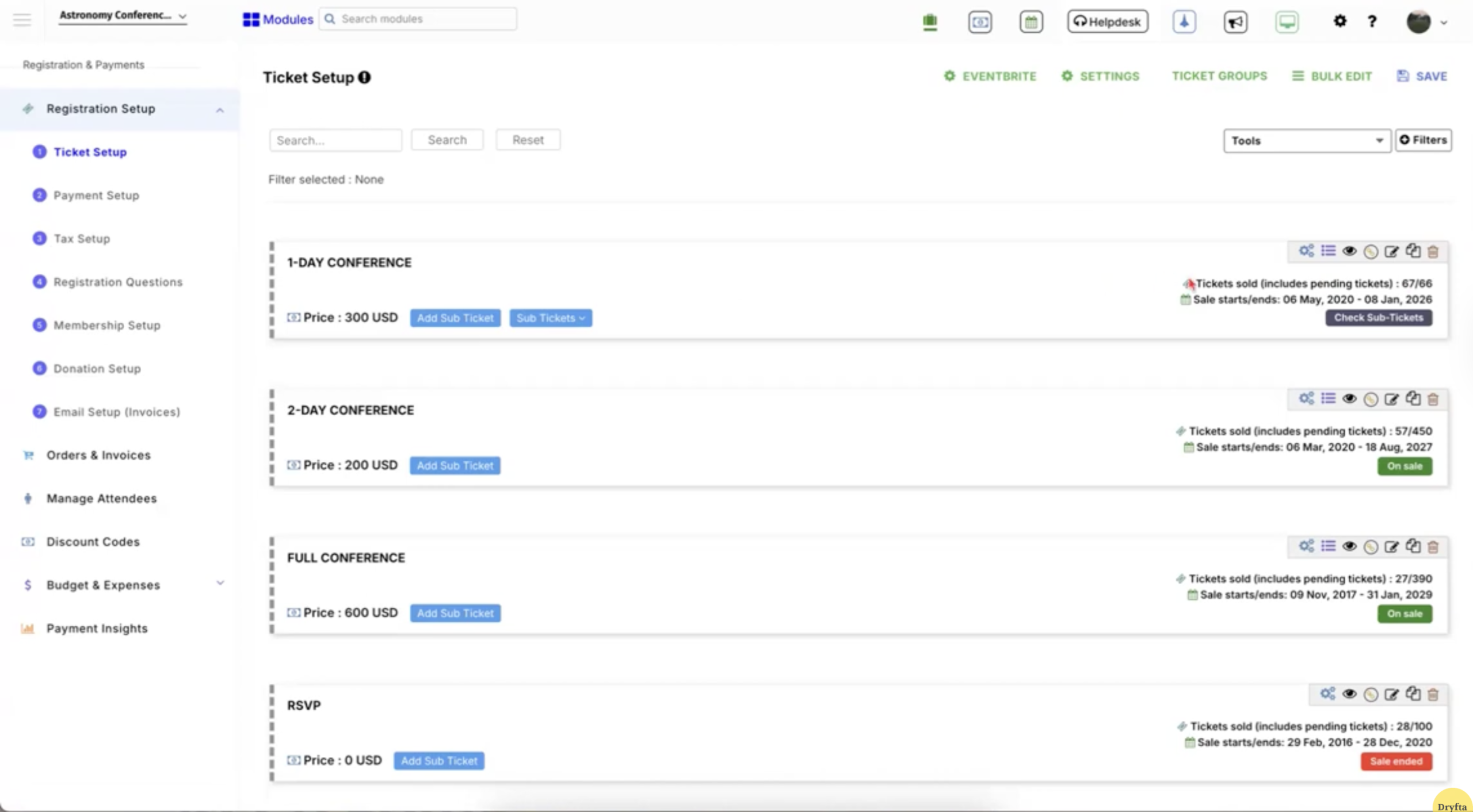
Most event planners use all-inclusive platforms such as Dryfta to manage every aspect of an event’s lifecycle. The platform is designed specifically for research-driven conferences and events and allows organizations to automate many tasks involved in executing the entire event.
- Event website builder: Use graphic design tools to create completely customized, mobile-responsive websites for your event. Choose your own domain name or have your website created as part of the Dryfta brand (white-labeling).
- Email automation: Send targeted email campaigns. Automate emails to attendees when they register or cancel registrations. Segment your audience based on interest level, location, and previous attendance with built-in CRM and mass emailing.
- Registration tool: Create customizable registration forms. Offer various types of tickets. Allow attendees to pay for their registration online through integrated payment gateways. Track registrants’ orders with live tracking from one dashboard.
- Analytics: Track real-time data on attendee behavior at your events. Generate customizable reports to measure the success of your events.
- Integration with CRM tools: A native event CRM comes pre-installed in Dryfta. In addition, Dryfta integrates with other CRM tools, such as Mailchimp and HubSpot, for even more efficient data synchronization and audience segmentation.
Best Practices for Event Marketing Success
Successful event marketing efforts are almost never based on last-minute efforts or on relying solely on a single promotional campaign. Successful events marketing campaigns require a strategy. While the execution doesn’t have to be complicated, you do have to perform the fundamental elements of the plan correctly.
Here’s what really matters for successful event marketing campaigns:
- Start early (8–12 weeks): Give yourself enough runway to build awareness and create steady momentum before registrations peak.
- Use a multi-channel approach: Relying on a single channel is never as effective as combining multiple channels, such as social media, content, and paid advertising.
- Personalize campaigns: Develop your messages for specific segments of your target audience so they feel your communications were sent specifically to them.
- Track performance: Monitor key metrics throughout the campaign to adjust quickly and improve results in real time.
The Bottom Line
Picking the right marketing channels can make or break your event turnout. Social media, email marketing, advertising, your event website, and influencers deliver your target audience with many opportunities to become aware of your event, engage with it, and ultimately register for it. Most often, when we think of “the” channel that will get our registration numbers up, we forget that each channel provides an opportunity to interact with the target audience, as long as they are used effectively together.
With platforms like Dryfta, you can manage all these marketing aspects from a single location. If you want to see how it works in real time, book a free demo and take a closer look.
FAQs About Event Marketing
1. What are the best channels for event marketing?
The best channels for event marketing depend on your audience, but a mix is usually most effective. Email marketing is the top performer for direct conversions, while social media builds vital organic buzz. For high-intent traffic, paid ads on LinkedIn or Google work wonders. Don’t overlook influencer partnerships, which add instant credibility and niche reach.
2. How do you create an event marketing strategy?
Start by defining what you really want out of your event. Establish smart objectives, understand your audience’s actual issues, and base your strategy on them. Next, plot your campaigns across channels, starting with pre-event buzz, then live, and finally post-event follow-ups. When you employ event marketing tactics such as personalized communication and high-value propositions, you feel purposeful and linked to actual business results.
3. When should you start promoting an event?
You should generally start promoting an event 3 to 4 months in advance, depending on its scale. For virtual event marketing, a 6-week lead time often suffices. Use this period to launch early-bird offers and teaser content. A structured timeline ensures you build consistent momentum, preventing a last-minute scramble to fill seats and hit registration targets.
4. How do you measure event marketing success?
Measure success by tracking KPIs that align with your initial goals. Key metrics include total registrations, actual attendance rates, and attendee engagement levels. Beyond numbers, look at the sales pipeline generated and the overall revenue impact. An event marketing software makes it easier to analyze this data.
5. What are common event marketing mistakes to avoid?
Avoid common pitfalls like having no clear goals or failing to follow up with leads promptly. Weak targeting often leads to low-quality attendance, while ignoring data analytics prevents you from optimizing future event marketing ideas. Finally, never rely on a single promotion channel; a diverse mix across email, social, and paid ads is essential for consistent reach.
6. How can you increase event registrations?
To increase registrations, create a high-converting landing page with a clear CTA and compelling speaker bios. Use urgency-driven tactics like limited-time discounts or exclusive “VIP” perks to trigger immediate action. Additionally, leverage referral marketing by encouraging current registrants to invite peers.
7. What tools are used for event marketing?
For an all-in-one approach, Dryfta offers a practical suite of features including a website builder, registration tools, and abstract management. It handles technical logistics like automated emails and secure payments within a single dashboard. While it’s a robust option for streamlining workflows and syncing data, it’s best suited for organizers who want to centralize their entire event lifecycle.