Pop-up events are now one of the most cost-effective ways to create brand buzz. According to a Google survey cited by Zendesk, brands that ran pop-up activations reported a 46% increase in sales, a 51% rise in market visibility and 66% greater brand awareness compared to periods without a pop-up presence.
More than being just another attempt at marketing, pop-ups let brands test the waters of new markets. but with a safety net to lean back into. The money that goes into hosting pop-up events is substantially less in comparison to other advertising activities. And the best part yet about it is that it allows brands to connect with their customers in person and face-to-face.
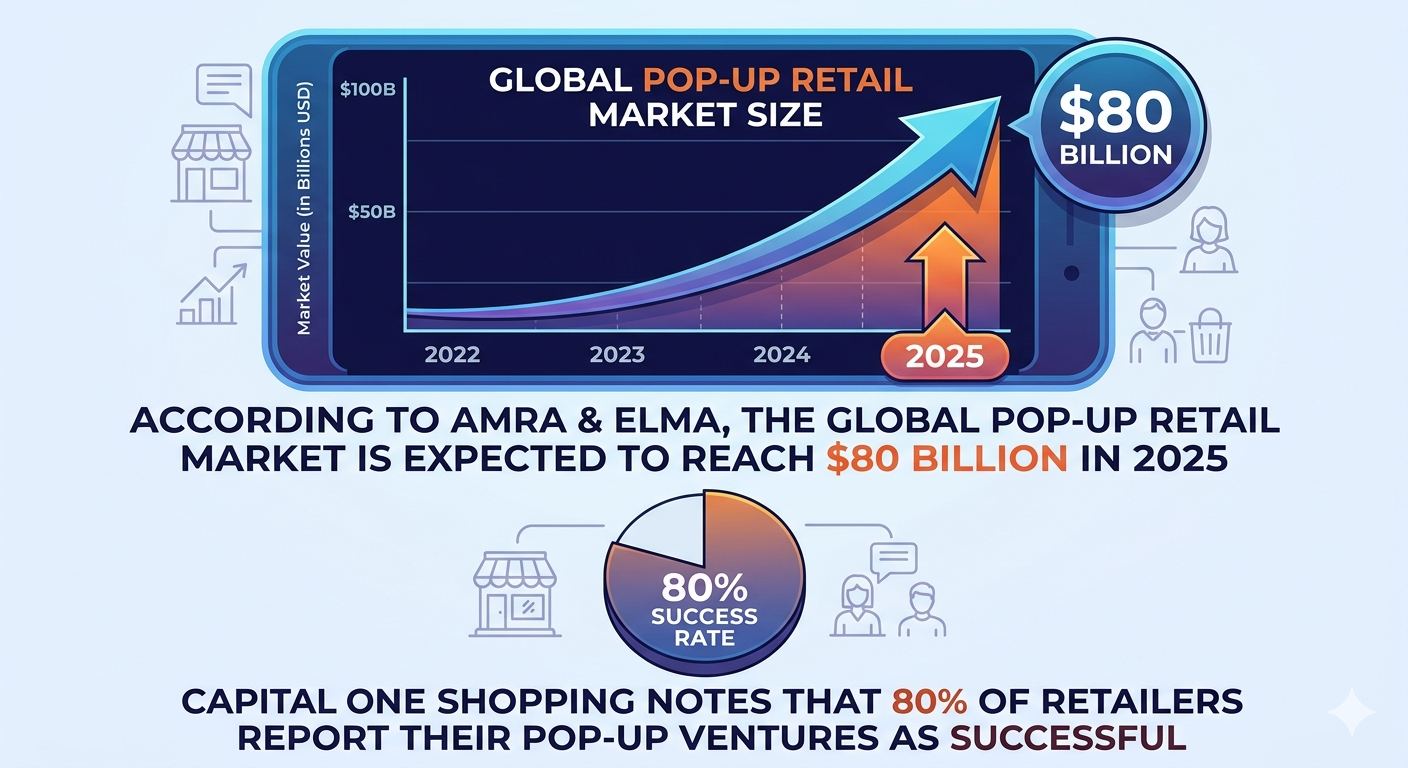
The global pop-up retail market is now expected to reach $80 billion in 2025, according to Amra and Elma. Capital One Shopping also noted that 80% of retailers report their pop-up ventures as successful. If you and your brand want to be in this 80% of winners but don’t know where to start, you’re in the right place. This is the first and final guide that you will need to read about pop up events in 2026. We’re taking you down everything that an event team or a marketing professional needs to know.
In this complete guide, we’re covering everything you need to know about pop up event ideas your team needs to execute the event well.
What are Pop-up Events?
A pop-up event is a temporary and short-durational event that is held in an unexpected or unconventional location. The reason for brands to choose spaces that their target audience would least expect is simple: to show up and create buzz. Pop-up events are directly the opposite of permanent retail and recurring event formats. They’re defined almost entirely by the element of surprise. They seem to appear out of thin air, stay for a few predetermined hours or days and then exit.
Key Characteristics of Pop-up Events
Pop-up events are distinguished by a few characteristics, which include-
-
- Experiential and live: Pop-up events sit at the intersection of experiential marketing and live events. The format is used by brands to launch products, test new markets, build community around a cause or simply generate the kind of attention that a paid advertisement cannot manufacture.
- Limited duration: The temporary nature of the format is not a limitation. Rather, it is the key characteristic and mechanism. Scarcity and novelty are what drive the foot traffic, the social content and the urgency that make a pop-up work.
- Brevity: Pop-up events can be compared to flash mobs in their mechanics. The brand does not wait for customers to find it. It places itself directly in the path of the audience it wants to reach, on its own terms and for a defined window of time.
- Social media amplification: The novelty and visual distinctiveness of pop-up events make them highly shareable.
Benefits of a Pop-up Events
The appeal of pop-up events is well-supported by data across both retail and experiential marketing. Some of its benefits include but are not limited to the following:
-
- Higher brand awareness at lower cost: Two-thirds of retailers use pop-ups specifically to strengthen brand awareness, according to Amra and Elma. The format generates awareness at a fraction of the cost of a permanent retail installation or a large-scale event.
- Lead generation and data collection: Leads and data collection is now the single most important metric for consumer events, according to Kande Photo Booths. A well-structured pop-up with a clear registration or opt-in mechanism is one of the most cost-efficient lead capture tools available.
- Market testing before permanent commitment: Majority of pop-ups are focused on new product launches. Pop-up events therefore let brands test consumer response in a real commercial environment without the financial exposure of a permanent location.
- Social media content generation: A visually distinctive pop-up can generate organic content at a scale that no paid social budget can match.
Types of Pop-up Events
Pop-up events are not a single format. They exist across a wide range of structures, each suited to different brand objectives and audience types. The most common types of pop up events include:
-
- Pop-up retail shops: Temporary stores where brands sell products directly to consumers in a non-permanent retail setting. These are used by both established brands testing a new geography and newer brands that want a physical retail presence without a long-term lease.
- Pop-up marketing events: Brand activation events designed to generate awareness, interaction and social content rather than direct sales. The experience here is the product. Common activities comprise interactive installations, tasting events and sensory brand experiences.
- Pop-up restaurants and food events: Temporary dining concepts used by chefs, food brands and hospitality groups to test menus and to attract some press attention leading up to a permanent opening.
- Pop-up art and cultural events: Gallery shows, book launches, film screenings and community art installations that use the pop up events to build a sense of occasion and exclusivity.
- Cause and community pop-ups: Non-profit and community organizations tap into the format to raise awareness, recruit volunteers or to do things like drive petition sign-ups in high-footfall public spaces.
Best Event Management Software for Pop-up Events
Managing a pop-up event without the right software means handling everything manually. Handling everything manually means a loss of efficiency. For an event format like pop up that moves fast and depends on operational precision, this kind of fragmentation can cost you severely. It chips away at your precious time and drains your leads.
Dryfta is an all-in-one event management platform built to handle every stage of a pop-up event in a single system. If you have a pop-up up event idea, we have software that can turn this idea into an engaging event. Here are some of Dryfta’s best features that are particularly relevant to the pop-up event format:
-
- Branded registration pages with custom fields, ticket types and payment processing. Set up in minutes, shareable immediately via link, QR code or social media.
- Mobile check-in with QR code scanning for fast, paperless attendee processing at the door. No hardware required beyond a smartphone or tablet.
- A centralised dashboard showing real-time attendance data, opt-in status and attendee profiles across all event sessions.
- Post-event dashboards covering registration volume, attendance rate, lead capture numbers and session-level data for multi-session pop-up formats.
9 Keys to Organizing and Planning a Pop-up Event
The most successful pop-up events are the result of disciplined pre-event planning that makes the execution look and feel almost effortless to the attendee. The nine factors in the below section are some key strategies to achieve just that kind of effortless execution on pop up event day:
-
- Set specific goals and go over key performance indicators that are important to you before all else. If your goal is lead volume, plan your day accordingly. Should it be social media reach, ensure that you have ideas of the kind of content you would be filming.
- Work out a realistic budget that also accommodates contingencies and miscellaneous costs. Pop-up costs include venue or space hire, build-out and fit-out, staffing, permits and licensing, technology, and marketing. On top of this, it is important to keep a reasonable contingency buffer relative to your total budget.
- Come up with a creative concept and theme. This is especially important if you will be on display alongside multiple other similar brands or competitors. The visual and experiential identity of the pop-up needs to be distinctive enough to earn attention and social sharing.
- Lock the right venue and keep logistics figured out as early as possible. Keep in mind that your location is what determines your audience. Permits and landlord approvals take longer than most teams expect and need to be accounted for in logistics.
- Nail the technology and infrastructure setup: Wi-Fi, power supply, payment processing, AV equipment and check-in technology. Everything needs to be tested before the event opens.
- Build a targeted pre-event marketing campaign. Send mails to existing customers, if any, or work on social media promotion using teasers. If feasible, collaborate with local influencers and geo-targeted paid advertising.
- Staff your pop-up events with trainedpeople. The staff at your pop-up is the brand in person. Understaffed pop-ups with long queues lose attendees who simply walk away.
- Create a systematic lead capture and follow-up process. Every attendee who registers, opts in or interacts with a brand representative at a pop-up is a potential lead. Make sure to tap into it and follow up.
- Measure performance against the original KPIs and document learning. Your post-event analysis should cover things like foot traffic and conversion rate, lead capture volume, social media reach and sentiment, on-site sales data and attendee feedback.
Why Pop-up Events Matter
Pop-up events matter because they solve a problem that most digital marketing cannot.
-
- They create urgency that digital channels cannot manufacture. The temporary nature of a pop-up event drives foot traffic that no always-available digital forum can match up to. People are bound to prioritize experiences that they know will close soon.
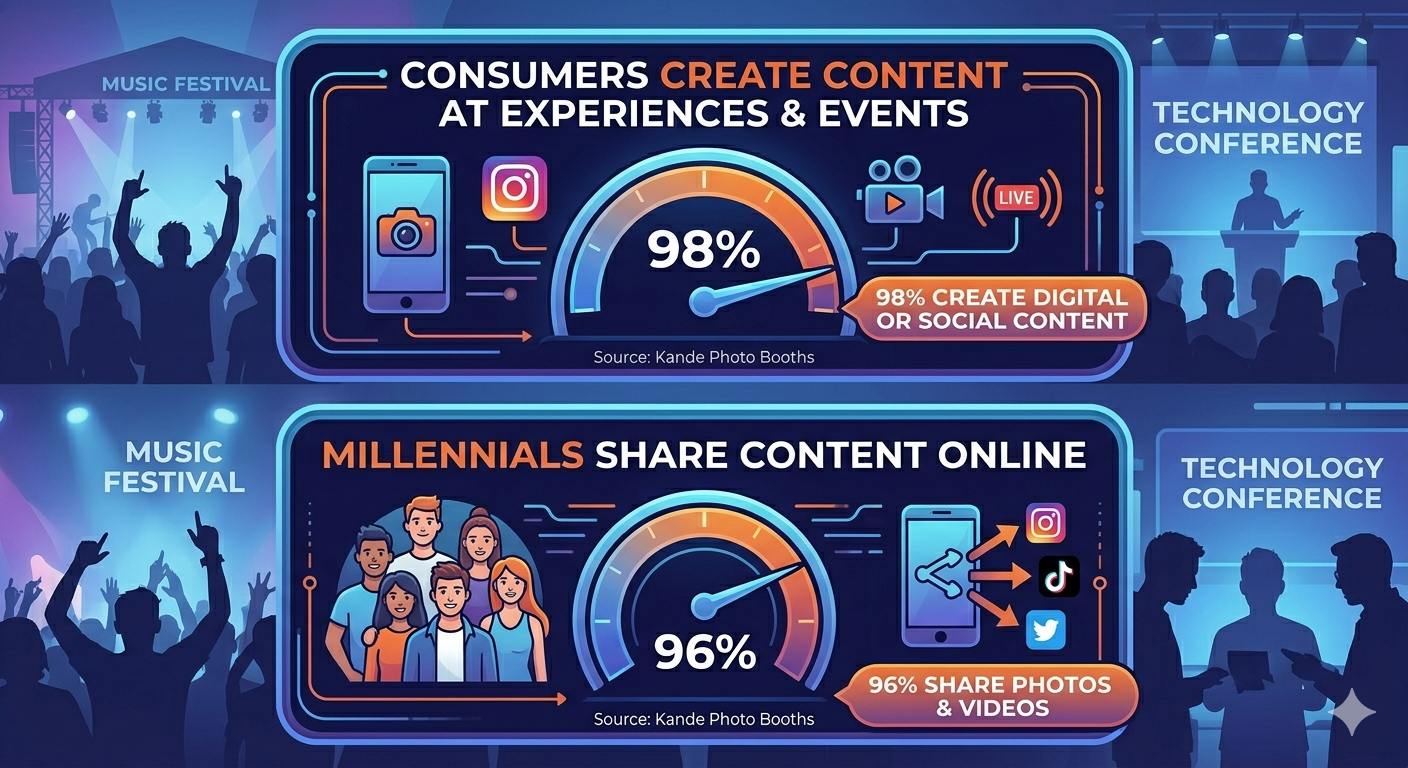
- They generate organic social content at scale. According to Kande Photo Booths, 98% of consumers create digital or social content at experiences and events, and 96% of Millennials share photos and videos online. A well-designed pop-up produces a volume of organic brand content that would cost significantly more to produce via paid channels.
- Face-to-face brand interaction is made possible by pop up events. Consumers are more likely to trust and make a purchase from a brand that they have seen and experienced in person.
- Pop ups events are giving brands a low-risk route to market testing. The cost of the test is also only a fraction of the cost of a failed permanent launch. The latter can even be irrecoverable for bootstrapped small businesses.
Pop-up Events Best Practices
Keep the concept specific and the audience well-defined: A pop-up event trying to appeal to everyone appeals to no one. The most effective pop-up marketing events are designed for a clearly identified audience segment and a concept built specifically for that group.
-
- Use scarcity intentionally: Limiting capacity, releasing information in stages and creating a defined end date all reinforce the urgency that drives pop-up attendance.
- Partner with local voices and influencers: Local influencers with an audience that matches the target demographic are more effective for driving foot traffic than broad paid advertising.
- Follow up quickly and personally: The relationship built at a pop-up event continues in the follow-up. A personalized email referencing a specific interaction at the event converts at a higher rate than a generic newsletter. The speed with which you follow up also matters. The window in which a pop-up lead remains warm closes up quicker than you think.
Common Pop-up Event Mistakes
These mistakes are among the most frequent causes of unsuccessful pop-up events as reported by marketing professionals, event organizers and attendees.
-
- Not having a defined objective or goal: If you are setting a pop-up without a single outcome or goal, then you essentially setting yourself up for failure. Without any measurable goals, it is close to impossible to go over your brand’s performance at the event.
- Choosing a location for the wrong reasons: A venue that looks good on the exterior but has nothing to do with your target audience is a disastrous decision. Your location research should be based on audience data and is less about aesthetics.
- Underinvesting in marketing: Pop-up event with no pre-event promotion is a surprise that nobody knows to show up for. Marketing spend, influencer partnerships and social media teaser content need to begin at least three weeks before the event opens.
- Insufficient staffing or under trained staff: A brand representative who cannot fully answer a product question can be counterproductive for your brand image. Make sure that your staffing ratios are planned to account for peak attendance periods.
- Ignoring permits and compliance requirements: Skipping the permit application process or underestimating the time it takes is one of the most common logistical failures in pop-up event setup. Local authorities, landlords and health and safety requirements all need to be addressed before the event opens.
Final Thoughts
The strongest case for investing in pop-up events is not the statistics, although the statistics are compelling. It is what it has to do with real people and in a real space. It allows people to have a real experience with your brand.
If your goal is a product launch, a market test or a brand awareness push, pop-up events can either be your best buddy or yet another failed marketing attempt. If you approach pop-up events less as trends and more as a way for you to reach through to the people who matter the most, your customers, you’ll rake in the ROI. It is a durable and scalable marketing and events tool in 2026.
A good event management software to support your pop-up event can turn your temporary moment into a lasting commercial outcome. Pop-up events move fast. Your event management platform should also keep up. Sign up for a free demo with Dryfta today to experience the convenience of automation in pop-up event management.
Frequently Asked Questions (FAQs)
How long should a pop-up event last?
The temporary nature of a pop-up is core to its appeal. Too long a run and the urgency that drives attendance will start to fade away. Most pop-up events run for a day, though some last only a few hours. A product launch pop-up can generate strong buzz in a single afternoon. A brand experience pop-up aimed at forming a few customer relationships can benefit from a slightly longer run.
What types of businesses use pop-up events?
Retail brands and food and drink companies use pop-up events to sell at festivals or busy streets. Newbie artists and designers leverage it to introduce their work directly to customers. More established online-only stores use it to meet their customers in person. Even charities use pop-ups to raise money and connect with communities.
How much does it cost to host a pop-up event?
According to Retail for the People, small and mid-sized pop-up gigs can cost businesses anywhere between $5000 and $20,000. Luxury setups can reach up to $50,000. The final figure varies and can fluctuate from region to region. It is also dependent on local pricing figures and government compliance.
What is the difference between a pop-up shop and a pop-up event?
A pop-up shop’s purpose is to sell products directly in a temporary retail setting. A pop-up event, on the other hand, is experiential. The goal here is to create a memorable brand interaction and sales is only a secondary priority. It is not uncommon for organizers to use a mix of these two formats.
How do you choose a location for a pop-up event?
Location selection is one of the most consequential decisions in pop-up event planning. The location should come within your target audience’s daily movement patterns. High-footfall areas such as city centres, markets, transit hubs and shopping districts work spectacularly for consumer-facing pop-ups. For B2B pop-up marketing events, checking for proximity to industry conferences or business districts is useful.
How can you measure the success of a pop-up event?
Track sales revenue and compare it to your costs. Count foot traffic and how many visitors became paying customers. Collect email sign-ups or social media followers gained. Monitor online mentions and photos shared. Survey visitors for feedback. After the event, watch whether website traffic or online sales go up. These numbers show real impact.
How do you promote a pop-up event?
Start on social media with countdowns and teaser posts. Partner with local influencers to spread the word fast. Send emails to your existing customers. Put up flyers in busy areas near the venue. List the event on local event sites and Google. Create a simple hashtag. Word of mouth also works for hyperlocal pop up events.
What are some examples of pop-up events?
Some examples of popular brands hosting pop-up up events include Rhode cosmetics event in London. Hailey Bieber’s beauty brand held a pop-up in London and allowed customers to try their new product, Barrier Butter. Netflix partnered with Mind, a UK-based mental health charity. It sold props and memorabilia based on hit shows at a pop-up event named ‘As Seen On Netflix.’