
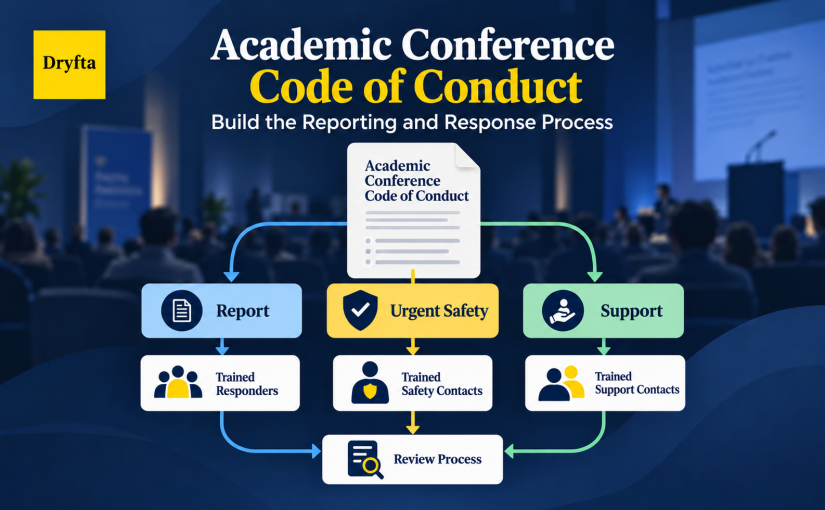
An attendee tells a volunteer that another participant’s behavior made them feel unsafe. The conference website says that harassment is prohibited. The volunteer, however, does not know who receives the report, what they may promise or whether the situation needs an urgent response. The policy exists, but the process stops at “contact us.”
A working academic conference code of conduct closes that gap. It sets expectations for participants and connects those expectations to reporting routes, trained roles, safety decisions, fair review and clear communication. This guide explains how to build that operating process before a concern reaches the team.