



Academic conferences remain the primary way researchers share their work and connect with colleagues who are asking similar questions. The energy in those rooms is real and researchers get inspired by conversations that reveal new directions for their work.
However, something important happens after those conference sessions end and attendees return to their institutions. Your presentation turns into a memory and your abstract becomes just another line on your CV unless you take deliberate steps to extend its reach beyond that single weekend or week where the conference happened.
Publishing your conference abstracts on dedicated platforms gives your work a longer life than those fifteen minutes at the podium. The research you presented deserves to reach scholars who couldn’t attend because they were presenting elsewhere or couldn’t travel at all. Digital repositories make your abstract discoverable months or years later and they create permanent reference points that other researchers can cite. Here are 6 platforms where you should consider publishing your conference abstracts in 2026.
1. ResearchGate
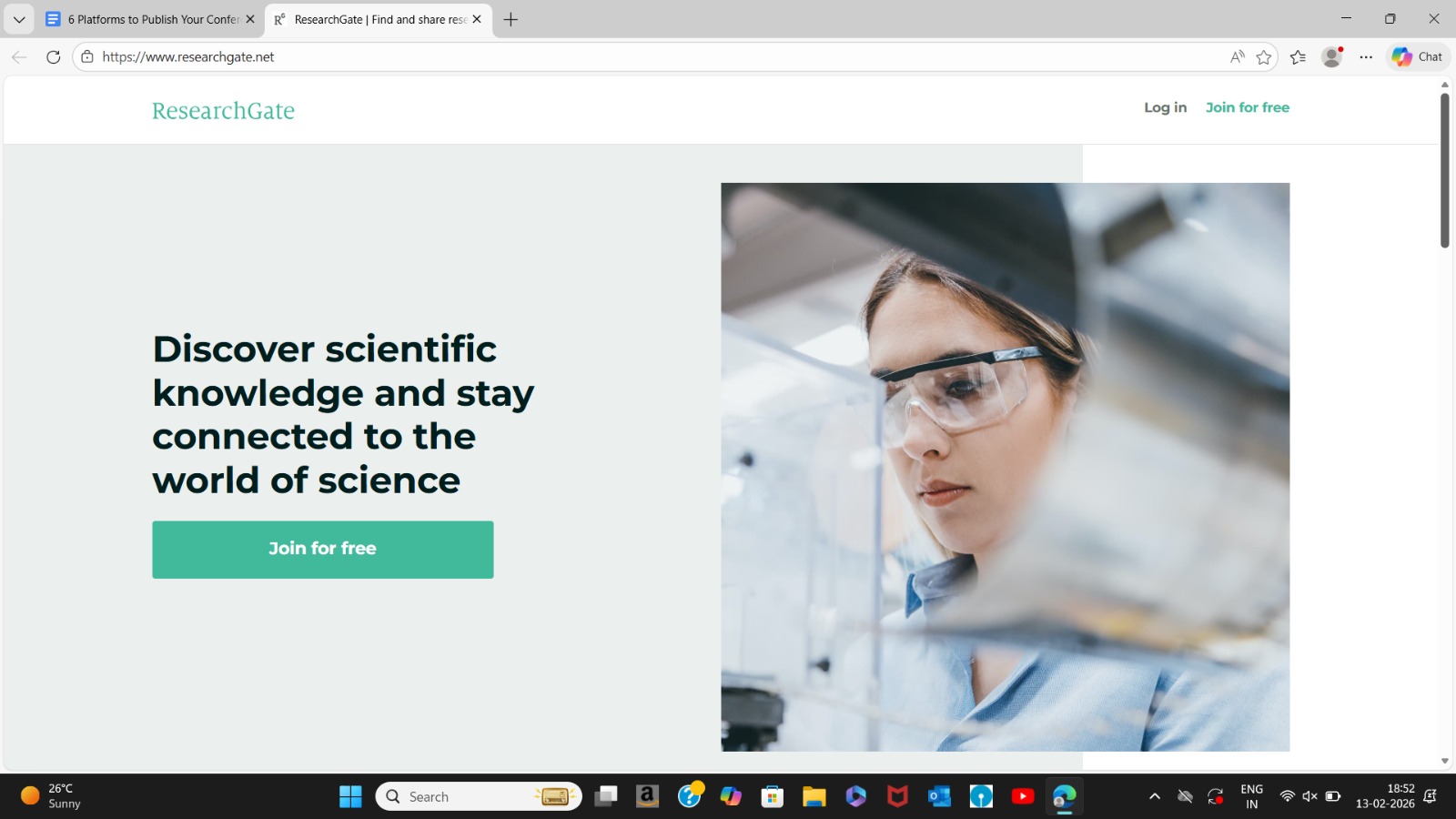
ResearchGate has grown into one of the largest academic social networks with over twenty million researchers participating. The site allows you to upload conference abstracts alongside full papers and datasets and you create a profile that shows the full scope of your work.
What makes ResearchGate particularly useful is its recommendation algorithm that surfaces your abstract to researchers working on similar topics. When someone searches for keywords related to your work, your abstract appears in their results even when they’ve never heard of the conference.
The platform tracks metrics like reads and citations, so you can see how your abstract performs and you discover which institutions are viewing your work. This creates opportunities for collaboration that might never materialize if your abstract remained buried in conference proceedings. Setting up takes just minutes and you maintain full control over what you share. Many researchers report that connections made because someone found their abstract on ResearchGate led to joint grant proposals or invitations to present elsewhere.
2. Zenodo
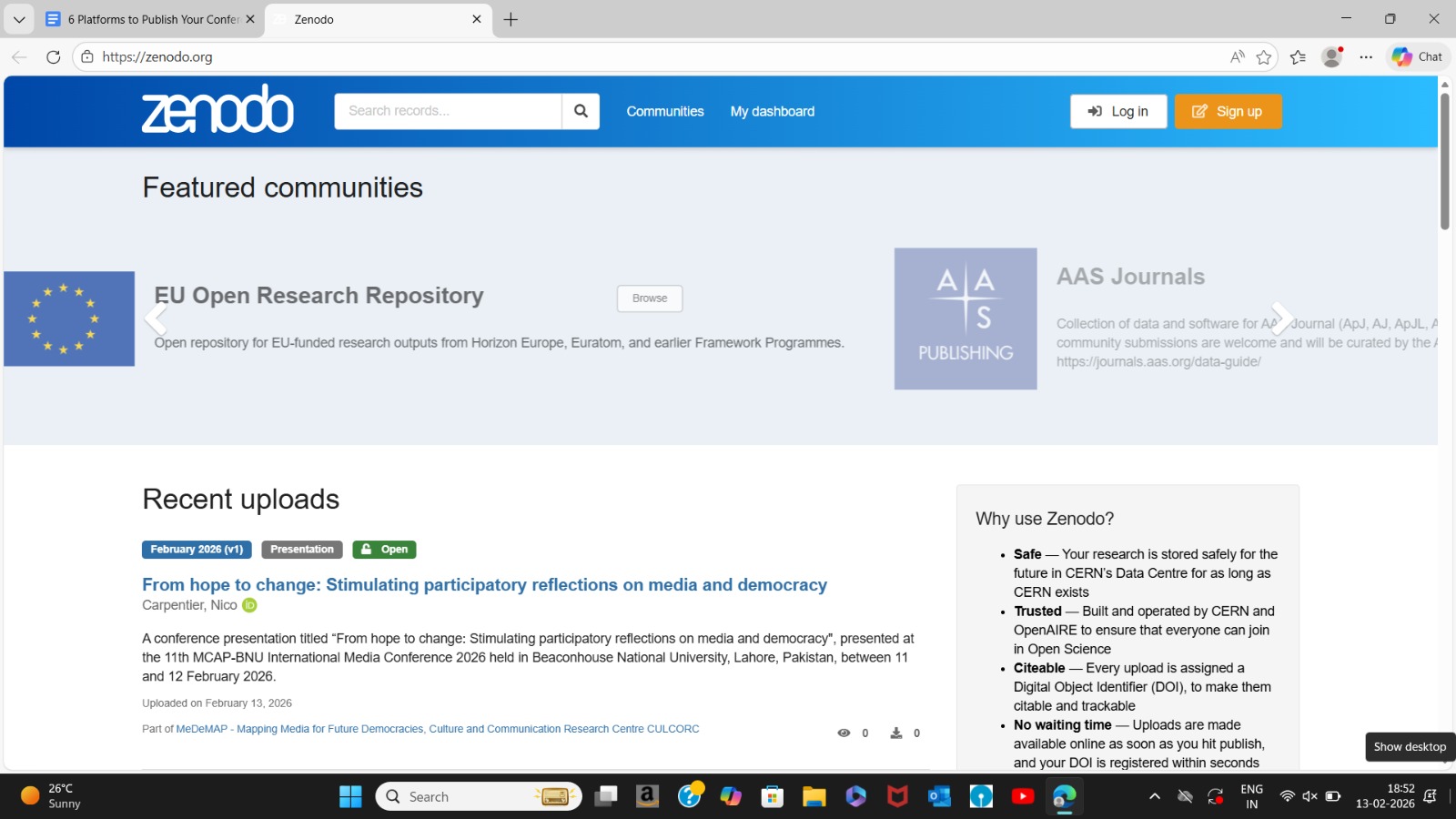
Zenodo operates under CERN with European Commission support and offers free open-access repository services. Conference abstracts receive Digital Object Identifiers when you upload them and this makes them permanently citable and discoverable. The DOI assignment matters because your abstract becomes part of the permanent scholarly record with a stable link that won’t break if websites change. Other researchers cite your abstract using its DOI and these citations track over time like journal article citations. The system integrates with ORCID and automatically links abstracts to your profile.
The platform allows uploads up to fifty gigabytes, so you can pair your abstract with presentation slides or supplementary materials. Everything receives the same DOI which keeps related materials together. Zenodo’s commitment to long-term preservation means your work remains accessible for decades, regardless of what happens to conference websites.
3. F1000Research
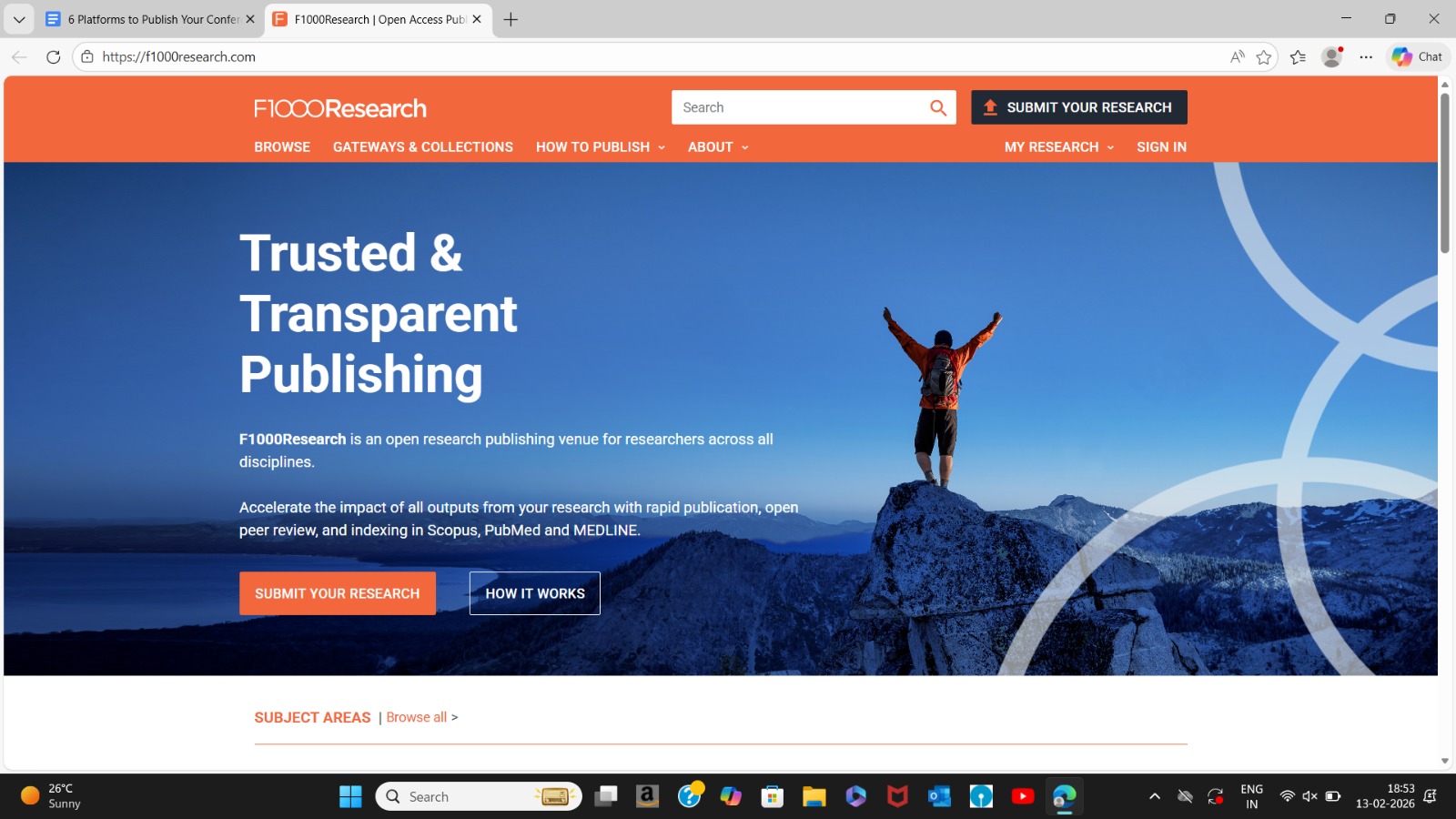
F1000Research operates on an open-access model that includes conference abstract publication. The platform is popular in biomedical and life sciences, although it accepts work across disciplines. What distinguishes F1000Research is its open peer review system that happens after publication.
The platform charges article processing fees, but many institutions have agreements covering these costs. All content is immediately open access with Creative Commons licensing, which maximizes visibility. The platform supports version control so you can update your abstract while maintaining records of previous versions.
4. figshare
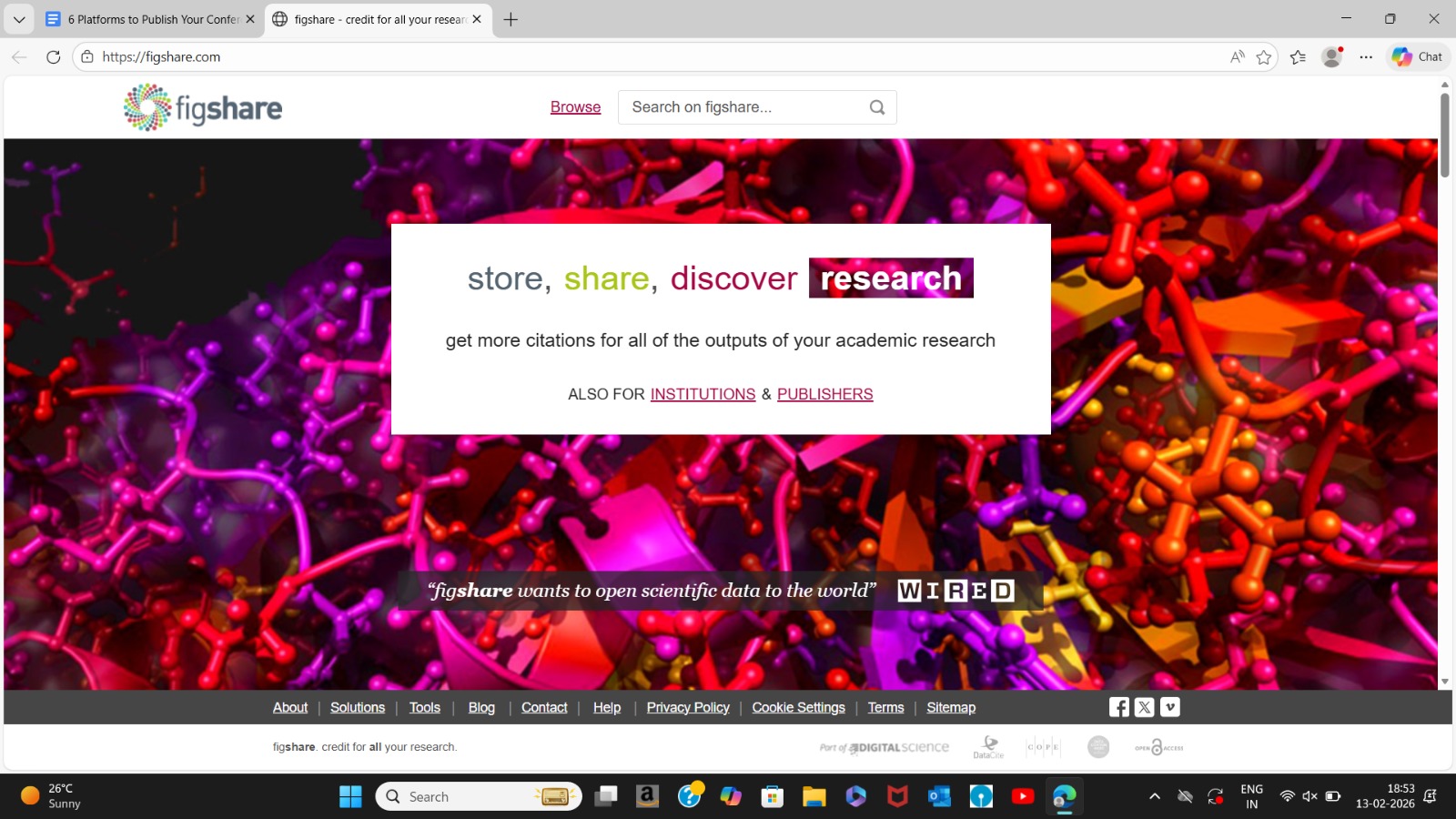
figshare provides a repository for research outputs with strong support for conference materials. The platform is free for individual researchers with unlimited public storage. Each abstract receives a DOI and detailed usage statistics. You can see how many times your abstract has been viewed and downloaded and these metrics are broken down by country and referral source. The search functionality is strong with filters for file type, license, author, and subject area.
figshare allows you to create collections that group related abstracts together. If you’ve presented multiple times on the same project, you can organize abstracts into a collection showing your work’s progression. This becomes valuable when applying for grants or jobs where you need to demonstrate sustained research focus.
5. Open Science Framework
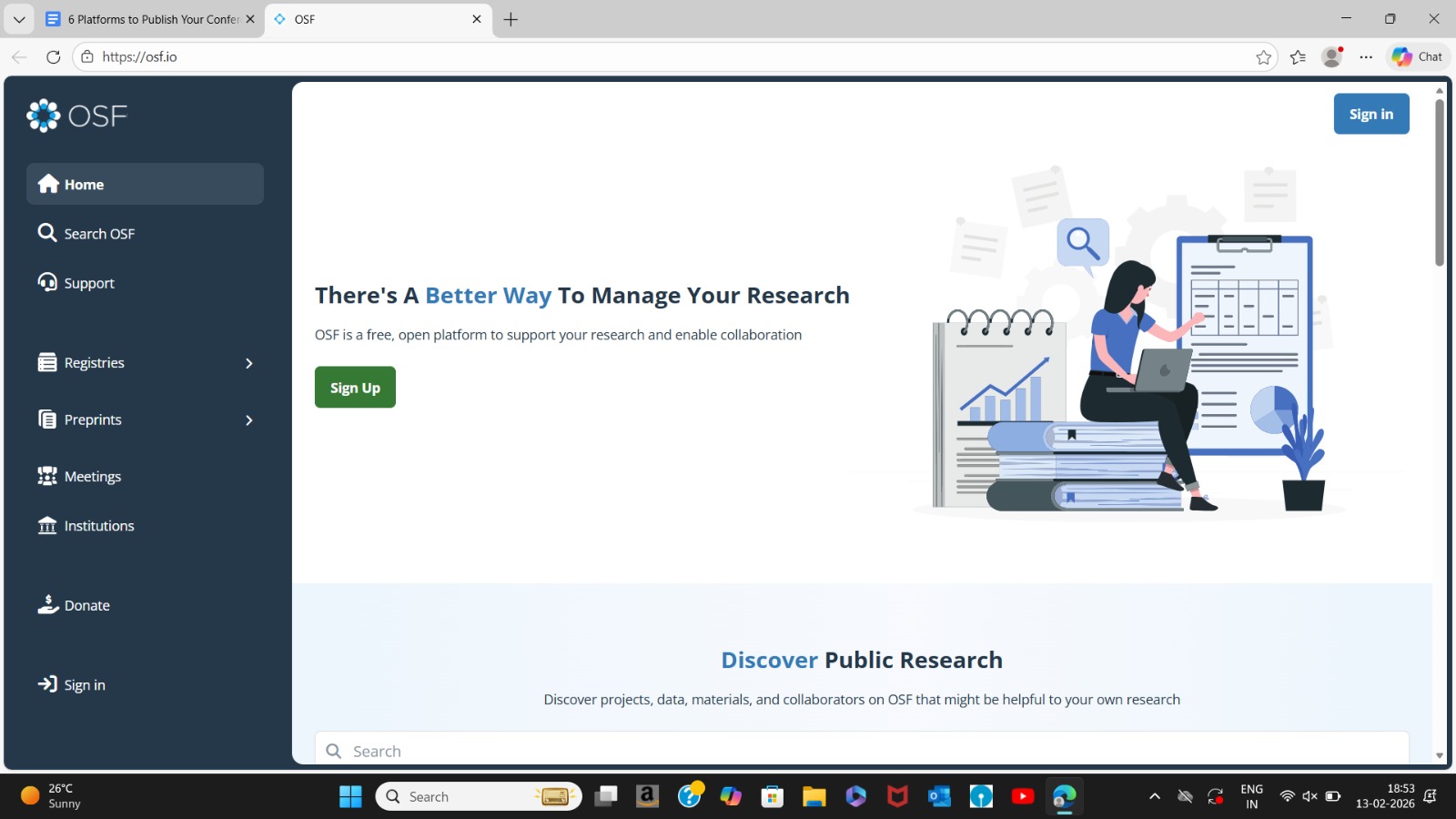
The Center for Open Science operates OSF as a free platform for managing research projects and sharing outputs. While many use it for preregistrations and data sharing, it’s also excellent for publishing conference abstracts. OSF takes a project-centered approach.
The platform supports public, private and embargoed content, so you control when and how you share your work. OSF integrates with tools researchers already use including Dropbox and GitHub and Mendeley. Like other platforms, OSF provides DOIs for public content.
6. Academia.edu
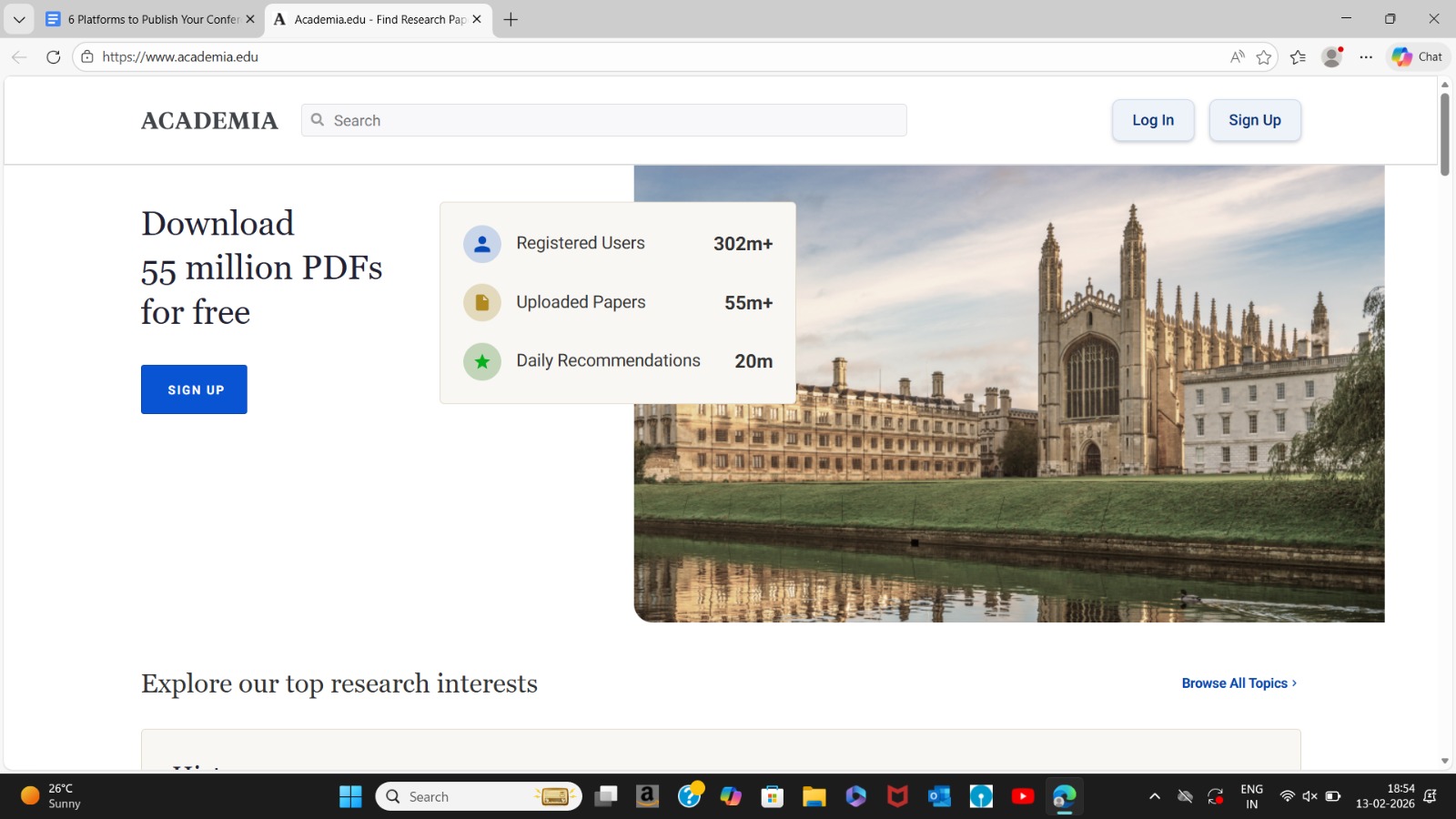
Academia.edu claims to be the largest platform for academics to share research with over two hundred million users. While it operates on a freemium model, the basic abstract publishing functionality remains free.
The platform’s strength lies in discoverability features that connect researchers across institutions and countries. When you upload an abstract Academia.edu extracts keywords and topics and notifies researchers who follow those topics. This brings your work to scholars who might never encounter it otherwise.
Academia.edu provides analytics showing which universities are viewing your abstract and what search terms led them to your work. The premium version offers more detailed analytics, but the free tier provides enough information to gauge audience interest.
Making Your Abstracts Last
Publishing your conference abstracts on these platforms takes minimal effort but it can significantly extend your research impact. Each platform offers different features and reaches different audiences, so consider using multiple platforms to maximize visibility. The time you need to investin publishing your abstract is modest. Most platforms allow you to quickly upload your abstract once you’ve created an account.
You spend just minutes per abstract, but the potential returns in citations, collaborations, and research visibility make it worthwhile. As academic communication shifts toward open, accessible models making your conference contributions visible, positions you at the center of these changes.
Your abstract deserves an audience larger than the people who happened to be in a particular conference room on a particular afternoon. These 6 platforms help your work reach scholars who need to see it, regardless of whether they attended in person. The extra step of publishing your abstracts creates opportunities that might never materialize if your work disappears after the conference ends.
Watch this space for more content on educational events and conferences and strategies that help researchers amplify their academic impact. Dryfta will continue sharing practical approaches to getting the most out of your research presentations.
