




Managing a conference comes with a long list of responsibilities, from handling event logistics to keeping attendees informed and engaged. Still, one of the biggest challenges usually comes from managing speakers and research submissions. Abstract collection, speaker coordination, and review processes can quickly consume a lot of time, especially when everything is handled manually.
An online abstract management tool helps organizers control the entire submission process from a single location. It gives teams the tools to collect abstracts, conduct peer reviews, and publish accepted work in the final conference program. This article provides a guide to the 6 best abstract management tools we have identified as the top options in the market today.
1. Dryfta
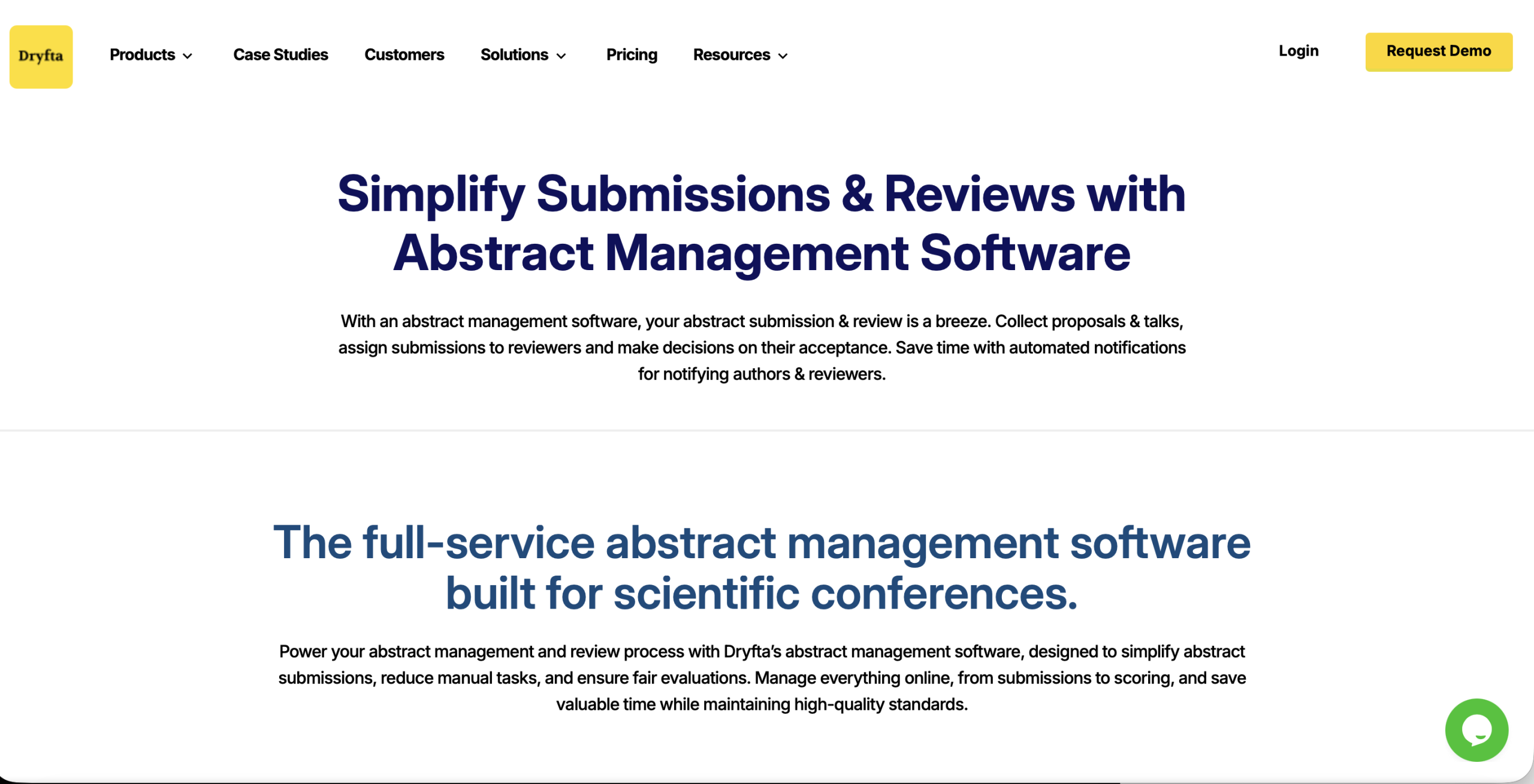
Dryfta provides a comprehensive abstract management system that targets academic conference needs. The system enables organizers to control the entire research process, from paper submission to finalization of the program schedule. Furthermore, Dryfta maintains abstract submission tracking in a single application, providing a complete solution, eliminating the need for extensive email communication.
The platform uses self-service dashboards for both communication and tracking purposes. Authors can log in to check submission status, and reviewers can submit scores and feedback directly through the system. Automated alerts can be set up for deadlines, reminders, and acceptance or rejection decisions, keeping everyone updated throughout the process.
After reviews are completed, accepted abstracts can be turned into an interactive event schedule automatically. It can also be exported into a professionally formatted abstract book.
Key Specifications
-
- Abstract Book Publishing: The platform enables organizers to create digital abstract books tailored to their event requirements. The system enables users to export files in multiple formats, including PDF and CSV, and to add watermarking.
- Flexible Exports: Organizers can export submission details and review-related files in bulk. Exports can be downloaded in common formats such as CSV or PDF, which helps with reporting and backup storage.
- Reviewer Dashboard: Reviewers use their central workspace to access their assigned submissions while they record their scores, make comments and update their reviewer profile information.
- Blind Review Options: The platform supports three review formats: single-blind, double-blind, and triple-blind. Organizers can select the appropriate setup depending on how strict the conference review process needs to be.
2. Whova
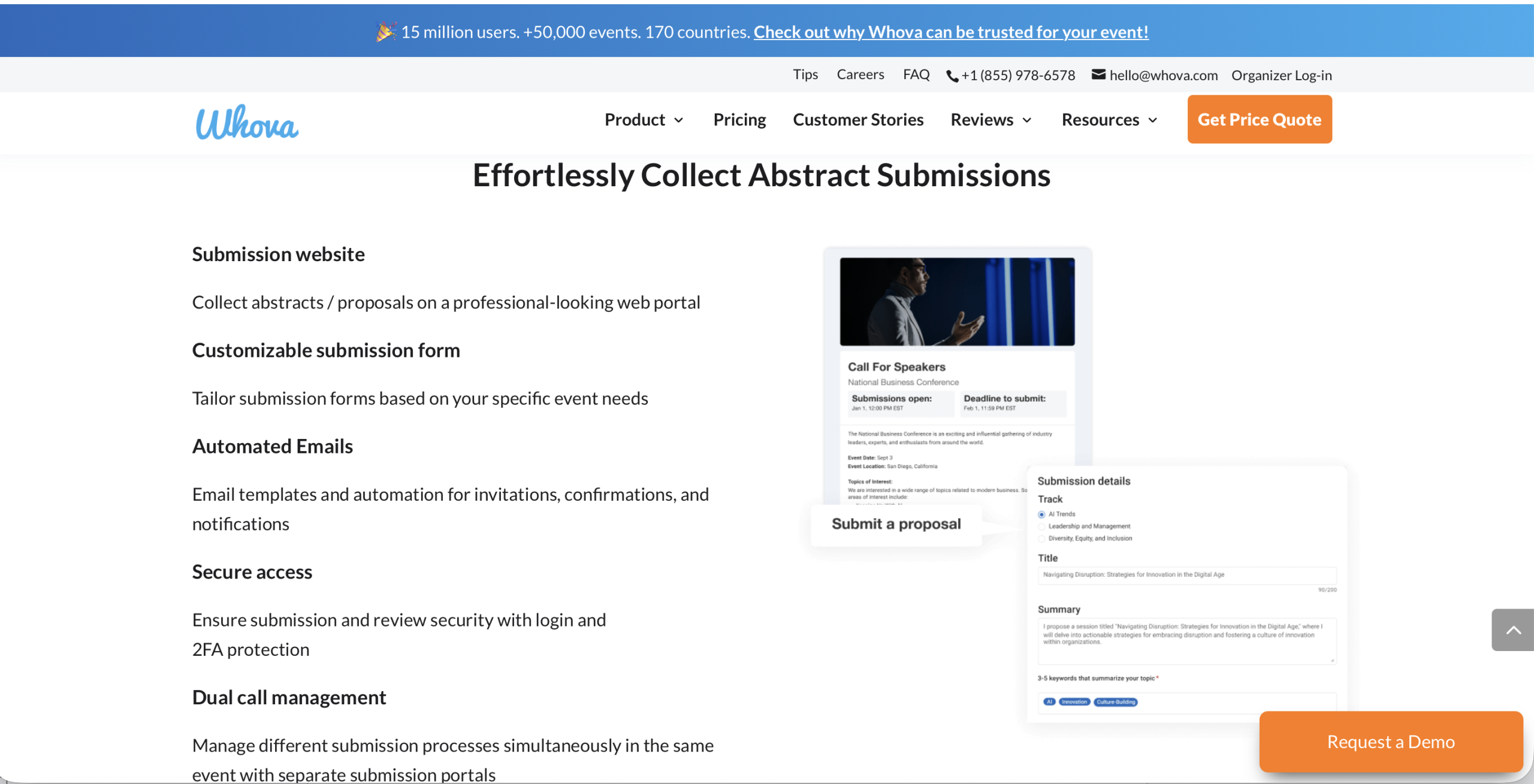
Whova is an event management solution that aims to help organizers manage call for speakers and abstract submissions more efficiently. Organizers will no longer have to collect speaker information via various online applications or handle lengthy back and forth email conversations, as the platform brings all of those steps into one place.
Whova’s interface keeps the submission and review process structured and easier to follow. Organizers can create forms quickly, use ready-made application templates, and start accepting speaker submissions in less time. Moreover, the platform supports communication between organizers and applicants, helps assign reviews across team members, and includes timeline tools to keep deadlines and review stages organized and on track.
Key Specifications
-
- Customizable Forms: Organizers can modify form questions based on the speaker’s history and the specific needs of their event.
- Multiple Calls: The platform supports running multiple submission tracks simultaneously, including posters, speaker sessions, and award entries.
- Assignment Controls: Reviewers can be assigned manually, randomly, or by topic, depending on how the review process is configured.
- Blind Reviews & Conflict Detection: The platform supports single-blind and double-blind reviews and identifies potential conflicts of interest to enhance review integrity.
- Two-Step Publishing: Approved sessions and speakers can be synced directly to the Whova event app and agenda web page.
- Customizable Rubrics: Organizers can set specific rubrics that reviewers must use to evaluate submissions, ensuring consistent evaluation standards.
3. Cvent
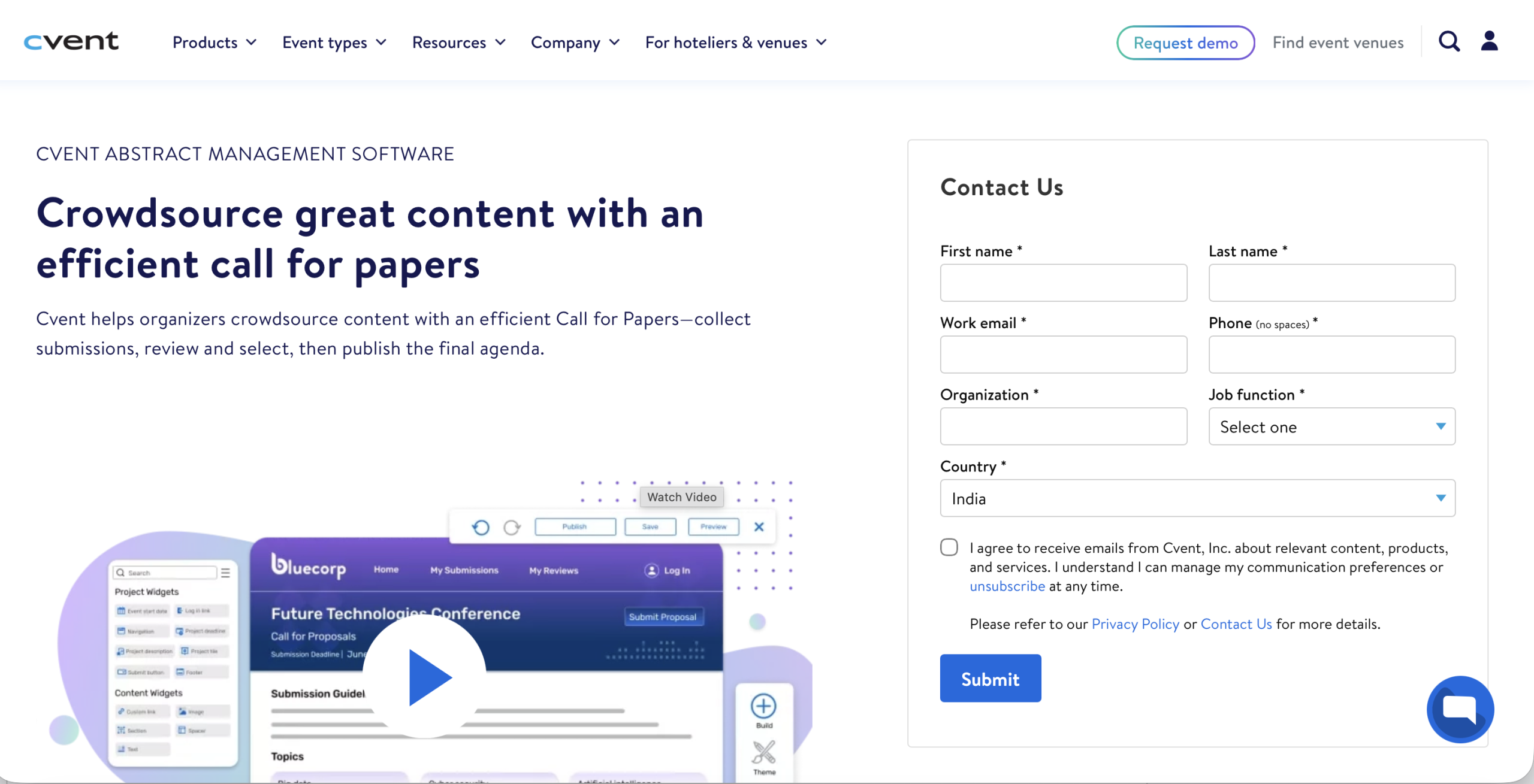
Cvent’s abstract management tools give organizers a lot of control over how submissions are collected. Submission forms can be customized to capture specific details, and organizers can also request different file types depending on what speakers need to upload. On top of that, the platform offers email automation to manage all your invites, confirmations, reminders, and alert updates. In addition, Cvent gives reviewers access to the portal where they can enter assigned reviews and provide ratings.
Some reports suggest Cvent’s pricing can be more than three times higher than similar tools. Reviews also mention that the interface can feel complicated, and the system may not feel easy to navigate for users who want something simpler and more intuitive.
Key Specifications
-
- Intelligent Routing: The platform automatically assigns reviewers to submissions based on topic, track, or reviewer expertise.
- Reviewer Portal: Reviewers will have their own portal for viewing and rating submissions, leaving comments, and adding internal notes.
- Custom Grading Scales: Organizers can set up scoring systems that match their review process, including custom rating scales, voting options, and evaluation criteria.
- Agenda Building: After a submission has been approved, it can be easily converted into a conference session and added to the overall agenda with minimal additional work.
- Mobile-Responsive Design: The submission form will be mobile responsive, allowing speakers to complete submissions on either phone, tablet, or computer.
- Data Integrity: Organizers can set the minimum and maximum number of characters reviewers can enter in a text field on the form.
4. Reviewr
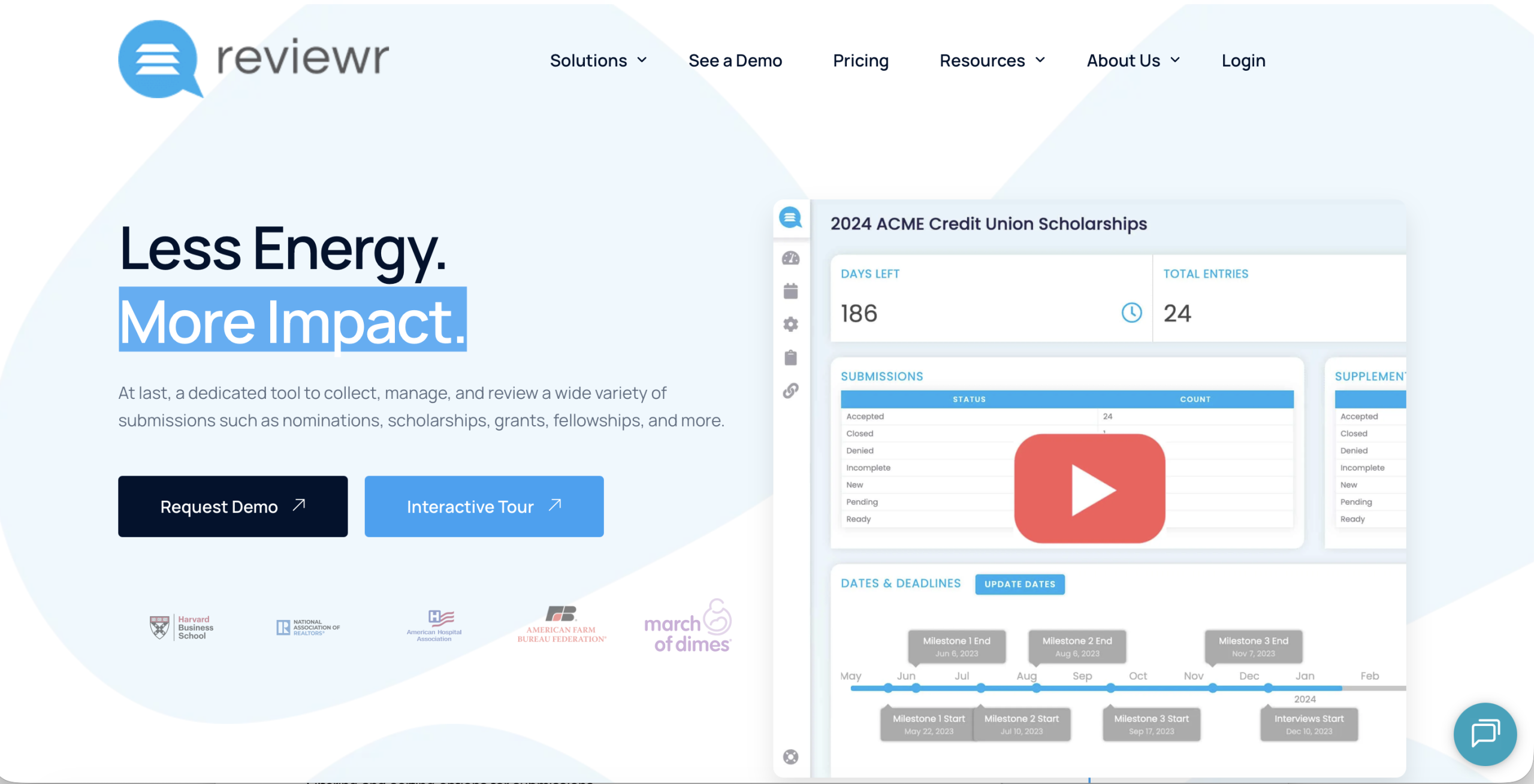
Reviewr is an abstract management platform designed to meet the basic needs of conference and academic events for submitting and reviewing submissions. The platform keeps its focus on the core abstract workflow (submission, reviews, organization) to provide a user friendly experience.
One of Reviewr’s biggest strengths is how smooth the submission process feels for authors. They may submit their abstracts with a few clicks and monitor the progress through the review process. Branding tools and feature flexibility may not be as strong as they would be with a larger platform. In addition, some organizers may also feel that the review process could use more advanced scoring and evaluation features, especially for events that rely heavily on detailed peer review workflows.
Key Specifications
-
- Role-Based Access: Reviewers and authors are assigned separate user group dashboards to easily access their submissions, edit details, and manage their assigned peer reviews.
- Integrated Scheduling: Once an accepted abstract is processed, it may be placed into the conference agenda immediately.
- Automated Communication: Automated emails are sent to authors confirming their submissions, reminding them of deadlines, and providing automated updates upon acceptance/rejection of their abstracts.
- Advanced Data Management: The platform allows organizers to sort and filter submissions by both status and score, with bulk actions available for faster management.
- Analytics and Reporting: Organizers can track submission volume and reviewer progress in real time to spot delays early.
5. Ex Ordo
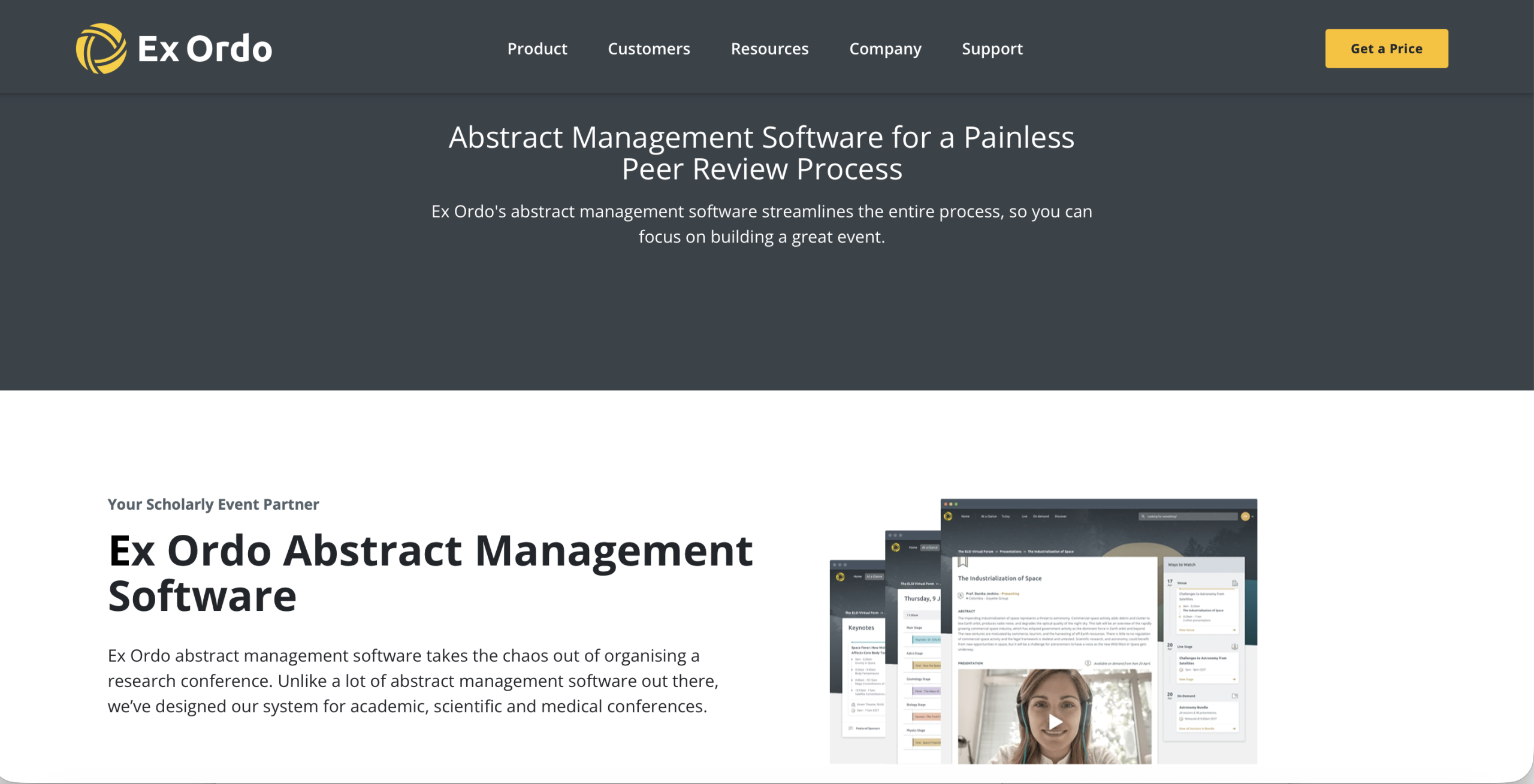
Ex Ordo is a cloud-based platform designed primarily for scholarly, medical, and scientific conferences that handle high volumes of research submissions. It is not a general event management tool, since its main focus is abstract management. Moreover, organizers no longer have to rely on spreadsheets or emails to coordinate the abstract handling process, saving time and reducing manual work.
The platform supports a structured submission process through an online portal that can be customized to meet the event’s requirements. Authors will be able to submit their work (abstracts, papers, posters) directly to the organization through the platform’s site, making it easier to manage their time and track their submissions. Furthermore, Ex Ordo includes an allocation tool that matches submissions with reviewers based on topic or expertise.
Key Specifications
-
- Custom Submission Forms: Forms can be customized with word limits, required topics, and mandatory file uploads based on event rules.
- Structured Tracks: The system is capable of supporting both single and multiple-track conferences.
- Chair Oversight: Chairs can review feedback, add comments, and finalize decisions using combined reviewer scores.
- Connected Platform: Submission data can flow into program building, the event app, and registration tools for easier setup.
6. vFairs

vFairs simplifies the complex lifecycle of academic and research events by centralizing content collection within a single digital ecosystem. The platform functions as a central connection point, which enables researchers and event organizers to communicate through a complete automated system that replaces their current method of using disorganized email threads and hand-operated spreadsheets. In addition, the platform provides a formal framework for handling “call for papers” submissions, enabling it to track all submissions, organize them into appropriate categories, and protect their storage.
This foundational approach allows organizations to focus on the quality of their scientific or professional discourse rather than the logistical burden of managing hundreds of disparate documents. Also, organizers can maintain high academic standards by implementing impartial grading systems and tracking reviewer progress in real time.
Key Specifications
-
- Flexible Edits and Deadlines: Authors can save drafts and edit submissions until the final submission. Organizers can set category-based deadlines and grant extensions using access codes.
- Customizable Scoring Rubrics: Organizers can set scoring criteria and use weighted scoring or voting systems to support final decisions.
- Multi-Stage Reviews: The platform supports multi-round review workflows, such as abstract review followed by full paper evaluation.
- Poster Hall Integration: Poster abstracts can be loaded into the virtual poster halls or into the mobile app sessions.
- Dedicated Speaker Portal: Speakers get a portal to track session details and schedules, reducing the need for extra communication.
Summing Up
Event organizers should take the time to compare different abstract management software options before choosing one. Each platform offers different features, and the best choice depends on both your conference structure and your submission process complexity.
The system evaluation process needs to examine five key factors, which include system usability, form customization, peer review functions and system integration capabilities with other event workflows. A careful evaluation makes it easier to choose a platform that fits your goals and keeps the entire submission well-organized.
Dryfta can support conferences that need a complete abstract management solution in one platform. The system provides tools that enable organizers to gather submissions, oversee peer review processes, interact with both authors and reviewers, and create the final program and agenda from approved abstracts. On top of that, Dryfta also integrates with registration and abstract management tools, which helps keep data consistent across the event workflow. Book a free demo with our team to experience how the platform operates during actual events.
