It is thirty minutes before registration opens. Staff stand at the desk with lanyards in hand, and the attendee lookup screen will not load. The organizer calls support and says what many of us would say: the contract promised 99.9% uptime. Surely this will be fixed at once. Perhaps it will. Perhaps it was never promised.
An event software SLA is easy to treat as reassurance and hard to read as an operating document. This article reads it the second way. Using one fictional outage, it shows which clause decides what an organizer can expect, before anything fails.
According to studies, over 44,554 event managers are currently employed in the United States, with 63.8% of the workforce identifying as women and 36.2% as men, highlighting the scale and diversity of the profession. Event management continues to grow as a dynamic field that blends strategy, creativity, and execution to deliver impactful experiences.
Did you know that, according to Dataintelo’s 2025 industry report, the education sector accounts for 11.9% of the global conference market? That is a huge slice of the pie. Yet, knowing how universities manage research conferences successfully is still unfamiliar to most organizers.
Unlike corporate events, there is no single team making every decision. Universities work across different departments with busy faculty members.
And if you have ever wondered how universities organize research conferences so successfully, we’ve got you covered. Keep reading.
According to G2, 84% of marketers say events help them stand out from the competition, making them one of the most effective ways to differentiate a brand. It’s no secret that businesses want to break through the digital clutter. If you’re figuring out how to become an event planner, whether for large corporate events or small personal gatherings, it really comes down to planning well and gaining real experience.
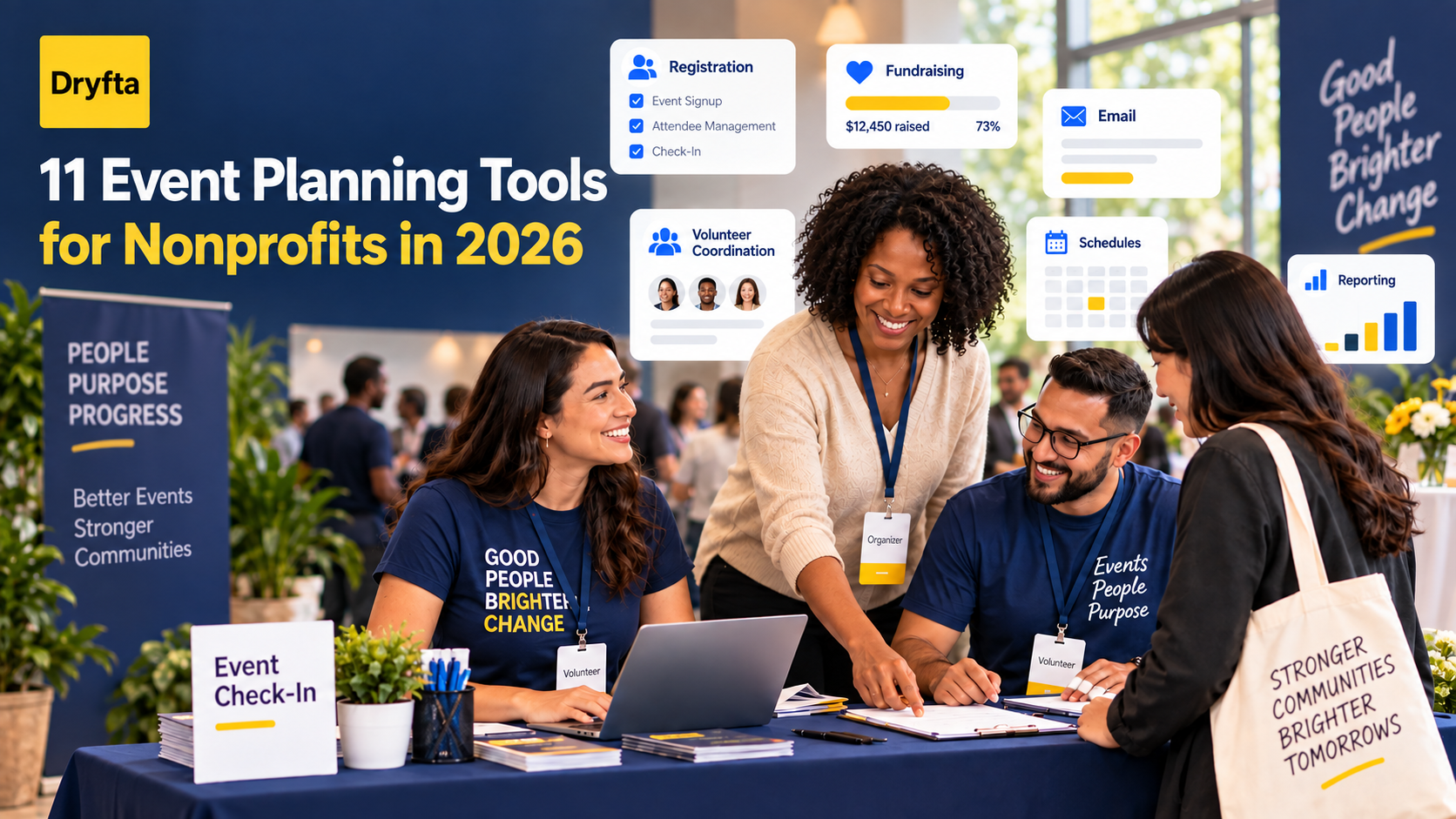
The best event planning tools for nonprofits are not always the products with the longest feature lists. They are the ones that fit the event, reduce manual work, protect supporter data, and leave more time for the mission behind it.
A fundraising gala, volunteer orientation, annual conference, and community workshop each create a different workload. One team may need ticketing and donations. Another needs abstract submissions, session schedules, certificates, and detailed attendance records. Before comparing brands, it helps to decide which jobs your technology must handle.
This guide compares 11 useful tools across the nonprofit event workflow. You will find options for project planning, design, email, fundraising, ticketing, volunteers, donor records, agendas, audience participation, virtual delivery, and connected event operations.
The central choice is not simply which tool has the most features. It is whether separate tools will stay simple or force your team to become the connection between them. That difference often decides whether an event feels manageable in its final weeks.
Editorial note: Dryfta publishes this guide and appears in the comparison. We reviewed official product and help information available on September 24, 2026. We assessed each tool for a specific job rather than declaring one product the winner in every situation. We did not run the same event on every platform. Features, nonprofit eligibility, pricing, and integrations can change, so confirm the details that affect your event before signing a contract.
Studies suggest that 45% of event planners work more than 50 hours per week during peak planning periods. For academic event organizers, the workload can become even heavier, as responsibilities extend beyond logistics to include abstract submissions, reviewer coordination, and communication with scholars. Adopting a CRM for event planners will help transition the event operations into a more organized workflow.
In the high-stakes world of event planning, your choice of technology is the difference between a seamless masterpiece and a complete disaster. As events continue to transform into complex, data-based experiences, one-size-fits-all type of event management platforms will no longer work. Regardless of whether you organize a global hybrid summit or an intimate executive roundtable, the platform you use to manage the event will act as the central hub for all things related to your event.
To say that planning an academic event is tricky is an understatement. The moment your attendees walk in, they’ll know whether your event is well-planned or not. With how competitive the event management space has become, the stakes are higher than ever this year. Add to it the chaos and stress of planning an event, and planners are always on their toes during the event planning process.
In the high-stakes world of professional gatherings, the difference between a forgettable conference and a transformative experience lies not in the budget, but in the blueprint. Most planners still believe that their job is to get through the checklist as quickly as possible, handle every last-minute problem that comes up, and make sure nothing goes wrong at the event.
As an event professional, you may have planned roughly dozens of events spread through the years. But you know that the struggle to achieve ‘good enough’ attendance rates always stays raw and real. The truth is simple: great events don’t market themselves.
The event that you’ve invested all your time, capital and effort in has just gone live. Months of an event in the making is now live on your website. You’ve begun selling tickets and slots. You believe that perhaps the toughest part of the event management lifecycle is behind you. However, the registrations that come in do not correspond with the math you did earlier. You realize you will have to market your event vigorously, or all your months of effort will result in an unsuccessful event.
When you’ve spent months on planning and yet it does not add up to actual engagement on the day of the event, then all your efforts are for nothing. The venue is booked and being prepared to welcome your attendees very soon, your speakers have confirmed and are actively working on their keynote speech and even your registration numbers seem promising.