




It is a big deal to plan a scientific event, symposium, conference, or academic meeting. You should have proper event management software to ease your trouble of managing registrations, collecting and reviewing abstracts, handling event workflows, constructing schedules and keeping track of attendee engagement.
The right platform will help you in the above mentioned areas and keep you organized throughout the process. Without this, there are chances you will have to deal with last-minute problems in your event management that can even cause the event to come to a standstill.
In this blog, we will compare top scientific event management software platforms and how they work. Their strengths and limitations will guide you towards choosing the correct platform for your event. This will also provide you with proper insight into how each one will enable you to make your event a success in the market.
1. Dryfta
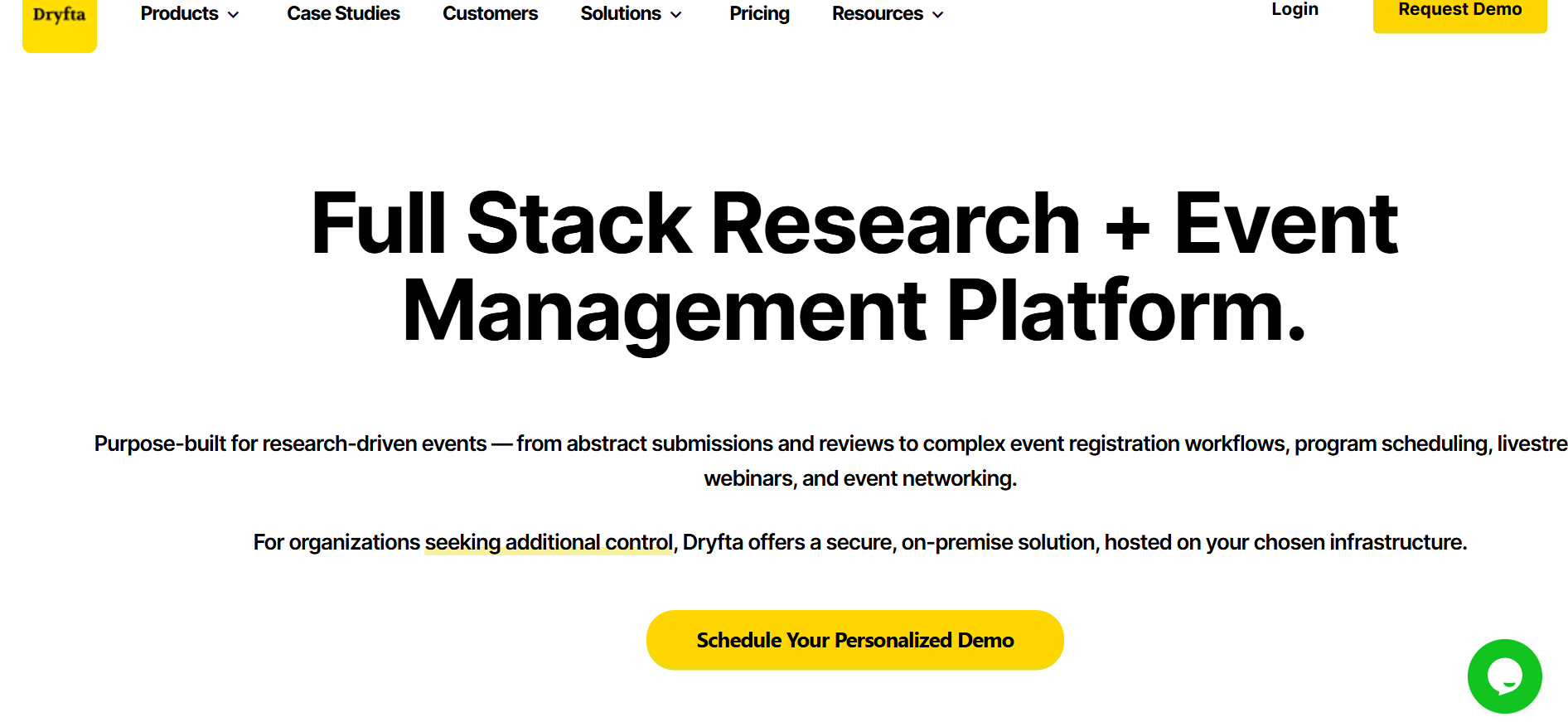
Dryfta is a complete event management tool which is designed for research and educational events. Unlike conventional event management software, this platform takes care of abstract submission, peer review, registration, scheduling, hybrid events, networking, and more in a single ecosystem. This makes it a highly sought-after platform for scientific conferences and hybrid events.
The key features of the platform include a robust CRM that tracks the details of the attendees, drag and drop scheduling, automatic notifications and marketing capabilities to suit your needs. The tool is also capable of abstract book publishing, session check-ins, real time reporting for teams, all under one ecosystem.
Features of Dryfta
-
- Registration and Ticketing: Dryfta provides a registration and ticketing system that supports all formats of events. Organziers can create multiple ticket types, make pricing rules, and configure custom registration forms based on different attendees. The platform makes sure the payment modes are secure and properly sends invoices.
- Abstract Management and Peer Review: The abstract submission and peer review process helps organizers can make custom submission forms, mention the areas of the topic, and set submission deadlines easily. The peer review system supports single-blind and double-blind review processes. It also provides authors and reviewers dashboard and sends automatic notifications on the status of the submissions.
- Scheduling: Dryfta has a powerful event scheduling system that helps the organizers to design structured event agendas with multiple tracks, sessions and presentations. The scheduling system updates everyone across the event, and organizers can manage last-minute changes efficiently.
- Event Networking App: The mobile application is available for both Android and iOS. This allows you to keep track of your agendas, messaging, and other networking features on the go. The application allows attendees to create their profiles, browse participant lists, and connect with others who have similar interests.
Scientific Event Use Case and Real Examples
International Association of Applied Linguistics (AILA 2021)
The scientific program had more than 2400 registered participants, 260+ thematic symposia, more than 270 virtual sessions and above 1740 abstract submissions. The participants were able to interact during the event via audio, video and text messaging, and all the sessions were accessible even in the following year.
Features of Dryfta That AILA Used:
-
- Abstract submission and peer review
- Online and offline registration
- Email campaigns
- Building an event website with custom content and event information
- Virtual meetings
- Building an interactive event schedule
- Collecting and processing pre-recorded videos
- Managing an online community for attendees, speakers and moderators
- Live chat, private messaging and video call
- Mobile event application for both iOS and Android
- Creating and designing certificates
With the help of Dryfta, AILA asked the authors to submit their abstracts and upload the pre-recorded presentations. During the live event, the participants watched the pre-recorded presentations by the speakers and then joined the live Q&A session to discuss the papers. There were two types of sessions in the AILA Congress: Live Meetings (for symposia) and Livestreams (for keynotes). They also used the Matchmaking tool to find attendees who have similar interests.
2. Ex Ordo
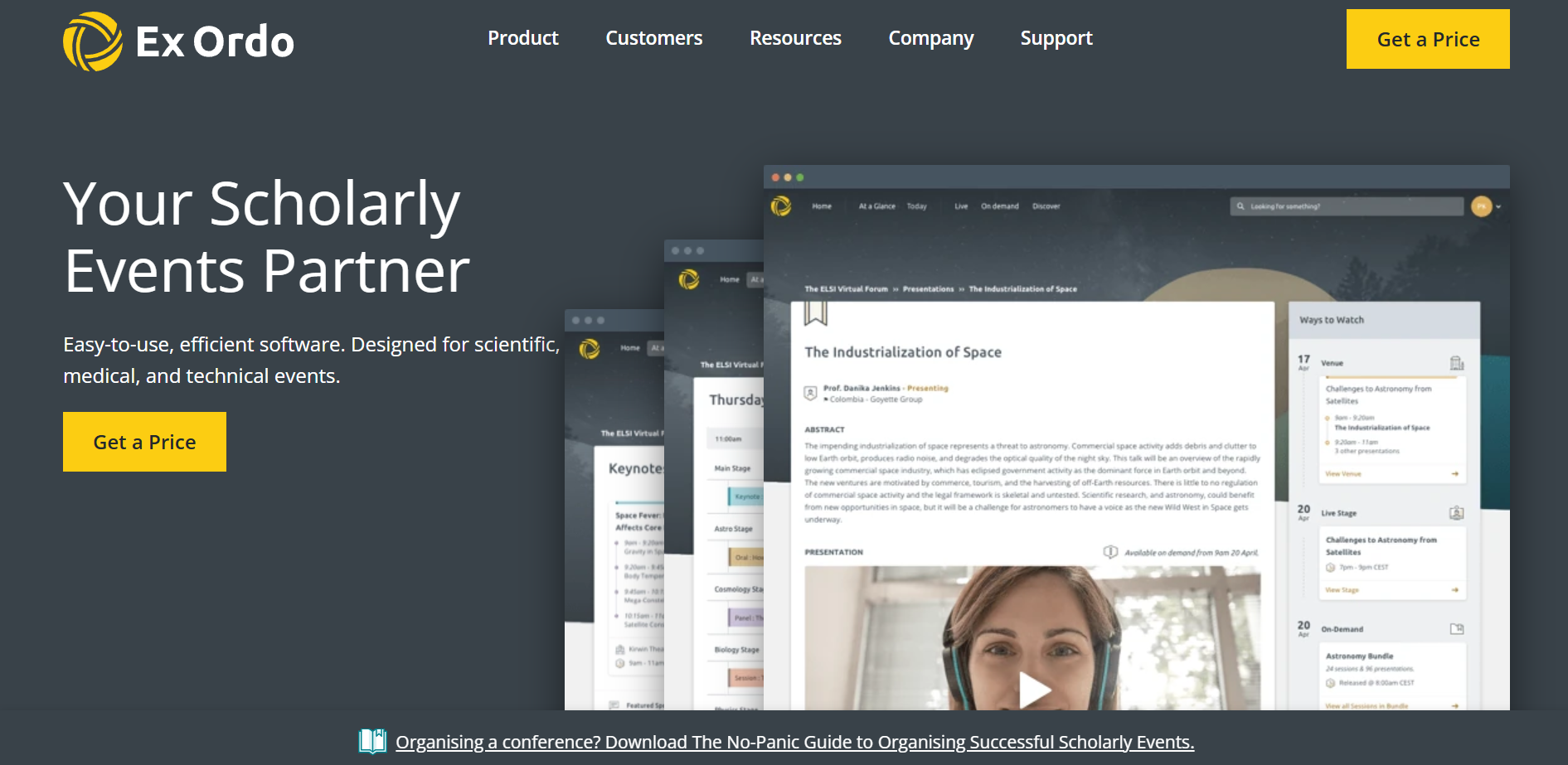
Ex Ordo is an online conference management system for academic gatherings such as scientific conferences, technical meetings, and research symposia. The key strengths of the platform include abstract management systems and peer review systems, which are combined with registration and online event solutions.
The platform allows organizers to plan events and assign reviewers from a single point. It has an easy-to-use system suitable for both the organizer and attendee, and is used by associations, universities, and scientific communities worldwide. It also supports in-person, virtual, and hybrid event formats, with an online conference platform that retains content even after the live event ends.
Features of Ex Ordo
-
- Abstract Management and Review System: The platform has a structured abstract submission format and a proper system that allocates reviewers, manages comments and sends automated notifications on the status of submissions. The review tools and conflict avoidance mediums make sure the review process runs efficiently.
- Virtual Event Space: The system has a virtual event space to manage the audience online. It hosts highlights and star speakers in live sessions. Alongside the platform also gives space for video presentations, and papers to browse, which lets the attendees engage in discussions, ask questions and interact professionally.
- Comprehensive Registration and Payment Collection: Ex-Ordo helps you customize your registration forms. Its registration and payment collection system makes sure the payments remain secure, and the delegates have the freedom to pay by bank transfer as well.
Scientific Event Use Case and Real Examples
Society of Engineering Science Annual Meeting (SES2019)
In 2018, the new organizing team for the SES Annual Meeting had to design and manage a complex review system to handle the number of submissions for their upcoming conference the next year. They had to register delegates, collect payments, and it was necessary to monitor the entire process. They wanted to create a program that handled it all, both online and offline, through a mobile application. The conference had 1000+ submissions, 152 reviewers, 54 topics, 900+ delegates, and 20 parallel sessions.
Features of Ex-Ordo That SES Used:
-
- Abstract submission and review management
- Registration and payment collection
- Programme handling
- Mobile application
Ex-Ordo has all of that functionality at an affordable price, and the system could manage the delegates, registration and the handling of reviews. The recorded data from the system gave them an early indication of the workload. This way, they were able to assign reviewers to areas of their expertise easily. With the help of the platform, they managed the conference successfully.
3. HEPCon
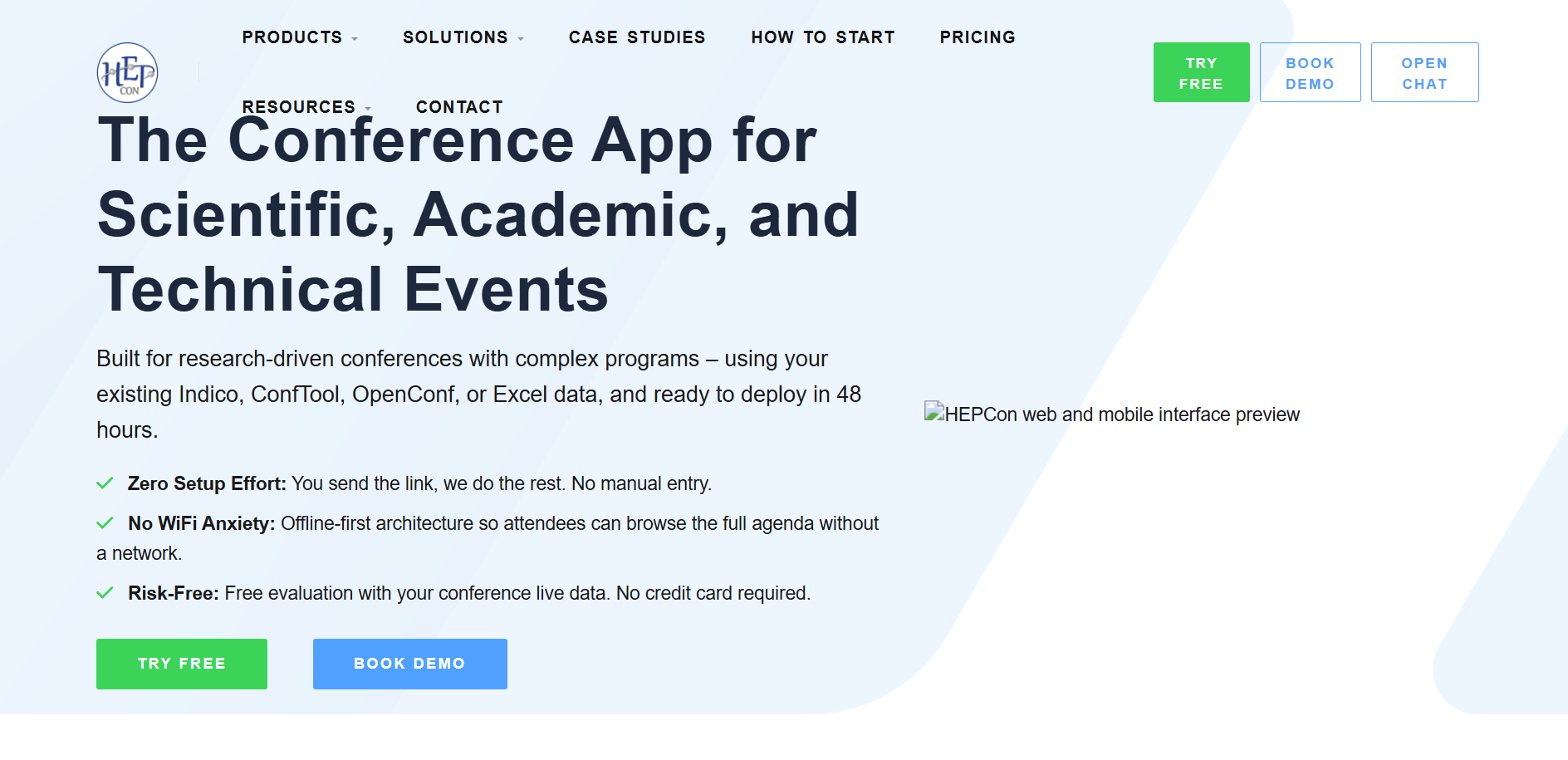
HEPCon is developed as a specialized online conference solution, which aims particularly at scientific, technical, and academic meetings, especially those with complex multi-track schedules, large sets of abstracts, and large attendee lists.
The platform addresses the particular needs of scientific events, starting from supporting scientific agendas, parallel sessions, authors, and speakers, to offline support. The system interoperates directly with Indico, ConfTool, OpenConf, and CSV databases, which ensures that organizers can easily and automatically import scientific programmes and session structures. The mobile and web solutions are tailored for scientific conferences.
Features of HEPCon
-
- Advanced Scientific Program and Event Management: The platform supports detailed sessions and structured scientific content, which allows the organizers to present large volumes of research material in a clean and coherent format. Attendees can easily explore sessions by using their desired filter options.
- Mobile and Website Experience Available: One of the strengths of the platform is that it has both mobile and web facilities. The mobile application can also be used in offline mode. Attendees can access the full event agenda, abstracts, speaker details and personal schedules even without an internet connection. This feature helps large scientific events run effortlessly, even when the connection is disrupted for any unavoidable reason.
- Seamless Integration with Scientific Conference Systems: The platform allows the organizers to keep track of the schedules, abstracts, and session updates while it works with the scientific conference systems alongside. This streamlined workflow allows consistency and accuracy, which maintains the quality of the event.
Scientific Event Use Case and Real Examples
EPS-HEP 2025 (European Physical Society Conference on High Energy Physics)
The European Physical Society Conference on High Energy Physics is an international conference in particle physics. The 2025 conference took place with 798 registered participants. The event had 124 sessions, 684 oral contributions, and 10 posters, which were distributed across multiple parallel tracks. Without a mobile agenda, the participants would have been forced to rely on static PDFs or the Indico website, both of which were troublesome during the conference days. HEPCon helped them with its mobile application and web agenda platform, as it is specifically designed for conferences with complex scientific programmes.
Features of HEPCon That EPS-HEP Used:
-
- Mobile application
- Website agenda
- Push notifications
- Analytics dashboard
HEPCon made the event agenda available in offline mode for the participants. This helped them to search for speakers, browse abstracts, and build personal schedules even where there was limited connectivity.
Final Thoughts
Proper execution of scientific events needs careful planning. From abstract submission to the actual session, it is important to use an appropriate event management tool. Each of these platforms offers a unique set of benefits. From a full-fledged event management software to a platform designed specifically for scientific events. Every one of them has different levels of functionality and offers particular solutions to your problems.
In the end, choosing the right platform for your event will depend on the complexities and needs of your event. When you are able to match your needs with the strengths of the platform, you will inevitably be able to alleviate the stress of the whole event planning process. Book a free demo with Dryfta today to find out how it will suit your next conference and help you maintain your workflow and event quality.
