




Academic events depend not only on proper organization but also on a good number of attendees and a proper assessment of the submissions made. In the context of hosting a research conference, a university symposium, or an international meeting of academics, the success of such events relies on having the proper platform, which forms the foundation for their success.
The organizers in the academic setting also expect a complete solution that handles the task of abstract submissions and then carefully follows through with the peer reviewing process. This in turn, is an essential step in ensuring that all submissions go through a fair evaluation process. This approach ensures that academic discourse remains of high integrity and quality, as it allows for engaging discussions.
This blog will explore some of the academic event tools with peer review systems that have made academic events easier and helped them turn into successful ones.
1. Dryfta
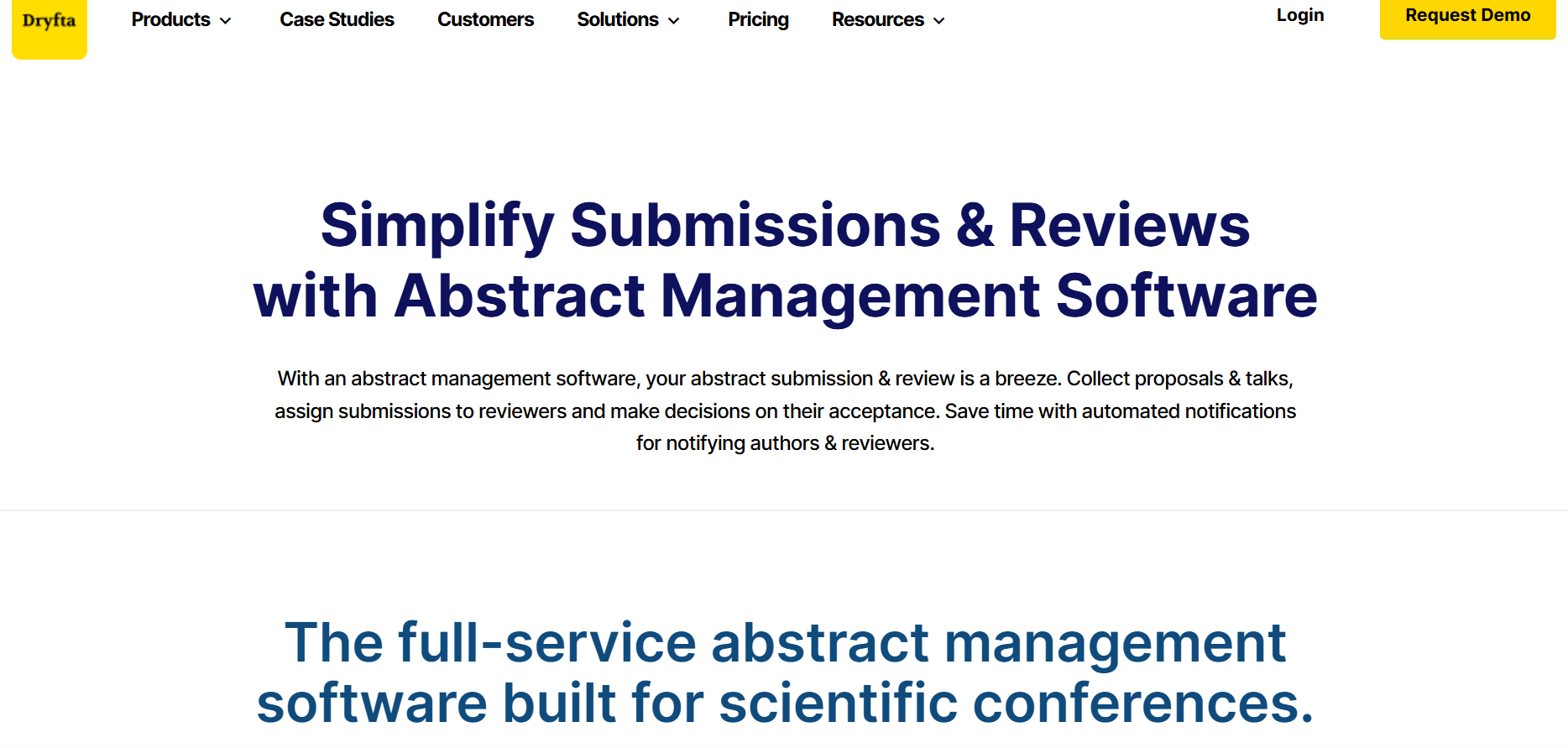
Dryfta is a unique platform that assists event organizers in managing abstracts, peer reviewing, scheduling, engagement, and ticketing from a single interface. The platform provides an abstract management and review process system that is designed to simplify the submissions, manage the manual tasks and make sure fair evaluation is done. From submissions to evaluation, everything can be done while maintaining high-quality standards
The peer review process of the platform gives space for flexible workflows ranging from single to multi-tiered review, automatic assignment of reviewers and double-blind reviews. It also has an inbuilt author and reviewer dashboard that provides all the necessary information in one single place, making it easy for the reviewer to complete their work.
2. OpenConf
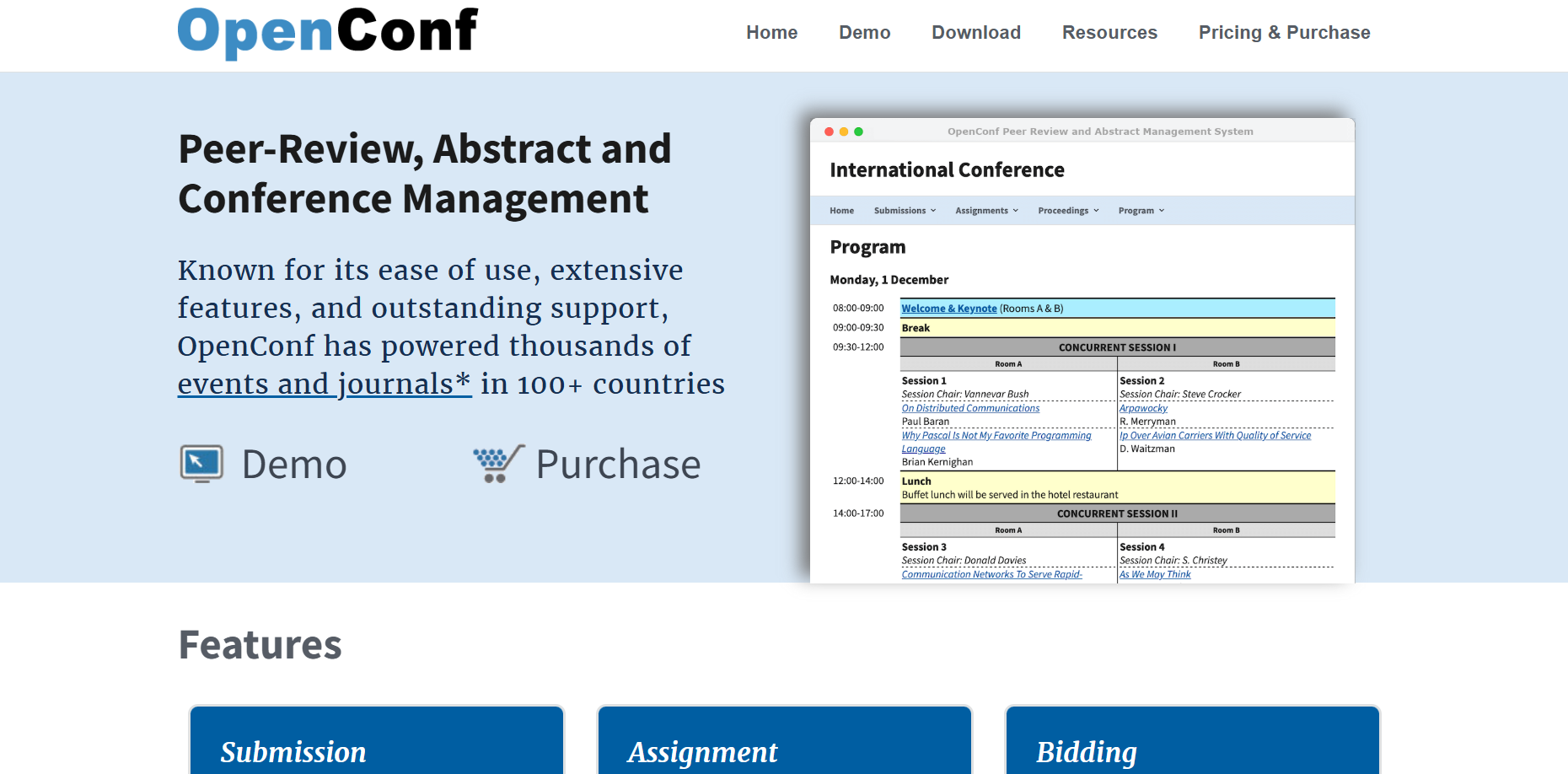
OpenConf gives the option to appoint categories for submission, review forms, scales for review, as well as choices for determining the outcome. Submissions of reviewers remain anonymous when necessary.
The platform also offers reviewer bidding and conflict-of-interest management services, which are of value in conferences with high evaluation criteria. OpenConf usually operates as a self-contained reviewing tool. Such a platform is adequate for academic committees that put a strong emphasis on the control of peer review.
3. PeerSubmit
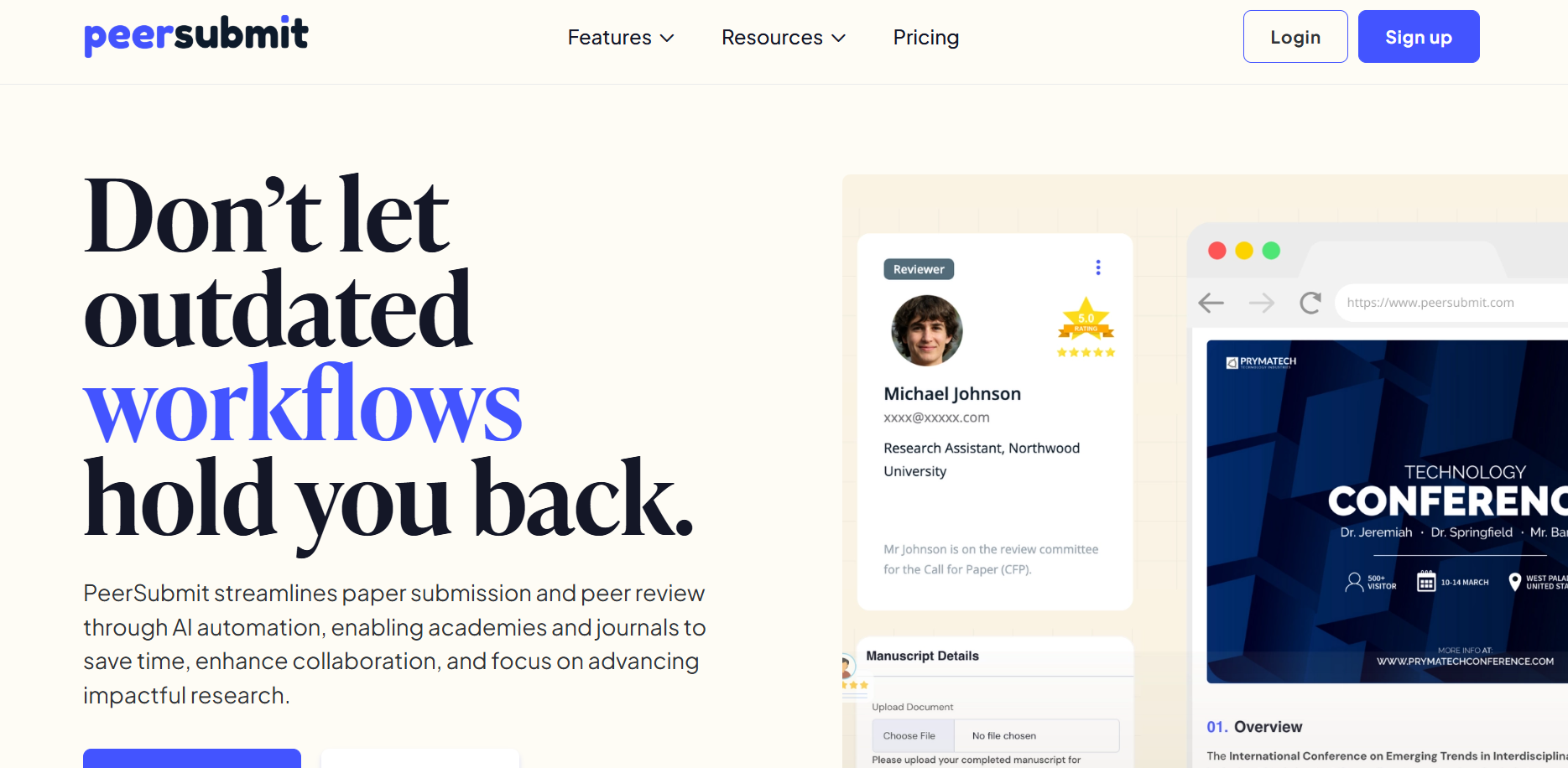
PeerSubmit provides abstract submission, review, and ticketing in the same interface. The platform provides automated assignment of reviewers, as well as tracking of both the progress of submissions and the revenue from registration.
It streamlines the paper submissions through AI automation, which enables the academics to save time and focus on impactful research. PeerSubmit provides dashboards for authors and reviewers through which they can track their real-time progress and take the necessary steps for a proper review of the abstracts while saving time.
4. PaperFox
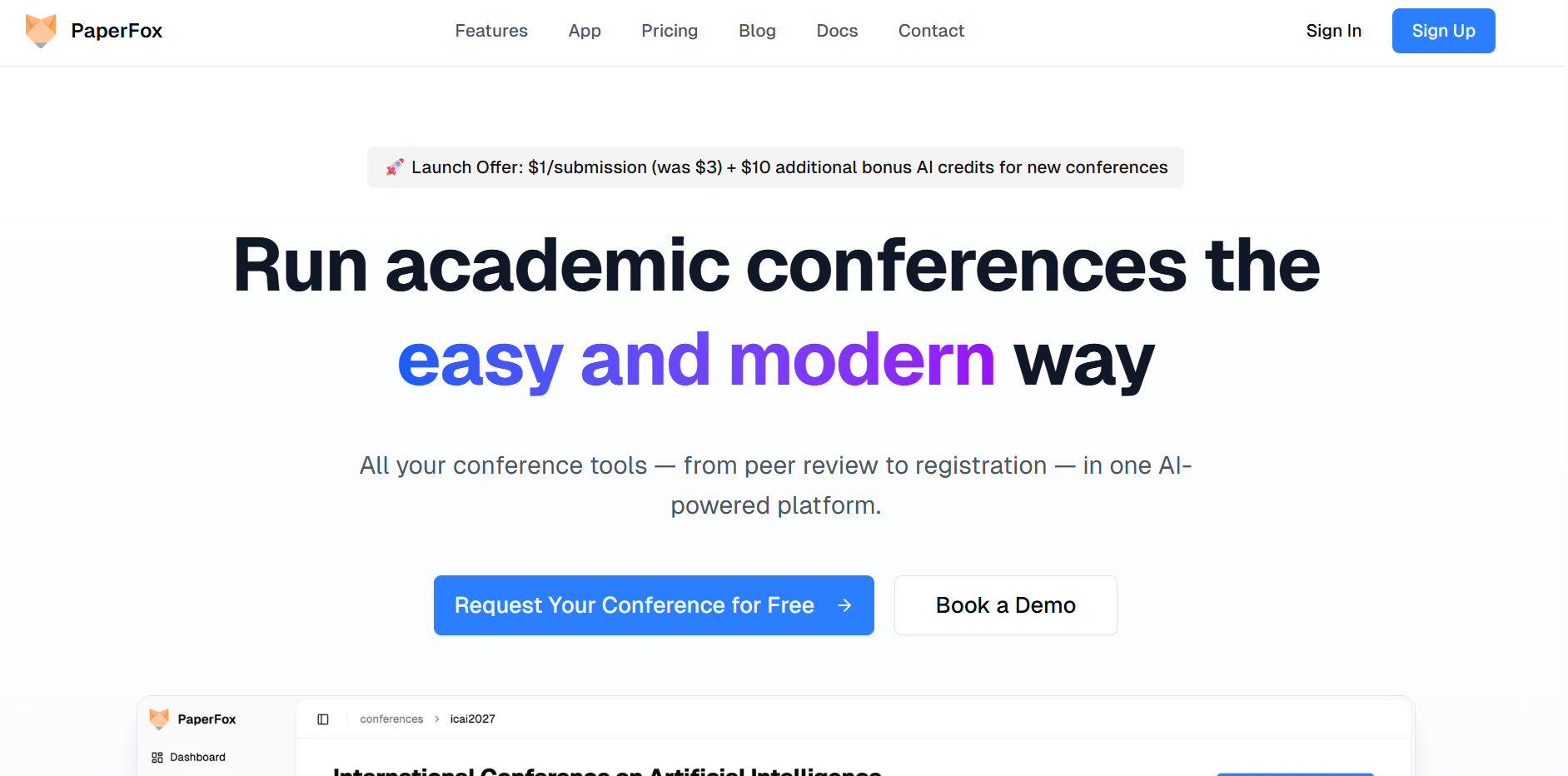
PaperFox has a submission process, review process and event organization, all in a simple-to-use interface. The organizers of the conference can easily set up an automatic review system for the benefit of the conference papers. Its automated deadline reminders help the submission process to be completed on time. This, in turn, helps the reviewers to complete the reviewing with ease, and they are saved from any last-minute pressure, which can affect the reviewing quality.
5. MeetingBloom
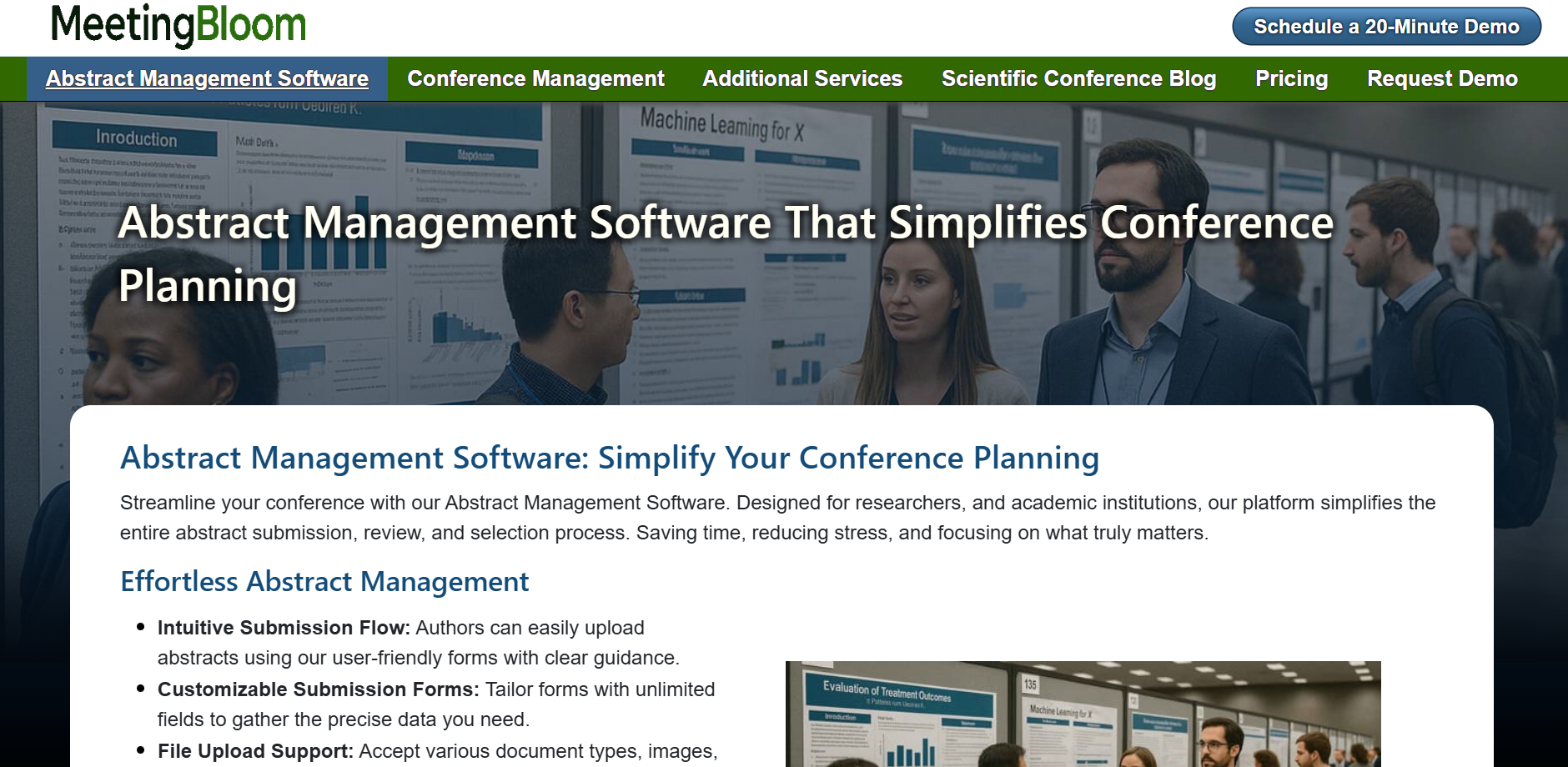
MeetingBloom is dedicated to addressing the requirements of peer review and attendee registration processes. It has a comprehensive set of tools that helps the organizers to efficiently manage and automate the assignment of the reviewers, enables them to make their work flow easier and at the same time, it helps them monitor the progress of their reviews easily.
Additionally, the tool also simplifies the registration process as it collects attendee information and makes the event experience smoother.
6. OpenWater
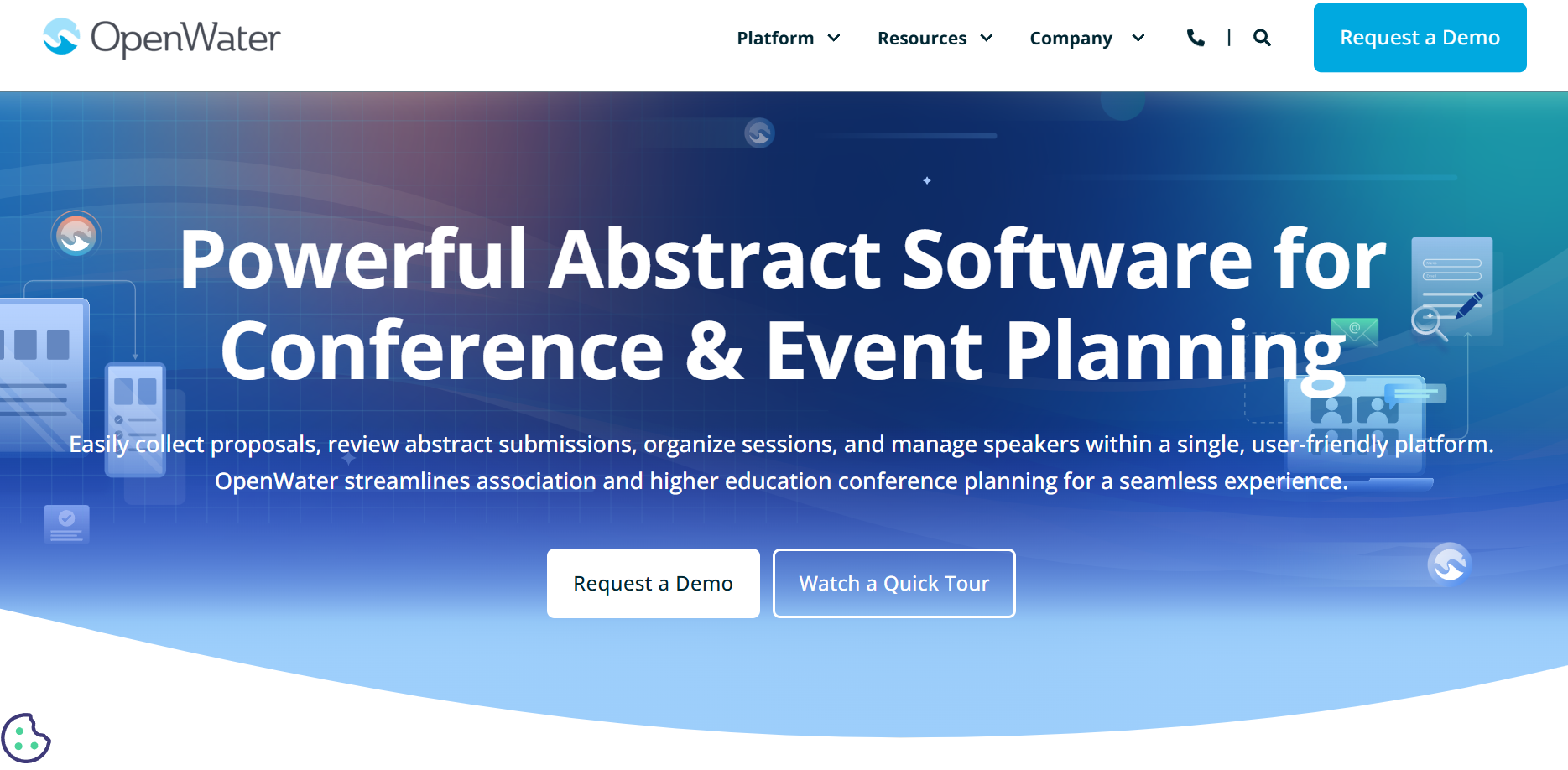
OpenWater is a conference planning system with capabilities to handle abstract workflows from start to finish and geared towards research conferences, learning events, and scientific events. OpenWater enables organizers to select abstract submissions to specific reviewers via their review dashboards, whereby every reviewer gets to see only those abstracts assigned to them to evaluate, as well as specific review criteria and forms.
7. Dossier.events

Dossier.events provides a unified academic event platform where the organizers can automate deadlines and targeted communications. It is a modern AI-powered event management platform by dossier.nexus which is mainly designed to run academic conferences. Its ready-to-use form makes it easy for paper submissions, and organizers can assign reviewers to submissions easily. It allows the organizers to monitor the progress of reviews easily with the real time tracking system, and the AI tools help organize tasks such as tagging, ranking and filtering submissions.
8. MeetingHand

MeetingHand event management software is designed to make the abstract submission and review process easier for academic conferences. Organizers can use a single-blind or a double-blind peer review process to hide the identities of the authors and the reviewers to make sure the reviewing process stays impartial. It provides submission status notifications and editing alerts, which makes the process of reviewing hassle-free, and the custom review scoring forms help in making the review process easy-flowing.
9. Pheedloop
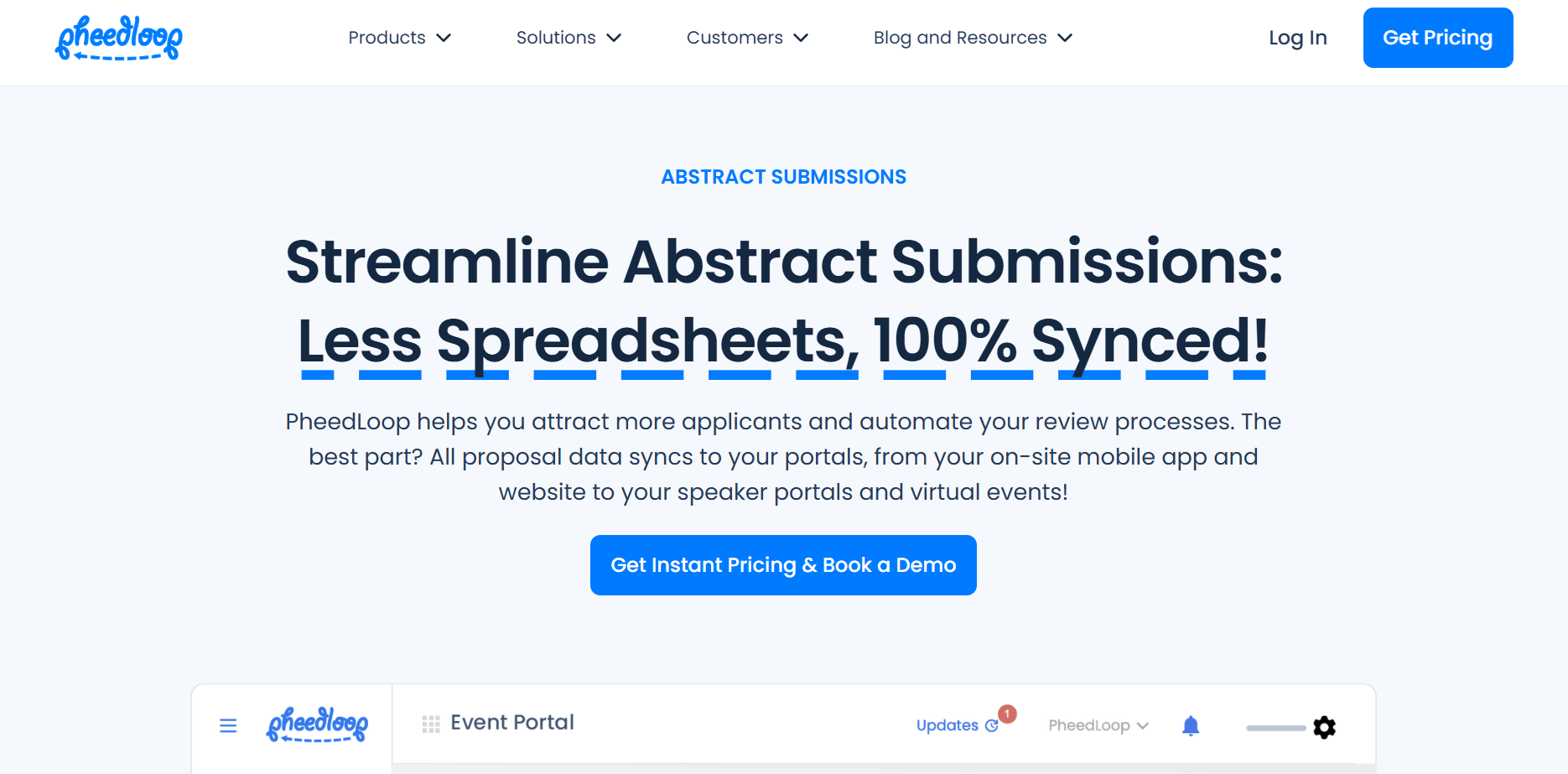
PheedLoop allows for an integrated abstract and peer review submission and management system. It keeps everything related to your research event organized, starting from the call for proposals and ending with the final scheduling of all sessions. Organizers can easily establish calls for proposals or abstracts through the use of the software and design the process of abstract submission with tracks, types, and audiences tailored to suit the research nature of the event.
10. EasyChair
EasyChair emerges as one of the most widely used peer review systems currently available to the scholarly community, especially when it comes to traditional conferences or overall journal integrative reviews. This system has detailed submission processes as well as efficient reviewer management, which makes it extremely useful.
Final Thoughts
In managing an academic event, there is a need to have control while dealing with the complex nature of event coordination. To make this process simpler without getting bogged down by the numerous spreadsheets involved, it becomes important to take the assistance of an event management system. A system that stands out among the rest is Dryfta, with features including managing peer review tasks, ticket options, engagement of participants, and organization of the event agenda, with the sole aim of making the planning process smooth.
By utilizing the power of the right event management solution, you would be able to improve your academic events to ensure they are more organized. Right from the planning stages, where the ideas have been submitted, till the final stages, including the selling of tickets, the right event solution would make an enormous difference.
Enhance your educational events with Dryfta today! Register for a free demo and experience the convenience of having a single platform that allows effective management of ticketing, streamlined peer review procedures, and extensive event management, all with just a click of a button.
