




The abstract is one of the most important factors in academic conferences. It is where the ideas take shape, reviewers decide what belongs in the program, and where the identity of the event begins to form. Long before badges are printed or sessions are scheduled, abstracts define the intellectual quality of a conference.
Many conferences still rely on outdated methods to collect and manage abstracts. Email inboxes overflow with attachments, spreadsheets grow longer and harder to keep track of. As the submission number increases, these systems crack under pressure.
This is why academic conferences across multiple disciplines are moving away from email and spreadsheets and toward dedicated abstract submission platforms. This article looks closely at three widely used systems, Dryfta, OpenWater, and EasyChair, and explains how each supports the modern abstract workflow.
Why Email and Spreadsheets No Longer Work
Traditionally, organizers accepted papers based on abstracts sent via email, as it seemed logical or they found it simple. In this case, authors would forward Word or PDF files, while they would use spreadsheet software to track the information and forward it to reviewers. This method would work fine for a few papers or low expectations.
However, conferences now receive hundreds or even thousands of paper abstracts, with various tracks and deadlines. Review processes must involve blind reviews, scoring, conflict resolution, and auditability, and these needs cannot be effectively addressed by traditional manual methods.
Common problems such as abstracts getting lost in email threads, review assignments becoming uneven, missed deadlines and taking long hours to report back appear quickly in this method. A dedicated abstract management system helps centralize submissions, standardize reviews, automate communication and even the workflow.
Dryfta as an Abstract Management System
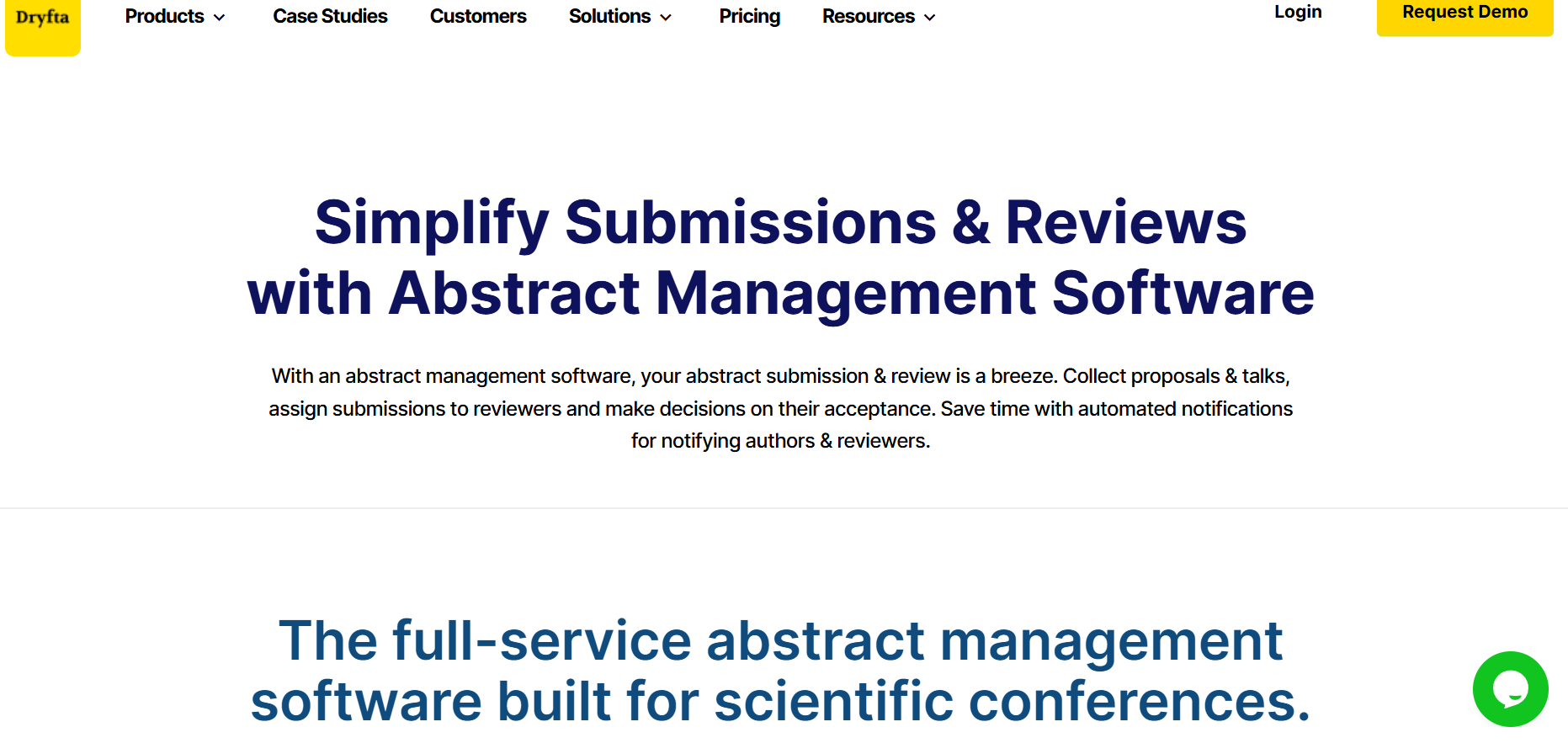
Dryfta views abstracts as part of the complete lifecycle of managing a conference and does not see them as an isolated entity. Its abstract submission platform is seamlessly integrated into the overall needs of academic events. It allows organizers to create submission forms that show how the researchers submit their abstracts. Abstract types, word limits, file uploads and other details can all be configured without technical work. Authors can save drafts and return them later, which reduces incomplete submissions and last-minute errors.
Review Assignment Without the Chaos
Once abstracts are submitted, Dryfta allows for both automated and manual handling of reviewer assignments. Organizers can assign reviewers to abstracts by subject area, and can handle assignments in bulk. The workload of reviewers is tracked, providing another level of fairness. The system accommodates single-blind, double-blind, or triple-blind models of blind review, as desired for a conference.
The reviewers work in a dedicated dashboard and see assigned abstracts, submit scores, add comments, and track progress without exchanging files by email. This clarity improves completion rates and shortens review time.
Decisions, Notifications, and Publishing
Once abstracts arrive, Dryfta allows for automated and manual handling of the assignments. Organizers can assign reviewers to abstracts by subject area, and can handle assignments in bulk. The workload of reviewers is tracked, providing another level of fairness. The system accommodates single-blind, double-blind, or triple-blind models of blind review, as desired for a conference.
OpenWater- Enterprise-Focused Abstract Management
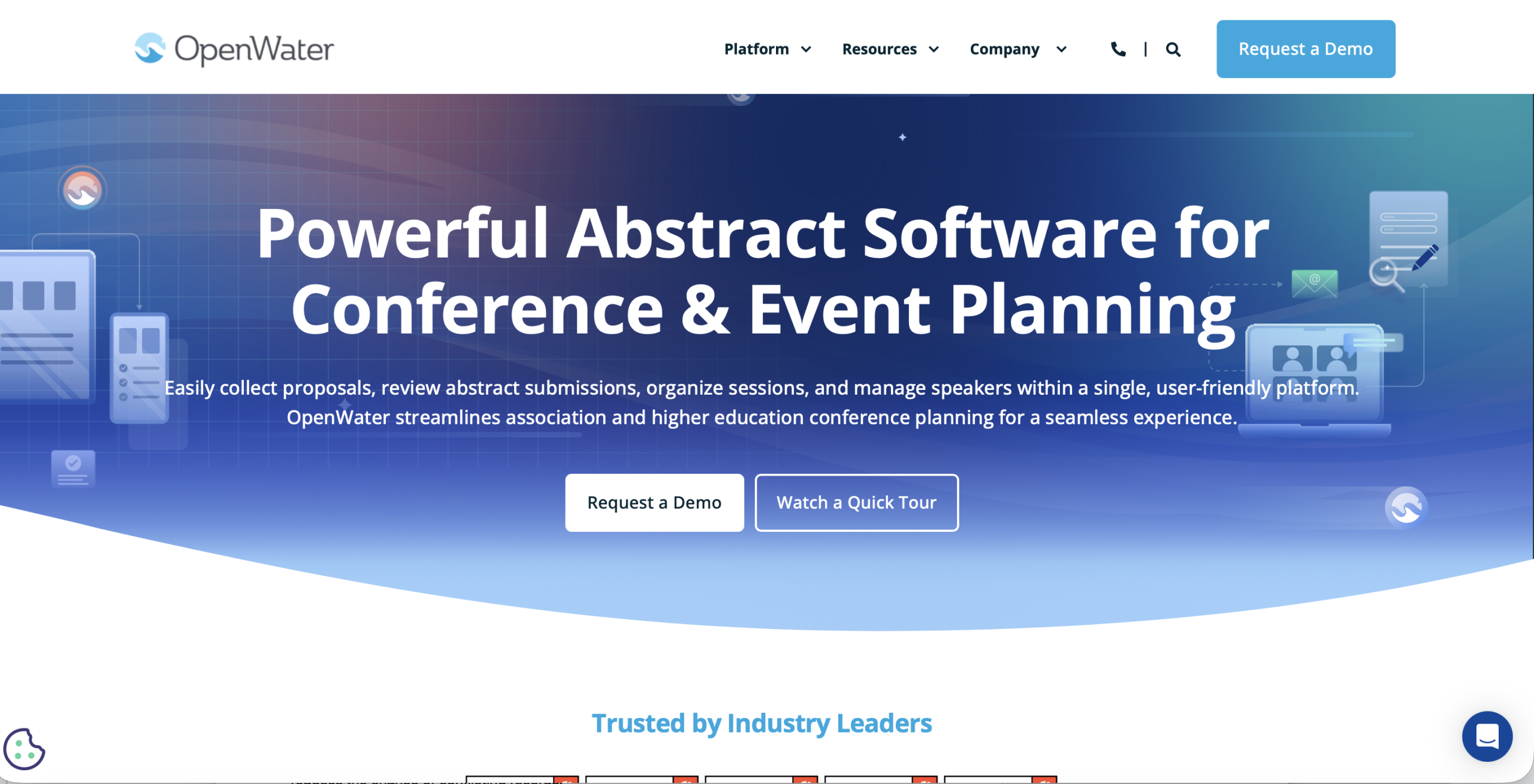
OpenWater presents itself as a configurable, enterprise-level platform for abstract and application management. It often serves associations and organizations that manage abstracts alongside grants, awards, and memberships. The platform allows detailed customization of abstract submission forms. Organizers define required fields, upload options, and eligibility rules. The system supports different abstract categories within the same event.
Structured Review Processes
Review workflows in OpenWater can entail multiple rounds, along with customizable review rubrics. Blind and non-blind fields are also configurable, thus giving conferences the power to configure as they wish.
One of the greatest strengths of OpenWater is the ability to match the abstract submission process with the branding of the organization. The submission process appears to be a seamless extension of an existing website.
Additionally, it integrates with CRM and AMS systems like Salesforce and other enterprise systems, which is advantageous to organizations that require abstracts associated with broader membership or donor data.
Session Creation and Reporting
Once the acceptance of the abstracts is done, they can be grouped for each session and exported for scheduling tools or mobile apps. Reporting dashboards can be used to gain insights about the submissions, reviewers’ work, and review calendars.
EasyChair- A Familiar Name in Academic Publishing
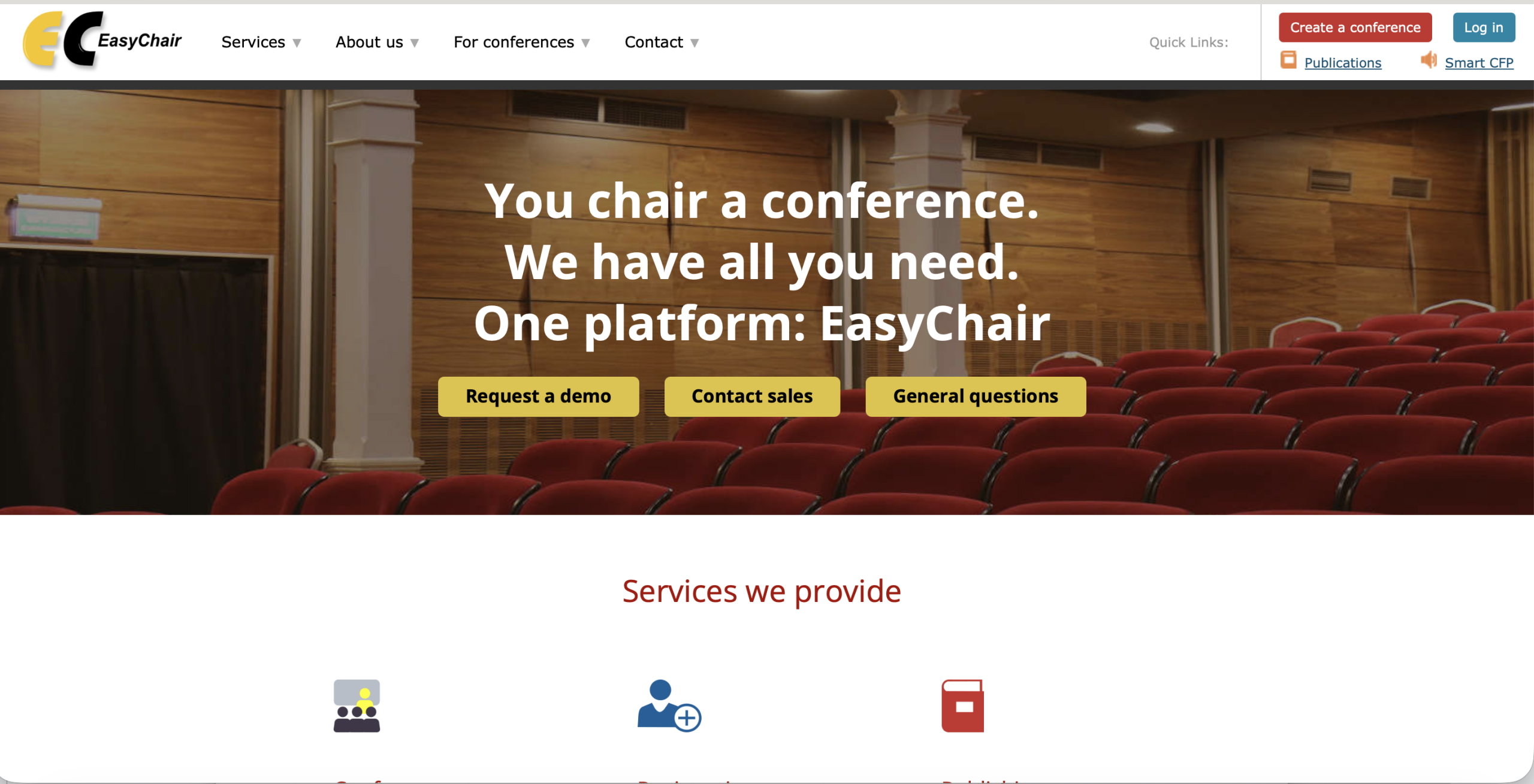
EasyChair is an integral part of academic conferences. For most scholars, it is a part of their early academic experiences, typically in computer science and related fields of engineering. EasyChair helps in abstract and paper submission, as well as reviewing, rating, and discussion. Smart CFP is a part of the program that facilitates the invitation for paper submission. Editor roles, phases, and proceedings can also be managed using EasyChair. Proceedings preparation is an important factor for continuous usage.
Licensing Model
The platform operates on a tiered licensing system. Small conferences receive limited free access while larger events must purchase licenses based on submission volume and support needs.
Where EasyChair Fits Today
EasyChair remains reliable for traditional academic peer review workflows. However, it focuses mostly on submission and review rather than on full event lifecycle management. Integration with the tools for registration, scheduling, and attendee engagement normally requires extra systems.
| Comparison | Dryfta | OpenWater | EasyChair |
| Custom Abstract Forms | Yes | Yes | Yes |
| Blind Review | Yes | Yes | Yes |
| Automated Author Communication | Yes | Yes | Limited |
| Session and Schedule Creation | Yes | Yes | Basic |
| End-to-End Event Workflow | Yes | Partial | Yes |
Final Thoughts
Conferences in academic circles face pressure to improve author, reviewer, and attendee experiences. Abstracts mark the beginning of these efforts. A poorly functioning abstract management process makes a corresponding process worse. A well-designed abstract system is an attempt to introduce order when emails and spreadsheets cause problems. Introducing order enhances fairness, clarity, and efficiency. No, it is not a trend.
Previously, being able to manage such an abstract submission process via email and spreadsheet may have seemed sufficient, yet it is no longer suitable for keeping up with contemporary academic conferences. With increasing numbers of abstract submissions and the formalization of evaluation, conference organizers need tools that provide transparency and order to all aspects of the process. A specially designed platform for abstract management closes the gaps, facilitates fair peer evaluation, and links accepted abstracts to programs and conference calendars without duplication or delay.
Ready to bring order to your abstract submission and evaluation processes? Get your free demo of Dryfta and learn how you can bring your next conference together!