




The university research conferences have changed over time. Initially, it was a process that was built around emails, spreadsheets, and different tools. However, now it needs a more structured system that can handle the registrations, submissions, peer review, session scheduling and engagement in one place. Universities need platforms that respect the academic workflows while supporting hybrid and virtual participation.
Two platforms that often come up in discussions are Dryfta and vFairs. These systems support the modern needs of conferences and approach academic events from a dynamic angle. This article explores how each platform supports university research conferences.
What Do University Research Conferences Actually Require
A research conference is not just an event but a structured academic process that begins months before the first session. It often continues long after the conference schedule has already been released. Organizers need to manage calls for abstracts, assign reviewers, communicate with authors, publish schedules, and provide space for scholarly exchange. Attendees always expect clear communication, easy access to data, and meaningful interaction with others.
Beyond the logistics, universities also need reliable data, secure handling of personal information, and systems that can adapt easily to the institutional policies. Any platform used for a conference must support these needs without creating unnecessary complexity.
Dryfta As an Academic Conference Platform
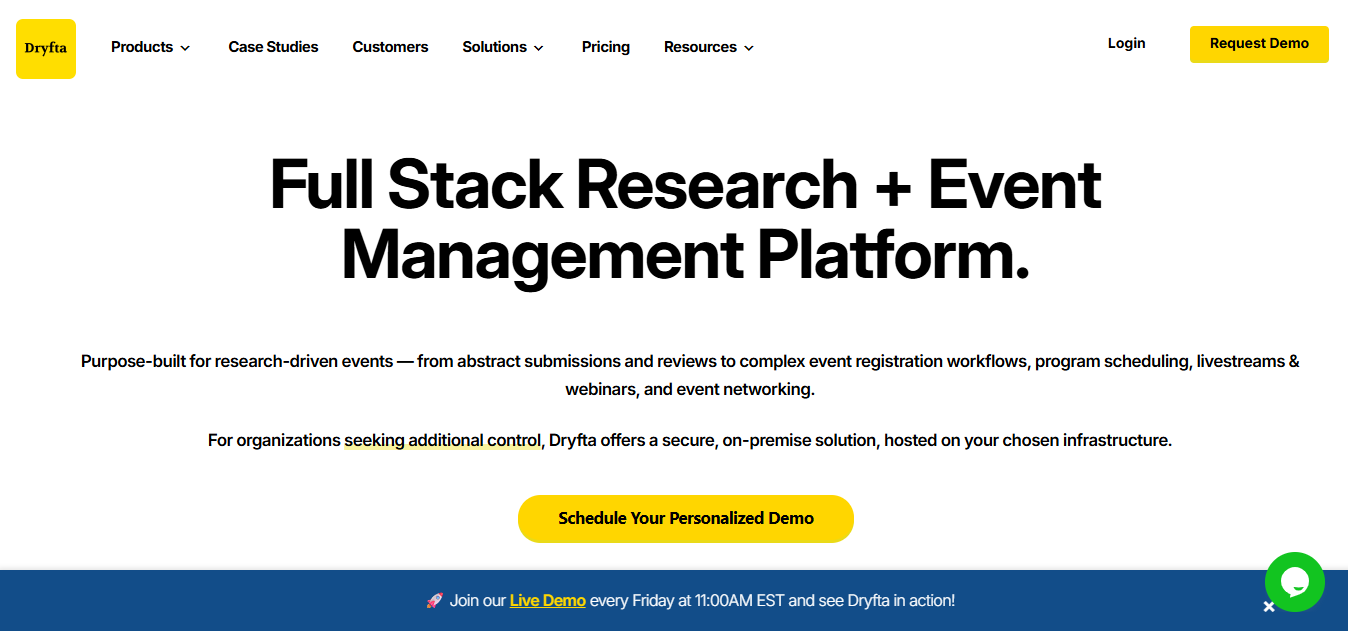
Dryfta is created specifically for academic institutions and research conferences. Its structure shows how universities can run events, starting from abstract submission to post-conference reporting. Rather than putting up with multiple tools, organizers can work with a single platform.
Abstract submission sits at the core of the platform. Organizers can publish a call for papers with custom forms and manage submissions clearly. Peer review workflows allow reviewers to evaluate abstracts within the platform, while organizers can track the progress and communicate the decisions properly. This approach mirrors the traditional academic processes and reduces administrative work.
Dryfta allows organizers to create multiple registration categories, manage payments, and maintain a central attendee database. These functions are available within the system, and the data remains consistent throughout the conference. The platform also supports the creation of a complete conference website.
Organizers can publish agendas, speaker profiles, sponsor details, and session information. This helps to maintain a single source of information for attendees. Scheduling tools allow the collected abstracts to move directly into the programme. Speaker sessions and time slots can be arranged while avoiding conference conflicts.
For conferences that include a virtual audience, the system supports virtual and hybrid sessions through integrated streaming, live sessions, and on-demand access. Networking features such as messaging and discussion spaces help maintain academic exchange beyond formal sessions.
Data security and compliance are also a part of Dryfta’s design. The platform follows the established standards for data security and secure payments, which are essential for universities managing sensitive academic and personal data.
vFairs As an Academic Conference Platform
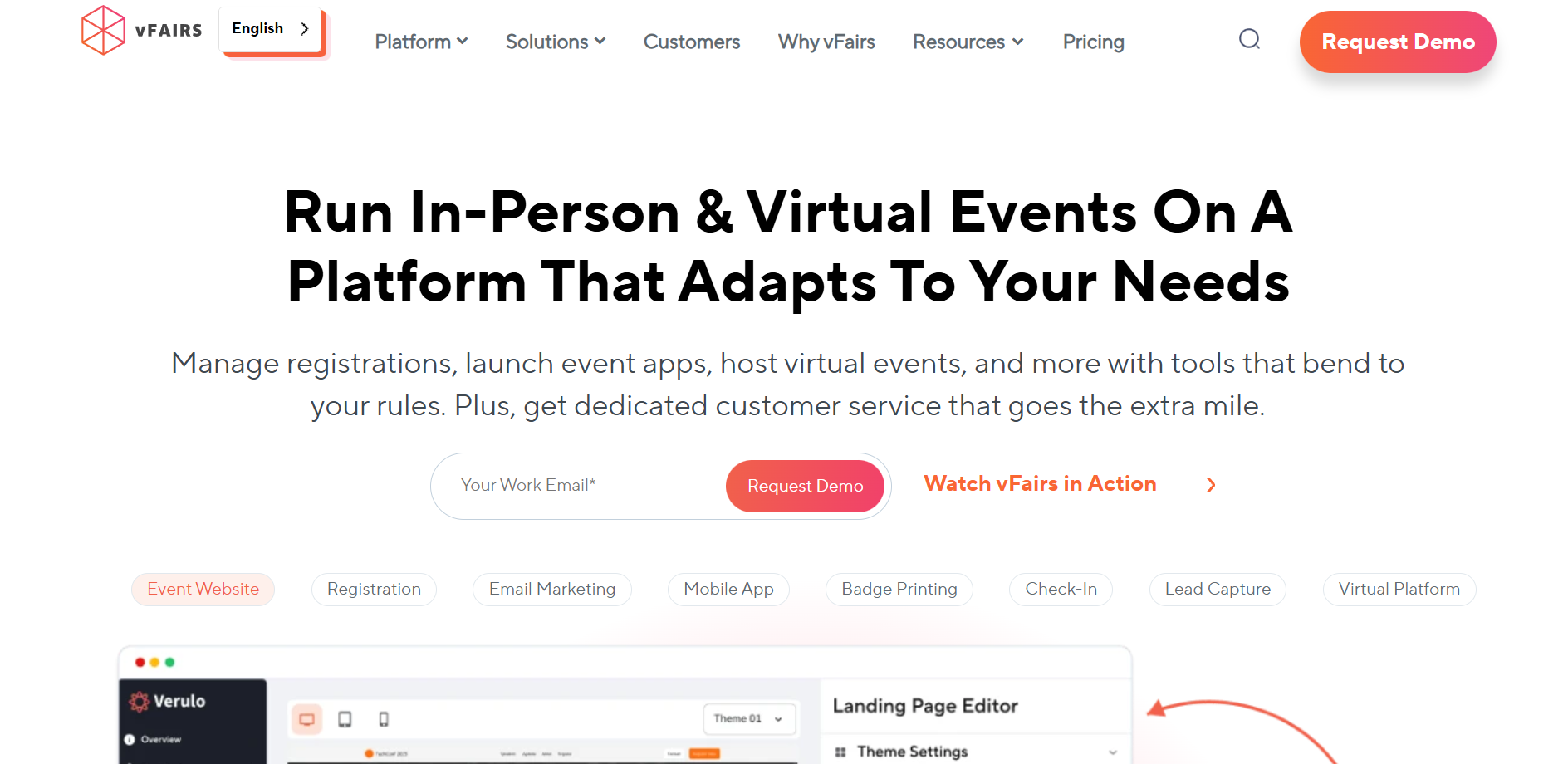
vFairs approaches the conference from a wider enterprise perspective. It supports universities, corporations, associations, and large-scale events that need advanced virtual and hybrid capabilities. It does not focus primarily on academic workflows but also emphasizes immersive experience and high levels of customization. The platform offers features such as registration, ticketing, exhibitor portals, and analytics. Universities that run large-scale research conferences with exhibitions or sponsor-heavy programmes may find this appealing.
One of the platform’s notable features is the virtual environment. The platform provides 2D and 3D digital venues that replicate physical conference spaces. Attendees can navigate virtual halls, visit exhibitor booths, and join sessions in a visually engaging way. This approach aims to recreate the feel of an in-person conference for remote participants.
The networking tools of the platform allow the attendees to connect through video meetings, texts, and scheduled appointments. These features support structured and informal interactions across all time zones. The platform operates at an enterprise level, which suits institutions with larger budgets and complex requirements, but it may be less predictable for smaller academic events.
Comparing Dryfta and vFairs for Academic Conferences
When comparing Dryfta and vFairs, the differences emerge in how each tool prioritizes academic requirements.
Dryfta is designed with academic processes in mind. Abstract submission, peer review, and program organization are not secondary but primary functionalities. This makes the tool more streamlined for research committees and highly compatible with academic processes at universities.
vFairs has abstract and speaker management tools, but these tools are secondary to the event management system. For academic conferences, where review is the key focus, conference organizers may have to work around the tool’s system to fit their needs.
Regarding virtual event capabilities, both tools are capable of hosting virtual and hybrid events. Dryfta is geared towards functional virtual events with organized sessions and engagement tools that facilitate academic discussions. vFairs is designed for immersive experiences that focus on visual engagement and mass interaction.
Usability is also different for the two tools. Dryfta’s design is academic-friendly, with terminology and processes that can reduce the learning curve for research conference committees. vFairs has a lot of functionality, but this also means that the tool may require systematic training and coordination with support staff.
Dryfta vs vFairs: University Research Conference Comparison
| Feature | Dryfta | vFairs |
| Core Focus | Academic and research conference management | Enterprise-level virtual and hybrid events |
| Abstract Work | Fully integrated abstract and peer review system | Supported, but not the primary focus |
| Program Scheduling | Fully integrated program scheduling | Session scheduling available |
| Registration and Payments | Multiple academic categories with centralized data | Advanced ticketing with enterprise-level controls |
| Networking Tools | Messaging and discussion spaces for academic exchange | Video meetings, appointments, and exhibitor interactions |
| Usability | Academic-friendly | Powerful but may require training and support |
Choosing the Right Platform
The selection of the platform has to be done based on the goals and size of the conference.
Dryfta is best suited for conferences where the main aim is research event management. It is best for conferences that value process transparency, efficiency, and cost-effectiveness and are still capable of hosting virtual and hybrid conferences.
vFairs is best suited for conferences that aim at creating large-scale, visually stunning experiences with high networking and exhibitor engagement. Universities that host global conferences with complex requirements may find the enterprise support model of vFairs helpful.
Understanding your conference structure, size, and capabilities will help you make a better decision than comparing feature lists.
Final Thoughts
Each university research conference has its own set of characteristics, including its own structure and requirements. Some conferences are more about academic review and program building, while others are about reaching a wider audience and having a more immersive experience.
Dryfta and vFairs are both capable of handling modern conferences, but they take different approaches to this process. One is more about academic processes and research-driven conference planning, while the other is more about enterprise-level conference delivery and visual engagement. It really does depend on what your conference is like and what your attendees value most. If you are organizing a research conference at your university soon and are interested in learning more about an academic platform that can handle submissions, reviews, registrations, and more in one convenient location, request a free demo of Dryfta today.
